Comb Sedge
Oreobolus strictus
Last updated:
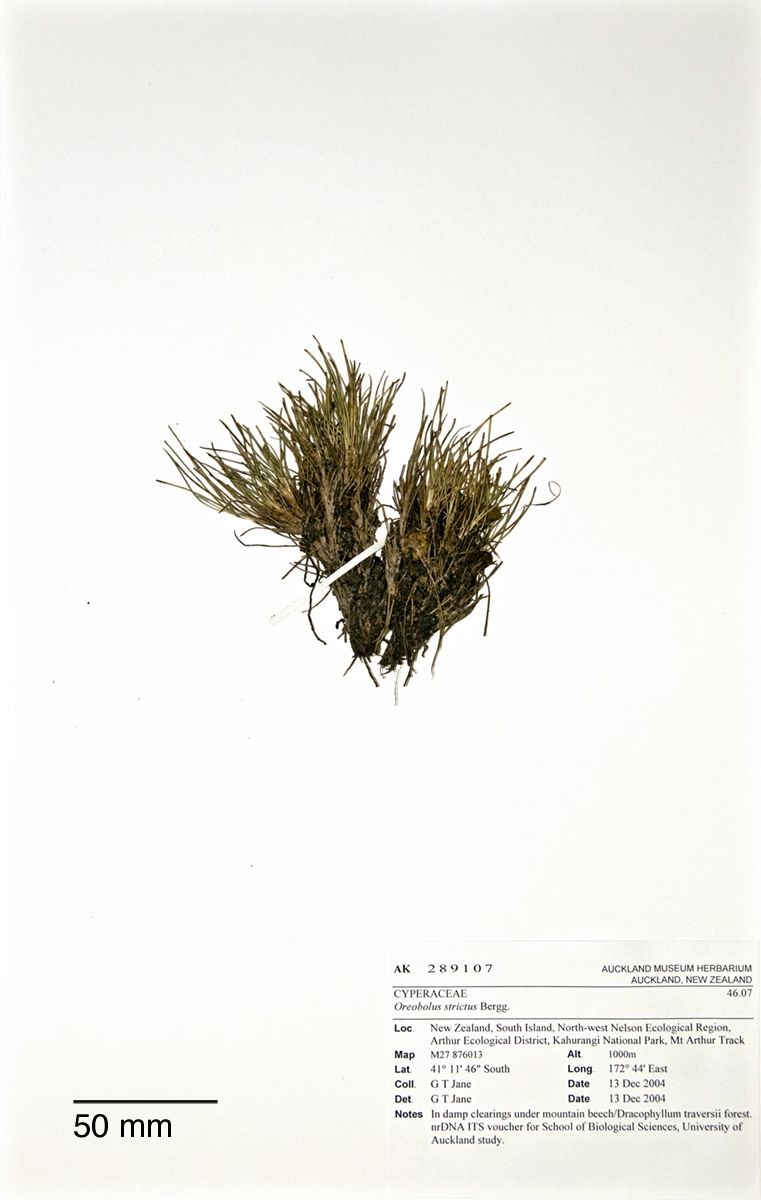
Comb sedge (Oreobolus strictus) is a small endemic sedge that forms loose green or yellowish-green tufts just 3 to 12 cm high. It grows in permanently sodden turf, cushion bogs, seepages and mires from the Volcanic Plateau southwards through the South Island to Stewart Island/Rakiura, mostly in the mountains but descending to sea level in the wet south and west. Its creeping, branching stems root as they go, and its very narrow leaves are arranged in neat fans. It is Not Threatened but is very slow-growing and rarely cultivated. Explore more native grasses and flaxes in our native plant guide.
Plant Description
Oreobolus strictus forms loose tufts 30 to 120 mm tall from creeping, branching stems that root at the nodes. The leaves are narrow-linear, no more than about 0.5 mm wide, channelled on the upper surface and convex beneath with a prominent central nerve, and they are held stiffly upright, which is the meaning of strictus.
The flowering stem carries a single spikelet, rarely two, with three glumes that are usually tinged red. The fruit is a small light grey nut about 1.5 by 1 mm with a three-pointed tip. Flowering is from October to December and fruit is present from November to April or May.
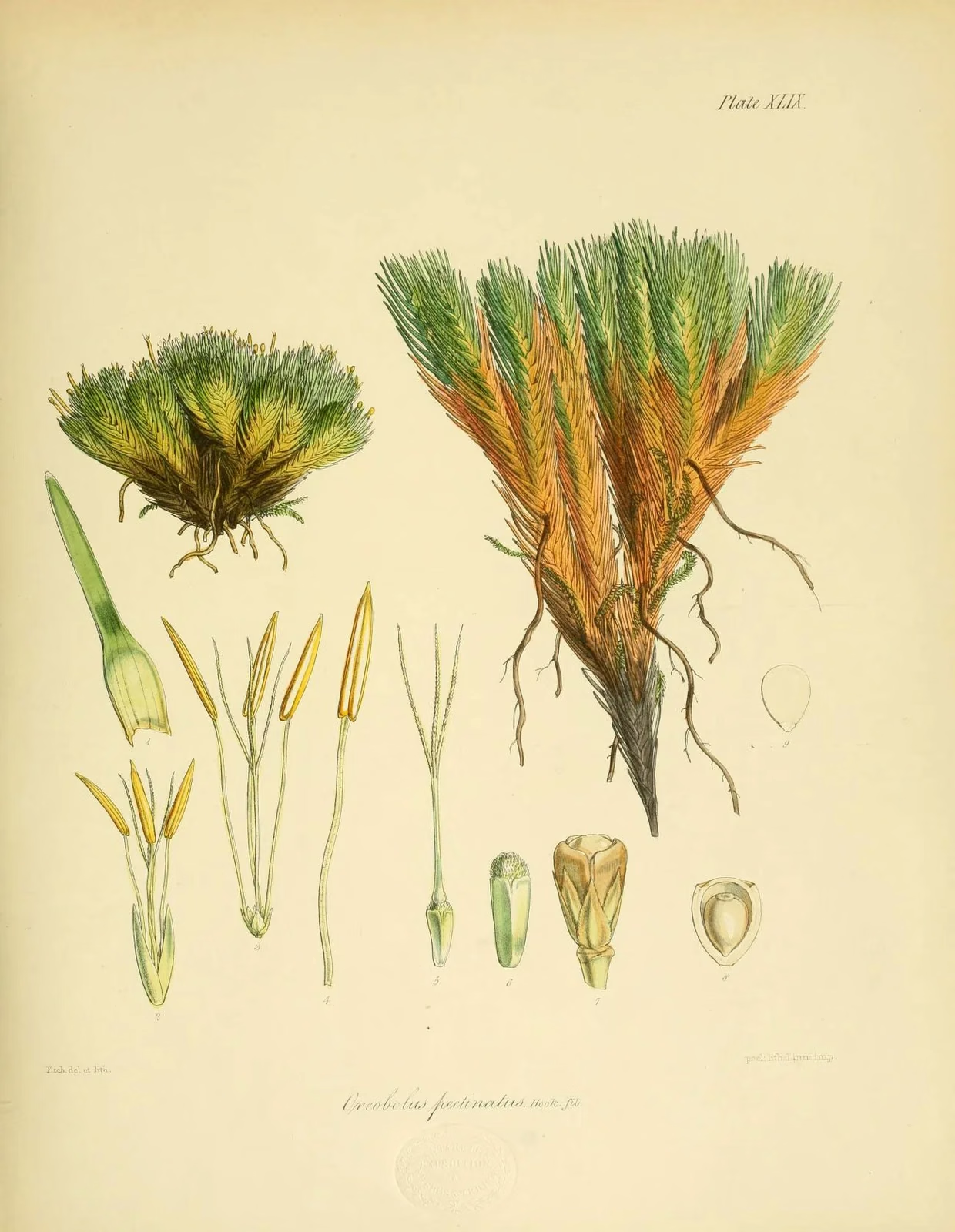
Its looser, taller tufts help separate it from the dense, hard cushions formed by Oreobolus pectinatus, the other common New Zealand comb sedge of alpine bogs. A hand lens and a look at the leaf and spikelet details are needed for confident identification.
Quick Facts
| Scientific Name | Oreobolus strictus |
|---|---|
| Height | 3-12 cm |
| Spread | Loose tufts spreading slowly by creeping stems |
| Water Needs | Very high; permanently wet ground |
| Light | Full sun to light shade |
| Frost Tolerance | High; an alpine and subalpine plant |
| Salt Tolerance | Low; not a coastal salt-spray plant |
| Growth Rate | Very slow |
| Lifespan | Perennial |
Climate Best Suited to
It suits cool, wet climates with frequent rain or mist, from alpine zones to the cold lowland bogs of the far south and west.
Regional Suitability
| City | Climate Suitability |
|---|---|
| Auckland | Low |
| Wellington | Low |
| Christchurch | Low |
| Dunedin | Medium |
Plant Habitat
Comb sedge is endemic to New Zealand. In the North Island it grows from the Volcanic Plateau and adjacent ranges southwards, and it continues through the South Island to Stewart Island/Rakiura, from the coast to about 1500 m above sea level.
It is primarily an alpine plant, descending to sea level only in the western and southern South Island and on Rakiura. Typical sites are permanently sodden turf, cushion bogs, seepages, mires and poorly drained ground beneath low shrubs.
Growing Requirements
Soil Requirements
It grows in wet, peaty, nutrient-poor soils that never dry out.
- Acidic peat or peaty gravel
- Low fertility; avoid fertiliser
- Constantly moist but not stagnant
Light Requirements
In bogs it grows in open, bright conditions, sometimes in the shelter of low shrubs.
- Full sun in cool climates
- Light shade in warmer places
- Avoid being overtopped by taller plants
Water Requirements
Constant moisture is the single most important requirement. NZPCN gives it a facultative wetland rating, and it is usually found in permanently wet ground.
- Keep the pot standing in a shallow saucer of water in summer
- Use rainwater rather than hard tap water where possible
- Never allow the root zone to dry out
Planting and Establishing
This is a plant for alpine houses, troughs and bog gardens in cool districts rather than ordinary borders. Plant a rooted piece into a mix of peat and grit and keep it permanently damp.
In warmer lowland gardens it will struggle with summer heat, so a shaded, cool position or an alpine house is the best chance of success.
Ecological Role
Like other sedges it is wind-pollinated. Its tufts help bind the surface of wet turf and cushion bogs, and the creeping, rooting stems let it slowly build up patches.
It is part of the specialised flora of New Zealand mountain bogs and seepages, growing with cushion plants, sundews and other small herbs that rely on permanently wet, low-nutrient ground.
Uses & Significance
Garden Uses
Its appeal is to alpine and bog plant enthusiasts who enjoy tiny, neat textures.
- Alpine house pots and troughs
- Edges of a peat bog garden
- Miniature landscapes with cushion plants
Ecological Value
It is a structural part of alpine bog and seepage turf throughout much of the country.
- Binds wet peat surfaces
- Part of cushion bog communities
- Habitat for small invertebrates in bog turf
Landscaping Uses
Group it with small alpine bog plants such as sundews and cushion species in a shallow trough kept wet. Its upright fans of leaves give fine texture against low mats.
It is too small and slow for mass planting in gardens, but it can be used in specialist wetland restoration in the mountains where local material is available.
Seasonal Care Calendar
Spring
Growth resumes and flowering begins in October.
- Top up water levels
- Divide rooted pieces if needed
Summer
Flowering finishes in December and small nuts develop.
- Keep cool and constantly wet
- Shade pots in hot weather
Autumn
Fruit can remain until April or May.
- Collect ripe nuts for sowing
- Remove fallen leaves that may smother tufts
Winter
The plant is evergreen and hardy to cold.
- Little care needed
- Keep pots from drying out in windy weather
When to Prune and How Much
No pruning is required. Simply remove any dead or browned tufts by hand.
Keep surrounding plants from spreading over it, since a small sedge like this is easily smothered.
How to Grow Comb Sedge
NZPCN notes that comb sedge is easily grown from rooted pieces and probably from fresh seed, but that it is very slow-growing and best grown in cool climates or an alpine house. It is not commercially available, so propagation relies on existing cultivated plants or carefully authorised collection. Dividing creeping stems that already have roots is the most reliable method.
By Division
Because the creeping stems root at the nodes, rooted sections can be detached with minimal disturbance to the parent tuft. Spring is the best time, as growth is beginning.
- Find a stem section with healthy roots at a node
- Cut it away with clean scissors
- Pot into a wet mix of peat and fine grit
- Stand the pot in a shallow tray of rainwater
- Keep cool and shaded until new growth appears
- Allow a full year before dividing again, given the slow growth
From Seed
Seed propagation has not been well documented for this species, but NZPCN suggests fresh seed is probably viable. Collect nuts when ripe in late summer or autumn and sow straight away.
- Collect ripe grey nuts between January and April
- Sow on the surface of a damp peat and grit mix
- Keep the tray standing in water so the surface never dries
- Leave outdoors in a cold, sheltered place over winter
- Expect slow and possibly erratic germination
- Grow seedlings on for at least a season before handling
Pests & Diseases
No specific pests or diseases are recorded for comb sedge. In cultivation, the main problems are drying out and summer heat.
Mosses and liverworts can overgrow pots in constantly wet conditions; remove them gently by hand.
Cultural Significance
No Māori name or traditional use is recorded for Oreobolus strictus in the sources consulted.
The genus name Oreobolus means mountain clump, a fitting description of these little sedges, and strictus is Latin for upright or stiff. The species was named by the Swedish botanist Sven Berggren, who studied the New Zealand flora in the nineteenth century.
Bonus Tip
If you are trying to identify a tiny sedge in an alpine bog, check whether the tufts are loose with creeping, rooting stems, which points to Oreobolus strictus, or packed into a hard, dense cushion, which suggests another Oreobolus species.
Related Plants
Explore other native plants that share similar characteristics or habitats with Comb Sedge (Oreobolus strictus), offering further insights into New Zealand's diverse flora. These related species provide context and opportunities for complementary planting in your garden.
Shawia nummulariifolia
Shawia nummulariifolia
Hangatere
Macrolearia semidentata
Stalked Adder's Tongue Fern
Ophioglossum petiolatum
Stylidium subulatum
Stylidium subulatum
White Oxalis
Oxalis magellanica
Thompson's Oxalis
Oxalis thompsoniae
Mountain Tauhinu
Ozothamnus vauvilliersii
Pectinatus Plant
Pectinatus Plant
Plant Conservation
Oreobolus strictus is ranked Not Threatened (2023). It is widespread in mountain bogs and seepages, and much of its habitat lies within protected land.
Like other bog plants it depends on intact hydrology, so drainage, trampling, vehicle damage and weed invasion of wetlands are the main local threats.
Frequently Asked Questions
What is comb sedge?
Comb sedge is Oreobolus strictus, a tiny endemic New Zealand sedge that forms loose tufts 3 to 12 cm high in bogs, seepages and wet alpine turf.
Where does Oreobolus strictus grow?
It grows from the Volcanic Plateau and nearby ranges south through the South Island to Stewart Island/Rakiura, from the coast to about 1500 m, though it is mainly alpine except in the west and south.
Can you grow comb sedge in a garden?
NZPCN says it is easily grown from rooted pieces but very slow-growing, and best suited to cool climates or an alpine house. It is not commercially available.
Sources and Further Reading
The botanical, growing, and conservation details for Comb Sedge (Oreobolus strictus) on this page draw on the New Zealand plant references below. Consult them for full technical records and the latest distribution data.