Stalked Adder's Tongue Fern
Ophioglossum petiolatum
Last updated:
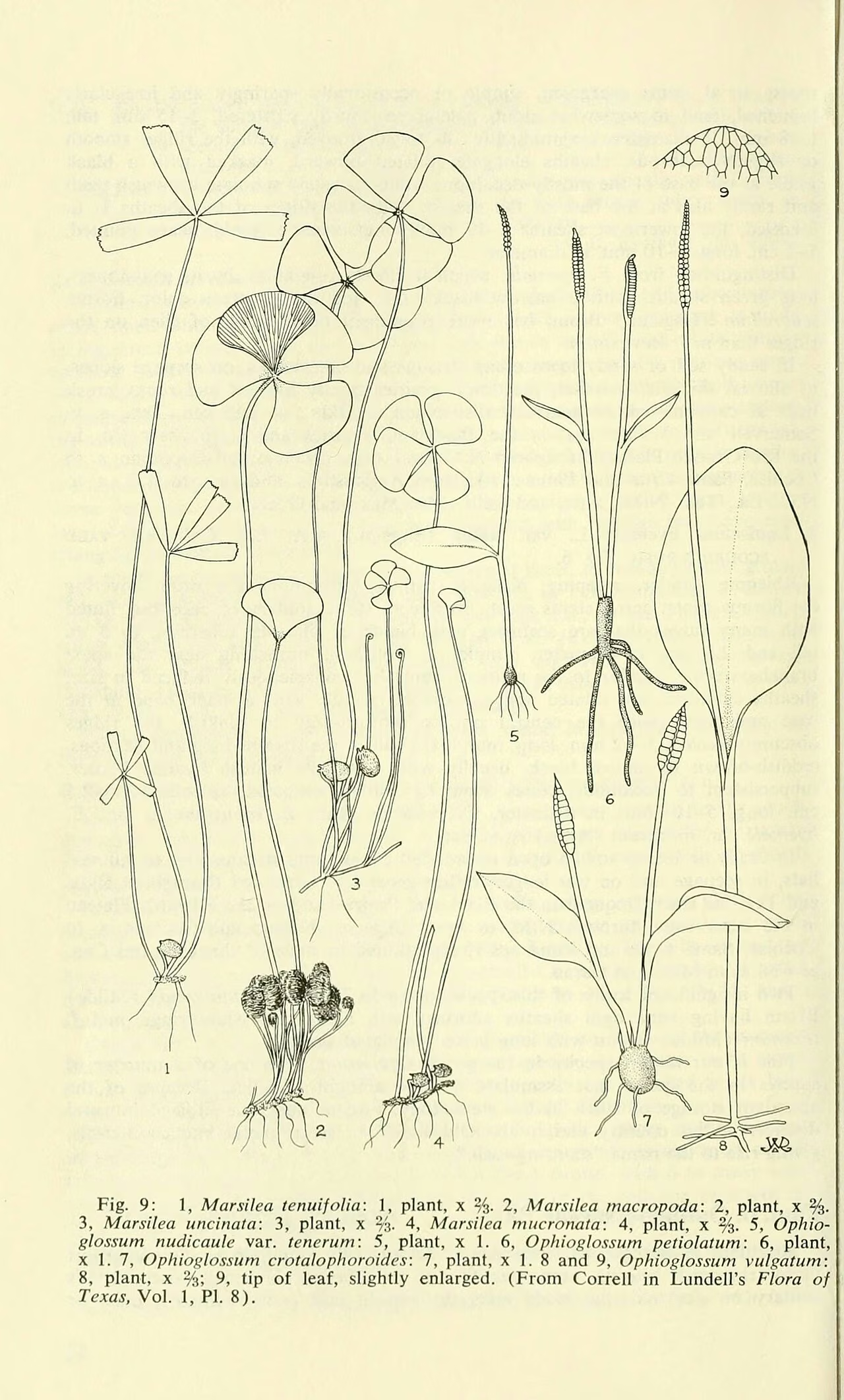
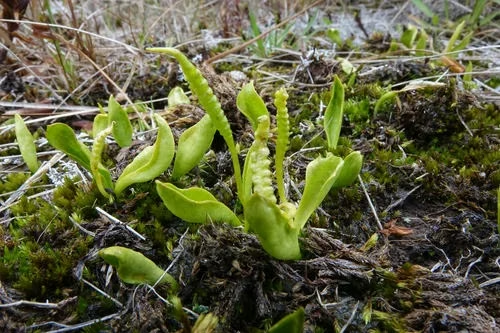
Stalked adder's tongue fern (Ophioglossum petiolatum) is a small, fleshy, seasonally dormant fern that looks nothing like a typical fern. Each plant sends up a single undivided, net-veined green blade on a stalk, with a slender fertile spike rising above it, the snake's tongue of its name. In New Zealand it is scattered through coastal and lowland damp places from Te Paki to Kāwhia, with old records from the South Island and the Chatham Islands. It appears in spring, dies down by autumn and is ranked Threatened - Nationally Vulnerable. Explore more native ferns in our native plant guide.
Plant Description
This is a fleshy perennial fern that grows from an erect underground rhizome wrapped in fleshy white to pale yellow sheaths, and can form extensive patches. Each frond has a sterile blade 15 to 150 mm long and 6 to 40 mm wide, yellow-green to dark green and broadly to narrowly ovate, with a clearly netted pattern of veins rather than the forked veins of most ferns.
Rising from the frond is a fertile spike 14 to 60 mm long on a stalk 40 to 200 mm long, carrying 15 to 48 pairs of sunken sporangia in two rows. In New Zealand it is most often seen between spring and late summer, and spores are produced from November to January.
The similar Ophioglossum coriaceum is smaller and its sterile blade lacks a stalk and is narrower. The stalked blade of Ophioglossum petiolatum, which gives the species its name, is the key feature to look for.
Quick Facts
| Scientific Name | Ophioglossum petiolatum |
|---|---|
| Height | 5-25 cm |
| Spread | Forms patches by spreading rhizomes |
| Water Needs | High; permanently moist ground |
| Light | Semi-shade to open sites with low competition |
| Frost Tolerance | Dormant underground in winter; frost hardiness not documented |
| Salt Tolerance | Some; grows on coastal lagoon margins |
| Growth Rate | Fast in the growing season |
| Lifespan | Perennial (summer-green, winter dormant) |
Climate Best Suited to
It suits warm-temperate, frost-light climates with moist summers, which matches its mainly northern North Island distribution in New Zealand and its tropical and subtropical range overseas.
Regional Suitability
| City | Climate Suitability |
|---|---|
| Auckland | High |
| Wellington | Medium |
| Christchurch | Low |
| Dunedin | Low |
Plant Habitat
In New Zealand it occurs on Manawatāwhi/Three Kings Islands (Great Island) and in scattered North Island populations from Te Paki south to Kāwhia and Arohaki Lagoon, with a population also recorded at Hōkio near Levin. It has not been recently recorded in the South Island, and it was last seen on the Chatham Islands in 2007. Overseas it is widespread in tropical and subtropical regions, including South America and Africa, and is naturalised in parts of the United States.
It is a plant of coastal and lowland habitats: ephemeral wetlands, moist talus, sandy margins of coastal lagoons, herbfields near lake margins, swamps and stream sides, and damp hollows in forest. It needs open ground with little competition from taller plants.
Growing Requirements
Soil Requirements
It grows in fertile, permanently moist soils, from sandy lagoon margins to damp forest hollows.
- Fertile, moisture-retentive soil
- Sandy or silty soils that stay damp
- Avoid soils that dry out in summer
Light Requirements
NZPCN advises semi-shade in cultivation. In the wild it also grows in open, low turf where taller plants are kept down.
- Semi-shade is ideal
- Open sites only where competition is low
- Avoid being overtopped by grasses
Water Requirements
Constant moisture during the growing season is essential, and it often grows where water lies seasonally.
- Keep permanently moist from spring to autumn
- Tolerates seasonal flooding of ephemeral wetlands
- Soil can be drier while the plant is dormant
Planting and Establishing
This is a plant for conservation collections and specialist growers rather than general gardens. If you have plants from a legitimate source, plant them in spring as they emerge, in a pot or bed of fertile, damp soil in semi-shade.
Mark the planting position, because the plant disappears in autumn and is easily dug up or smothered while dormant.
Ecological Role
Ophioglossum is an ancient lineage of ferns whose underground stages depend on fungal partners. Its spores are dispersed by wind, but NZPCN notes that most New Zealand plants investigated have proved sterile, so local populations probably spread mainly by their rhizomes.
It is a small component of ephemeral wetland and lagoon-margin turf communities, habitats rich in specialised small plants that are easily lost to weeds and drainage.
Uses & Significance
Garden Uses
It has little ornamental value, but it is an interesting plant for fern enthusiasts and for conservation planting. Overseas it is used in teaching because it grows quickly in cultivation.
- Pot culture in a damp, shaded fernery
- Conservation collections
- Teaching and botanical interest
Ecological Value
Its main value is as a threatened member of New Zealand's coastal and lowland wetland flora.
- Indicator of intact ephemeral wetland turf
- Part of lagoon-margin plant communities
- Genetic diversity at the southern edge of its range
Landscaping Uses
In a garden it is best kept in a labelled pot or a small dedicated patch, where it will not be overrun. It suits a shaded water garden edge with low mosses and small herbs.
Do not mix it with vigorous groundcovers or grasses; competition from taller plants is one of the main reasons it declines in the wild.
Seasonal Care Calendar
Spring
New fronds emerge from the dormant rhizome.
- Keep slug and snail bait or barriers in place
- Water as growth begins
Summer
Fronds are fully developed and fertile spikes appear, with spores produced from November to January.
- Keep soil moist
- Remove competing weeds by hand
Autumn
Fronds yellow and die down.
- Leave the dying fronds in place
- Mark the location
Winter
The plant is dormant underground.
- Avoid disturbing the soil
- Do not let the pot dry completely
When to Prune and How Much
No pruning is needed. The fronds die down naturally each autumn, and they can be left to wither in place.
The main maintenance task is keeping taller plants from shading and crowding the patch, by careful hand weeding rather than cutting.
How to Grow Stalked Adder's Tongue Fern
NZPCN states that stalked adder's tongue fern is easily grown by dividing whole plants, and that it does best in fertile, permanently moist soil in semi-shade. Spore propagation is not practical for New Zealand material, because most plants examined have proved sterile, so division is the realistic method. As this is a Nationally Vulnerable species, propagate only from cultivated stock or under a conservation programme with the necessary permissions.
By Division
Divide established clumps in spring as new growth appears, when the rhizomes and their sheaths are easy to see and the plant is ready to grow into new soil. Each division needs its own rhizome and roots.
- Lift the clump carefully with a good ball of soil
- Gently tease apart rhizomes that have their own roots
- Replant each piece at the same depth in fertile, moist mix
- Water in well and keep in semi-shade
- Protect from slugs and snails while new fronds develop
- Label pots, as the plants will vanish when they go dormant in autumn
From Spores
Adder's tongue ferns produce spores that need fungal partners to grow underground, and germination is slow and difficult even with fertile material. Because most New Zealand plants have proved sterile, spore raising is only worth attempting by specialists working with fertile, verified material.
- Confirm the fertile spike is producing viable spores
- Collect spikes as sporangia open in early summer
- Sow on sterile, damp medium in a sealed container
- Keep dark or dimly lit and be prepared to wait a long time
Pests & Diseases
NZPCN describes slug and snail damage as devastating; they eat the fleshy fronds as they emerge and can wipe out a plant's growth for the season. Use barriers or baits in cultivation.
In the wild, pigs rooting in damp ground also destroy plants, and vigorous exotic grasses and herbs can overwhelm populations.
Cultural Significance
No Māori name or traditional Māori use is recorded for this fern in the sources consulted.
Overseas, Ophioglossum petiolatum is valued as a teaching plant because it grows quickly and its leaf cells are unusually rich in chloroplasts. The genus is also well known to botanists for having some of the highest chromosome numbers of any plant.
Bonus Tip
If you are surveying a damp lagoon edge or ephemeral wetland for this fern, look in spring and early summer. By autumn the fronds have died back and the plant is effectively invisible, which is one reason populations are hard to monitor.
Related Plants
Explore other native plants that share similar characteristics or habitats with Stalked Adder's Tongue Fern (Ophioglossum petiolatum), offering further insights into New Zealand's diverse flora. These related species provide context and opportunities for complementary planting in your garden.
Plant Conservation
Stalked adder's tongue fern is ranked Threatened - Nationally Vulnerable (2023), with the qualifiers Recruitment Failure, Secure Overseas and Sparse. Regionally it is ranked Regionally Endangered in Northland and Regionally Vulnerable in Auckland.
Threats include habitat destruction, being overwhelmed by competing vegetation, invasion by exotic species, rooting by pigs and heavy slug and snail browsing. Because some populations, such as those at Opuatia and Hōkio, are sterile, they cannot recover by spores, so protecting existing patches and managing weeds is vital.
Frequently Asked Questions
Why is it called adder's tongue fern?
The name Ophioglossum comes from the Greek ophis, snake, and glossa, tongue, describing the narrow spore-bearing spike that rises from the leaf like a forked tongue.
Why can't I find stalked adder's tongue fern in winter?
It is seasonally dormant. Plants are most conspicuous between spring and late summer and die back to an underground rhizome in autumn and winter.
How do you tell Ophioglossum petiolatum from Ophioglossum coriaceum?
Ophioglossum petiolatum is larger, its sterile blade sits on a distinct stalk, and its fertile spike carries 15 to 48 pairs of sporangia. Ophioglossum coriaceum has a stalkless, narrower blade with only 7 to 15 pairs.
Is stalked adder's tongue fern endangered in New Zealand?
Yes. It is ranked Threatened - Nationally Vulnerable, with scattered small populations at risk from competing weeds, habitat loss, pigs, and slugs and snails.
Sources and Further Reading
The botanical, growing, and conservation details for Stalked Adder's Tongue Fern (Ophioglossum petiolatum) on this page draw on the New Zealand plant references below. Consult them for full technical records and the latest distribution data.