Thompson's Oxalis
Oxalis thompsoniae
Last updated:
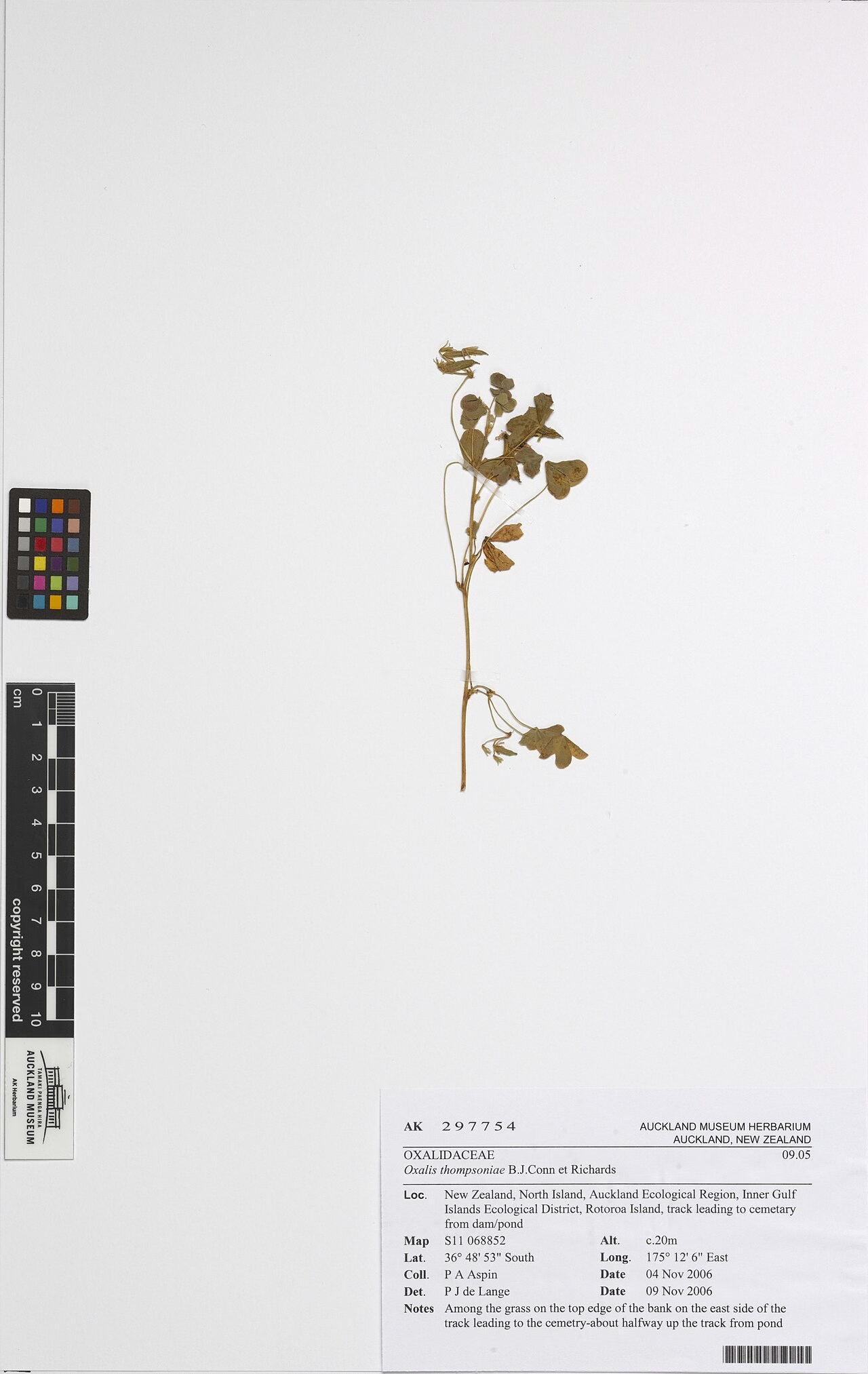
Thompson's oxalis (Oxalis thompsoniae) is a low, creeping native herb with greyish, hairy three-part leaves and small yellow flowers. Its prostrate stems reach up to 45 cm long, and it grows from the coast to montane areas in grassland, coastal shrubland, grey scrub, open forest sites and on cliff faces. It is found on the Kermadec Islands, the North and South Islands and the Chatham Islands, and also in Australia and New Guinea. A member of the Oxalis corniculata group, it was only described in 1994, and it is ranked At Risk - Naturally Uncommon. Explore more native ground covers in our native plant guide.
Plant Description
Oxalis thompsoniae has prostrate to sprawling stems up to 450 mm long, with sparse to moderate hairs. The leaves have three bilobed leaflets 3 to 16 mm long and 5 to 20 mm wide, with a greyish, glaucous appearance and fine hairs along the margins.
The yellow flowers are produced in clusters of one to six from the leaf axils. They are followed by cylindrical capsules 5 to 16 mm long, densely covered in downward-pointing hairs. NZPCN gives flowering from September to June and fruit for most of the year.
Distinguishing it from Oxalis corniculata, the cosmopolitan creeping oxalis weed, needs a close look: Oxalis thompsoniae has copious forward-pointing hairs, smaller rounded stipules, finely hairy, glaucescent leaves and seeds that are smooth or only shallowly ribbed.
Quick Facts
| Scientific Name | Oxalis thompsoniae |
|---|---|
| Height | Under 10 cm; stems prostrate to 45 cm long |
| Spread | Up to about 45 cm per plant |
| Water Needs | Low to moderate |
| Light | Full sun to light shade |
| Frost Tolerance | Light frosts; reaches montane areas |
| Salt Tolerance | Good; grows on coastal cliffs and coastal scrub |
| Growth Rate | Fast |
| Lifespan | Perennial |
Climate Best Suited to
It suits mild coastal and lowland climates, from the subtropical Kermadec Islands to the cool Chatham Islands, and is tolerant of wind and exposure.
Regional Suitability
| City | Climate Suitability |
|---|---|
| Auckland | High |
| Wellington | High |
| Christchurch | Medium |
| Dunedin | Medium |
Plant Habitat
Oxalis thompsoniae is indigenous to New Zealand, recorded from Raoul and Macauley Islands in the Kermadecs, the North and South Islands, and the Chatham Islands. It is also native to Australia and New Guinea.
It grows from the coast to montane zones in grassland, coastal shrubland, grey scrub and open sites in forest, and on cliff faces. It occasionally appears in urban lawns and waste areas, which can make its native status easy to overlook.
Growing Requirements
Soil Requirements
It grows in a range of open, well-drained soils, from thin soils on cliffs to grassland.
- Free-draining soils
- Copes with thin, rocky ground
- Moderate fertility is sufficient
Light Requirements
Its habitats are open and sunny, though it will also grow in light shade at forest edges.
- Full sun preferred
- Tolerates light shade
- Needs open ground free of tall vegetation
Water Requirements
As a plant of cliffs, grassland and coastal scrub, it tolerates drier conditions than many native herbs.
- Moderate watering once established
- Tolerates summer dryness on free-draining soils
- Avoid waterlogging
Planting and Establishing
There is little reason to plant it in ordinary gardens because of its tendency to spread. It is best reserved for coastal or grassland restoration where it is known to be part of the local flora.
If grown, plant it where its spread can be contained, such as a rock garden or pot.
Ecological Role
Its yellow flowers attract small insects such as flies and native bees. Like other members of the corniculata group, its capsules split explosively to scatter seed.
It occupies open, often disturbed sites such as cliff faces and grassland gaps, acting as an early coloniser of bare ground in coastal habitats.
Uses & Significance
Garden Uses
It has limited garden value because it can behave weedily, but it can be useful in specific settings.
- Coastal restoration plantings with local stock
- Contained rock gardens
- Botanical collections of native oxalis
Ecological Value
It is part of the native low herb flora of coastal and lowland open habitats.
- Covers bare ground on cliffs and banks
- Flowers over a very long season for small insects
- Represents a naturally uncommon native species
Landscaping Uses
In a native rock garden it can trail over stones in a sunny spot with other small coastal herbs. Its greyish leaves give a soft texture.
Avoid planting it near lawns or vegetable gardens, where its seed could spread it into unwanted places.
Seasonal Care Calendar
Spring
Flowering begins in September and stems lengthen.
- Remove unwanted seedlings
- Check plants are confined
Summer
Flowering and fruiting continue strongly.
- Trim back stems to limit spread
- Water only in prolonged drought
Autumn
Flowers persist into autumn, with capsules ripening.
- Collect seed if needed for restoration
- Pull out stray plants
Winter
Growth slows, though fruit may still be present.
- Little maintenance required
When to Prune and How Much
Trim back the creeping stems whenever they spread beyond their allotted space. Removing old flowering stems before capsules ripen will limit self-seeding.
No structural pruning is needed for this small herb.
How to Grow Thompson's Oxalis
NZPCN gives no detailed propagation method for Oxalis thompsoniae, but notes it tends towards weediness in cultivation, which indicates that it establishes and self-seeds readily. Seed and division of its creeping stems are both straightforward. Because of its weedy tendency, only propagate it for a clear purpose, such as restoring a coastal or grassland site where it naturally occurs, and keep the plants contained in the nursery.
From Seed
Seed is produced over much of the year in hairy, cylindrical capsules that burst when ripe. Enclosing the capsules before collection prevents losing the seed.
Sow only what you need, and dispose of surplus seed and seedlings in the rubbish rather than the compost, so the plant does not spread around the nursery or garden.
- Tie a small fine mesh bag over a cluster of ripening capsules
- Collect the released seed after a few days
- Sow thinly onto a free-draining seed mix
- Cover very lightly and keep just moist
- Prick out seedlings into individual pots
- Grow on in a sunny place until ready to plant
By Division
Stems lying along the ground may root where they touch moist soil. These rooted portions can be cut from the parent and potted.
- Find a stem section that has formed roots
- Cut it from the parent plant
- Pot into a gritty mix
- Water in and keep in light shade for a week
- Move into full sun once new growth starts
Pests & Diseases
No significant pests or diseases are recorded for this species. Snails and slugs may nibble young growth.
The main management issue in gardens is controlling its spread rather than protecting it.
Cultural Significance
No Māori name or traditional Māori use is recorded for Oxalis thompsoniae in the sources consulted.
B.J. Conn and P.G. Richards described it in 1994 as a new species of Oxalis section Corniculatae from Australasia. The Flora of New Zealand places it in the Oxalis corniculata group, a set of similar small yellow-flowered creepers that are notoriously hard to tell apart.
Bonus Tip
If you find a hairy, yellow-flowered oxalis on a coastal cliff, check the seeds with a hand lens before pulling it out: smooth or shallowly ribbed seeds suggest the native Oxalis thompsoniae, whereas strongly ribbed seeds point to the weedy Oxalis corniculata.
Related Plants
Explore other native plants that share similar characteristics or habitats with Thompson's Oxalis (Oxalis thompsoniae), offering further insights into New Zealand's diverse flora. These related species provide context and opportunities for complementary planting in your garden.
Stalked Adder's Tongue Fern
Ophioglossum petiolatum
Oreobolus strictus
Oreobolus strictus
Stylidium subulatum
Stylidium subulatum
White Oxalis
Oxalis magellanica
Mountain Tauhinu
Ozothamnus vauvilliersii
Hairless Cress
Pachycladon fastigiatum
Pachycladon latisiliquum
Pachycladon latisiliquum
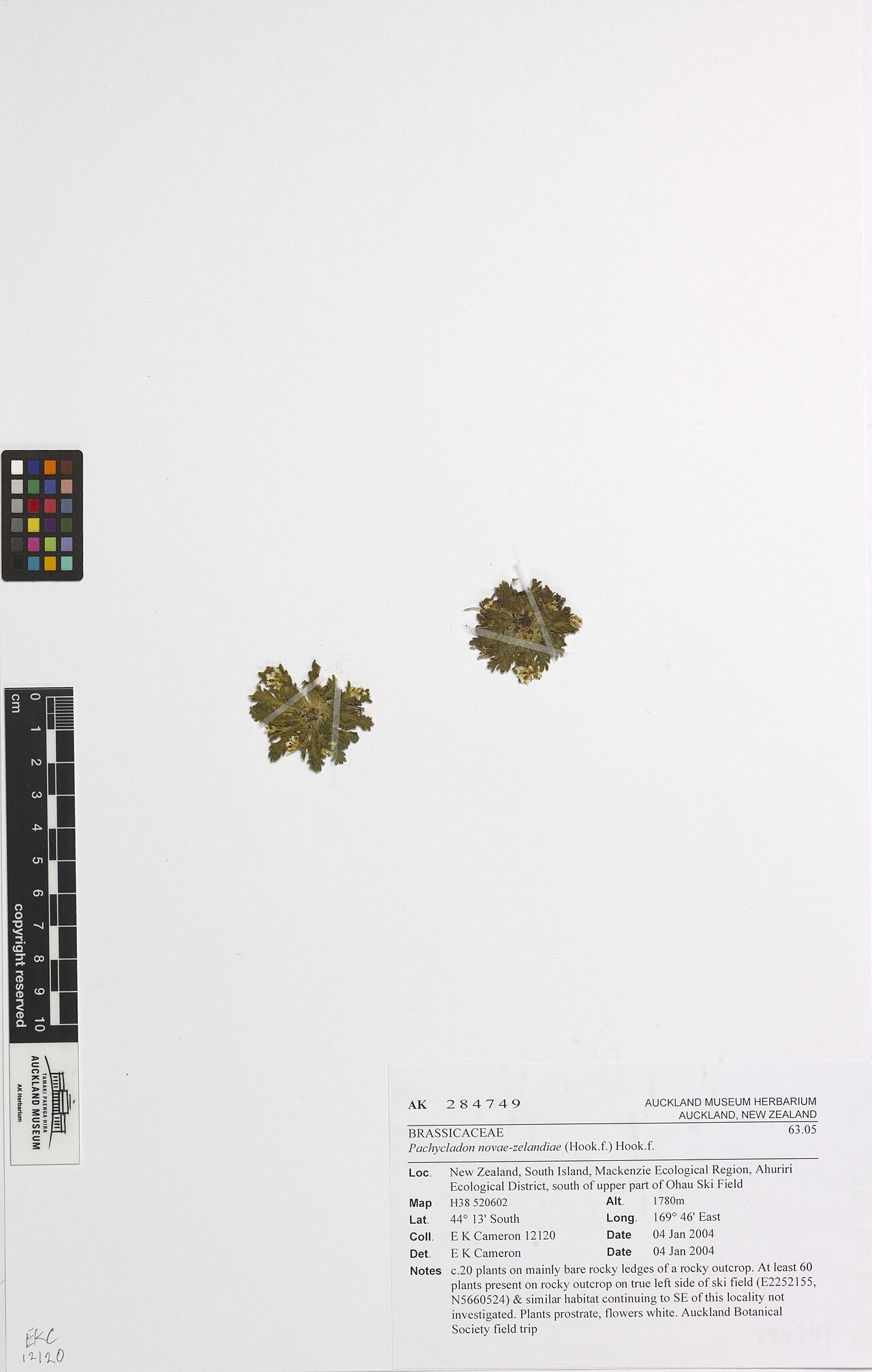
Pachycladon novae zelandiae
Pachycladon novae zelandiae
Plant Conservation
Oxalis thompsoniae is ranked At Risk - Naturally Uncommon (2023), with the qualifiers Sparse, Data Poor Size, Data Poor Trend and Secure Overseas. It was ranked Not Threatened in 2004 and 2009 before being reassessed. Regionally, it is listed as Regionally Endangered in Auckland and Data Deficient in Northland and Wellington.
Because it is easily confused with the common weedy Oxalis corniculata, its true distribution and abundance are poorly known. Better recording of correctly identified plants is the first step towards understanding its status.
Frequently Asked Questions
How do you tell Oxalis thompsoniae from Oxalis corniculata?
Oxalis thompsoniae has copious forward-pointing hairs, smaller rounded stipules, finely hairy greyish leaves and smooth or shallowly ribbed seeds, whereas the weedy Oxalis corniculata has distinctly ribbed seeds.
Is Thompson's oxalis a weed?
It is a native plant ranked At Risk - Naturally Uncommon, but NZPCN notes it can be weedy in cultivation and sometimes appears in lawns and waste ground, though it is less weedy than Oxalis corniculata.
Where is Oxalis thompsoniae found?
In New Zealand it grows on Raoul and Macauley Islands in the Kermadecs, the North and South Islands and the Chatham Islands. It also occurs naturally in Australia and New Guinea.
Sources and Further Reading
The botanical, growing, and conservation details for Thompson's Oxalis (Oxalis thompsoniae) on this page draw on the New Zealand plant references below. Consult them for full technical records and the latest distribution data.