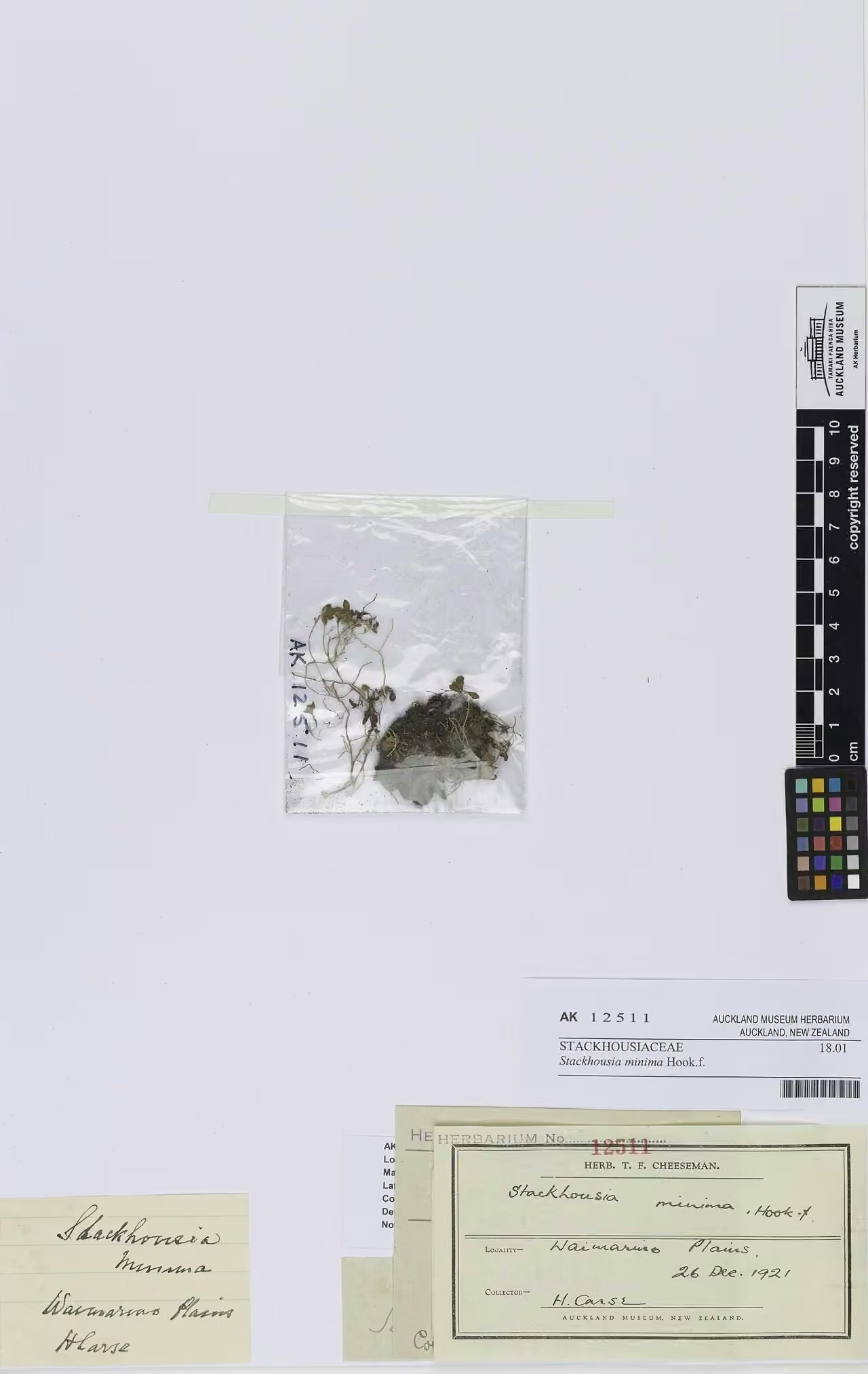
Stackhousia
Stackhousia minima
Last updated:
Stackhousia minima is a tiny, hairless perennial herb endemic to New Zealand and the only member of its genus here. From branching white, slightly succulent rhizomes it sends up close-set erect shoots no more than 5 cm tall, and these can knit into dense mats up to about 3 m across. In January and February it bears solitary, fragrant, yellowish flowers at the shoot tips. It grows in damp grassland, flushes, bogs and short turf from the central North Island southwards, from the lowlands into the montane zone. It is ranked Not Threatened nationally but is rather local and easily overlooked. Explore more native ground covers in our native plant guide.
Plant Description
Stackhousia minima is a small, slender, hairless herb. Beneath the surface it has branching white rhizomes that are slightly succulent, and from these arise close-set, erect branches up to 5 cm long. Where conditions suit it, the shoots grow so densely that they form mats up to about 3 m in diameter, although individual patches are often much smaller.
The leaves are fleshy and almost stalkless, mostly 4 to 15 mm long and 0.5 to 2 mm wide, varying from linear to narrowly obovate or spoon-shaped with a pointed to blunt tip. The flowers are borne singly at the ends of the shoots on very short stalks and are fragrant. The calyx is about 4 mm long and the yellowish petals about 7 mm long, joined around the middle (sometimes free) and ending in pointed, recurved teeth. The fruit splits into smooth rounded segments called cocci, usually two maturing per flower, each about 3 mm long and pale to dark brown or yellowish when ripe.
No other New Zealand plant is closely related, so the combination of a tiny fleshy-leaved herb with comparatively large, tubular, yellowish, scented flowers is distinctive. Out of flower it can be mistaken for small fleshy-leaved turf herbs, so look for the white rhizomes and the erect, unbranched shoot tips.
Quick Facts
| Scientific Name | Stackhousia minima |
|---|---|
| Height | Shoots up to 5 cm |
| Spread | Forms mats up to about 3 m across |
| Water Needs | Moist to wet; damp grassland, flushes and bogs |
| Light | Full sun in open turf and grassland |
| Frost Tolerance | High; reaches the montane zone |
| Salt Tolerance | No information available |
| Growth Rate | Slow, spreading by rhizomes |
| Lifespan | Perennial |
Climate Best Suited to
Suits cool temperate climates with reliable moisture, from lowland to montane elevations. It tolerates frost and the cold, dry winters of inland Otago and Canterbury, provided its ground stays damp.
Regional Suitability
| City | Climate Suitability |
|---|---|
| Auckland | Low |
| Wellington | Medium |
| Christchurch | Medium |
| Dunedin | Medium |
Plant Habitat
Stackhousia minima occurs in the North and South Islands from latitude 38 degrees southwards, so it is absent from Northland, Auckland and most of the Waikato. Its populations are scattered rather than continuous. Herbarium collections come from places such as the Craigieburn Range at Broken River, Mt Barker in Canterbury, and the base of the Hawkdun Range in Central Otago.
Its habitat is damp grassland, flushes and boggy places from the lowlands to the montane zone. Collectors have recorded it in open patches of low tussock grassland, in degraded and dry red tussock grassland, in short turf at the edge of a tarn, and as a common herb in turf in a clearing in low kānuka forest.
Growing Requirements
Soil Requirements
It grows in damp, often peaty or flushed soils in open turf, where competition from taller plants is low.
- Moist to wet ground in flushes and around tarns
- Low-fertility tussock grassland soils
- Short, open turf with little competition
Light Requirements
As a plant only a few centimetres tall, it needs open sites where taller grasses and shrubs do not shade it.
- Full sun in open turf
- Tolerates the light shade of a clearing edge
- Fails when overgrown by rank grass
Water Requirements
Damp ground is its normal habitat, and NZPCN rates it Facultative, meaning it grows both in wetlands and in drier sites.
- Keep the root zone consistently moist
- Some populations grow in drier tussock grassland, so brief dry spells are tolerated
Planting and Establishing
Stackhousia minima is not sold by nurseries and is rarely grown. It is best appreciated in the wild, and plants should not be dug from natural sites.
A grower who obtains legally sourced material could try it in a damp trough or the margin of a bog garden, in an open, sunny position with short, non-invasive companions so that the tiny shoots are not swamped.
Ecological Role
The fragrant, tubular flowers suggest pollination by insects, possibly night-flying moths given the scent, but the pollinators of the New Zealand species are not documented in the sources consulted.
By spreading through white rhizomes it can occupy patches of open turf several metres across, forming part of the low herb layer in damp montane grassland and around tarns along with other small turf species.
Uses & Significance
Garden Uses
It has very limited garden value because it is small, not commercially available and needs constant moisture.
- Specialist alpine or bog troughs
- Botanic garden displays of New Zealand turf plants
- Best enjoyed in the field in January and February
Ecological Value
It is part of the distinctive low turf flora of damp grassland and flushes, a habitat that has been reduced by drainage and pasture development.
- The only New Zealand member of a mainly Australian genus
- Contributes to the diversity of montane turf communities
- Indicator of intact damp grassland and flush habitat
Landscaping Uses
This species is not used in landscaping. In a naturalistic bog or trough planting its mats would sit at the very front, among other tiny turf plants, where the scented yellowish flowers can be seen up close.
For restoration of montane wetlands it is better to protect existing turf and its natural seed sources than to attempt planting.
Seasonal Care Calendar
Spring
New shoots arise from the white rhizomes as the ground warms.
- Keep competing grasses short around cultivated plants
- Check moisture levels
Summer
Flowering runs from January to February, with fragrant yellowish flowers at the shoot tips.
- Look for flowering mats in damp montane turf
- Fruits begin to form from December
Autumn
Fruits ripen through to March, each flower usually producing two smooth cocci.
- Collect seed from cultivated plants only
- Leave wild fruit undisturbed
Winter
Growth slows over the cold months; the sources consulted do not say whether the shoots die back fully, but the rhizomes persist.
- Mark the position of cultivated plants
- Avoid waterlogging in stagnant conditions
When to Prune and How Much
No pruning is needed. The shoots are small and the plant renews itself from its spreading rhizomes.
In cultivation, simply clear away taller weeds or grasses that start to shade the mat.
How to Grow Stackhousia
NZPCN gives no propagation information for Stackhousia minima and it is not grown commercially, so no tested method has been published. Its biology points to two approaches: seed, since each flower sets small cocci between December and March, and division of the white rhizomes, which is how the plant naturally spreads into mats. Either should be attempted only with material already in cultivation or collected with permission, never by digging up wild plants. Use a moist, gritty, low-fertility mix, keep the pots in an open, cool place, and expect slow establishment.
From Seed
Fruits mature from December to March and turn pale to dark brown or yellowish when ripe. Gather them as they colour, before the segments fall.
- Collect ripe cocci in late summer
- Sow fresh on the surface of a moist, gritty seed mix and lightly cover
- Stand the tray in a cool, bright spot outdoors and keep it damp
- Prick out seedlings once they have formed a few shoots
By Division of Rhizomes
Because the plant spreads by branching white rhizomes, a cultivated mat can be divided in spring, keeping several shoots attached to each rhizome piece. Dividing in spring gives each piece a full growing season to establish before winter.
- Lift a small section from the edge of a cultivated mat in spring
- Separate rhizome pieces that each carry shoots
- Replant at the same depth in damp, gritty mix
- Keep moist and shaded from hot sun until new growth appears
Pests & Diseases
No specific pests or diseases are recorded for this species in the sources consulted.
The main risks in the wild are habitat loss through drainage, pasture improvement and overgrowth by taller introduced grasses. In cultivation, slugs and snails could damage the small fleshy shoots.
Cultural Significance
No Māori name or traditional use is recorded for Stackhousia minima in the sources consulted.
The genus honours John Stackhouse, an English botanist, and the epithet minima means very small. Joseph Dalton Hooker described the species in 1852.
Bonus Tip
To find it, search damp montane turf and tarn margins in Canterbury or Otago in January, and use your nose as well as your eyes: the flowers are fragrant, and a patch of tiny fleshy shoots topped with comparatively large yellowish tubes is the giveaway.
Related Plants
Explore other native plants that share similar characteristics or habitats with Stackhousia (Stackhousia minima), offering further insights into New Zealand's diverse flora. These related species provide context and opportunities for complementary planting in your garden.
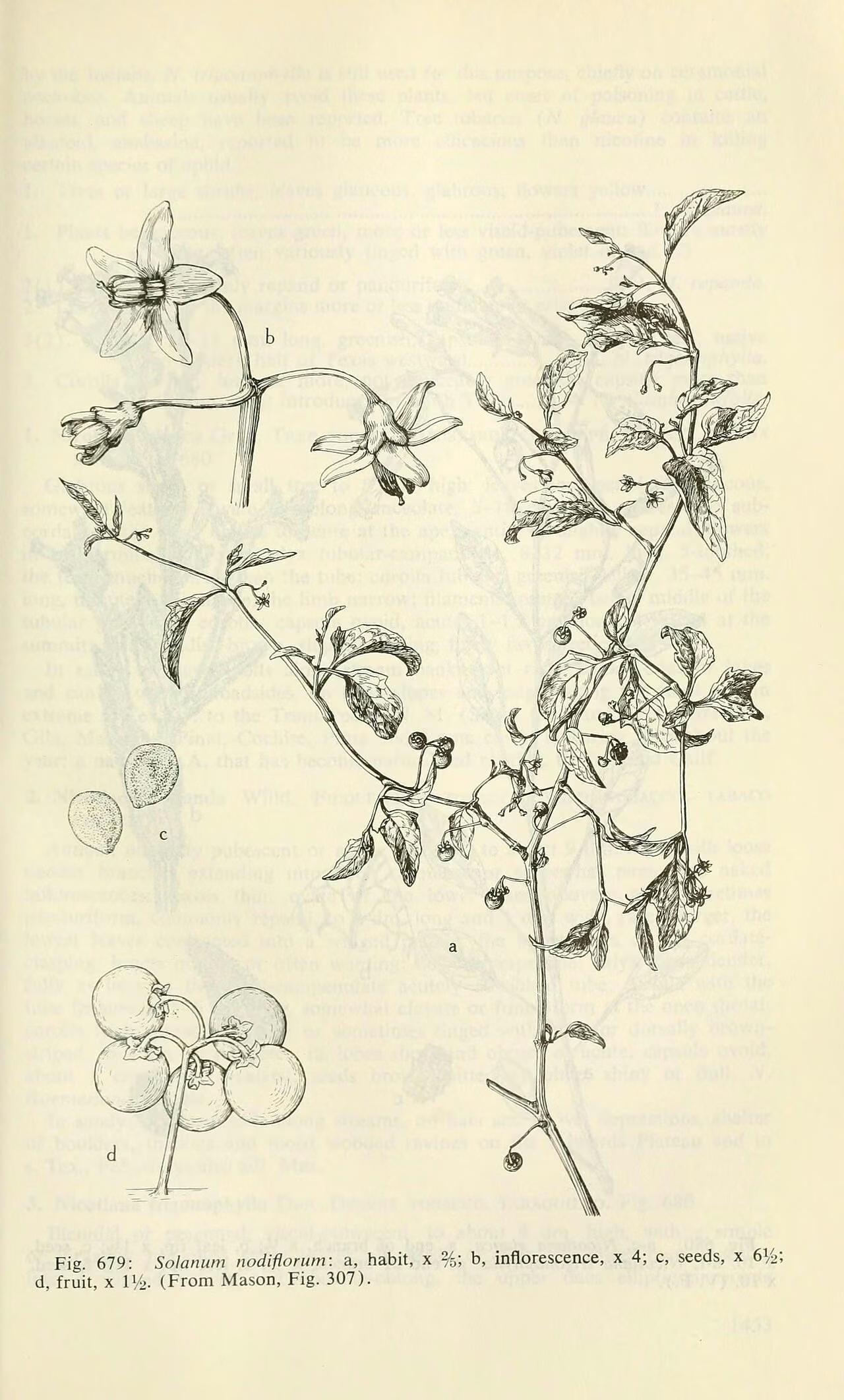
Small-Flowered Nightshade
Solanum americanum
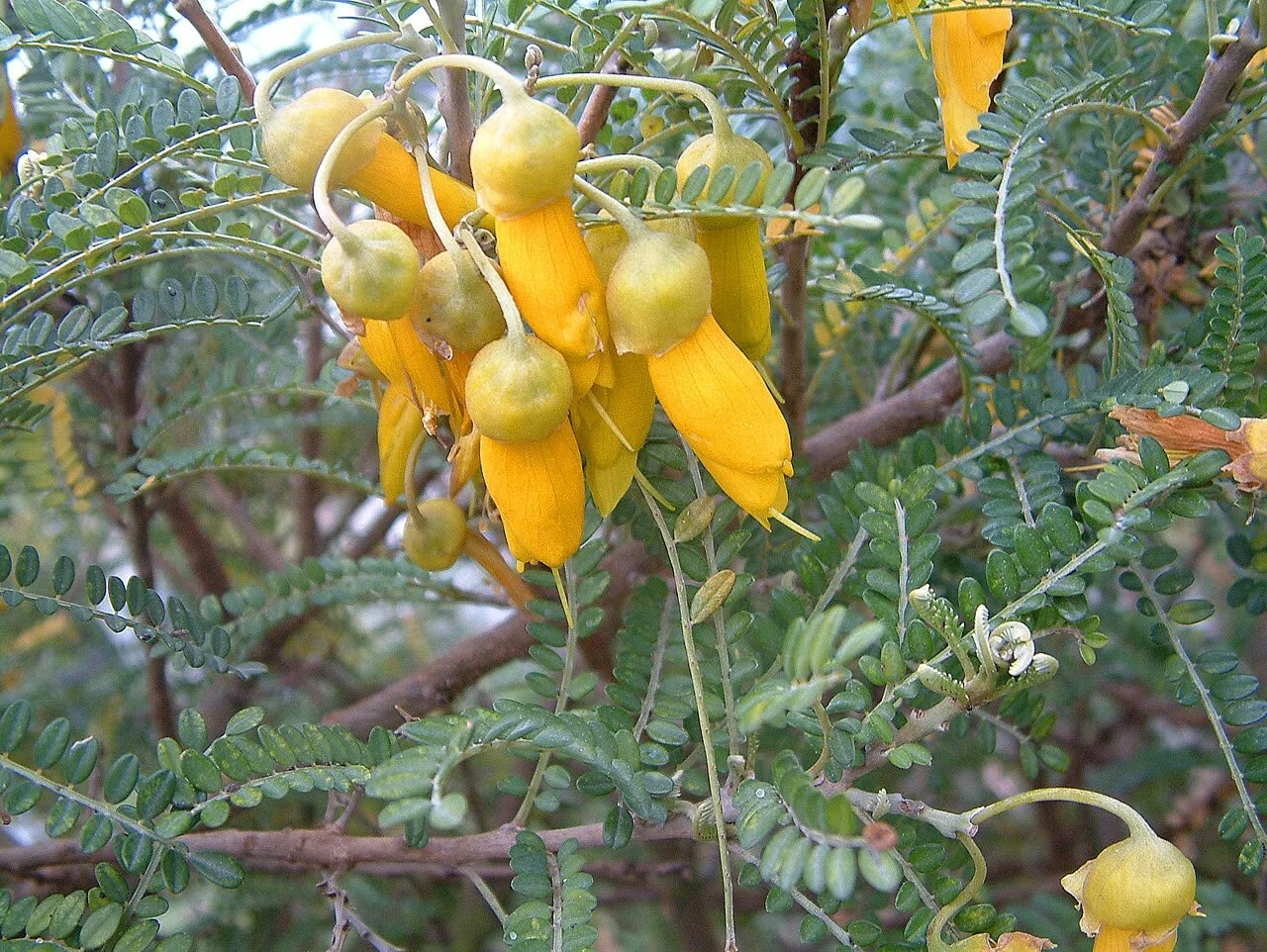
Cook Strait Kōwhai
Sophora molloyi
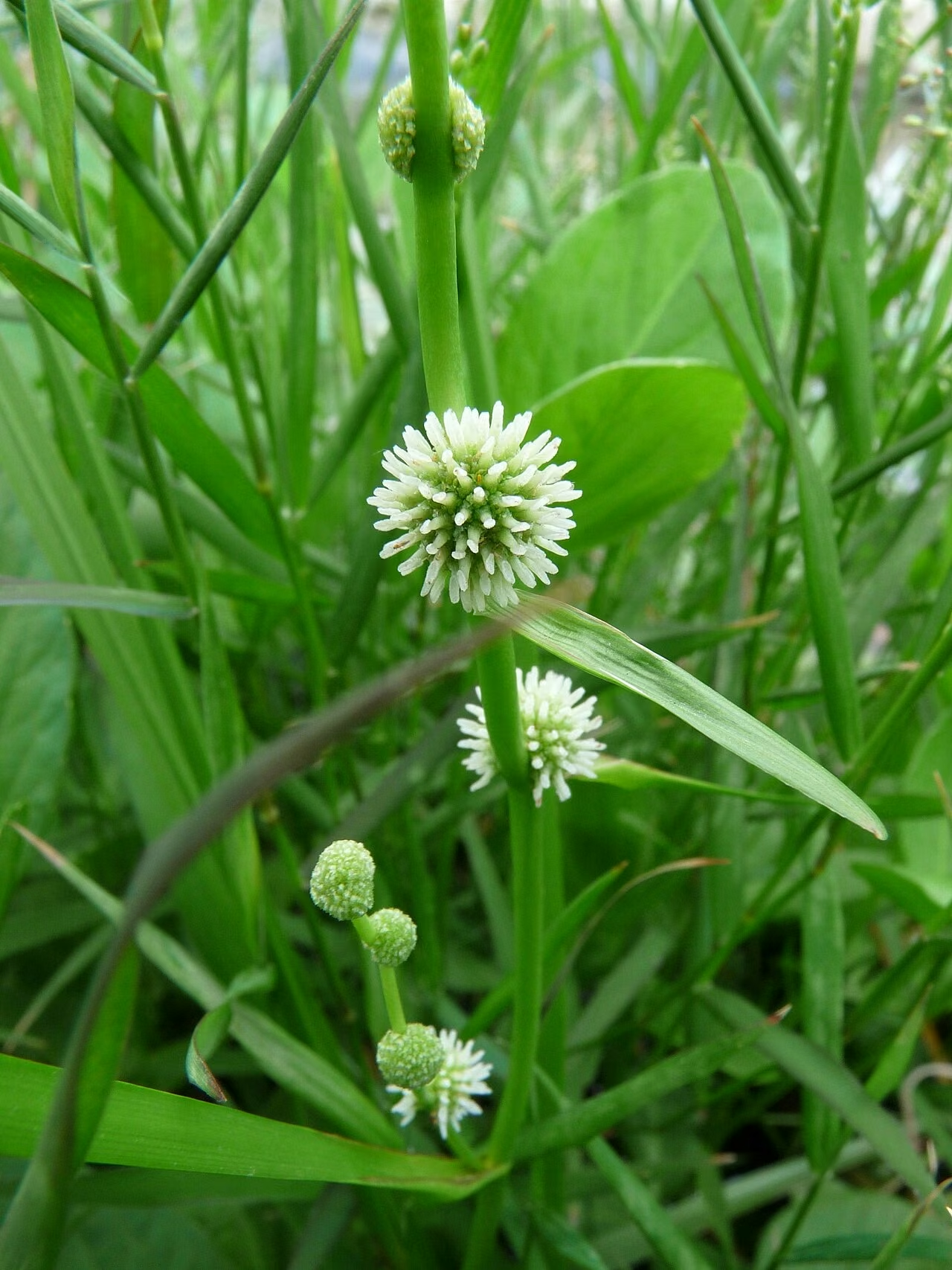
Sparganium subglobosum
Sparganium subglobosum

New Zealand Sea Spurrey
Spergularia tasmanica
Slender Chickweed
Stellaria gracilenta
Stenostachys gracilis
Stenostachys gracilis
Grassland Wheatgrass
Stenostachys laevis
Bidibid
Bidibid
Plant Conservation
Stackhousia minima has been ranked Not Threatened at every national assessment since 2004. Regionally, Otago (2025) ranks it At Risk - Regionally Naturally Uncommon, reflecting its scattered occurrence there.
Its damp grassland and flush habitats are vulnerable to drainage, cultivation, fertiliser and invasion by vigorous pasture grasses. Retaining wet hollows and short turf in tussock country helps this and many other small turf plants.
Frequently Asked Questions
What family does Stackhousia minima belong to?
It belongs to the Celastraceae, the staff-vine family. Stackhousia was formerly placed in its own family, Stackhousiaceae, and most of its species are Australian.
Where does Stackhousia minima grow in New Zealand?
It occurs in the North and South Islands from about latitude 38 degrees southwards, in damp grassland, flushes and boggy places from the lowlands to the montane zone, but its populations are scattered.
What do Stackhousia minima flowers look like?
The flowers are solitary at the tips of the short shoots, very shortly stalked and fragrant, with yellowish petals about 7 mm long that are joined in the middle and have small recurved pointed lobes.
Is Stackhousia minima rare?
Nationally it is ranked Not Threatened, but it is local in distribution and Otago ranks it Regionally At Risk - Regionally Naturally Uncommon.
Sources and Further Reading
The botanical, growing, and conservation details for Stackhousia (Stackhousia minima) on this page draw on the New Zealand plant references below. Consult them for full technical records and the latest distribution data.