Cook Strait Kōwhai
Sophora molloyi
Last updated:
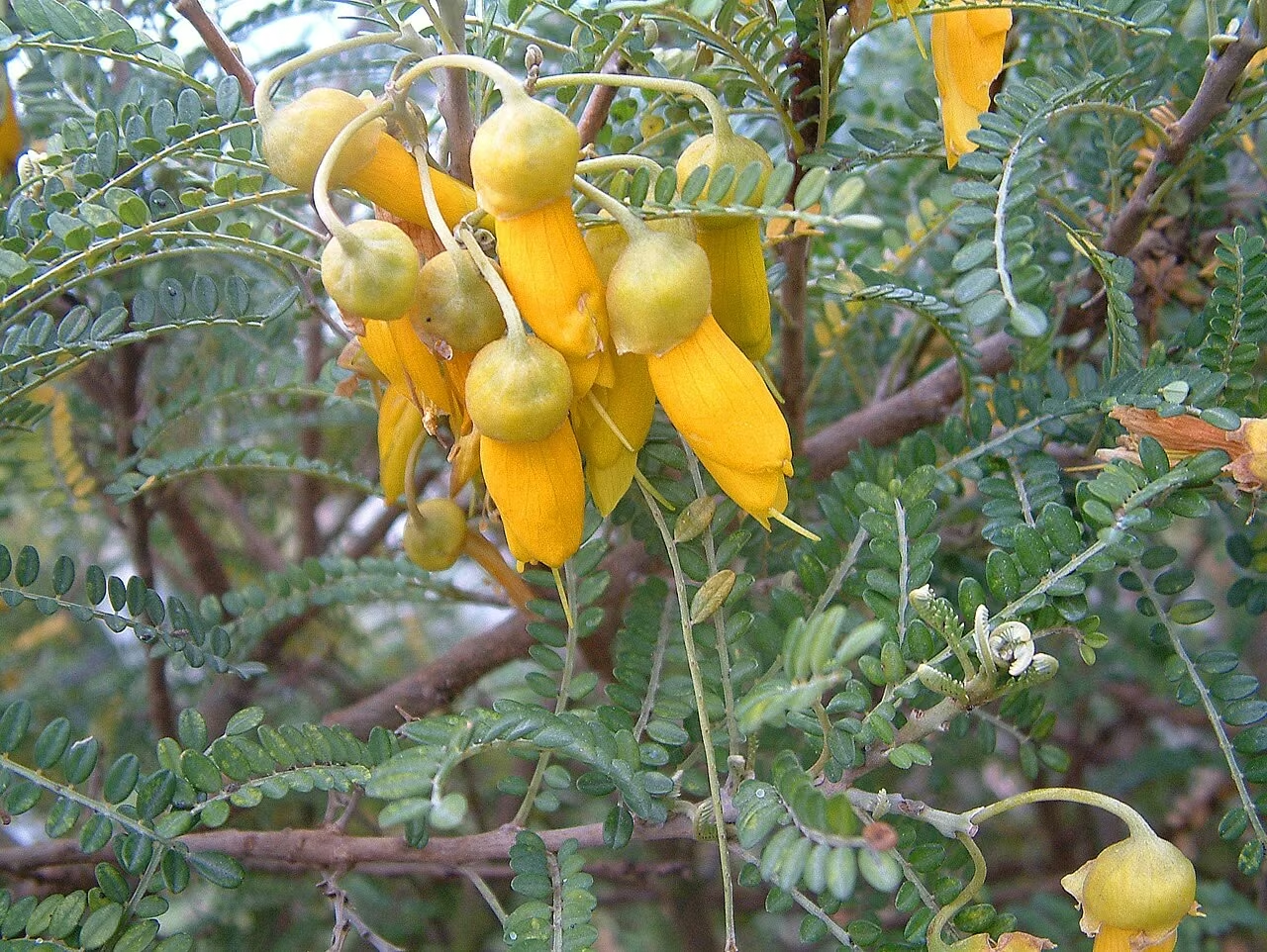
Cook Strait kōwhai (Sophora molloyi) is a bushy, spreading shrub up to 3 m tall, usually wider than high, with small leaflets and clusters of yellow flowers from April to October. It is endemic to the Cook Strait region, growing on Stephens, Kapiti, Arapawa and other islands and on the southern North Island headlands of Cape Terawhiti, Turakirae and Palliser Bay. Adapted to drought, salt and severe wind, it is one of the toughest kōwhai and makes an excellent winter-flowering shrub for exposed coastal gardens. It is ranked At Risk - Naturally Uncommon because of its small natural range. Explore more native shrubs in our native plant guide.
Plant Description
Sophora molloyi is a bushy, spreading to sprawling shrub up to 3 m tall, with several main branches arising at or near ground level, so plants are usually wider than they are high. Unlike some kōwhai it has no underground branches or rhizomes and keeps its leaves all year.
The leaves are up to 100 mm long and divided into 23 to 37 small leaflets, each 5 to 12 mm long and 2 to 6 mm wide, elliptic to broadly elliptic. The bright yellow flowers, about 3 cm long, are carried in racemes and are often partly hidden among the foliage. They are followed by brown, four-winged pods 50 to 100 mm long containing up to nine hard yellow seeds.
It differs from other kōwhai by its shrubby, spreading habit with branches from the base, the absence of rhizomes, its leaflet characters and its restriction to the Cook Strait area. Grown from seed it skips the tangled divaricating juvenile stage of species such as Sophora microphylla.
Quick Facts
| Scientific Name | Sophora molloyi |
|---|---|
| Height | Up to 3 m |
| Spread | Usually wider than tall, 2-4 m |
| Water Needs | Low; drought tolerant once established |
| Light | Full sun |
| Frost Tolerance | Moderate; light frosts |
| Salt Tolerance | High; tolerates salt burn and coastal wind |
| Growth Rate | Moderate |
| Lifespan | Long-lived perennial |
Climate Best Suited to
Suits windy, dry, salt-exposed coastal climates like those around Cook Strait. It handles drought and severe wind well and tolerates light frosts.
Regional Suitability
| City | Climate Suitability |
|---|---|
| Auckland | High |
| Wellington | High |
| Christchurch | Medium |
| Dunedin | Medium |
Plant Habitat
Cook Strait kōwhai is endemic to the Cook Strait region. In the North Island it grows on the headlands of Cape Terawhiti, Turakirae and Palliser Bay, and it occurs on Stephens, Rangitoto, Chetwode, Titi, Arapawa and Kapiti Islands.
It is coastal, from sea level to about 300 m. It grows in grey scrub on cliffs, talus slopes and active alluvial fans, and in extremely exposed places where drought, salt burn and severe wind damage limit what plants can survive.
Growing Requirements
Soil Requirements
In the wild it grows on thin, stony soils of cliffs, scree and fans. It is well suited to poor, free-draining ground.
- Free-draining, stony or sandy soil
- Tolerates low fertility
- Does well on dry banks
Light Requirements
It grows in open, exposed scrub and flowers best in full sun.
- Full sun
- Tolerates exposed, windy sites
Water Requirements
Adapted to drought on exposed coasts, it needs little water once established.
- Water during the first summer
- Avoid wet, poorly drained soils
Planting and Establishing
Plant in autumn or winter in a sunny, free-draining position. Its spreading habit needs room to develop, so allow at least 2 m of width. It is especially useful on difficult banks with poor soil, where Wikipedia notes 'Dragon's Gold' performs well.
On exposed coasts, plant small specimens, which establish better than large ones in windy sites. Mulch lightly and water through the first summer, then leave it largely alone.
Ecological Role
Kōwhai flowers are rich in nectar and are visited by nectar-feeding birds such as tūī and korimako (bellbird); flowering through winter makes this species a valuable food source when little else is in bloom. Kōwhai foliage is also eaten by the larvae of the kōwhai moth (Uresiphita polygonalis maorialis).
In the wild it is part of grey scrub communities on exposed coasts, where it helps stabilise scree, fans and cliffs. Its hard seeds can survive in the soil for long periods.
Uses & Significance
Garden Uses
One of the best kōwhai for small or exposed gardens, flowering in winter.
- Coastal and windy gardens
- Banks and poor soils
- Large containers
- Bird-attracting winter colour
Ecological Value
Its winter flowers provide nectar when few other plants flower.
- Winter nectar for tūī and bellbirds
- Host plant for the kōwhai moth caterpillar
- Stabilises exposed coastal slopes
Landscaping Uses
Use Cook Strait kōwhai as a spreading shrub on banks, in coastal shelter plantings or as a feature in a gravel or rock garden. Its compact, wide shape suits small gardens better than tree kōwhai, and it makes an excellent container plant.
Combine it with other tough coastal natives such as coastal flax, Coprosma and Muehlenbeckia. Plant where its winter flowers can be seen from a window.
Seasonal Care Calendar
Spring
Flowering finishes by October and new growth begins.
- Light trim after flowering if needed
- Watch for kōwhai moth caterpillars
Summer
Pods develop and plants handle dry conditions well.
- Water young plants in drought
- Collect ripening pods
Autumn
Flowering begins from April, earlier than most kōwhai.
- Plant new specimens
- Sow nicked seed
Winter
The main flowering season, with bright yellow flowers attracting birds.
- Enjoy bird visits
- Protect young plants from hard frost
When to Prune and How Much
Little pruning is needed. Trim lightly after flowering to shape or to keep plants compact, and remove any dead or crossing branches.
Avoid hard cutting into old wood. Because it branches from the base, it naturally keeps a dense, bushy shape without much intervention.
How to Grow Cook Strait Kōwhai
Cook Strait kōwhai is easy to grow from seed, as long as the hard seed coat is treated first. NZPCN advises lightly nicking or sanding the seed and soaking it overnight in water before sowing. Named cultivars such as 'Dragon's Gold' should be propagated vegetatively to keep their characteristics, since seedlings will vary. For restoration within its natural range, use seed collected locally rather than garden cultivars.
From Seed
Pods ripen over a long period. Collect brown, dry pods and extract the hard yellow seeds. Untreated seed may take a long time to germinate, so scarification is important.
Seedlings grow steadily and, unlike many kōwhai, do not go through a divaricating juvenile phase.
- Collect ripe brown pods and remove the seeds
- Lightly nick or sand the seed coat
- Soak the seeds overnight in water until they swell
- Sow in a free-draining seed mix about 5 mm deep
- Pot on seedlings and plant out after a year
From Cuttings
Cultivars like 'Dragon's Gold' are propagated from cuttings to keep them true to type. Semi-hardwood cuttings are the usual method for kōwhai, though rooting can be slow.
Not every cutting will strike, so take more than you need. Once rooted, pot the cuttings on into a free-draining mix and grow them in a sunny spot for a season before planting out.
- Take semi-hardwood cuttings in late summer or autumn
- Dip in rooting hormone
- Insert in a free-draining mix with bottom heat
- Keep humid until rooted
Pests & Diseases
The main pest is the kōwhai moth caterpillar, which can strip foliage in summer. Plants usually recover, but heavy infestations can be removed by hand.
In the wild, browsing goats threaten some North Island populations. In gardens, poor drainage is more likely to cause problems than pests.
Cultural Significance
Kōwhai is the Māori name for the genus Sophora in New Zealand, and kōwhai flowers are a well-known seasonal marker in Māori tradition. No traditional uses specific to Sophora molloyi are recorded, as it was only recognised as a separate species in 2001.
The species honours Brian Molloy, a New Zealand botanist and conservationist. The cultivar 'Dragon's Gold' takes its name from the tuatara of Stephens Island.
Bonus Tip
For winter colour in a small, windy garden, choose Cook Strait kōwhai over tree kōwhai: it stays bushy and wide rather than tall, keeps its leaves all year, and starts flowering in autumn when other kōwhai are still months away.
Related Plants
Explore other native plants that share similar characteristics or habitats with Cook Strait Kōwhai (Sophora molloyi), offering further insights into New Zealand's diverse flora. These related species provide context and opportunities for complementary planting in your garden.
Guano Groundsel
Senecio sterquilinus
Simplicia buchananii
Simplicia buchananii
Simplicia laxa
Simplicia laxa
Small-Flowered Nightshade
Solanum americanum
Sparganium subglobosum
Sparganium subglobosum
New Zealand Sea Spurrey
Spergularia tasmanica
Stackhousia minima
Stackhousia minima
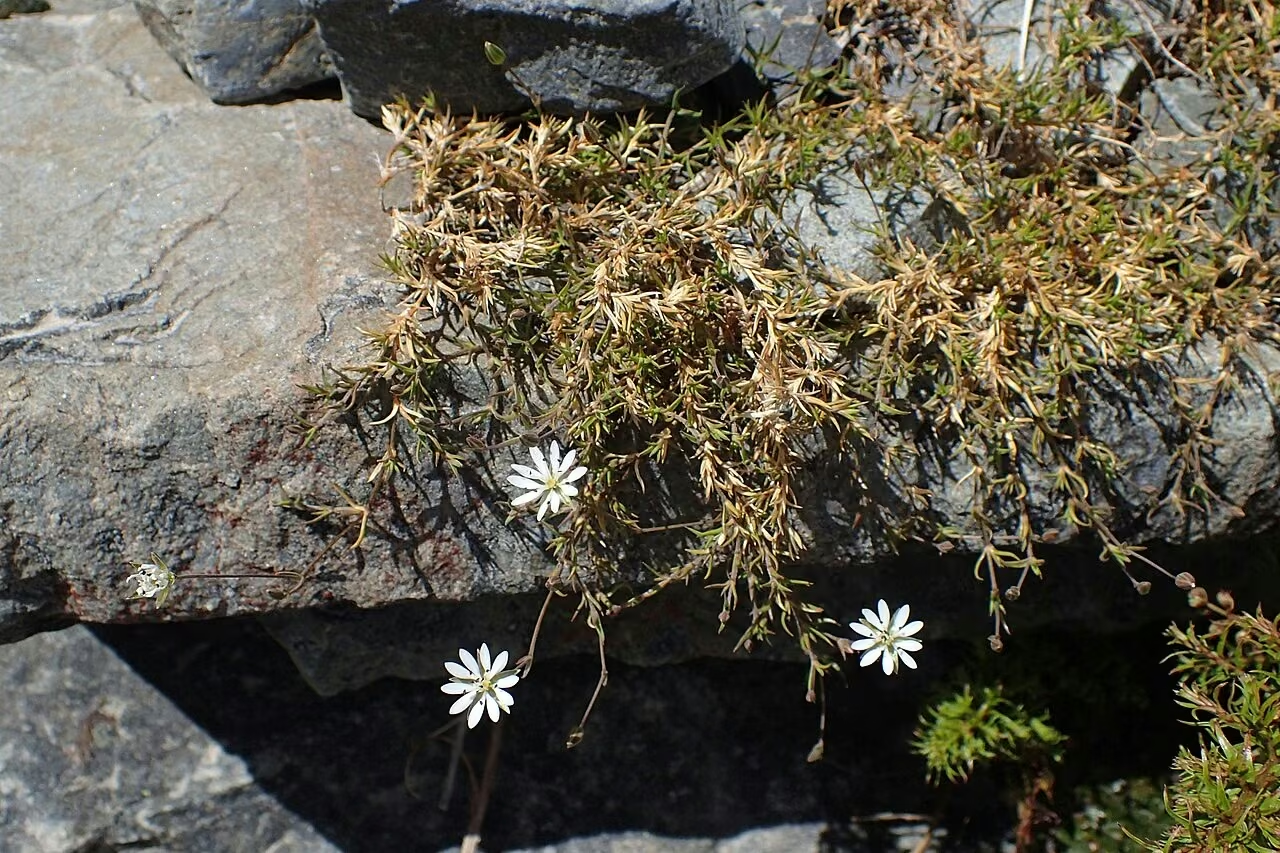
Slender Chickweed
Stellaria gracilenta
Plant Conservation
Sophora molloyi is ranked At Risk - Naturally Uncommon (2023) with qualifiers RR (range restricted) and Sp (sparse), and is Regionally Naturally Uncommon in Wellington. It is secure on its island habitats.
Some North Island populations may be threatened by browsing animals such as goats. Goat control on headlands and protection of island populations help keep it secure.
Frequently Asked Questions
When does Cook Strait kōwhai flower?
NZPCN records flowering from April to October, so it flowers through winter, earlier than most other kōwhai, when few other shrubs are in bloom.
How big does Sophora molloyi grow?
It is a bushy, spreading shrub up to about 3 m tall and usually wider than high. The popular cultivar 'Dragon's Gold' reaches about 2 m in ten years.
What is Sophora molloyi 'Dragon's Gold'?
It is a cultivar selected by Terry Hatch of Joy Plants from Stephens Island material. The name refers to the many tuatara on the island, likened to an isle of dragons.
Does Cook Strait kōwhai lose its leaves?
Wikipedia notes that it keeps its leaves all year and lacks the divaricating juvenile stage seen in some other kōwhai when grown from seed.
Sources and Further Reading
The botanical, growing, and conservation details for Cook Strait Kōwhai (Sophora molloyi) on this page draw on the New Zealand plant references below. Consult them for full technical records and the latest distribution data.