Stenostachys
Stenostachys gracilis
Last updated:
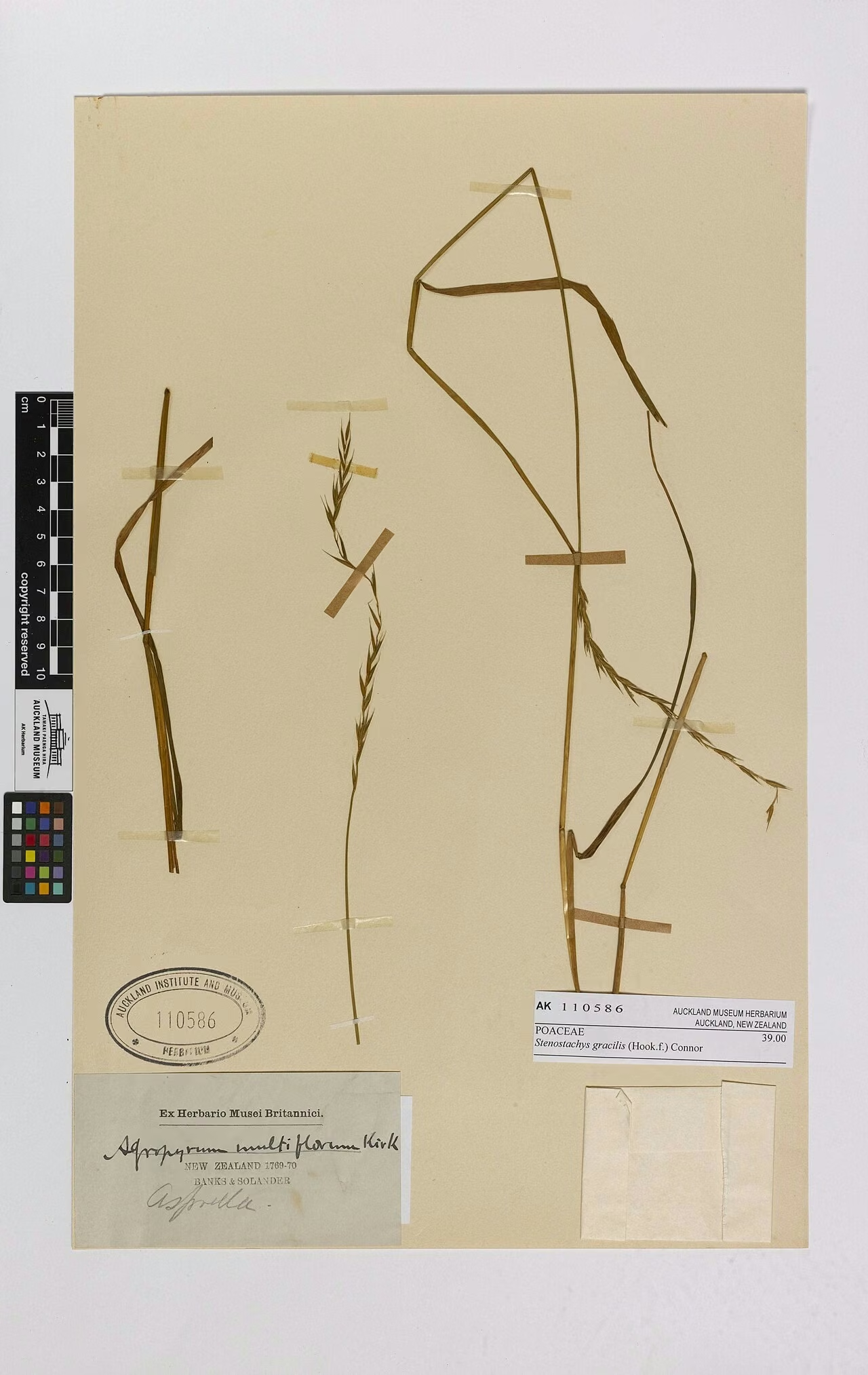
Stenostachys gracilis is a slender, stoloniferous grass endemic to New Zealand and belongs to a genus found nowhere else. It forms open to dense patches of thin, flat leaves 10 to 20 cm long, from which arch culms 0.7 to 1.2 m long ending in narrow, nodding flower spikes of 15 to 40 spikelets. It grows in damp, semi-shaded places from the coast to about 1000 m: gully heads, clay banks and stream sides in tall forest, shrubland and estuary margins. It is common in the south but uncommon north of the Central Volcanic Plateau, and it is easily grown from fresh seed for shady native gardens. Explore more native grasses and flaxes in our native plant guide.
Plant Description
Stenostachys gracilis is a perennial grass that spreads by stolons, forming open to densely tufted patches of fairly wide, flat leaves, with long nodding flower heads. The leaf sheaths are 50 to 150 mm long and carry long hairs. The ligule is short, 0.3 to 1 mm. The leaf blades are flat and thin, 100 to 200 mm long and 1.5 to 2 mm wide.
The culms are slender, 0.7 to 1.2 m long, with visible nodes, and end in a slender spike-like inflorescence 100 to 300 mm long bearing 15 to 40 spikelets. The glumes are minute, absent or awn-like, up to about 3 mm. The lemma is 7 to 10 mm long and covered in abundant prickle-teeth, and the palea 5 to 7 mm. Most flowers are cleistogamous, meaning they self-pollinate without opening, and the seed is about 4 mm long.
Three species of Stenostachys occur in New Zealand. S. gracilis is separated from S. laevis and S. deceptorix by its mix of minute, absent or awn-like glumes and its lemma characters. In forest it is often quite stout, and its long, drooping, narrow seed heads are the best field character.
Quick Facts
| Scientific Name | Stenostachys gracilis |
|---|---|
| Height | 0.7-1.2 m in flower |
| Spread | Spreading patches via stolons |
| Water Needs | Moist; damp soil preferred |
| Light | Semi-shade to shade |
| Frost Tolerance | Moderate to high; reaches the montane zone |
| Salt Tolerance | Some tolerance; occurs in estuarine habitats |
| Growth Rate | Moderate |
| Lifespan | Perennial |
Climate Best Suited to
Suits mild to cool, humid climates under a forest or shrub canopy. It is widespread in the cooler south and becomes uncommon in the warm north.
Regional Suitability
| City | Climate Suitability |
|---|---|
| Auckland | Low |
| Wellington | High |
| Christchurch | High |
| Dunedin | High |
Plant Habitat
Stenostachys gracilis is endemic to the North, South and Stewart Islands. It is uncommon north of the Central Volcanic Plateau and scarce north of the Bay of Plenty and Waikato. Northland ranks it Regionally Extirpated, and Auckland, Wellington and Otago each rank it Regionally Data Deficient.
It ranges from the coast to the montane zone, 0 to 1000 m. Typical sites are gully and valley heads, clay banks and stream sides in tall forest, and it also grows in shrubland, in estuarine habitats and occasionally in tussock grassland.
Growing Requirements
Soil Requirements
It favours damp, reasonably fertile soils, including clay banks and stream-side alluvium under forest.
- Moist forest soils and leaf litter
- Clay banks and gully heads
- Stream-side and estuarine margins
Light Requirements
It is mainly a forest grass and NZPCN advises a semi-shaded site in cultivation.
- Semi-shade or dappled light
- Tolerates the deeper shade of forest margins
- Avoid hot, exposed sites
Water Requirements
It needs damp soil, reflecting its stream-side and gully habitats.
- Keep the soil moist through summer
- Mulch to hold moisture in drier gardens
Planting and Establishing
Plant in damp, semi-shaded ground such as under existing trees, beside a stream or on a shaded bank. Set plants about 40 to 50 cm apart and let the stolons fill in between them.
It suits restoration plantings once a canopy has formed, where it can colonise the forest floor and banks along with ferns and other shade-tolerant natives.
Ecological Role
Because most of its flowers are cleistogamous, Stenostachys gracilis largely self-pollinates without needing to open its flowers to wind or insects. How its seed is dispersed is not documented in the sources consulted, though the seed heads droop close to the ground and the plant also spreads vegetatively by rooting stolons.
As a ground-layer grass of forest and shrubland, it helps bind soil on clay banks and stream sides. Its northern decline and loss from Northland suggest it is sensitive to habitat modification in warmer lowland areas, though the causes are not documented.
Uses & Significance
Garden Uses
It is a useful fine-textured grass for shaded native gardens where few native grasses thrive.
- Ground cover under trees
- Shaded banks and gully plantings
- Stream-side restoration within its natural range
Ecological Value
It belongs to an endemic genus and is a characteristic grass of moist forest floors and banks in southern New Zealand.
- Member of an endemic New Zealand genus
- Stabilises soil on clay banks and stream edges
- Adds to native grass diversity in forest understoreys
Landscaping Uses
Use it in drifts under a light canopy, where the arching culms and nodding narrow seed heads create a soft, woodland look. It combines well with low ferns such as Blechnum species and with shade-tolerant sedges.
Its stoloniferous habit makes it a good filler on shaded slopes, but give it space as it spreads into patches.
Seasonal Care Calendar
Spring
Flowering begins in September and continues through to January.
- Plant out new divisions
- Keep soil moist as growth accelerates
Summer
Seed starts ripening from November, with nodding heads on long culms.
- Collect fresh seed as heads ripen
- Water in dry spells
Autumn
Fruiting continues until May, and the patches keep spreading.
- Sow fresh seed
- Cut back old culms if untidy
Winter
Growth slows over the cooler months.
- Lift and divide congested patches in late winter
- Clear smothering leaf fall if needed
When to Prune and How Much
No regular pruning is needed. Old flowering culms can be cut back after seed fall to tidy the planting.
If patches spread too far, trim stolons at the edges or lift and replant the excess.
How to Grow Stenostachys
NZPCN states that Stenostachys gracilis is easily grown from fresh seed and rooted pieces, and prefers a semi-shaded site in damp soil. Because most of its flowers are cleistogamous, seed set is usually reliable, and the stolons that root along the ground provide plenty of material for division. Fruiting runs from November to May, giving a long window for seed collection. Collect seed or pieces only from cultivated plants or with permission, and keep provenance local when the plants are destined for restoration projects, especially in the north where the species is scarce.
From Seed
Fresh seed germinates best, so sow soon after collection rather than storing it.
- Collect seed heads as they ripen and begin to dry, between November and May
- Rub out the seeds and sow on a moist seed-raising mix
- Cover lightly and keep damp in a shaded spot
- Pot on seedlings when they are a few centimetres tall
- Plant out after one season into semi-shade
By Division of Rooted Pieces
The stolons root and shoot at their nodes, so small rooted sections can be detached with little harm to the parent patch. Late winter or early spring is a good time, as the pieces then have the growing season ahead of them to establish.
- Choose stolon sections that have already rooted
- Cut them free with a few leaves attached
- Pot into a moist, free-draining mix or replant directly
- Keep shaded and watered until new growth appears
Pests & Diseases
No specific pests or diseases are recorded for this species in the sources consulted.
In the wild, grazing animals and the invasion of forest margins by exotic grasses and weeds are likely to reduce its habitat, and stock trampling damages the stream sides and banks where it grows.
Cultural Significance
No Māori name or traditional use is recorded for Stenostachys gracilis in the sources consulted.
The species was first described by Joseph Dalton Hooker as Gymnostichum gracile and has since been placed in Hystrix, Asprella, Cockaynea and Elymus before Henry Connor placed it in the endemic genus Stenostachys. The epithet gracilis means slender.
Bonus Tip
If you are restoring a shady gully in the south, look for this grass already growing on nearby clay banks: a few rooted stolon pieces from a cultivated or permitted source will establish quickly and give a native ground layer where most native grasses struggle in shade.
Related Plants
Explore other native plants that share similar characteristics or habitats with Stenostachys (Stenostachys gracilis), offering further insights into New Zealand's diverse flora. These related species provide context and opportunities for complementary planting in your garden.
Sparganium subglobosum
Sparganium subglobosum

New Zealand Sea Spurrey
Spergularia tasmanica
Stackhousia minima
Stackhousia minima
Slender Chickweed
Stellaria gracilenta
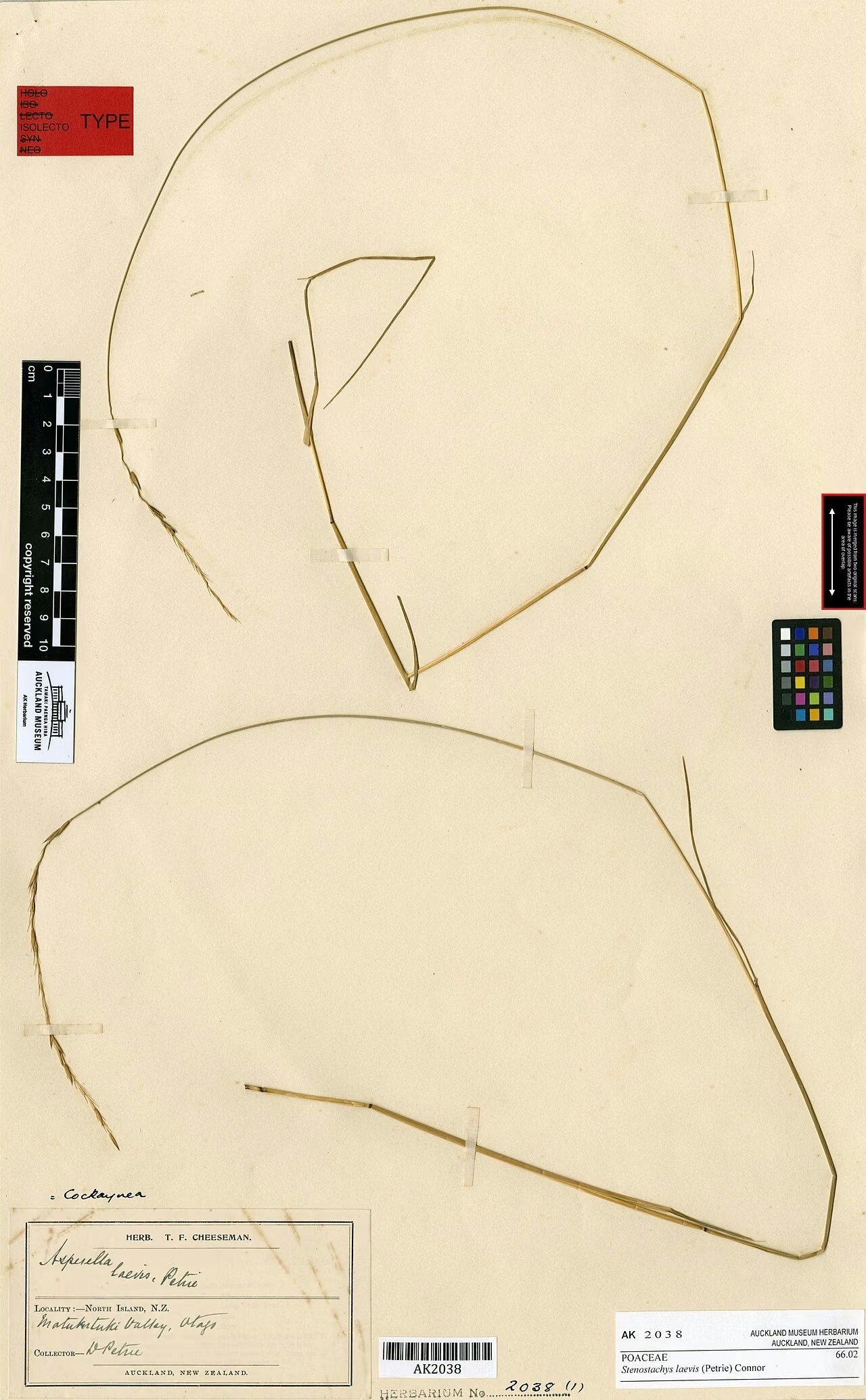
Grassland Wheatgrass
Stenostachys laevis
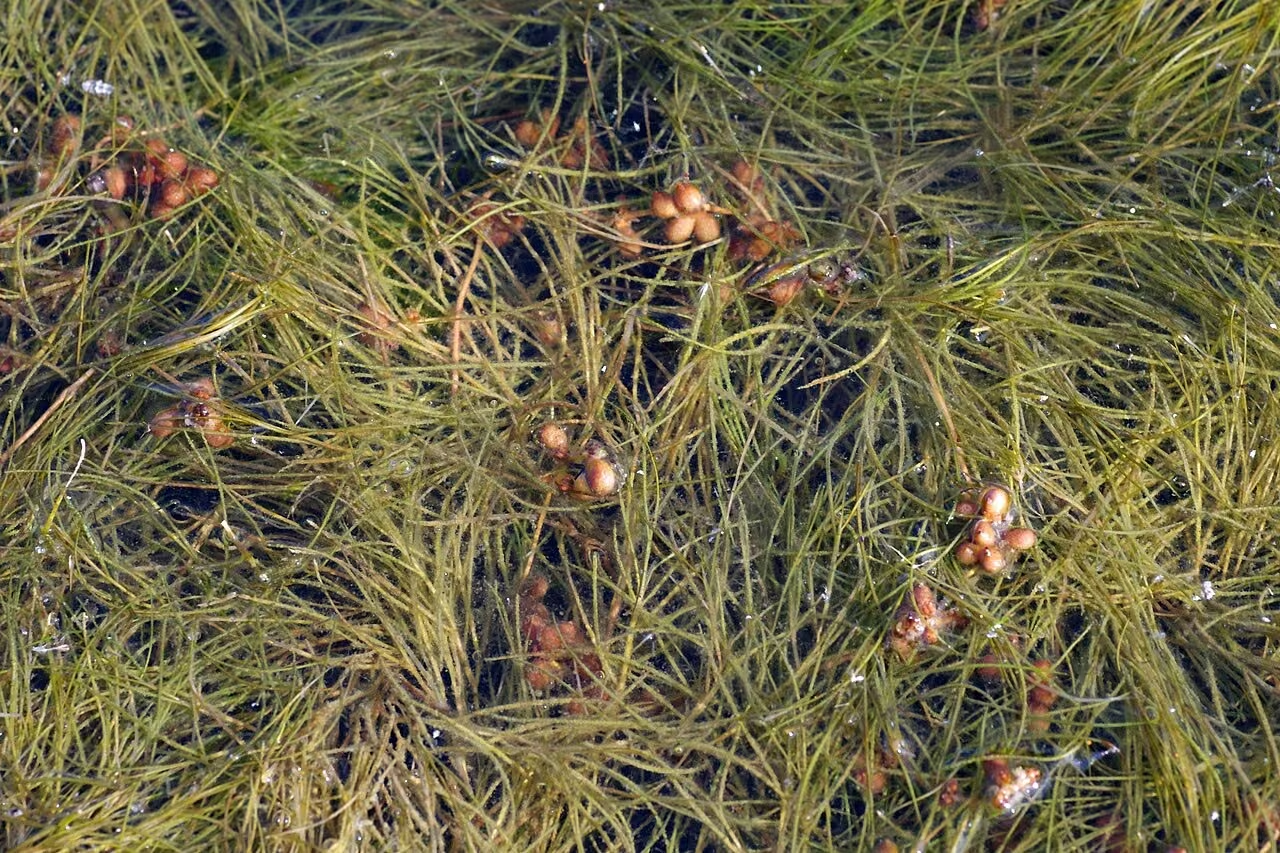
Fennel-Leaved Pondweed
Stuckenia pectinata
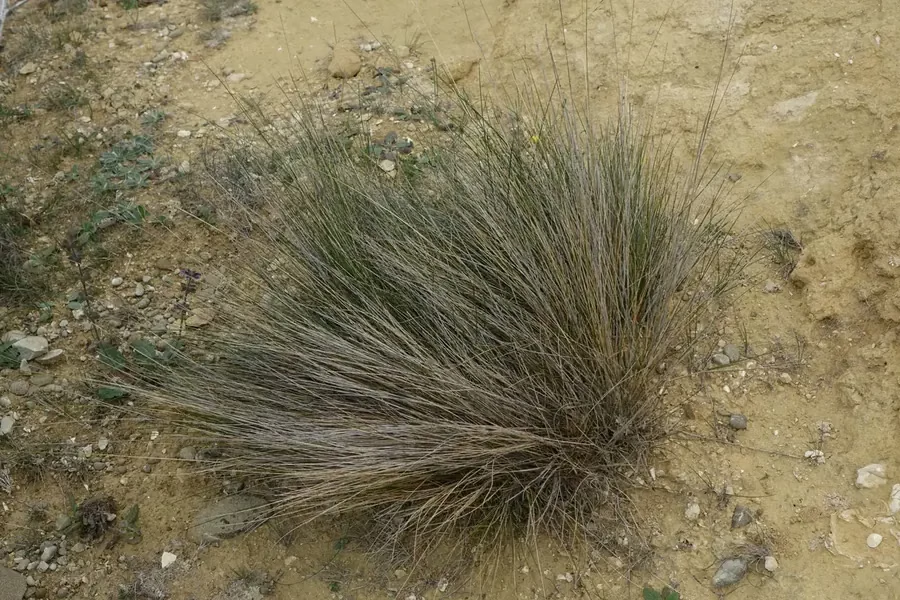
Petriei Grass
Achnatherum Petriei Grass
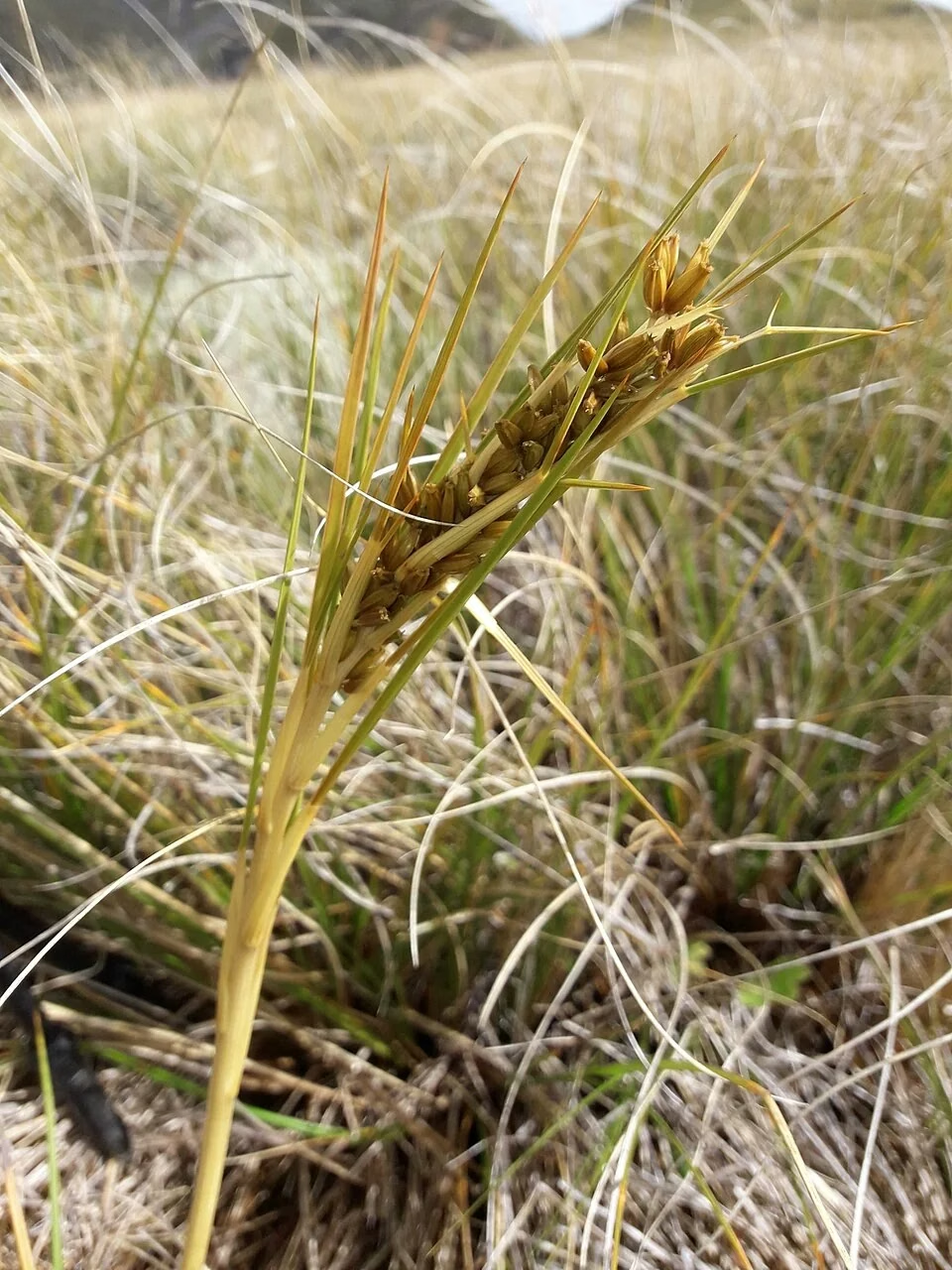
Speargrass
Speargrass
Plant Conservation
Stenostachys gracilis is ranked Not Threatened (2023) with the qualifiers Data Poor: Size and Data Poor: Trend. NZPCN notes it is scarce north of the Bay of Plenty and Waikato, and regional assessments rank it Regionally Extirpated in Northland and Data Deficient in Auckland, Wellington and Otago.
Protecting forest margins, gully heads and stream sides from stock and weeds helps it persist. Records from the northern North Island are valuable, as better data would clarify its status there.
Frequently Asked Questions
Is Stenostachys gracilis a native grass?
Yes. It is endemic to New Zealand, and the genus Stenostachys is itself endemic, with three species found only here.
Where is Stenostachys gracilis found?
It occurs on the North, South and Stewart Islands from the coast to about 1000 m, but is uncommon north of the Central Volcanic Plateau and scarce north of the Bay of Plenty and Waikato.
How do you tell Stenostachys gracilis from Stenostachys laevis?
Stenostachys gracilis has minute, absent or awn-like glumes and lemmas thickly covered in prickle-teeth, whereas S. laevis has glumes 2 to 6 mm long and a lemma ending in a spine tip or short awn. S. gracilis is mainly a forest grass.
Can Stenostachys gracilis be grown in a garden?
NZPCN notes it is easily grown from fresh seed and rooted pieces, and prefers a semi-shaded site planted in damp soil.
Sources and Further Reading
The botanical, growing, and conservation details for Stenostachys (Stenostachys gracilis) on this page draw on the New Zealand plant references below. Consult them for full technical records and the latest distribution data.