Bur-Reed
Sparganium subglobosum
Last updated:
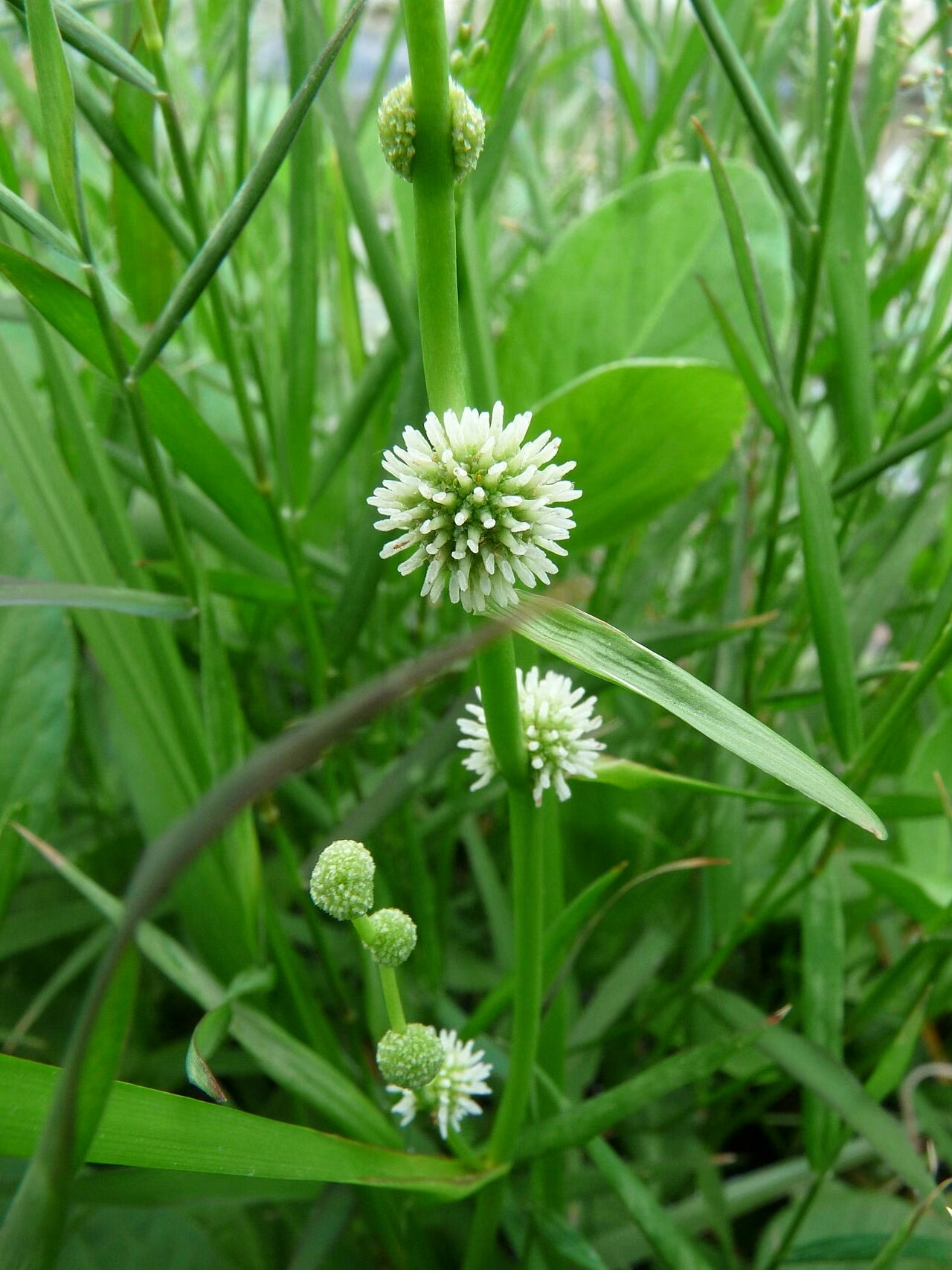
Bur-reed (Sparganium subglobosum), known in Māori as maru, is a soft, summer-green aquatic herb that grows to about 1 m tall at flowering. It spreads by rhizomes, forming stands of bright to dark green linear leaves that are triangular in cross-section, and carries distinctive globe-shaped heads of white flowers. It grows as an emergent in shallow water at the margins of ponds, lakes and slow streams, and in fens, throughout the North Island and very locally in the South Island. It also occurs in Australia and Asia. Nationally Not Threatened, it has declined in many regions as wetlands have been drained. Explore more native grasses and flaxes in our native plant guide.
Plant Description
Sparganium subglobosum is a hairless, summer-green perennial herb of shallow water and fertile swamps, spreading by long, slender rhizomes. Its leaves are spongy to firmly fleshy, dark to yellowish green, 0.3 to 1 m long and up to 10 mm wide, with distinct longitudinal nerves. A key feature is their shape in cross-section, which is triangular to diamond-shaped rather than flat.
The flowering stem reaches about 1 m and is simple or has a few branches. It carries up to 20 globe-shaped heads of white flowers: one to three female heads near the base and up to ten smaller male heads above. After flowering, the female heads develop into bur-like clusters of fruit, which give the plant its common name.
NZPCN considers it unmistakable in New Zealand. The combination of soft, triangular, summer-green leaves and the round flower heads separates it from raupō, sedges and rushes that grow in the same places.
Quick Facts
| Scientific Name | Sparganium subglobosum |
|---|---|
| Height | 0.3-1 m |
| Spread | Spreads by rhizomes to form patches |
| Water Needs | High; roots permanently submerged |
| Light | Full sun |
| Frost Tolerance | Moderate; dies back in winter |
| Salt Tolerance | Low; a freshwater plant |
| Growth Rate | Moderate to fast |
| Lifespan | Perennial |
Climate Best Suited to
Suits mild lowland climates with permanent shallow fresh water. It dies back in winter and regrows in spring, so it tolerates cool winters as long as its rhizomes stay under water.
Regional Suitability
| City | Climate Suitability |
|---|---|
| Auckland | High |
| Wellington | High |
| Christchurch | Medium |
| Dunedin | Low |
Plant Habitat
Bur-reed is indigenous to New Zealand and is present throughout the North Island, though often scarce over large parts of that range. In the South Island it is very uncommon, known from Nelson, Marlborough, north Westland and the Canterbury Plains. It also occurs in Australia, and Wikipedia records it from East Asia, the Himalayas and New Guinea.
It grows from the coast to lowland areas up to about 400 m. It is usually an emergent in shallow water on the margins of ponds, lakes and slow-flowing streams, and also grows in fens and in the lagg zone at the edge of acidic bogs. It is classed as an obligate wetland plant.
Growing Requirements
Soil Requirements
It grows in fertile, saturated mud and silt beneath shallow water.
- Fertile, silty or muddy substrate
- Permanently saturated
- Plant in aquatic baskets in lined ponds
Light Requirements
NZPCN recommends full sun for best growth.
- Full sun
- Avoid heavily shaded water
Water Requirements
An obligate wetland plant, it needs its roots permanently submerged in shallow fresh water.
- Shallow water at pond or stream edges
- Still or slow-moving water
- Do not let the margin dry out
Planting and Establishing
Plant in spring, when new growth emerges, into shallow water at the edge of a pond or slow stream. In a lined pond, use an aquatic basket filled with heavy soil and place it so the rhizomes are covered by shallow water.
For wetland restoration, plant clumps or rhizome divisions along margins where water levels stay fairly constant. Source plants from local populations, especially in regions such as Auckland and Wellington where it is regionally threatened.
Ecological Role
Bur-reeds are wind-pollinated, with separate male and female flower heads on the same stem. Wikipedia notes that Sparganium provides food and cover for wildlife and waterfowl, and its seeds build up in the soil seed bank, allowing plants to regenerate when water levels drop.
Stands of bur-reed help stabilise pond and stream margins and provide habitat for aquatic invertebrates. Its decline has followed the draining of lowland wetlands and the degradation of water quality.
Uses & Significance
Garden Uses
An attractive native marginal plant for ponds and wetland gardens.
- Shallow pond margins
- Slow-flowing streams and drains
- Constructed wetlands and rain gardens with standing water
Ecological Value
It adds diversity to native wetlands and provides food and shelter for wildlife.
- Seeds and cover for waterfowl
- Habitat for aquatic insects
- Helps restore declining lowland wetland communities
Landscaping Uses
Use bur-reed in groups along the edge of a sunny pond, where its soft upright leaves and round white flower heads contrast with broader-leaved plants such as harakeke and finer sedges.
Because it is summer-green, plant it alongside evergreen marginals like Carex or Machaerina so the pond edge does not look bare in winter.
Seasonal Care Calendar
Spring
New leaves emerge from the rhizomes and flowering begins in September.
- Plant or divide clumps
- Check water levels
Summer
Peak growth and flowering, with round white heads.
- Keep roots submerged
- Remove competing weeds
Autumn
Female heads mature into bur-like fruit clusters by about May.
- Collect fresh seed
- Allow some seed to fall
Winter
Leaves die back and the plant rests as rhizomes.
- Remove dead foliage if desired
- Keep rhizomes under water
When to Prune and How Much
No pruning is needed. Dead leaves can be cut back in late winter before new growth appears, which keeps a garden pond tidy.
If it spreads too far in a small pond, remove excess rhizomes when dividing in spring.
How to Grow Bur-Reed
NZPCN describes bur-reed as easily grown from fresh seed and by division of established plants. Division is the quickest way to get a flowering clump, while seed is useful for raising larger numbers for wetland restoration. Either way, the plants need permanently wet conditions from the start. For restoration work, collect seed or divisions from local populations, as the species is regionally threatened in several parts of New Zealand.
From Seed
Seed ripens from about November to May as the female heads turn brown and bur-like. Sow it fresh, since seed of aquatic plants often loses viability if dried out.
- Collect mature fruiting heads and separate the seeds
- Sow fresh seed on a fine, heavy soil mix
- Stand the pot in a tray of water so the mix stays saturated
- Grow on in full sun until seedlings are sturdy
- Plant into shallow water at the pond edge
By Division
Established plants spread by slender rhizomes and can be divided in spring as new growth starts.
Division is the most reliable method for garden ponds, as each rhizome section with a growing tip quickly forms a new clump. Divisions can be planted straight into the pond margin as long as they are anchored so they do not float away, for example by weighting the basket with gravel.
- Lift a clump from the pond margin
- Cut the rhizome into sections, each with shoots and roots
- Replant in aquatic baskets or directly into mud
- Keep the roots submerged at all times
Pests & Diseases
No specific pests are recorded for bur-reed. In ponds, aphids occasionally appear on soft growth, and grazing ducks or pūkeko may disturb young plants.
The bigger threats are invasive aquatic weeds and drying out of the habitat, which can quickly overwhelm or kill stands.
Cultural Significance
NZPCN and the Flora of New Zealand record the Māori name maru (mārū) for this species. No specific traditional uses were found in the sources consulted.
The species was long known in New Zealand as Sparganium antipodum, a name now treated as a synonym of S. subglobosum, which is shared with Australia and Asia.
Bonus Tip
To identify bur-reed when it is not flowering, roll a leaf between your fingers: its triangular cross-section feels quite different from the flat leaves of most sedges and the D-shaped leaves of raupō.
Related Plants
Explore other native plants that share similar characteristics or habitats with Bur-Reed (Sparganium subglobosum), offering further insights into New Zealand's diverse flora. These related species provide context and opportunities for complementary planting in your garden.
Simplicia buchananii
Simplicia buchananii
Simplicia laxa
Simplicia laxa
Small-Flowered Nightshade
Solanum americanum
Cook Strait Kōwhai
Sophora molloyi
New Zealand Sea Spurrey
Spergularia tasmanica
Stackhousia minima
Stackhousia minima
Slender Chickweed
Stellaria gracilenta
Stenostachys gracilis
Stenostachys gracilis
Plant Conservation
Sparganium subglobosum is ranked Not Threatened nationally (2023), with qualifiers DPS, DPT and SO. However, it is Regionally Critical in Wellington, Regionally Vulnerable in Auckland and Regionally Declining in Northland.
The main threats are drainage of lowland wetlands, changes to water levels and invasion by aquatic weeds. Protecting and restoring pond, lake and fen margins with locally sourced plants helps it recover.
Frequently Asked Questions
What does bur-reed look like?
It has soft, linear leaves up to 1 m long that are triangular to diamond-shaped in cross-section, and a simple or few-branched stem carrying round, many-flowered heads, with a few female heads below and up to ten male heads above.
Where does Sparganium subglobosum grow in New Zealand?
It occurs throughout the North Island, though scarce in many areas, and is very uncommon in the South Island, known from Nelson, Marlborough, north Westland and the Canterbury Plains. It grows from the coast to about 400 m.
Can you grow bur-reed in a garden pond?
Yes. NZPCN describes it as an excellent plant for a shallow pond or slow stream, best in full sun with the roots permanently submerged, and easily grown from fresh seed or division.
Does bur-reed die back in winter?
Yes, it is summer-green. The leaves die back in the colder months and the plant regrows from its rhizomes in spring.
Sources and Further Reading
The botanical, growing, and conservation details for Bur-Reed (Sparganium subglobosum) on this page draw on the New Zealand plant references below. Consult them for full technical records and the latest distribution data.