Small-Flowered Nightshade
Solanum americanum
Last updated:
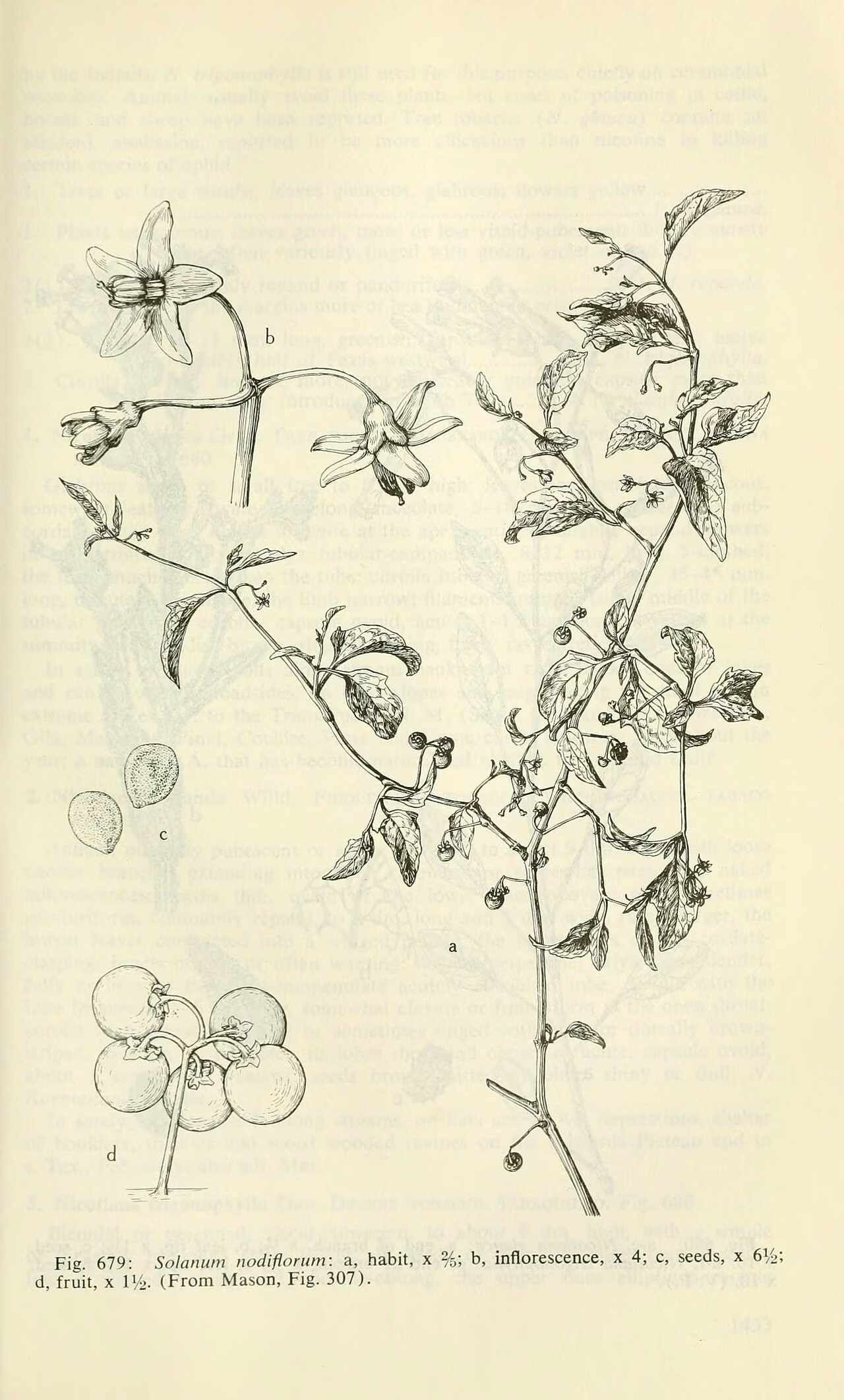
Small-flowered nightshade (Solanum americanum, now usually called Solanum americanum) is a bright green to purple-green annual or short-lived perennial herb up to about 1 m tall, though usually smaller. It has small white to pale mauve star-shaped flowers and glossy black berries. It is indigenous to New Zealand, from the Kermadec and Three Kings Islands through the North, South and Chatham Islands, and is especially abundant on northern offshore islands. It also occurs widely overseas. It is ranked Not Threatened, and its unripe berries are poisonous, so it should be treated with care around children. It was previously known as Solanum nodiflorum. Explore more native flowering plants in our native plant guide.
Plant Description
Small-flowered nightshade is a small, bright green to purple-green herb up to 1 m tall and wide, though usually much smaller. Its soft, branching stems carry simple, thin leaves typical of the nightshades.
The flowers are star-shaped, white to pale mauve, 5 to 8 mm across, with yellow anthers forming a central cone. They are carried in small umbels, with all the flower stalks arising from one point. They are followed by glossy black to purple-black berries 5 to 8 mm across, containing buff to pale orange-yellow seeds 1 to 2.5 mm long.
It is most often confused with black nightshade, Solanum nigrum, which has a pseudo-umbellate cluster of larger flowers, 8 to 13 mm across, and lacks the hard stone cells found in the berries of S. americanum. Solanum opacum, also present in New Zealand, has intermediate features.
Quick Facts
| Scientific Name | Solanum americanum |
|---|---|
| Height | Up to 1 m, usually less |
| Spread | Up to 1 m |
| Water Needs | Low to moderate |
| Light | Full sun to light shade |
| Frost Tolerance | Low |
| Salt Tolerance | Moderate; usually coastal |
| Growth Rate | Fast |
| Lifespan | Annual or short-lived perennial |
Climate Best Suited to
Suits warm, frost-free coastal climates and is most abundant in the subtropical Kermadec Islands and northern offshore islands. It grows less vigorously in cool southern districts.
Regional Suitability
| City | Climate Suitability |
|---|---|
| Auckland | High |
| Wellington | Medium |
| Christchurch | Medium |
| Dunedin | Low |
Plant Habitat
Small-flowered nightshade is recorded from the Kermadec, Three Kings, North, South and Chatham Islands, and is abundant on northern offshore islands, especially the Kermadecs. Beyond New Zealand it occurs in the Americas, Australia, Africa, India, south-east Asia and the Pacific.
It is usually coastal but also grows inland in open forest up to about 400 m above sea level. It thrives on disturbed ground, in petrel colonies where burrowing seabirds churn and fertilise the soil, and occasionally in urban areas.
Growing Requirements
Soil Requirements
It favours disturbed, fertile ground, such as seabird-enriched soils on islands.
- Fertile, open soil
- Tolerates sandy and rocky coastal soils
- Establishes readily on freshly disturbed ground
Light Requirements
It grows in open sites and in light shade at forest margins.
- Full sun to partial shade
- Grows best in open clearings
Water Requirements
A fast-growing herb that copes with coastal summer dryness but grows most lushly with some moisture.
- No special watering needed
- Avoid waterlogged ground
Planting and Establishing
Small-flowered nightshade is not normally planted; NZPCN describes it as very weedy and invasive in cultivation. It usually appears on its own from bird-dispersed seed.
If it appears in a garden used by young children, remove it before berries form, because the unripe berries are poisonous. Wear gloves when pulling plants.
Ecological Role
Its glossy black berries are eaten by birds, which disperse the seeds. The plant is a common part of the vegetation in seabird colonies on offshore islands, where it colonises the fertile, disturbed ground between burrows.
As a fast-growing annual of open ground, it fills gaps after disturbance and is soon replaced by longer-lived plants as vegetation matures. The small flowers are visited by insects; no New Zealand pollination studies were found.
Uses & Significance
Garden Uses
It has little ornamental value and is usually treated as a weed in gardens, but it plays a natural role on islands.
- Not recommended for gardens because of its weediness and toxic berries
- Can be tolerated in wild corners where children do not play
- Of interest in restoration of seabird island vegetation
Ecological Value
On offshore islands it is a natural colonist of seabird-disturbed ground.
- Berries provide food for fruit-eating birds
- Colonises bare, fertile ground in petrel colonies
- Part of the coastal vegetation from the Kermadecs to the Chathams
Landscaping Uses
This species is not used in landscaping. Where it occurs in coastal restoration sites it can be left to play its role as a short-lived colonist until shrubs and trees take over.
In home gardens, remove seedlings from areas where children play, and do not confuse it with edible garden Solanum crops.
Seasonal Care Calendar
Spring
Seedlings germinate on disturbed ground and flowering begins in October.
- Identify and remove unwanted seedlings early
- Wear gloves when weeding
Summer
Plants flower and set berries, which ripen from green to black.
- Remove plants before berries ripen if unwanted
- Keep children away from green berries
Autumn
Fruiting continues until about June and birds take the ripe berries.
- Expect new seedlings where birds perch
- Pull plants before seed spreads
Winter
Plants die back in colder areas but may persist on frost-free coasts.
- Clear dead stems
- Check for seedlings in mild sites
When to Prune and How Much
No pruning is needed. Plants are short-lived and are usually either left alone or removed.
If plants are kept, cutting off flower clusters before berries form prevents self-seeding and reduces the risk of poisoning.
How to Grow Small-Flowered Nightshade
Small-flowered nightshade reproduces readily from seed, and NZPCN simply describes it as very weedy and invasive. It is rarely propagated deliberately, but understanding how it spreads is useful both for restoration practitioners on islands and for gardeners who want to control it. Its berries are eaten by birds, which drop the seeds in new places, and seedlings appear quickly on bare or disturbed soil. Remember that all green parts and unripe berries are toxic, so wear gloves when handling plants and fruit.
From Seed
If seed is needed for a restoration project, collect fully ripe black berries in summer or autumn, squash them and wash the seeds clean of pulp. Seeds germinate readily on warm, moist, open soil.
- Wear gloves and collect fully ripe black berries
- Crush the berries in water and rinse out the pale seeds
- Sow on the surface of a seed mix and cover thinly
- Keep warm and moist until seedlings emerge
- Plant out while small, as plants grow fast
Managing Self-Sown Seedlings
In most places the plant appears by itself where birds have dropped seed. Seedlings can be transplanted while very small, or simply pulled out if unwanted.
Seedlings tend to appear where birds perch or roost, such as under fences, trees and power lines, so check those spots first when looking for young plants to move or remove.
- Identify seedlings by their soft leaves and nightshade flowers
- Lift with a trowel if moving them
- Remove unwanted plants before they fruit
Pests & Diseases
No serious pests are recorded for this species in New Zealand. Like other nightshades it can host aphids and leaf-eating insects.
The plant itself is more often a nuisance than a victim of pests, appearing as a weed in gardens and disturbed ground.
Cultural Significance
Landcare Research's Ngā Rauropi Whakaoranga database records the Māori names raupeti, remuroa, pōporo and poroporo for Solanum americanum, noting it may have been a Polynesian introduction. The name poroporo is also widely applied to the shrubby Solanum aviculare and S. laciniatum. No specific traditional Māori uses were found for this species in the sources consulted.
Overseas, young shoots of Solanum americanum are cooked as greens in parts of Africa, South America, New Guinea and Oceania, with the cooking water discarded because it contains alkaloids. This is not a recommendation to eat it: the plant can be poisonous.
Bonus Tip
Before pulling out any nightshade, look closely at the flowers: if they are tiny (5 to 8 mm) and in a neat umbel, you probably have the native small-flowered nightshade rather than the introduced black nightshade. Either way, remove berries from areas where children play.
Related Plants
Explore other native plants that share similar characteristics or habitats with Small-Flowered Nightshade (Solanum americanum), offering further insights into New Zealand's diverse flora. These related species provide context and opportunities for complementary planting in your garden.
Senecio scaberulus
Senecio scaberulus
Guano Groundsel
Senecio sterquilinus
Simplicia buchananii
Simplicia buchananii
Simplicia laxa
Simplicia laxa
Cook Strait Kōwhai
Sophora molloyi
Sparganium subglobosum
Sparganium subglobosum
New Zealand Sea Spurrey
Spergularia tasmanica
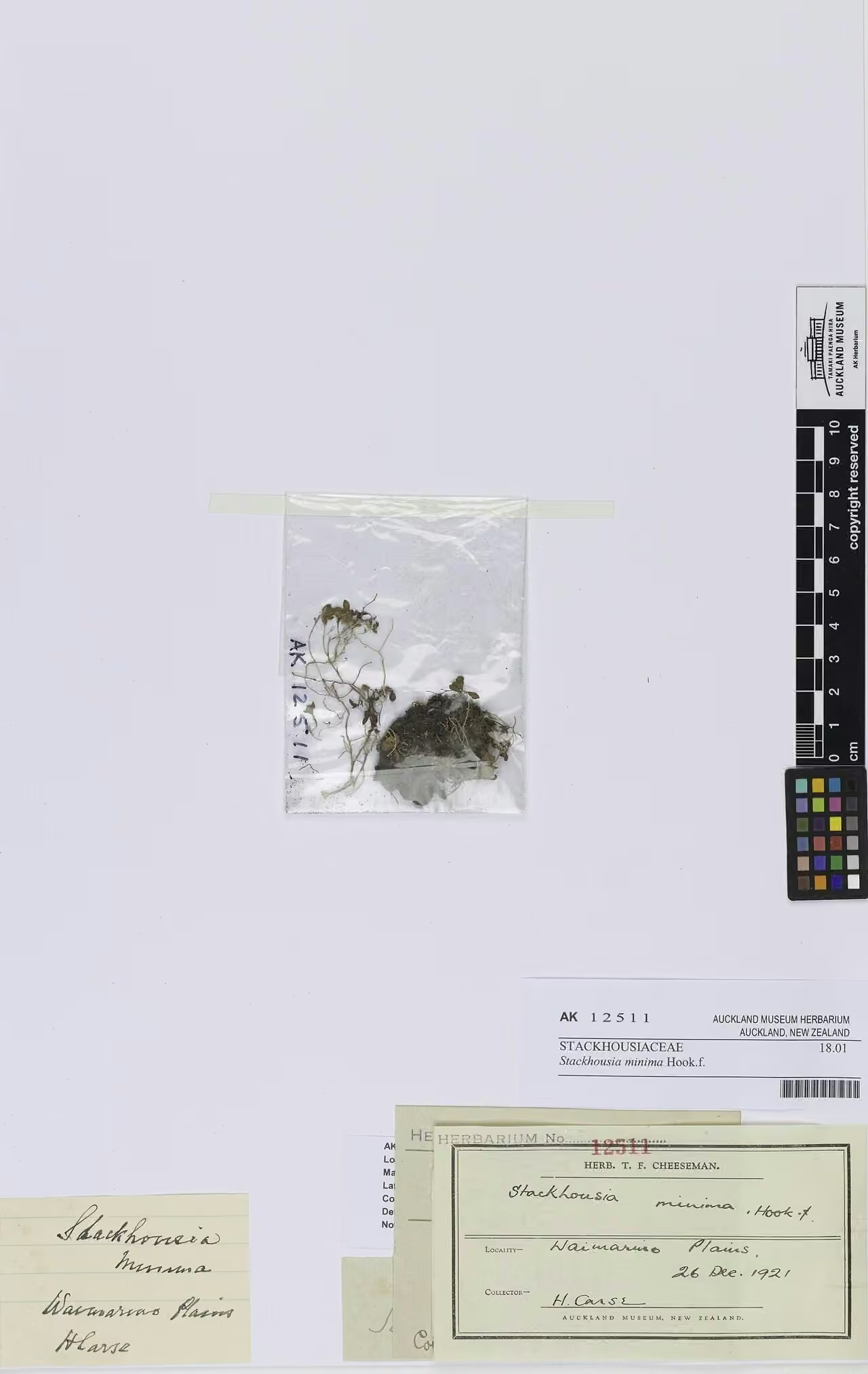
Stackhousia minima
Stackhousia minima
Plant Conservation
Solanum americanum is ranked Not Threatened (2023), with the qualifier SO (secure overseas), and is regionally Not Threatened in Northland. It is common and widespread, especially on northern offshore islands.
No conservation action is needed. Its presence in petrel colonies is a sign of the seabird-driven ecosystems that pest eradication on islands helps restore.
Frequently Asked Questions
Is Solanum nodiflorum the same as Solanum americanum?
Yes. NZPCN treats Solanum nodiflorum as a synonym of Solanum americanum, the small-flowered nightshade, which is the name now used in New Zealand.
Are small-flowered nightshade berries poisonous?
The berries contain toxic glycoalkaloids, and green unripe berries are particularly poisonous; eating them has caused deaths of children overseas. Ripe berries are less toxic but the level varies, so do not eat them.
Is small-flowered nightshade native to New Zealand?
NZPCN lists it as indigenous, occurring naturally in New Zealand and overseas. Landcare Research notes it is presumed indigenous but may have been introduced by early Polynesian voyagers.
How do you tell small-flowered nightshade from black nightshade?
Small-flowered nightshade has true umbels of smaller flowers, 5 to 8 mm across, and its berries contain stone cells. Black nightshade (Solanum nigrum) has larger flowers of 8 to 13 mm in a less regular cluster.
Sources and Further Reading
The botanical, growing, and conservation details for Small-Flowered Nightshade (Solanum americanum) on this page draw on the New Zealand plant references below. Consult them for full technical records and the latest distribution data.