Guano Groundsel
Senecio sterquilinus
Last updated:
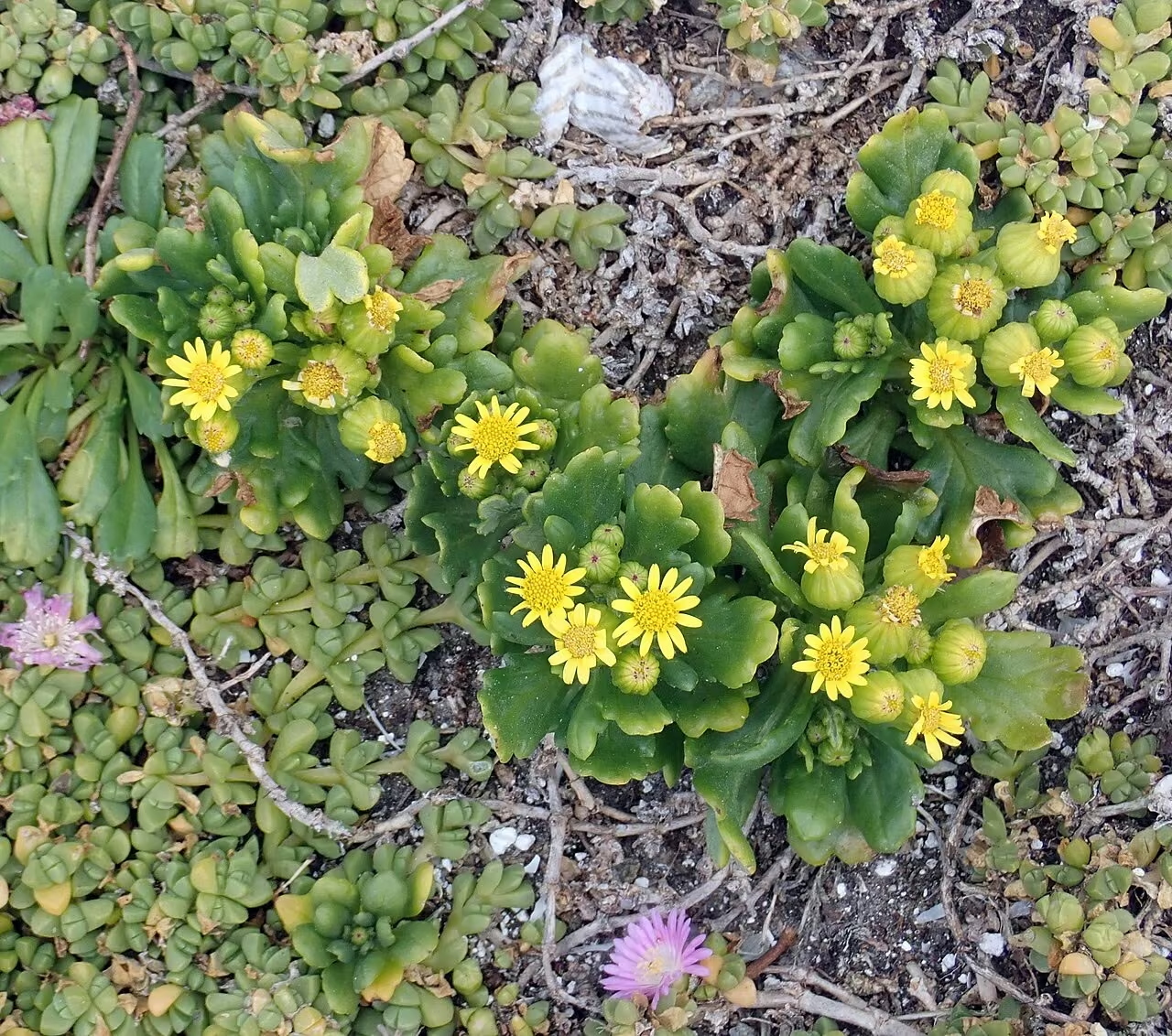
Guano groundsel (Senecio sterquilinus) is an endemic, densely branched, sprawling daisy up to 0.6 m tall and wide, with fleshy, glossy dark green leaves and large heads of dark yellow ray flowers. It is a strictly coastal plant that grows in thick seabird guano or near seal haul-outs on rock stacks and islands, including the Mokohinau Islands, Matiu/Somes and Makaro/Ward Islands in Wellington Harbour, Stephens and Brothers Islands, the West Coast and the Chatham Islands. Its dependence on seabird-fertilised soil makes it unusual, and it is ranked At Risk - Naturally Uncommon because it is vulnerable to any decline in nesting seabirds. Explore more native flowering plants in our native plant guide.
Plant Description
Senecio sterquilinus forms densely branched, somewhat sprawling plants up to 0.6 m by 0.6 m. The stem base is woody and purple-red. The leaves are fleshy to subsucculent, 30 to 200 mm long and 10 to 80 mm wide, dark green and glossy above, and sparsely to moderately covered in cobweb-like hairs. They are usually pinnately lobed or deeply divided.
The flower heads are large for a groundsel, with 13 to 28 dark yellow ray florets, each ligule 3 to 10 mm long, around a yellow disc. In good conditions flowers can almost cover the plant. The seeds are dark brown to black-brown, 2.5 to 3 mm long and densely hairy. Flowering and fruiting can occur in any month.
It is closely related to Senecio lautus (shore groundsel) but is larger and coarser, with 18 to 21 involucral bracts instead of 10 to 13 and slightly larger seeds. On the Chatham Islands it differs from Senecio radiolatus subsp. radiolatus by its smaller, more spreading habit, very fleshy leaves without woolly hairs and more ray florets.
Quick Facts
| Scientific Name | Senecio sterquilinus |
|---|---|
| Height | Up to 0.6 m |
| Spread | Up to 0.6 m |
| Water Needs | Moderate; damp, fertile soil |
| Light | Full sun |
| Frost Tolerance | Low to moderate; a coastal plant |
| Salt Tolerance | High; grows on exposed sea stacks |
| Growth Rate | Fast |
| Lifespan | Annual or short-lived perennial |
Climate Best Suited to
Suits mild, windy, salt-laden coastal climates around Cook Strait, the West Coast and the Chatham Islands. As an annual it is little troubled by winter cold in cultivation.
Regional Suitability
| City | Climate Suitability |
|---|---|
| Auckland | Medium |
| Wellington | High |
| Christchurch | Medium |
| Dunedin | Medium |
Plant Habitat
Guano groundsel is endemic to New Zealand, with a scattered, probably relict distribution. Known sites include Stack H in the Mokohinau Islands, Matiu/Somes and Makaro/Ward Islands in Wellington Harbour (where it was found in 1992), Petone Beach and Evans Bay, Brothers Island and Stephens Island in Cook Strait, the West Coast from Cape Foulwind to Point Elizabeth, and on the Chatham Islands the Forty Fours, the Sisters and Western Reef. A Hawke's Bay population is extinct.
It is strictly coastal, usually growing near seabird nesting grounds or seal haul-outs. It is often found growing out of thick guano on sparsely vegetated rock stacks dominated by seabirds, where few other plants can cope with the extreme nutrient levels, salt spray and trampling.
Growing Requirements
Soil Requirements
In nature it grows in guano-enriched soil, extremely high in nitrogen, phosphorus and potassium. NZPCN recommends very fertile, damp soil in cultivation.
- Very fertile soil with plenty of nutrients
- Damp but not stagnant
- Responds well to rich compost or manure
Light Requirements
It grows on open, treeless rock stacks and needs full sun to flower well.
- Full sun
- Open, exposed sites are fine
Water Requirements
NZPCN advises damp soil for good growth; fleshy leaves give it some drought resilience on exposed stacks.
- Keep soil moist in summer for continuous flowering
- Avoid waterlogging
Planting and Establishing
Raise plants from seed and plant out in spring into a sunny bed of rich, damp soil. It was successfully trialled as an annual bedding plant in Lower Hutt in 1991, where the large yellow flower heads often covered the plants completely.
For restoration, only plant within or close to its known range using locally sourced seed, ideally on sites where seabirds nest or roost. Elsewhere, treat it as a garden annual and avoid releasing it into habitats where it does not occur naturally.
Ecological Role
Guano groundsel is tied to the nutrient cycle created by seabirds and seals. Their guano and disturbance keep rock stacks fertile and sparsely vegetated, conditions in which this fast-growing annual can thrive. Its bright yellow flowers attract generalist insects; no specific pollinator studies were found. The hairy seeds are likely spread by wind.
Because it depends on seabird guano, its populations are very vulnerable to any decline in nesting or roosting seabirds. Pest eradication on islands, which allows seabirds to recover, indirectly supports this plant.
Uses & Significance
Garden Uses
A cheerful annual for sunny beds in coastal gardens, especially around Wellington.
- Summer bedding with native plants
- Coastal and seaside gardens
- Educational plantings about seabird ecosystems
Ecological Value
It is a characteristic plant of seabird guano deposits, a naturally rare ecosystem in New Zealand.
- Indicator of healthy seabird colonies
- Food for flower-visiting insects on exposed islands
- Part of the relict coastal flora of Cook Strait islands
Landscaping Uses
Use guano groundsel in sunny beds, raised planters or coastal gravel gardens where its glossy fleshy leaves and large dark yellow flowers can be seen. Its sprawling habit suits the front of a border or the edge of a wall.
Because individual plants are short-lived, sow a few each year or let it self-seed in a rich, open patch. It pairs well with other coastal natives such as shore groundsel, Pimelea and grasses.
Seasonal Care Calendar
Spring
Sow seed or plant out young plants into rich soil.
- Add compost or manure before planting
- Keep seedlings moist
Summer
Peak flowering, with heads of dark yellow rays often covering the plant.
- Water in dry spells
- Collect seed as heads ripen
Autumn
Flowering and seeding continue in mild coastal sites.
- Save seed for next year
- Pull out exhausted plants
Winter
In the wild it can flower in any month; in gardens it is mainly dormant or growing slowly.
- Protect seedlings from slugs
- Prepare beds for spring sowing
When to Prune and How Much
No regular pruning is required. Removing spent flower heads can extend flowering in a garden bed, while leaving some heads to ripen provides seed for the next year.
Remove plants once they have finished, as they are annual or short-lived and decline after seeding.
How to Grow Guano Groundsel
Guano groundsel is described by NZPCN as easy to grow from fresh seed. It behaves as a strict annual in cultivation, so seed is the only practical method and plants should be raised afresh each year. Seed is produced over a long season, and in the wild plants may flower and fruit in any month. Because the species is At Risk and has a very restricted natural range, take seed from cultivated plants where possible, and only collect from wild populations with permission.
From Seed
Collect seed when the heads have dried and the dark brown hairy seeds come away easily. Fresh seed germinates readily. Seedlings grow fast in rich mix and can flower within a few months of sowing.
Give young plants plenty of nutrients, reflecting their natural guano-rich habitat. A potting mix with added slow-release fertiliser or well-rotted manure produces strong, floriferous plants.
- Collect ripe, dry seed heads and separate the seeds
- Sow fresh seed on the surface of a fertile, moist seed mix
- Cover lightly and keep in a bright, sheltered spot
- Pot on seedlings into rich mix when they have a few true leaves
- Plant out in full sun into very fertile, damp soil in spring
Self-Sown Seedlings
In a suitable bed, guano groundsel may self-sow. Seedlings can be lifted while small and moved to where they are wanted.
- Leave some flower heads to ripen and shed seed
- Keep the bed surface open and fertile
- Transplant small seedlings with a good root ball
Pests & Diseases
In the wild, the main threat is not pests but the loss of the seabird colonies that keep its habitat fertile. Weeds can also compete on less exposed sites.
In gardens, aphids, slugs and snails may attack the soft fleshy growth, and the plant can suffer if grown in poor, dry soil. Rust fungi that affect other groundsels may also occur.
Cultural Significance
No Māori name or traditional use specific to Senecio sterquilinus was found in the sources consulted. The scientific name was given by Robert Ornduff in 1960, using a Latin word for a dung heap that describes its guano-rich habitat.
It was earlier treated as a variety of Senecio lautus by Joseph Hooker. It was featured as the NZPCN Plant of the Month in December 2015.
Bonus Tip
Treat guano groundsel as a hungry plant: it naturally grows in soil enriched by seabird droppings, so it flowers far better in heavily fed, moist soil than in the lean, dry conditions most coastal natives prefer.
Related Plants
Explore other native plants that share similar characteristics or habitats with Guano Groundsel (Senecio sterquilinus), offering further insights into New Zealand's diverse flora. These related species provide context and opportunities for complementary planting in your garden.
Senecio repangae
Senecio repangae
Senecio rufiglandulosus
Senecio rufiglandulosus
Senecio scaberulus
Senecio scaberulus
Simplicia buchananii
Simplicia buchananii
Simplicia laxa
Simplicia laxa
Small-Flowered Nightshade
Solanum americanum
Cook Strait Kōwhai
Sophora molloyi
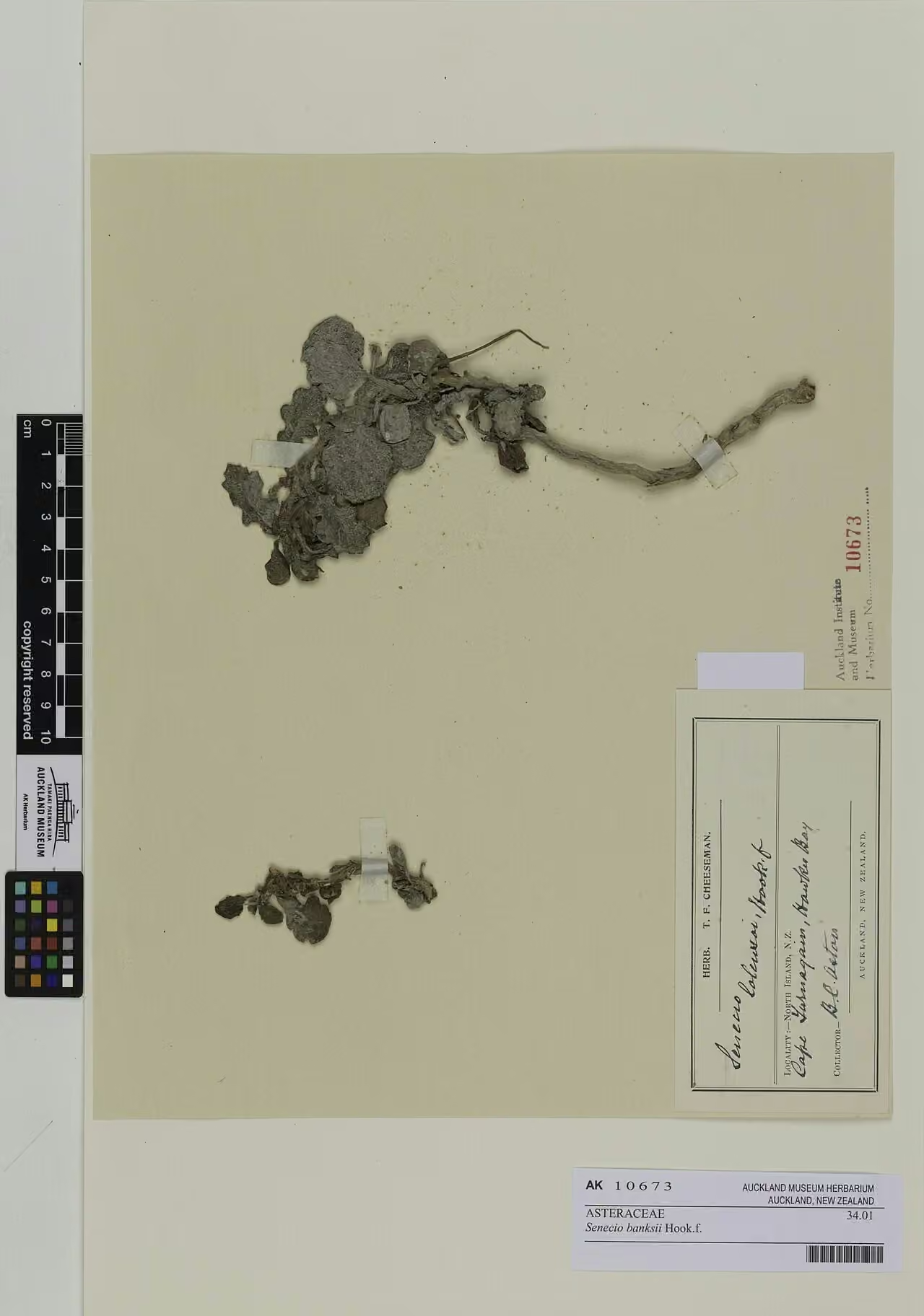
Senecio banksii
Senecio banksii
Plant Conservation
Senecio sterquilinus is ranked At Risk - Naturally Uncommon (2023), with qualifiers CD (conservation dependent), DPR, EF and RR; previously it was ranked At Risk - Relict. In the Wellington region it is Regionally Endangered. It is abundant at most of its known sites but those sites are few and scattered, and the Hawke's Bay population has been lost.
Its reliance on seabird guano makes it very vulnerable to any decline in seabird numbers. Protecting seabird colonies from predators, controlling weeds on islands and keeping cultivated seed stocks all help secure the species.
Frequently Asked Questions
Why is it called guano groundsel?
The species usually grows near seabird nesting grounds and seal haul-outs, often rooted in thick guano deposits on rock stacks. The epithet sterquilinus comes from Latin for a dung heap.
Where can you see Senecio sterquilinus?
It is known from Stack H in the Mokohinau Islands, Matiu/Somes and Makaro/Ward Islands, Brothers and Stephens Islands in Cook Strait, the West Coast between Cape Foulwind and Point Elizabeth, and a few Chatham Islands stacks.
How is guano groundsel different from shore groundsel?
It is larger than Senecio lautus, with coarser divided leaves, more involucral bracts (18 to 21 versus 10 to 13) and slightly larger seeds.
Can you grow guano groundsel in a garden?
Yes, NZPCN says it is easy from fresh seed and thrives in very fertile, damp soil in full sun. It was trialled in Lower Hutt bedding displays in 1991, where flowers often covered the plants.
Sources and Further Reading
The botanical, growing, and conservation details for Guano Groundsel (Senecio sterquilinus) on this page draw on the New Zealand plant references below. Consult them for full technical records and the latest distribution data.