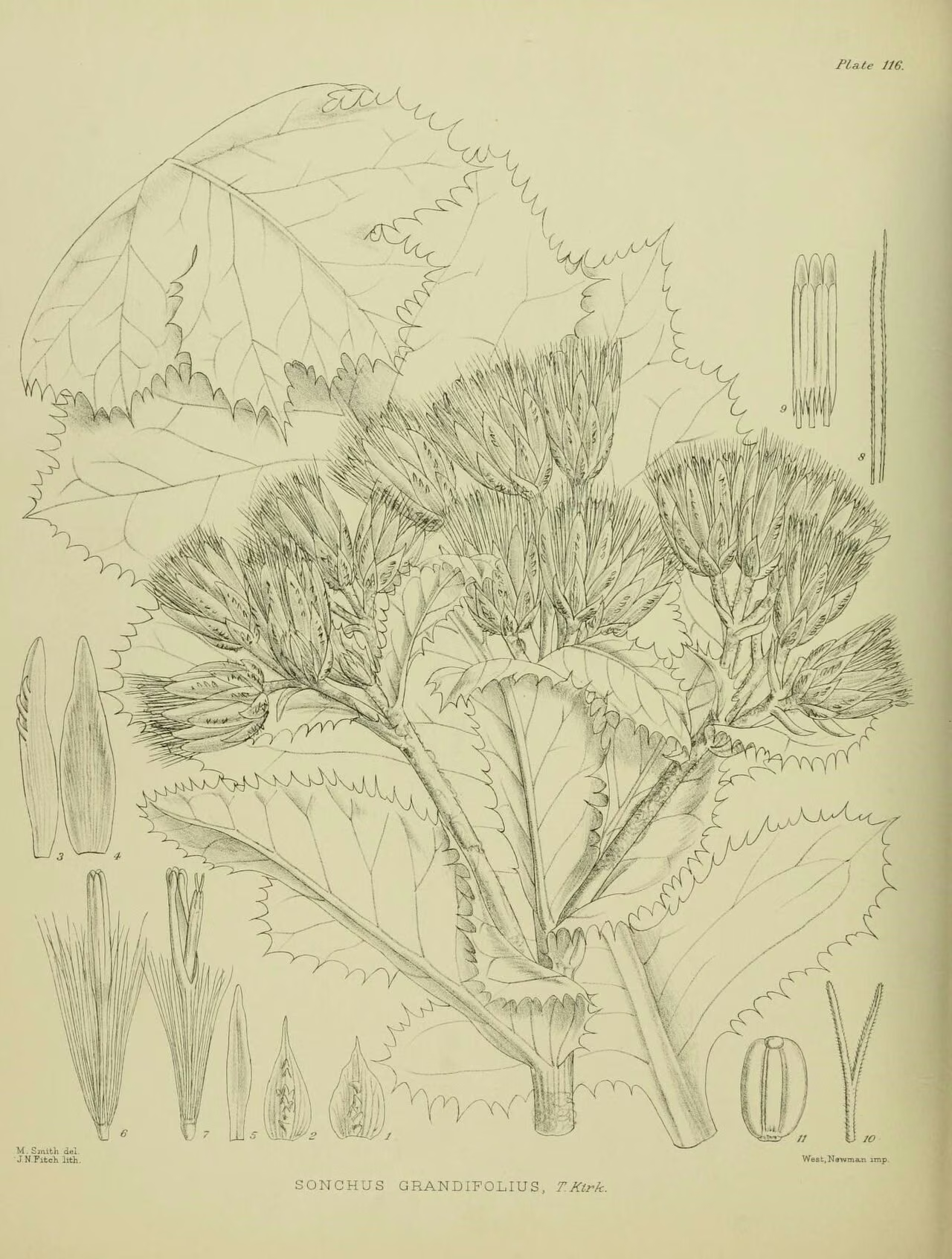
Chatham Island Sow Thistle
Sonchus grandifolius
Last updated:
Chatham Island sow thistle or pūhā pārākau rahi (Sonchus grandifolius, formerly Embergeria grandifolia) is a giant, rhizomatous relative of pūhā found only on the Chatham Islands. Flowering plants usually stand 0.8-1.5 m tall, occasionally 2.2 m, above basal leaves up to 1.5 m long that are thick, leathery and deeply lobed. In summer it carries branched clusters of flower heads 30-45 mm across in apricot, pink, mauve or yellow-orange. It grows on coastal sand dunes, cliff ledges and rock stacks, and after decades of decline from browsing it is now classed At Risk - Recovering. Explore more native flowering plants in our native plant guide.
Plant Description
Sonchus grandifolius is a stout herb that spreads by thick, fleshy rhizomes 30-50 mm in diameter, which become semi-woody with age. Every part exudes milky latex when cut. The basal leaves are its most striking feature: 0.8-1.5 m long including a stout stalk of 0.2-0.4 m, leathery, somewhat succulent, oblong in outline and irregularly cut into lobes with coarse, sharp, double teeth. The upper surface is rough to the touch, yellow-green to dark green and often bluish-grey with a bloom, while the underside is paler with raised veins. Despite the thistle-like look, the leaves lack stinging spines.
Seasonal flowering stems up to 2.2 m tall branch in their upper part into broad, flat-topped clusters of 30 or more flower heads. Each head is 30-45 mm across on a stout stalk covered in white woolly hairs that are shed after flowering, with layered green bracts bearing small dark spines. The ray florets range from yellow-orange and apricot to pink or mauve, often paler at first and darkening as they age. Flowering runs from December to February.
Fruit follows in late summer and autumn: brown, flattened, thickly winged and ribbed achenes 4-5 mm long, topped with a white pappus of soft hairs 10-15 mm long that carries them on the wind. Its size, rhizomes, leathery leaves and coloured flowers make it unlike any other pūhā or sow thistle in New Zealand.
Quick Facts
| Scientific Name | Sonchus grandifolius |
|---|---|
| Height | 0.8-1.5 m in flower (rarely to 2.2 m) |
| Spread | Spreads by rhizomes into wide colonies; individual leaf rosettes over 1 m across |
| Water Needs | Moderate; damp but free-draining soil |
| Light | Full sun, or light afternoon shade in warmer districts |
| Frost Tolerance | Hardy to frost in cool coastal gardens |
| Salt Tolerance | High; grows on foredunes and sea cliffs |
| Growth Rate | Moderate to fast in suitable conditions |
| Lifespan | Perennial |
Climate Best Suited to
It comes from the cool, windy, oceanic climate of the Chatham Islands, and does best where summers are mild and the air is not humid. Hot, muggy summers often kill cultivated plants.
Regional Suitability
| City | Climate Suitability |
|---|---|
| Auckland | Low |
| Wellington | High |
| Christchurch | Medium |
| Dunedin | High |
Plant Habitat
Chatham Island sow thistle is endemic to the Chatham Islands, about 800 km east of mainland New Zealand. It is recorded from Rēkohu (Chatham Island), Rangihaute (Pitt Island), Mangere, Tapuaenuku, Wharekaikite (Rabbit Island) and Hokorereoro (South East Island), as well as many smaller islets and rock stacks.
It is strictly coastal. Typical sites are sand dunes, usually the foredunes, along with coastal cliff ledges, clay promontories, talus slopes and rock stacks exposed to salt spray. It is most secure on cliffs and on predator-free islands and islets out of reach of livestock.
Growing Requirements
Soil Requirements
NZPCN recommends a free-draining, fertile but damp soil. In the wild it grows in dune sand and on cliff soils that are well drained yet rarely dry right out.
- Fertile, free-draining loam or sandy soil
- Add compost to sandy soils to hold moisture
- Avoid heavy, waterlogged clay, which encourages root rot
Light Requirements
It grows in full sun on open coasts. In warmer gardens some afternoon shade helps keep the roots cool.
- Full sun in cool or coastal districts
- Light afternoon shade in warmer inland areas
Water Requirements
It likes damp soil but dislikes humid, stagnant conditions. The aim is a cool, moist root run with good drainage and air movement around the leaves.
- Water during dry spells, especially in its first summer
- Mulch to keep roots cool
- Do not overwater in warm, humid weather
Planting and Establishing
Plant in autumn or early spring into a sunny, open spot with deep, fertile, free-draining soil. Give each plant plenty of room, as the basal leaves alone can spread over a metre and the plant extends by rhizomes. A breezy coastal site suits it far better than a sheltered, humid courtyard.
Dig in compost, set the plant at the same depth it grew in the pot, water well and mulch. In warmer districts choose a position with some afternoon shade or a cool, south-facing aspect, since plants commonly collapse in hot weather.
Ecological Role
The large, colourful flower heads attract insects for pollination, and the seeds, each with a white pappus, are dispersed by wind. This wind dispersal lets it colonise new beaches and cliffs, and NZPCN reports it is actively spreading into new coastal areas across the Chatham Islands.
As a robust rhizomatous herb of foredunes and cliff ledges it helps stabilise sand and loose cliff soils. Its decline on the main islands was driven by browsing animals, showing how palatable it is; studies of the specific insects that feed on or pollinate it were not found.
Uses & Significance
Garden Uses
A spectacular architectural plant for cool coastal gardens, grown for its huge leathery leaves and summer flower clusters. It is occasionally available from specialist native nurseries.
- Bold foliage feature in coastal or seaside gardens
- Collections of Chatham Islands plants
- Large containers in cool climates, kept well watered
Ecological Value
It is a Chatham Islands endemic of coastal dunes and cliffs, and its recovery is an example of how removing browsing animals allows coastal vegetation to return.
- Binds foredune sand and cliff soils
- Provides nectar and pollen for insects in summer
- Part of the unique Chatham Islands coastal flora
Landscaping Uses
Use it as a single specimen or small group where its metre-long, deeply toothed leaves can be appreciated, for example beside a path, against a plain wall or among low coastal grasses and ground covers. The bluish bloom on many plants pairs well with silver and grey foliage.
In flower the tall branched stems with apricot, pink and mauve heads add height in midsummer. Allow space for the clump to widen by rhizomes, and plant it where its seasonal flowering stems can be cut away later without leaving a gap.
Seasonal Care Calendar
Spring
New basal leaves expand from the rhizomes and flowering stems begin to rise.
- Apply compost or a light general fertiliser
- Check for slugs and snails on young leaves
Summer
Flowering from December to February, with clusters of coloured heads on tall stems.
- Water in dry spells
- Watch for heat stress in warm districts
Autumn
Seed ripens and disperses on white pappus hairs through late summer and autumn.
- Collect fresh seed for sowing
- Cut back spent flowering stems
Winter
Growth slows; the large leathery leaves usually persist in mild coastal gardens.
- Ensure good drainage in wet weather
- Remove any rotting leaves
When to Prune and How Much
Little pruning is needed. Flowering stems are produced seasonally and die back after seeding, so cut them to the base once seed has been collected or has dispersed.
Remove old, yellowing or damaged basal leaves at their base to keep the plant tidy and improve air flow around the crown, which helps reduce rot. The milky sap is a normal feature of the plant.
How to Grow Chatham Island Sow Thistle
NZPCN describes Chatham Island sow thistle as easy to grow from fresh seed, and this is the standard way it is raised in nurseries. Nelson Natives notes that seed germinates without treatment, although about four weeks of cold stratification speeds germination. Because the plant spreads by thick rhizomes, separating rooted pieces of an established clump is a second option for gardeners. Fresh seed from cultivated plants is preferable to collecting from wild populations on the Chatham Islands, which are still recovering.
From Seed
Collect seed heads in late summer or autumn when the white pappus is fluffing out and the achenes have turned brown. Sow as fresh as possible, since fresh seed gives the best results.
- Pick ripe heads on a dry day and separate the winged achenes from the fluffy pappus.
- For quicker germination, mix seed with damp sand and refrigerate for about four weeks.
- Sow on a free-draining seed mix and cover lightly.
- Keep the tray moist in a cool, bright, well-ventilated place out of hot sun.
- Prick seedlings out into individual pots when they have two or three true leaves.
- Grow on in a deep pot to allow the fleshy rhizome to develop before planting out.
By Division
Established plants spread by fleshy rhizomes, so a piece of rhizome with its own leaves and roots can be cut from the edge of a clump. Do this in cool weather to reduce the risk of rot.
- Work in autumn or early spring.
- Cut a rooted section of rhizome with at least one leaf crown from the clump margin.
- Let the cut surface dry for a day so the latex seals it.
- Pot into free-draining mix and keep just moist and cool until new leaves appear.
Pests & Diseases
In the wild the main threats are browsing animals, including livestock, pigs, possums and rodents, which have eliminated plants from accessible sites on the main Chatham Islands. In gardens, fence or shield plants where rabbits or stock could reach them.
The most common cultivation problem is not a pest but collapse in hot, humid weather and root rot in poorly drained soil. Young leaves may also be eaten by slugs and snails, so check seedlings regularly.
Cultural Significance
NZPCN gives the Māori name pūhā pārākau rahi for this species, linking it to pūhā, the sow thistles eaten as a green vegetable by Māori. No traditional use specific to Sonchus grandifolius is recorded in the sources consulted, and Moriori names or uses were not found.
It was first described by Thomas Kirk in 1894. Its later transfer to the genus Embergeria and return to Sonchus in 2014 means it is still widely sold and labelled as Sonchus grandifolius.
Bonus Tip
If you garden somewhere warm, grow this plant in a deep pot of free-draining mix that you can move into a cool, airy, part-shaded spot over midsummer. Keeping the roots cool through the hottest weeks is the single most effective way to stop the sudden summer collapse that NZPCN warns about.
Related Plants
Explore other native plants that share similar characteristics or habitats with Chatham Island Sow Thistle (Sonchus grandifolius), offering further insights into New Zealand's diverse flora. These related species provide context and opportunities for complementary planting in your garden.

Plant Conservation
Chatham Island sow thistle is classed At Risk - Recovering (2023), with qualifiers including conservation dependent, extreme fluctuations, island endemic and range restricted. In 2004 it was rated Threatened - Nationally Endangered after browsing, weed competition and land conversion had greatly reduced it.
It has since made a spectacular recovery across large parts of its range and is colonising new beaches and cliffs. Ongoing threats on the main islands include livestock and feral animals, invasive weeds, coastal development and erosion, so fencing of coastal sites and pest control remain important.
Frequently Asked Questions
Is Embergeria grandifolia the same as Sonchus grandifolius?
Yes. Kirk described it as Sonchus grandifolius in 1894, Boulos moved it to Embergeria, and Garnock-Jones (2014) returned Embergeria to Sonchus, so Sonchus grandifolius is the accepted name.
Where does the Chatham Island sow thistle grow wild?
Only on the Chatham Islands, including Rēkohu (Chatham), Rangihaute (Pitt), Mangere, Rabbit and South East Islands and many smaller islets, on foredunes, cliff ledges, clay promontories and rock stacks.
Why is Chatham Island sow thistle hard to grow in Auckland?
NZPCN notes it dislikes humidity and plants often die in hot weather, so it is much more reliable in cool, breezy southern and coastal gardens than in warm, humid northern ones.
How is it different from ordinary pūhā?
The indigenous pūhā Sonchus kirkii is a much smaller plant without rhizomes, usually under 0.8 m, with thinner grey-green leaves and smaller bright yellow flower heads.
Sources and Further Reading
The botanical, growing, and conservation details for Chatham Island Sow Thistle (Sonchus grandifolius) on this page draw on the New Zealand plant references below. Consult them for full technical records and the latest distribution data.