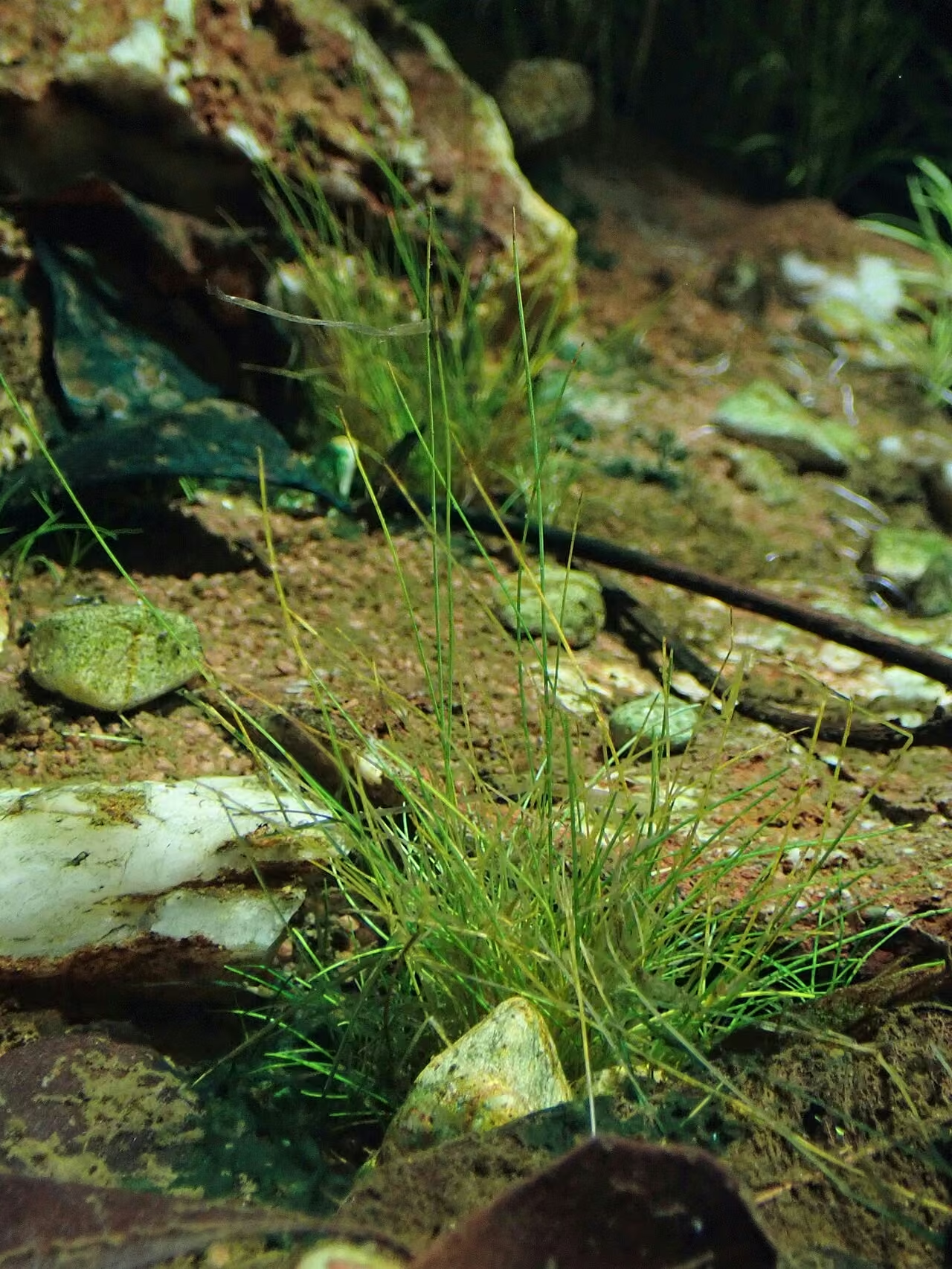
Small Spike Sedge
Eleocharis pusilla
Last updated:
Eleocharis pusilla is one of New Zealand's smallest sedges, forming bright green to brownish tufts of hair-fine stems only 1 to 12 cm long. It grows on the margins of, and submerged within, lakes, tarns and slow-flowing rivers and streams throughout the North and South Islands, and also occurs across Australia, where it is known as small spike-rush. It shows a strong preference for clean, unpolluted water, so its presence is a quiet sign of healthy freshwater. Although ranked Not Threatened, it has declined markedly in the north of its New Zealand range and is regionally threatened in Wellington. Explore more native grasses and flaxes in our native plant guide.
Plant Description
Eleocharis pusilla is a diminutive perennial sedge that grows from pale brown rhizomes only 1 to 3 mm in diameter. From these arise densely tufted culms (stems) 10 to 120 mm long and usually much less than 0.5 mm thick, so fine that they are described as bristle-like. Plants exposed to the air are bright green, while submerged or shaded plants are dark green to brownish green. Like all spike sedges it has no proper leaf blades; the photosynthetic work is done by the stems.
Each culm ends in a single small spikelet 2.5 to 3 mm long and about 1 mm wide, ovate and sharply pointed, carrying one to five flowers. The glumes are 1.5 to 2 mm long and blunt. The fruit is a tiny nut about 1 mm long and 0.5 mm wide, narrowly obovoid, with prominent vertical ribs linked by fine transverse bars, a feature best seen under a hand lens.
It is most likely to be confused with Eleocharis gracilis, which has larger spikelets. NZPCN notes that its distinctly tufted, often bright green culms make emergent plants look like a small grass, and they are easily overlooked. Plants growing fully submerged, often among quillworts (Isoetes), rarely flower.
Quick Facts
| Scientific Name | Eleocharis pusilla |
|---|---|
| Height | 0.01-0.12 m |
| Spread | Small tufts spreading slowly by fine rhizomes |
| Water Needs | Aquatic to wet margins; needs regular immersion |
| Light | Full sun to semi-shade |
| Frost Tolerance | Hardy; occurs from northern lakes to the South Island |
| Salt Tolerance | Low; a freshwater species |
| Growth Rate | Slow to moderate |
| Lifespan | Perennial |
Climate Best Suited to
A cosmopolitan freshwater plant within New Zealand, occurring from northern lakes to the South Island. Water quality and permanent moisture matter far more to it than air temperature.
Regional Suitability
| City | Climate Suitability |
|---|---|
| Auckland | Medium |
| Wellington | Medium |
| Christchurch | Medium |
| Dunedin | Medium |
Plant Habitat
Eleocharis pusilla is found throughout the North and South Islands, showing what NZPCN calls a decided preference for clean waterways free from pollution. It is still abundant in the deeper, cleaner lake systems of the North Island and is common in the South Island, but herbarium records suggest a large decline in the north of its range. It is ranked Regionally Critical in the Wellington region and Regionally Naturally Uncommon in Otago.
It usually grows on the margins of, and submerged within, lakes, tarns and slow-flowing rivers and streams. Underwater it often shares the lake bed with quillworts. Outside New Zealand it is widespread in Australia, where it occurs in every state in moist sites such as lake shores and wet ground beside rivers.
Growing Requirements
Soil Requirements
It roots into the silt, sand or fine gravel of lake beds and shallow margins, where the substrate is permanently or regularly saturated.
- Fine sediment or sand on lake and stream margins
- Permanently wet or submerged ground
- Low-nutrient conditions typical of clean water bodies
Light Requirements
Emergent plants grow in open, sunny margins, while submerged plants cope with the reduced light under clear water. NZPCN advises semi-shade for cultivated plants.
- Semi-shade suits cultivated and aquarium plants
- Clear water is needed for submerged growth
- Taller emergent plants can shade it out of margins
Water Requirements
This is an obligate wetland plant (OBL) that almost always grows in water or on regularly inundated margins. Clean water is critical.
- Keep the plant immersed or the substrate saturated
- Avoid nutrient-enriched or polluted water
- Fluctuating lake levels are tolerated if the roots stay wet
Planting and Establishing
Small spike sedge is a plant for specialist pond or aquarium use rather than general garden planting. NZPCN notes it can be tricky to establish, so plant small rooted tufts directly into fine substrate on the shallow shelf of a clean pond or into the base of an aquarium.
Keep newly planted tufts permanently wet and lightly shaded until they begin to spread. In an outdoor pond, choose a spot without vigorous emergent plants such as raupō or exotic grasses that would quickly overwhelm such a tiny sedge.
Ecological Role
Eleocharis pusilla forms part of the low turf and submerged plant communities of clean New Zealand lakes, growing alongside quillworts and other small aquatic plants. These turfs help bind fine sediment on lake beds and shorelines.
Like other sedges it is wind-pollinated. Its bristly nuts are dispersed by water and possibly also by wind and by attaching to animals, which may help it reach isolated tarns. Its dependence on clean water makes it a useful indicator of good lake health.
Uses & Significance
Garden Uses
Its main cultivated use is as a fine-textured carpeting plant in aquariums and clean natural ponds.
- Submerged foreground plant in coldwater aquariums
- Shallow margins of a clean, unfertilised wildlife pond
- Restoration of native lake-edge turf communities
Ecological Value
It is part of the native submerged and lake-margin flora that has declined with nutrient enrichment, sedimentation and aquatic weed invasion in many lowland lakes.
- Indicator of clean, unpolluted freshwater
- Contributes to lake-bed turf alongside quillworts
- Helps stabilise fine sediment on shorelines
Landscaping Uses
In landscaping terms this is a miniature plant whose effect is a soft, bright green turf at the water's edge or on a pond floor. It works best where it can be seen at close range, such as a small, clear-water pond beside a path or deck.
Pair it with other low native lake-edge plants rather than tall rushes or flaxes, which would hide or shade it. Because it is inconspicuous, label it so it is not weeded out as grass.
Seasonal Care Calendar
Spring
Flowering begins in September, with tiny spikelets appearing at the tips of emergent culms.
- Check pond water levels as weather warms
- Remove algae that could smother tufts
Summer
Flowering continues through to February and nuts start ripening from November.
- Keep margins wet during dry spells
- Thin taller pond plants that shade it
Autumn
Fruiting continues to April as the ribbed nuts mature and are shed into the water.
- Collect ripe spikelets if seed is wanted
- Avoid disturbing the pond bed
Winter
Growth slows but tufts persist under water or on wet margins.
- No maintenance needed
- Keep leaf litter from fouling small ponds
When to Prune and How Much
No pruning is needed. The fine culms renew themselves from the rhizome, and cutting them achieves nothing useful.
In an aquarium, overgrown clumps can be trimmed back lightly with scissors or thinned by lifting sections, which can then be replanted.
How to Grow Small Spike Sedge
NZPCN describes Eleocharis pusilla as tricky to establish, doing best as a submerged aquarium plant in semi-shade with regular immersion in water. Division of established tufts is the most reliable approach because the plant already spreads by slender rhizomes. Seed is produced in abundance on emergent plants, with flowering from September to February and fruiting from November to April, but there is little published guidance on germinating this particular species, so seed raising should be treated as experimental. Whatever the method, the key is never letting the plant or its growing medium dry out, and using clean, low-nutrient water so that algae do not smother the tiny culms. Collect only from cultivated stock or with landowner permission, especially in regions where it is uncommon.
By Division
Established tufts can be gently pulled apart into small clumps, each with a piece of rhizome and some roots. Division is best done in spring when growth is resuming.
- Lift a healthy clump from a pond or aquarium in spring
- Tease it into small tufts, each with rhizome and roots attached
- Press each tuft into fine sand or silt in a shallow pot
- Stand the pot in a tray of clean water so the base is always wet
- Submerge or plant out once new culms appear
From Seed
The ribbed nuts ripen from November to April. Sedge nuts are generally best sown fresh onto a saturated surface.
- Collect ripe spikelets from emergent plants in summer or autumn
- Sow the tiny nuts on the surface of fine, wet sand
- Stand the pot in clean water so the surface stays saturated
- Keep in bright light without hot sun
- Grow seedlings on until they form small tufts before planting
Pests & Diseases
No specific insect pests are recorded. The main problems in cultivation are algae smothering the fine culms and the plant being overgrown by more vigorous pond plants.
In the wild, the greatest threats are nutrient enrichment, sedimentation and invasive aquatic weeds such as oxygen weeds, which reduce water clarity and occupy the lake beds where it grows.
Cultural Significance
No traditional Māori name or use is recorded for Eleocharis pusilla in the sources consulted.
The genus name Eleocharis means charm of the swamp, and pusilla means small, an apt name for one of the tiniest spike sedges. The species was named by the botanist Robert Brown from Australian material.
Bonus Tip
If you are surveying a lake edge for this sedge, look closely at what appears to be fine grass in the shallows. Pull one stem and check for a tiny pointed spikelet at the tip and a lack of leaf blades; a hand lens on the ribbed, cross-barred nut confirms the identification.
Related Plants
Explore other native plants that share similar characteristics or habitats with Small Spike Sedge (Eleocharis pusilla), offering further insights into New Zealand's diverse flora. These related species provide context and opportunities for complementary planting in your garden.
Chenopodium allanii
Chenopodium allanii
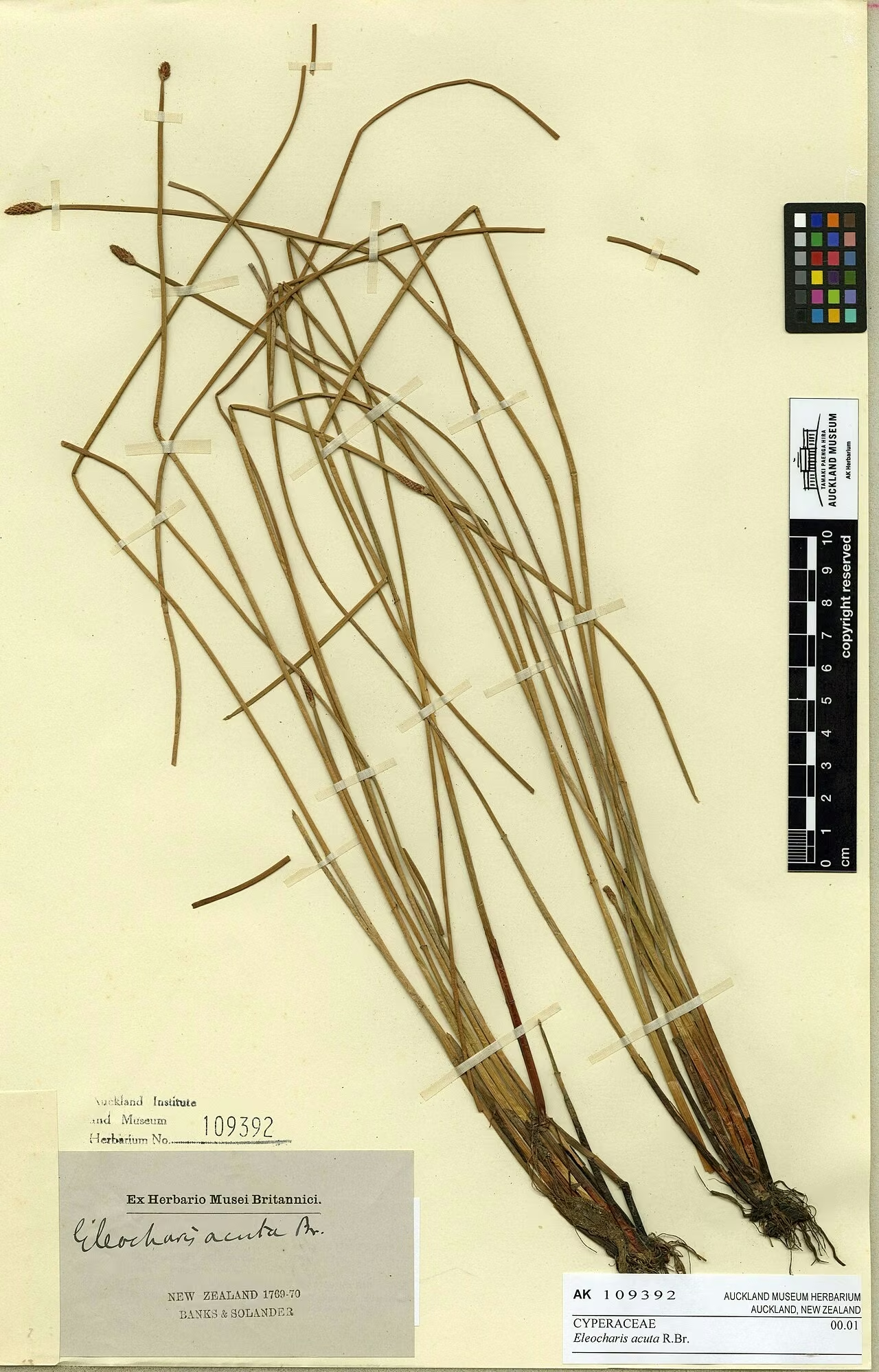
Sharp Spike Sedge
Eleocharis acuta
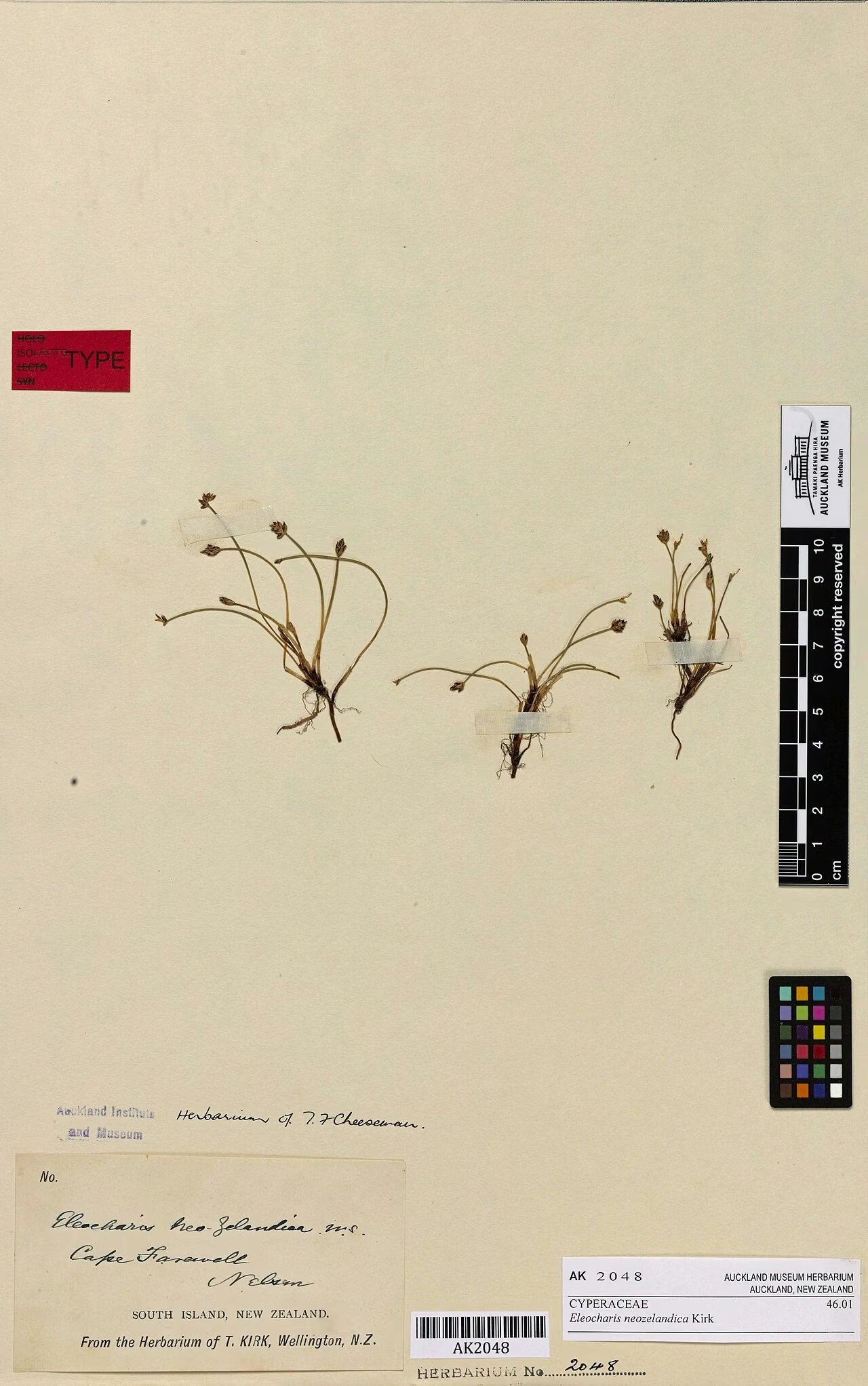
Sand Spike Sedge
Eleocharis neozelandica
Elingamita johnsonii
Elingamita johnsonii

Prostrate Bluegrass
Connorochloa tenuis
Chatham Island Sow Thistle
Sonchus grandifolius
Epacris alpina
Epacris alpina
Gracilis Plant
Gracilis Plant
Plant Conservation
Eleocharis pusilla is ranked Not Threatened nationally (2023), with the qualifier Secure Overseas because of its wide Australian range. However, NZPCN notes herbarium evidence of a large decline in the north of its New Zealand range, and it is Regionally Critical in Wellington.
The main threats are declining water quality, eutrophication and the spread of aquatic weeds in lowland lakes. Reducing nutrient and sediment runoff into lakes and streams, and preventing the spread of aquatic weeds between water bodies by cleaning boats and gear, are the most useful actions.
Frequently Asked Questions
What does Eleocharis pusilla look like?
It forms small, dense tufts of very fine, bright green stems under 0.5 mm thick and up to 12 cm long, each tipped with a tiny pointed spikelet about 3 mm long. Out of flower it is easily mistaken for a small grass.
Where does small spike sedge grow in New Zealand?
It grows on the edges of and under the water in lakes, tarns and slow-flowing rivers and streams in both main islands. It is still common in the South Island but has declined in the northern North Island.
Can Eleocharis pusilla be grown in an aquarium?
Yes. NZPCN notes it can be tricky to establish but does best as a submerged aquarium plant, where it can look very attractive, preferring semi-shade and regular immersion.
How do you tell Eleocharis pusilla from Eleocharis gracilis?
Eleocharis pusilla has smaller spikelets, up to about 3 mm long, and its tiny nut has prominent vertical ribs crossed by fine transverse bars.
Sources and Further Reading
The botanical, growing, and conservation details for Small Spike Sedge (Eleocharis pusilla) on this page draw on the New Zealand plant references below. Consult them for full technical records and the latest distribution data.