Epacris
Epacris alpina
Last updated:
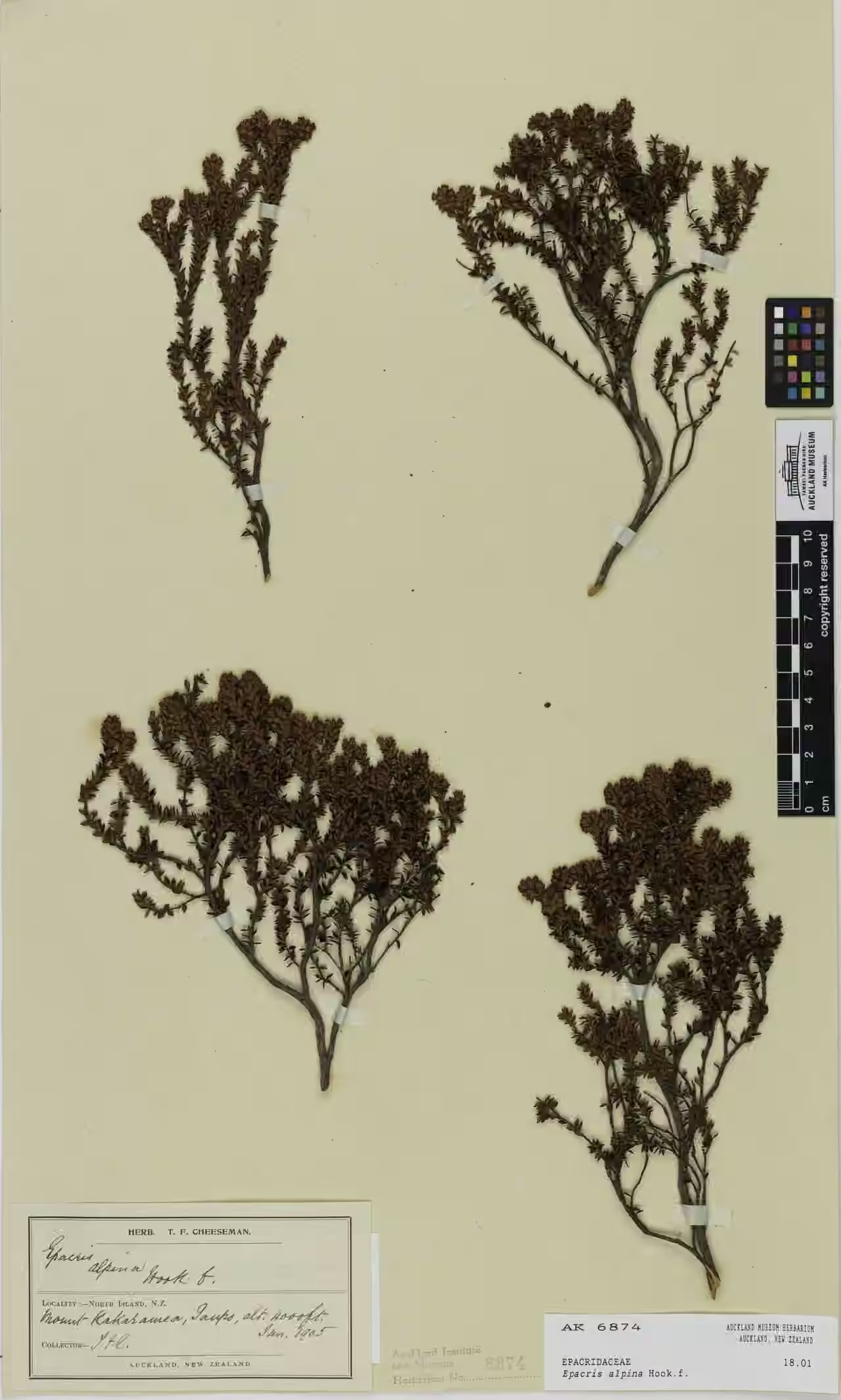
Epacris alpina is a small endemic heath shrub of New Zealand's mountains, growing up to about 1 m tall with slender, often sprawling stems densely set with hard leaves only 3 to 5 mm long. In December and January its twigs are dotted with small white flowers held singly at the base of the leaves. It grows in montane to lower subalpine grassland and fellfield from the Central Volcanic Plateau south to about the latitude of central Canterbury, and was first collected near the base of Mount Tongariro. It is ranked Not Threatened and is a close mountain relative of the lowland tamingi (Epacris pauciflora). Explore more native shrubs in our native plant guide.
Plant Description
Epacris alpina is an erect or spreading slender shrub up to about 1 m tall, often lying along the ground at the base before turning upward. Its twigs are covered in fine hairs. The leaves are hard, leathery and hairless, 3 to 5 mm long and 1.5 to 2 mm wide, ovate-oblong to elliptic with a blunt tip. They point upward at first and then spread out, closely packed along the stems, and are distinctly widest in the middle with a prominent ridge on the underside.
The white flowers, 2.5 to 4 mm across, are borne singly in the leaf axils, but there are many along each twig, giving a speckled white effect in summer. The corolla lobes spread open and the stigma is rounded. The fruit is a small, dry, five-lobed capsule about 1.5 mm long that releases minute, wind-dispersed seeds.
Its closest relative is tamingi (Epacris pauciflora), which grows in lowland bogs, gumland and pakihi rather than mountain grassland. Tamingi has slightly longer leaves (4 to 7 mm) marked with three darker green lines underneath, whereas Epacris alpina has a single prominent ridge.
Quick Facts
| Scientific Name | Epacris alpina |
|---|---|
| Height | Up to about 1 m |
| Spread | 0.3-1 m, often sprawling at the base |
| Water Needs | Moderate; moist but free-draining |
| Light | Full sun |
| Frost Tolerance | High; a montane to subalpine plant |
| Salt Tolerance | No information available |
| Growth Rate | Slow |
| Lifespan | Long-lived perennial shrub |
Climate Best Suited to
Suits cool, montane climates with cold winters and regular rainfall. It is not suited to hot, humid lowland conditions.
Regional Suitability
| City | Climate Suitability |
|---|---|
| Auckland | Low |
| Wellington | Medium |
| Christchurch | Medium |
| Dunedin | Medium |
Plant Habitat
Epacris alpina is endemic to New Zealand, occurring in the mountains of the North and South Islands from about latitude 38 degrees 30 minutes south to about 44 degrees south. NZPCN describes its range as montane areas south of the Central Volcanic Plateau, and the original specimens were collected near the base of Mount Tongariro.
Its habitat is montane to lower subalpine grassland and fellfield, where it grows among tussocks, low shrubs and on open stony ground.
Growing Requirements
Soil Requirements
Like many heaths, it grows on infertile, acidic soils, including volcanic and stony mountain soils.
- Low-fertility, acidic soil
- Free-draining stony or gritty ground
- Avoid lime and rich fertilisers
Light Requirements
It is a plant of open grassland and fellfield and needs full sun to stay compact and flower well.
- Full sun
- Avoid shading by taller shrubs
Water Requirements
In the mountains it receives regular rain and cool temperatures, so the root zone rarely dries out for long, but water drains away freely.
- Keep cool and evenly moist in cultivation
- Ensure excellent drainage
Planting and Establishing
Epacris alpina is not commercially available and is rarely cultivated. Anyone growing it should source plants from legally collected seed and place them in a cool rock garden, scree bed or alpine trough with gritty, acidic, low-fertility soil in full sun.
Avoid disturbing the roots when planting, as heath shrubs generally resent root disturbance, and mulch with stone chips to keep the root zone cool.
Ecological Role
Epacris alpina contributes to the low shrub layer of montane tussock grassland and fellfield, alongside other small heaths and tussocks. Its numerous small white flowers are likely visited by native insects, although specific pollinators are not recorded in the sources consulted.
NZPCN notes that its minute seeds are wind dispersed, allowing it to colonise open ground such as volcanic surfaces and disturbed fellfield.
Uses & Significance
Garden Uses
It has little ordinary garden use because it is not commercially available, but suits alpine enthusiasts.
- Alpine troughs and rock gardens
- Montane revegetation within its natural range
- Collections of native Ericaceae
Ecological Value
It is part of the native heath flora that characterises montane grassland and fellfield in the central North Island and northern South Island.
- Contributes to the shrub layer of tussock grassland
- Pioneer of open stony and volcanic ground
- Summer nectar source for small insects
Landscaping Uses
In an alpine garden, Epacris alpina can be used as a fine-textured small shrub among rocks, its sprawling base softening stone edges. Its white flowers in midsummer contrast well with the bronze and green of native tussocks.
Pair it with other mountain natives such as small Coprosma, Gaultheria and tussock grasses for a naturalistic montane planting.
Seasonal Care Calendar
Spring
New growth begins as mountain soils warm.
- Weed around cultivated plants
- Top up stone mulch
Summer
Flowering takes place in December and January, with many small white flowers along each twig.
- Water cultivated plants in dry spells
- Enjoy the flowers on mountain walks
Autumn
Tiny capsules ripen and release minute seeds on the wind.
- Collect capsules from cultivated plants for seed
- Sow seed fresh
Winter
Plants tolerate frost and snow in the mountains.
- No protection needed in cool areas
- Ensure good winter drainage
When to Prune and How Much
Pruning is rarely needed. A light trim after flowering can keep cultivated plants compact, but avoid cutting into old, leafless wood.
Remove any dead stems in spring.
How to Grow Epacris
Epacris alpina is not commercially available and there is no published propagation protocol specific to this species in the sources consulted. NZPCN notes only that its minute seeds are wind dispersed. The methods below follow general practice for small native heath shrubs in the Ericaceae, such as surface-sowing fine seed on acidic mix and striking semi-hardwood cuttings, and should be treated as a starting point rather than a proven recipe. Heaths often have specialised root fungi and can be slow and temperamental in cultivation, so expect modest success and slow growth. Use only seed or cuttings from cultivated plants, or collect with appropriate permission, and grow on in cool, bright conditions with a free-draining, acidic, low-nutrient medium.
From Seed
The capsules ripen after the December to January flowering. The seed is extremely fine and must be sown on the surface.
- Collect ripe capsules in late summer or autumn
- Dry them in a paper bag to release the seed
- Sow on the surface of fine, acidic, peaty seed mix
- Do not cover; mist to settle the seed
- Keep cool, moist and in good light until germination
- Grow seedlings slowly before potting on
From Cuttings
Short semi-hardwood cuttings can be tried, as is done with other small heath shrubs.
- Take 3 to 5 cm tip cuttings in late summer
- Strip leaves from the lower half
- Insert into a mix of fine bark and sand
- Keep humid and shaded until rooted
- Pot on into acidic, gritty mix
Pests & Diseases
No specific pests or diseases are recorded for Epacris alpina. In cultivation, root rot in warm, wet, poorly drained soils is the most likely problem.
In the wild, browsing animals and the spread of exotic weeds such as heather into montane grasslands could affect it, though no specific threats are documented.
Cultural Significance
No traditional Māori name or use is recorded for Epacris alpina in the sources consulted.
The species was described by Joseph Dalton Hooker. The genus name comes from the Greek epi, upon, and akros, top, referring to the high ground where some species grow, and alpina means of the mountains.
Bonus Tip
On Tongariro or Ruahine tracks in December, look for low shrubs with tiny, close-set leaves whose twigs are studded with white starry flowers. Turn a leaf over: a single prominent ridge underneath points to Epacris alpina rather than the three lines of lowland tamingi.
Related Plants
Explore other native plants that share similar characteristics or habitats with Epacris (Epacris alpina), offering further insights into New Zealand's diverse flora. These related species provide context and opportunities for complementary planting in your garden.
Small Spike Sedge
Eleocharis pusilla
Elingamita johnsonii
Elingamita johnsonii

Prostrate Bluegrass
Connorochloa tenuis
Chatham Island Sow Thistle
Sonchus grandifolius
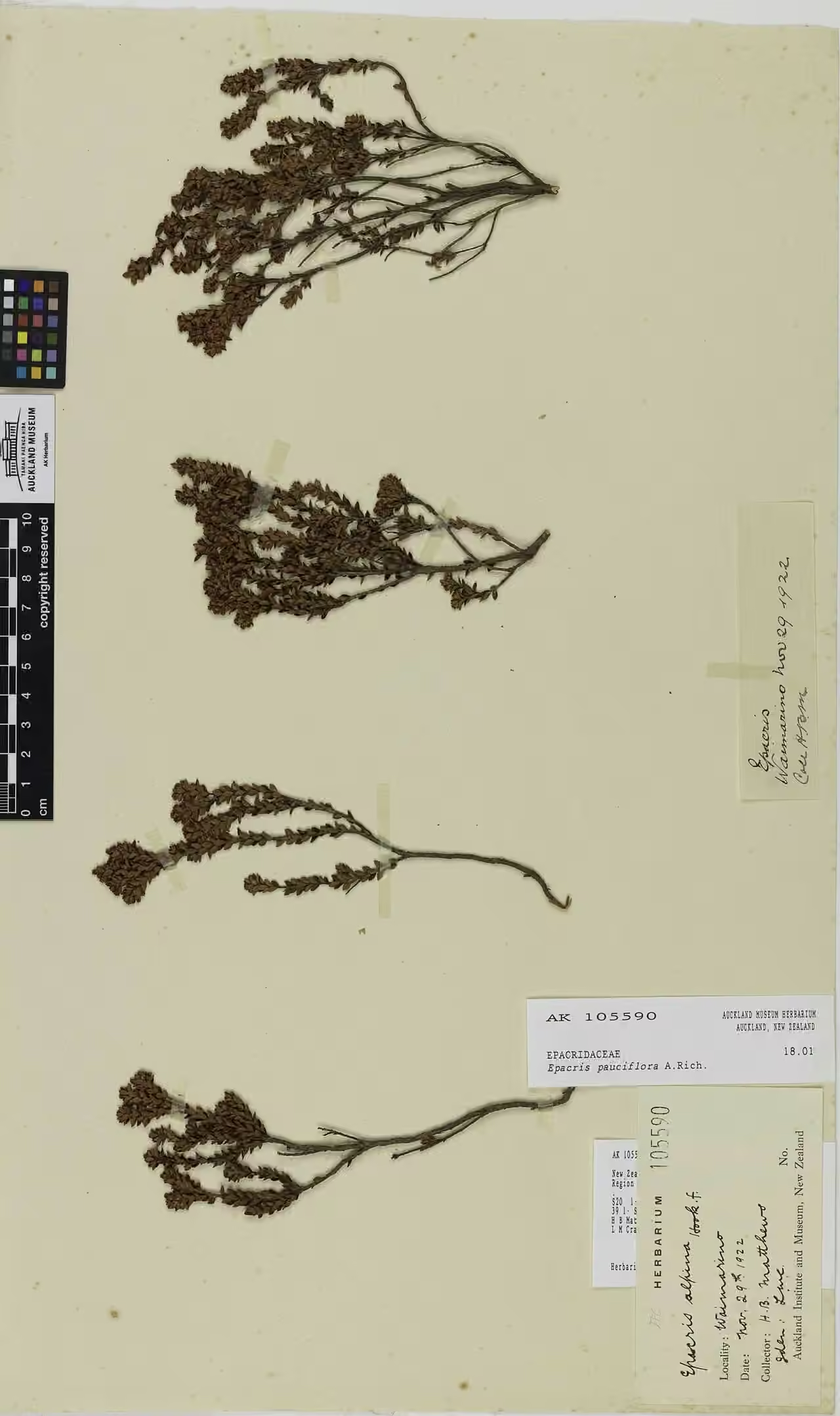
Tamingi
Epacris pauciflora
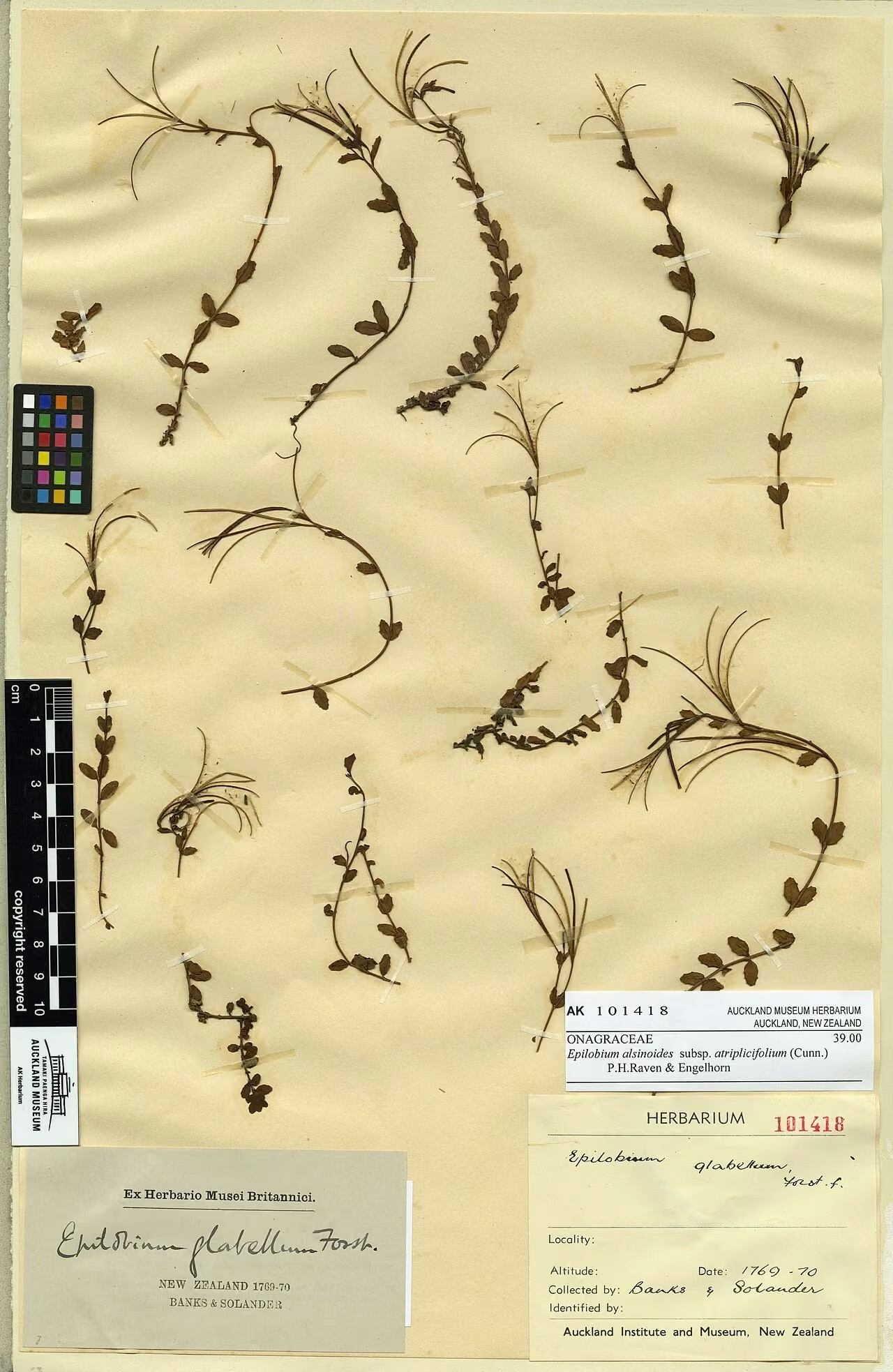
Epilobium alsinoides
Epilobium alsinoides
Epilobium angustum
Epilobium angustum
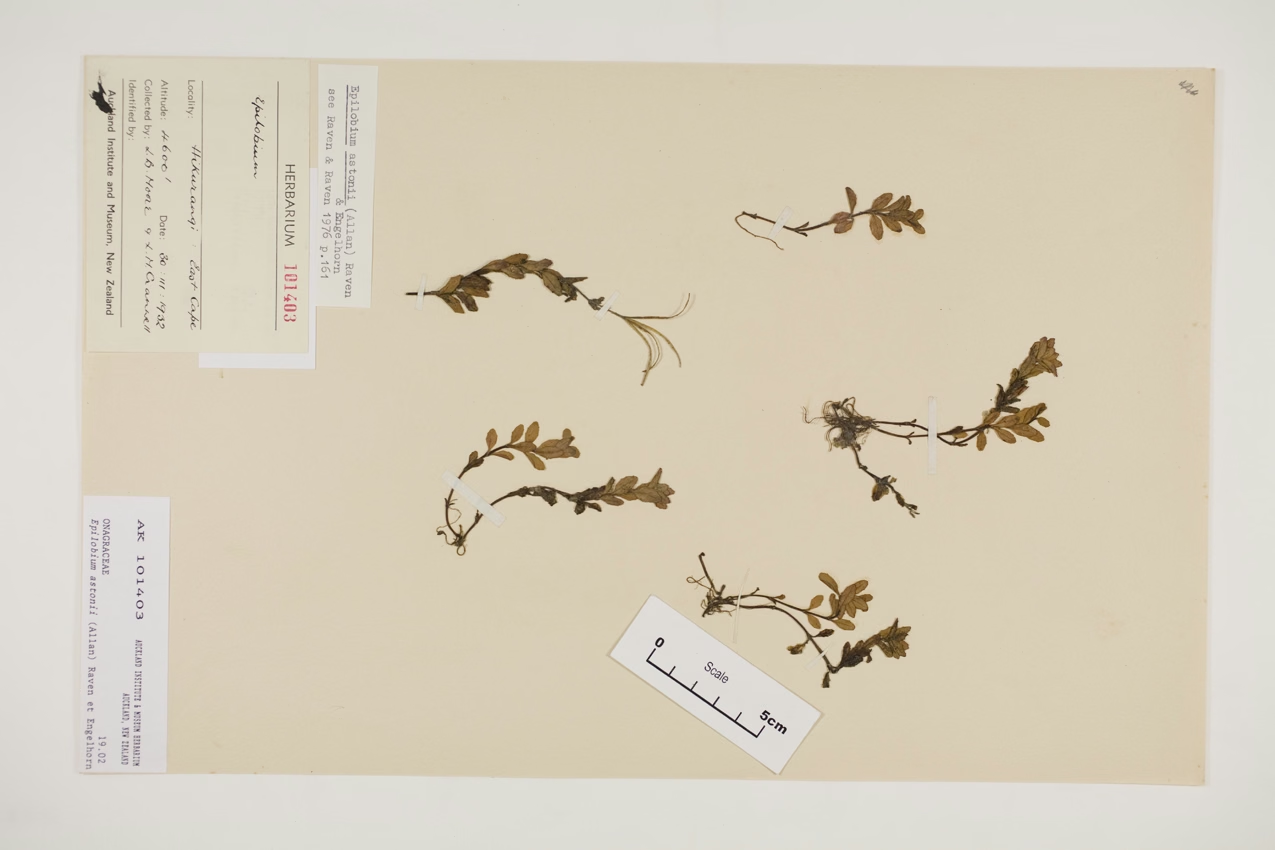
Aston's Willowherb
Epilobium astonii
Plant Conservation
Epacris alpina is ranked Not Threatened (2023) and is widespread in montane habitats across its range.
Protecting montane grasslands from invasive weeds such as heather and wilding conifers helps keep its habitat intact.
Frequently Asked Questions
Where does Epacris alpina grow?
It grows in montane to lower subalpine grassland and fellfield in the North and South Islands, from the Central Volcanic Plateau south to about latitude 44 degrees.
How do you tell Epacris alpina from tamingi?
Epacris alpina is a mountain plant with shorter leaves, 3 to 5 mm long, and a single prominent ridge on the leaf underside, and it flowers in December and January. Tamingi (Epacris pauciflora) is a lowland bog and scrub shrub with leaves 4 to 7 mm long marked with three darker lines beneath, flowering through much of the year.
Is Epacris alpina available from nurseries?
NZPCN notes that it is not commercially available, so it is rarely seen in gardens outside specialist alpine collections.
Sources and Further Reading
The botanical, growing, and conservation details for Epacris (Epacris alpina) on this page draw on the New Zealand plant references below. Consult them for full technical records and the latest distribution data.