
Prostrate Bluegrass
Connorochloa tenuis
Last updated:
Prostrate bluegrass (Elymus tenuis, now called Connorochloa tenuis) is an endemic New Zealand grass with flat, bronze leaves and slender stems that trail along the ground, rooting at the nodes. After flowering, its upper stem can stretch to 1.5 m, so the whole culm may reach 2 m or more. It grows in open short tussock (Festuca) grassland from sea level to 900 m on the Volcanic Plateau, the Ruahine Range and the eastern South Island. It is the only species in its genus and is ranked At Risk - Declining, as much of its grassland habitat has been converted to pasture. Explore more native grasses and flaxes in our native plant guide.
Plant Description
Prostrate bluegrass is a flat, open, stoloniferous grass with bronze-coloured leaves that roots and shoots from the nodes of its trailing stems. Leaf sheaths are 5 to 7 cm long and mostly hairless; the ribbed blades are 10 to 15 cm long and only about 2 mm wide, with tiny prickle-teeth on the margins and upper surface. The ligule is minute and there are small, clasping auricles.
The slender culm trails along the ground and can be 2 m or more long. Its most remarkable feature is that the uppermost internode elongates greatly after flowering, sometimes to 1.5 m, carrying the seed head well away from the parent plant. The wheat-like inflorescence is 10 to 15 cm long with up to 15 spikelets, each with six to eight florets. The glumes bear short barbed awns and the lemmas have awns 15 to 35 mm long. Seeds are 4.5 to 5 mm long.
It can be separated from New Zealand's other wheatgrasses (Anthosachne and related grasses) by its easily detached, trailing culms, the elongating upper internode, spikelets pressed flat against the stem and uniformly yellow anthers 2 to 3 mm long. It is also octoploid (2n = 56).
Quick Facts
| Scientific Name | Connorochloa tenuis |
|---|---|
| Height | Prostrate; culms trail up to 2 m long |
| Spread | Up to 2 m by trailing stolons |
| Water Needs | Low; a grass of dry, open grassland |
| Light | Full sun |
| Frost Tolerance | High |
| Salt Tolerance | No information available |
| Growth Rate | Moderate |
| Lifespan | Perennial |
Climate Best Suited to
Suits the dry, sunny, frosty climates of the central North Island and the eastern South Island, where short tussock grassland develops.
Regional Suitability
| City | Climate Suitability |
|---|---|
| Auckland | Low |
| Wellington | Medium |
| Christchurch | High |
| Dunedin | Medium |
Plant Habitat
Prostrate bluegrass is endemic to New Zealand. In the North Island it occurs on the Volcanic Plateau and in the Ruahine Range; in the South Island it is found in north-west Nelson, Marlborough and east of the main divide south to Southland.
It is a species of open short tussock grassland dominated by fescue tussock (Festuca), from sea level to about 900 m. Its trailing stems weave through the gaps between tussocks in these open, sunny communities.
Growing Requirements
Soil Requirements
It grows on the free-draining, low-fertility soils typical of short tussock grassland.
- Free-draining, stony or silty soils
- Low fertility; fertilised ground favours competing pasture grasses
- Open ground between tussocks
Light Requirements
A plant of open grassland, it needs full sun and does poorly when shaded by taller vegetation.
- Full sun
- Avoid shading by shrubs or rank pasture grasses
Water Requirements
It is adapted to the dry summers of eastern tussock grasslands and needs little watering once established.
- Water only while establishing
- Avoid wet, poorly drained sites
Planting and Establishing
Prostrate bluegrass is best used in dryland grassland restoration within its natural range. Plant divisions or seedlings into open ground between low tussocks in autumn or early spring, in full sun and free-draining soil.
Keep competing exotic grasses away from new plants, as these are what have displaced it across much of its range. In a garden, a sunny gravel or rock garden gives the trailing stems room to spread.
Ecological Role
As a wind-pollinated grass of short tussock grassland, it fills the spaces between fescue tussocks with a loose network of trailing stems. NZPCN notes that its florets are dispersed by wind and by attaching to animals or clothing, aided by the long lemma awns.
The dramatic lengthening of the upper stem after flowering appears to carry the seed head away from the parent, helping the species spread across open ground. Insects or other animals that depend on it are not documented in the sources consulted.
Uses & Significance
Garden Uses
It has limited ordinary garden use but is valuable in native grassland plantings and specialist collections.
- Dryland and short tussock grassland restoration
- Rock or gravel gardens with room to trail
- Collections of rare native grasses
Ecological Value
It is the sole member of an endemic genus and part of New Zealand's dwindling native lowland and montane grasslands.
- Only species in the endemic genus Connorochloa
- Component of short tussock grassland communities
- Indicator of intact native grassland not converted to pasture
Landscaping Uses
Its bronze foliage and trailing habit can be used as a loose, textured ground layer among low tussocks such as Festuca or Poa in a dryland native planting. The long arching seed stems add movement in summer.
Allow it plenty of open space, because it is a low, sprawling grass that will not compete with dense ground covers.
Seasonal Care Calendar
Spring
New leaves and stolons grow as soils warm.
- Plant divisions in early spring
- Weed out invading pasture grasses
Summer
Flowering stems appear and the upper internode begins to lengthen dramatically after flowering. Exact flowering months are not given in the sources consulted.
- Leave stems intact to ripen seed
- Avoid watering established plants
Autumn
Seed ripens and disperses on wind and by attaching to passing animals.
- Collect fresh seed from cultivated plants
- Sow seed fresh
Winter
Plants persist through frosts in a semi-dormant state.
- No maintenance needed
- Keep site free of rank exotic grass
When to Prune and How Much
No pruning is needed. Old, dead culms can be cleared away in late winter to tidy the plant before new growth.
Avoid cutting off flowering stems until seed has dispersed if you want the plant to self-sow.
How to Grow Prostrate Bluegrass
NZPCN states that prostrate bluegrass is easily grown from divisions of whole plants and from fresh seed. Because the stems root at their nodes, rooted pieces of stolon are also simple to separate and grow on. Seed should be collected fresh from cultivated plants once the long-awned florets ripen; for restoration projects, collect locally sourced seed with permission so that plantings reflect the genetic make-up of the area. Because this species is At Risk - Declining, wild plants should be disturbed as little as possible. Grow young plants in a free-draining, low-fertility mix and keep them in full sun, since rich, shaded conditions favour soft growth and competing weeds. Plants raised this way are well suited to replanting into short tussock grassland restoration sites in autumn.
By Division
Whole plants can be lifted and split, or rooted lengths of the trailing stolons can be cut away and potted up.
- Lift a cultivated plant in autumn or early spring
- Separate into pieces or cut rooted stolon sections
- Pot into a gritty, free-draining mix
- Water in and keep lightly moist in full sun
- Plant out once new leaves and roots are growing
From Seed
Fresh seed germinates readily. The florets carry long awns that can be trimmed for easier sowing.
- Collect ripe florets from cultivated plants
- Sow fresh into trays of free-draining seed mix
- Cover lightly and keep moist
- Prick out seedlings into individual pots
- Grow on in full sun before planting out
Pests & Diseases
No particular pests or diseases are recorded for this grass. Like other native grasses it can be grazed by stock and rabbits.
Its main threat is competition from introduced pasture grasses, which have replaced it across large areas of its former range.
Cultural Significance
No traditional Māori name or use is recorded for this grass in the sources consulted.
The plant was first described by John Buchanan as a variety of Agropyron scabrum, later treated as Agropyron tenue and then Elymus tenuis, before Barkworth, Jacobs and Zhang placed it in its own genus, Connorochloa, recognising that its unusual elongating flowering stem and genome combination set it apart from all other wheatgrasses. The origin of the genus name is not explained in the sources consulted.
Bonus Tip
If you think you have found prostrate bluegrass, check a flowering stem in late summer: if a trailing culm snaps away from the plant easily and the stalk below the seed head has stretched to many times the length of the leaves, you are very likely looking at this species.
Related Plants
Explore other native plants that share similar characteristics or habitats with Prostrate Bluegrass (Connorochloa tenuis), offering further insights into New Zealand's diverse flora. These related species provide context and opportunities for complementary planting in your garden.
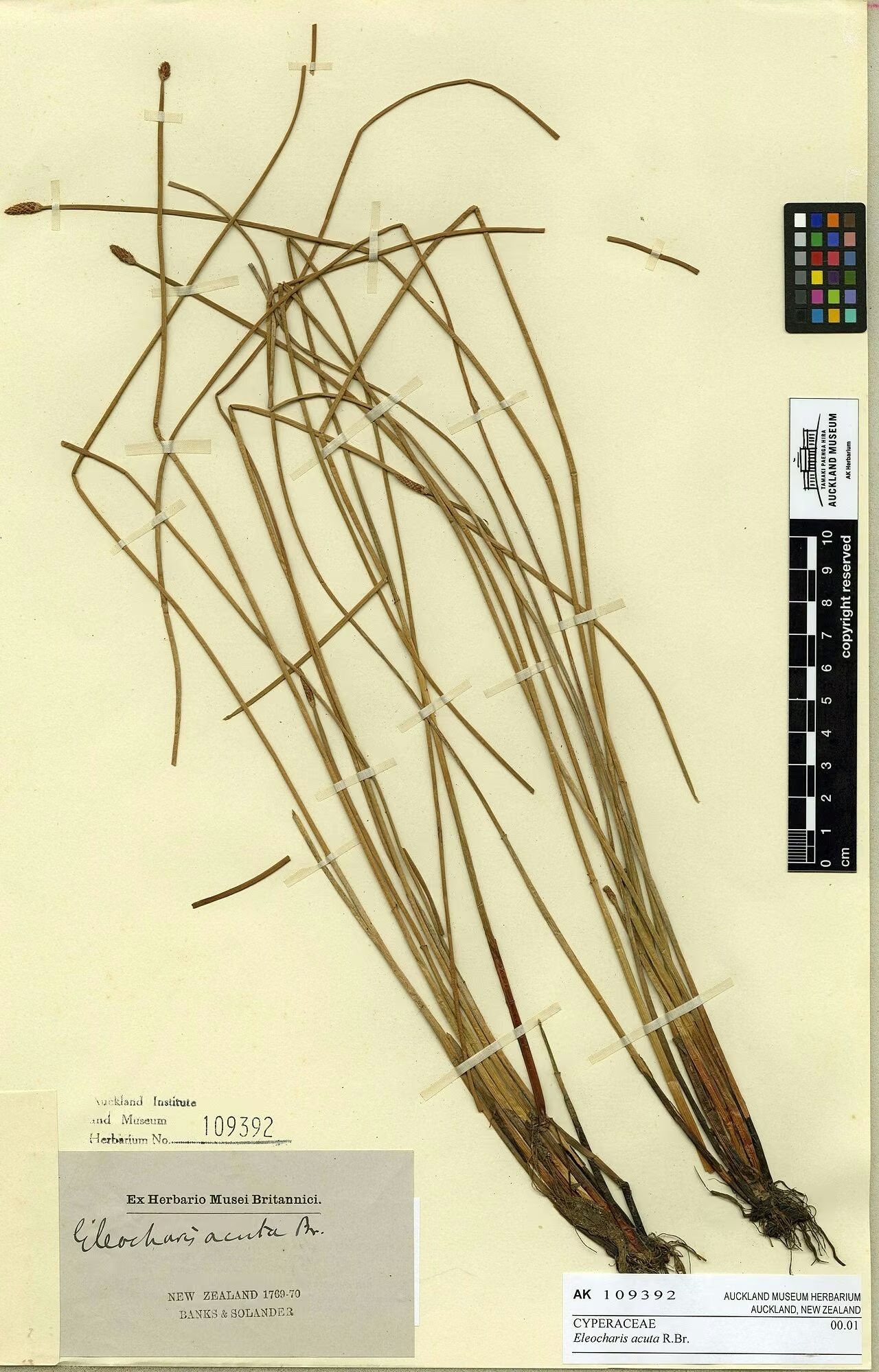
Sharp Spike Sedge
Eleocharis acuta
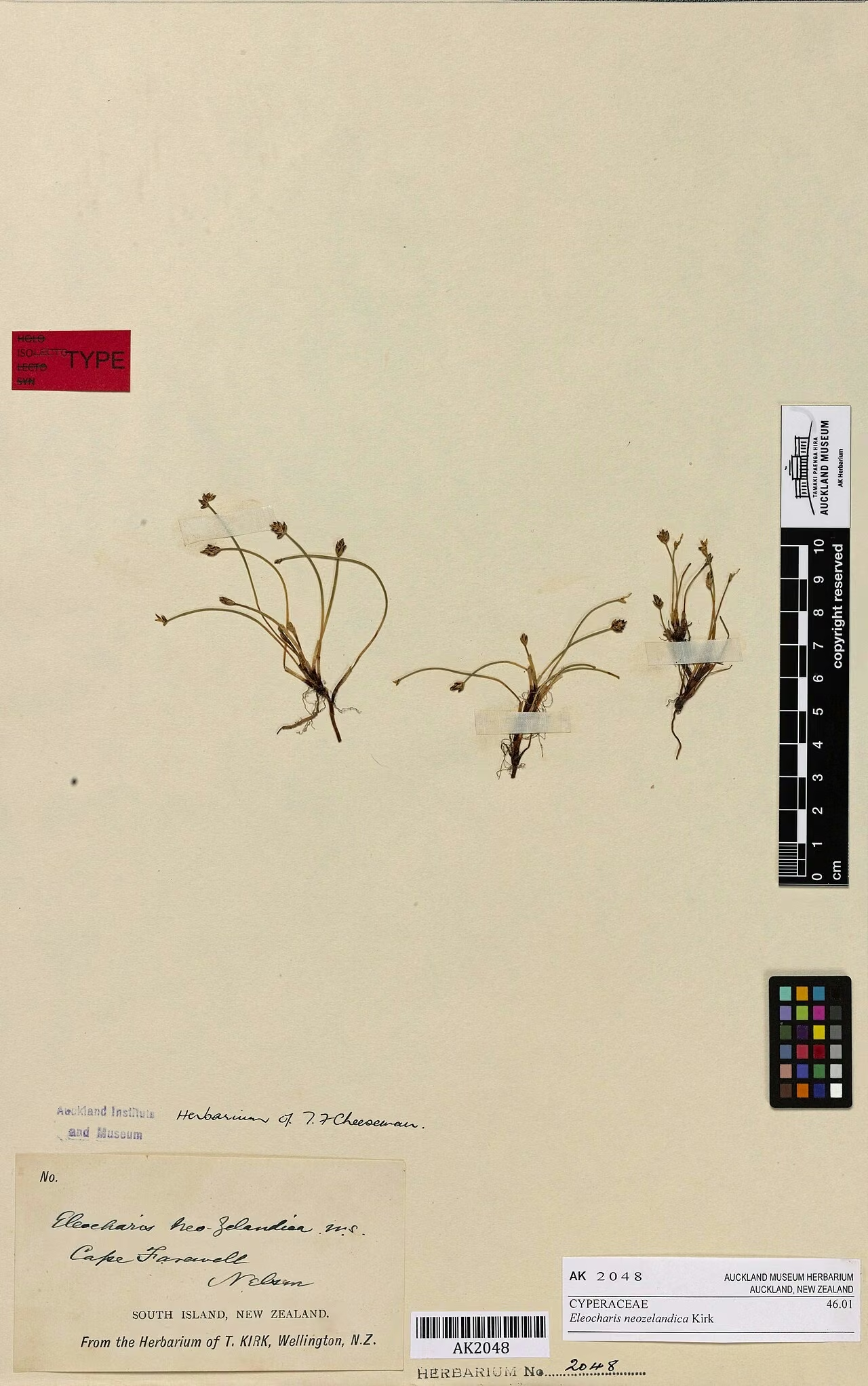
Sand Spike Sedge
Eleocharis neozelandica
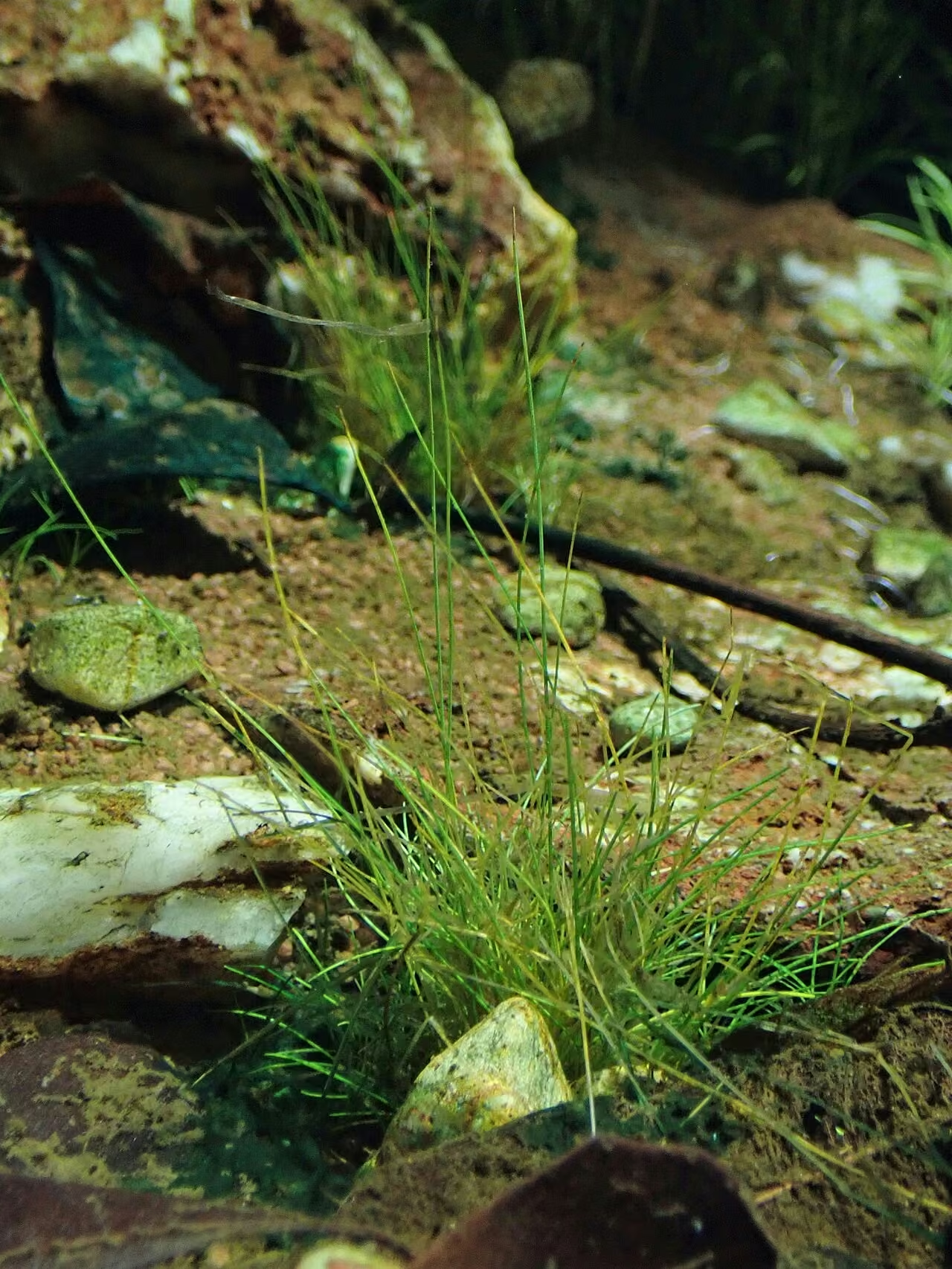
Small Spike Sedge
Eleocharis pusilla
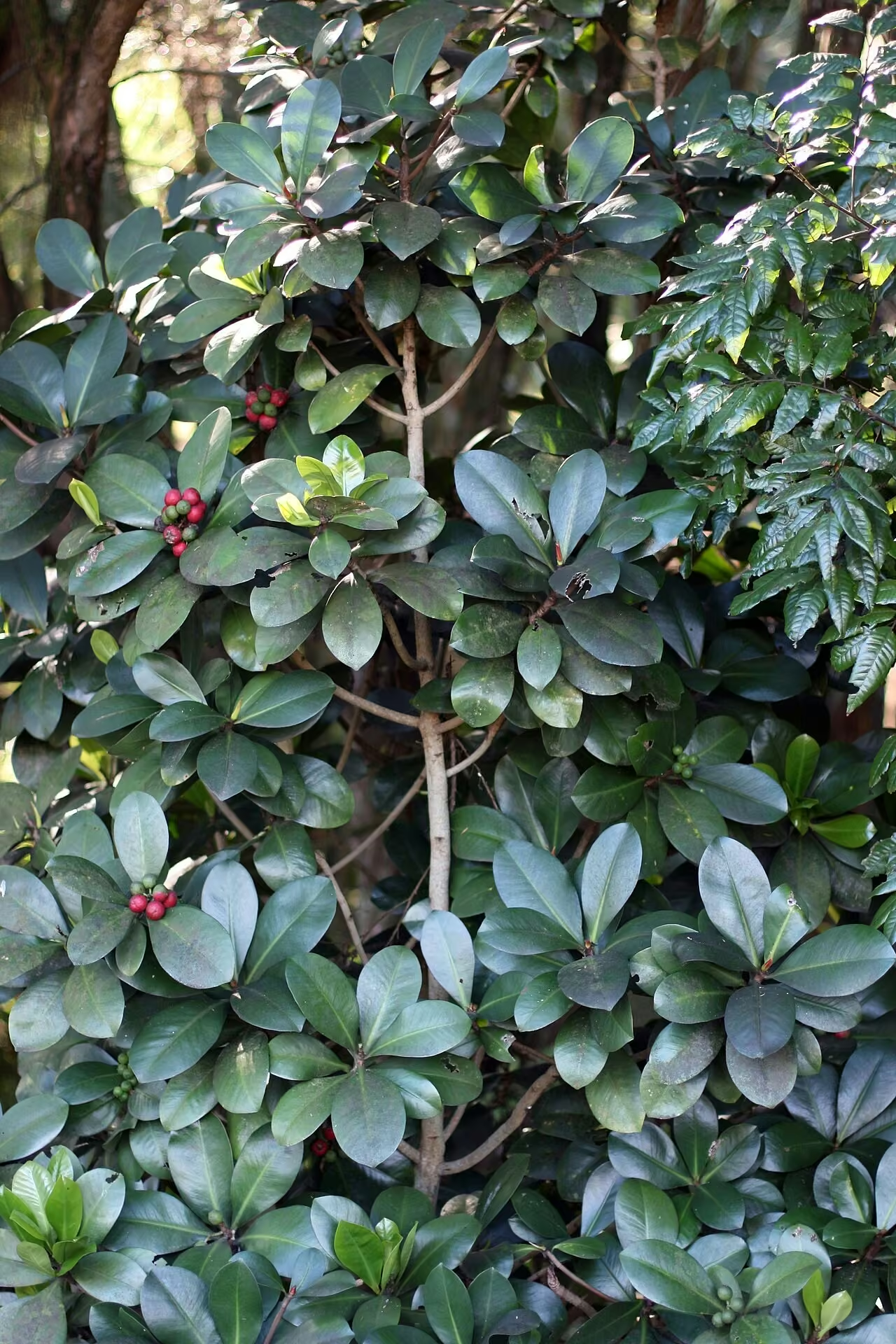
Elingamita johnsonii
Elingamita johnsonii
Chatham Island Sow Thistle
Sonchus grandifolius
Epacris alpina
Epacris alpina
Tamingi
Epacris pauciflora
Epilobium alsinoides
Epilobium alsinoides
Plant Conservation
Connorochloa tenuis is ranked At Risk - Declining (2023), having previously been listed as Data Deficient. NZPCN notes that much of its historic range has been overtaken by introduced pasture grasses, although the decline has not been fully quantified.
Protecting remaining short tussock grasslands from conversion, intensive fertilising and invasion by exotic grasses is the most important action. Recording sightings on iNaturalist NZ also helps clarify where it still occurs.
Frequently Asked Questions
Is Elymus tenuis the same as Connorochloa tenuis?
Yes. Barkworth and colleagues moved Elymus tenuis into a new genus, Connorochloa, of which it is the only species. NZPCN now lists it as Connorochloa tenuis.
How do you identify prostrate bluegrass?
Look for bronze leaves about 2 mm wide, culms that trail along the ground and detach easily, an upper stem that greatly lengthens after flowering, spikelets pressed against the stem and uniformly yellow anthers 2 to 3 mm long.
Where does prostrate bluegrass grow?
It grows in open short tussock grassland from sea level to 900 m on the Volcanic Plateau and Ruahine Range in the North Island, and in north-west Nelson, Marlborough and east of the main divide in the South Island.
Why is Connorochloa tenuis declining?
NZPCN notes that large parts of its former range have been taken over by introduced pasture grasses, which suggests it is declining, although the extent has not been fully measured.
Sources and Further Reading
The botanical, growing, and conservation details for Prostrate Bluegrass (Connorochloa tenuis) on this page draw on the New Zealand plant references below. Consult them for full technical records and the latest distribution data.