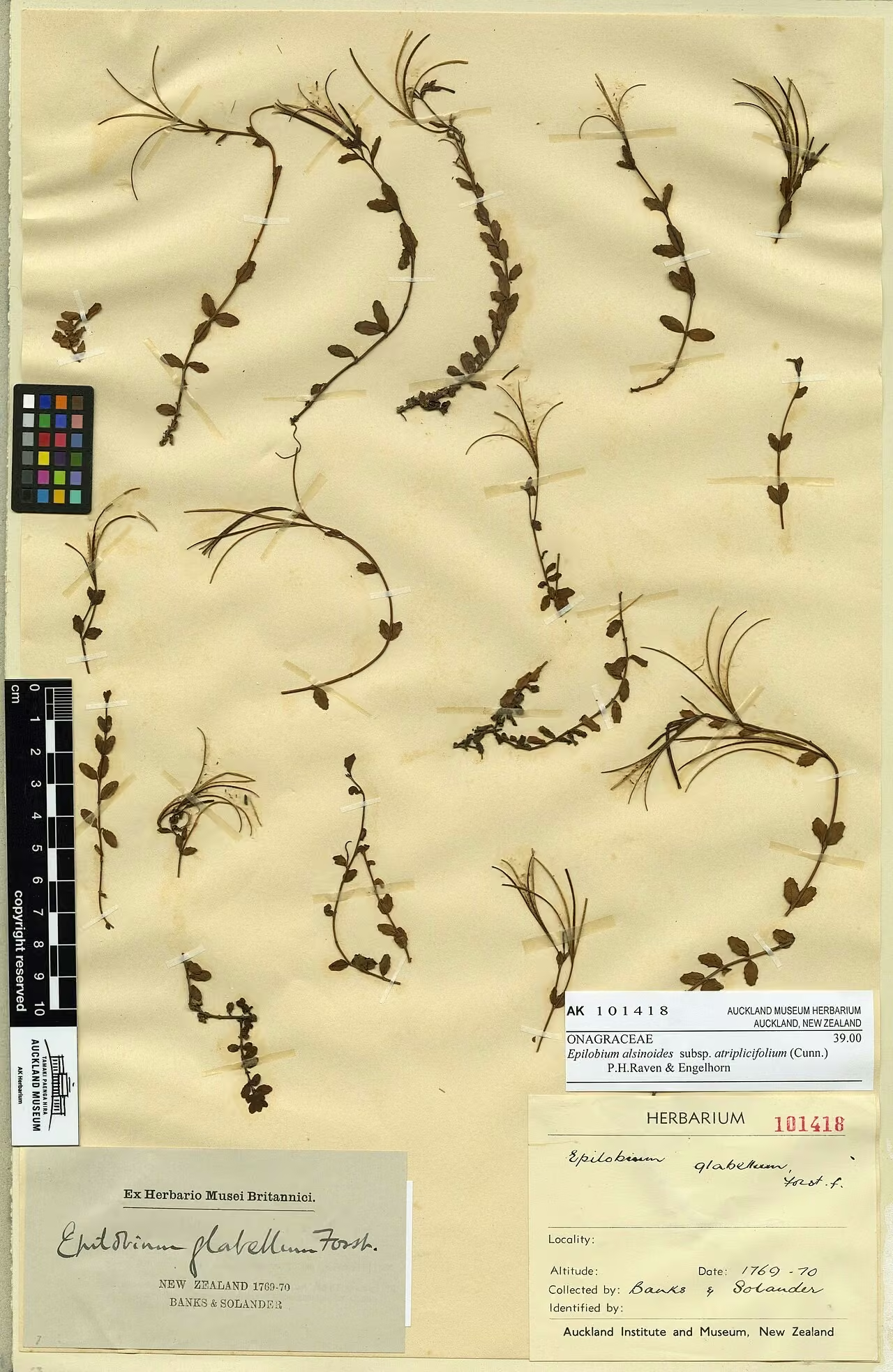
Willowherb
Epilobium alsinoides
Last updated:
Epilobium alsinoides is a delicate, low-growing endemic willowherb about 20 cm tall, covered in fine hairs, with small opposite oval leaves 3 to 8 mm long and white flowers that may flush pink after pollination. Its name refers to its chickweed-like look. It grows from sea level to low alpine elevations in open grassland and on partly shaded, seasonally damp eroding banks in the North Island and the northern South Island. It is ranked Not Threatened nationally, but is now scarce north of the Waikato and has disappeared from Northland and Auckland, where it was first collected in 1833. Explore more native flowering plants in our native plant guide.
Plant Description
Epilobium alsinoides is a delicate, low perennial herb up to about 200 mm tall, usually much-branched from the base with leafy stolons, and densely covered in fine, flattened hairs. The leaves are small and opposite, 3 to 8 mm long, oval in shape with just a few teeth along the margins, giving the plant the chickweed-like appearance reflected in its name (alsinoides means like Alsine, an old name for chickweed).
The flowers are small with white petals that may flush pink after pollination. As in all willowherbs, the flower sits on top of a long, narrow ovary that develops into a slender capsule, splitting to release seeds topped with a tuft of silky hairs. Flowering is mainly from November to January, with fruit maturing from January to May.
Several small New Zealand willowherbs are closely related. NZPCN separates it from Epilobium atriplicifolium by its finely reticulate rather than papillose seeds and pedicels that lengthen to 10 to 80 mm in fruit, and from E. tenuipes by its ovate rather than narrow leaves, usually shorter than the internodes, and the whitish flattened hairs on the capsule and sepals.
Quick Facts
| Scientific Name | Epilobium alsinoides |
|---|---|
| Height | Up to about 0.2 m |
| Spread | 0.1-0.3 m |
| Water Needs | Moderate; seasonally damp but not humid |
| Light | Full sun to partial shade |
| Frost Tolerance | Moderate to high; reaches low alpine zone |
| Salt Tolerance | No information available |
| Growth Rate | Fast |
| Lifespan | Short-lived perennial |
Climate Best Suited to
Suits temperate climates with seasonal moisture but good air movement. Humid, still conditions encourage powdery mildew.
Regional Suitability
| City | Climate Suitability |
|---|---|
| Auckland | Low |
| Wellington | Medium |
| Christchurch | Medium |
| Dunedin | Medium |
Plant Habitat
Epilobium alsinoides is endemic to New Zealand. It occurs throughout the North Island, although it is scarce north of the Waikato and is now regarded as regionally extirpated in Northland and Auckland. In the South Island it is apparently confined to Nelson and northern Marlborough. The type specimens were gathered in 1833 between the Waimate and Kerikeri mission stations in the Bay of Islands.
It grows from sea level to low alpine elevations, usually in open grassland or on partially shaded, seasonally damp eroding banks, where reduced competition from taller plants lets this small herb persist.
Growing Requirements
Soil Requirements
It grows on thin, often freshly exposed soils of eroding banks and in open grassland.
- Free-draining, moderately fertile soil
- Bare or sparsely vegetated ground
- Seasonally damp sites
Light Requirements
It favours open or partially shaded sites where taller vegetation does not crowd it.
- Full sun to partial shade
- Avoid dense ground covers that smother it
Water Requirements
Its natural sites are seasonally damp, but humid, stagnant air causes problems.
- Keep moderately moist during growth
- Provide good air circulation to prevent mildew
Planting and Establishing
Grow Epilobium alsinoides in a rock garden, on a sunny bank or in a pot, in free-draining soil with good airflow. It is short-lived, so allow it to self-seed into gaps.
In humid northern gardens, plant it where breezes keep the foliage dry to reduce powdery mildew.
Ecological Role
As a small pioneer herb, Epilobium alsinoides colonises bare ground on eroding banks and open grassland. Its seeds, carrying a tuft of hairs, are dispersed by wind in the manner typical of willowherbs.
Its specific pollinators are not documented in the sources consulted, though the pink flush that develops after pollination is a feature also seen in other New Zealand willowherbs.
Uses & Significance
Garden Uses
It is mainly of interest to native plant enthusiasts as a small, self-seeding herb.
- Rock gardens and troughs
- Filling gaps on sunny banks
- Restoration of native grassland herb communities
Ecological Value
It is part of the native small-herb flora of grasslands and banks, a group that is easily overlooked and often displaced by weeds.
- Pioneer of bare, eroding ground
- Endemic member of a diverse NZ willowherb group
- Regionally lost from Northland and Auckland
Landscaping Uses
Its small scale suits close-up plantings such as rock crevices, gravel paths and the front of native herb beds, where the tiny white flowers can be appreciated.
Combine it with other small native herbs and low grasses rather than vigorous ground covers.
Seasonal Care Calendar
Spring
New shoots grow from the leafy stolons as the weather warms.
- Weed around plants
- Sow fresh seed if available
Summer
Flowering runs from November to January, with white flowers that may turn pink after pollination.
- Watch for powdery mildew in humid weather
- Water in dry spells
Autumn
Capsules ripen from January to May and split to release plumed seeds.
- Collect seed as capsules begin to split
- Allow some to self-sow
Winter
Plants persist as small leafy tufts.
- Keep drainage good
- Replace old plants with seedlings
When to Prune and How Much
No pruning is required. Remove old flowering stems once seed has been shed if you want a tidier plant.
Cut away any mildewed shoots promptly to limit the spread of the disease.
How to Grow Willowherb
NZPCN states that Epilobium alsinoides is easily grown from fresh seed and from rooted pieces. It flowers from November to January and ripens fruit from January to May, so summer and autumn are the times to gather seed. The plumed seeds blow away quickly once the long capsules split, so check plants regularly. Because it forms leafy stolons that root at the base, small rooted pieces can simply be detached and potted. Plants are short-lived, so keeping a few seedlings coming on is the best way to keep it in a garden. It dislikes humidity and is prone to powdery mildew in humid climates, so raise young plants in an airy, bright position rather than a closed propagating case, and water at soil level.
From Seed
Fresh seed germinates readily. Collect capsules just as they begin to split.
- Collect capsules as they start to split in summer or autumn
- Sow seed fresh on the surface of a free-draining seed mix
- Press in lightly and keep just moist
- Place in bright light with good air movement
- Prick out seedlings into small pots once they have a few leaf pairs
By Division of Rooted Pieces
Rooted stolons and side shoots can be separated from established plants.
- Lift or expose the base of a healthy plant
- Detach small shoots that already have roots
- Pot into a gritty, free-draining mix
- Water in and keep lightly shaded for a week
- Plant out once growing strongly
Pests & Diseases
Powdery mildew is the main problem, particularly in humid climates, as NZPCN notes. Good airflow and avoiding overhead watering help.
In the wild, it is threatened mainly by competition from exotic grasses and weeds that overgrow the open ground it needs.
Cultural Significance
No traditional Māori name or use is recorded for Epilobium alsinoides in the sources consulted.
It was among the early New Zealand plants collected for science, with the type specimens gathered in the Bay of Islands in 1833. The genus name Epilobium comes from the Greek epi, upon, and lobos, pod, because the flower appears to sit on top of the seed pod.
Bonus Tip
To tell this willowherb apart from its close relatives, look at a leaf next to the stem: in Epilobium alsinoides the oval leaf is usually shorter than the gap to the next leaf pair, and the capsule and sepals look whitish from their fine flattened hairs.
Related Plants
Explore other native plants that share similar characteristics or habitats with Willowherb (Epilobium alsinoides), offering further insights into New Zealand's diverse flora. These related species provide context and opportunities for complementary planting in your garden.

Prostrate Bluegrass
Connorochloa tenuis
Chatham Island Sow Thistle
Sonchus grandifolius
Epacris alpina
Epacris alpina
Tamingi
Epacris pauciflora
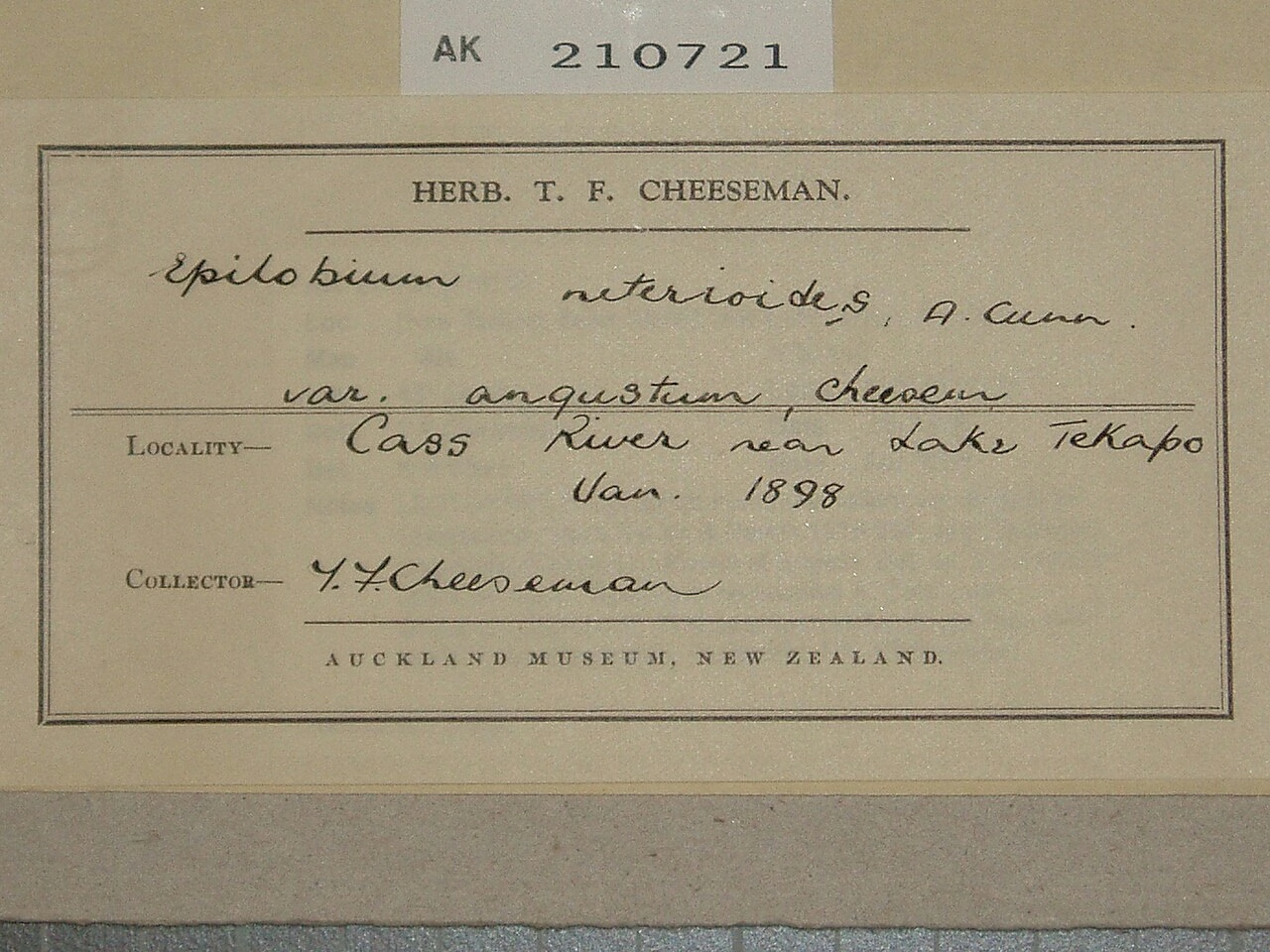
Epilobium angustum
Epilobium angustum
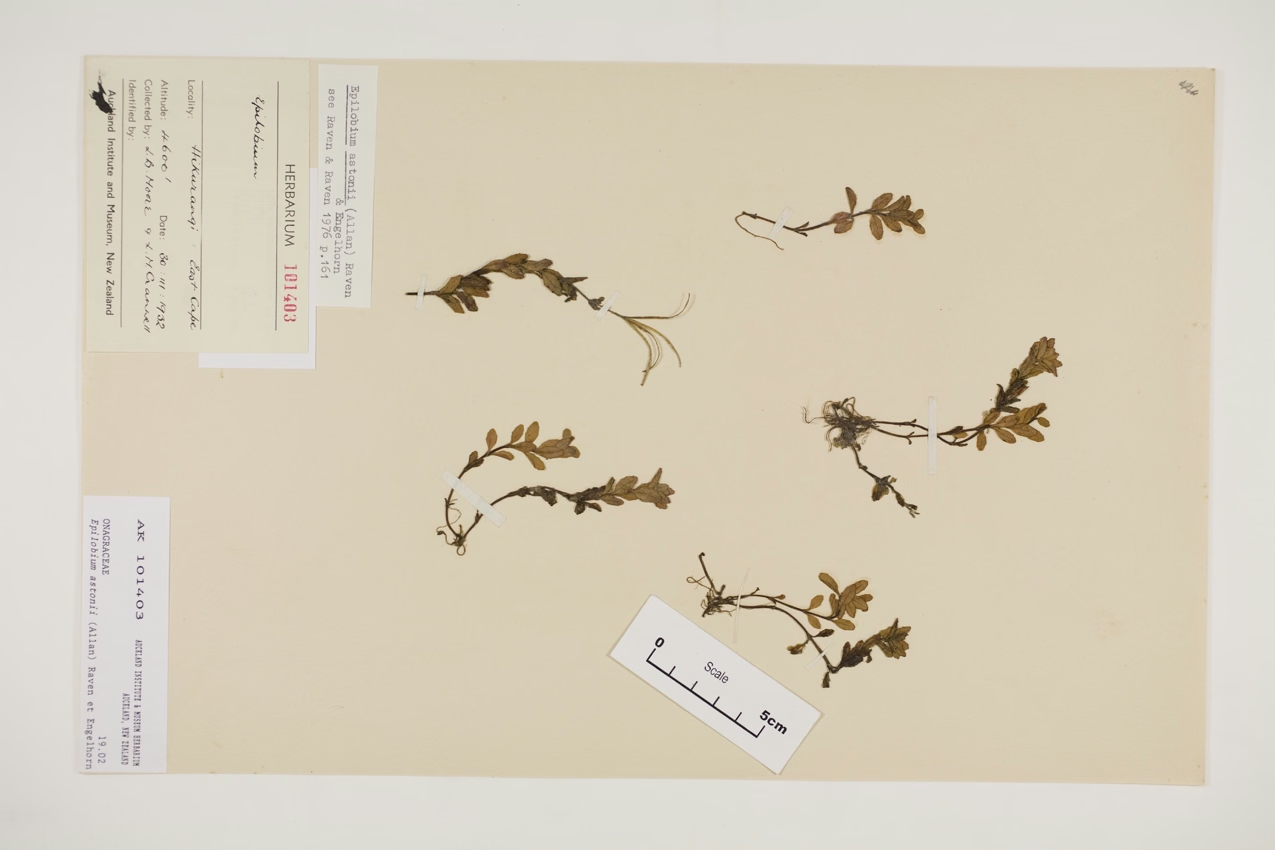
Aston's Willowherb
Epilobium astonii
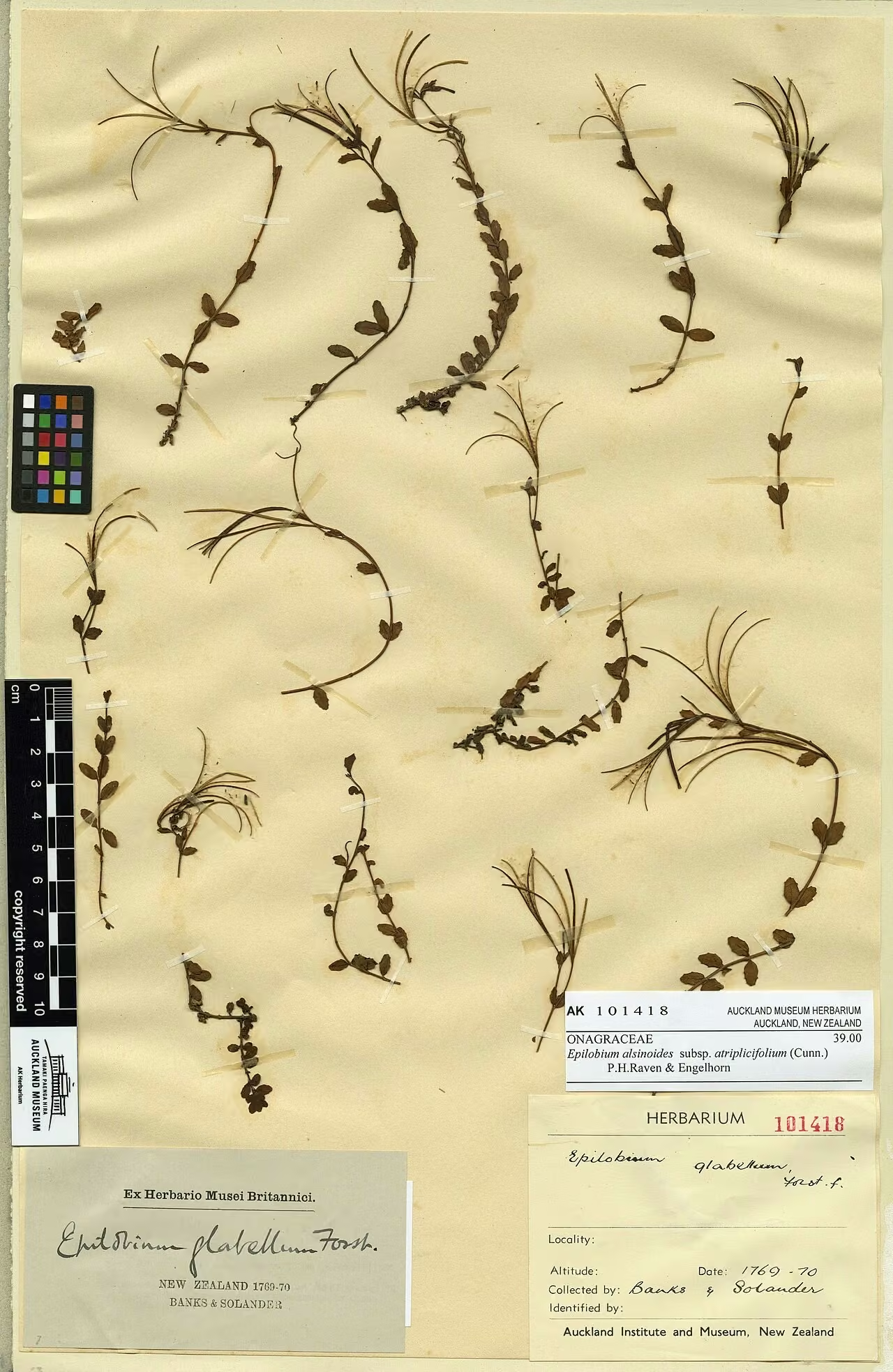
Epilobium atriplicifolium
Epilobium atriplicifolium
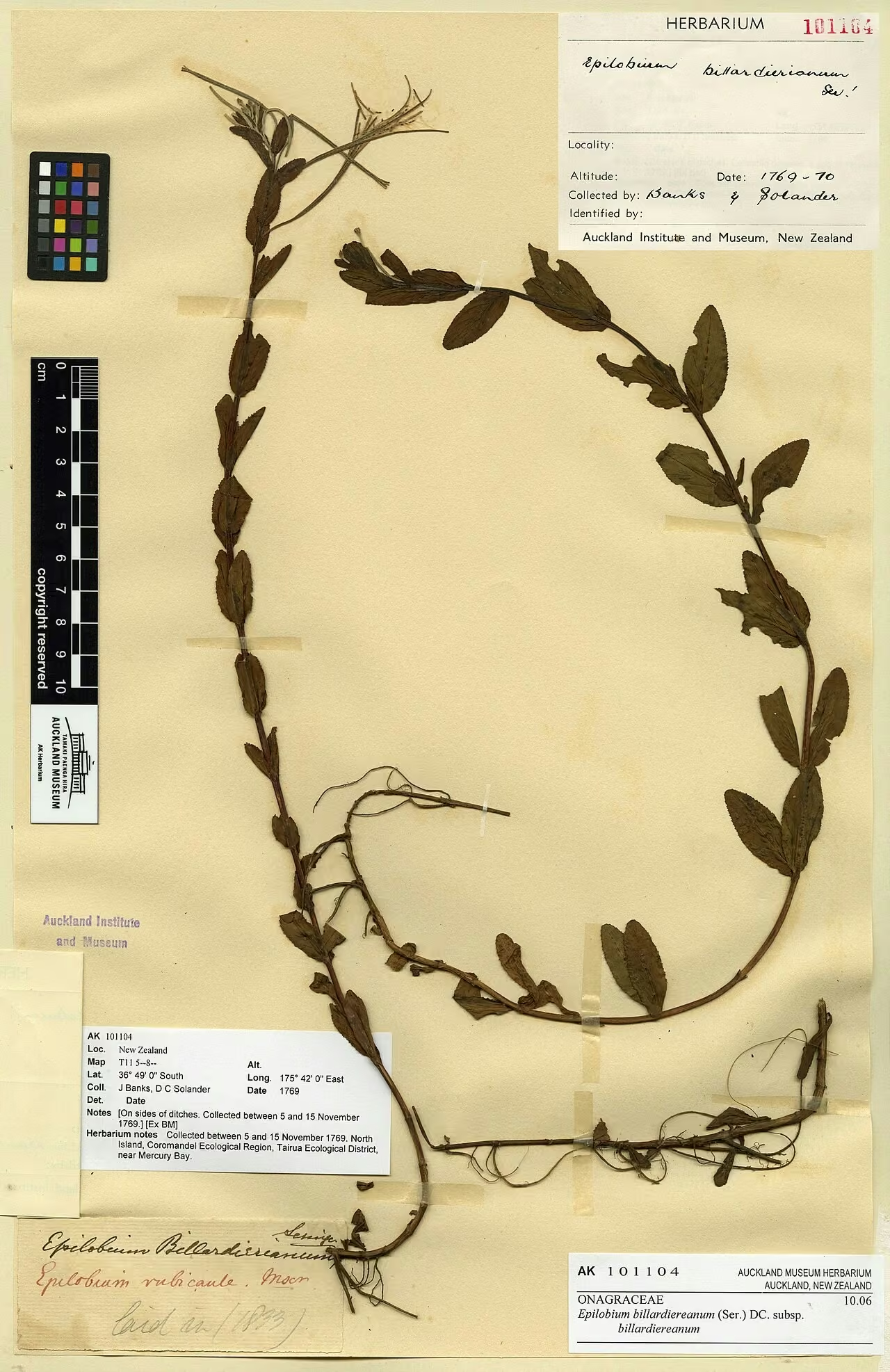
Epilobium billardiereanum
Epilobium billardiereanum
Plant Conservation
Epilobium alsinoides is ranked Not Threatened nationally (2023), a status it has held in every assessment since 2004. Regionally, it is considered extirpated in Northland and Auckland and Regionally Naturally Uncommon in Wellington.
Retaining open, low-competition habitats such as eroding banks and native grassland, and controlling invasive grasses, helps this small herb persist.
Frequently Asked Questions
What does Epilobium alsinoides look like?
It is a small, much-branched, finely hairy herb about 20 cm tall with opposite, oval leaves 3 to 8 mm long bearing a few teeth, small white flowers that may turn pink after pollination, and long, slender seed capsules.
Where is Epilobium alsinoides found?
It occurs in the North Island and in Nelson and northern Marlborough in the South Island, from sea level to low alpine elevations, on open grassland and seasonally damp eroding banks. It is scarce north of the Waikato.
Is Epilobium alsinoides easy to grow?
NZPCN says it is easily grown from fresh seed and rooted pieces, but it dislikes humidity and is prone to powdery mildew in humid climates.
How is Epilobium alsinoides different from Epilobium tenuipes?
Epilobium alsinoides has ovate leaves that are usually shorter than the stem sections between them, and white-looking flattened hairs on the capsule and sepals, whereas E. tenuipes has narrowly elliptic to linear leaves.
Sources and Further Reading
The botanical, growing, and conservation details for Willowherb (Epilobium alsinoides) on this page draw on the New Zealand plant references below. Consult them for full technical records and the latest distribution data.