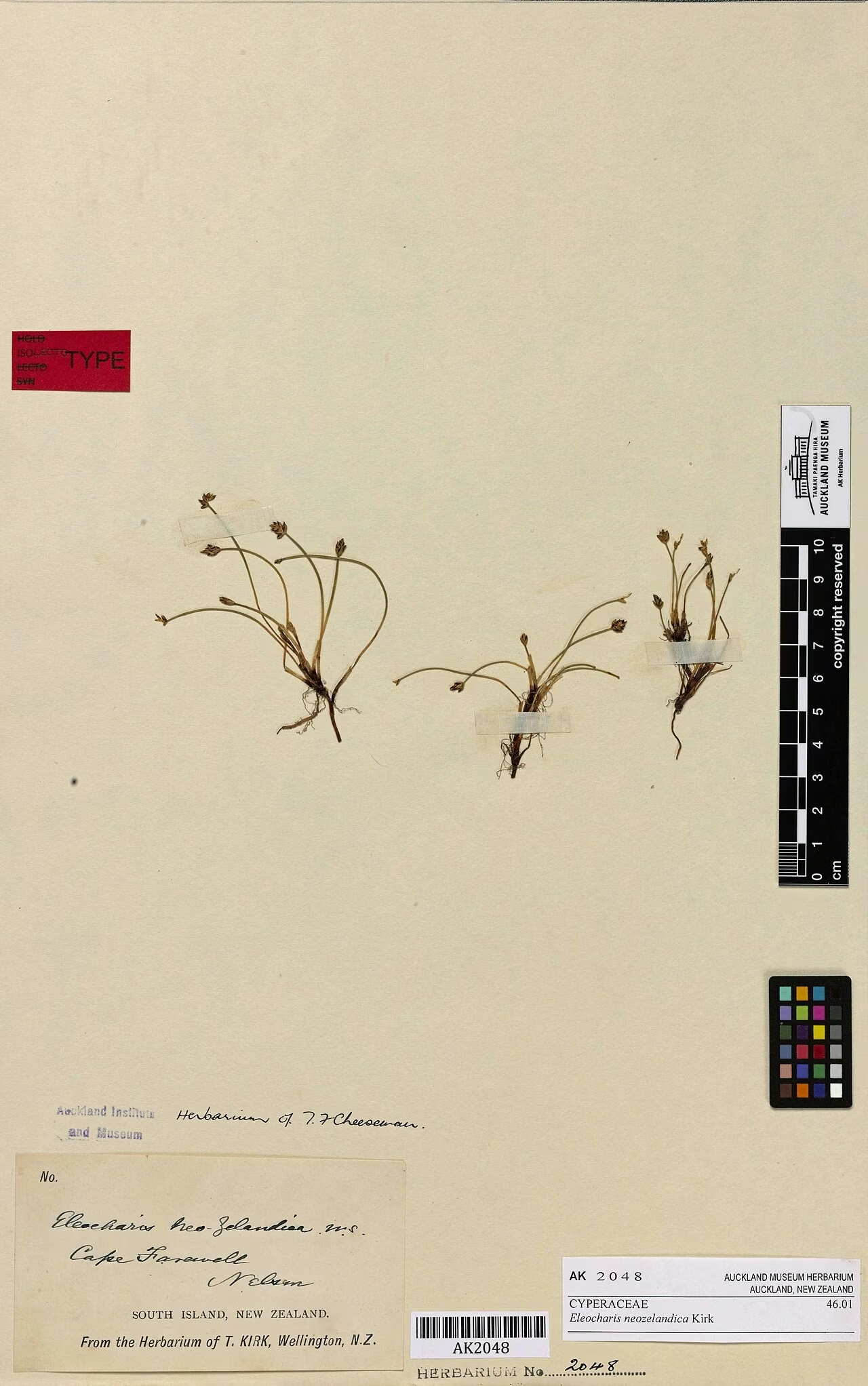
Sand Spike Sedge
Eleocharis neozelandica
Last updated:
Sand spike sedge (Eleocharis neozelandica) is a tiny, mat-forming sedge endemic to New Zealand. Its rigid, often curved green stems are only 3 to 8 cm tall, rising from far-creeping, thread-thin brown rhizomes, and each ends in a small spikelet of four to ten flowers. It grows on damp sand flats, often near streams or where fresh water seeps through the sand or ponds temporarily. It occurs in the North Island and, in the South Island, only at Farewell Spit. Coastal development, weeds and changes to sand flats have led to its ranking as At Risk - Declining. Explore more native grasses and flaxes in our native plant guide.
Plant Description
Eleocharis neozelandica is a small mat-forming sedge with far-creeping, dark brown rhizomes only about 1 mm in diameter. From these arise scattered tufts of rigid, often curved culms 3 to 6 cm tall, occasionally to 8 cm, and 0.5 to 1 mm thick. As in other spike sedges, the stems carry no leaf blades.
Each stem ends in a single spikelet 5 to 8 mm long and 1 to 4 mm wide, holding four to ten flowers. The nut is biconvex and asymmetrically obovate, golden-brown, smooth and shining, 1.5 to 2 mm long and about 1 mm wide, with a ring at its base. Flowers and fruit may be found at any time of year.
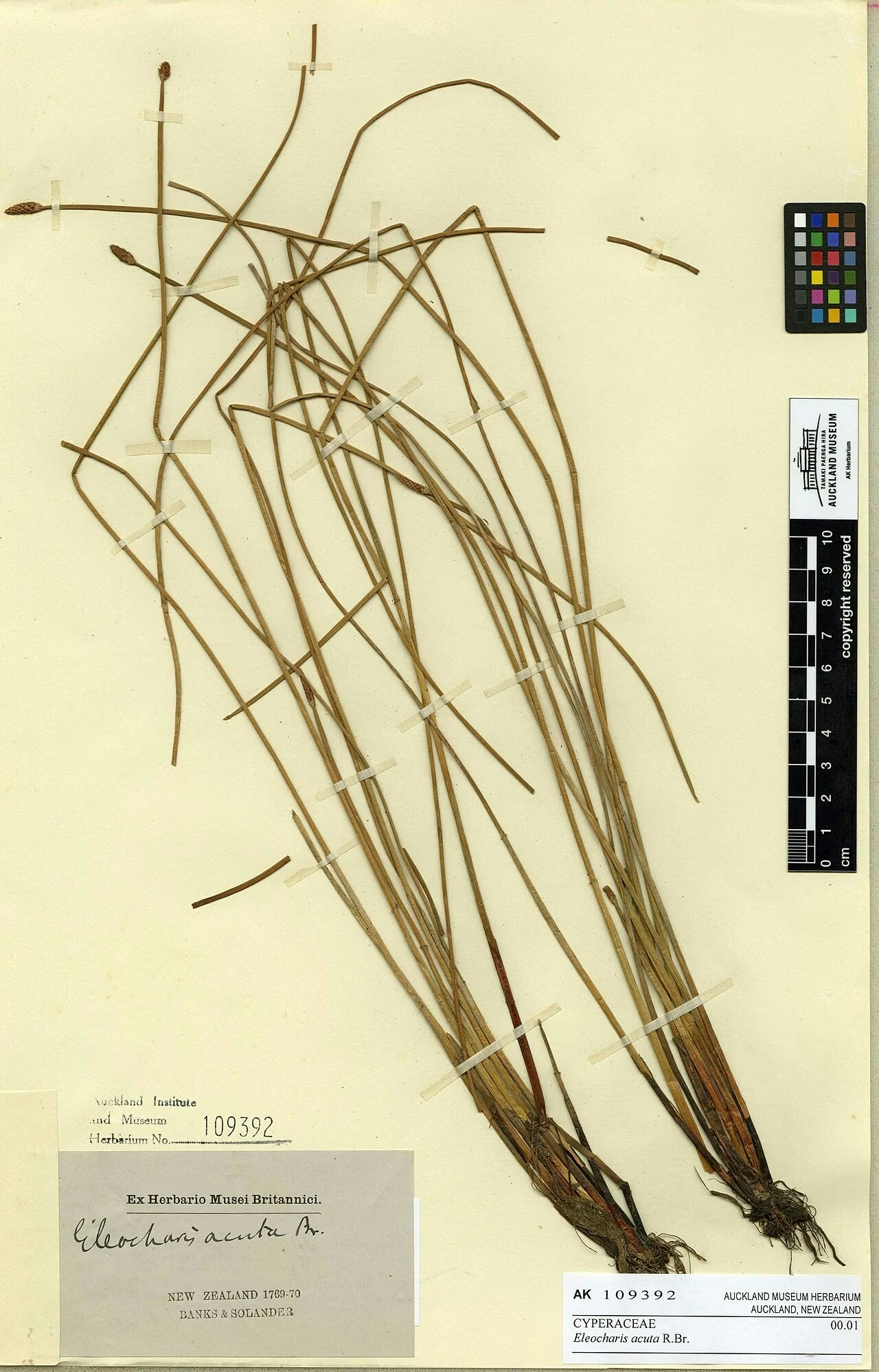
It is most likely to be confused with Eleocharis gracilis, another slender native spike sedge. E. neozelandica lacks hypogynous bristles, has a bifid rather than trifid style and produces biconvex rather than trigonous nuts. Its tiny size and sand flat habitat also help separate it from the much larger E. acuta.
Quick Facts
| Scientific Name | Eleocharis neozelandica |
|---|---|
| Height | 0.03-0.08 m |
| Spread | Forms mats via far-creeping rhizomes |
| Water Needs | High; damp sand with fresh water seepage |
| Light | Full sun on open sand flats |
| Frost Tolerance | Low to moderate; a coastal lowland plant |
| Salt Tolerance | Moderate; coastal sand flats with freshwater influence |
| Growth Rate | Moderate; short-lived in cultivation |
| Lifespan | Short-lived perennial |
Climate Best Suited to
Suits mild coastal climates where sand flats stay damp from freshwater seepage. It does not suit cold inland or dry conditions.
Regional Suitability
| City | Climate Suitability |
|---|---|
| Auckland | Medium |
| Wellington | Medium |
| Christchurch | Low |
| Dunedin | Low |
Plant Habitat
Sand spike sedge is endemic to New Zealand. It is found in the North Island and is scarce in the South Island, where it is now known only from Farewell Spit at the north-western tip of Golden Bay.
It grows on damp sand flats, often near streams or in places where fresh water filters through the sand at depth or ponds temporarily. These are typically low, moist hollows within coastal sand country, and it is rated an obligate wetland plant. Populations at individual sites can be ephemeral, appearing and disappearing as the sand flats change.
Growing Requirements
Soil Requirements
It roots in clean, damp sand that is low in nutrients and kept moist by fresh groundwater.
- Sand rather than loam or clay
- Constant dampness from below
- Little organic matter or competing vegetation
Light Requirements
Its sand flat habitat is open and sunny, and taller plants quickly shade it out.
- Full sun
- Keep free of taller weeds and grasses
Water Requirements
It needs damp sand, supplied by seepage or shallow temporary ponding, but not deep permanent water.
- Saturated to damp sand at all times
- Shallow, temporary ponding is tolerated
Planting and Establishing
Sand spike sedge is not a garden plant, and its threat status means wild plants should not be collected. Planting is a matter for conservation projects working with the Department of Conservation and specialist growers.
For translocations, sites need open, damp sand with a reliable freshwater seepage and active control of weeds. Grow plants in pots of sand kept wet from below, and be prepared to renew stock because plants are short-lived in cultivation.
Ecological Role
Like other sedges it is wind-pollinated. Its creeping rhizomes allow it to spread across open, damp sand and to recolonise suitable ground as sand flats shift and change over time.
It is part of a specialised community of small turf plants on damp coastal sand, many of which are also uncommon. These communities depend on open ground maintained by natural disturbance, and they are easily overrun by exotic grasses and other weeds.
Uses & Significance
Garden Uses
It has no general garden use, but it is valuable in specialist conservation collections and restoration of dune wetlands.
- Threatened plant collections
- Restoration of damp dune slacks and sand flats under guidance
Ecological Value
As a declining endemic, it is an important part of New Zealand's coastal sand flat flora.
- Characteristic of damp coastal sand flats
- Helps bind the surface of wet sand
- Indicator of healthy, weed-free dune wetlands
Landscaping Uses
This species is not suitable for landscaping. Its value lies in natural dune wetlands, where its fine green mats colour patches of damp sand.
Where coastal landscapes are being restored, leaving damp, open sand hollows free of planting and weeds can provide habitat for it and other small turf plants.
Seasonal Care Calendar
Spring
Flowers and fruit may appear at any time of year, and growth increases as the sand warms.
- Check damp sand hollows for flowering mats
- Begin weed control around known sites
Summer
Sand flats may dry at the surface; plants depend on underlying seepage.
- Keep cultivated pots standing in water
- Avoid trampling damp sand flats
Autumn
Plants continue flowering and fruiting while conditions stay damp.
- Collect fresh seed from cultivated plants
- Divide vigorous cultivated mats
Winter
Temporary ponding often occurs on sand flats, which the plant tolerates.
- No action needed in the wild
- Protect pots from hard frost
When to Prune and How Much
No pruning is needed. Old stems die off and are replaced naturally from the rhizomes.
In cultivation, the best maintenance is regular renewal by division, because plants tend to be short-lived.
How to Grow Sand Spike Sedge
NZPCN states that Eleocharis neozelandica is easily grown from division of whole plants and from fresh seed, but that plants are short-lived and difficult to maintain over time. Because it is ranked At Risk - Declining, any propagation should be part of a recognised conservation programme, using cultivated stock or material collected with permission from the Department of Conservation. Growers should plan to repeatedly divide or resow plants to keep a collection going, rather than expecting individual plants to last for many years.
By Division
The thin, far-creeping rhizomes make division straightforward. Small sections with several stems and roots establish quickly in wet sand.
- Lift part of a healthy cultivated mat
- Cut the rhizomes into pieces, each with several stems and roots
- Pot into clean, washed sand
- Stand the pots in a tray of shallow fresh water so the sand stays saturated
- Keep in full sun and repeat division regularly to keep stock vigorous
From Seed
Flowers and fruit may be found throughout the year, so ripe golden-brown nuts can be collected whenever they are present. NZPCN recommends fresh seed.
Seedlings are tiny and easily swamped by algae or moss on the sand surface, so give them bright light and avoid fertiliser, which encourages competing growth.
- Collect ripe spikelets with golden-brown nuts from cultivated plants
- Sow fresh on the surface of damp, clean sand
- Keep the tray standing in shallow water in a sunny spot
- Prick out small clumps once they begin to spread
Pests & Diseases
No specific pests or diseases of Eleocharis neozelandica are recorded in the sources consulted. The main threats are habitat changes: disturbance of sand flats, coastal development and invasion by weeds that overgrow its low mats.
Vehicles driving on beaches and sand flats, and changes to groundwater from drainage, can also destroy the damp sand it depends on.
Cultural Significance
No Māori name or traditional use specific to Eleocharis neozelandica is recorded in the sources consulted.
The name is attributed to the botanists Charles Baron Clarke and Thomas Kirk and dates from 1894. Neozelandica means of New Zealand, marking it as one of the spike sedges found only in this country.
Bonus Tip
When searching for this sedge, look in low, damp hollows of sand flats where the surface stays darker and wetter than the surrounding dry sand: these freshwater seepage points are where its tiny curved stems are most likely to be found.
Related Plants
Explore other native plants that share similar characteristics or habitats with Sand Spike Sedge (Eleocharis neozelandica), offering further insights into New Zealand's diverse flora. These related species provide context and opportunities for complementary planting in your garden.
Bamboo Orchid
Earina aestivalis
Chenopodium allanii
Chenopodium allanii
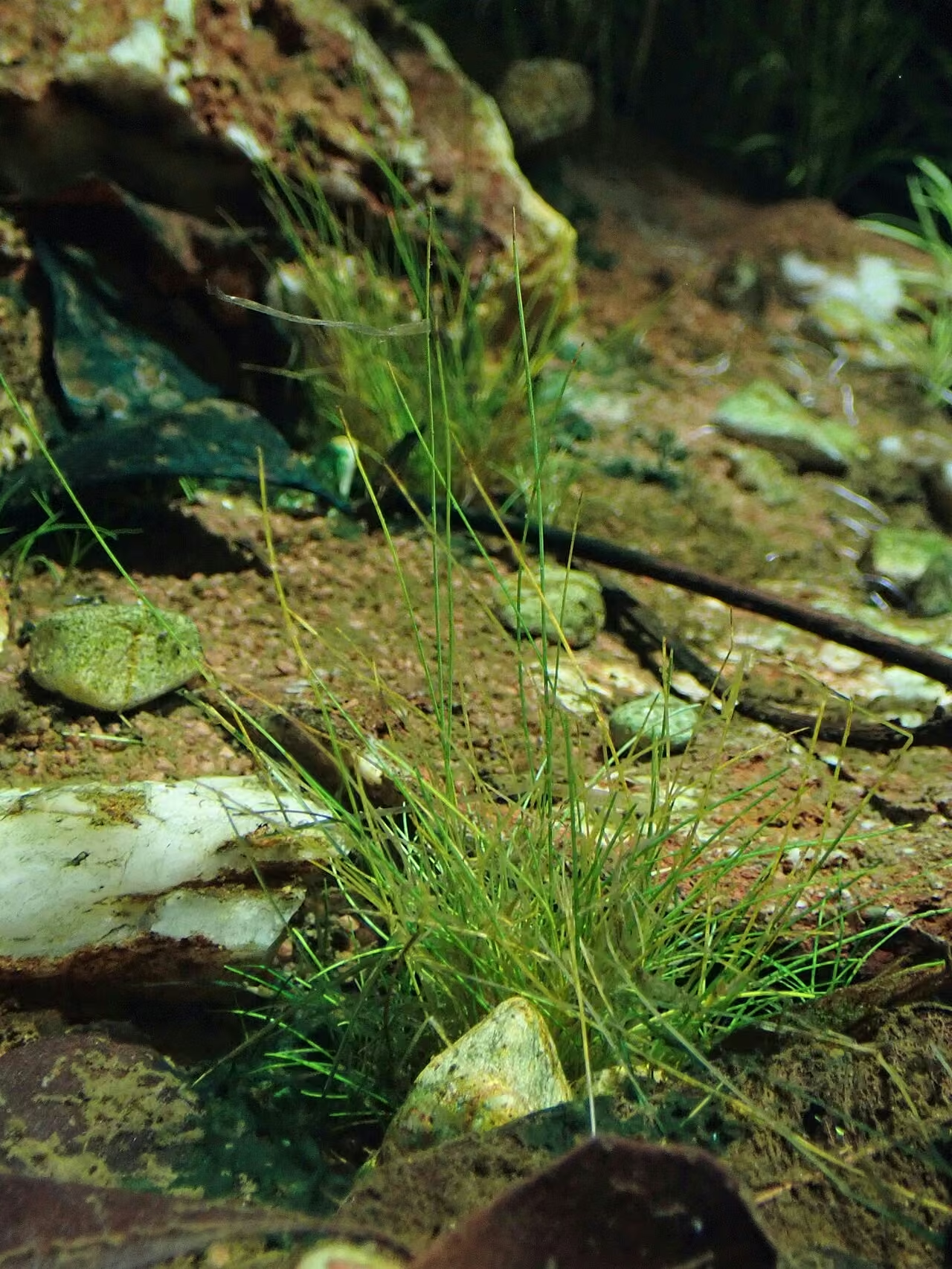
Sharp Spike Sedge
Eleocharis acuta
Small Spike Sedge
Eleocharis pusilla
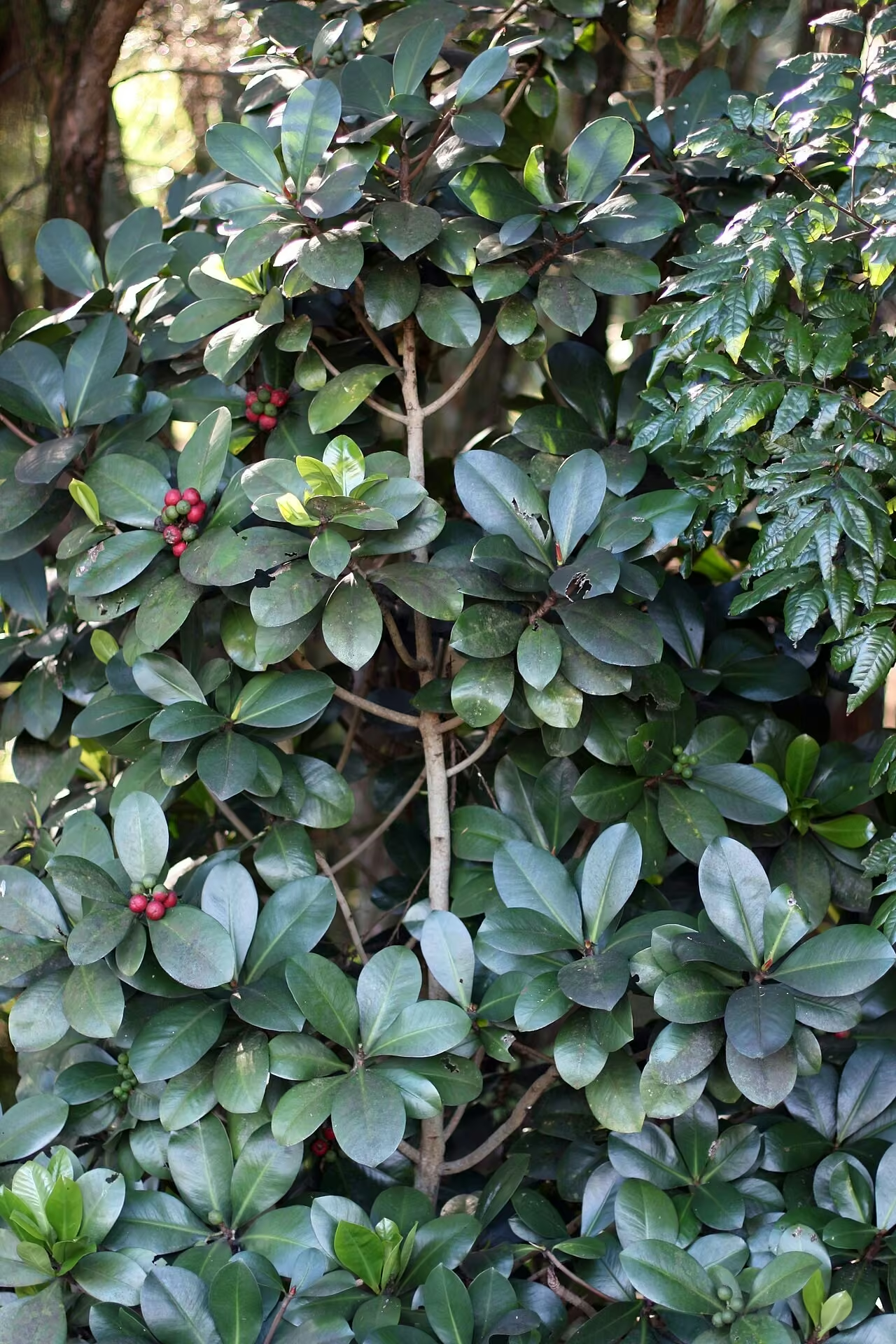
Elingamita johnsonii
Elingamita johnsonii

Prostrate Bluegrass
Connorochloa tenuis
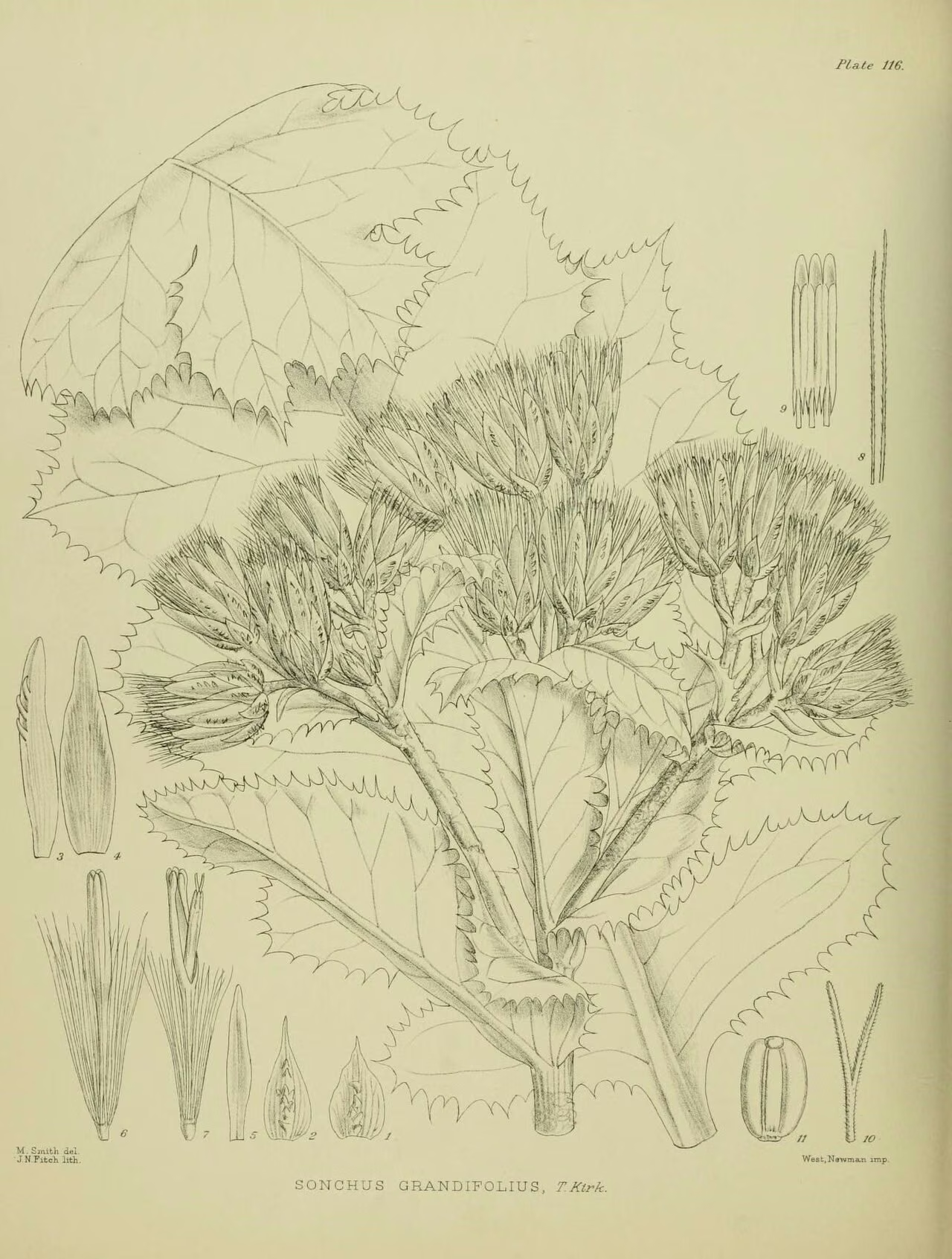
Chatham Island Sow Thistle
Sonchus grandifolius
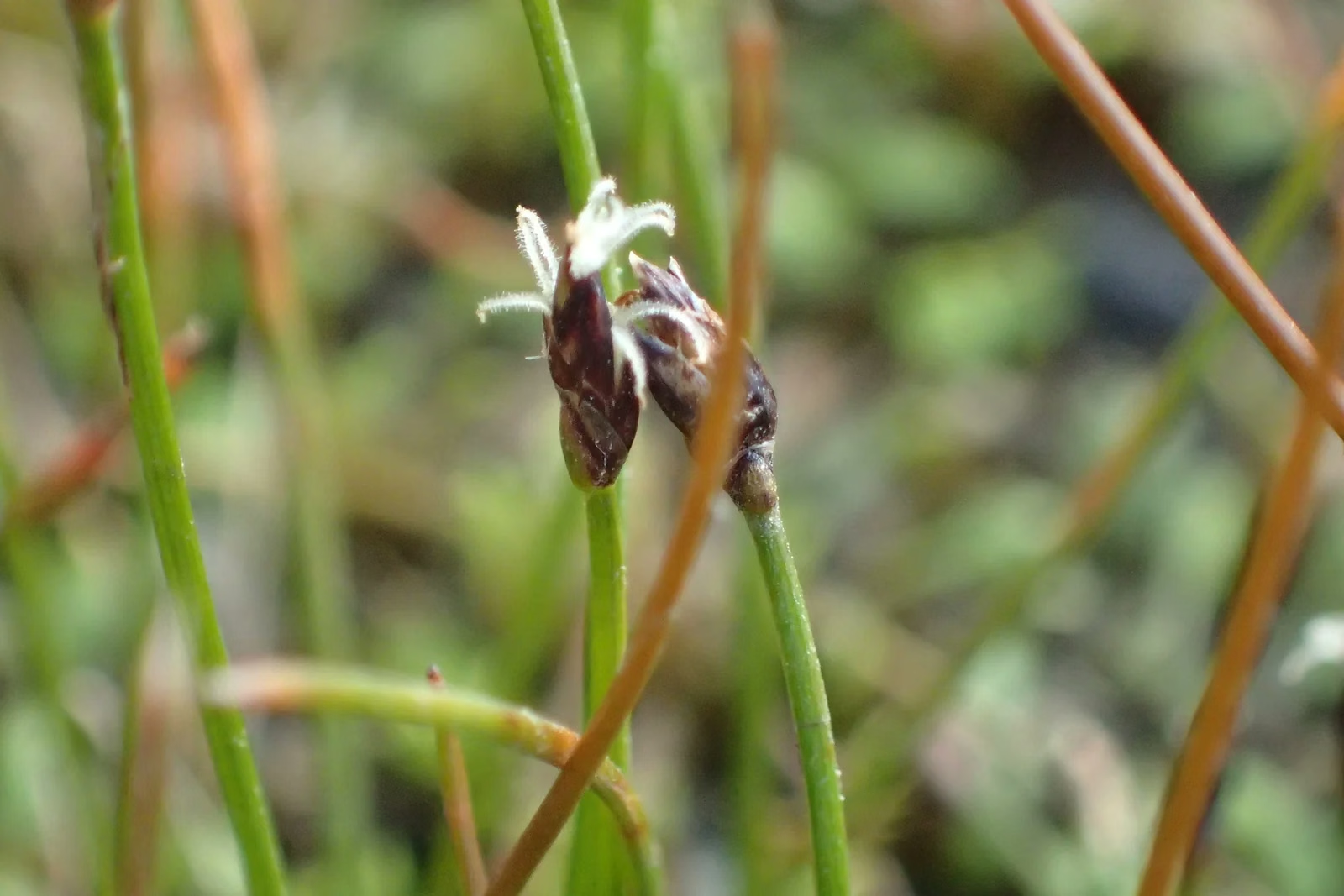
Gracilis Plant
Gracilis Plant
Plant Conservation
Eleocharis neozelandica is ranked At Risk - Declining (2023), with qualifiers including CI (climate impact), EF (extreme fluctuations) and RR (range restricted). Regionally it is Regionally Critical in Auckland and Regionally Vulnerable in Northland, and in the South Island it survives only at Farewell Spit.
It is vulnerable to perturbation of sand flat habitats, coastal development, weed invasion and the naturally ephemeral nature of its populations at individual sites. Protecting dune wetlands, controlling weeds and keeping vehicles off damp sand flats all help.
Frequently Asked Questions
Where does sand spike sedge grow?
It grows on damp coastal sand flats, often near streams or where fresh water filters through the sand or ponds temporarily. It occurs in the North Island and in the South Island is now known only from Farewell Spit.
Why is Eleocharis neozelandica declining?
Its sand flat habitat is easily disturbed, it is threatened by coastal development and weed invasion, and individual populations come and go naturally, which makes it vulnerable to local loss.
How do you tell Eleocharis neozelandica from Eleocharis gracilis?
E. neozelandica lacks the bristles below each flower, has a two-branched rather than three-branched style, and produces flattened biconvex nuts instead of three-angled ones.
Is sand spike sedge easy to grow?
NZPCN says it is easily grown from division of whole plants and fresh seed, but it is short-lived and difficult to keep going in cultivation over time.
Sources and Further Reading
The botanical, growing, and conservation details for Sand Spike Sedge (Eleocharis neozelandica) on this page draw on the New Zealand plant references below. Consult them for full technical records and the latest distribution data.