Willowherb
Epilobium angustum
Last updated:
Epilobium angustum is a small, creeping willowherb that forms low mats of crowded, copper to green leaves with a distinctive dimpled, shiny upper surface. Its white flowers are held upright from the leaf axils from November to April. It is endemic to the South Island east of the main divide, from Marlborough to Fiordland, where it grows at 180 to 820 m in short turf around lakes, tarns and other seasonally flooded glacial hollows. It is ranked At Risk - Declining because farm intensification, pugging and weed invasion are destroying the fragile turfs it depends on. Explore more native ground covers in our native plant guide.
Plant Description
Epilobium angustum is a small, mat-forming perennial with creeping stems marked by two lines of sparse glandular hairs running down from the leaf bases. The leaves are opposite, crowded and overlapping, often bent back, copper to green in colour, 1.5 to 12 mm long and 1 to 5 mm wide, with one to three widely spaced and poorly defined teeth. The upper surface is rugose and shiny, with a dimpled texture, while the underside is smooth and dull.
White flowers are held upright from the leaf axils, with petals 2.9 to 8 mm long and notched at the tip. The flower stalks are 2 to 6 mm at flowering but lengthen to as much as 50 mm or more as the capsule matures. The cylindrical capsules are 7 to 13 mm long and, like the stalks and sepals, sparsely to densely hairy. The light brown seeds are about 0.8 to 0.95 mm long with a swollen, translucent rim and a coma of hairs 4 to 5 mm long that detaches readily.
It resembles other small creeping willowherbs, especially Epilobium brunnescens and E. komarovianum. It differs from E. brunnescens in its dimpled upper leaf surfaces, and from E. komarovianum in having glandular hairs on the flower stalks, ovary, sepals and capsules, and in its seeds with a swollen cellular rim.
Quick Facts
| Scientific Name | Epilobium angustum |
|---|---|
| Height | Under 0.05 m (mat-forming) |
| Spread | Small mats up to 0.25 m across |
| Water Needs | High; seasonally inundated |
| Light | Full sun |
| Frost Tolerance | High |
| Salt Tolerance | No information available |
| Growth Rate | Slow |
| Lifespan | Perennial |
Climate Best Suited to
Suits the continental climate of the eastern South Island inland basins, with cold winters, frosts and seasonal flooding of glacial hollows.
Regional Suitability
| City | Climate Suitability |
|---|---|
| Auckland | Low |
| Wellington | Low |
| Christchurch | Medium |
| Dunedin | Medium |
Plant Habitat
Epilobium angustum is endemic to the South Island, east of the main divide from Marlborough to Fiordland, at altitudes of 180 to 820 m.
It lives in short turf around the margins of lakes and tarns and in other seasonally inundated hollows of glacial origin. It favours open clay or stony patches that are periodically flooded, barely venturing into the surrounding tussock grassland, and grows mostly on greywacke glacial debris, clay and loess. It is an obligate wetland plant.
Growing Requirements
Soil Requirements
It grows on clay, loess and stony greywacke glacial debris in open turf around ephemeral wetlands.
- Clay or stony glacial substrates
- Open, low-competition ground
- Seasonally waterlogged soils
Light Requirements
Its turf habitats are open and treeless, so it grows in full sun.
- Full sun
- Shading by taller weeds or grasses is harmful
Water Requirements
It depends on a regime of seasonal flooding followed by drying, typical of ephemeral wetlands.
- Wet to flooded in winter and spring
- Tolerates drying of turf in late summer
- Altered drainage or water levels can eliminate it
Planting and Establishing
This is a specialist plant for ephemeral wetland restoration within its natural range rather than a garden plant. Plantings should use locally sourced material and be placed in open turf on the margins of tarns or hollows that flood seasonally.
Exclude stock from restoration sites to prevent pugging, and keep vigorous exotic grasses and weeds under control around new plants.
Ecological Role
Epilobium angustum is part of the specialised short-turf communities of ephemeral wetlands, which hold many small, often rare plants adapted to alternating flooding and drying. Its seeds carry a coma of hairs that detaches easily, a feature that may relate to dispersal by wind and water.
The pollinators of its small white flowers are not documented in the sources consulted.
Uses & Significance
Garden Uses
It has very little ordinary garden use and is best treated as a restoration and conservation plant.
- Restoration of ephemeral wetland turf in Canterbury and Otago
- Specialist conservation collections
- Trough planting for enthusiasts with suitable seasonal wetting
Ecological Value
It is a characteristic member of turf communities around glacial tarns and ephemeral wetlands, one of New Zealand's most threatened habitat types.
- Part of rare ephemeral wetland turf communities
- Endemic to the eastern South Island
- Indicator of intact, ungrazed lake-margin turf
Landscaping Uses
Epilobium angustum is not used in landscaping. In a restoration context, it would form part of a low turf mosaic with other tiny native herbs around seasonally flooded hollows.
Its coppery, dimpled leaves are best appreciated at close range by those visiting these wetland margins.
Seasonal Care Calendar
Spring
Turf around tarns and hollows is often flooded, and new growth begins as water recedes.
- Keep stock out of wetland turf
- Monitor for weed invasion
Summer
Flowering begins in November, with upright white flowers on the mats.
- Survey populations while flowering
- Avoid trampling turf
Autumn
Flowering continues to April while capsules ripen and release their plumed seeds.
- Collect seed only with permission
- Record sightings
Winter
Hollows fill again with water and plants sit out the cold.
- No intervention needed
- Protect sites from pugging
When to Prune and How Much
No pruning is needed for this tiny mat-forming herb.
In managed wetland sites, keeping surrounding grasses short by careful control of weeds is more useful than any trimming of the plant itself.
How to Grow Willowherb
NZPCN gives no propagation details for Epilobium angustum, and no published protocol specific to this species was found in the sources consulted. The methods below are based on general practice for small creeping New Zealand willowherbs, which often grow readily from fresh seed and from rooted stem pieces, and should be treated as a guide only. Because the species is At Risk - Declining, material should be collected only under appropriate permits and in coordination with conservation agencies, using locally sourced plants for any restoration. Young plants need constant moisture, open light and low competition, mimicking the seasonally flooded turf in which they naturally grow. Grow them in shallow pans of fine, clay-rich mix that can be stood in water to keep them evenly wet.
From Seed
Flowering runs from November to April, and the plumed seeds are released as the capsules split.
- Collect capsules just as they begin to split
- Sow fresh seed on the surface of a fine, moist mix
- Stand the pan in a tray of water to keep it wet
- Keep in full light with good airflow
- Prick out seedlings into shallow pans once established
From Cuttings of Rooted Stems
The creeping stems can root at the nodes, so rooted pieces can be detached from cultivated plants.
- Select a rooted section of creeping stem
- Cut it away with a few leaf pairs attached
- Press into moist, fine mix
- Keep wet and in good light until new growth appears
Pests & Diseases
No specific pests or diseases are recorded. The major threats are habitat-based rather than from pests.
NZPCN identifies farm intensification and land modification, including ploughing and pugging by stock, as damaging its habitat, while also opening the way for more competitive exotic weeds to invade the delicate turf.
Cultural Significance
No traditional Māori name or use is recorded for Epilobium angustum in the sources consulted.
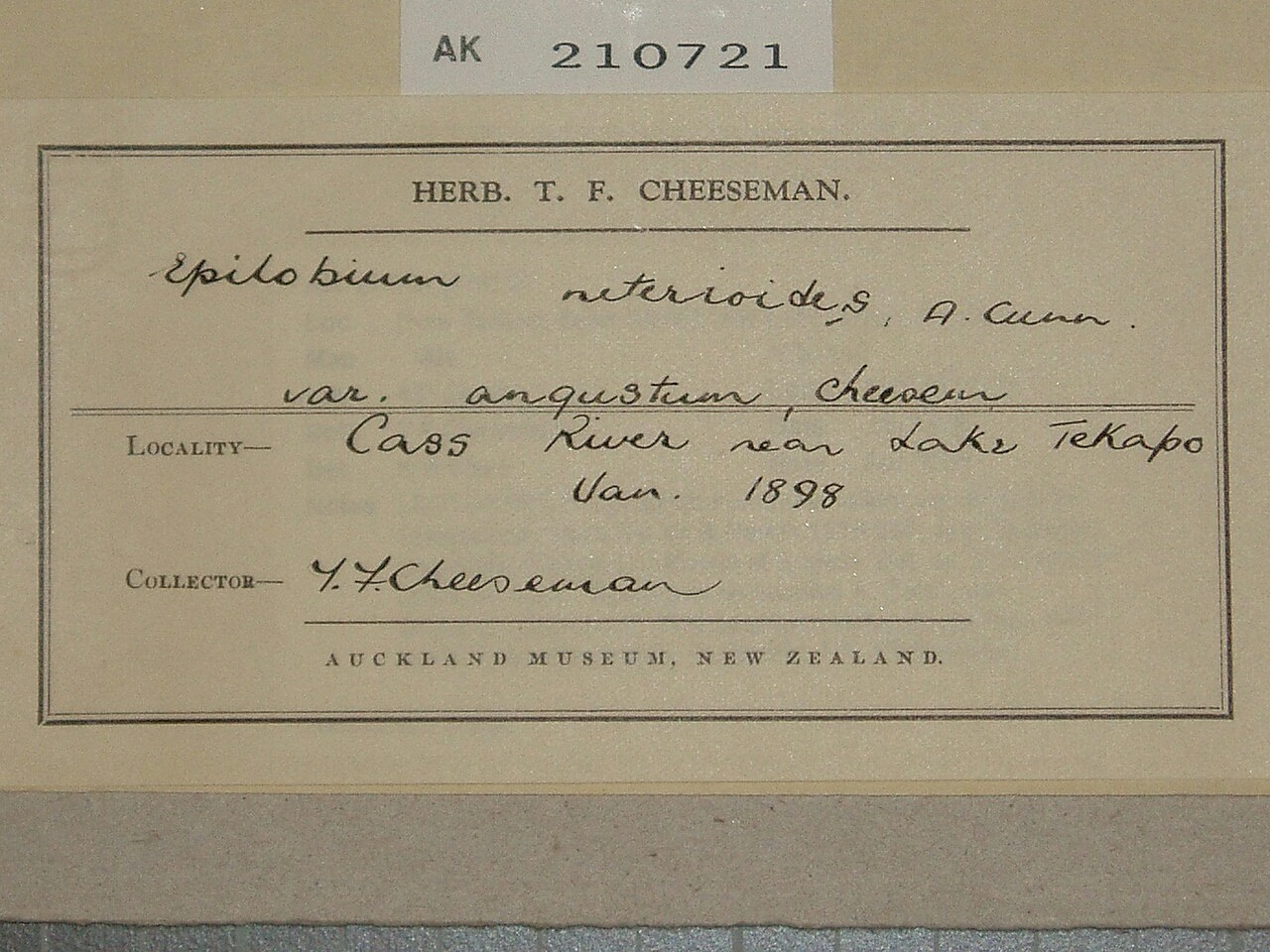
It was first described by Thomas Cheeseman as a variety, Epilobium nerteroides var. angustum, and was later raised to species rank by Peter Raven and Tamra Engelhorn in their revision of New Zealand Epilobium.
Bonus Tip
When surveying turf around Canterbury or Otago tarns, run a finger over a leaf: if the upper surface of a tiny creeping willowherb is visibly dimpled and shiny, you are likely looking at Epilobium angustum rather than the similar E. brunnescens.
Related Plants
Explore other native plants that share similar characteristics or habitats with Willowherb (Epilobium angustum), offering further insights into New Zealand's diverse flora. These related species provide context and opportunities for complementary planting in your garden.
Chatham Island Sow Thistle
Sonchus grandifolius
Epacris alpina
Epacris alpina
Tamingi
Epacris pauciflora
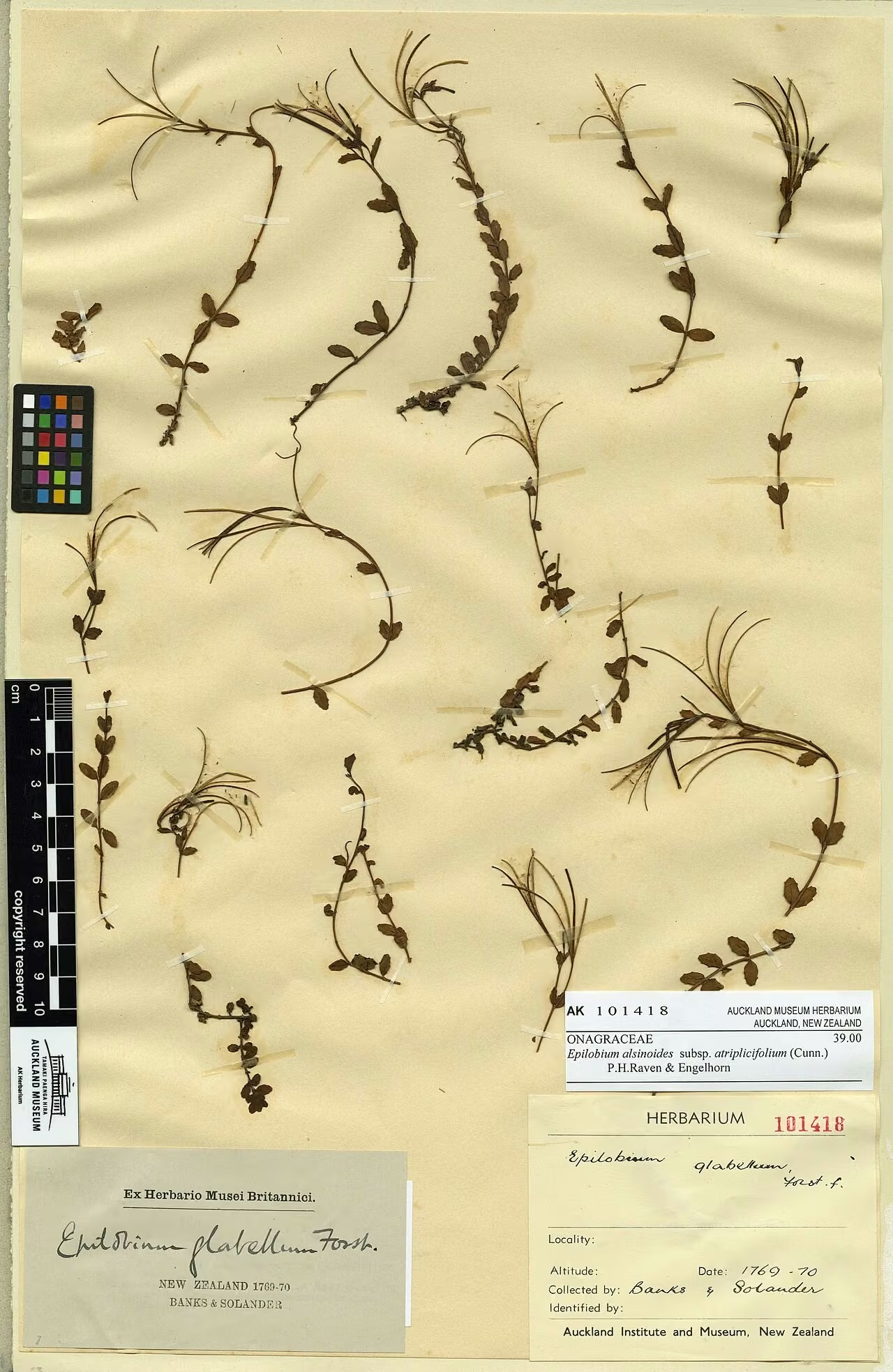
Epilobium alsinoides
Epilobium alsinoides
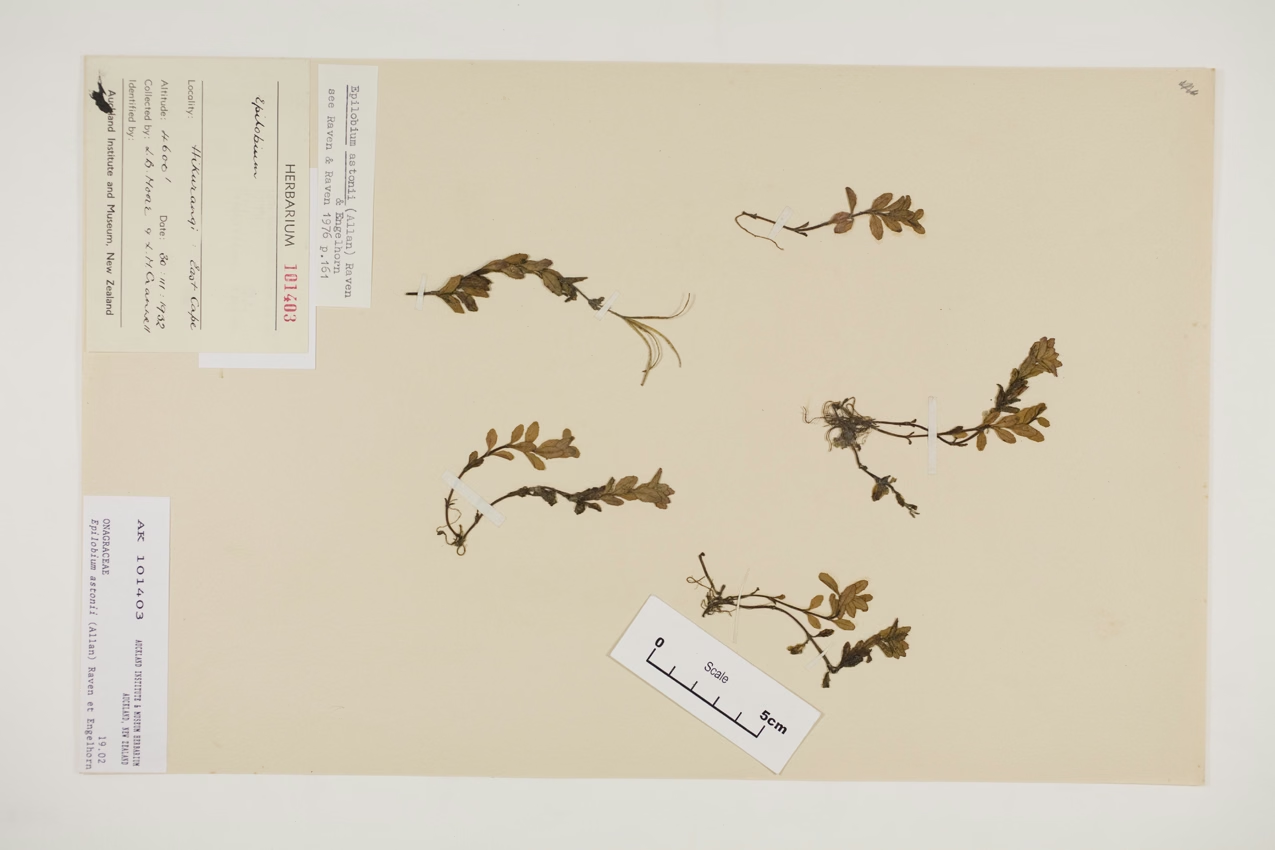
Aston's Willowherb
Epilobium astonii
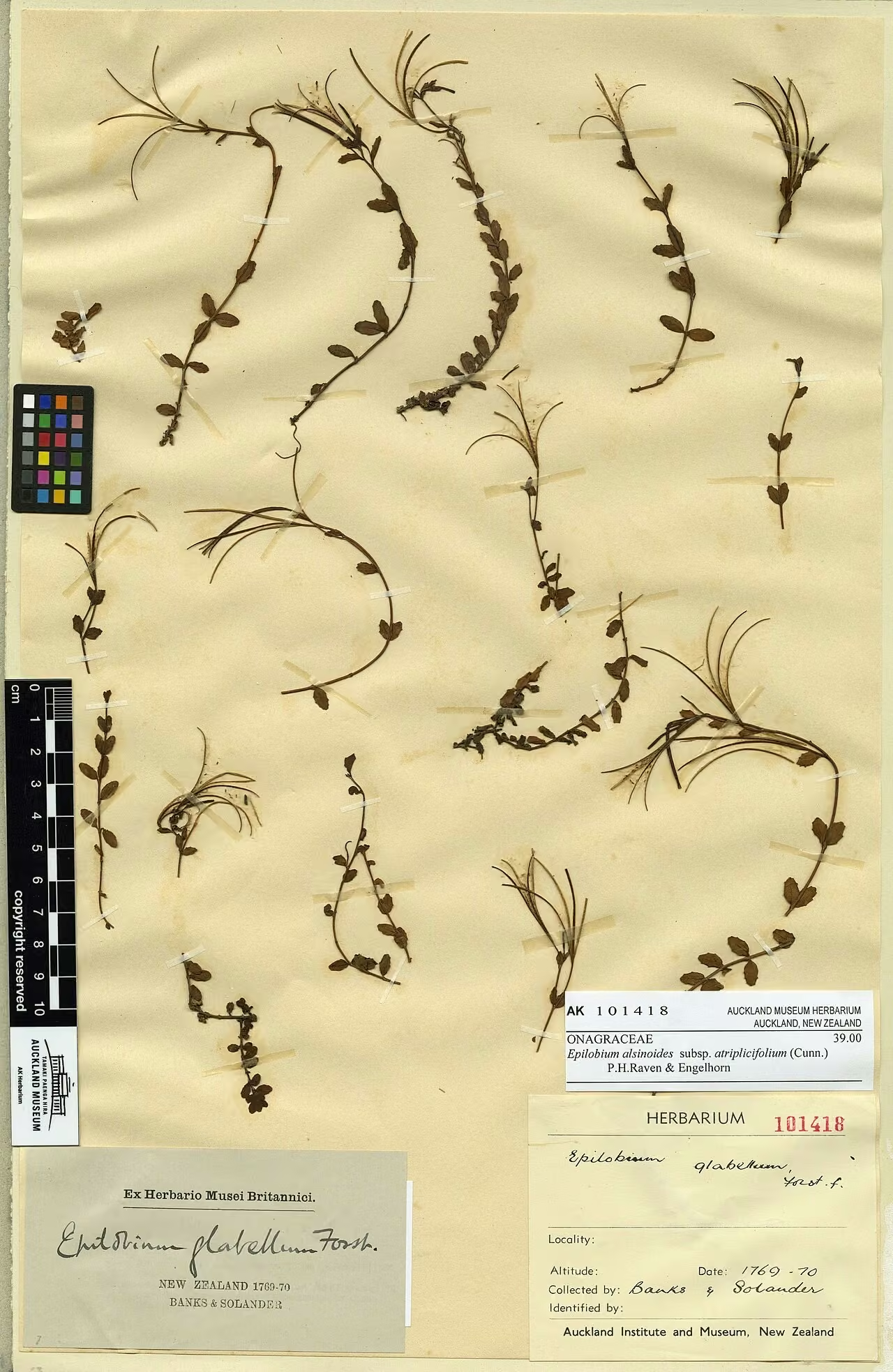
Epilobium atriplicifolium
Epilobium atriplicifolium
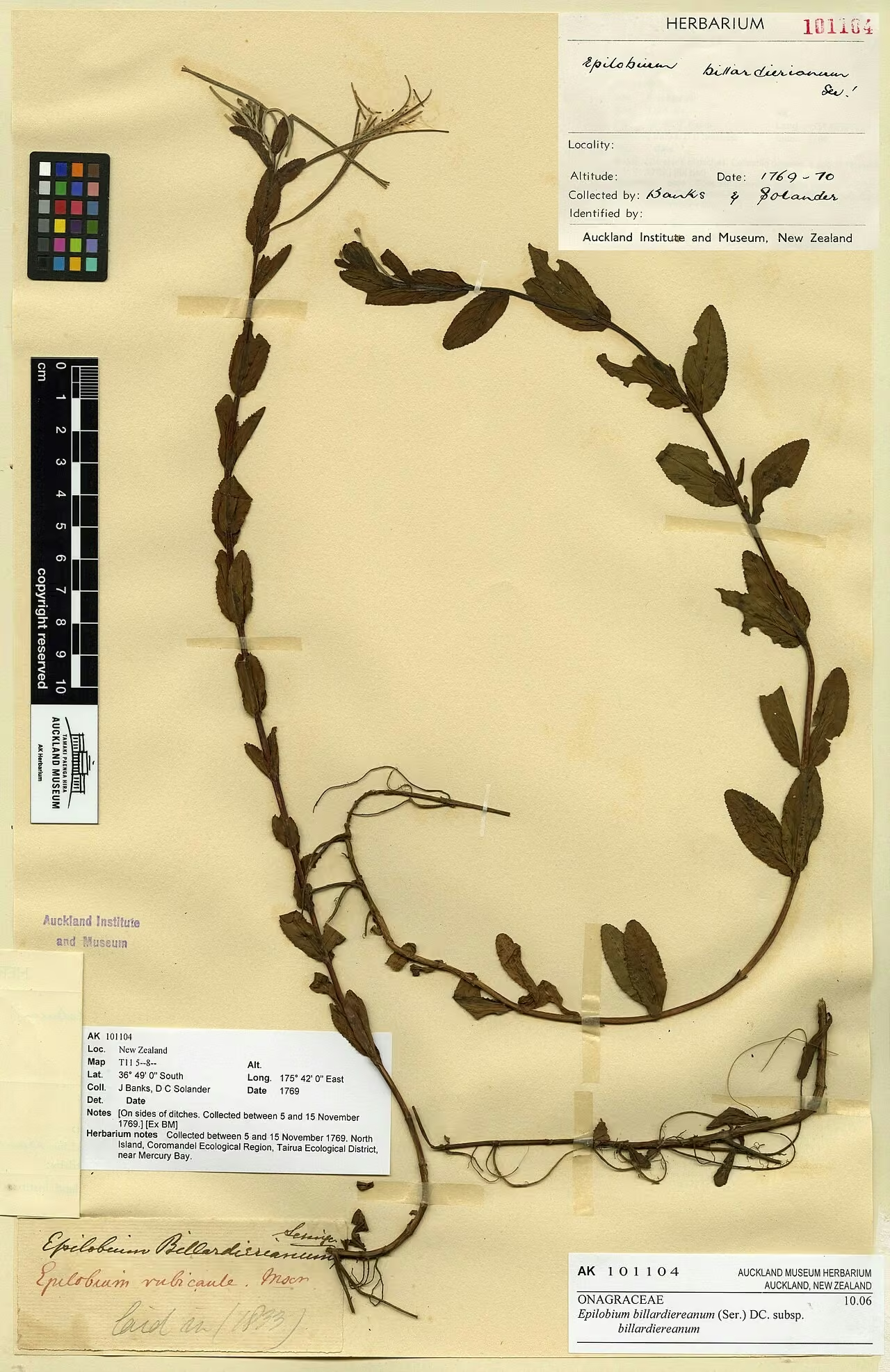
Epilobium billardiereanum
Epilobium billardiereanum
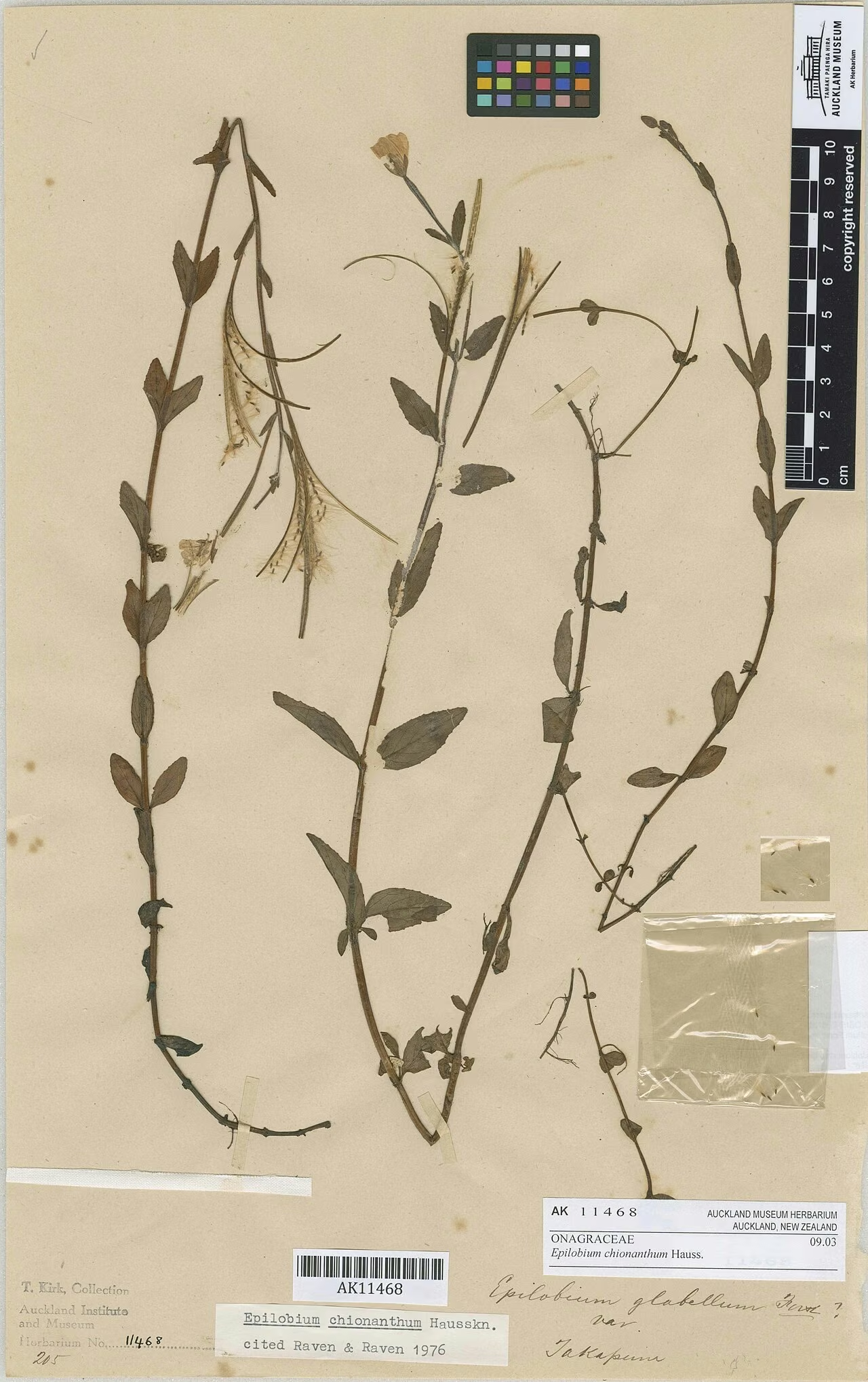
Marsh Willowherb
Epilobium chionanthum
Plant Conservation
Epilobium angustum is ranked At Risk - Declining (2023), with qualifiers indicating declining population size, declining trend and range restriction. It was listed as Naturally Uncommon in 2012 and 2017 and Not Threatened before that. In Otago it is ranked Regionally Endangered.
Protecting ephemeral wetlands from drainage, conversion, cultivation and stock pugging, and controlling invasive weeds in turf communities, are the key actions for its survival.
Frequently Asked Questions
Where does Epilobium angustum grow?
It grows only in the South Island east of the main divide, from Marlborough to Fiordland, in short turf around lakes, tarns and seasonally flooded glacial hollows between 180 and 820 m.
How do you identify Epilobium angustum?
It is a creeping, mat-forming willowherb whose small opposite leaves have a rugose, dimpled and shiny upper surface, often coppery in colour, with upright white flowers and finely glandular-hairy capsules.
Why is Epilobium angustum declining?
NZPCN says farm intensification and land modification in dryland areas destroy its turf habitat through ploughing and pugging, and let competitive exotic weeds invade the delicate turfs.
Sources and Further Reading
The botanical, growing, and conservation details for Willowherb (Epilobium angustum) on this page draw on the New Zealand plant references below. Consult them for full technical records and the latest distribution data.