Pachycladon
Pachycladon latisiliquum
Last updated:
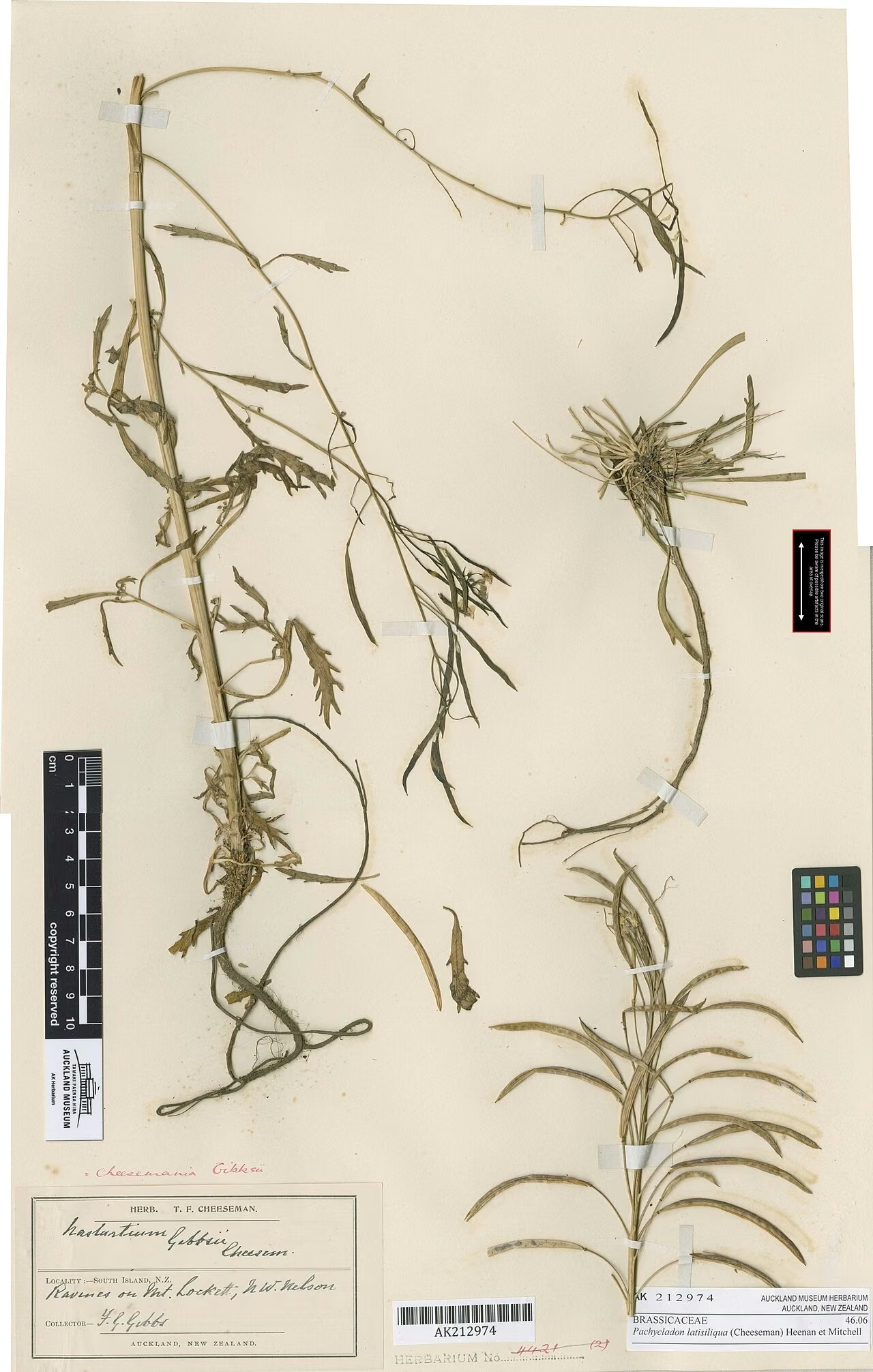
Pachycladon latisiliquum is an endemic perennial herb in the cabbage family (Brassicaceae). It grows from a stout base and deep taproot crowned by a rosette of narrow, sharply toothed leaves up to 5 cm long, and sends up much-branched sprays of white flowers that can exceed half a metre. Herbarium collections place it on the marble mountains of north-west Nelson, including Mount Arthur and the Lockett and Anatoki Ranges in Kahurangi National Park. It has no common name and is ranked Not Threatened, although NZPCN notes it is data poor. Explore more native flowering plants in our native plant guide.
Plant Description
Pachycladon latisiliquum has a stout stock up to about 1.5 cm in diameter with a deeply descending taproot. The top of the stock is crowned by a rosette of basal leaves that are narrowly linear to spoon-shaped, up to 5 cm long, sharply toothed and hairless or only sparsely fringed with hairs along the margins.
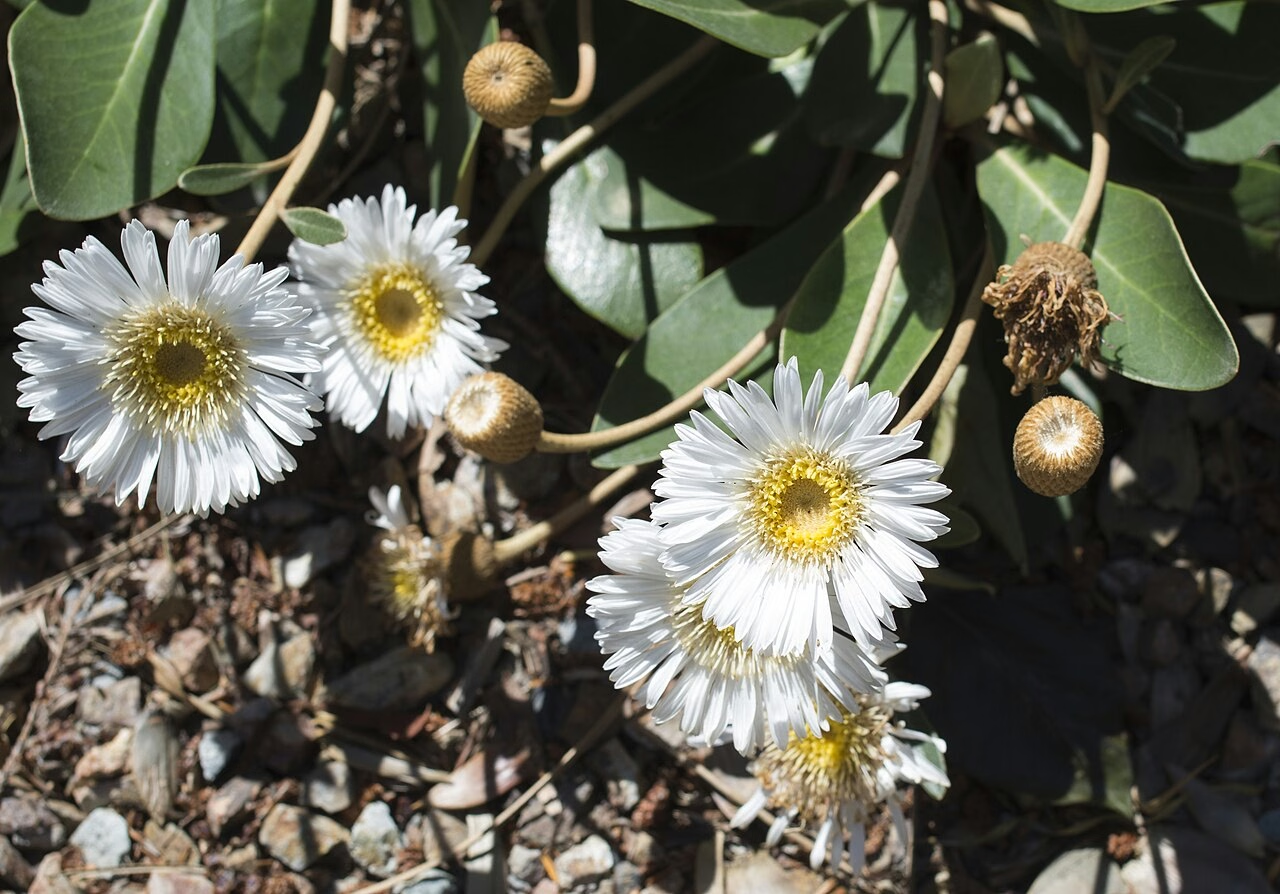
The white four-petalled flowers are carried in much-branched inflorescences that the Flora of New Zealand describes as exceeding 5 dm, so a flowering plant can stand well over half a metre tall despite its small rosette. The flowers are followed by siliques, the long narrow pods of the cabbage family, 1.5 to 6 cm long, containing reddish-brown seeds. Flowering and fruiting months were not given in the sources consulted.
Among New Zealand Pachycladon species, its combination of a narrow, toothed, largely hairless rosette and a tall, much-branched flower spray is distinctive. Specimens from north-west Nelson have been checked by Peter Heenan, who revised the genus, but a published key to separate it from every relative was not available in the sources consulted.
Quick Facts
| Scientific Name | Pachycladon latisiliquum |
|---|---|
| Height | Rosette low; branched flowering stems over 50 cm |
| Spread | A single rosette on a stout base; width not recorded in sources consulted |
| Water Needs | Moderate; free-draining rocky sites in a wet mountain climate |
| Light | Full sun to light shade on open rock |
| Frost Tolerance | High; an alpine species |
| Salt Tolerance | Not recorded; an inland mountain plant, so assume low |
| Growth Rate | Slow |
| Lifespan | Perennial |
Climate Best Suited to
Suited to the cool, wet alpine climate of north-west Nelson, with high rainfall, winter snow and frost on exposed marble tops.
Regional Suitability
| City | Climate Suitability |
|---|---|
| Auckland | Low |
| Wellington | Low |
| Christchurch | Medium |
| Dunedin | Medium |
Plant Habitat
Pachycladon latisiliquum is endemic to New Zealand. The herbarium specimens found during research all come from north-west Nelson in Kahurangi National Park: the track from Mount Arthur Hut to Winter Peak, Horseshoe Basin on Mount Arthur, Marble Peak north-west of Mount Benson on the Lockett Range at about 1430 m, and the Anatoki Range including the head of the Slate River. A complete published distribution was not available.
Every record found is on marble, the crystalline limestone that forms Mount Arthur and the surrounding karst country. Collectors noted it on marble cliffs, small marble outcrops in tussock grassland, dry soil at the edge of marble, and the steep rocky sides of a large sinkhole in grass and herbland.
Growing Requirements
Soil Requirements
It is associated with marble, so in the wild its roots run into lime-rich crevice soils over hard crystalline rock.
- Shallow, stony, base-rich crevice soil
- Excellent drainage around the crown
- Deep root run for the descending taproot
Light Requirements
It grows on open marble outcrops and cliffs above the treeline.
- Full sun to bright, open light
- Will tolerate some shade from rock ledges
Water Requirements
Rainfall on the north-west Nelson ranges is high, but the marble drains very quickly, so the plant experiences frequent moisture without waterlogging.
- Keep moist but never waterlogged
- Water drains away fast through crevices
- Avoid wet, stagnant conditions around the rosette
Planting and Establishing
Pachycladon latisiliquum is not grown commercially and no cultivation notes were found in the sources consulted. Wild plants in Kahurangi National Park are protected and should not be collected.
If seed becomes available through a conservation or botanic garden programme, the plant would need an alpine treatment: a deep pot or crevice for the taproot, a gritty lime-rich mix, plenty of light and air, and protection from slugs.
Ecological Role
Its white flowers, held high on branched stems, are presumably visited by small native insects, as in other members of the cabbage family, but no pollination study for this species was found. Seeds are shed from the long pods close to the parent plant and into nearby crevices and sinkhole slopes.
It is one of many plants that make the marble karst of north-west Nelson a botanical hotspot. Limestone and marble areas there support numerous plants found nowhere else, and this cress contributes to that distinctive alpine flora.
Uses & Significance
Garden Uses
This species has no established place in gardens and is not available from nurseries.
- Botanic garden alpine collections only
- Possible lime-rich crevice garden subject for specialists
- Not suited to general planting
Ecological Value
It adds to the endemic diversity of the north-west Nelson marble mountains.
- Part of the specialised karst and marble flora of Kahurangi
- Offers nectar and pollen to small alpine insects
- Represents one lineage of the endemic Pachycladon group
Landscaping Uses
In the wild, the narrow toothed rosettes pressed into grey marble and the tall airy sprays of white flowers make a striking contrast, and that is the best way to appreciate this plant.
For alpine gardeners it illustrates the kind of plant that suits a lime-rich crevice garden: a tight basal rosette with a long taproot, and a flowering display that rises far above the foliage.
Seasonal Care Calendar
Spring
Rosettes resume growth as snow melts from the marble tops of Kahurangi.
- Watch for new leaves on known populations
- Stay on tracks around marble outcrops
Summer
Most collections of flowering material come from the summer months, when the branched white sprays rise above the rosettes.
- Photograph rather than pick flowering stems
- Record sightings on iNaturalist NZ
Autumn
The long pods ripen and split to release reddish-brown seeds.
- Leave seed to fall in the wild
- Note fruiting dates to help fill gaps in knowledge
Winter
Plants rest beneath snow or endure hard frost on the exposed tops.
- No action needed in wild populations
- Keep any cultivated plants dry at the crown
When to Prune and How Much
No pruning is required. On a cultivated plant the old branched flower stems can be removed at the base once seed has been gathered or shed.
Cut away any rotting leaves from the rosette promptly so decay does not spread into the crown and taproot.
How to Grow Pachycladon
No published propagation information for Pachycladon latisiliquum was found in the sources consulted, and it is not known to be in commercial cultivation. The methods below describe the general approach for alpine cresses with a stout stock and taproot, not tested techniques for this species. Seed or plant material should only be obtained through a legitimate conservation or botanic garden programme, as wild plants grow within Kahurangi National Park and must not be collected. The deep taproot means it will resent root disturbance, so it is best raised and grown in deep containers.
From Seed
Seed is the most likely successful method. The siliques are 1.5 to 6 cm long and hold reddish-brown seeds, which should be gathered as the pods begin to dry and split.
- Collect ripe pods from cultivated plants before they shatter
- Sow fresh on a gritty seed mix with some crushed limestone
- Cover with a thin layer of fine grit
- Keep the pot outdoors in a cool, bright place over winter
- Move seedlings to deep individual pots while still small to protect the taproot
From Cuttings
Because each plant normally has a single rosette on a taprooted stock, cuttings offer little material. If a cultivated plant forms an offset rosette, that offset may be tried.
- Detach any side rosette with a short heel in spring
- Dry the base briefly before inserting into coarse pumice
- Keep bright, cool and only lightly moist until rooted
- Pot into a deep container with a gritty mix
Pests & Diseases
No specific pest or disease records for this species were found in the sources consulted. In the wild, grazing by introduced animals such as deer, goats, chamois and hares is a general pressure on palatable alpine herbs in north-west Nelson.
In cultivation, slugs, snails and caterpillars of the cabbage white butterfly are likely to damage the leaves, and crown rot is a risk in humid or poorly drained conditions.
Cultural Significance
No Māori name or traditional Māori use is recorded for Pachycladon latisiliquum in the sources consulted.
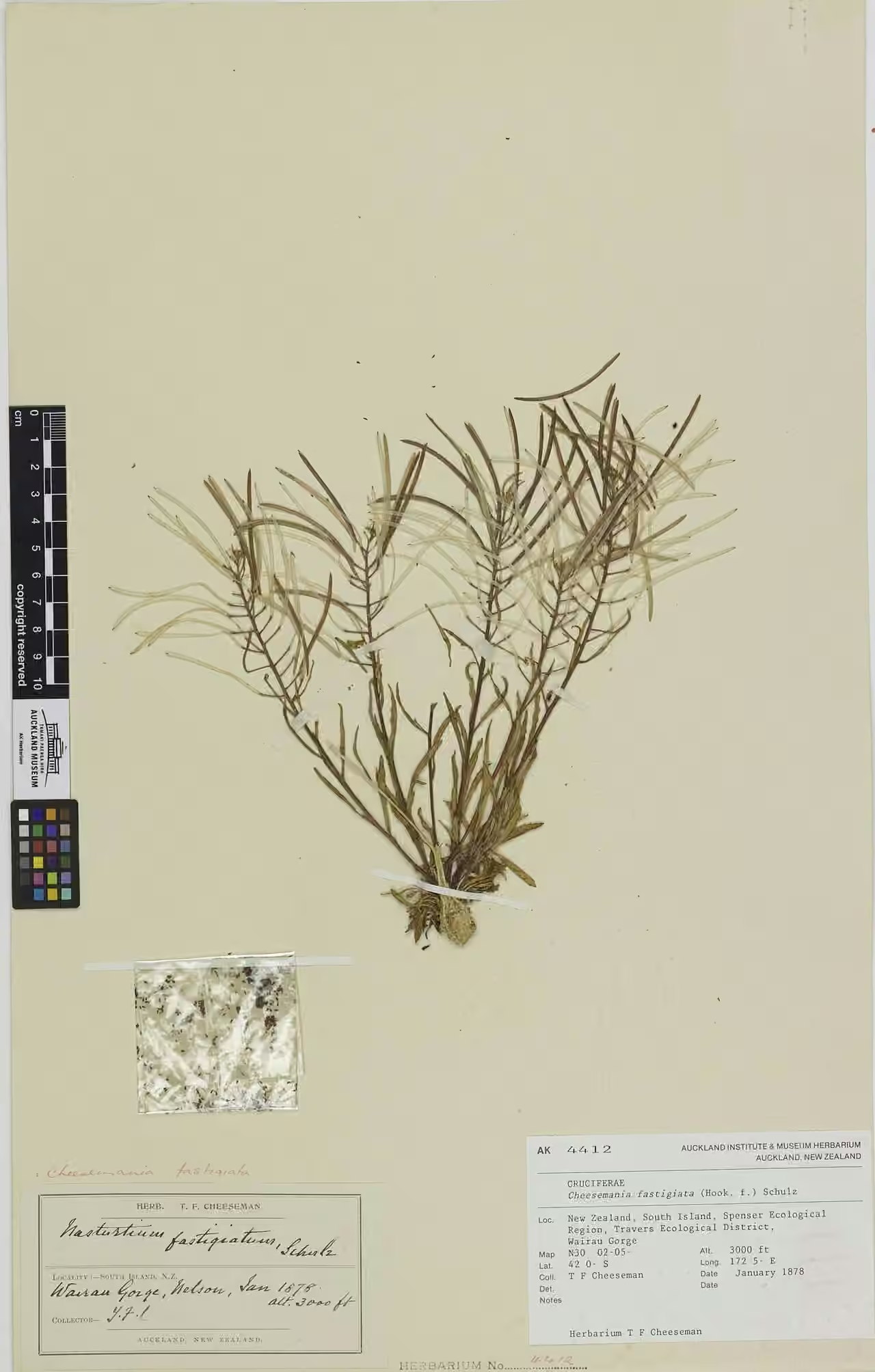
The species has a long naming history. Thomas Cheeseman described it as Cardamine latisiliqua in 1883, and it was later moved to Nasturtium and Cheesemania before molecular work by Peter Heenan and Anthony Mitchell placed it in Pachycladon in 2002.
Bonus Tip
If you are walking from Mount Arthur Hut towards Winter Peak or exploring Horseshoe Basin in summer, scan the edges of marble outcrops and sinkholes for a narrow toothed rosette with a tall branching spray of small white flowers. Posting a photo with location to iNaturalist NZ helps fill gaps in what is known of this data-poor species.
Related Plants
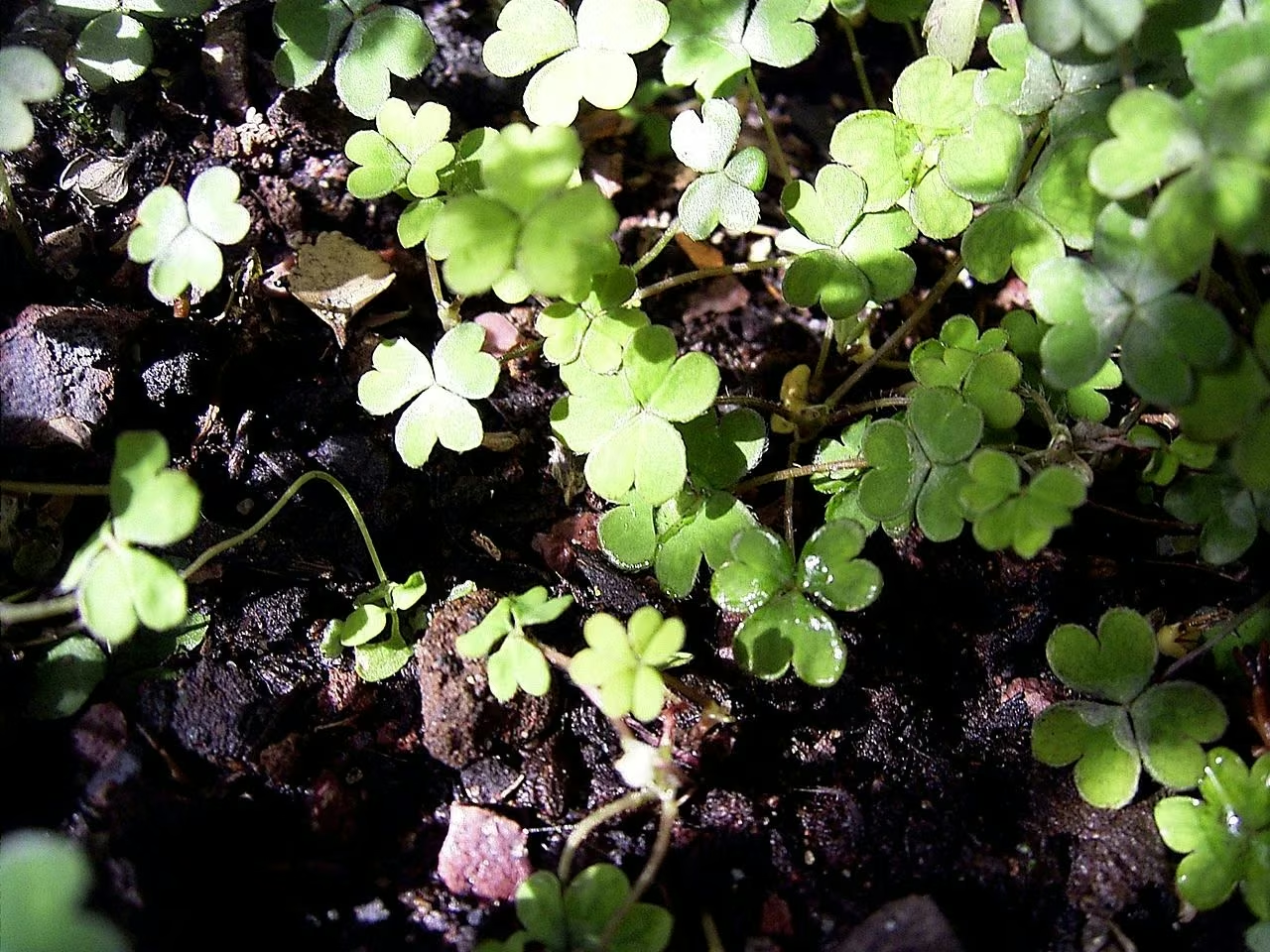
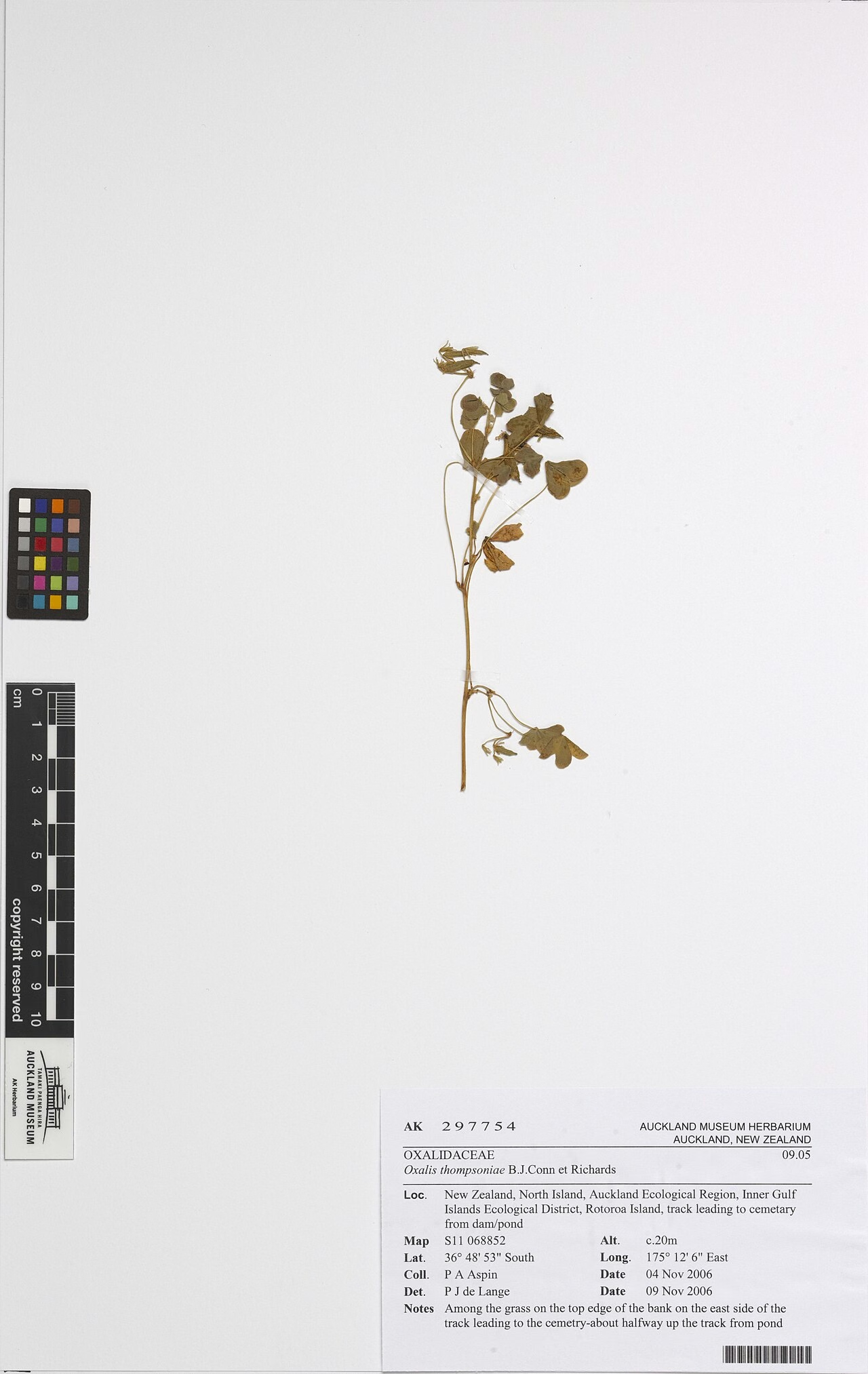
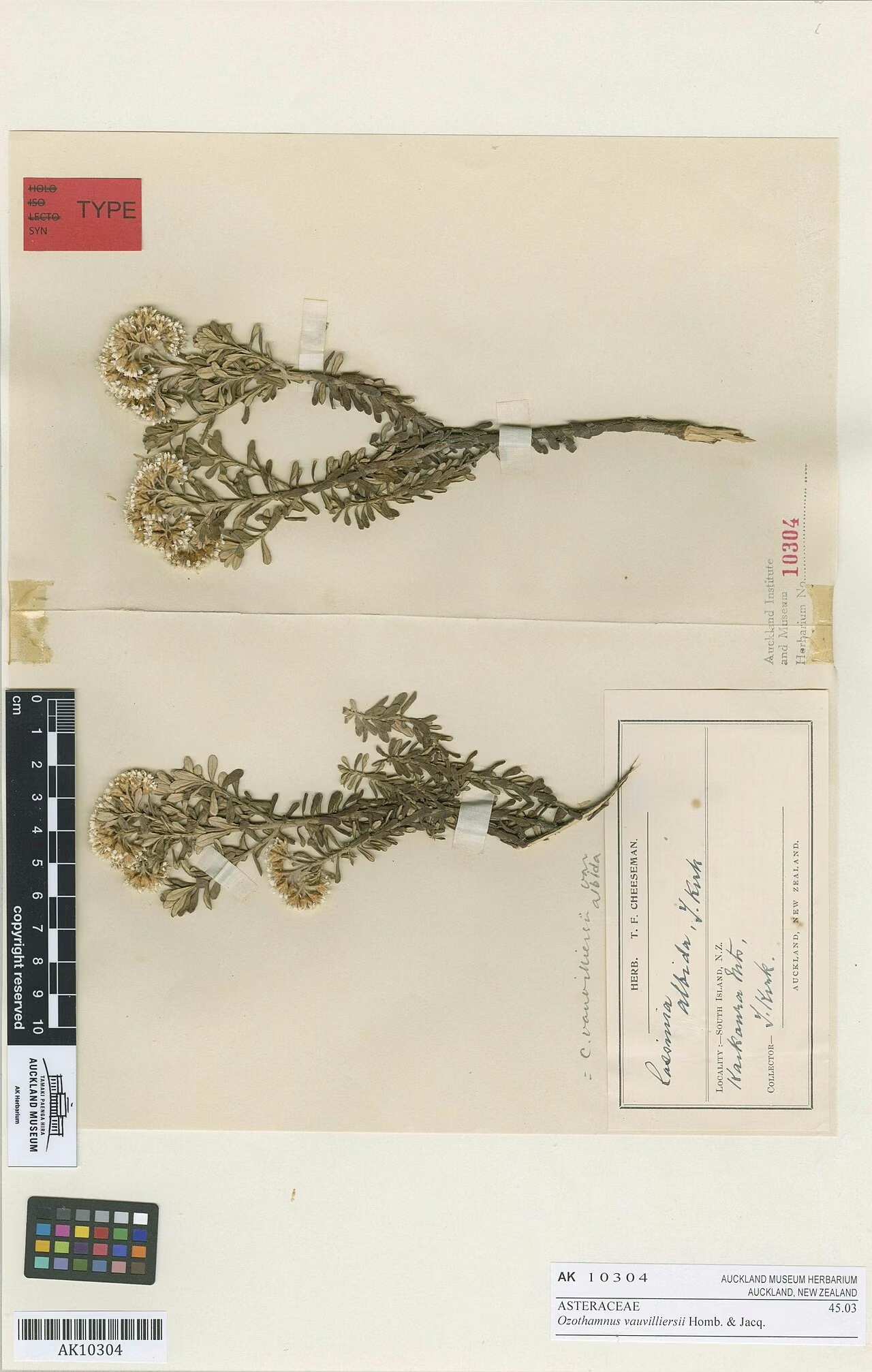
Explore other native plants that share similar characteristics or habitats with Pachycladon (Pachycladon latisiliquum), offering further insights into New Zealand's diverse flora. These related species provide context and opportunities for complementary planting in your garden.
Plant Conservation
Pachycladon latisiliquum has been assessed as Not Threatened in every New Zealand Threat Classification since 2004. The 2023 listing carries qualifiers stating that data on its population size and trend are poor, which means the ranking rests on limited information.
Its known sites lie within Kahurangi National Park, which gives its habitat legal protection. Control of browsing animals, keeping to tracks on fragile marble country, and more survey work to map its full range would all help confirm its security.
Frequently Asked Questions
What does latisiliquum mean in Pachycladon latisiliquum?
The name combines the Latin latus, broad, with siliqua, the long seed pod of the cabbage family, referring to its seed pods. It was first named Cardamine latisiliqua by Thomas Cheeseman in 1883.
Where can you see Pachycladon latisiliquum in the wild?
Herbarium records come from marble outcrops, sinkholes and rocky grassland on Mount Arthur, the Lockett Range and the Anatoki Range in Kahurangi National Park, north-west Nelson.
Is Pachycladon latisiliquum rare?
It is ranked Not Threatened in the 2023 assessment, but with qualifiers noting that data on its population size and trend are poor, so its true status is uncertain.
Sources and Further Reading
The botanical, growing, and conservation details for Pachycladon (Pachycladon latisiliquum) on this page draw on the New Zealand plant references below. Consult them for full technical records and the latest distribution data.