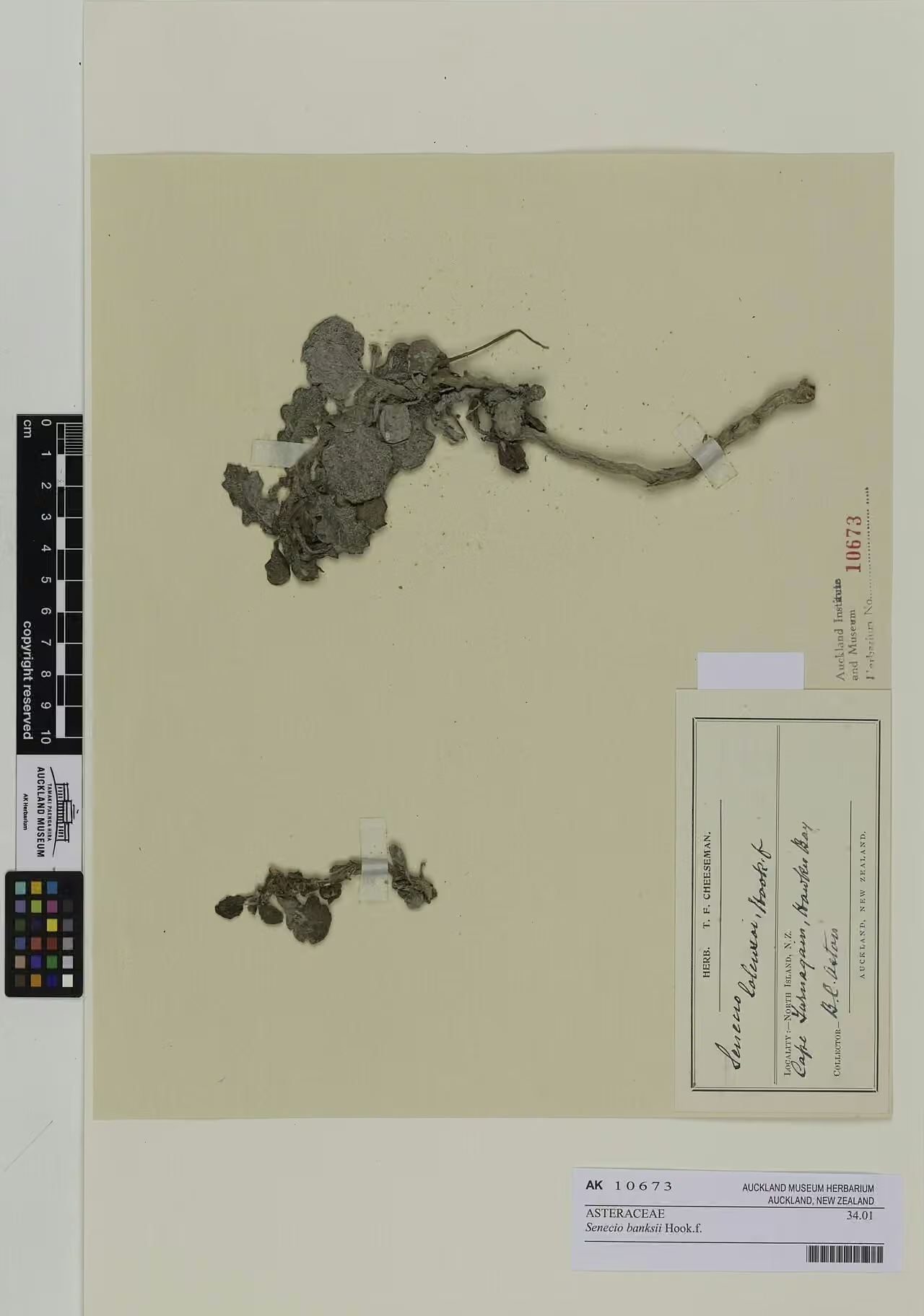
Groundsel
Senecio banksii
Last updated:
Senecio banksii is a perennial daisy endemic to the North Island, growing up to 1.5 m tall with toothed leaves that clasp the stem and terminal clusters of up to 40 bright yellow flower heads, each up to 2.5 cm across. It grows mainly east of the main ranges and near the coast, from the Mokohinau Islands south to Castlepoint and eastern Wairarapa, reaching inland to the central plateau. It favours well-drained limestone and mudstone cliffs, boulders and outcrops from sea level to 1100 m. It is ranked At Risk - Naturally Uncommon and is occasionally sold by specialist native nurseries. Explore more native flowering plants in our native plant guide.
Plant Description
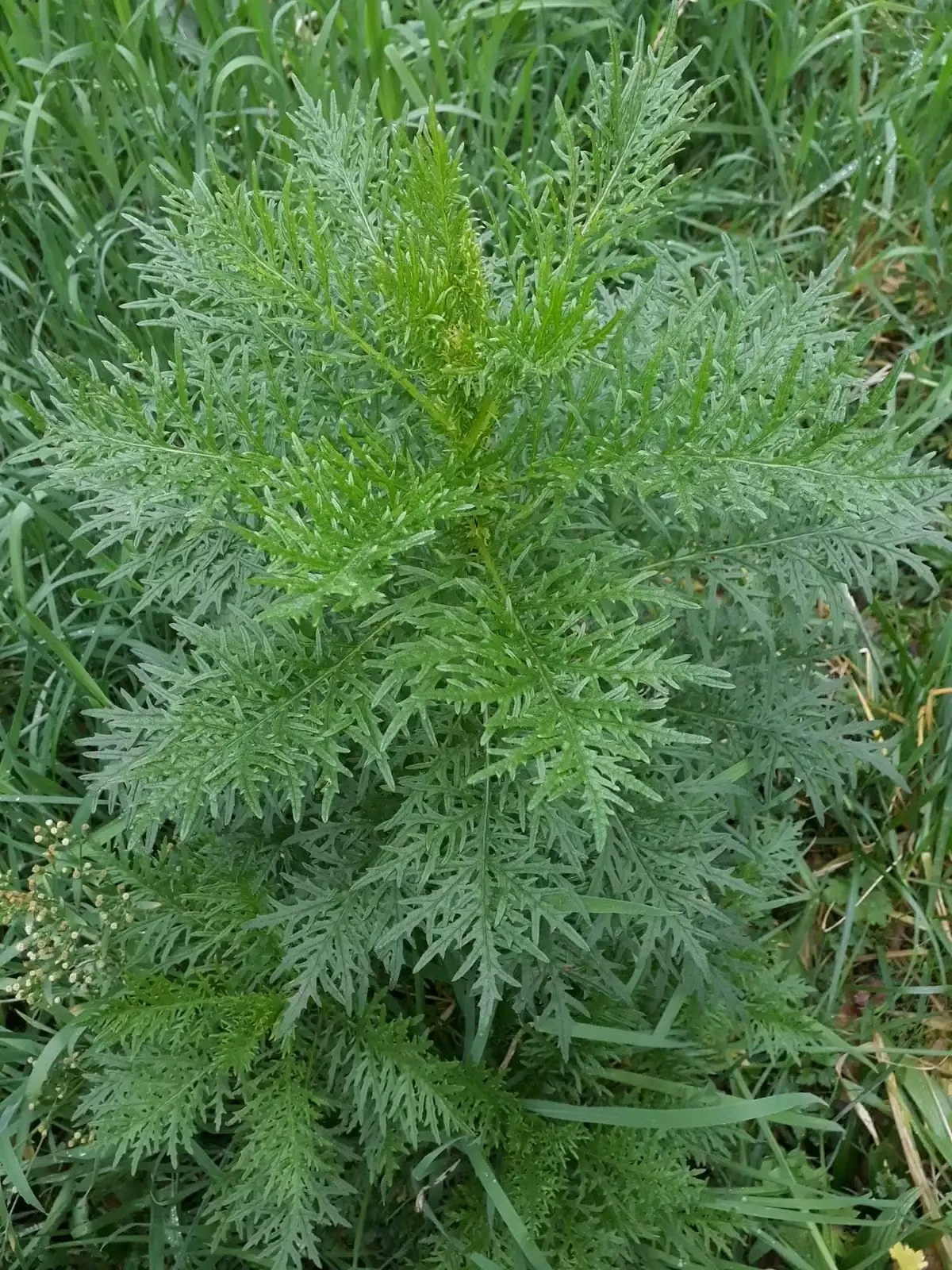
Senecio banksii is a hardy perennial herb with erect to angled stems up to 1.5 m tall, often somewhat gangly. The leaves are elliptic to obovate, 20-200 mm long and 10-50 mm wide, irregularly toothed or serrated and sometimes lobed, often narrowing to a base that clasps the stem. They may be hairless or moderately to densely hairy underneath, and the undersides range from green to purple.
The flower heads are borne in flat-topped terminal clusters of up to 40. Each has usually 7-13 yellow ray florets 3-8 mm long around a yellow disc, giving heads up to 2.5 cm across. Flowering is from October to February, sometimes into June, and the hairy-tufted seeds (achenes 2-2.8 mm long) ripen from December to July.
The closely related Senecio colensoi is distinguished by leaves densely clothed in silvery-white woolly hairs and by its smaller, less heavily branched habit. Some botanists combine the two, but NZPCN keeps them apart because they have been found growing side by side without merging.
Quick Facts
| Scientific Name | Senecio banksii |
|---|---|
| Height | Up to 1.5 m |
| Spread | 0.5-1 m |
| Water Needs | Low to moderate; needs good drainage |
| Light | Full sun to light shade |
| Frost Tolerance | Moderate; grows to 1100 m inland |
| Salt Tolerance | Moderate; grows on coastal cliffs |
| Growth Rate | Fast |
| Lifespan | Perennial, often short-lived |
Climate Best Suited to
It suits the warm, relatively dry eastern North Island climate, with summer sun and good drainage, and tolerates cooler inland conditions up to 1100 m.
Regional Suitability
| City | Climate Suitability |
|---|---|
| Auckland | High |
| Wellington | High |
| Christchurch | Medium |
| Dunedin | Low |
Plant Habitat
Senecio banksii is endemic to the North Island. It occurs east of the main ranges and is mostly coastal, from the Mokohinau Islands in the north to Castlepoint and eastern Wairarapa in the south, extending inland to the central North Island plateau. The Wellington regional assessment lists it as Data Deficient.
It grows from sea level to about 1100 m on well-drained sites, especially limestone and mudstone cliffs, boulders and rock outcrops, where competition from taller vegetation is limited.
Growing Requirements
Soil Requirements
In the wild it grows on limestone and mudstone rock, so free drainage is essential.
- Free-draining, stony or gritty soil
- Tolerates lime-rich soils
- Avoid wet, heavy clay
Light Requirements
A plant of open cliffs and outcrops, it flowers best in full sun.
- Full sun for compact growth and heavy flowering
- Becomes leggy in shade
Water Requirements
Once established it copes with dry summers typical of the eastern North Island.
- Water young plants until established
- Do not overwater; roots dislike sitting wet
Planting and Establishing
Plant in spring or autumn into a sunny bank, rock garden or raised bed with excellent drainage. Mixing in grit or crushed limestone helps on heavier soils.
Space plants about 60 cm apart. Because it can be gangly, place it where neighbouring plants or rocks give some support, or cut it back after flowering.
Ecological Role
Its large clusters of yellow daisy heads offer nectar and pollen over a long season; specific pollinator records for this species were not found, but the open heads are accessible to a wide range of insects. The seeds carry a pappus of fine bristles and are dispersed by wind.
On eroding cliffs and outcrops it acts as an early coloniser, growing in places where soil is thin and taller shrubs struggle.
Uses & Significance
Garden Uses
A cheerful native perennial for dry, sunny gardens.
- Rock gardens and dry banks
- Coastal gardens on the east coast
- Pollinator plantings
- Limestone or gravel gardens
Ecological Value
It is a characteristic plant of eastern North Island cliff and outcrop vegetation.
- Long flowering season for insects
- Colonises bare rock and eroding faces
- Part of naturally uncommon limestone and mudstone plant communities
Landscaping Uses
Use Senecio banksii for a burst of yellow among grey rocks, flaxes and tussocks. Its height makes it a good mid-border plant in dry gravel gardens.
Pair it with Pimelea, coastal tussocks and small flaxes for a naturalistic east coast cliff planting, keeping its yellow heads as the focal point.
Seasonal Care Calendar
Spring
New shoots grow quickly and buds form; flowering starts from October.
- Plant out new stock
- Check for aphids on new growth
Summer
Peak flowering with clusters of up to 40 yellow heads.
- Deadhead to tidy plants
- Collect seed as heads turn fluffy
Autumn
Occasional late flowers continue; seed is still ripening into winter.
- Cut back leggy stems
- Sow fresh seed
Winter
Growth slows. Plants rest in their well-drained position.
- Avoid waterlogging
- Replace old, woody plants with seedlings
When to Prune and How Much
Cut back flowered stems by about half after the main flowering in late summer or autumn to keep plants bushy and to prevent them flopping.
Older plants can become woody and sparse; as a relatively short-lived perennial it is often best renewed from seed or cuttings every few years.
How to Grow Groundsel
Senecio banksii is grown most easily from fresh seed, which is produced in quantity on the wind-dispersed, bristle-tufted achenes from December to July. Like many perennial Senecio, it can also be raised from cuttings of non-flowering shoots, which is a good way to keep a particular form, for example one with purple leaf undersides. For restoration work, collect seed locally, as the species is naturally uncommon and some regional populations may be genetically distinct. Avoid planting it close to Senecio colensoi if you want to keep seed true.
From Seed
Collect heads as they turn fluffy and white. Seed is best sown fresh in late summer or autumn.
- Pick seed heads just as the pappus opens and before the wind takes them.
- Rub off the seeds and sow thinly on a free-draining seed mix.
- Cover with a light layer of fine grit.
- Keep moist in a sunny, sheltered spot until seedlings emerge.
- Pot seedlings on individually once they have a few true leaves.
From Cuttings
Take soft or semi-hardwood cuttings from non-flowering shoots in spring or early summer.
Cuttings root fastest in warm weather. Use stock plants growing in full sun, as their shoots are firmer and less prone to rotting than soft, shaded growth.
- Cut 8-10 cm shoots just below a node.
- Remove the lower leaves.
- Insert into a gritty cutting mix.
- Keep humid and shaded until roots form, then pot on.
Pests & Diseases
Aphids may cluster on soft new growth and flower stems, and caterpillars of moths that feed on Senecio can chew the leaves. Neither usually causes serious harm.
The main cultivation problem is root rot in poorly drained soil, especially in wet winters.
Cultural Significance
No Māori name or traditional Māori use is recorded for Senecio banksii in the sources consulted. The species was described by Joseph Hooker in 1852 and named after Sir Joseph Banks (1743-1820), the naturalist on Cook's first voyage.
The genus name Senecio comes from the Latin senex, 'old man', probably referring to the white, beard-like hairs on the seeds.
Bonus Tip
If your plant has gone leggy by midsummer, cut half the stems back hard and leave the rest to flower; the cut stems regrow and flower later, extending the display into autumn and keeping the plant upright.
Related Plants
Explore other native plants that share similar characteristics or habitats with Groundsel (Senecio banksii), offering further insights into New Zealand's diverse flora. These related species provide context and opportunities for complementary planting in your garden.
Plant Conservation
Senecio banksii is ranked At Risk - Naturally Uncommon (2023), with qualifiers Sp (sparse), DPS (data poor: size), DPT (data poor: trend) and RR (range restricted). It was ranked Not Threatened in 2004 and 2009.
Because its populations are scattered on cliffs and outcrops, browsing animals and weeds that invade rock faces could affect it. Better survey data on population sizes and trends is the main need.
Frequently Asked Questions
Where does Senecio banksii grow naturally?
It is found only in the North Island, mostly near the east coast from the Mokohinau Islands to Castlepoint and eastern Wairarapa, extending inland to the central plateau, on well-drained cliffs and outcrops.
How is Senecio banksii different from Senecio colensoi?
Senecio colensoi has leaves densely covered in silvery-white woolly hairs and is a smaller, less branched plant. The two have been found growing together, which supports keeping them as separate species.
Who is Senecio banksii named after?
It honours Sir Joseph Banks, the English naturalist and patron of science who sailed with Cook on the Endeavour.
Can I buy Senecio banksii?
NZPCN notes it is occasionally available from specialist native plant nurseries. It suits a sunny, well-drained bank or rock garden.
Sources and Further Reading
The botanical, growing, and conservation details for Groundsel (Senecio banksii) on this page draw on the New Zealand plant references below. Consult them for full technical records and the latest distribution data.