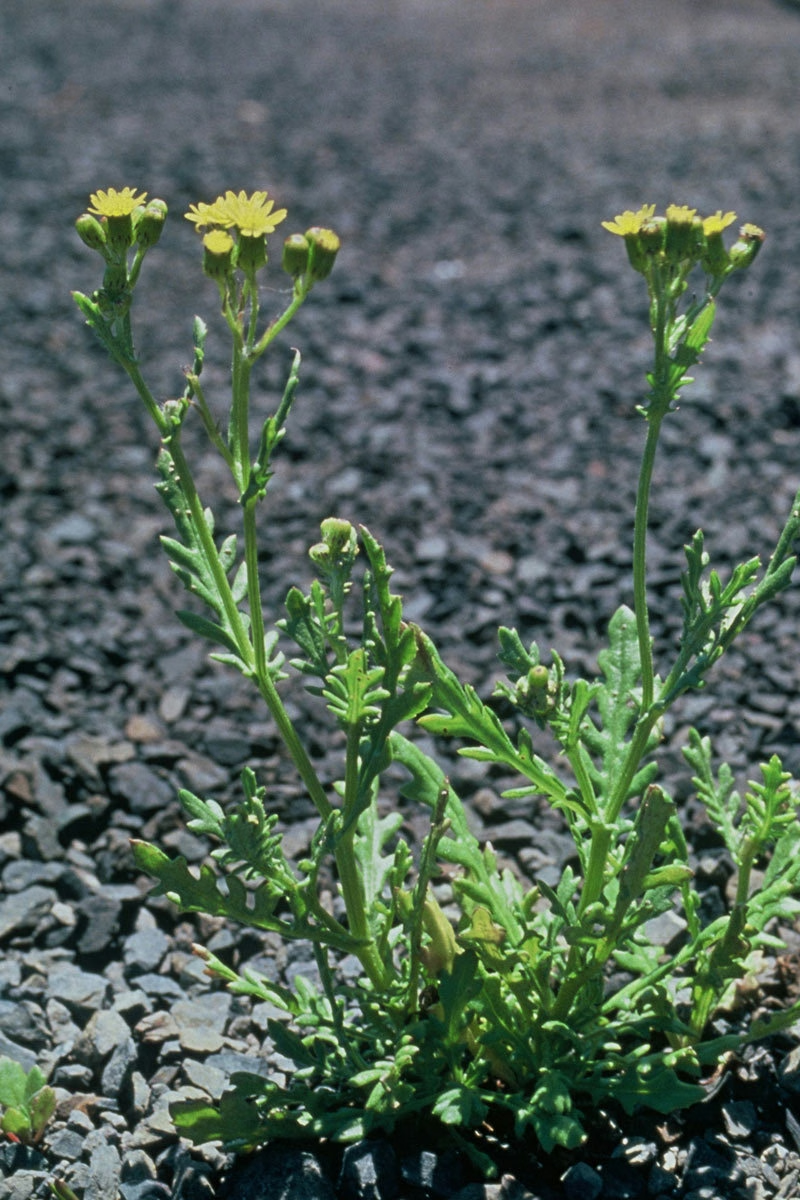
Groundsel
Senecio repangae
Last updated:
Senecio repangae, formerly Senecio repangae subsp. repangae, is an endemic groundsel of north-eastern North Island offshore islands, from Wakatehāua Island to Cuvier Island (Repanga). It is an erect, sparsely branched annual or short-lived perennial 0.2 to 1.2 m tall, with dull dark grey-green, hairy, deeply lobed leaves and small yellow heads bearing up to 9 short, curled-back rays. It is strictly coastal and grows close to colonies of gulls, shags and petrels. Known only from small, scattered populations, some of which have declined since the early 1990s, it is ranked Threatened - Nationally Endangered. Explore more native flowering plants in our native plant guide.
Plant Description
Senecio repangae is an erect, sparsely branched annual or short-lived perennial herb 0.2 to 1.2 m tall with a stout woody rootstock. Its foliage is dull dark grey-green and hairy. The basal leaves taper narrowly to the base, while the mid-stem leaves are deeply two-lobed at the base and pinnately lobed.
The flowers are yellow. Each head has a subcylindric to urn-shaped involucre of 9 to 17 narrow, lanceolate bracts and between 0 and 9 ray florets, whose sulphur-yellow ligules are only 1 to 2 mm long and curl backwards. The chromosome number is 2n = 100.
It differs from Senecio pokohinuensis of the Mokohinau Islands by its dark green, heavily hairy, non-succulent and non-glaucous foliage, its urn-shaped involucre with longer bracts, and its fewer, recurved rays. From the shore groundsel Senecio lautus it differs in growth form, involucral bract number and seed features. Genetic work has shown both S. repangae and S. pokohinuensis are of hybrid origin, arising from separate hybridisation events.
Quick Facts
| Scientific Name | Senecio repangae |
|---|---|
| Height | 0.2-1.2 m |
| Spread | Sparsely branched; narrow |
| Water Needs | Low to moderate |
| Light | Full sun |
| Frost Tolerance | Low; frost-free island climate |
| Salt Tolerance | High; strictly coastal |
| Growth Rate | Fast |
| Lifespan | Annual or short-lived perennial |
Climate Best Suited to
Suits the mild, frost-free maritime climate of northern offshore islands, with warm summers and strong salt-laden winds.
Regional Suitability
| City | Climate Suitability |
|---|---|
| Auckland | High |
| Wellington | Medium |
| Christchurch | Low |
| Dunedin | Low |
Plant Habitat
Senecio repangae is endemic to the North Island, where it is confined to offshore islands in the north-east, from Wakatehāua Island in the north to Cuvier Island (Repanga) off the Coromandel Peninsula.
It is strictly coastal and grows mainly in the immediate vicinity of seabird colonies of gulls, shags, petrels and diving petrels, where the birds keep the ground open and enrich the soil.
Growing Requirements
Soil Requirements
It grows in thin, seabird-enriched soils on rocky coastal islands.
- Free-draining, rocky or gritty soil
- Tolerates high nutrient seabird ground
- Open, disturbed patches for seedlings
Light Requirements
Its seabird colony habitat is open and exposed, and NZPCN recommends full sun.
- Full sun
- Exposed coastal sites
Water Requirements
Island seabird sites drain quickly and become dry in summer.
- Water young plants until established
- Keep drainage sharp to avoid rot
Planting and Establishing
In cultivation plant it in full sun in a sheltered but sunny, frost-free position with gritty, free-draining soil, or grow it in a container.
It is short-lived, so plan to replace plants from seed every year or two, and keep it apart from other groundsels to avoid hybridisation.
Ecological Role
Senecio repangae is part of the specialised plant community of seabird islands, where burrowing and roosting birds disturb and fertilise the soil. Its plumed seeds are dispersed by wind.
Its small heads attract generalist insects, though no species-specific pollination studies were found. Because it depends on seabird activity, changes to colonies can affect its populations.
Uses & Significance
Garden Uses
It is chiefly of value in conservation collections.
- Ex situ conservation of a Nationally Endangered plant
- Collections of northern island flora
- Not suited to general garden use
Ecological Value
It is an indicator plant of healthy seabird colony vegetation on north-eastern islands.
- Part of seabird colony communities
- Food for island insects
- Significant for studies of hybrid speciation
Landscaping Uses
It has little landscape use. In a specialist collection it fits a sunny coastal rockery alongside other island plants.
Any restoration planting should use local seed from the same island and be coordinated with the Department of Conservation.
Seasonal Care Calendar
Spring
Flowering begins in September.
- Sow seed or plant out
- Weed around young plants
Summer
Flowering and fruiting continue through summer.
- Collect ripe seed
- Water potted plants in dry spells
Autumn
Flowering ends by about March and fruiting by April.
- Sow fresh seed for replacement plants
Winter
Annual plants have died back and perennial ones grow slowly.
- Protect potted plants from frost and waterlogging
When to Prune and How Much
No regular pruning is needed. Spent flowering stems can be removed after seed has been collected.
Replace old, untidy plants with fresh seedlings rather than pruning hard, since the species is short-lived.
How to Grow Groundsel
NZPCN describes Senecio repangae as easy from fresh seed and preferring full sun. As an annual or short-lived perennial, it is best maintained by regular sowing. Because this is a Nationally Endangered plant whose island sites are mostly protected reserves, never collect seed from the wild without Department of Conservation permission and engagement with mana whenua. Keep cultivated plants well away from other Senecio, especially S. lautus and S. pokohinuensis, so that seed stays true to type, and record the island of origin for every seed lot.
From Seed
Fruiting runs from September to April. Collect seed as the heads open and fluff up, before the plumed seeds blow away.
Sow seed fresh for best results, as is usual for groundsels. Because individual plants live only a season or a few years, sowing a small batch each year keeps a steady supply of young plants and avoids losing a collection when older plants die.
- Collect ripe seed heads
- Sow fresh on a gritty, free-draining seed mix
- Cover very lightly
- Keep moist in a warm, sunny place
- Pot seedlings individually once they have true leaves
- Grow on in full sun before planting out
- Plant out in spring once frosts have passed
Seed Banking
With only small, scattered and in some places declining wild populations, stored seed provides an important backup for this species.
- Clean and dry seed thoroughly
- Store in sealed containers in cool, dry conditions
- Keep separate lots for each island population
- Test germination periodically
Pests & Diseases
No specific insect pests are recorded. Aphids and slugs may affect young plants in cultivation.
In the wild, NZPCN attributes its threat ranking to its small, scattered populations and observed declines, rather than to a particular pest.
Cultural Significance
Its name honours Repanga, the Māori name for Cuvier Island. No traditional Māori use of this plant was found in the sources consulted.
Peter de Lange and Brian Murray described it in 1998, originally with two subspecies; the Mokohinau subspecies was later separated as Senecio pokohinuensis.
Bonus Tip
If you are growing this plant for conservation, check the rays on each head: small, sulphur-yellow rays that curl backwards, on a plant with dark green hairy leaves, confirm Senecio repangae rather than a hybrid or a related groundsel.
Related Plants
Explore other native plants that share similar characteristics or habitats with Groundsel (Senecio repangae), offering further insights into New Zealand's diverse flora. These related species provide context and opportunities for complementary planting in your garden.
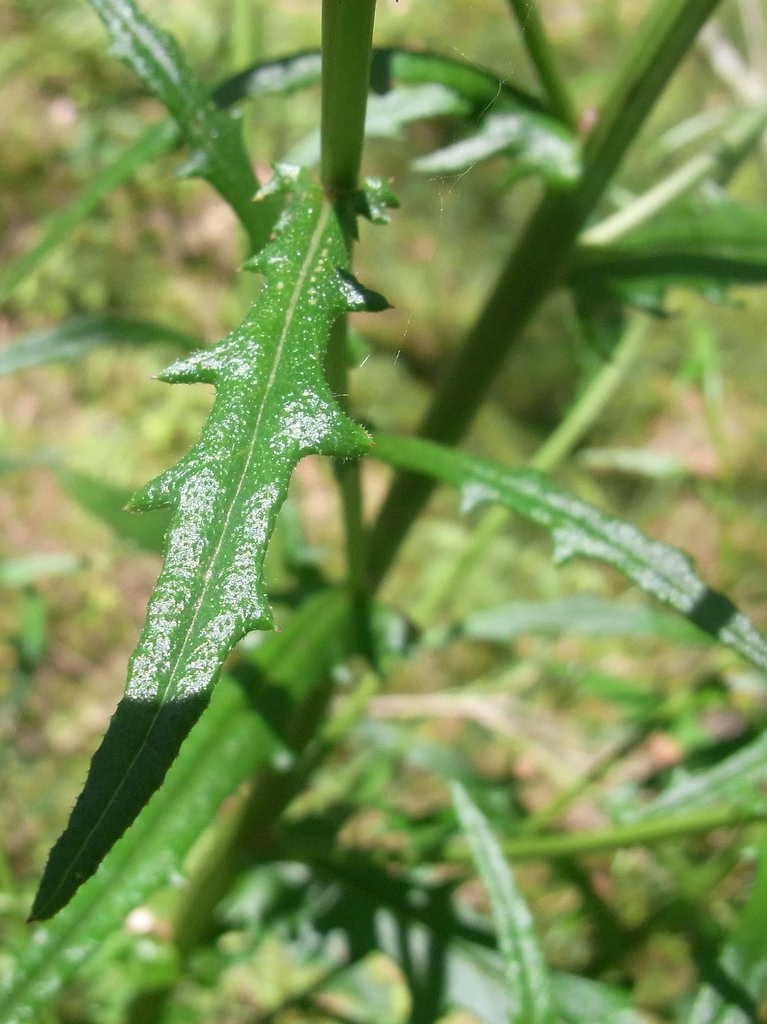
Senecio hispidulus
Senecio hispidulus
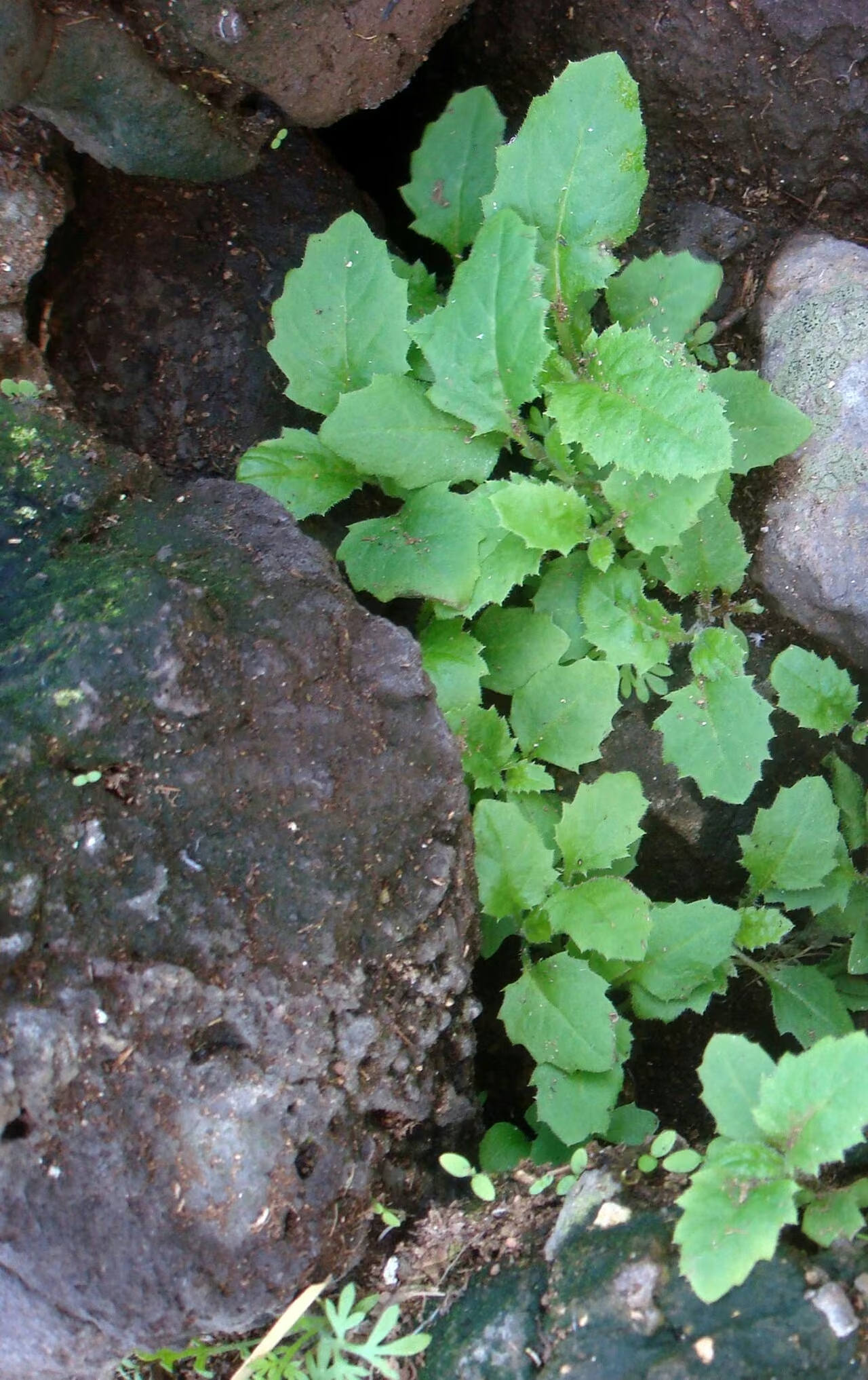
Kermadec Fireweed
Senecio kermadecensis
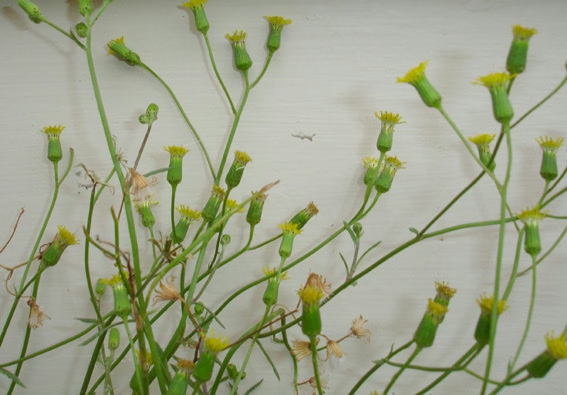
Senecio marotiri
Senecio marotiri
Senecio rufiglandulosus
Senecio rufiglandulosus
Senecio scaberulus
Senecio scaberulus
Guano Groundsel
Senecio sterquilinus
Simplicia buchananii
Simplicia buchananii
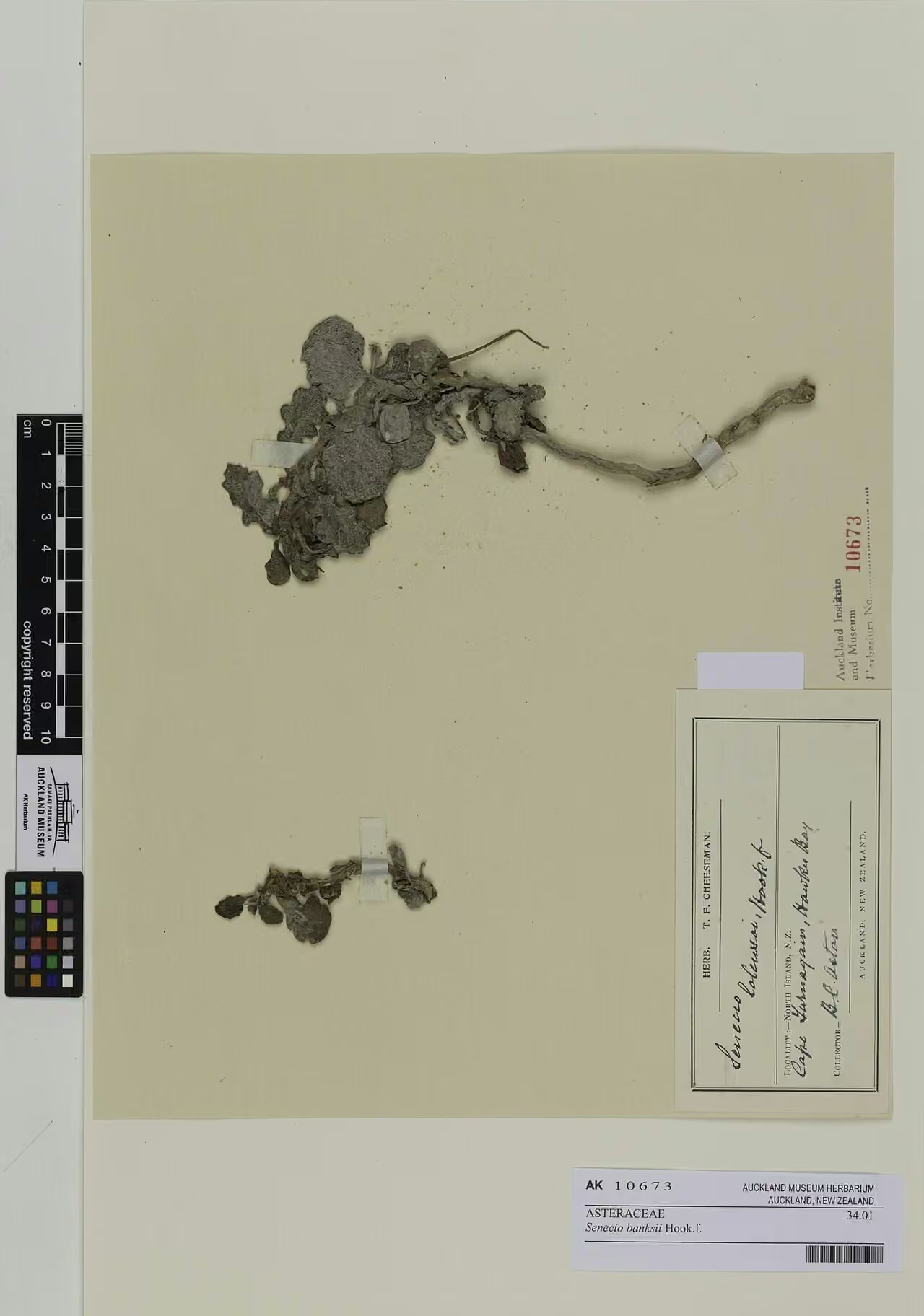
Senecio banksii
Senecio banksii
Plant Conservation
Senecio repangae is ranked Threatened - Nationally Endangered (2023), worsened from Nationally Vulnerable in 2017, with qualifiers for sparse occurrence, data poor (size and trend), partial decline and population fragmentation. NZPCN notes that it is very uncommon, known only from small, widely scattered populations, and has declined at some sites recorded in the late 1980s and early 1990s.
Protecting seabird colonies, keeping the islands free of predators and weeds, monitoring known populations and maintaining seed of known provenance in cultivation will all help its survival.
Frequently Asked Questions
What happened to Senecio repangae subsp. repangae?
When its Mokohinau Islands relative was raised to species rank as Senecio pokohinuensis in 2022, the remaining subspecies simply became Senecio repangae.
Where does Senecio repangae grow?
It grows only on offshore islands in the north-east of the North Island, from Wakatehāua Island to Cuvier Island, close to seabird colonies of gulls, shags and petrels.
Why is Senecio repangae Nationally Endangered?
It is very uncommon and known only from small, widely scattered populations, and NZPCN reports that some sites found in the late 1980s and early 1990s have since declined.
What does the name repangae mean?
It refers to Repanga, the Māori name for Cuvier Island off the Coromandel coast, which is the type locality of the species.
Sources and Further Reading
The botanical, growing, and conservation details for Groundsel (Senecio repangae) on this page draw on the New Zealand plant references below. Consult them for full technical records and the latest distribution data.