Kermadec Fireweed
Senecio kermadecensis
Last updated:
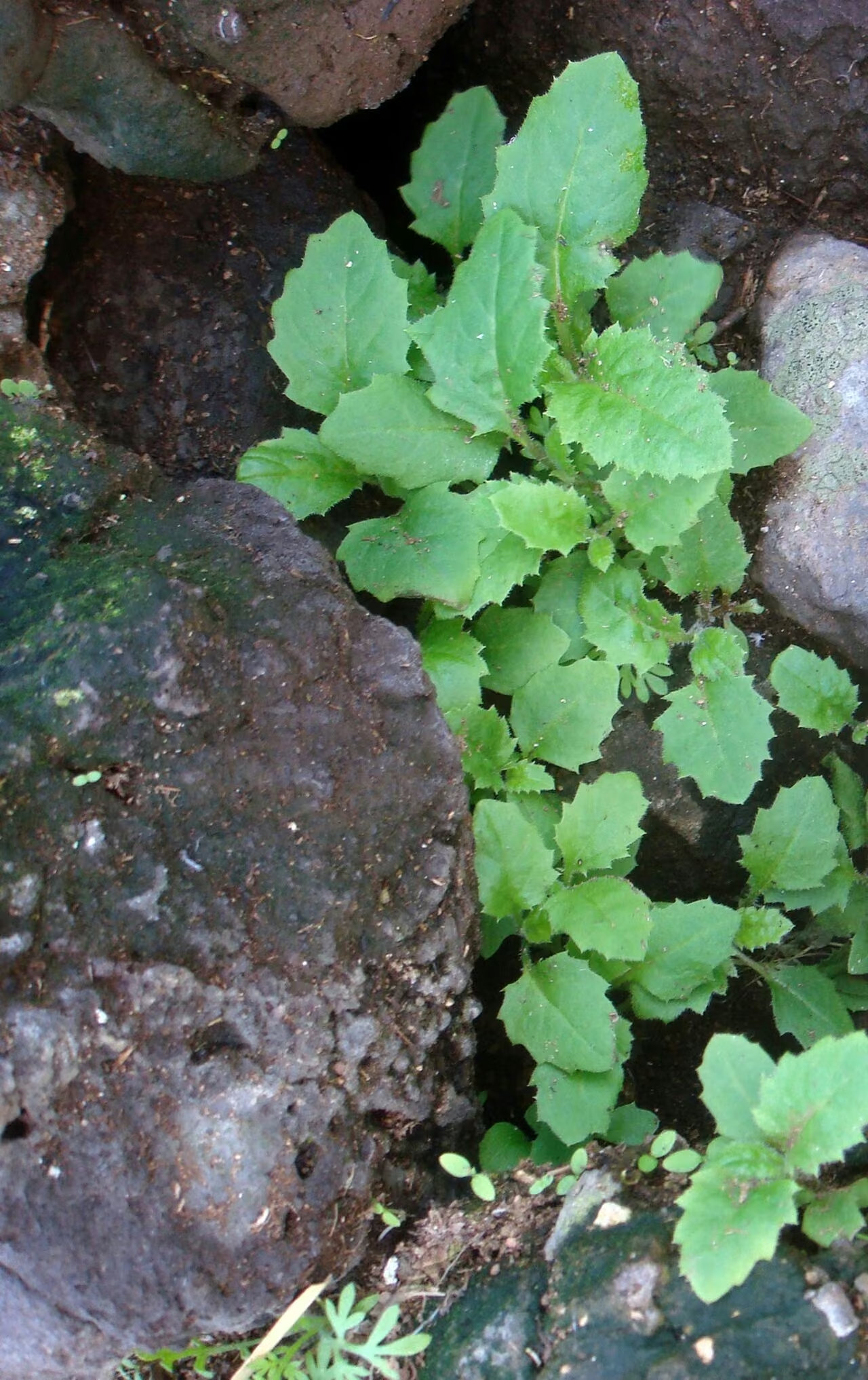
Kermadec fireweed (Senecio kermadecensis) is an erect annual or short-lived perennial herb found only in the Kermadec Islands, New Zealand's subtropical northern outpost. It has hairy, finely toothed leaves, stems often flushed maroon-purple, and small greenish-yellow flower heads with no petal-like rays. It depends on open ground kept clear by nesting seabirds. Once common on Raoul Island, it appears to have vanished there over the last few decades and survives mainly on the nearby Meyer Islets, where the invasive blue billygoat weed threatens it. It is ranked Threatened - Nationally Critical. Explore more native flowering plants in our native plant guide.
Plant Description
Senecio kermadecensis is an erect annual or short-lived perennial herb with dark maroon-purple or green stems. The basal leaves are 40 to 100 mm long and 10 to 40 mm wide, broadly elliptic, grey-green to bright green and sparsely to densely bristly-hairy, especially underneath. The stem leaves are 3 to 8 cm long with fine, even teeth, becoming smaller and narrower towards the top of the plant.
The flower heads are carried in a flat-topped cluster. Each head has only 5 to 8 involucral bracts, 4.5 to 5.5 mm long, and no ray florets, so the small greenish-yellow disc looks like a tiny tuft rather than a daisy. The seeds are almost cylindrical, 2 to 2.5 mm long, greyish-black, with rows of hairs in the grooves between the ribs. The chromosome number is 2n = 60.
It is the only erechthitoid groundsel in the Kermadec Islands, so there are no native look-alikes. The real identification problem is the weed Ageratum houstonianum: young plants of the two are easily confused, and reliable identification requires flowering plants. Belcher, who studied it, considered its closest relative to be Senecio biserratus, and Allan once placed it in the genus Erechtites.
Quick Facts
| Scientific Name | Senecio kermadecensis |
|---|---|
| Height | Erect herb; exact height range not well documented |
| Spread | Single erect stems, little spread |
| Water Needs | Moderate |
| Light | Full sun on open ground |
| Frost Tolerance | None; very cold sensitive |
| Salt Tolerance | Moderate; grows on coastal seabird islets |
| Growth Rate | Fast |
| Lifespan | Annual or short-lived perennial |
Climate Best Suited to
Adapted to the warm, humid, frost-free subtropical climate of the Kermadec Islands. It is very cold sensitive and unsuited to frosty mainland climates.
Regional Suitability
| City | Climate Suitability |
|---|---|
| Auckland | Medium |
| Wellington | Low |
| Christchurch | Low |
| Dunedin | Low |
Plant Habitat
Kermadec fireweed is endemic to the Kermadec Islands, roughly 1000 km north-east of the North Island. It has been recorded from Raoul Island and the small islets close to it, including the Meyer Islets and Herald Islets. It was once common on Raoul but was already scarce there by the 1960s, and recent surveys suggest it is now confined to the Meyer Islets.
It is a plant of disturbed, open ground. It needs clear patches of soil such as those created by active seabird nesting, and the Flora of New Zealand also records it from coastal forest margins and clearings. It is closely associated with seabird colonies, which open up the ground and enrich the soil.
Growing Requirements
Soil Requirements
On the islets it grows in loose, seabird-disturbed soil enriched by guano.
- Open, freshly disturbed soil
- Nutrient-rich, seabird-influenced ground
- Free drainage
Light Requirements
It needs open ground and does not compete well once taller, faster plants shade it.
- Full sun
- Little tolerance of competition or shade
Water Requirements
The Kermadecs are warm and humid with regular rainfall.
- Keep evenly moist in cultivation
- Avoid waterlogging
Planting and Establishing
Planting in the wild is a matter for conservation agencies, as the Kermadec Islands are a nature reserve with strict biosecurity and access controls.
Ex situ plants need a frost-free glasshouse or a warm, sheltered northern site, open free-draining soil and protection from competing weeds. Because it is short-lived, collections must be renewed regularly from seed.
Ecological Role
Kermadec fireweed is tied to seabird colonies, which are thought to provide the nutrients and disturbed open ground it needs and may also help disperse it. The plumed seeds are also spread by wind across open ground.
Its strategy is to colonise gaps quickly, but this puts it in direct competition with Ageratum houstonianum, which colonises the same open sites, grows faster and shades out its seedlings.
Uses & Significance
Garden Uses
This is a conservation plant rather than a garden ornamental.
- Ex situ conservation collections
- Botanic garden displays of threatened island flora
- Not for general garden planting
Ecological Value
It is one of the few endemic herbs of the Kermadec Islands.
- Part of the seabird colony plant community
- Nectar for insects on the islets
- An indicator of weed pressure on seabird islets
Landscaping Uses
Kermadec fireweed has no practical landscaping role on the mainland. Its value lies in conservation, research and education.
In a botanic garden or nursery collection it is best displayed alongside other Kermadec Island plants in a frost-free house, with interpretation explaining the threat from Ageratum.
Seasonal Care Calendar
Spring
Flowering begins as early as August.
- Weed around plants in cultivation
- Check seedlings carefully against Ageratum
Summer
Flowering continues to about January while seed ripens from October.
- Collect ripe seed for conservation stock
Autumn
Fruiting continues until about April.
- Sow fresh seed
- Keep young plants frost-free
Winter
Mild Kermadec winters allow some plants to persist as short-lived perennials.
- Protect cultivated plants from any cold
When to Prune and How Much
No pruning is needed. In cultivation, remove spent heads only after seed has been collected, since seed is the only reliable way to keep the species going.
Dead annual plants can be removed once they have finished seeding.
How to Grow Kermadec Fireweed
NZPCN reports that Kermadec fireweed is easy to grow from fresh seed but very cold sensitive. Because it is an annual or short-lived perennial, seed is the only practical method of propagation and must be repeated every generation to keep plants in cultivation. Any collection from the Kermadec Islands requires Department of Conservation authorisation, and material should be handled under strict biosecurity so that no weeds, seeds or pests move between the islands and the mainland. Cultivated stock of known provenance is valuable as an insurance population for this Nationally Critical plant.
From Seed
Fruiting runs from October to April. The greyish-black seeds are small and plumed, so heads should be collected as they open.
Seedlings should be grown warm from the start, as cold checks growth and can kill young plants.
- Collect ripe seed heads under permit
- Sow fresh on a free-draining seed mix
- Germinate in a warm, frost-free glasshouse
- Keep moist and in good light
- Prick out into individual pots when large enough to handle
- Keep plants above frost risk year round
Seed Banking
Because wild numbers are tiny and plants are short-lived, storing seed is an important backup to living collections. Seed lots kept separately by collection site preserve whatever genetic differences exist between the remaining islet populations.
- Dry cleaned seed thoroughly
- Store sealed in cool, dry conditions
- Test germination periodically
- Record the collection site and date with every seed lot
- Use stored seed to replace failed living collections
Pests & Diseases
The overwhelming threat is not a pest insect but the weed Ageratum houstonianum, blue billygoat weed, which was naturalised on Raoul Island in the 1940s and has since reached the Meyer Islets. NZPCN notes that eradicating it there is unlikely because human disturbance would harm the seabird nesting grounds.
In cultivation, aphids and slugs may attack young plants, and cold damage is the main cause of losses.
Cultural Significance
No Māori name or traditional use for Kermadec fireweed was found in the sources consulted.
The species was described by Belcher and was at one time treated in Erechtites by Allan. Its decline on Raoul Island is closely bound up with the island's history of human settlement, introduced animals and weeds.
Bonus Tip
When weeding seabird islets or raising this species in a nursery, never pull a young plant until it flowers: seedlings of Kermadec fireweed and blue billygoat weed are very hard to tell apart, and only the yellow-green versus blue flowers make identification reliable.
Related Plants
Explore other native plants that share similar characteristics or habitats with Kermadec Fireweed (Senecio kermadecensis), offering further insights into New Zealand's diverse flora. These related species provide context and opportunities for complementary planting in your garden.
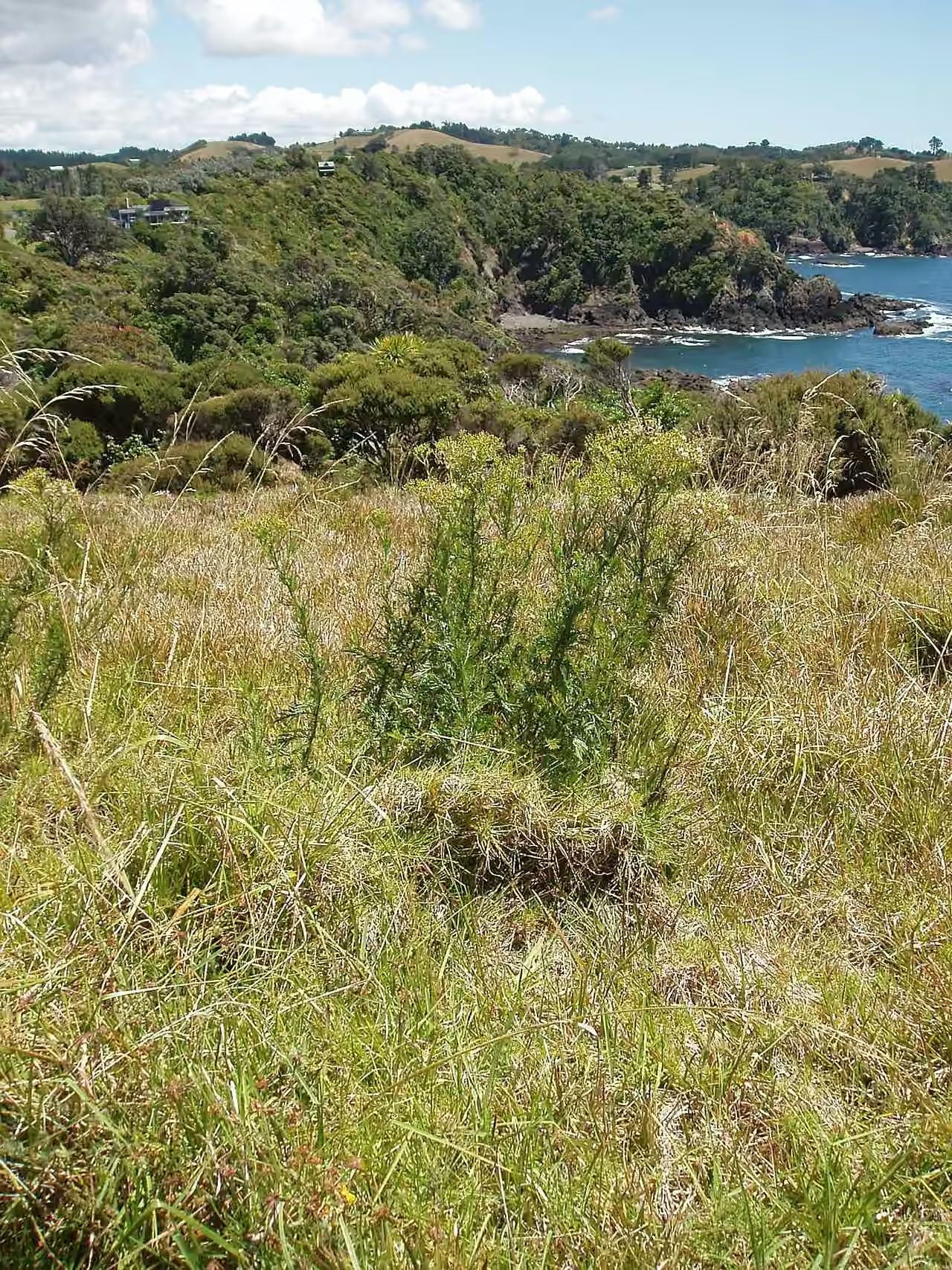
Esler's Fireweed
Senecio esleri
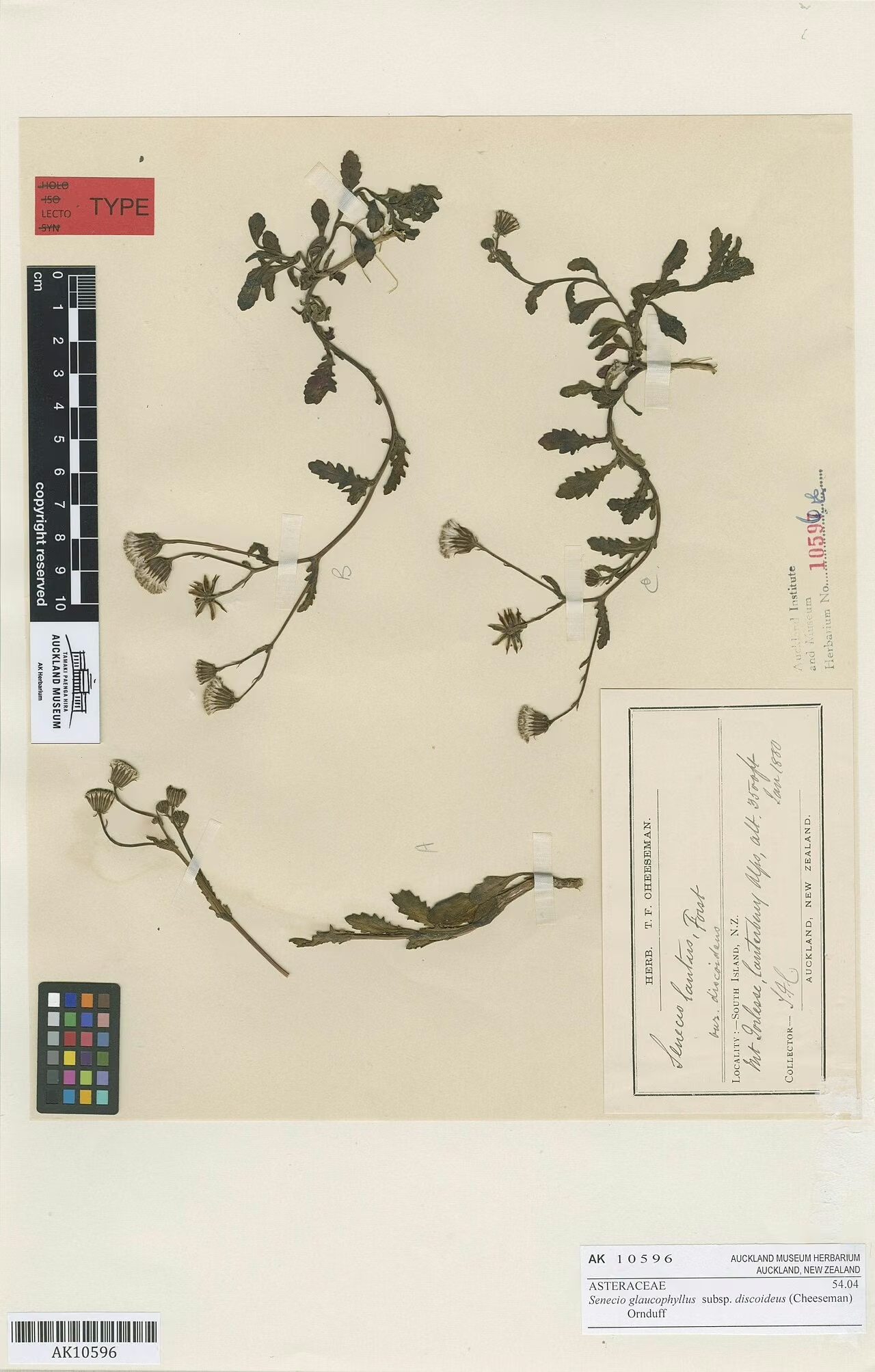
Senecio matatini subsp. discoideus
Senecio matatini subsp. discoideus
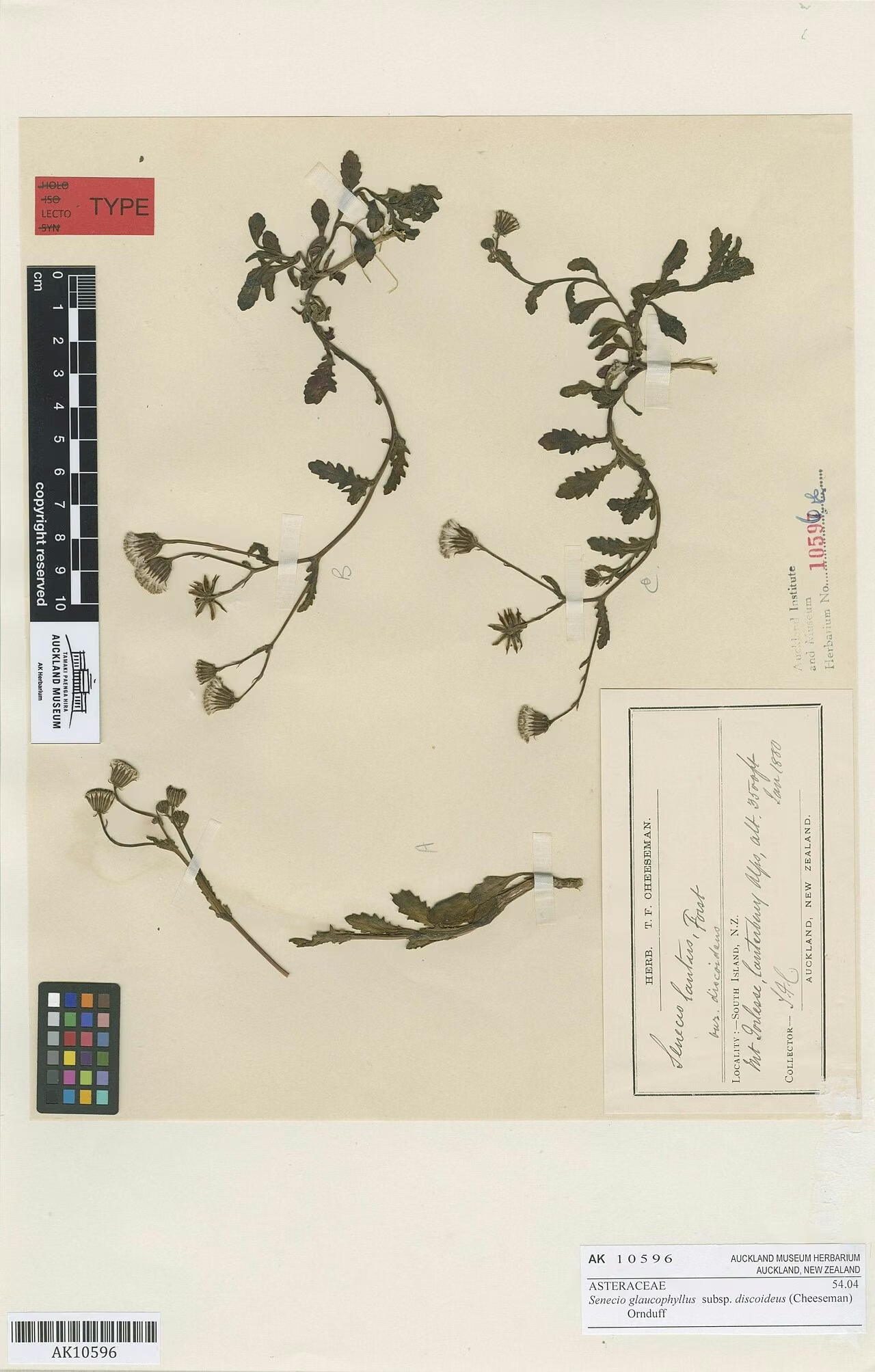
Senecio glaucophyllus
Senecio glaucophyllus
Senecio hispidulus
Senecio hispidulus
Senecio marotiri
Senecio marotiri
Senecio repangae
Senecio repangae
Senecio rufiglandulosus
Senecio rufiglandulosus
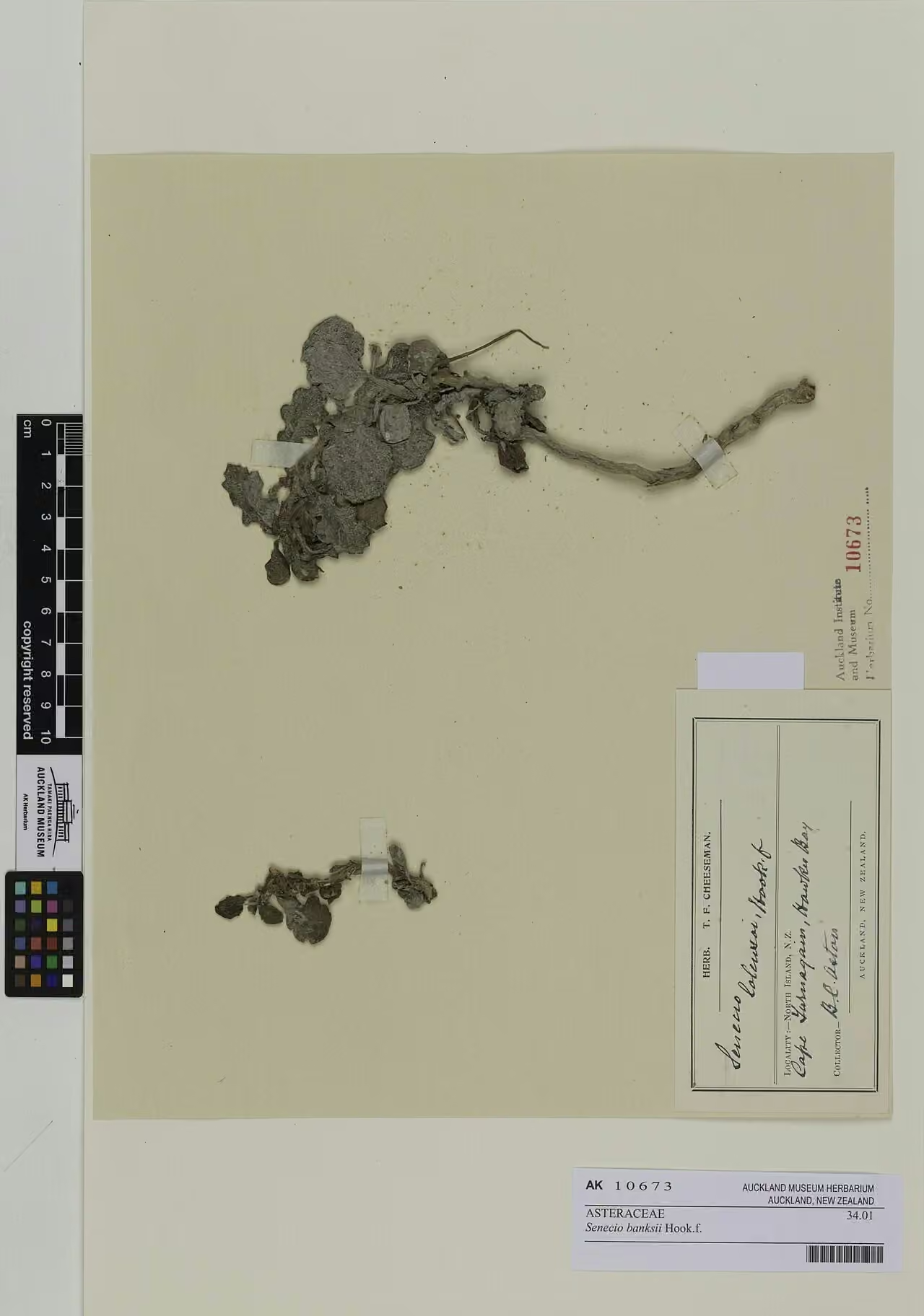
Senecio banksii
Senecio banksii
Plant Conservation
Senecio kermadecensis is ranked Threatened - Nationally Critical (2023) with qualifiers for episodic fluctuations, island endemic and range restricted. It appears to have disappeared from Raoul Island over the last 30 years and is now apparently restricted to the Meyer Islets.
Weed control of Ageratum where it can be done without harming seabirds, continued protection of seabird colonies, and holding seed and plants in cultivation are the main ways to prevent its extinction.
Frequently Asked Questions
Where does Kermadec fireweed grow?
It is endemic to the Kermadec Islands. It was recorded from Raoul Island and the nearby Meyer and Herald Islets, but recent surveys suggest it now survives only on the Meyer Islets.
Why is Kermadec fireweed Nationally Critical?
Its tiny range is being invaded by blue billygoat weed (Ageratum houstonianum), a faster-growing plant that takes over the same open seabird ground and shades out its seedlings.
How can you tell Kermadec fireweed from blue billygoat weed?
Young plants look alike, so flowers are needed: Kermadec fireweed has small yellow-green flower heads, while Ageratum has fluffy blue flowers.
Can Kermadec fireweed be grown on the New Zealand mainland?
NZPCN says it is easy from fresh seed but very cold sensitive, so it would need frost-free conditions or glasshouse protection away from its subtropical home.
Sources and Further Reading
The botanical, growing, and conservation details for Kermadec Fireweed (Senecio kermadecensis) on this page draw on the New Zealand plant references below. Consult them for full technical records and the latest distribution data.