Groundsel
Senecio matatini subsp. discoideus
Last updated:
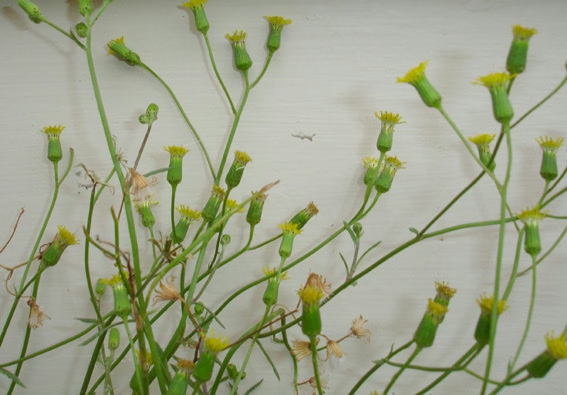
Senecio matatini subsp. discoideus, long known as Senecio glaucophyllus subsp. discoideus, is an endemic perennial groundsel of New Zealand's eastern mountains. It is a low, almost hairless herb with a woody base, bluish-green leaves and heads of dull yellow disc florets that usually lack the bright petal-like rays of its relatives. It grows on stony ground, screes and debris slopes from the montane to subalpine zone, in the Kaweka, Kaimanawa and Ruahine Ranges of the North Island and throughout the South Island east of the main divide. It is ranked Not Threatened nationally. Explore more native flowering plants in our native plant guide.
Plant Description
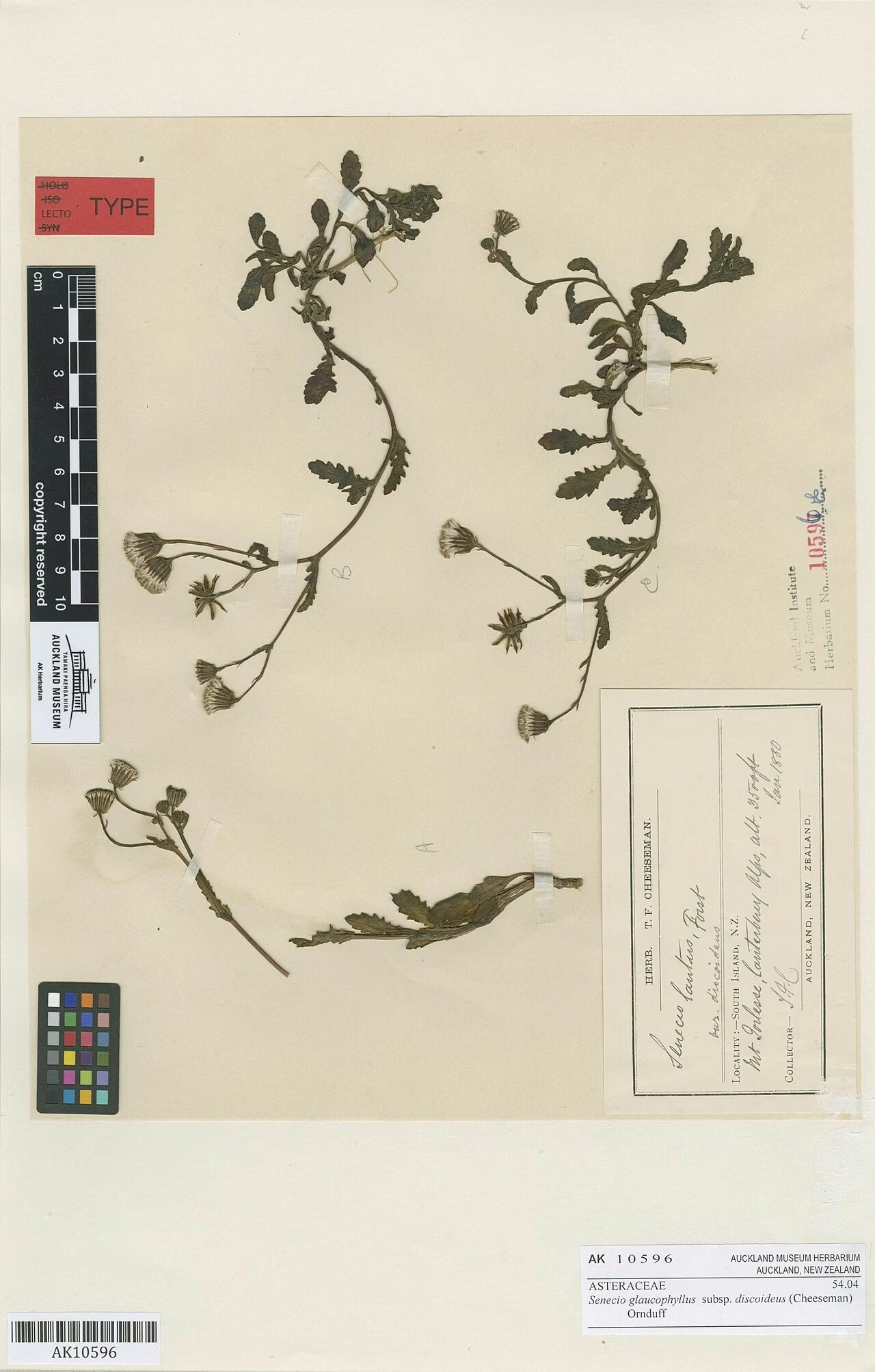
Senecio matatini subsp. discoideus is a glabrous or nearly glabrous perennial herb arising from a woody base. Its stems may lie flat, ascend or stand erect, and the leaves have the bluish or greyish bloom that gave the old species name glaucophyllus. As in the rest of the group the leaves are very variable, ranging from simple and toothed to deeply lobed, and can reach up to about 9 cm long.
The flower heads have between 10 and 21 involucral bracts around a dull yellow disc about 4 to 9 mm across. The defining character of this subspecies is that wild plants lack ray florets, so each head looks like a small yellow button rather than a daisy. The seeds (cypselae) are narrow, about 2.5 to 3.5 mm long and carry a tuft of white pappus hairs for wind dispersal. The chromosome number is 2n = 100.
The related subspecies of S. matatini and the true S. glaucophyllus of North-west Nelson all carry bright yellow rays, so a rayless glaucous groundsel on eastern screes is usually this subspecies. Identification is not always clear cut: the Flora of New Zealand notes that the complex is taxonomically difficult and that discoid plants sometimes develop rays once grown at low altitude in a garden.
Quick Facts
| Scientific Name | Senecio matatini subsp. discoideus |
|---|---|
| Height | Low herb; prostrate to erect stems, usually well under 0.5 m |
| Spread | Small clump from a woody base |
| Water Needs | Low to moderate; needs sharp drainage |
| Light | Full sun |
| Frost Tolerance | High; a montane to subalpine plant |
| Salt Tolerance | No information available; not a coastal plant |
| Growth Rate | Moderate |
| Lifespan | Perennial |
Climate Best Suited to
Suits cold, dry to moderately moist eastern mountain climates with hard winter frosts, strong sun and freely draining stony ground. Humid lowland summers are less to its liking.
Regional Suitability
| City | Climate Suitability |
|---|---|
| Auckland | Low |
| Wellington | Medium |
| Christchurch | High |
| Dunedin | High |
Plant Habitat
This subspecies is endemic to New Zealand. In the North Island it is known from the Kaweka, Kaimanawa and Ruahine Ranges, and in the South Island it occurs throughout the country east of the main divide, with herbarium records from places such as the Craigieburn Range in Canterbury.
It is a plant of montane to subalpine stony ground: scree, debris slopes, gravelly river terraces and rock outcrops, with specimens collected at around 1200 to 1500 m. Although Not Threatened nationally, it is ranked Regionally Naturally Uncommon in Otago.
Growing Requirements
Soil Requirements
In the wild it roots into loose stone, gravel and scree with little organic matter, where water drains away almost immediately.
- Gritty, stony or scree-type mix
- Excellent drainage is essential
- Low to moderate fertility
Light Requirements
It grows in open, unshaded mountain sites and NZPCN advises full sun in cultivation.
- Full sun
- Avoid crowding by taller plants
Water Requirements
Eastern screes dry out quickly between rains, and the plant tolerates dry spells better than waterlogging.
- Water deeply but infrequently in dry weather
- Never leave the roots sitting wet in winter
Planting and Establishing
Plant in spring into a raised scree bed, rock garden or deep gravel-topped container. Set the plant so the woody base sits at or slightly above the surrounding grit, and mulch around it with stone chip rather than bark to keep the crown dry.
Give each plant room to sprawl without being overtopped. Because it is a mountain plant, it generally does better in cooler southern and eastern gardens than in humid northern ones.
Ecological Role
Like other native Senecio, its small yellow heads are visited by flies, native bees and other generalist insects, although specific pollinator studies for this subspecies were not found. The plumed seeds are dispersed by wind across scree and gravel.
Its ability to colonise moving scree and debris slopes makes it part of the sparse pioneer vegetation of eastern mountain ranges, where few plants can establish on unstable ground.
Uses & Significance
Garden Uses
It is a plant for alpine and rock garden enthusiasts rather than general borders.
- Scree or gravel gardens
- Alpine troughs and containers
- Grey-foliage contrast among small tussocks
Ecological Value
It contributes to the flora of open, stony mountain habitats that are often overlooked.
- Pioneer of scree and debris slopes
- Nectar and pollen for small insects
- Part of a scientifically interesting species complex
Landscaping Uses
Pair it with small tussocks, scree cushions and other grey-leaved montane plants in a free-draining rockery. Its blue-grey foliage stands out against dark stone and its button-like yellow heads add colour through summer.
In the eastern South Island it can suit native restoration of gravel terraces and roadside cuttings within its natural range, using locally sourced seed.
Seasonal Care Calendar
Spring
New shoots emerge from the woody base as the snow clears.
- Plant out new stock
- Top up stone chip mulch
Summer
Flowering runs between about October and April for the species group, peaking in summer.
- Water only in prolonged drought
- Collect ripe seed heads
Autumn
Seed continues to ripen and disperse on the wind.
- Sow fresh seed
- Take semi-hardwood cuttings early in autumn
Winter
Growth stops and some top growth may die back.
- Keep the crown dry
- Shelter potted plants from prolonged wet
When to Prune and How Much
Little pruning is needed. Remove spent flowering stems after seed has been collected or shed, and trim away any dead growth at the end of winter to keep the plant tidy.
Avoid cutting into the woody base itself, which is where new shoots arise each season.
How to Grow Groundsel
NZPCN describes Senecio matatini subsp. discoideus as easy to raise from fresh seed and from semi-hardwood cuttings, with the main requirements being full sun and excellent drainage. Seed is the simplest route and preserves the genetic variety of a population, while cuttings reproduce a particular plant exactly. Because the rayless character can change in cultivation and the group hybridises readily, keep material from different sources and different Senecio species apart if you want plants that stay true to type. Collect only from your own plants or with permission, and for restoration use seed from the same district.
From Seed
Seed ripens from late summer into autumn. The seeds carry white pappus hairs and blow away quickly, so watch the heads closely and collect them as they fluff up.
- Gather fluffy seed heads on a dry day
- Rub off the pappus and sow fresh on a gritty seed mix
- Cover lightly with fine grit
- Keep moist but not wet in a bright, cool spot
- Prick out seedlings into deep pots of free-draining mix
From Cuttings
Semi-hardwood cuttings taken from non-flowering shoots in late summer or early autumn root readily.
- Cut 5 to 8 cm non-flowering shoots
- Remove the lower leaves
- Insert into a sandy or pumice-rich cutting mix
- Keep in bright shade with moderate humidity
- Pot on once roots form, usually within several weeks
- Harden off in full sun before planting out in spring
Pests & Diseases
No serious pests specific to this subspecies are recorded. Aphids, slugs and snails can attack soft new growth in gardens, and like other Senecio it may host caterpillars of moths that feed on groundsels.
The greater risk in cultivation is crown rot in wet, poorly drained soil, which is why gritty mix and stone mulch matter more than pest control.
Cultural Significance
No traditional Māori use or Māori name specific to this plant was found in the sources consulted. The new species name matatini is a te reo Māori word meaning complicated, composite or complex, chosen by Liew and co-authors to reflect the tangled taxonomy of the group.
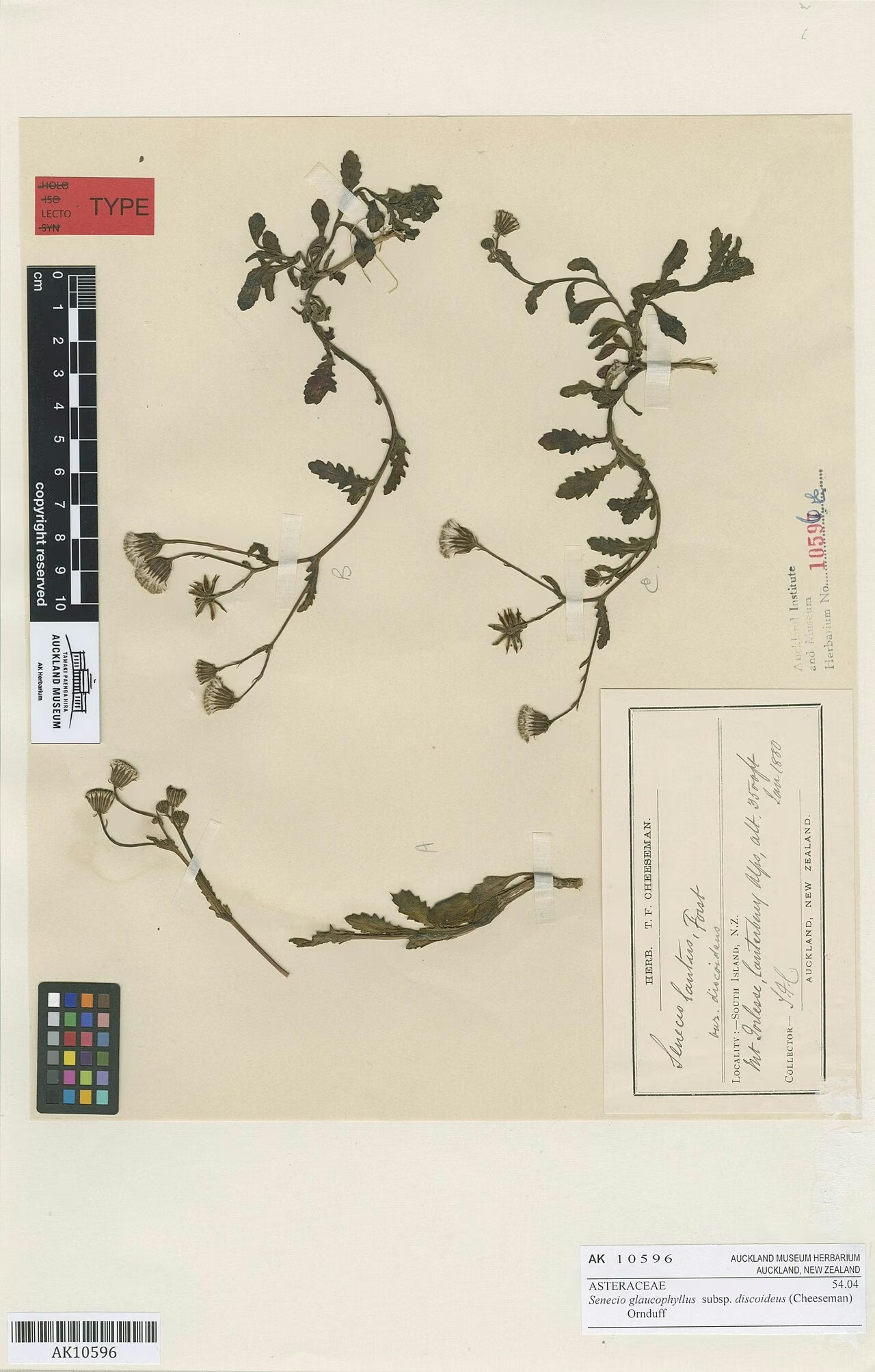
The plant was first named by Thomas Cheeseman as Senecio lautus var. discoideus, later became a subspecies of S. glaucophyllus under Robert Ornduff, and moved to S. matatini in 2021.
Bonus Tip
If your garden plants suddenly produce yellow rays, do not assume you have the wrong plant: the Flora of New Zealand records that rayless wild plants of this group sometimes develop rays when grown near sea level. Keep a label with the original collection locality so the provenance is not lost.
Related Plants
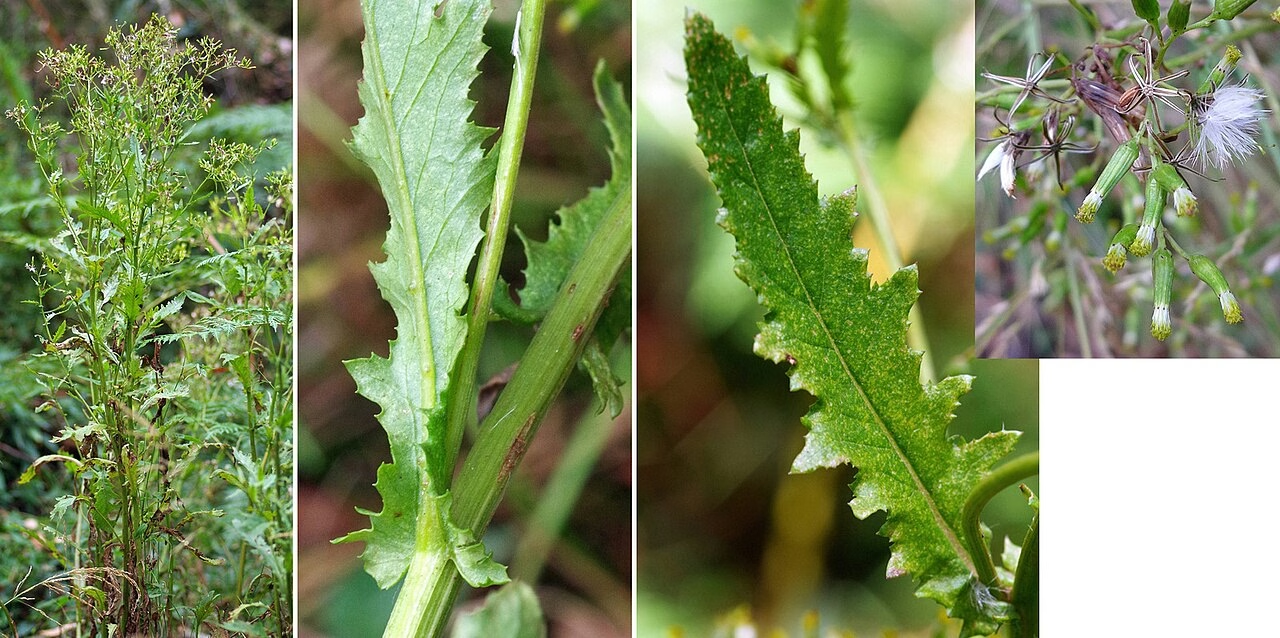
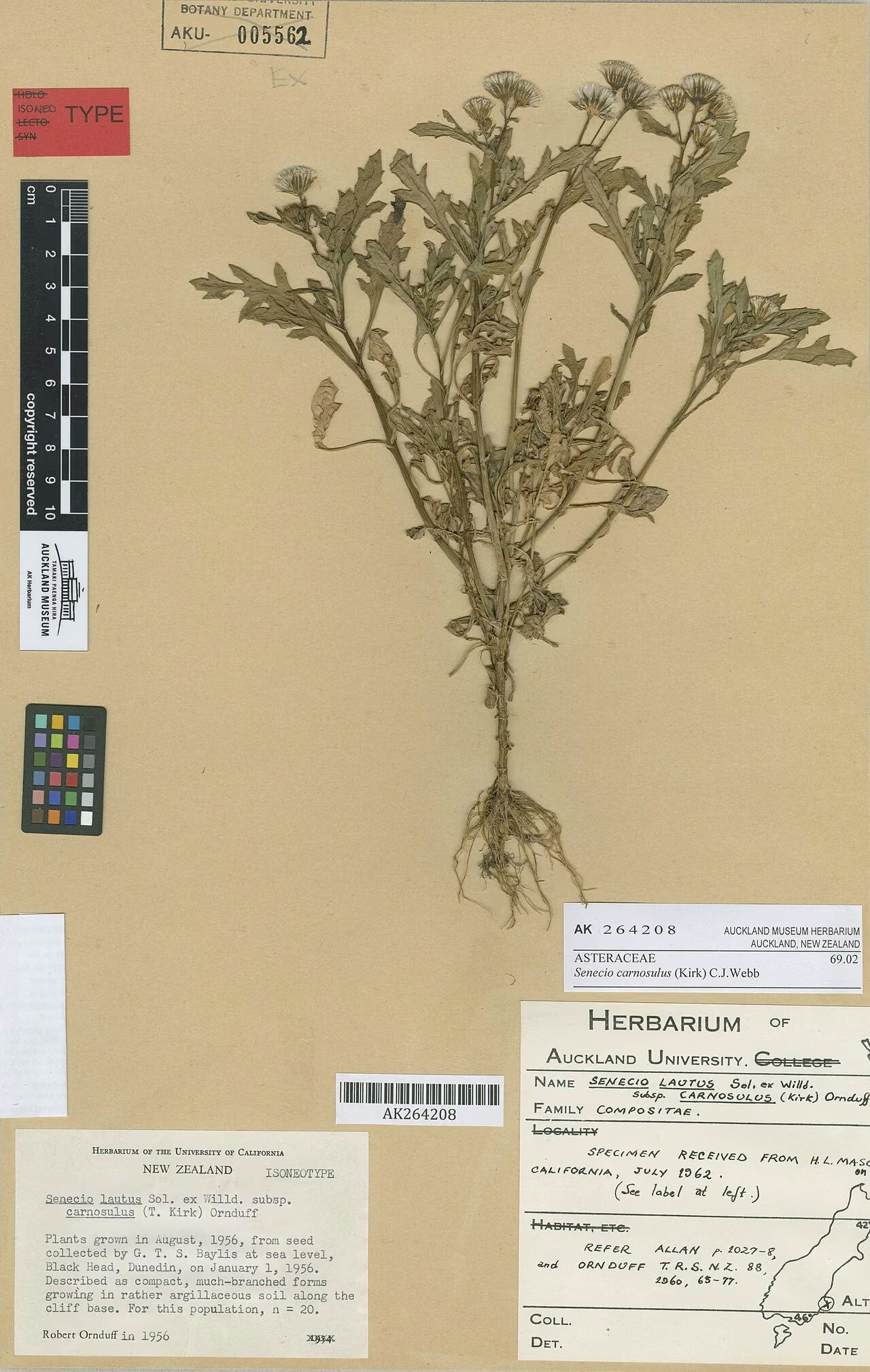
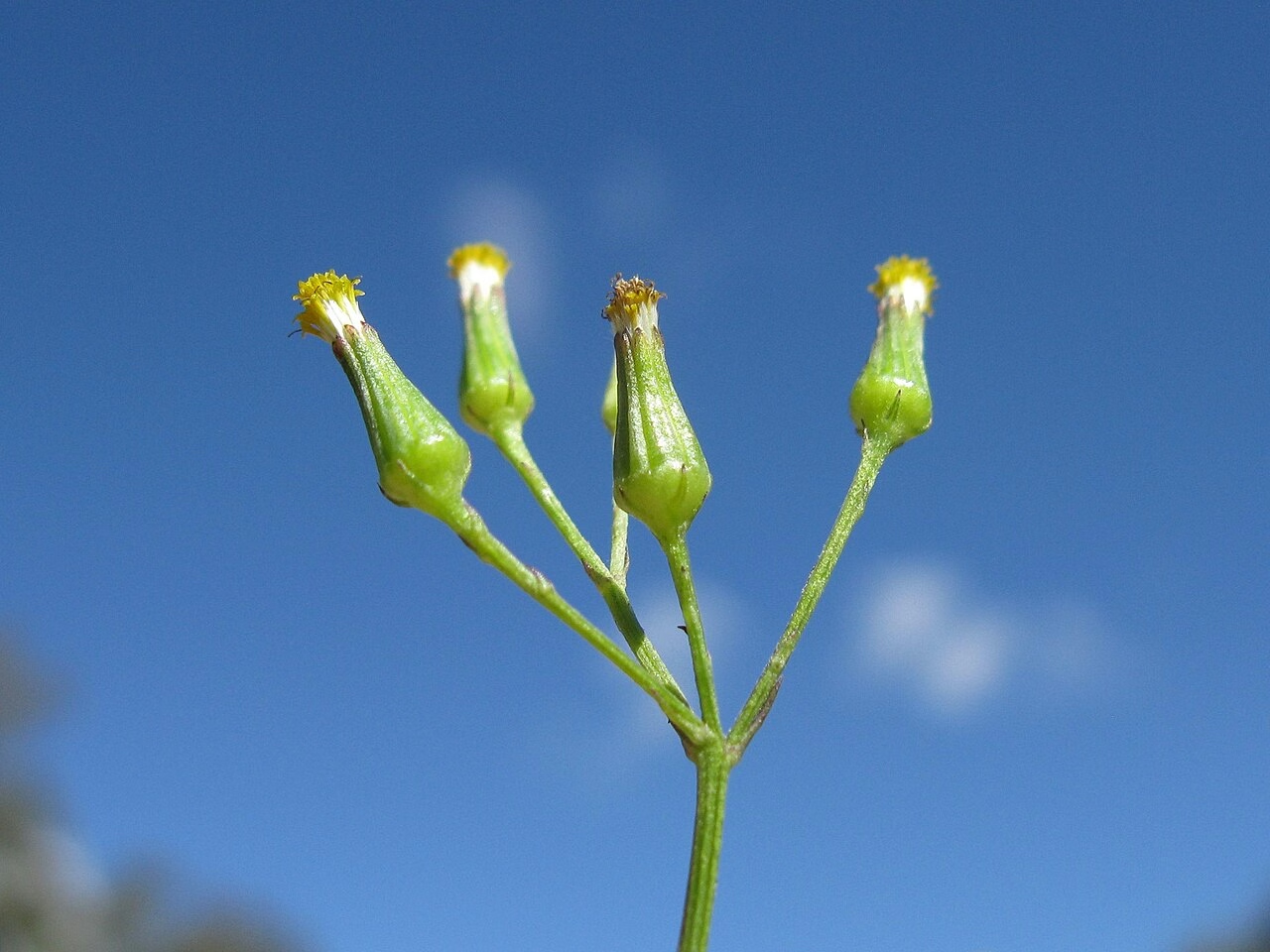
Explore other native plants that share similar characteristics or habitats with Groundsel (Senecio matatini subsp. discoideus), offering further insights into New Zealand's diverse flora. These related species provide context and opportunities for complementary planting in your garden.
Plant Conservation
Senecio matatini subsp. discoideus has been ranked Not Threatened in every national assessment since 2004, including 2023. It is ranked Regionally At Risk - Regionally Naturally Uncommon in Otago.
Its stony mountain habitats are relatively secure, but weeds such as wilding conifers and invasive grasses can stabilise and overgrow open scree. Keeping these habitats open and avoiding hybrid garden stock in restoration plantings both help.
Frequently Asked Questions
What is the current name for Senecio glaucophyllus subsp. discoideus?
A 2021 revision by Liew, Courtney, de Lange and Pelser transferred it to a new species, so it is now called Senecio matatini subsp. discoideus.
Why does this groundsel have no petals?
Wild plants usually carry only disc florets with no ray florets, which is what discoideus refers to. The Flora of New Zealand notes that rayless plants sometimes produce rays when grown in cultivation.
Where does Senecio matatini subsp. discoideus grow?
It grows in the Kaweka, Kaimanawa and Ruahine Ranges and throughout the South Island east of the main divide, on stony montane to subalpine ground such as scree and debris slopes.
Is it easy to grow from seed?
NZPCN describes it as easy from fresh seed and semi-hardwood cuttings, provided it is given full sun and excellent drainage.
Sources and Further Reading
The botanical, growing, and conservation details for Groundsel (Senecio matatini subsp. discoideus) on this page draw on the New Zealand plant references below. Consult them for full technical records and the latest distribution data.