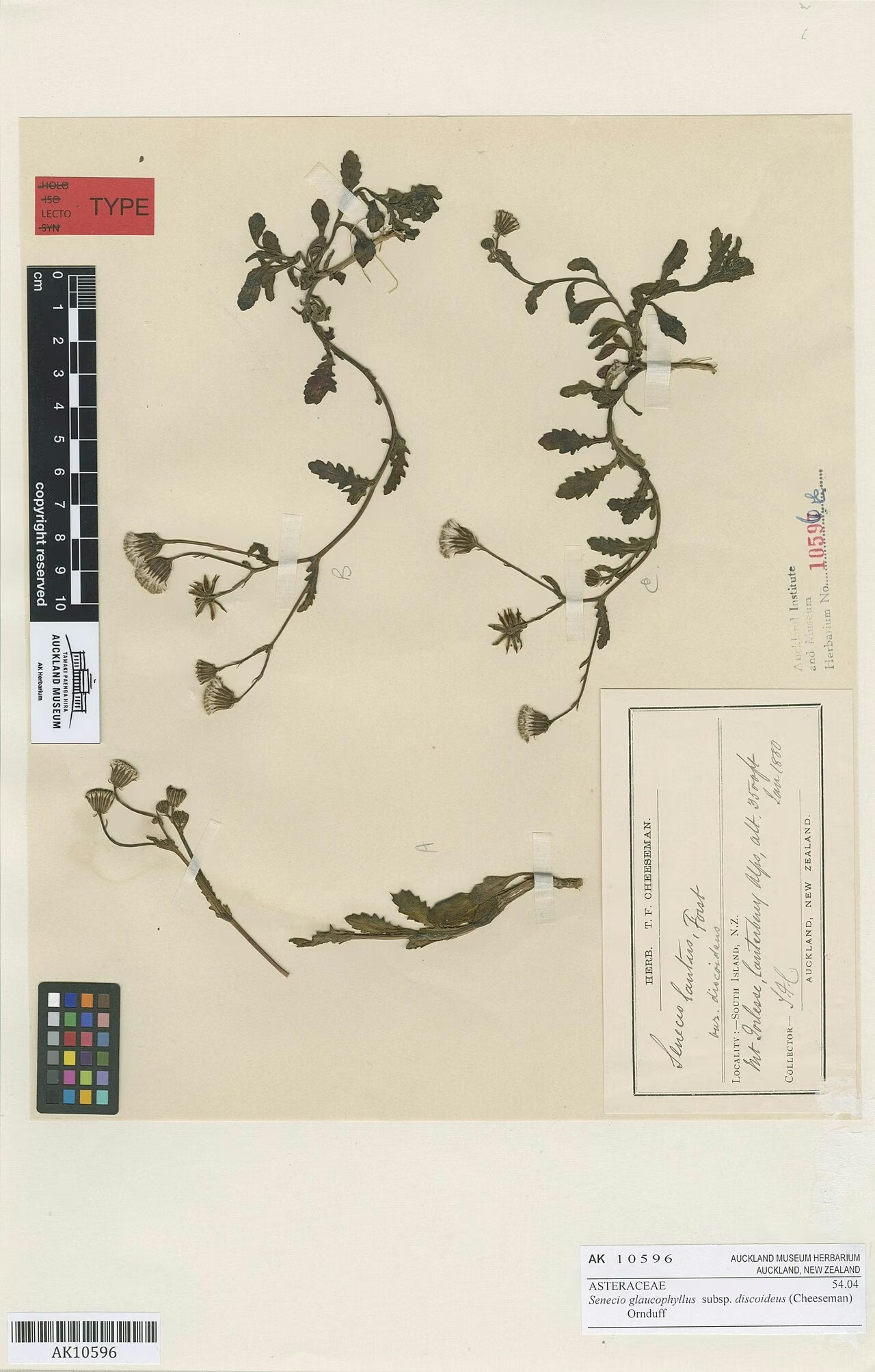
Groundsel
Senecio glaucophyllus
Last updated:
Senecio glaucophyllus is a rare endemic groundsel restricted to limestone, marble and dolomite rock in North-west Nelson, from Mt Burnett in the Whakamarama Range to the Pikikirunga and Arthur Ranges. It is a summer-green perennial herb up to about 0.9 m tall and 1 m across, with bluish, toothed leaves and clusters of bright yellow daisy flowers. It grows from 300 to 1400 m on open outcrops, boulderfalls and around cave entrances and tomo. Formerly treated as Senecio glaucophyllus subsp. glaucophyllus, it is now ranked Threatened - Nationally Vulnerable because it is known from very few sites. Explore more native flowering plants in our native plant guide.
Plant Description
Senecio glaucophyllus is a glaucous, summer-green perennial herb up to about 0.9 m tall and 1 m wide, growing from a woody rootstock. Erect stems 0.15 to 1 m tall arise each season from the base and die back over winter, leaving the rootstock to resprout in spring.
The lower stem leaves are shortly stalked, bluish-grey above, about 20 to 30 mm long and oblanceolate, obovate, elliptic or almost diamond-shaped, with serrate to wavy-toothed margins. The flower heads are borne in terminal, flat-topped clusters of usually up to 10 or so heads that sit above the leaves. Each head has 10 to 16 bright yellow ray florets with short ligules 2 to 6 mm long around a yellow disc. The brown to black-brown seeds are 2.5 to 3.5 mm long with broad ribs and a white pappus 4.5 to 6.5 mm long.
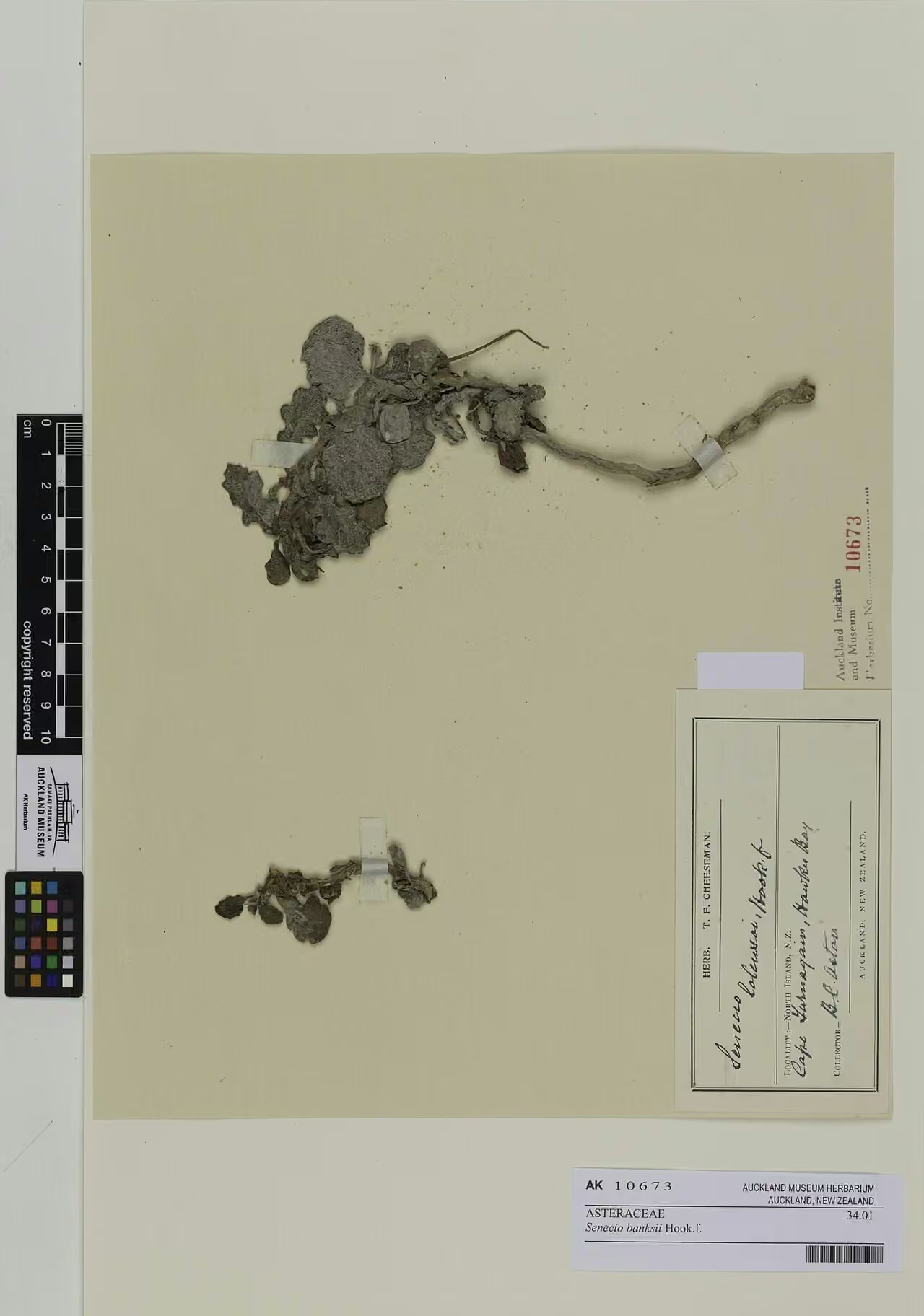
Within its range it is the only member of the group confined to limestone outcrops. Senecio matatini subsp. matatini, which also grows on calcareous rock further south from the Gouland Downs to Lewis Pass, was part of the same old subspecies and can look similar, so location is an important clue. Outside the South Island it is most like Senecio banksii, which differs in seed size and chromosome number.
Quick Facts
| Scientific Name | Senecio glaucophyllus |
|---|---|
| Height | 0.15-0.9 m |
| Spread | Up to 1 m |
| Water Needs | Moderate; needs sharp drainage |
| Light | Full sun to light shade |
| Frost Tolerance | High; montane to alpine |
| Salt Tolerance | No information available; an inland plant |
| Growth Rate | Fast in the growing season |
| Lifespan | Perennial, often short-lived in cultivation |
Climate Best Suited to
Suits the cool, wet mountain climate of North-west Nelson, with high rainfall, frosts and occasional snow at the upper end of its range. It needs drainage and air movement rather than warmth.
Regional Suitability
| City | Climate Suitability |
|---|---|
| Auckland | Low |
| Wellington | Medium |
| Christchurch | Medium |
| Dunedin | Medium |
Plant Habitat
Senecio glaucophyllus is endemic to the South Island, where it is confined to North-west Nelson from Mt Burnett on the Whakamarama Range to the Pikikirunga and Arthur Ranges. It occurs from montane to alpine elevations, roughly 300 to 1400 m above sea level.
It is a calcicole, meaning it grows only on lime-rich rock: limestone, marble, dolomite-limestone and dolomite-marble outcrops and boulderfalls. It favours open or sparsely vegetated places, sometimes within shrubland, and is often found around cave entrances and sinkholes (tomo) in the karst country of the region.
Growing Requirements
Soil Requirements
It grows in thin, lime-rich soil and crevices on limestone and marble, and NZPCN notes that it does best in cultivation in soil enriched with lime.
- Alkaline, lime-enriched mix
- Gritty or stony and very free-draining
- Crushed limestone or marble chip suits it well
Light Requirements
In the wild it occupies open outcrops and sparsely vegetated rock, sometimes among shrubs.
- Full sun or bright light shade
- Avoid deep shade under trees
Water Requirements
North-west Nelson is wet, but its rock crevice habitat drains rapidly.
- Keep evenly moist in the growing season
- Reduce watering while the stems are dormant in winter
Planting and Establishing
Because it is short-lived and lime-loving, NZPCN suggests growing it in a pot with lime-enriched soil. A trough or raised bed filled with gritty mix and limestone chips is a good alternative in cooler gardens.
Plant in spring as new stems appear. Expect the top growth to die back in winter; mark the position so the dormant rootstock is not disturbed.
Ecological Role
The bright yellow heads attract flies, native bees and other generalist pollinators, although no species-specific pollination studies were found. The plumed seeds are wind dispersed, which helps it reach new crevices on cliffs and boulderfalls.
It is part of the specialised flora of North-west Nelson karst, an area that supports a number of plants confined to limestone and marble.
Uses & Significance
Garden Uses
This is a specialist plant for conservation collections and limestone rock gardens.
- Pot culture in lime-enriched mix
- Limestone rock gardens
- Ex situ conservation collections
Ecological Value
As a narrow-range calcicole, it is an indicator of intact limestone outcrop communities.
- Part of the distinctive North-west Nelson karst flora
- Nectar and pollen for insects
- Key to understanding the Senecio glaucophyllus complex
Landscaping Uses
In a specialist garden it looks best tucked among limestone boulders, where its blue-grey foliage and bright yellow flowers stand out against pale rock.
It is not suited to mass landscape planting. Any use in restoration should be limited to its natural range, using local seed sourced with Department of Conservation approval.
Seasonal Care Calendar
Spring
New erect stems grow from the woody rootstock.
- Plant or repot
- Top dress with limestone chip
Summer
Flowering runs from November to January.
- Keep moist in dry spells
- Watch for aphids on soft stems
Autumn
Fruiting continues from January to April as the seed heads open.
- Collect and sow fresh seed
- Take semi-hardwood cuttings
Winter
The stems die back and the plant rests as a rootstock.
- Cut away dead stems
- Keep the pot from becoming waterlogged
When to Prune and How Much
Cut the old stems back to the base once they have died off in late autumn or winter, as the plant is summer-green and replaces its stems every year.
Deadheading after seed collection keeps plants tidy, but leaving a few heads to ripen provides seed to replace plants, which tend to be short-lived.
How to Grow Groundsel
NZPCN describes Senecio glaucophyllus as easy from fresh seed and semi-hardwood cuttings, but notes that it is inclined to be short-lived and does best in a pot in lime-enriched soil. Regular propagation is therefore the key to keeping it in cultivation. Because this is a Nationally Vulnerable plant known from few sites, do not collect seed or cuttings from the wild without Department of Conservation permission, and keep stock of known provenance separate from other Senecio, which can hybridise.
From Seed
Fresh seed gathered between January and April germinates readily. The seeds have a white pappus and blow away soon after the heads open, so collect promptly.
Raising a fresh batch of seedlings every year or two is the most practical way to keep this short-lived plant going, and seed captures more of the genetic variety of the parent population than cuttings do.
- Collect ripe, fluffy seed heads
- Sow fresh onto a gritty seed mix with a little added lime
- Cover lightly with fine grit
- Keep moist in a bright, sheltered place
- Pot seedlings individually into lime-enriched mix
From Cuttings
Semi-hardwood cuttings from non-flowering stems are a quick way to replace older plants before they decline.
Cuttings preserve the exact character of a known wild source, which is useful for conservation collections where provenance records matter.
- Take 6 to 10 cm cuttings in summer or early autumn
- Strip lower leaves
- Insert into free-draining cutting mix
- Keep in bright shade until rooted
- Pot on and grow in full light
Pests & Diseases
No specific pest problems are recorded for this species. Aphids and slugs may damage soft new stems in cultivation, and caterpillars of groundsel-feeding moths sometimes chew the leaves.
Root and crown rot in heavy, wet soil is the main cultivation risk. In the wild, NZPCN lists no apparent threats beyond its small, scattered range.
Cultural Significance
No Māori name or traditional use for this species was found in the sources consulted.
The name was published by Thomas Cheeseman. For decades it was applied to a widespread, variable group, until Liew, Courtney, de Lange and Pelser showed in 2021 that it properly belongs only to the North-west Nelson limestone plant, which required the new name Senecio matatini for the rest.
Bonus Tip
Treat this plant as a short-lived perennial: take a few cuttings or sow seed every year or two so you always have young replacements, and add crushed limestone or a little garden lime to the potting mix to mimic its marble and limestone home.
Related Plants
Explore other native plants that share similar characteristics or habitats with Groundsel (Senecio glaucophyllus), offering further insights into New Zealand's diverse flora. These related species provide context and opportunities for complementary planting in your garden.
Senecio carnosulus
Senecio carnosulus
Senecio diaschides
Senecio diaschides
Esler's Fireweed
Senecio esleri
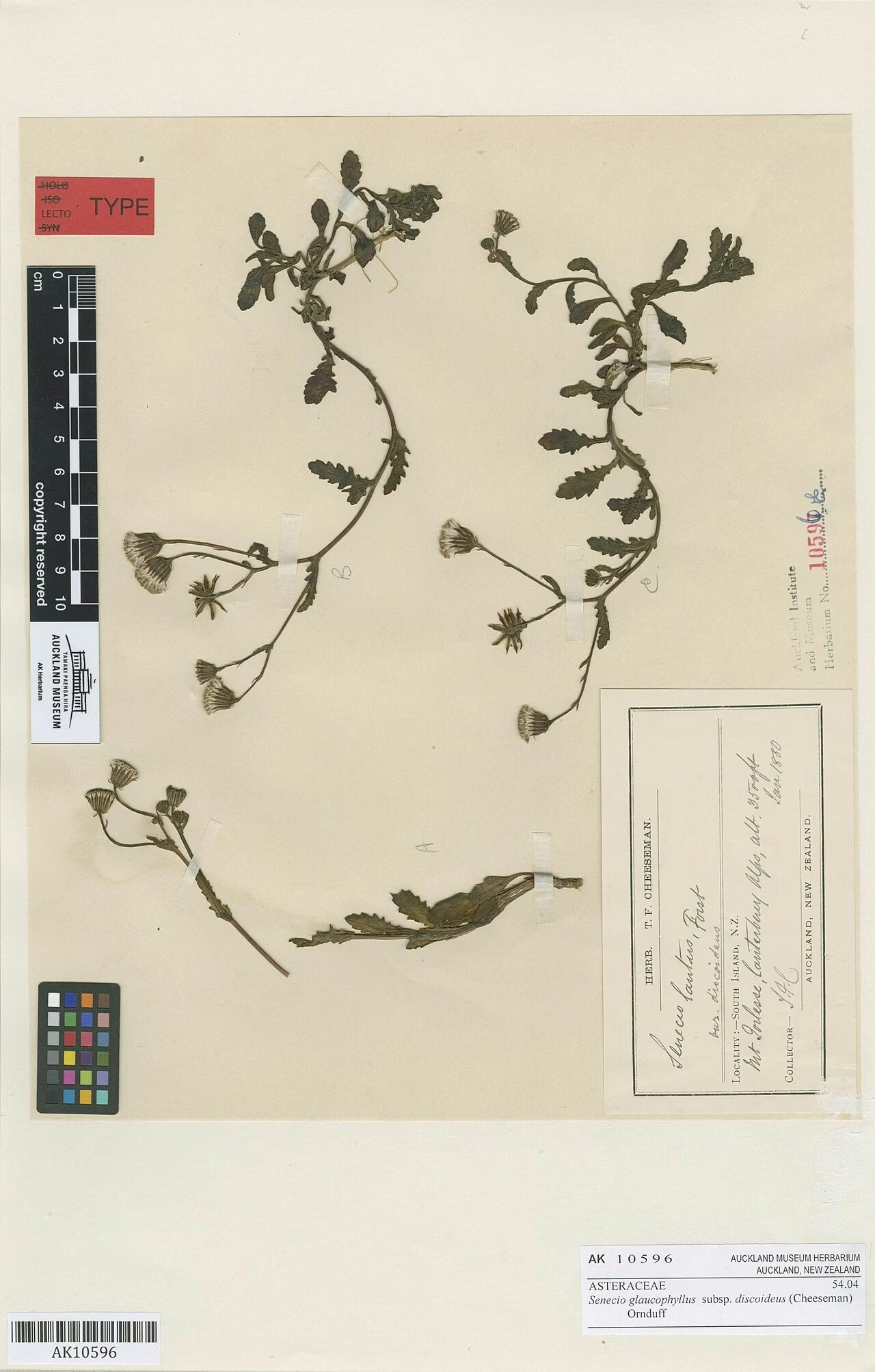
Senecio matatini subsp. discoideus
Senecio matatini subsp. discoideus
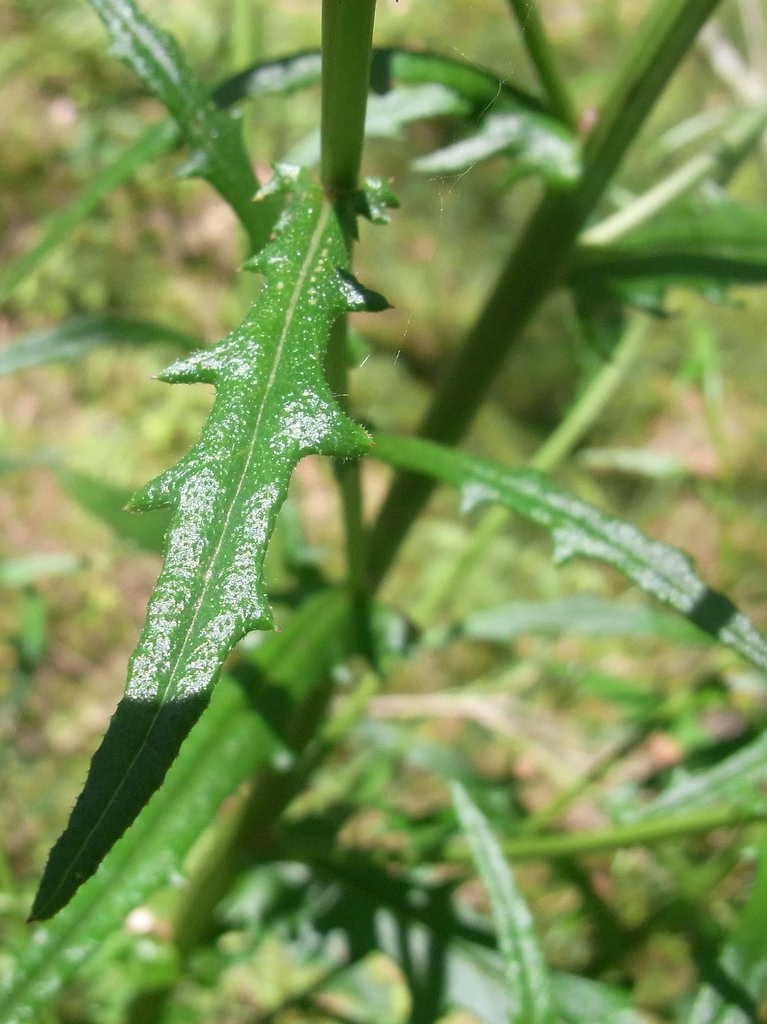
Senecio hispidulus
Senecio hispidulus
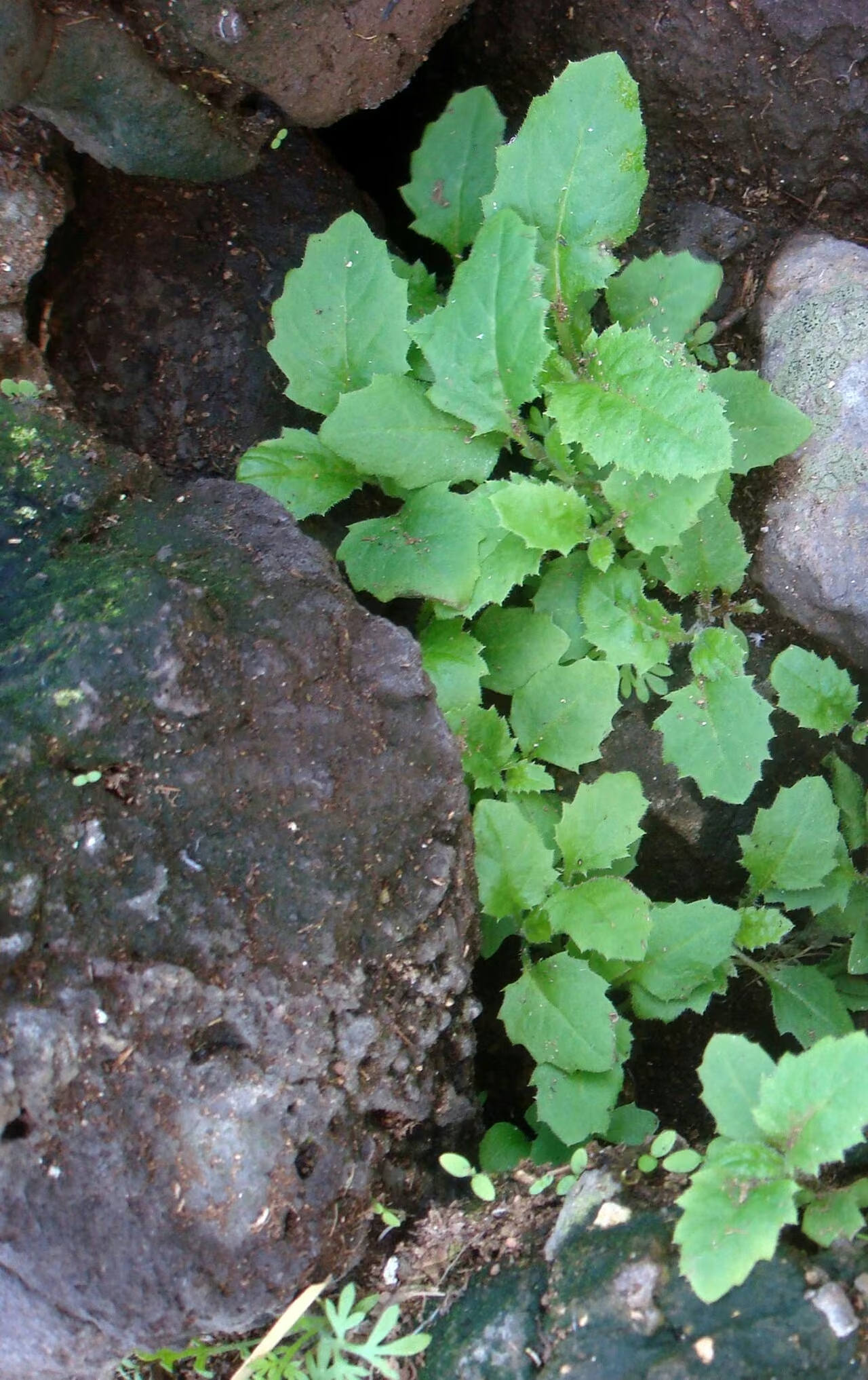
Kermadec Fireweed
Senecio kermadecensis
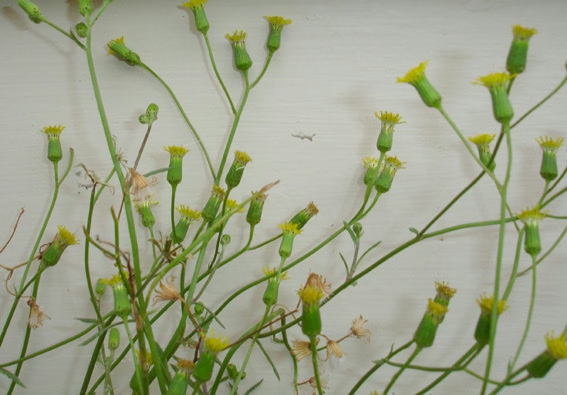
Senecio marotiri
Senecio marotiri
Senecio banksii
Senecio banksii
Plant Conservation
Senecio glaucophyllus is ranked Threatened - Nationally Vulnerable (2023) with qualifiers for sparse occurrence, data poor status and range restriction. NZPCN notes that it faces no obvious threats but is known from very few places and is common at none, which makes it highly susceptible to environmental change.
Protecting the karst landscapes of North-west Nelson, keeping weeds off open limestone outcrops and holding seed of known provenance in cultivation all help secure it.
Frequently Asked Questions
What happened to Senecio glaucophyllus subsp. glaucophyllus?
A 2021 revision restricted the name Senecio glaucophyllus to the North-west Nelson limestone plant and placed most other former subspecies, plus plants from the Gouland Downs to Lewis Pass, in the new species Senecio matatini.
Where does Senecio glaucophyllus grow?
Only in North-west Nelson, on limestone, marble and dolomite outcrops and boulderfalls between about 300 and 1400 m, often near cave entrances and sinkholes.
How do you tell Senecio glaucophyllus from Senecio banksii?
They look similar, but S. banksii grows in the North Island, has smaller seeds up to 3 mm long and a chromosome number of 2n = 60, against 2n = 100 in S. glaucophyllus.
Is Senecio glaucophyllus endangered?
It is ranked Threatened - Nationally Vulnerable (2023) because it is known from very few places and is common at none, leaving it vulnerable to environmental change.
Sources and Further Reading
The botanical, growing, and conservation details for Groundsel (Senecio glaucophyllus) on this page draw on the New Zealand plant references below. Consult them for full technical records and the latest distribution data.