Jagged Fireweed
Senecio biserratus
Last updated:
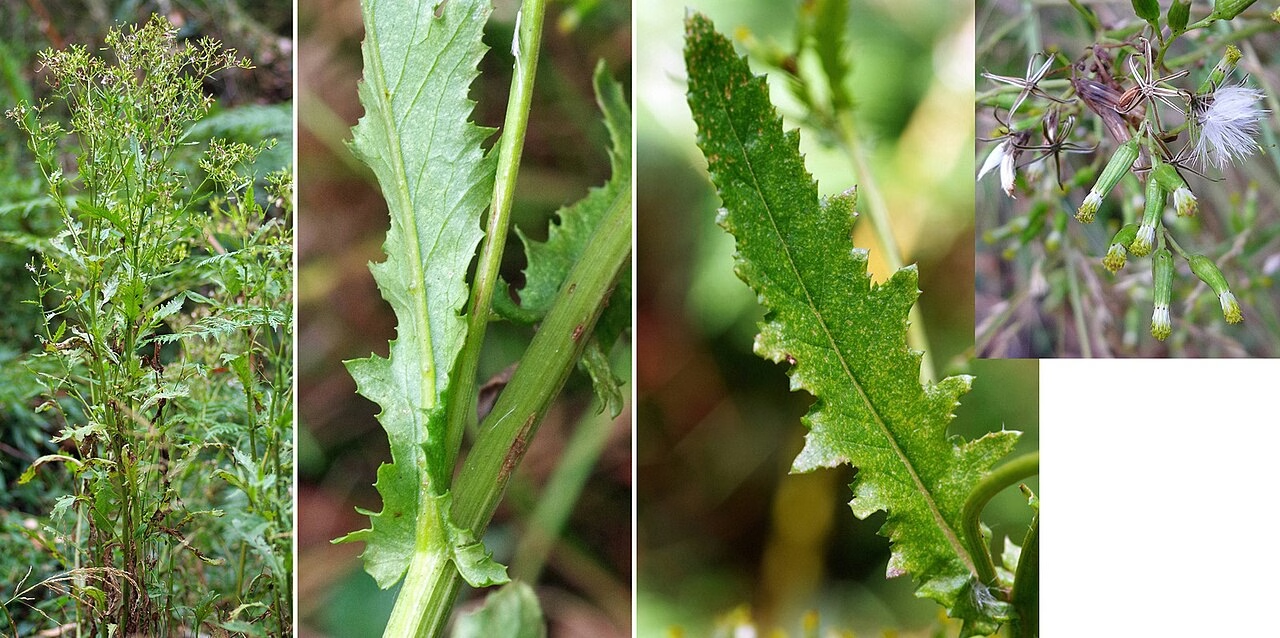
Jagged fireweed (Senecio biserratus) is an annual to short-lived, slightly succulent herb up to about 1 m tall, with dark green, deeply toothed leaves and large numbers of small, pale yellow, rayless flower heads, often 50-200 per stem. It grows in coastal and lowland early successional habitats throughout the North, South and Stewart Islands, and is the only indigenous disciform (rayless) senecio that commonly grows in sand dune country, usually among Muehlenbeckia complexa. It also occurs in Australia. It is ranked At Risk - Declining; in the northern South Island it now survives only on offshore islands, and the reasons for its decline are unclear. Explore more native flowering plants in our native plant guide.
Plant Description
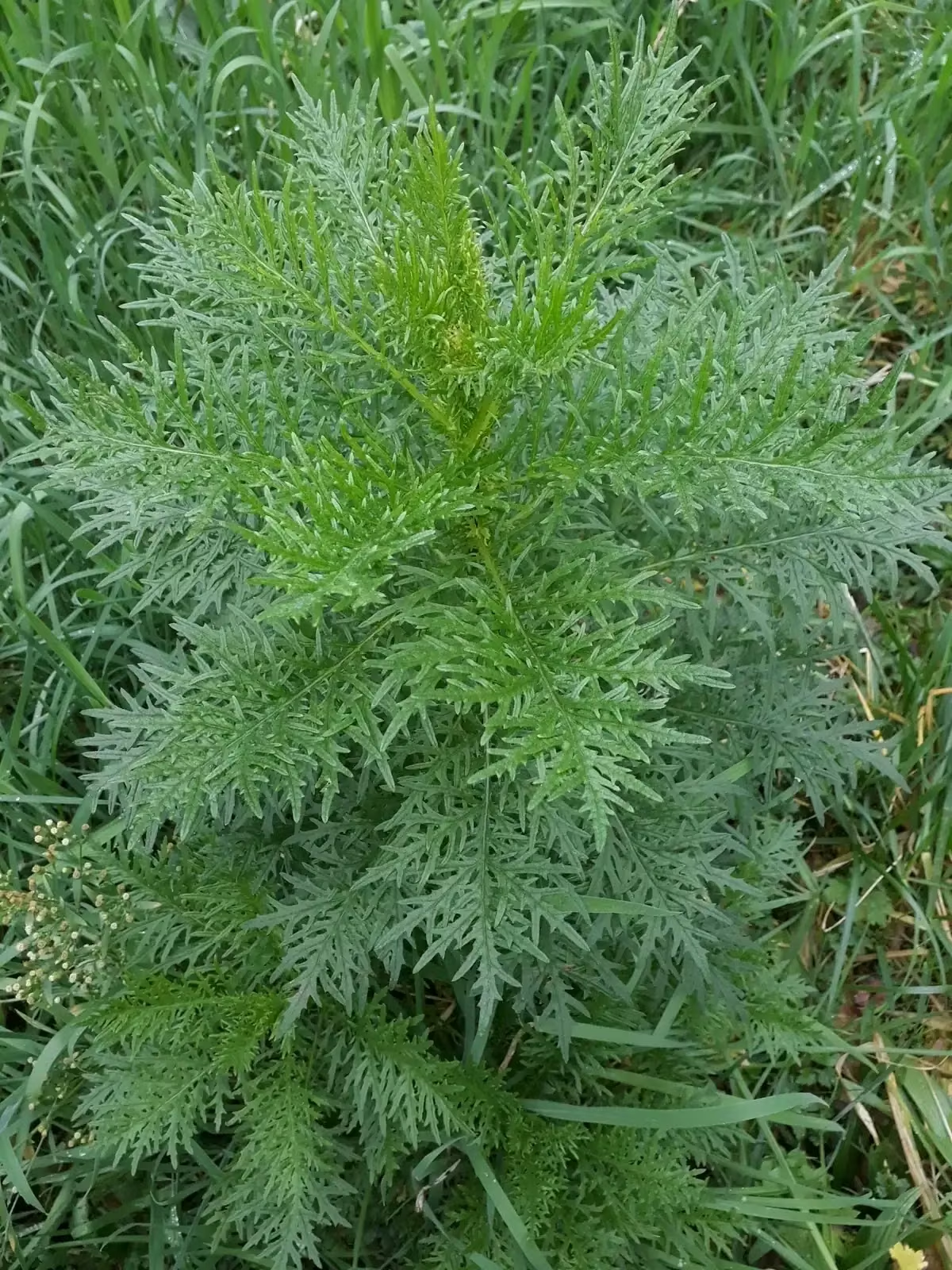
Senecio biserratus is an erect or straggling herb with somewhat fleshy (subsucculent) growth. Stems are sparsely hairy at the base, becoming smoother upward. The mid-stem leaves are stalkless, dark green and mostly hairless, elliptic to lanceolate or oblong, about 35-170 mm long, and pinnately lobed with 3-9 coarsely and irregularly toothed segments on each side. The leaf base has divided lobes (auricles) clasping the stem. The epithet biserratus means doubly toothed.
The plant produces many small flower heads, often 50-200 per stem. They are disciform, with no ray petals, and contain 12-20 pale yellow florets. NZPCN gives flowering as August to January and fruiting from September to May; NZ Flora records flowering from November to March. The seeds are dark brown, 2-3.2 mm long (typically 2.5-2.8 mm), with bands of papillose hairs, topped by a white pappus.
Among the native disciform senecios it is recognised by its combination of subsucculent, dark green, almost hairless foliage, pinnately lobed leaves with irregularly serrate to dentate segments, and its relatively large seeds.
Quick Facts
| Scientific Name | Senecio biserratus |
|---|---|
| Height | Up to about 1 m |
| Spread | 0.3-0.6 m |
| Water Needs | Moderate |
| Light | Full sun to partial shade |
| Frost Tolerance | Low to moderate; a coastal and lowland plant |
| Salt Tolerance | Moderate; grows in coastal dunes |
| Growth Rate | Fast |
| Lifespan | Annual or short-lived perennial |
Climate Best Suited to
It suits mild coastal and lowland climates throughout New Zealand, from Northland to Stewart Island.
Regional Suitability
| City | Climate Suitability |
|---|---|
| Auckland | High |
| Wellington | High |
| Christchurch | Medium |
| Dunedin | Medium |
Plant Habitat
Senecio biserratus occurs in the North Island, South Island and Stewart Island/Rakiura, and in Australia. It has declined over much of its New Zealand range, and in the northern South Island it is now found only on offshore islands. Regional assessments rank it Regionally Critical in Northland, Regionally Vulnerable in Auckland and Data Deficient in Wellington.
It grows in coastal and lowland early successional habitats. It is characteristic of dune systems, where it usually grows amongst pōhuehue (Muehlenbeckia complexa), and it is the only indigenous disciform senecio that frequents sand dune country.
Growing Requirements
Soil Requirements
In the wild it grows mainly on coastal sand and disturbed lowland soils.
- Free-draining sand or loam
- Low to moderate fertility
- Tolerates disturbed ground
Light Requirements
As an early successional plant it needs open sites, often with the light shelter of scrambling Muehlenbeckia.
- Full sun or partial shade
- Does not persist under closed canopy
Water Requirements
Dune habitats dry out in summer, and the plant often completes its life within a year.
- Moderate moisture for germination
- Tolerates dry summer sand once established
Planting and Establishing
Senecio biserratus is mainly of interest for dune and coastal restoration. Sow seed or plant seedlings among pōhuehue or other low dune shrubs, which mimics its natural setting.
NZPCN warns that it can become invasive in cultivation, so it is not recommended for small gardens where it would self-seed among other plants.
Ecological Role
Its many small heads produce abundant wind-dispersed seed, letting it colonise fresh openings in dunes and lowland scrub. This boom and bust lifestyle depends on regular disturbance to create bare ground.
Pollinator and insect associations for this species are not documented in the sources consulted. Its close association with Muehlenbeckia complexa in dunes suggests it benefits from the shelter of that scrambling shrub.
Uses & Significance
Garden Uses
Best used in restoration rather than ornamental gardens.
- Dune restoration among pōhuehue
- Native seed banks and conservation plantings
- Wild coastal gardens where self-seeding is welcome
Ecological Value
It is a declining member of native dune and early successional plant communities.
- The only native rayless senecio of sand dunes
- Early coloniser of disturbed coastal ground
- Contributes to dune plant diversity
Landscaping Uses
In landscape terms it is a loose, airy herb with clouds of small yellow heads. It fits informal coastal plantings where pōhuehue, spinifex and pingao already grow.
Because it is short-lived and self-seeds freely, treat it as a transient filler that appears where there is space rather than a permanent feature.
Seasonal Care Calendar
Spring
Plants grow quickly and flowering begins.
- Sow seed
- Watch for seedlings in dune restoration sites
Summer
Main flowering, with many pale yellow rayless heads.
- Collect ripe seed
- Remove heads if self-seeding is unwanted
Autumn
Seed continues to ripen and disperse until about May.
- Collect last seed
- Old plants begin to die back
Winter
Most plants have died; new seedlings may appear in mild sites.
- Leave some bare sand for germination
When to Prune and How Much
No pruning is needed for this short-lived herb. Removing spent flower heads before the seed ripens will limit self-seeding.
Pull out old plants once they have set seed and died back.
How to Grow Jagged Fireweed
NZPCN describes Senecio biserratus as easy from fresh seed and warns that it can become invasive in cultivation. Because it is an annual or short-lived perennial, seed is the only practical method, and a population is maintained by letting plants set seed each year. For restoration, collect seed from the nearest wild population, as the species is declining and local genetic diversity is worth keeping. Make sure you have identified the plant correctly before collecting, since several introduced fireweeds and groundsels look similar.
From Seed
Seed ripens from September to May. Collect when the heads become fluffy and the dark brown seeds come away easily, and sow it fresh, as NZPCN recommends.
- Gather fluffy seed heads on a dry day.
- Sow seed thinly on the surface of a free-draining sandy mix.
- Cover lightly with sand or fine grit.
- Keep moist in a sunny, sheltered place.
- Prick out seedlings into small pots once they have their first true leaves.
- Plant into restoration sites while still small, before the plants begin to flower.
- Alternatively, scatter fresh seed directly onto prepared bare sand among dune shrubs.
Direct Sowing on Dunes
For dune restoration, sowing straight onto the site can work better than raising plants in pots, because this fast-growing annual completes its life quickly and naturally establishes from seed in open sand. Choose patches of bare or lightly vegetated sand beside pōhuehue, where young plants get some shelter from wind and sand blast.
- Scatter fresh seed onto bare sand in autumn or early spring.
- Rake lightly so the seed is just covered.
- Mark the area and check for seedlings over the following weeks.
- Let the first plants set seed so the patch can sustain itself.
Pests & Diseases
Like other Senecio, it may host caterpillars of the magpie moth and aphids, but no specific pest problems are recorded for this species.
In the wild, competition from weeds and the stabilisation of dunes by dense exotic grasses may limit the open ground it needs, although NZPCN states the exact causes of decline are unclear.
Cultural Significance
No Māori name or traditional Māori use is recorded for Senecio biserratus in the sources consulted. The name was published by Belcher, and the epithet biserratus means doubly toothed, referring to the leaf margins.
Fireweed is a general name for rayless Senecio that colonise burnt and disturbed ground, a habit that made several of them conspicuous after forest clearance.
Bonus Tip
To tell this native from weedy fireweeds on a dune, check its companions and leaves: Senecio biserratus is usually tangled in pōhuehue and has dark green, fleshy, almost hairless, jaggedly lobed leaves. Recording sightings on iNaturalist NZ helps track a species whose decline is poorly understood.
Related Plants
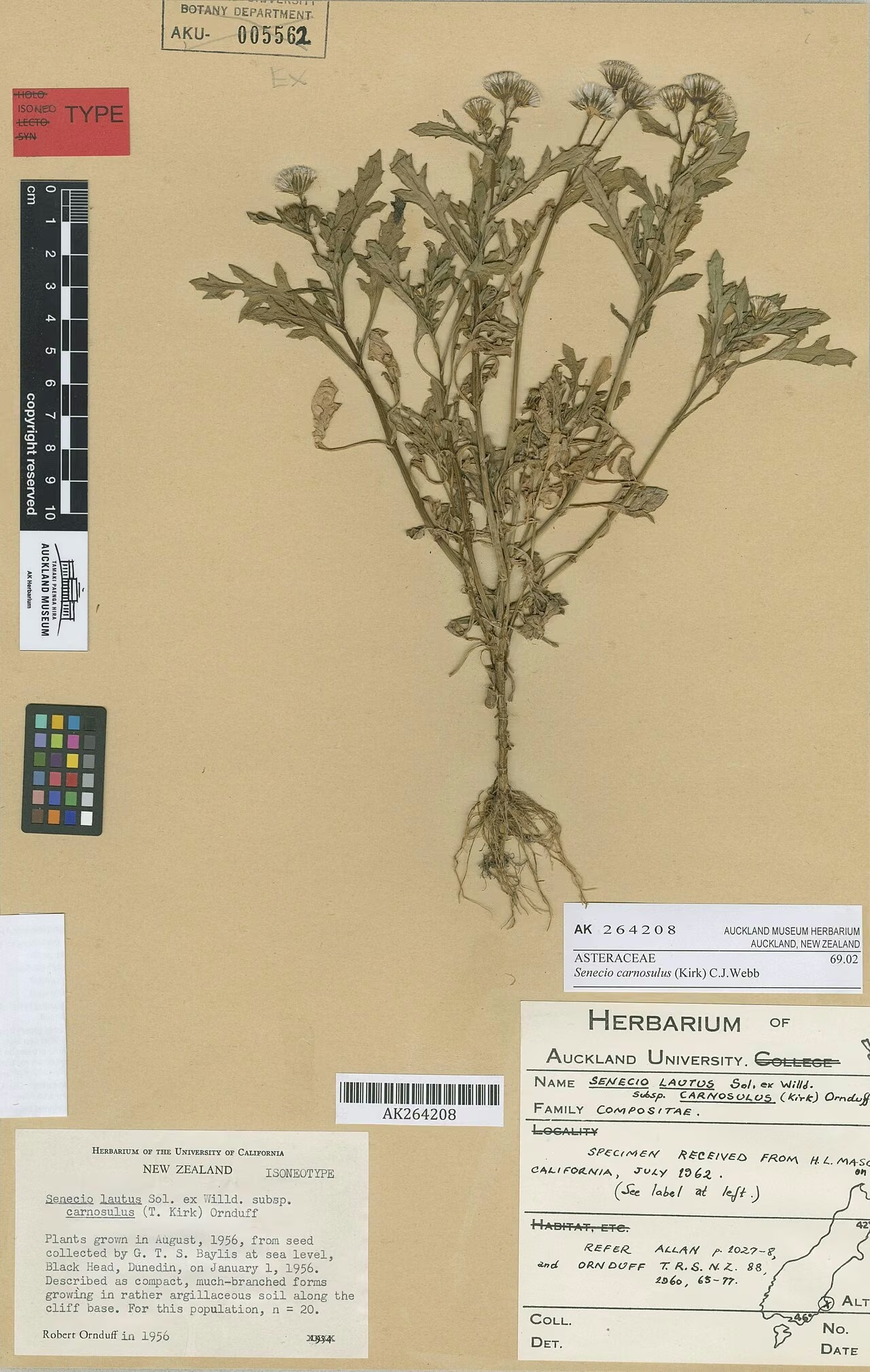
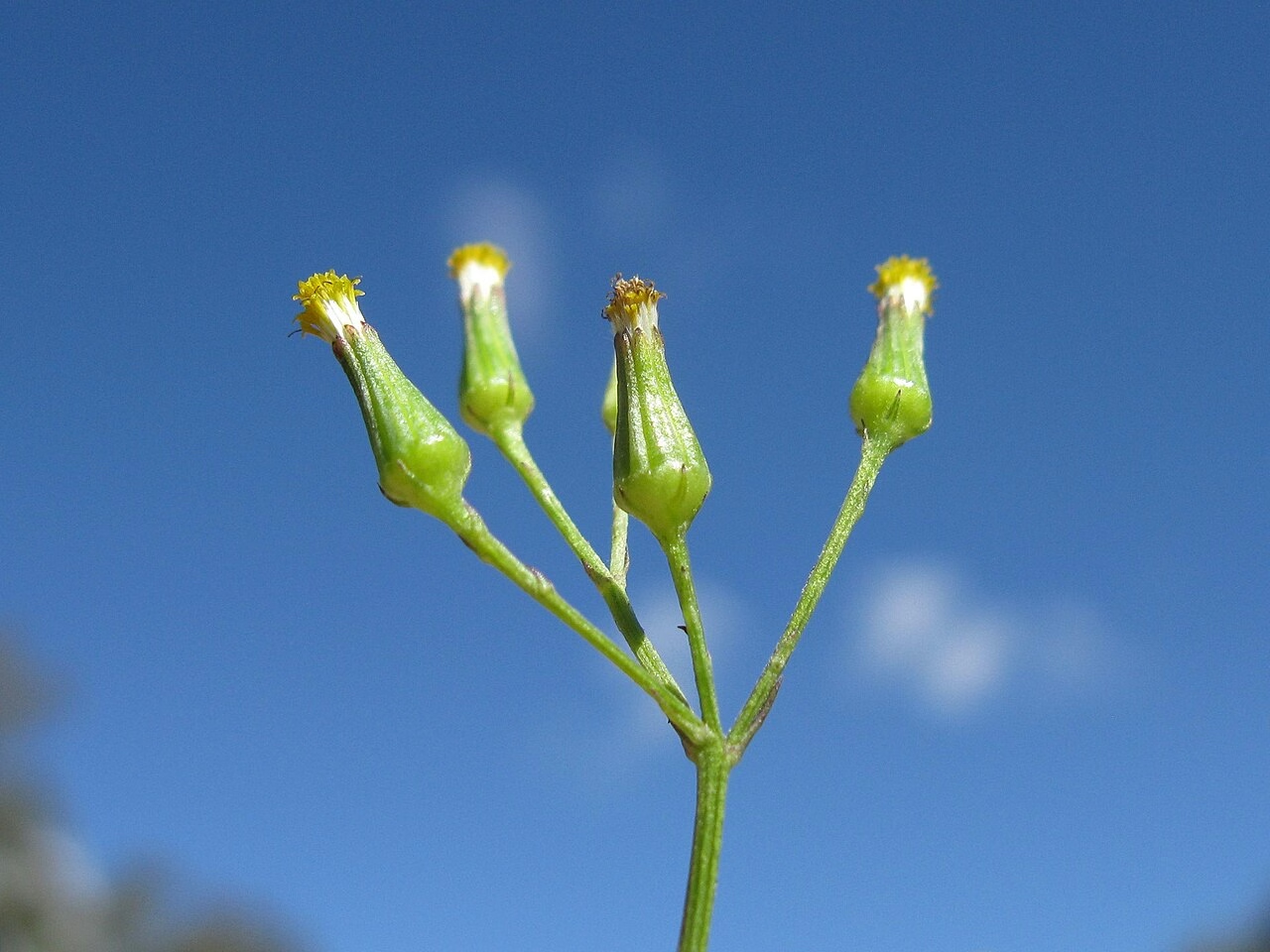
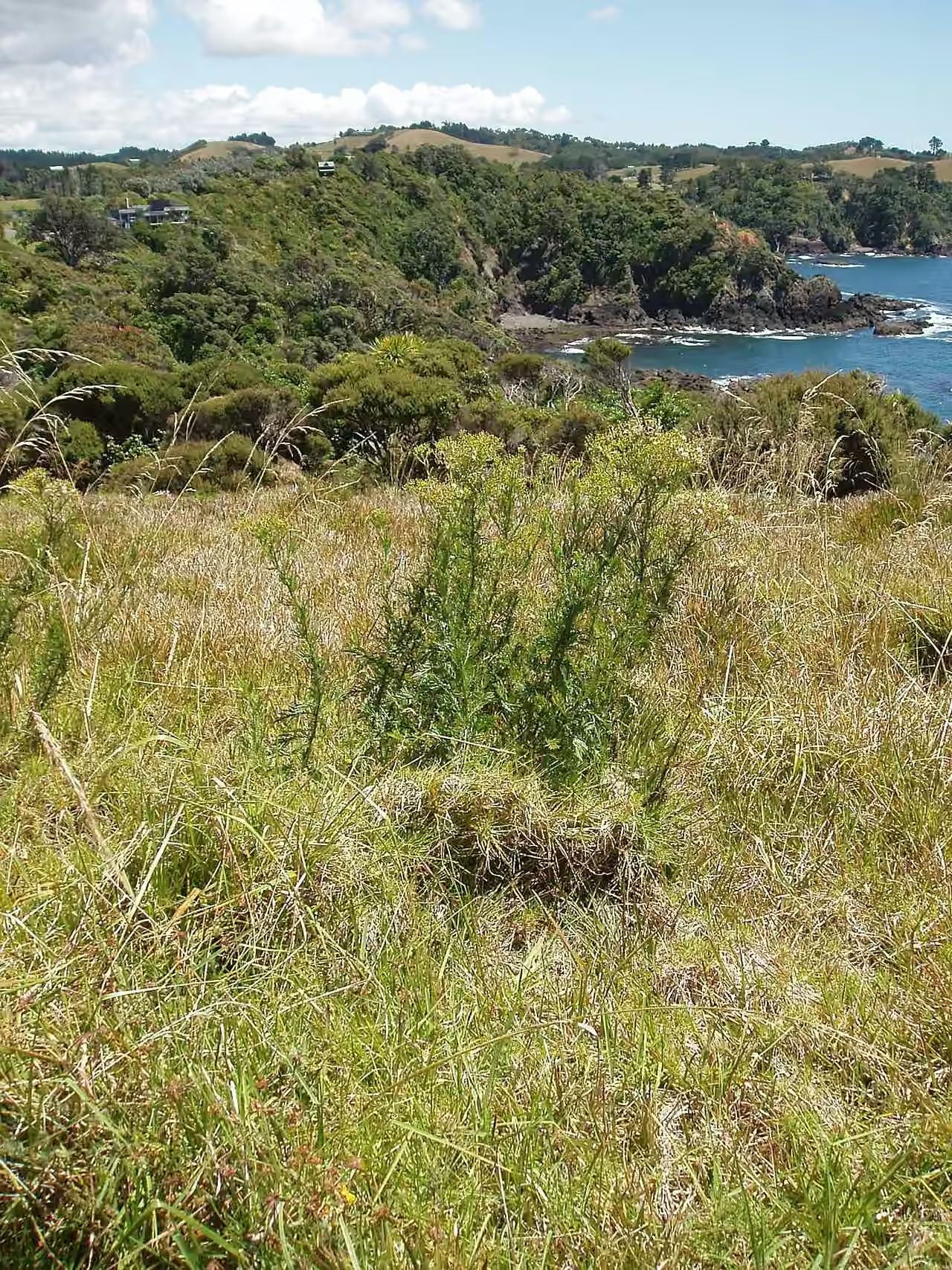
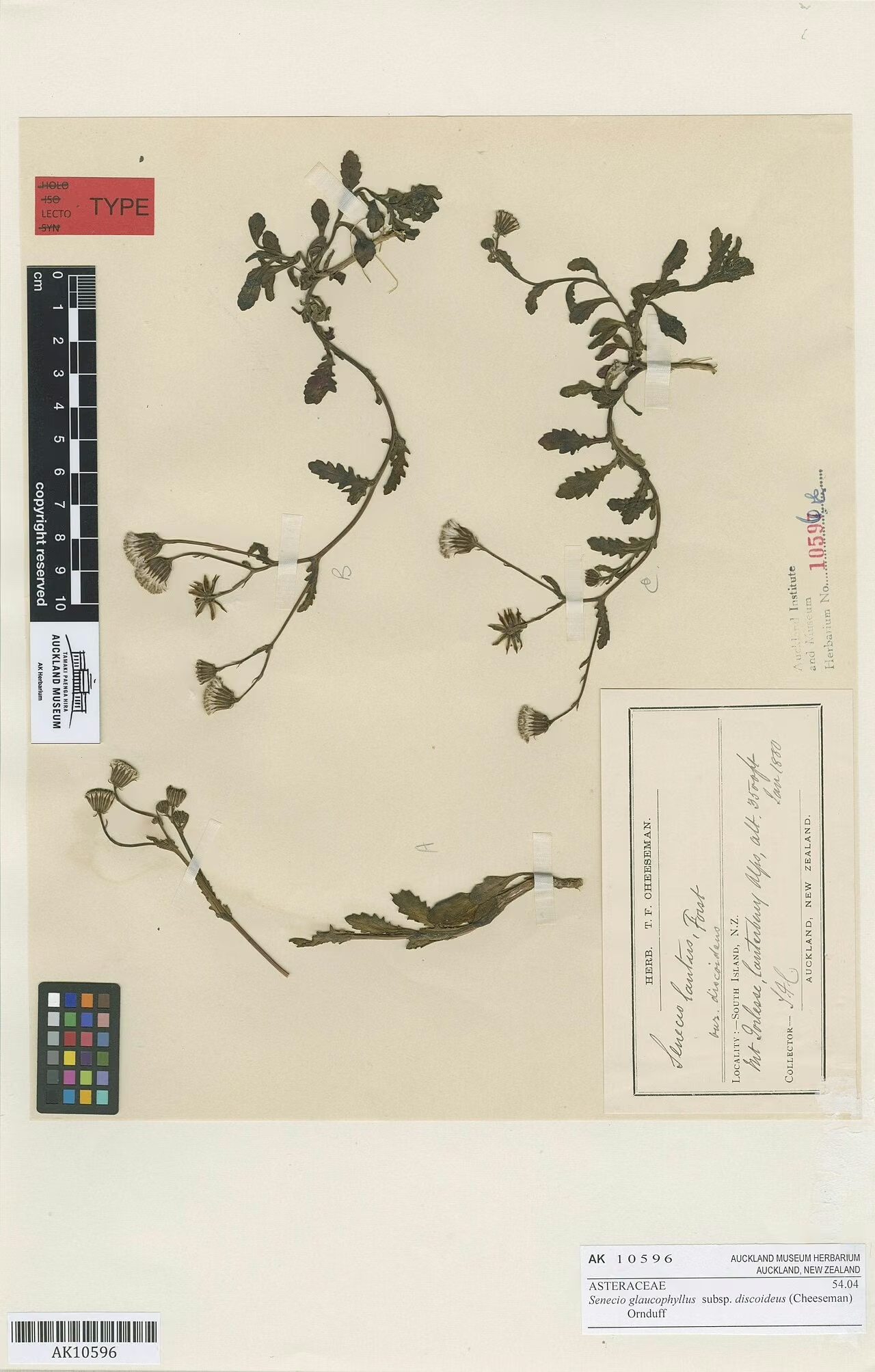
Explore other native plants that share similar characteristics or habitats with Jagged Fireweed (Senecio biserratus), offering further insights into New Zealand's diverse flora. These related species provide context and opportunities for complementary planting in your garden.
Plant Conservation
Senecio biserratus is ranked At Risk - Declining (2023) with the qualifier SO (secure overseas). It was Not Threatened until 2012 and was moved to Declining in 2017.
It is declining over much of its range for unclear reasons. Protecting natural dune systems with pōhuehue, controlling dense weeds and recording surviving populations are the most useful actions.
Frequently Asked Questions
Is Senecio biserratus a native plant or a weed?
It is a native species, indigenous to New Zealand and also found in Australia. It looks weedy, like many fireweeds, but it is ranked At Risk - Declining.
How do you identify Senecio biserratus?
Look for subsucculent, dark green, almost hairless leaves that are pinnately lobed with irregularly toothed segments, rayless pale yellow heads, and seeds 2-3 mm long. It is the only native rayless senecio that frequents sand dunes.
Why is Senecio biserratus declining?
NZPCN states it is declining through much of its range and now survives only on offshore islands in the northern South Island, but the reasons are unclear.
Sources and Further Reading
The botanical, growing, and conservation details for Jagged Fireweed (Senecio biserratus) on this page draw on the New Zealand plant references below. Consult them for full technical records and the latest distribution data.