Koheriki
Scandia rosifolia
Last updated:
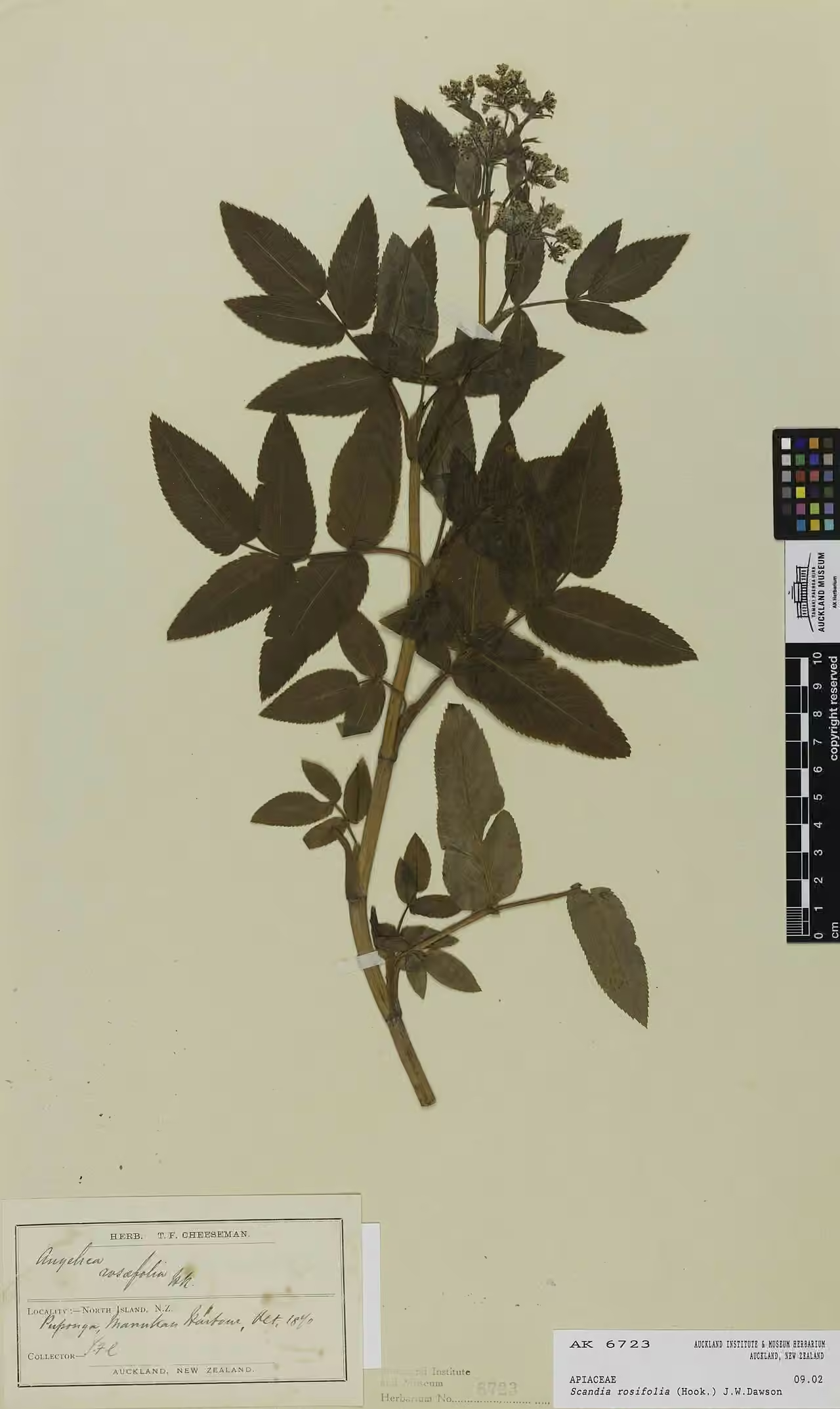
Koheriki (Scandia rosifolia) is an aromatic, woody shrub in the carrot family, growing to about 1 by 1 m, with glossy, rose-like pinnate leaves and flat heads of small white flowers. It is endemic to the North Island, from Manawatāwhi/Three Kings Islands south to Taranaki and the southern Ruahine Range, and grows from the coast to 1400 m, usually on cliffs, clay banks, boulders and river gorge walls. It is the only New Zealand member of its family with stipules between the leaves. Because it is palatable to browsing animals, it has vanished from much of its range and is now ranked Threatened - Nationally Vulnerable, yet it grows easily in gardens. Explore more native shrubs in our native plant guide.
Plant Description
Koheriki is a semi-erect to somewhat openly sprawling, woody, aromatic shrub up to about 1 by 1 m. Its stems are much branched and mature to orange-brown. The leaves are pinnate, with two to five (occasionally up to eight) pairs of leaflets, each 25 to 80 mm long and 10 to 40 mm wide, dark green and glossy above and paler and dull beneath. The resemblance of these leaves to rose foliage gives the species its name rosifolia, meaning rose-leaved.
Small white flowers are carried in compound umbels, and the fruits split into yellowish buff to pale orange-yellow mericarps. A key feature is the presence of stipules between the leaf bases, which are not known from any other apiaceous plant in New Zealand. Within the indigenous New Zealand Apiaceae, NZPCN describes it as extremely distinctive.
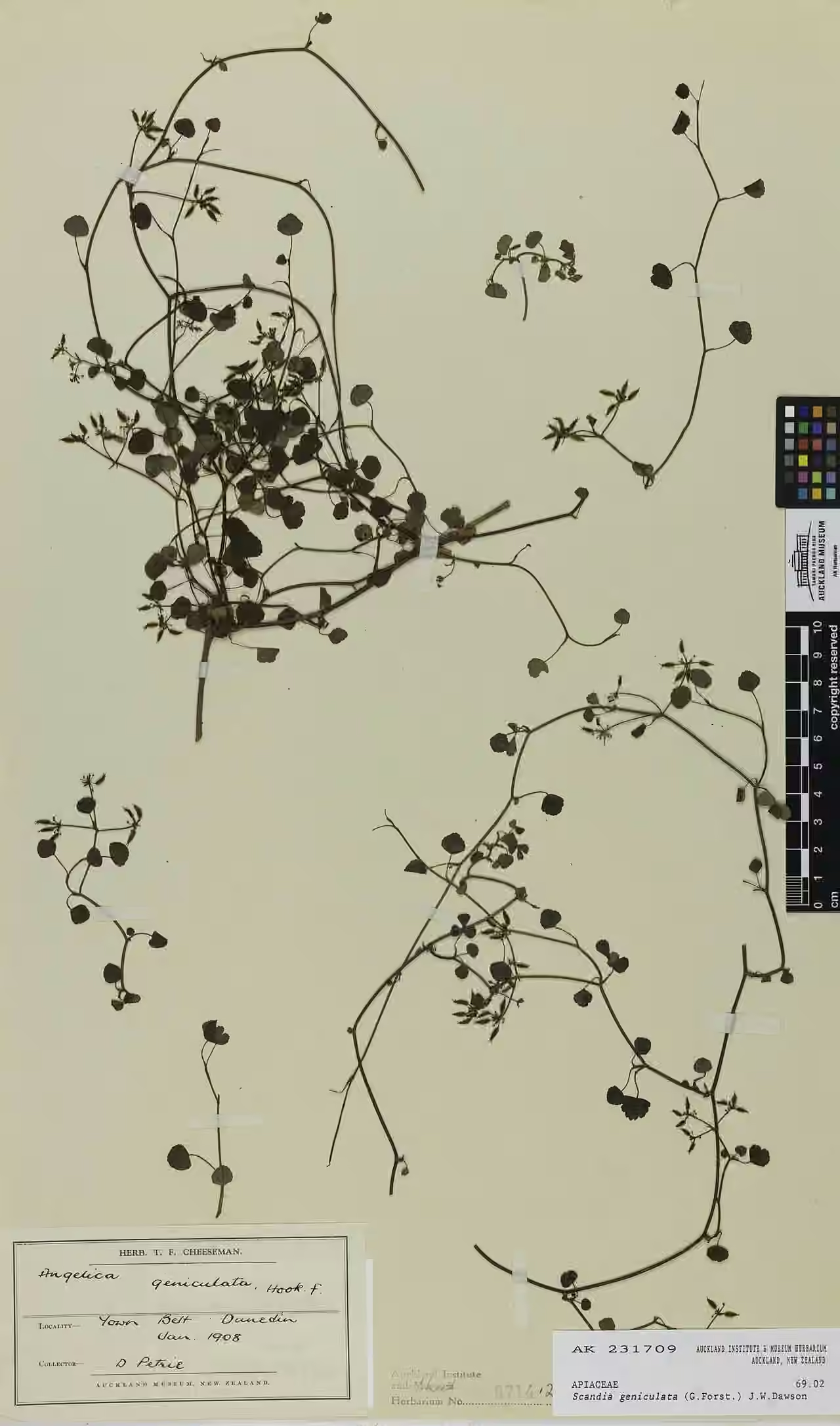
Two field forms are recognised. One has broader, rounder leaves and is strictly coastal; the other has narrower, lanceolate leaves and usually grows inland on cliff faces. Its relative Scandia geniculata of the southern North Island and eastern South Island is a weak-stemmed scrambler with small, rounded leaflets rather than rose-like pinnate leaves.
Quick Facts
| Scientific Name | Scandia rosifolia |
|---|---|
| Height | Up to 1 m |
| Spread | Up to 1 m |
| Water Needs | Moderate; needs free drainage |
| Light | Full sun |
| Frost Tolerance | Moderate to high; grows to 1400 m |
| Salt Tolerance | Moderate; one form grows strictly on the coast |
| Growth Rate | Moderate |
| Lifespan | Perennial |
Climate Best Suited to
Suited to the mild to warm North Island climate, from coastal sites to subalpine cliffs at 1400 m.
Regional Suitability
| City | Climate Suitability |
|---|---|
| Auckland | High |
| Wellington | High |
| Christchurch | Medium |
| Dunedin | Medium |
Plant Habitat
Koheriki is endemic to the North Island, ranging from Manawatāwhi/Three Kings Islands south to Taranaki in the west and the southern Ruahine Range in the east. It is still locally common in a few places, but over much of its range it now survives as small scattered populations or single plants.
It grows from the coast to subalpine altitudes of about 1400 m, usually on cliff faces, clay banks or among boulders, and often along cliffs lining river gorges. It is more rarely found in scrub, a pattern that reflects how it has been eliminated by browsing animals from more accessible sites.
Growing Requirements
Soil Requirements
In the wild it grows on cliffs, clay banks and among boulders; in cultivation it flourishes in free-draining, fertile soils.
- Free-draining loam or gritty soil
- Tolerates clay banks if drainage is good
- Responds well to moderate fertility
Light Requirements
NZPCN recommends it for a sunny situation.
- Full sun for compact growth and flowering
- Tolerates light shade on cliff faces
Water Requirements
It tolerates a range of conditions but does best where water drains away freely.
- Water during establishment and long dry spells
- Avoid waterlogged ground
Planting and Establishing
Plant koheriki in spring or autumn in a sunny spot with free-draining, fertile soil. Its small size makes it suitable for borders, rock gardens, banks and large containers. Space plants about 1 m apart.
Where browsing animals can reach the garden, protect young plants with a guard, as the species is palatable.
Ecological Role
Koheriki's flat white umbels offer accessible nectar and pollen to small insects through a very long flowering season from September to June. Fruit ripens from November to August, so seeds are available for much of the year.
As a palatable shrub, it is particularly vulnerable to browsing, and its present distribution on cliffs, clay banks and gorge walls reflects places where browsers find it hard to reach rather than its full potential habitat.
Uses & Significance
Garden Uses
NZPCN describes it as a beautiful small shrub for a sunny situation, and it is one of the few native umbellifers that is woody and long-lived in gardens.
- Small shrub for sunny borders and rock gardens
- Coastal gardens, using the broad-leaved coastal form
- Containers and courtyards
- Conservation and threatened plant collections
Ecological Value
Growing koheriki helps conserve a nationally threatened endemic plant and supports small pollinating insects.
- Long flowering season for insects
- Insurance population for a declining species
- Endemic member of the carrot family unique in its stipules
Landscaping Uses
With glossy, dark green rose-like foliage, orange-brown stems and lacy white umbels, koheriki is a refined small shrub that suits a mixed native border or rockery. Wikipedia notes that both Scandia species have been used by garden designer Piet Oudolf.
Plant it on a bank or retaining wall where its slightly sprawling habit can soften the edge, echoing its natural cliff-face habitat.
Seasonal Care Calendar
Spring
Flowering begins in September as new glossy leaves expand.
- Plant or pot on young plants
- Apply a light mulch
Summer
Flowering continues strongly and the first fruit ripens from November.
- Collect ripe fruit for fresh seed
- Water in dry spells
Autumn
Late flowers persist into June and fruit continues to ripen.
- Take semi-hardwood cuttings
- Sow fresh seed
Winter
Growth slows, though fruit can still ripen into August.
- Protect from browsing animals
- Check drainage in wet weather
When to Prune and How Much
Lightly trim after the main flush of flowering to keep the shrub compact and encourage fresh foliage. Remove any dead or weak stems.
Avoid cutting hard into old orange-brown wood, as the plant may be slow to regrow from it.
How to Grow Koheriki
NZPCN states that koheriki is easily grown from fresh seed and semi-hardwood cuttings. Its long fruiting season, from November to August, gives plenty of opportunity to gather seed from cultivated plants. Because it is Threatened - Nationally Vulnerable, do not collect from wild plants without permission; many wild populations are now tiny, and every seed may matter for their survival. Garden plants raised from known local sources are valuable for restoration work led by conservation groups.
From Seed
Collect fruit when it turns yellowish buff to pale orange-yellow and separates easily into its two mericarps. Fresh seed gives the best results.
Label seed with its source location, because the coastal and inland forms differ in leaf shape and habitat, and restoration plantings should match the local form.
- Collect ripe fruit from cultivated plants
- Sow fresh into a free-draining seed mix
- Cover lightly and keep moist in a bright position
- Prick out seedlings when they have their first true leaves
- Grow on in pots for a season before planting out
From Cuttings
Semi-hardwood cuttings of the current season's growth root readily and preserve the leaf form of the parent, which is useful for keeping coastal and inland forms distinct.
- Take 8 to 12 cm semi-hardwood cuttings in late summer or autumn
- Remove the lower leaves and trim just below a node
- Insert into a free-draining propagating mix
- Keep humid and shaded from direct sun until rooted
- Pot on and harden off before planting out
Pests & Diseases
Browsing is the major threat. Koheriki is a palatable species, and introduced browsing animals have removed it from accessible sites, leaving remaining populations mostly on cliffs and steep banks they find difficult to reach.
In gardens it has no well-documented pest or disease problems, but plants may rot in poorly drained, heavy soils.
Cultural Significance
Recorded Māori names for Scandia rosifolia include koheriki and kohepiro, and Williams (1971) also lists kūmarahou, a name more commonly associated with Pomaderris kumeraho. William Colenso recorded in 1868 that the leaves of this aromatic herb were used by Māori as a diuretic, for dropsy and as a remedy for syphilitic disease.
It is also called native angelica, reflecting its former placement in the genus Angelica before John Dawson moved it to Scandia, from the Latin scandere, to climb. Koheriki was featured as Plant of the Month in the NZPCN Trilepidea newsletter in February 2015.
Bonus Tip
If you grow koheriki, try to find out which form you have. The broad-leaved coastal form is better suited to exposed seaside gardens, while the narrow-leaved inland form, from cliffs and gorges, is a better match for cooler inland sites. Propagate each by cuttings to keep the forms distinct.
Related Plants
Explore other native plants that share similar characteristics or habitats with Koheriki (Scandia rosifolia), offering further insights into New Zealand's diverse flora. These related species provide context and opportunities for complementary planting in your garden.
Gumland Bristle Grass
Rytidosperma biannulare
Scaevola gracilis
Scaevola gracilis
New Zealand Aniseed
Scandia geniculata
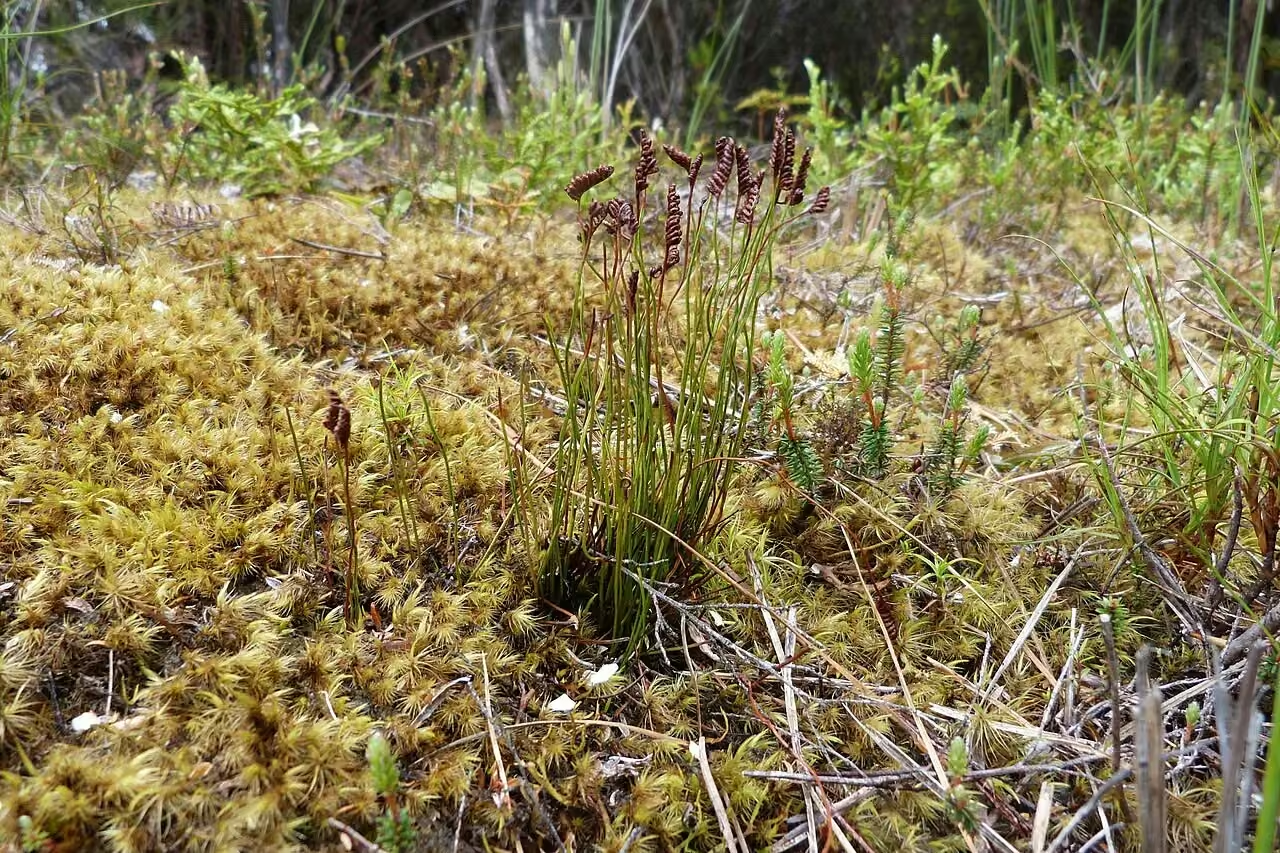
Southern Comb Fern
Schizaea australis
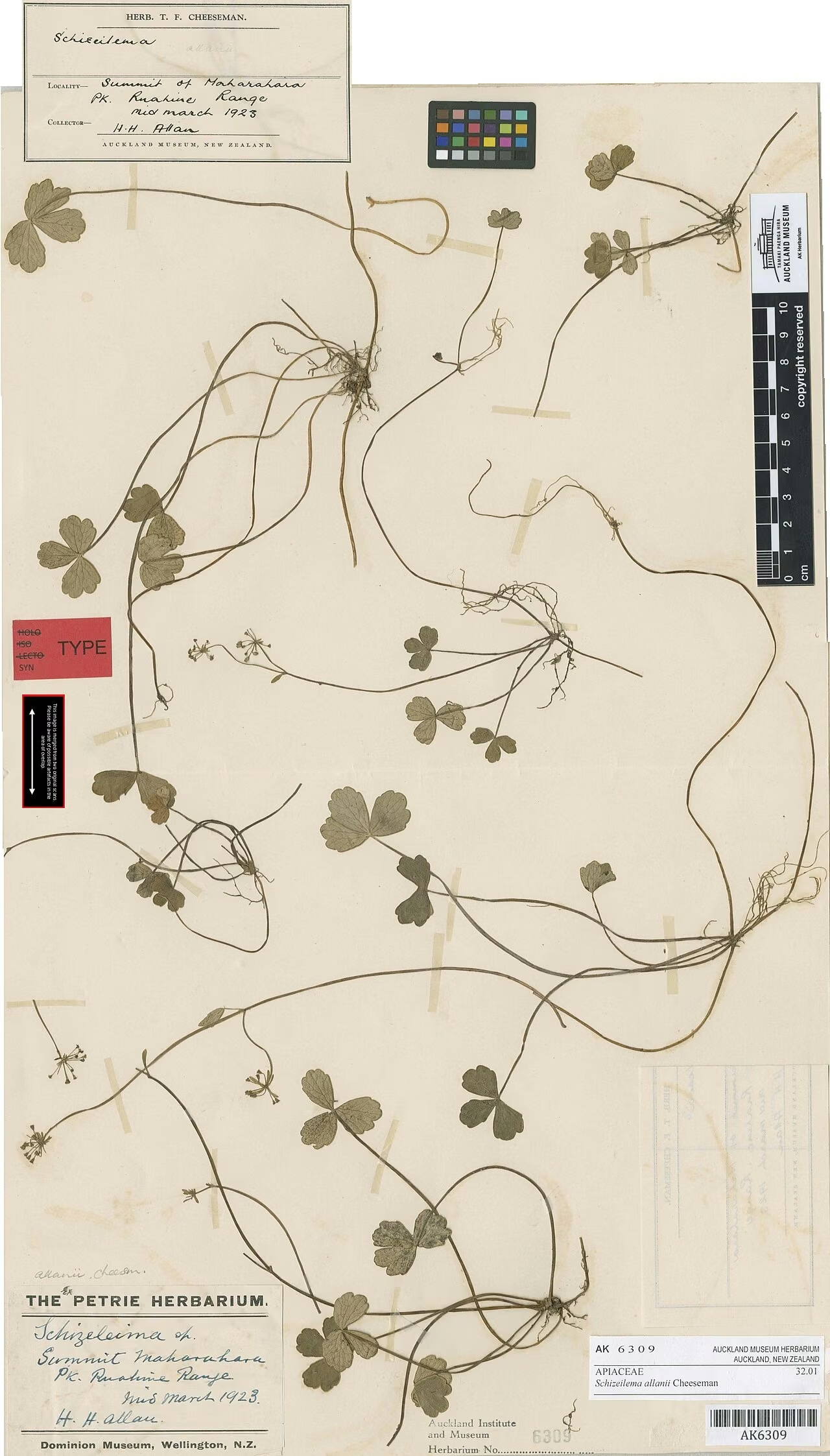
Azorella allanii
Azorella allanii
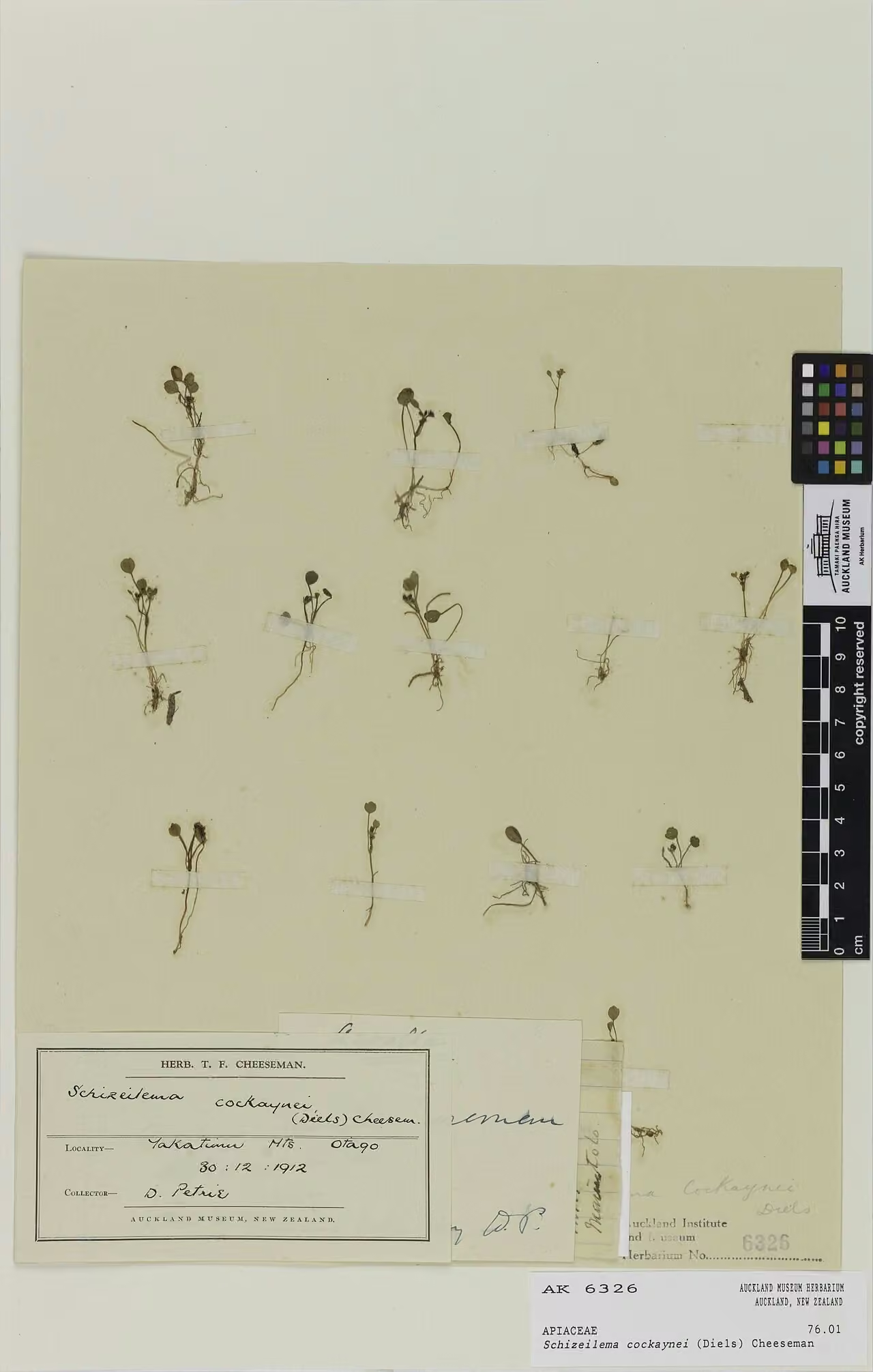
Azorella cockaynei
Azorella cockaynei
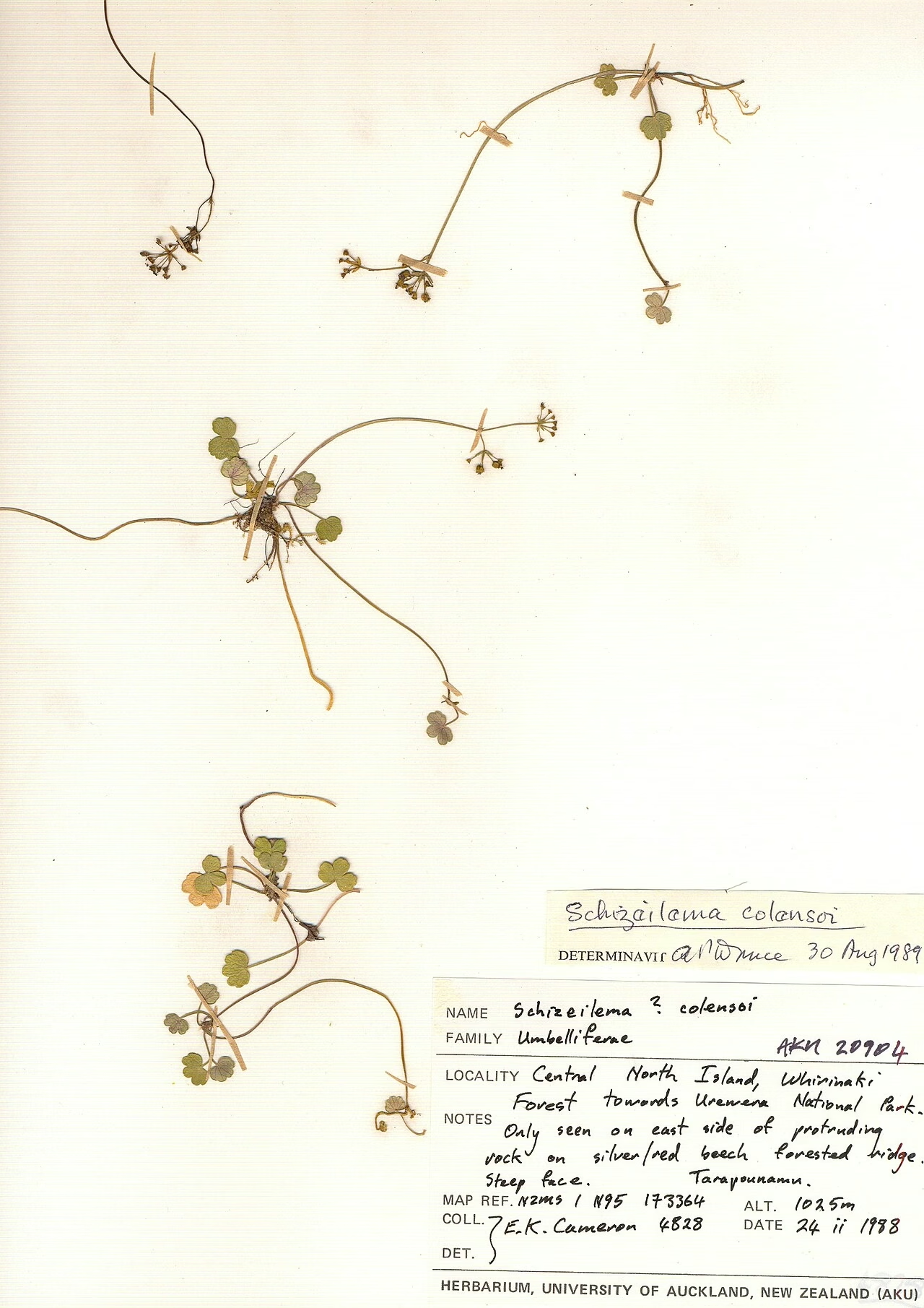
Azorella colensoi
Azorella colensoi
Devil's Horsewhip
Achyranthes velutina
Plant Conservation
Koheriki is ranked Threatened - Nationally Vulnerable (2023), with qualifiers indicating poor data on population size and trend and a partial decline. It has declined from significant parts of its range, and while it is still locally common in places, many locations now hold only small scattered populations or single plants.
Controlling introduced browsing animals, fencing stock out of cliff and gorge sites, and planting nursery-grown, locally sourced plants are the key actions. Growing it in gardens also helps keep this distinctive endemic in cultivation.
Frequently Asked Questions
What is koheriki?
Koheriki is the Māori name for Scandia rosifolia, an endemic aromatic shrub of the carrot family with rose-like leaves and white umbels, found on cliffs and banks in the North Island.
Why is Scandia rosifolia threatened?
It is palatable to browsing animals and has declined from significant parts of its range. Many populations now consist of small scattered groups or single plants surviving on cliffs and other places animals cannot reach.
Did Māori use koheriki as a medicine?
Yes. William Colenso recorded in 1868 that the leaves of this aromatic herb were used as a diuretic, for dropsy and as a remedy for syphilitic disease.
Is koheriki easy to grow?
NZPCN says it is easily grown from fresh seed and semi-hardwood cuttings, tolerates a range of conditions and flourishes in free-draining, fertile soil in a sunny spot.
Sources and Further Reading
The botanical, growing, and conservation details for Koheriki (Scandia rosifolia) on this page draw on the New Zealand plant references below. Consult them for full technical records and the latest distribution data.