Azorella
Azorella cockaynei
Last updated:
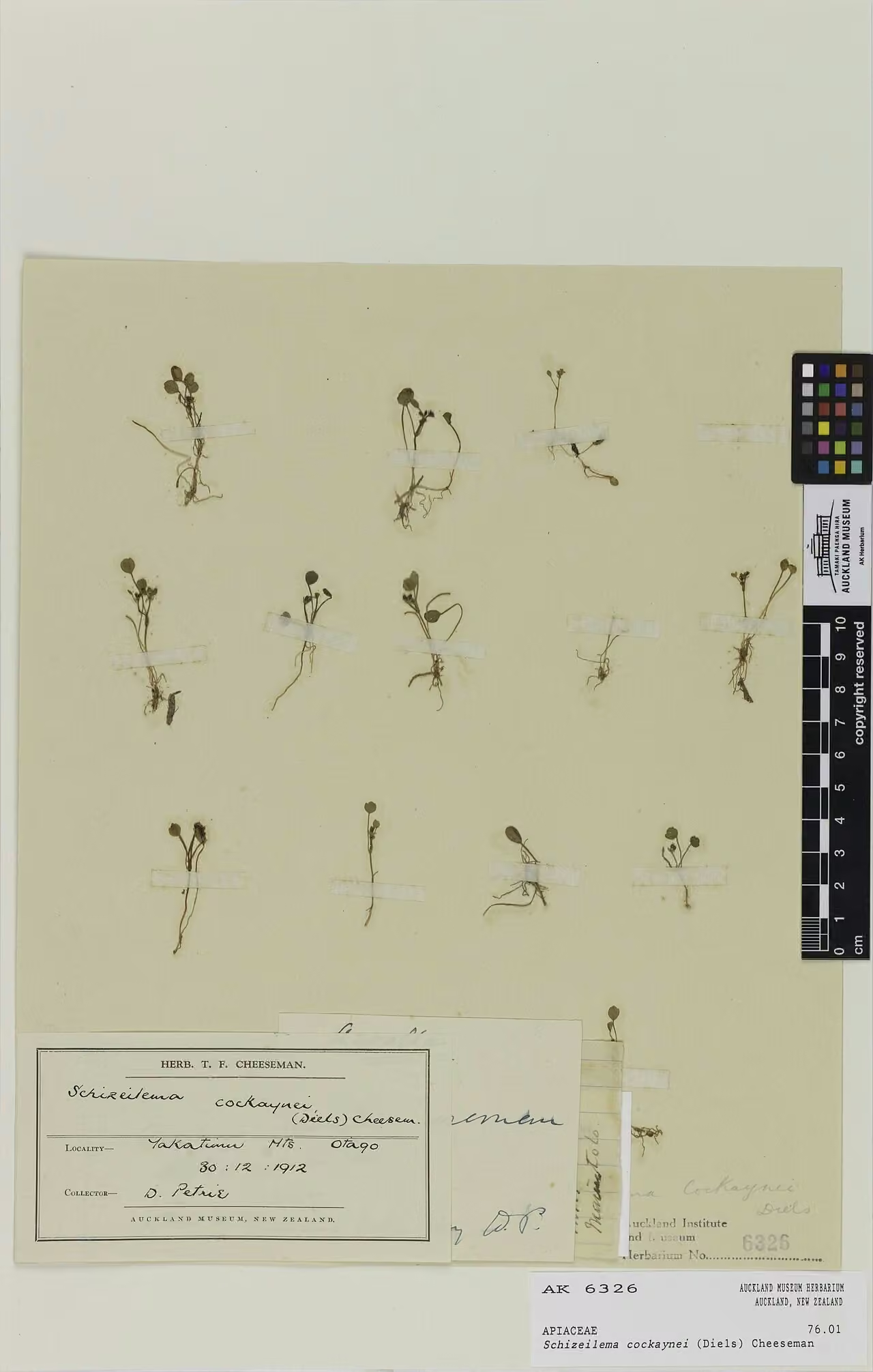
Azorella cockaynei, long known as Schizeilema cockaynei, is one of the smallest members of the carrot family in New Zealand. It is a tiny creeping herb whose thread-like rhizomes and stolons root at the nodes and knit into small patches, with simple rounded leaves only 2-4 mm across on hair-fine stalks. It is endemic to the far south, recorded locally from Otago through Southland to Stewart Island/Rakiura, where it grows in damp places and even in salt meadow near Mason Bay, its type locality. It is ranked Not Threatened and honours the botanist Leonard Cockayne. Explore more native ground covers in our native plant guide.
Plant Description
Azorella cockaynei is a minute perennial herb. Its rhizomes and stolons are very slender to thread-like and root at the nodes, so a plant gradually builds a small, low patch. The leaves are simple rather than divided, clustered at the nodes on capillary stalks up to 15 mm long. Each blade is slightly leathery, roughly 2-4 mm across, almost circular to broadly ovate, with an entire margin that is slightly thickened and only a little rolled under. Small triangular-ovate stipules, about 1.5 mm long, sit at the base of the leaf stalks.
Flowers are borne in tiny umbels of three or four on thread-like stalks up to 2 cm long, held just above the foliage and backed by minute ovate bracts. The calyx teeth are short and broadly triangular and the petals fall early. The fruit is about 1.5 mm long, roughly four-angled, and splits into two halves (mericarps) that are plainly five-ribbed.
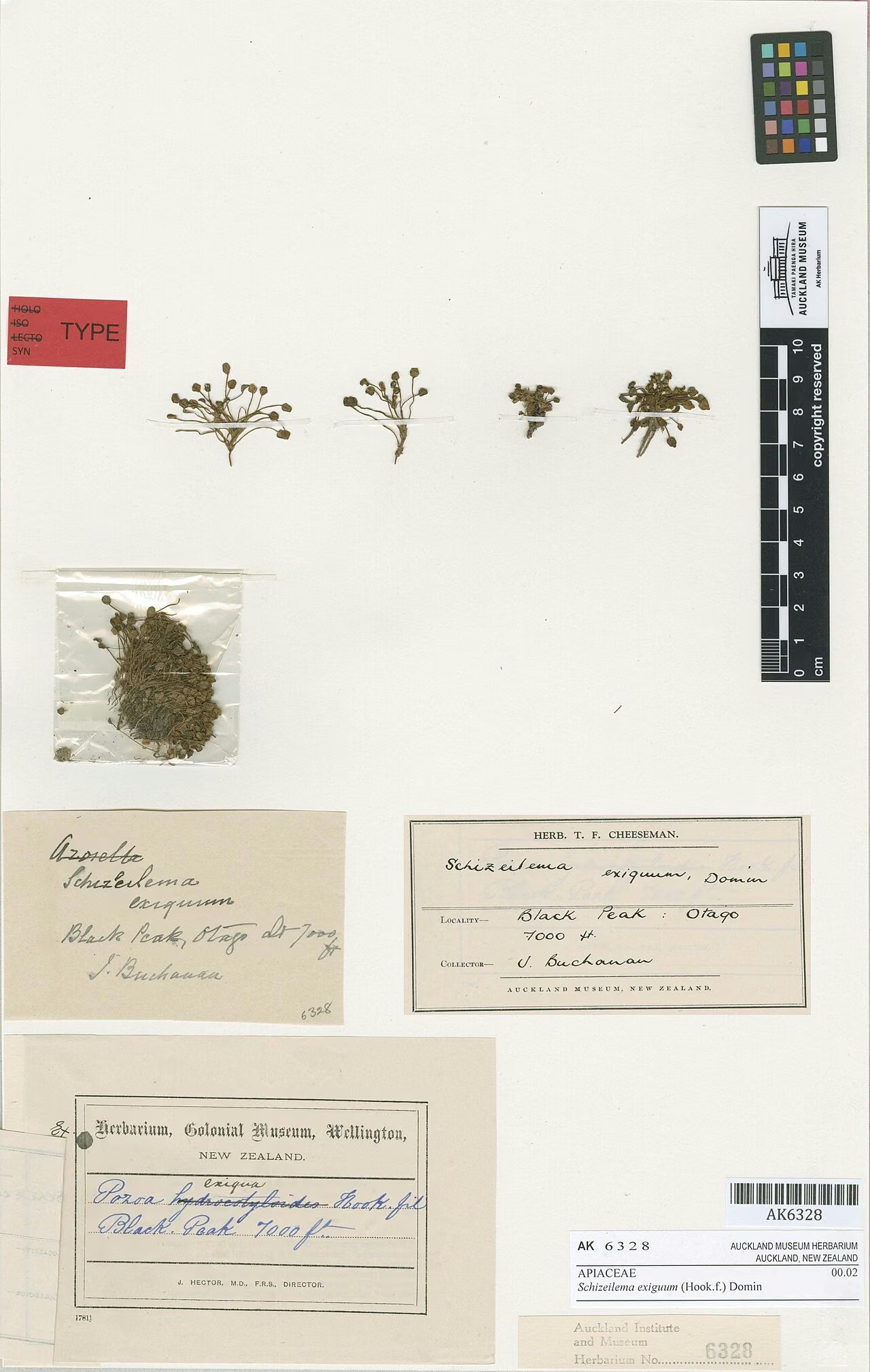
Its small, simple, undivided leaves separate it from most other New Zealand Azorella (formerly Schizeilema) species, which have lobed, three-parted or three-foliolate leaves. Azorella exigua of Otago is similarly tiny but has stout rhizomes and leathery leaves on stout stalks. Superficially similar Hydrocotyle pennyworts differ in their strongly flattened, lopsided fruit halves.
Quick Facts
| Scientific Name | Azorella cockaynei |
|---|---|
| Height | About 1-2 cm (leaf stalks up to 15 mm) |
| Spread | Forms small patches a few centimetres to decimetres across |
| Water Needs | High: permanently damp soil |
| Light | Full sun to light shade |
| Frost Tolerance | Hardy; native to the cold far south |
| Salt Tolerance | Some: recorded from salt meadow on Stewart Island |
| Growth Rate | Slow to moderate |
| Lifespan | Perennial |
Climate Best Suited to
Suited to the cool, moist, oceanic climate of Southland and Stewart Island, with reliable rainfall and no prolonged drought. Hot, humid northern summers are a poor match.
Regional Suitability
| City | Climate Suitability |
|---|---|
| Auckland | Low |
| Wellington | Medium |
| Christchurch | Medium |
| Dunedin | High |
Plant Habitat
Azorella cockaynei is endemic to the South and Stewart Islands, where NZPCN describes it as local from Otago south throughout Southland and on Stewart Island/Rakiura. Allan's Flora of New Zealand lists damp places on the lower slopes of Mount Ida in Otago, the base of the Takitimu Range in Southland, and salt meadow on Stewart Island.
The type was collected at Mason Bay on the west coast of Stewart Island by R.M. Laing and Leonard Cockayne on 30 January 1907. The national wetland plant list rates it FACW (facultative wetland), meaning it is usually found in wetlands but occasionally on drier ground. Its tiny size means it is easily overlooked among turf, herbfield and damp coastal meadow.
Growing Requirements
Soil Requirements
In the wild it grows in damp ground, including coastal salt meadow, so it wants a soil that never dries out.
- Moist to wet, fine-textured soil or a peaty mix
- Low to moderate fertility; rich soils favour competing weeds
- A pot stood in a saucer or shallow tray of water suits it well
Light Requirements
Open, low turf and salt meadow habitats suggest it grows in good light, provided the ground stays moist.
- Full sun in cool southern gardens
- Light shade further north to reduce drying
- Avoid deep shade under shrubs, where it will be smothered
Water Requirements
Water is the key requirement. NZPCN notes it is best grown in a partially submerged pot.
- Keep constantly moist all year
- Never let the pot or bed dry out in summer
- Rainwater is preferable to hard tap water for container plants
Planting and Establishing
Because Azorella cockaynei is not commercially available, plants usually come from specialist growers or botanic collections working with legally sourced material. Grow it in a shallow pot or pan of moist, peaty mix and stand the pot so its base sits in water, as NZPCN recommends.
In a garden, place it at the edge of a pond, bog garden or permanently damp hollow where taller plants will not shade it out. Plant small rooted pieces a few centimetres apart in spring and mark the spot, as the patch is so small it is easily trodden on or weeded out by mistake.
Ecological Role
As a tiny mat-former of damp turf and salt meadow, Azorella cockaynei is one component of the low herb communities of southern New Zealand wetlands and coastal margins. Its flowers are minute and borne in small umbels; no study of its pollinators was found, and its fruit has no obvious adaptation for animal dispersal.
Its creeping, rooting stolons let a plant persist and spread slowly within suitable damp ground. Like other low turf plants it depends on open conditions, and taller grasses or rushes can crowd it out where drainage or grazing changes.
Uses & Significance
Garden Uses
This is a plant for the native plant enthusiast or alpine and bog specialist, not a mainstream garden plant.
- Pot or pan culture stood in water
- Edge of a small bog garden or wildlife pond
- Collections of southern New Zealand wetland and salt-meadow plants
Ecological Value
Its value lies mainly in contributing to the diversity of southern wetland and salt-meadow turf communities.
- Part of the endemic flora of Stewart Island and Southland
- A facultative wetland indicator species (FACW)
- A member of a genus with many endemic New Zealand species
Landscaping Uses
In landscape terms Azorella cockaynei works only at the smallest scale: a living carpet in the crevices of stones at a pond edge, or a feature in a trough garden kept wet. Its rounded leaves only a few millimetres wide give a fine texture that contrasts well with mosses and with the larger leaves of bog plants such as Gunnera prorepens.
It will not cover ground quickly and cannot compete with vigorous grasses, so give it its own clear space and weed by hand.
Seasonal Care Calendar
Spring
New growth begins and stolons extend over damp ground.
- Divide and repot rooted pieces
- Check that water trays are topped up
Summer
Flowering runs from November to December, with fruit forming from December into autumn.
- Do not let pots dry out
- Collect ripe fruit if seed is wanted
Autumn
NZPCN records fruiting from December to March, so late fruit may still be present early in autumn.
- Clear fallen leaves that could smother the patch
- Sow any fresh seed
Winter
Growth slows; the plant is cold-hardy in its southern range.
- Keep plants moist but avoid standing in ice for long periods in pots
- Watch for slugs on mild nights
When to Prune and How Much
No pruning is needed. The plant is too small to trim and any cutting simply removes the stolons it uses to spread.
The only maintenance is to pull out invading grasses and mosses by hand before they overgrow the patch, and to remove dead leaves from overhanging plants.
How to Grow Azorella
The only published propagation note for Azorella cockaynei comes from NZPCN, which says it is easily grown in damp soil and does best in a partially submerged pot. Because the stolons root at the nodes, division of rooted pieces is the simplest method. Seed is a possible alternative, though no germination data were found. Plants are not commercially available, and wild plants should only be collected with landowner and Department of Conservation permission where required.
By Division of Rooted Stolons
Each node along the stolons can put down roots, so a healthy patch can be split into several small plants. Work in spring or early summer when the plant is actively growing so the pieces establish before winter.
- Lift a section of the patch from a well-established pot.
- Tease apart pieces that each have several rooted nodes and a cluster of leaves.
- Lay each piece on the surface of a moist, peaty mix and press the rooted nodes in lightly.
- Stand the pot in a tray of water so the mix stays wet.
- Keep in bright light out of hot afternoon sun until new leaves appear.
From Seed
The fruit is only about 1.5 mm long and ripens from December to March. No specific germination information was found for this species, so treat seed sowing as an experiment and keep division as the reliable method.
- Collect ripe brown fruit from cultivated plants.
- Sow fresh on the surface of a fine, moist seed mix and cover very lightly.
- Keep the tray constantly damp and cool, outdoors or in a cold frame.
- Prick out seedlings into small pots once they have a few true leaves.
Pests & Diseases
No specific pests or diseases are recorded for Azorella cockaynei. In cultivation the greatest risks are drying out and being smothered by faster-growing plants, mosses or liverworts in the pot.
As with other small soft-leaved herbs, slugs and snails can graze the tiny leaves, so check pots on damp nights. Avoid stagnant, warm water in trays during hot weather, which may encourage rot.
Cultural Significance
No Māori name or traditional Māori use is recorded for Azorella cockaynei. The plant is too small to have had practical uses and is rarely noticed outside botanical surveys.
Its botanical history is tied to Leonard Cockayne, who with R.M. Laing collected the type at Mason Bay in 1907 during a period of intensive study of Stewart Island vegetation. Ludwig Diels described it the following year as Azorella cockaynei, Cheeseman later moved it to Schizeilema, and in 2016-2017 it returned to Azorella.
Bonus Tip
Follow NZPCN's advice literally: grow this plant in a shallow pan sitting in a saucer or tray of water so the bottom of the mix is always wet. It is far easier to keep alive this way than in a garden bed, where its 2-4 mm leaves are quickly lost among weeds.
Related Plants
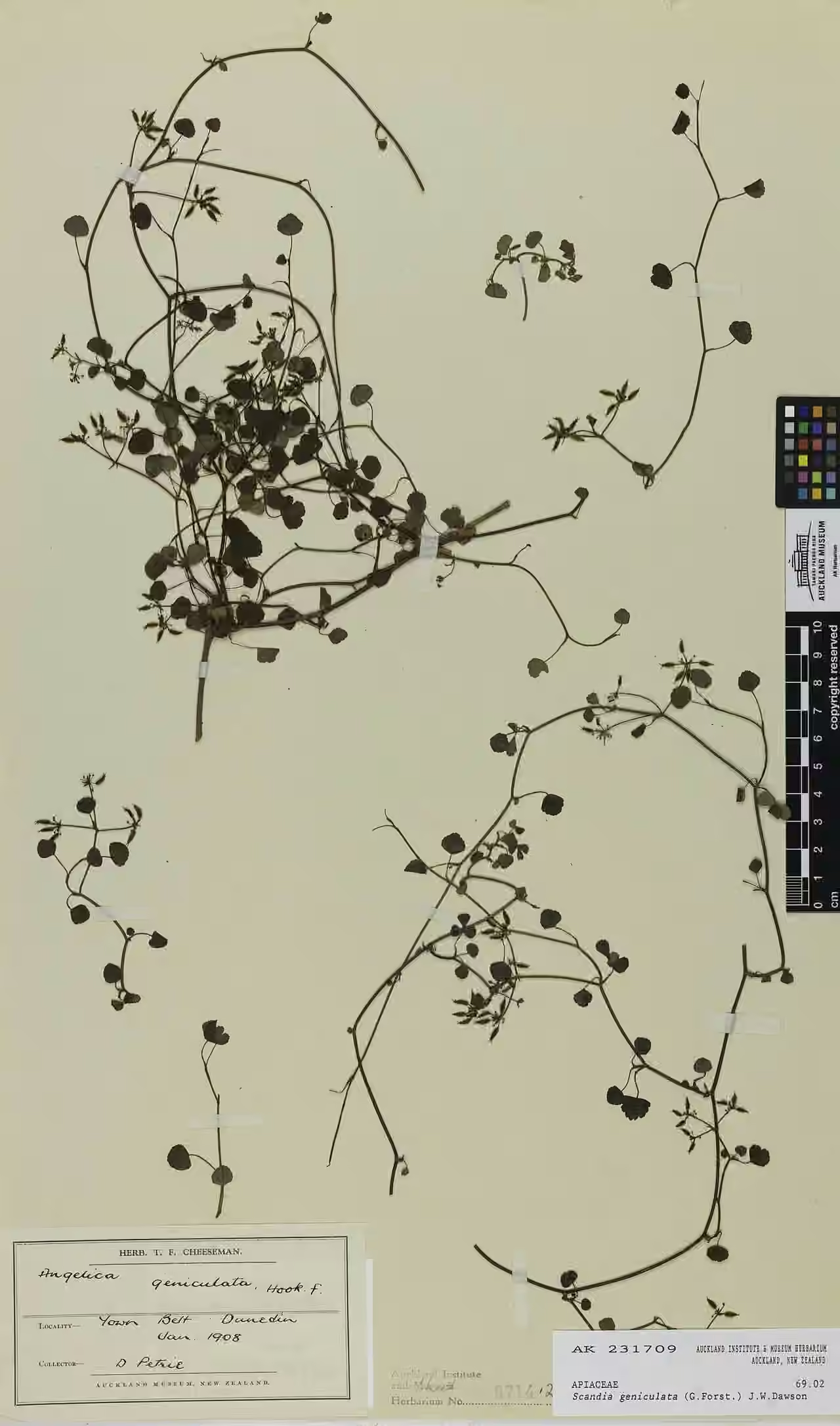
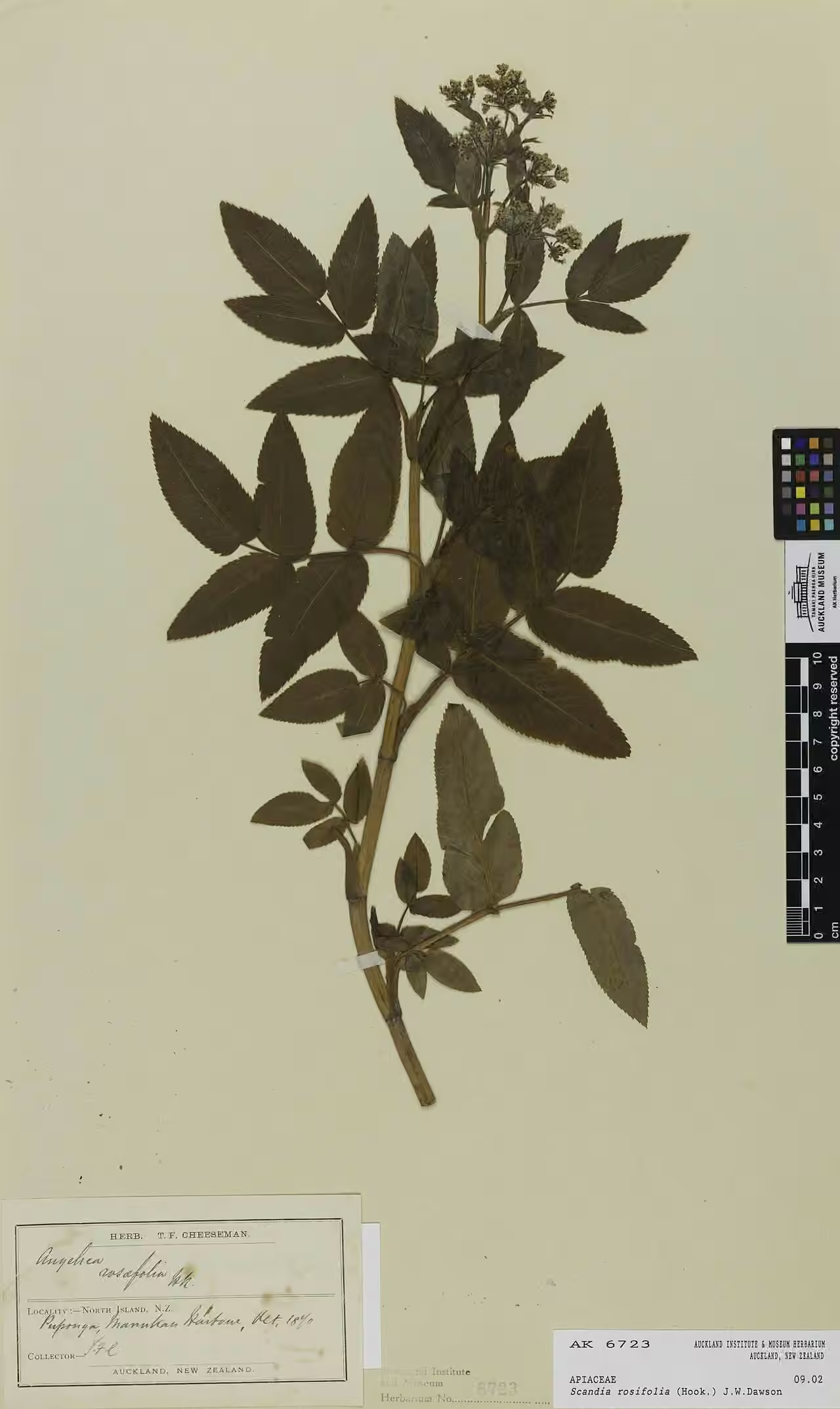
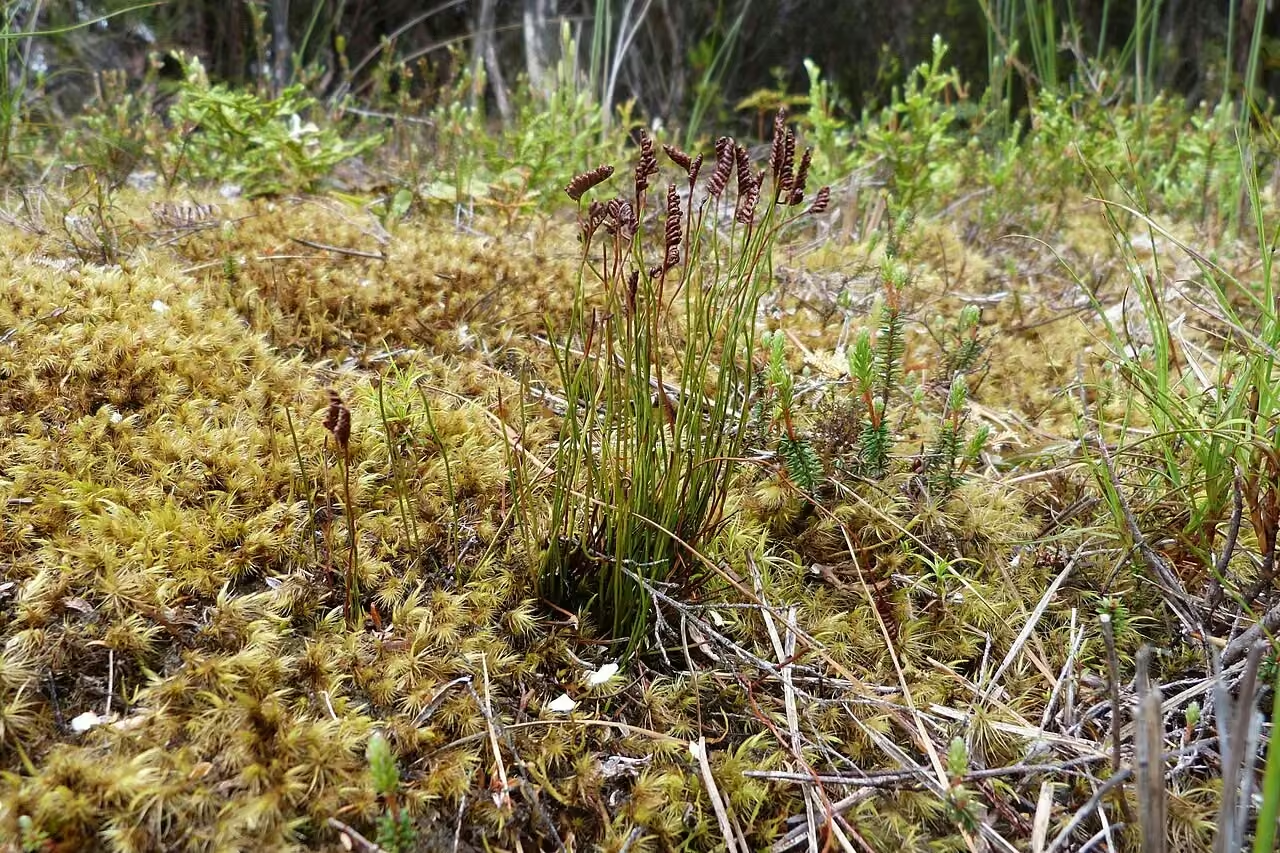
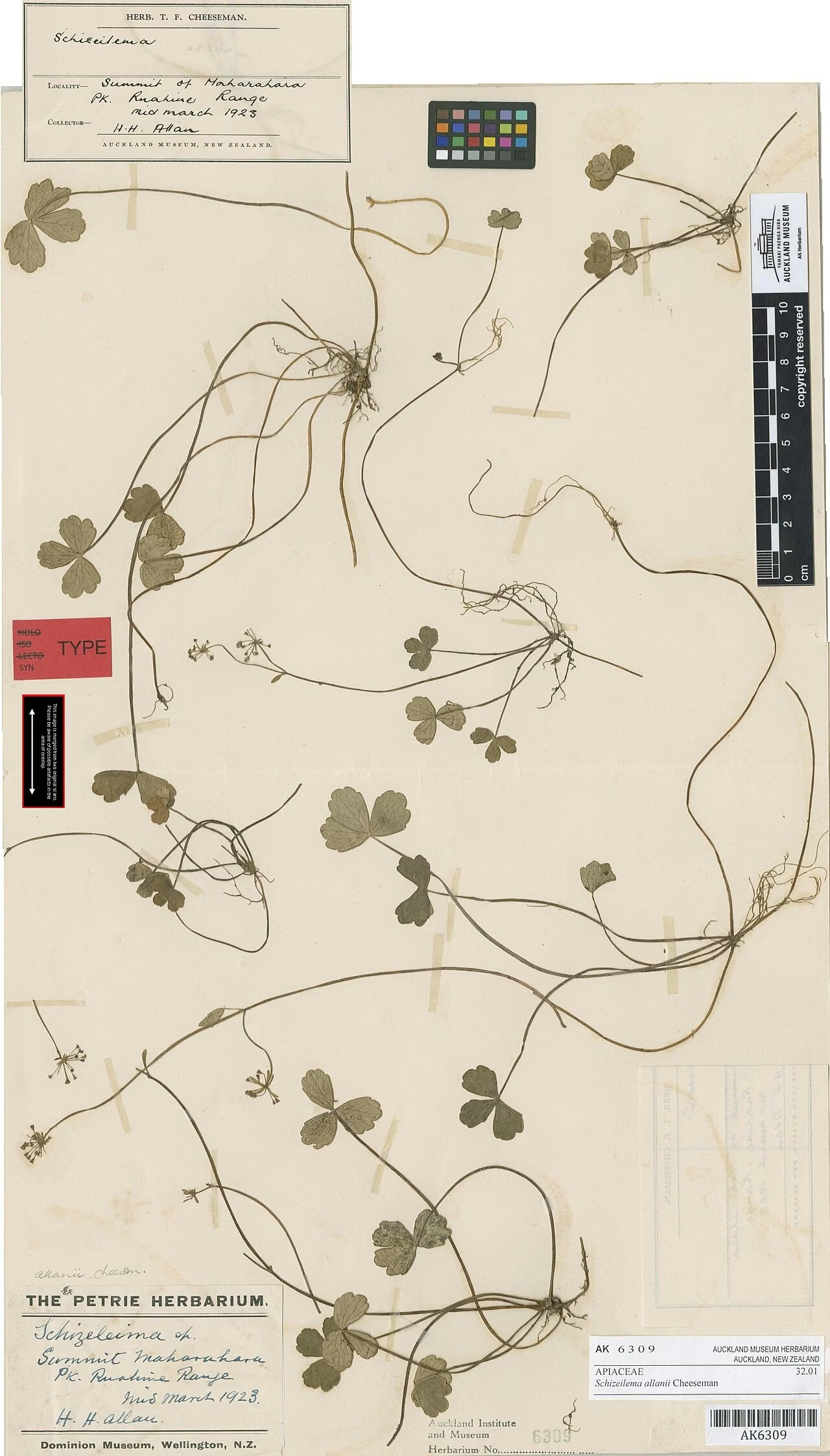
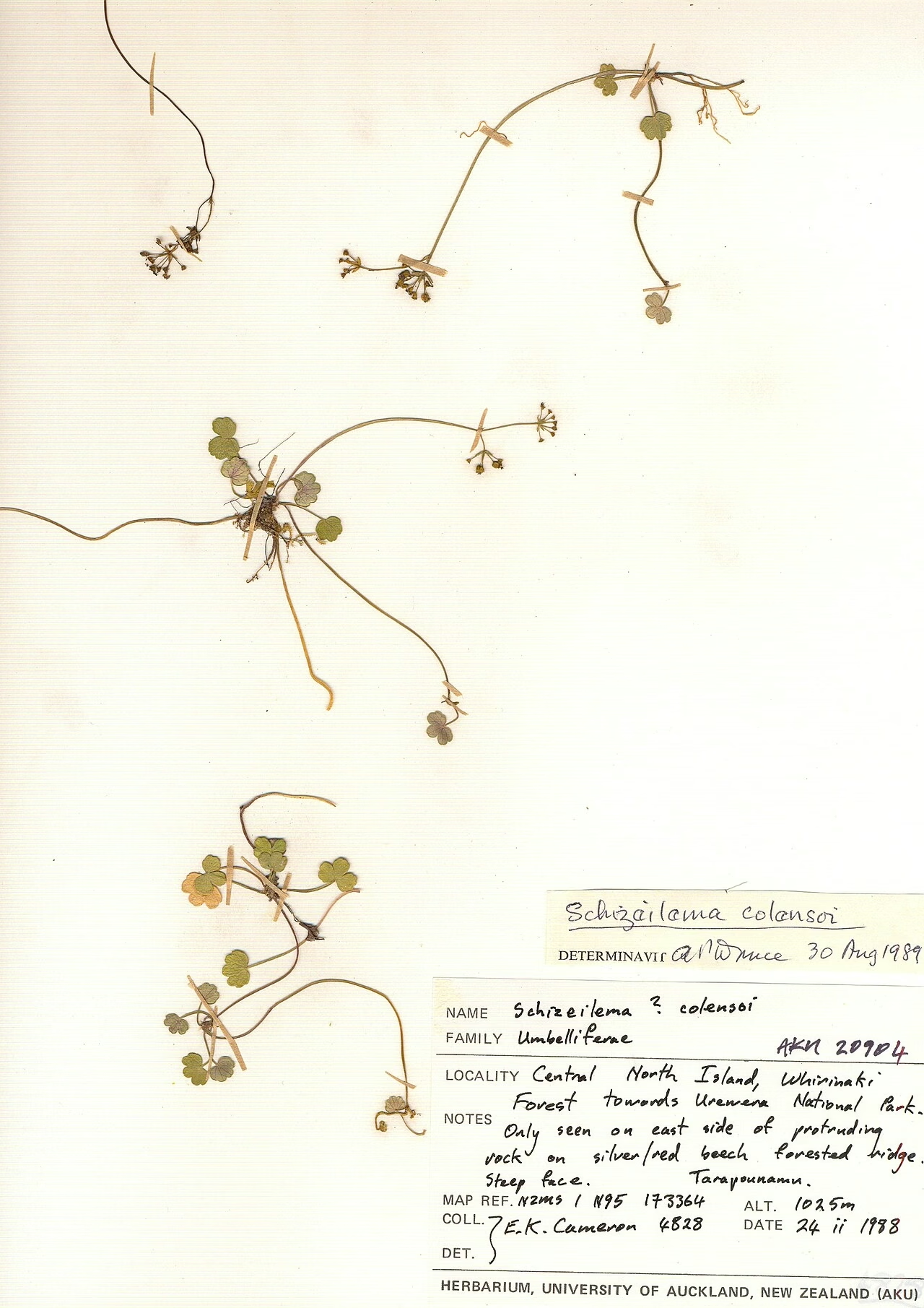
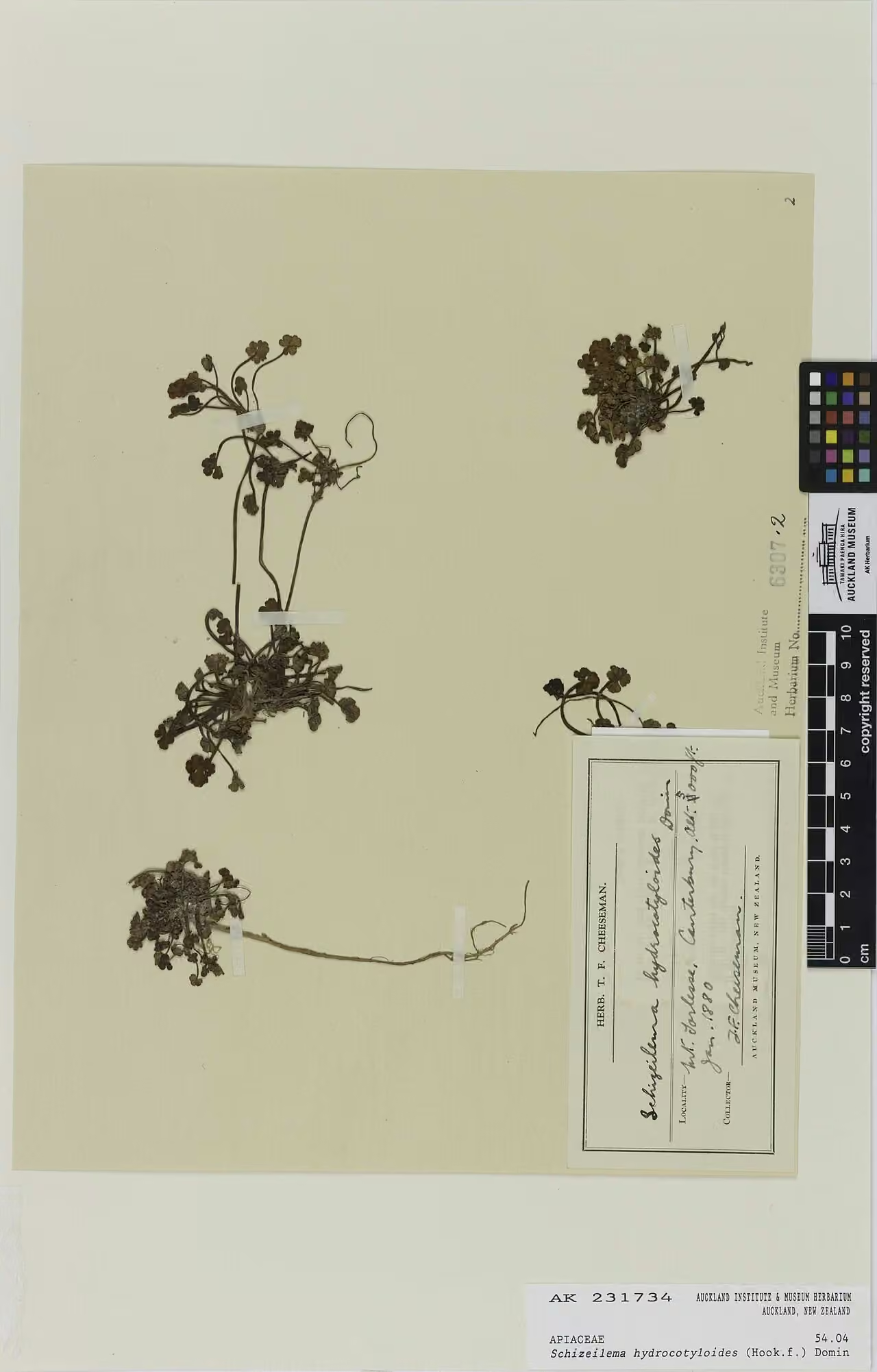
Explore other native plants that share similar characteristics or habitats with Azorella (Azorella cockaynei), offering further insights into New Zealand's diverse flora. These related species provide context and opportunities for complementary planting in your garden.
Plant Conservation
Azorella cockaynei is ranked Not Threatened in the 2023 New Zealand Threat Classification System assessment, a ranking it has held since at least 2004. In the 2025 Otago regional assessment it is listed as Regionally At Risk - Regionally Naturally Uncommon, reflecting how local it is in that region.
Its damp turf, wetland and salt-meadow habitats can be lost to drainage, development and invasion by taller exotic grasses. Protecting southern wetlands and coastal meadows, and recording new sightings on iNaturalist NZ, helps clarify its true distribution.
Frequently Asked Questions
Why is Schizeilema cockaynei now called Azorella cockaynei?
Phylogenetic work by Plunkett and Nicolas, published in 2016-2017, showed that the New Zealand Schizeilema species belong within Azorella, so the plant reverted to the name Azorella cockaynei that Diels first gave it in 1908.
Where does Azorella cockaynei grow?
It is endemic to the southern South Island and Stewart Island. Allan's Flora records it from damp places on the lower slopes of Mount Ida, the base of the Takitimu Range and salt meadow on Stewart Island.
Who is Azorella cockaynei named after?
The species epithet honours Leonard Cockayne (1855-1934), regarded by NZPCN as New Zealand's greatest botanist. He and R.M. Laing collected the type specimen at Mason Bay in January 1907.
How do you grow Azorella cockaynei?
NZPCN says it is easily grown in damp soil and does best in a pot that sits partly submerged in water. It is not sold commercially.
Sources and Further Reading
The botanical, growing, and conservation details for Azorella (Azorella cockaynei) on this page draw on the New Zealand plant references below. Consult them for full technical records and the latest distribution data.