Azorella
Azorella colensoi
Last updated:
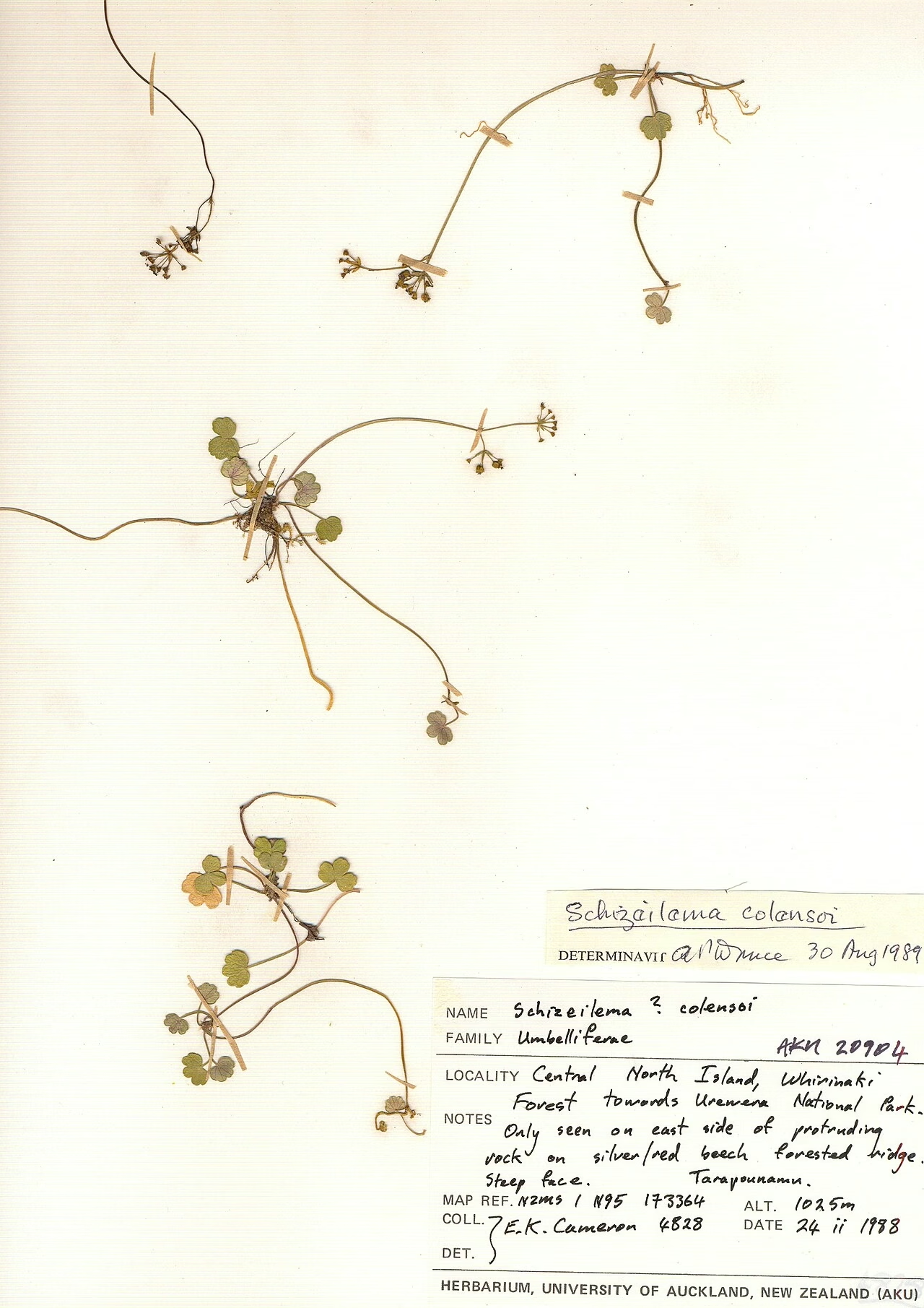
Azorella colensoi, formerly Schizeilema colensoi, is a small creeping herb of the carrot family endemic to the North Island. Its thread-like stems run over the ground and root at the nodes, carrying leaves that are split right to the base into three wedge-shaped leaflets, each usually 2.5-5 mm long. It grows in montane rocky places along the eastern ranges from the Raukumara Range south to the Kaweka Ranges. William Colenso first collected it on crags at Titiokura, where it still survives. It is ranked Not Threatened, though its population size and trend are poorly known. Explore more native ground covers in our native plant guide.
Plant Description
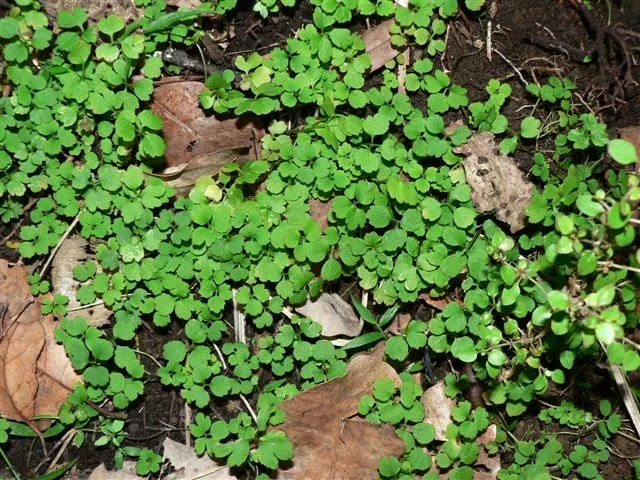
Azorella colensoi is a low perennial whose stems usually run above ground. They are thread-like or nearly so, creeping, branching and rooting at the nodes. The leaves sit on very slender stalks up to about 2 cm long, with minute fringed stipules at the base. Each leaf blade is hairless or bears a few fine hairs and is divided right to the base into three thin leaflets.
The leaflets are obovate to wedge-shaped, stalkless or nearly so, usually 2.5-5 mm long and occasionally up to 10 mm. Each typically ends in a rounded central lobe with a pair of blunt teeth to the sides, though some are notched or entire; the margins are slightly thickened and rolled under. Flowers are minute, in simple umbels of (three) five to six (up to ten) on slender, branched, finely hairy stalks up to about 2 cm long, backed by narrow, pointed bracts. The fruit is four-angled, about 3 by 2 mm, and its halves are distinctly five-ribbed.
Hooker originally treated it as a variety of Pozoa trifoliolata (now Azorella trifoliolata). That species is a larger plant whose stems reach about 30 cm and form large patches, with three-foliolate leaves on stalks up to about 8 cm long.
Quick Facts
| Scientific Name | Azorella colensoi |
|---|---|
| Height | About 2-3 cm (leaf stalks up to c. 2 cm) |
| Spread | Creeping stems form small open patches |
| Water Needs | Moderate; moist but free-draining rocky ground |
| Light | Full sun to partial shade |
| Frost Tolerance | Hardy; a montane plant |
| Salt Tolerance | Not recorded; an inland mountain plant, so low tolerance is likely |
| Growth Rate | Slow |
| Lifespan | Perennial |
Climate Best Suited to
Suited to the cool, frosty, often misty climate of the North Island's eastern montane ranges, with regular rainfall and cold winters. It is not suited to hot, dry lowland sites.
Regional Suitability
| City | Climate Suitability |
|---|---|
| Auckland | Low |
| Wellington | Medium |
| Christchurch | Medium |
| Dunedin | Medium |
Plant Habitat
NZPCN gives its range as the North Island from the Raukumara Range south to the Kaweka Ranges. Allan's Flora of New Zealand describes it as a plant of montane rocky places along the eastern ranges from about latitude 38 degrees 30 minutes to 39 degrees 30 minutes, apparently local, and also lists the Pouakai Range near Taranaki.
The type locality, given by Hooker as crags on Titiokura, lies in the hill country between Napier and Taupō. Allan noted the plant still persisted there, and that most other records were due to the field work of the botanist A.P. Druce. Its habitat of rock outcrops and crags in montane country is a small, patchy one, which helps explain why so little is known about its population.
Growing Requirements
Soil Requirements
Its natural habitat is montane rocky ground, so it needs a gritty, free-draining but moisture-holding root run.
- Gritty, stony mix with some fine organic matter
- Good drainage around the crown
- Low fertility to discourage competing weeds
Light Requirements
Crags and rock outcrops are typically open and bright, but rock crevices also give some shelter.
- Bright light or full sun in cool districts
- Light shade in warmer gardens
- Not suited to heavy shade under trees
Water Requirements
Montane rocky places in the eastern ranges receive regular rain and mist, so roots should stay cool and slightly moist.
- Water during dry spells so the mix does not dry right out
- Avoid waterlogging, which may rot the fine stems
- A stone mulch helps keep roots cool
Planting and Establishing
Azorella colensoi is not sold commercially and there is no published propagation guidance, so it is a plant for specialist collections only. If legally sourced material is available, plant it in an alpine pan or a crevice in a rock garden filled with a gritty, slightly humus-rich mix.
Settle rooted pieces so the nodes touch the mix, firm gently and water in. A cool, bright spot that does not bake in afternoon sun is likely to suit a plant from montane crags.
Ecological Role
Azorella colensoi is part of the small-herb flora of montane rock outcrops in the eastern North Island, a habitat that also shelters many other localised plants. Its pollinators and seed dispersal have not been studied; NZPCN lists both flowering and fruiting season as not known.
Its creeping, rooting stems allow it to persist in crevices and on ledges where soil is thin. Being low and slow-growing, it relies on these sites staying free of taller weeds and browsing pressure.
Uses & Significance
Garden Uses
This is a curiosity for alpine and native plant specialists rather than a general garden plant.
- Alpine house pans
- Crevice or rock gardens in cool districts
- Reference collections of New Zealand Apiaceae
Ecological Value
Its value lies in being a local endemic of the eastern North Island montane rock flora.
- Endemic to a limited stretch of North Island ranges
- Part of distinctive montane rock outcrop communities
- A data-poor species where new records add real knowledge
Landscaping Uses
In a rock garden its fine, three-parted leaves form a delicate tracery between stones, best seen at eye level in a raised crevice bed or trough. It pairs naturally with other small eastern North Island montane plants rather than with large-leaved perennials.
Because it grows slowly and stays very low, it should not be relied on as ground cover; treat it as a specimen to be looked at closely.
Seasonal Care Calendar
Spring
Growth resumes as the soil warms; this is the safest time to divide or repot.
- Top-dress pans with fresh grit
- Check for winter losses
Summer
Flowering time has not been documented, but related species flower from late spring to midsummer.
- Note any flowering dates you observe
- Water during dry spells
Autumn
Fruit, about 3 mm long, may be present; NZPCN lists fruiting time as not known.
- Collect any ripe fruit for trial sowing
- Remove fallen leaves
Winter
A frost-hardy montane plant that slows down in cold weather.
- Protect pans from prolonged waterlogging
- Keep grit around the crown
When to Prune and How Much
Azorella colensoi needs no pruning. Its stems are thread-fine and every node is a potential new plant, so trimming only reduces it.
Simply remove dead leaves and weeds by hand, taking care not to pull out the delicate stems.
How to Grow Azorella
There is no published propagation information for Azorella colensoi: NZPCN lists flowering and fruiting time as not known and gives no propagation technique, and the plant is not commercially available. The methods below follow from its structure, since its creeping stems root at the nodes, and from the fruit described in the Flora. Treat them as reasonable starting points rather than tested techniques, and only use material that has been collected legally with landowner and Department of Conservation permission where required.
By Division of Rooted Stems
Because the filiform stems root at the nodes, small rooted sections can be separated from an established plant. This is the most likely way to keep a cultivated plant going.
- In spring, find stems that have rooted at several nodes.
- Cut a section with roots and a few leaves using fine scissors.
- Lay it on a gritty, moist mix in a shallow pan and pin it down lightly.
- Keep the pan cool, bright and evenly moist until new leaves form.
- Pot on once the piece has spread and is clearly growing.
From Seed
The fruit is four-angled, about 3 by 2 mm, and splits into two five-ribbed halves. No germination information was found, so record what you try.
- Collect fruit when brown and easily detached.
- Sow fresh on a gritty seed mix and cover with a thin layer of fine grit.
- Keep outdoors or in a cold frame, where winter chilling may help.
- Keep moist and be patient, as germination time is not known.
Pests & Diseases
No pests or diseases have been recorded for Azorella colensoi. In cultivation, the main risks are likely to be overwatering in warm weather, competition from weeds and mosses in the pan, and drying out during summer.
Slugs and snails can damage small soft herbs, so inspect pans regularly. In the wild, browsing animals and weed invasion of rock outcrops are general pressures on montane herbs, though none has been documented specifically for this species.
Cultural Significance
No Māori name or traditional Māori use is recorded for Azorella colensoi.
The species is named after William Colenso (1811-1899), the Cornish missionary, printer, botanist, explorer and politician, who collected the type on the crags at Titiokura. Karel Domin named it Schizeilema colensoi in 1908, and in 2016 Plunkett and Nicolas transferred it to Azorella. Later knowledge of its distribution owes much to A.P. Druce's field work in the North Island ranges.
Bonus Tip
If you botanise in the Kaweka, Ruahine or Raukumara ranges, photograph any tiny three-parted Apiaceae on rock outcrops and post them to iNaturalist NZ. Azorella colensoi carries Data Poor qualifiers for both population size and trend, and even its flowering and fruiting times are listed as not known, so dated observations are genuinely useful.
Related Plants
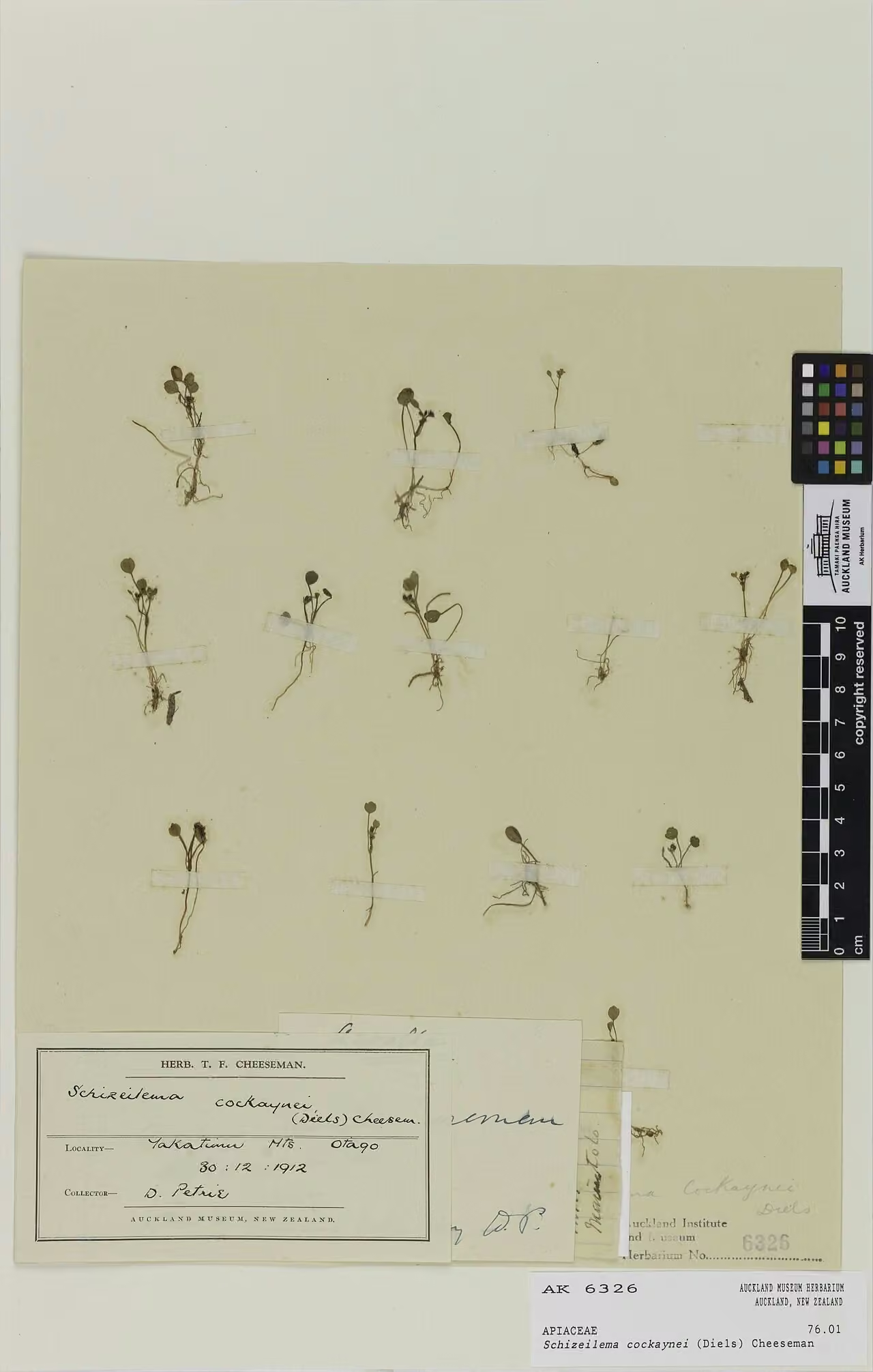
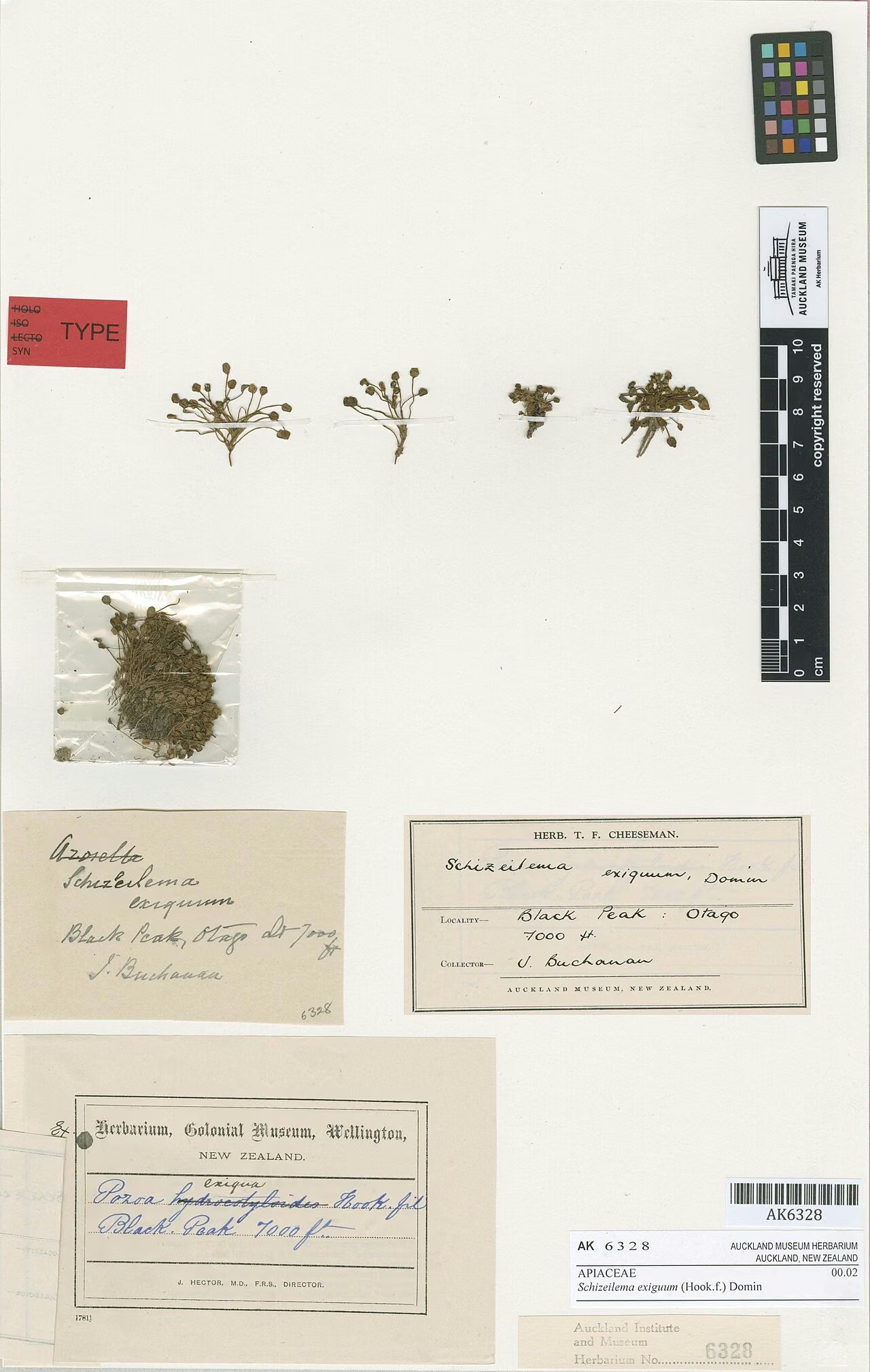
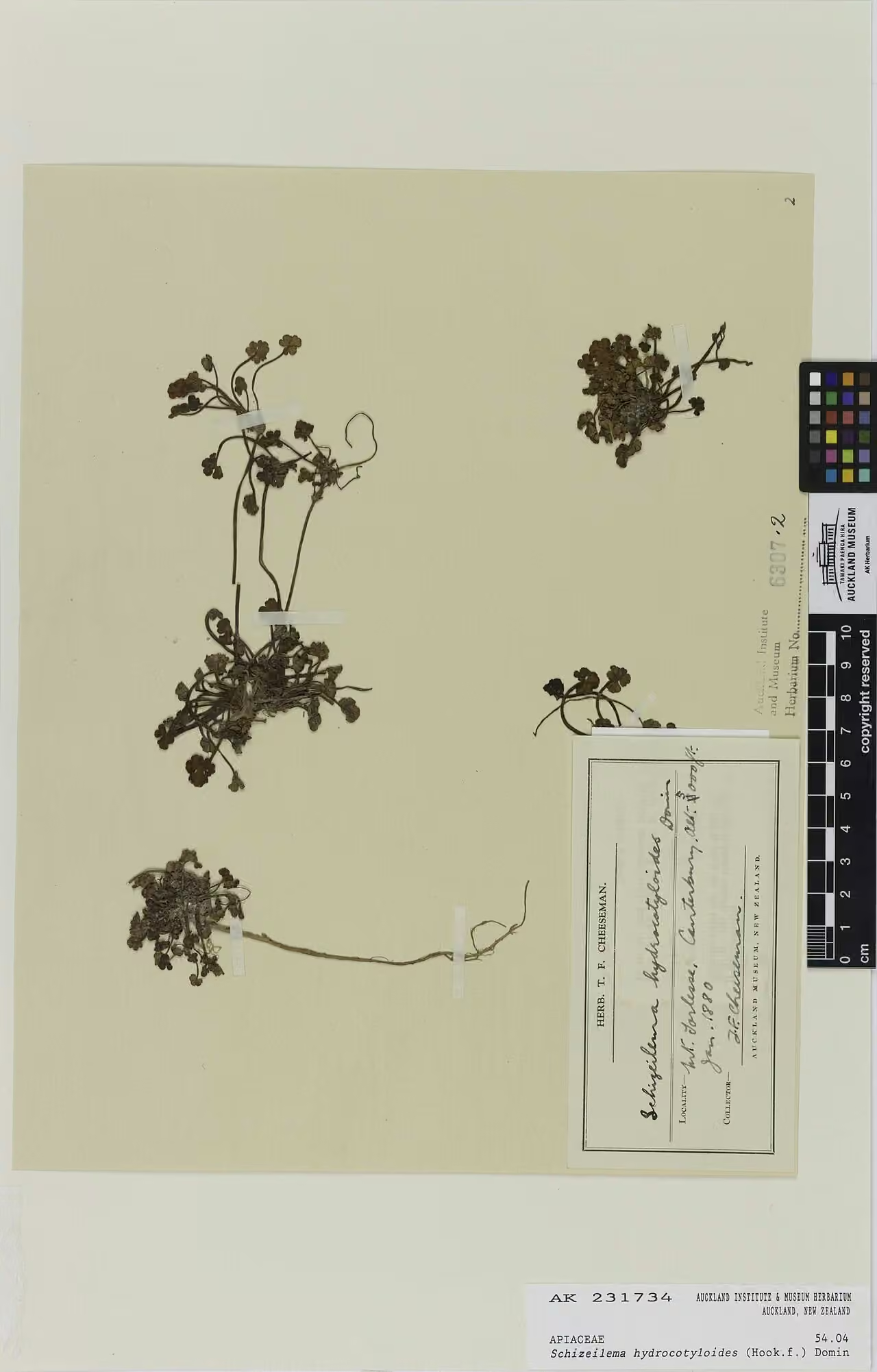
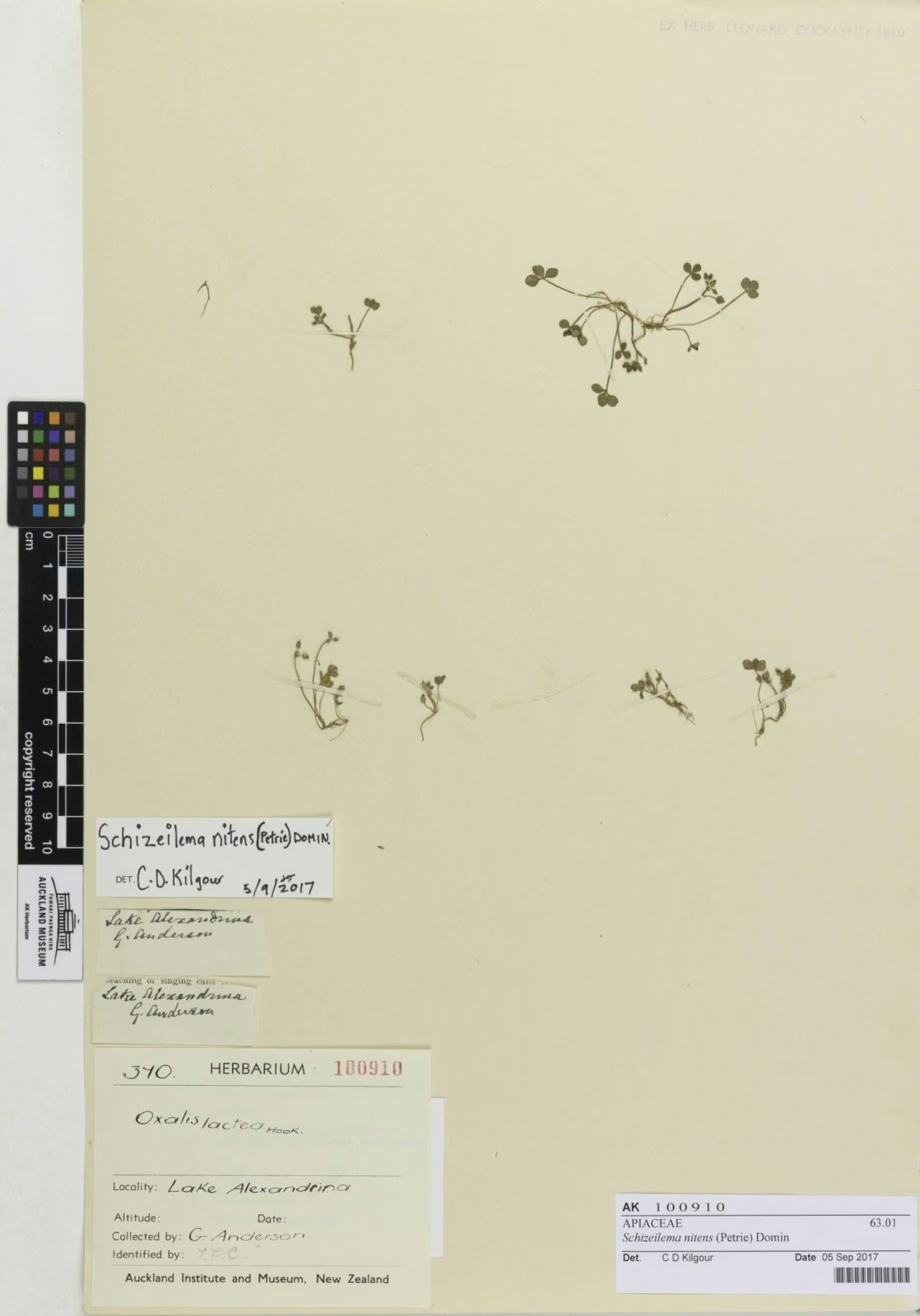
Explore other native plants that share similar characteristics or habitats with Azorella (Azorella colensoi), offering further insights into New Zealand's diverse flora. These related species provide context and opportunities for complementary planting in your garden.
Plant Conservation
Azorella colensoi is ranked Not Threatened in the 2023 New Zealand Threat Classification System assessment, with the qualifiers DPS (Data Poor: Size) and DPT (Data Poor: Trend). The 2017 assessment carried a Data Poor qualifier as well, so its status rests on limited information.
Its montane rock outcrop habitat is naturally fragmented. Weed invasion, browsing by introduced animals and disturbance of outcrops could affect local populations, so surveys to confirm where it still grows would help.
Frequently Asked Questions
Where is Azorella colensoi found?
It is endemic to the North Island, in montane rocky places along the eastern ranges from the Raukumara Range south to the Kaweka Ranges. Allan's Flora also lists the Pouakai Range in Taranaki.
What is the type locality of Azorella colensoi?
The type was collected by William Colenso on crags at Titiokura, on the old Napier-Taupō route. Allan's Flora notes the plant still persists at that site.
How do you tell Azorella colensoi from Azorella trifoliolata?
Azorella colensoi has leaves divided to the base on short petioles up to about 2 cm. Azorella trifoliolata forms large patches with three-foliolate leaves on petioles up to about 8 cm long.
Is Azorella colensoi threatened?
No. It was ranked Not Threatened in 2023, but with the qualifiers Data Poor: Size and Data Poor: Trend because few populations have been surveyed.
Sources and Further Reading
The botanical, growing, and conservation details for Azorella (Azorella colensoi) on this page draw on the New Zealand plant references below. Consult them for full technical records and the latest distribution data.