Devil's Horsewhip
Achyranthes velutina
Last updated:
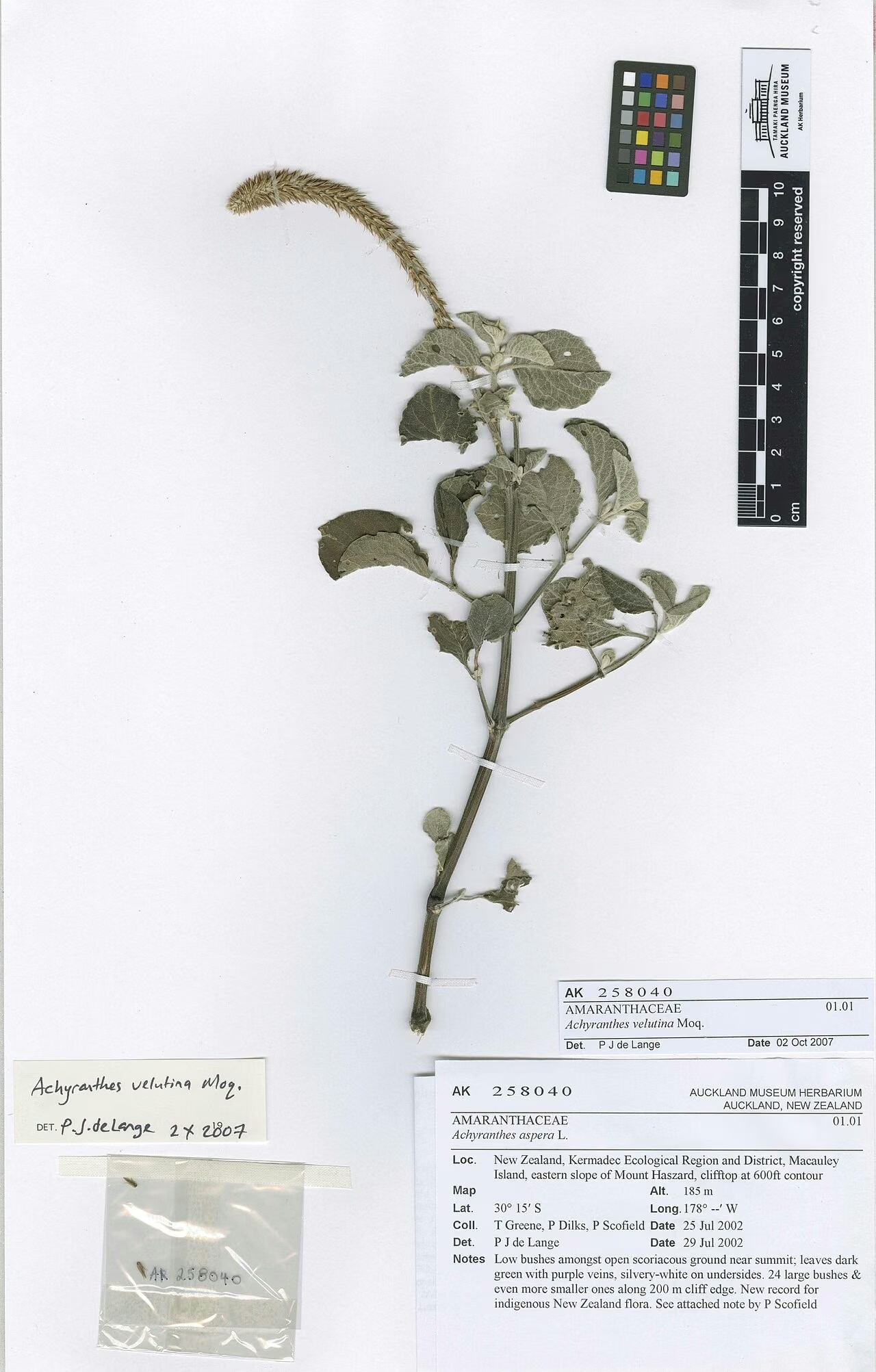
Devil's horsewhip (Achyranthes velutina) is a small, much-branched shrub in the amaranth family, with a stout woody rootstock, velvety hairy stems and fleshy, dark green to purple-grey leaves. Erect flower spikes 150 to 200 mm long carry up to about 200 small flowers, which ripen into spiny fruits that hook onto feathers, fur and clothing. Widespread in the Pacific, in New Zealand it grows naturally only on Macauley Island in the southern Kermadecs, among seabird burrows on cliff edges. It is ranked At Risk - Naturally Uncommon and is thought to have arrived by natural long-distance dispersal. Explore more native shrubs in our native plant guide.
Plant Description
Achyranthes velutina is a small, much-branched, monoecious shrub with a stout woody rootstock. The stems are somewhat succulent at first and ribbed, becoming woody at the base with age, and are densely covered in velvety, closely pressed hairs, which gives the species its name (velutina means velvety).
The leaves are opposite, spreading to curved downward and crowded toward the branch tips. They measure about 40 to 50 mm long by 25 to 30 mm wide, are mostly broadly ovate to elliptic, fleshy, and dark green or purple-grey. Flowers are borne in a terminal, erect spike 150 to 200 mm long carrying about 180 to 200 bisexual, stalkless flowers that point backwards (retrorse). They start about 10 mm apart and become crowded toward the tip. NZPCN lists the flower colours as orange and red to pink. Each flower has five narrow sepals and produces a spiny utricle holding a single dark chestnut-brown seed 1.2 to 1.8 mm long.
The only plant it could be confused with is Achyranthes aspera, the name under which Macauley Island plants were first recorded. A. aspera is an annual with a more slender, smaller habit and glabrescent (nearly hairless), less pigmented leaves, and it does not occur naturally in New Zealand.
Quick Facts
| Scientific Name | Achyranthes velutina |
|---|---|
| Height | Small shrub; no height is published for NZ plants |
| Spread | Much branched; flower spikes 150-200 mm long |
| Water Needs | Low to moderate |
| Light | Full sun |
| Frost Tolerance | Not documented; native only to subtropical islands |
| Salt Tolerance | Grows on exposed sea cliffs among seabird colonies |
| Growth Rate | Not documented |
| Lifespan | Perennial |
Climate Best Suited to
A plant of warm, subtropical Pacific islands. In New Zealand it is only suited to frost-free coastal sites in the far north or to glasshouse culture.
Regional Suitability
| City | Climate Suitability |
|---|---|
| Auckland | Medium |
| Wellington | Low |
| Christchurch | Low |
| Dunedin | Low |
Plant Habitat
In New Zealand Achyranthes velutina is known in a natural state only from Macauley Island in the southern Kermadec Islands. It is widespread elsewhere in the Pacific. A 1960 collection from Silverdale, north of Auckland, once listed as A. aspera, is now referred to A. velutina and treated as naturalised, an unusual situation for an indigenous plant.
NZPCN describes its habitat as amongst seabird burrows on the margins of steep cliffs, growing with grasses and sedges. These seabird-enriched, disturbed soils suit a plant whose burs travel on feathers.
Growing Requirements
Soil Requirements
On Macauley Island it grows in disturbed soils among seabird burrows, which are typically rich in nutrients from guano.
- Free-draining, fertile soil
- Tolerates disturbed ground
- Avoid cold, waterlogged sites
Light Requirements
Its cliff-top habitat among grasses and sedges is open and exposed.
- Full sun
- Tolerates exposure to wind on the coast
Water Requirements
Somewhat succulent stems and fleshy leaves suggest it copes with dry spells on its exposed cliff sites.
- Water young plants until established
- Established plants need little extra water
- In pots, allow the surface to dry between waterings
Planting and Establishing
Plant only in a warm, frost-free, sunny spot or keep it in a container under glass. Because NZPCN warns it is potentially an aggressive weed in warm climates, site it well away from bush margins, coastal reserves and paths where its burs would be carried off.
Spring planting into warm soil gives the best start.
Ecological Role
Its spiny utricles are dispersed by attaching to fur, feathers and clothing. On Macauley Island, growing among seabird burrows, the hooked fruits are well placed to be carried by nesting seabirds, and NZPCN regards its presence there as a natural long-distance dispersal event that led to successful establishment.
It flowers and fruits throughout the year. Pollinators of this species in New Zealand are not documented in the sources consulted. It forms part of the low cliff-edge vegetation of grasses and sedges on the island.
Uses & Significance
Garden Uses
Mainly of interest for botanical and Kermadec flora collections rather than general gardens, because of its weed potential and clinging burs.
- Specialist native plant or island flora collections
- Containers under glass in cooler regions
- Educational displays on seed dispersal by animals
Ecological Value
On Macauley Island it is one of the plants that holds and clothes the seabird-burrowed cliff margins.
- Contributes cover on disturbed, guano-enriched cliff soils
- Example of natural colonisation of New Zealand by long-distance dispersal
- Part of the small and distinctive Kermadec flora
Landscaping Uses
If grown, use it as a low feature plant in a contained bed or large pot, where its purple-grey velvety foliage and long upright flower spikes can be appreciated.
Keep it away from walkways and lawns so the burs do not attach to clothing, socks or pets.
Seasonal Care Calendar
Spring
Active growth resumes; flowering and fruiting occur year round.
- Plant or pot on
- Take cuttings
Summer
Main growth period, with new flower spikes forming at the shoot tips.
- Remove spent spikes before burs ripen if self seeding is unwanted
Autumn
Plants continue to flower and set spiny fruit.
- Collect seed if needed
- Prepare to protect plants from cold
Winter
Growth slows in cooler conditions.
- Protect from frost
- Water sparingly
When to Prune and How Much
Cut off flower spikes once flowering finishes if you want to stop burs forming and seed spreading. Wear gloves, as the ripe fruits are spiny.
Lightly trim the branch tips to keep plants compact, and remove old woody stems that have become bare.
How to Grow Devil's Horsewhip
NZPCN states that Achyranthes velutina is easy to propagate from both cuttings and seed, and that it is potentially an aggressive weed in warm climates. Because it flowers and fruits throughout the year, material is available in most seasons. Given the weed warning, propagate only for legitimate collections or restoration, and do not collect from Macauley Island, which is part of the Kermadec Islands Nature Reserve; use plants already in cultivation instead. In cooler parts of New Zealand, raise and keep young plants under glass, since there is no published information on how much cold this subtropical island shrub can tolerate, and dispose of unwanted seedlings and burs in the rubbish rather than the compost.
From Seed
Each spiny utricle holds one dark chestnut-brown seed about 1.2 to 1.8 mm long. Collect ripe fruits, which detach easily from the spike, and wear gloves when handling them.
- Gather ripe utricles from the lower, older part of the spike
- Sow whole fruits or cleaned seed into a free-draining seed mix
- Cover lightly and keep warm and moist
- Prick out seedlings when large enough to handle
- Grow on in pots before planting out
From Cuttings
Semi-ripe shoots root readily. Choose non-flowering side shoots where possible so energy goes into roots rather than seed.
- Take 8 to 10 cm cuttings from healthy shoots
- Remove the lower leaves and any flower spike
- Insert into a gritty propagating mix
- Keep warm with bottom heat if available and lightly moist
- Pot on once roots form
Pests & Diseases
No pests or diseases are recorded for this species in New Zealand in the sources consulted. In cultivation the main risks are cold damage and root rot in heavy, wet soil.
The plant is itself the bigger concern: NZPCN warns it could be an aggressive weed in warm climates, so monitor for seedlings beyond where it is planted.
Cultural Significance
No Māori name or traditional Māori use is recorded for Achyranthes velutina, which in New Zealand grows naturally only on remote Macauley Island.
Its common name, devil's horsewhip, reflects the long whip-like flower spikes and the painful, clinging burs. Botanically it is notable as an indigenous plant that is also regarded as naturalised on the mainland, following the 1960 Silverdale record.
Bonus Tip
Snip off each flower spike as soon as its flowers fade. Because this species flowers and fruits all year and its burs hitch rides on clothing and animals, deadheading is the simplest way to enjoy the plant without spreading it.
Related Plants
Explore other native plants that share similar characteristics or habitats with Devil's Horsewhip (Achyranthes velutina), offering further insights into New Zealand's diverse flora. These related species provide context and opportunities for complementary planting in your garden.
Acaena buchananii
Acaena buchananii
Acaena glabra
Acaena glabra
Acaena profundeincisa
Acaena profundeincisa
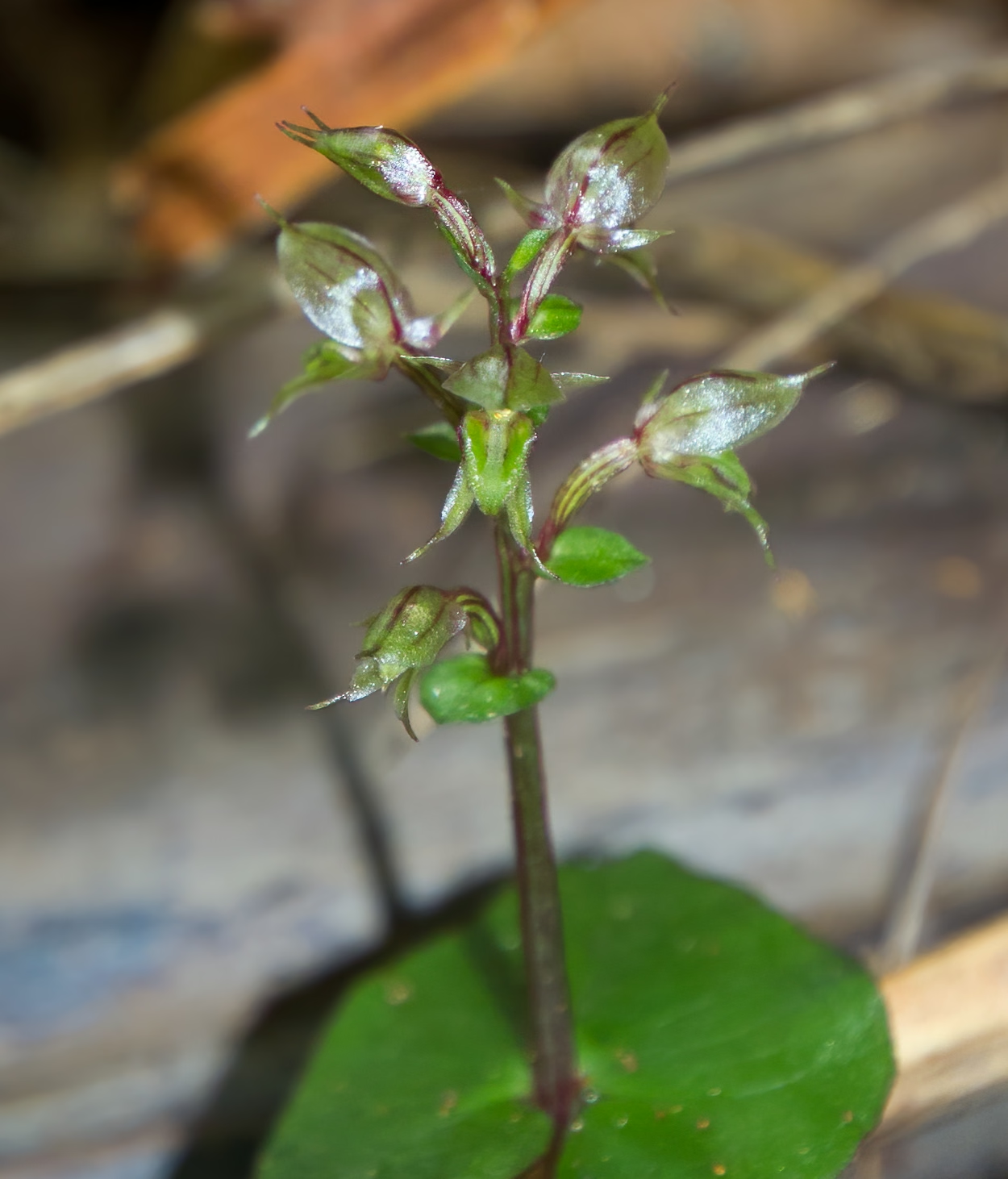
Heart-Leaved Orchid
Acianthus sinclairii
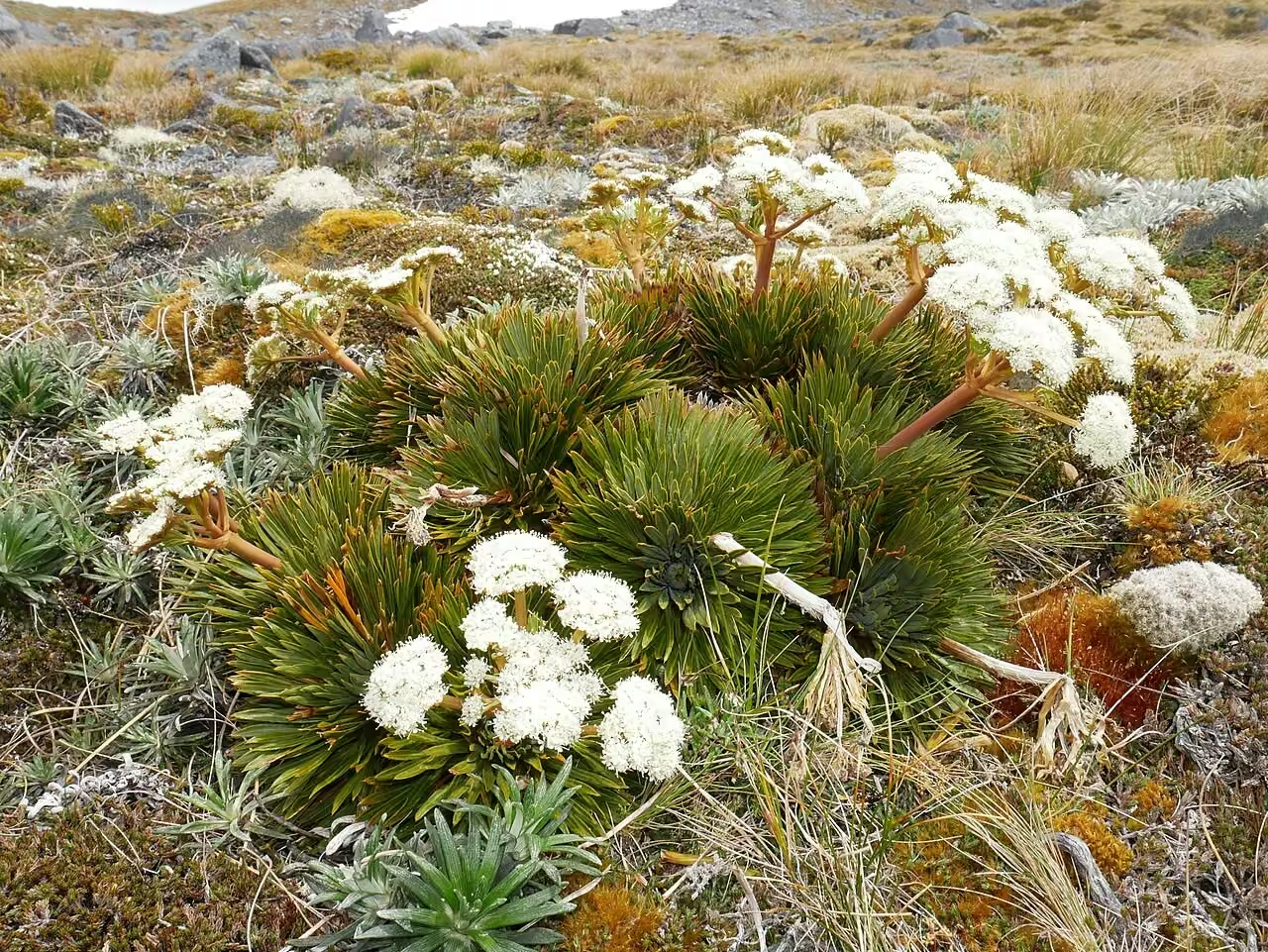
Aciphylla crosby-smithii
Aciphylla crosby-smithii
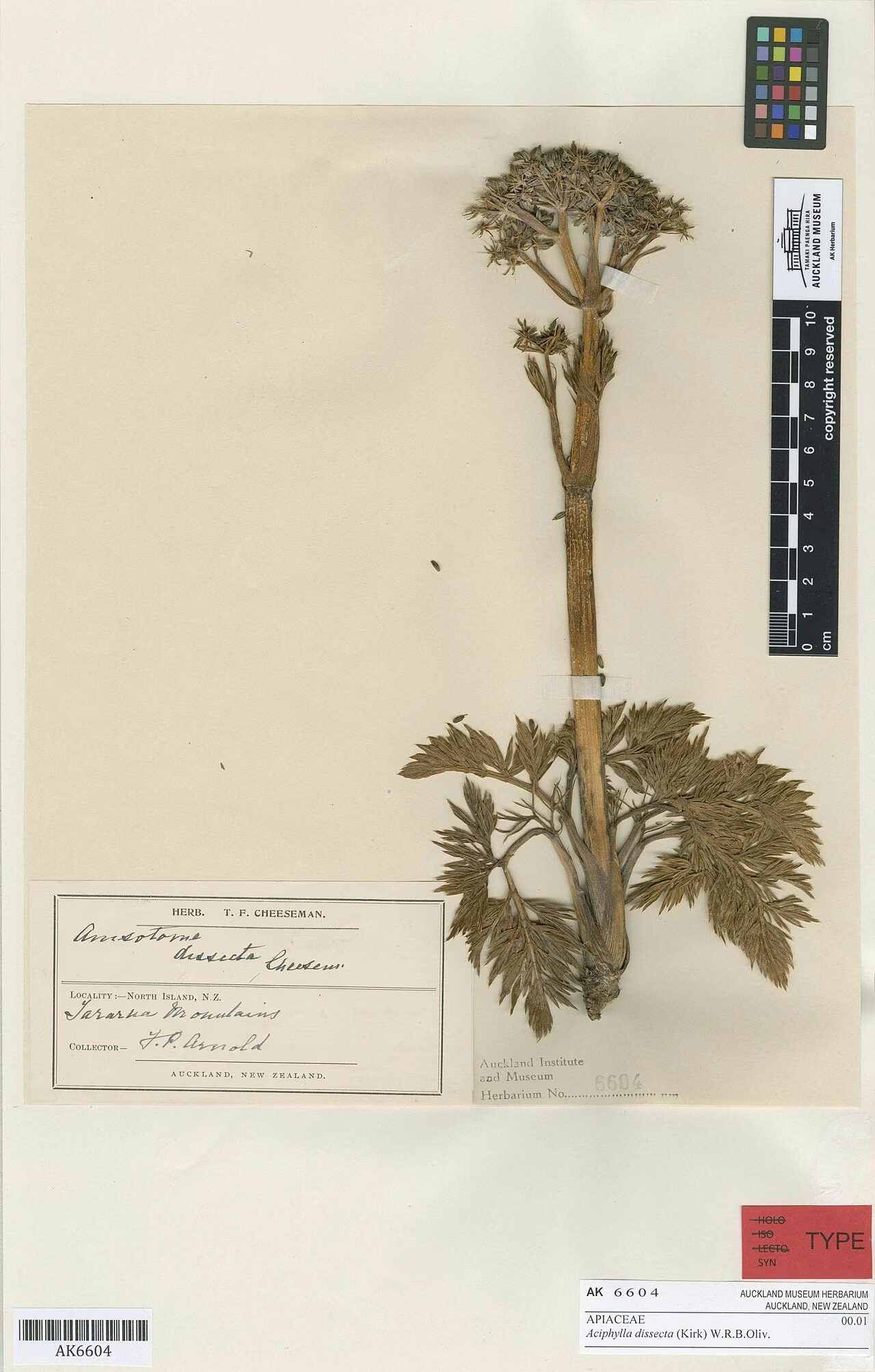
Aciphylla dissecta
Aciphylla dissecta
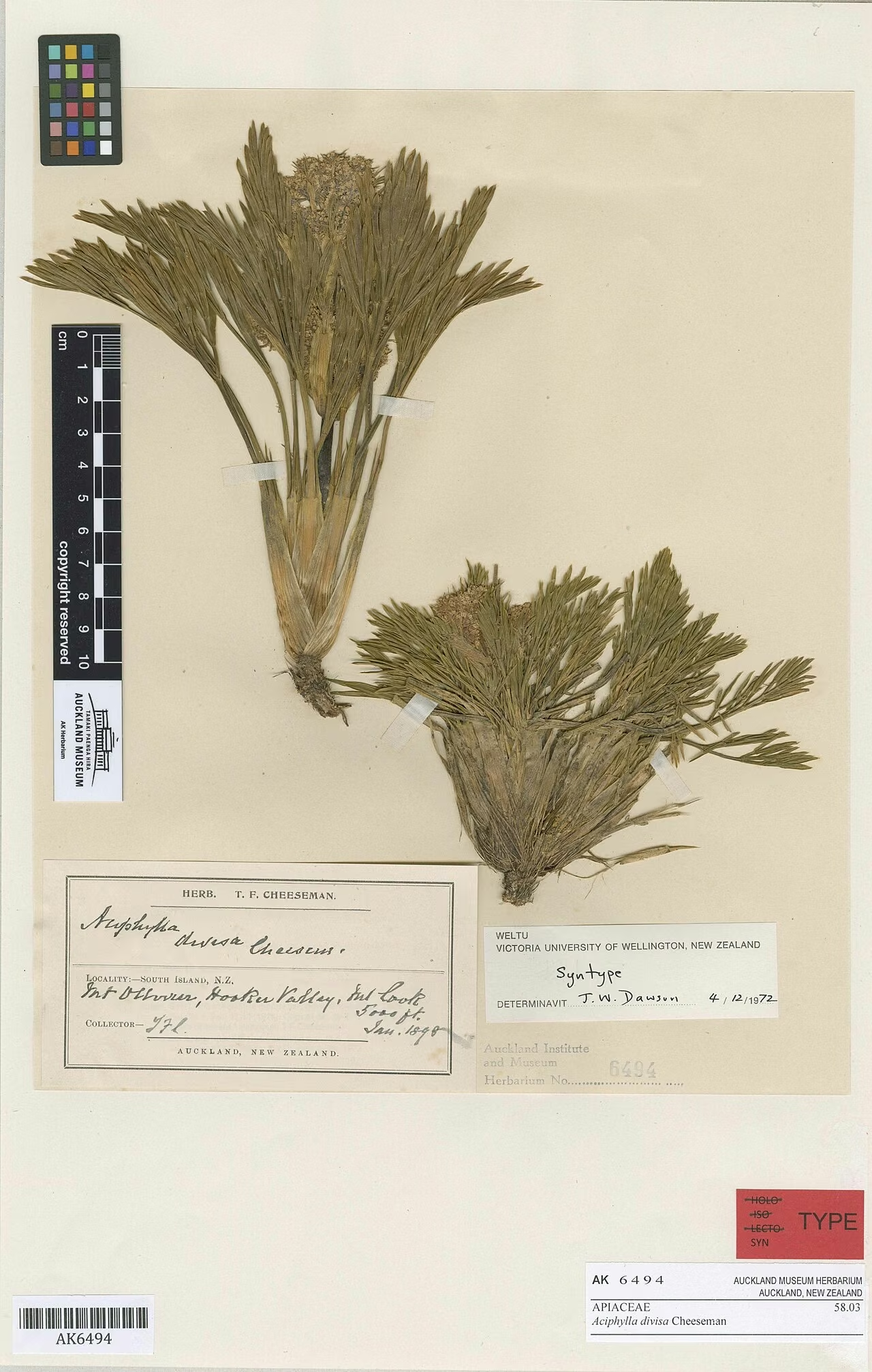
Aciphylla divisa
Aciphylla divisa
Yellow Mistletoe
Yellow Mistletoe
Plant Conservation
Achyranthes velutina is ranked At Risk - Naturally Uncommon (2023) with qualifiers DPS (data poor: size), Inc (increasing) and SO (secure overseas). It was listed as Non-resident Native - Coloniser in 2009 and At Risk - Naturally Uncommon in 2012 and 2017.
NZPCN considers it under no obvious threat. Its New Zealand population is confined to one island, so it is vulnerable to chance events, but it is secure elsewhere in the Pacific. Continued protection of Macauley Island and its seabird colonies is what keeps its habitat intact.
Frequently Asked Questions
Where does Achyranthes velutina grow in New Zealand?
Naturally it is known only from Macauley Island in the southern Kermadec Islands, where it grows among seabird burrows on cliff margins.
How are devil's horsewhip seeds spread?
NZPCN records that the spiny utricles (fruits) attach to fur, feathers and clothing, which is how the seeds travel long distances.
Is Achyranthes velutina the same as Achyranthes aspera?
No. Macauley Island plants were first called A. aspera, but that species is annual, more slender and smaller, with less hairy, less pigmented leaves, and is not native to New Zealand.
Should I plant devil's horsewhip in my garden?
With caution: NZPCN notes it is easy to grow but potentially an aggressive weed in warm climates, and its burs stick to clothing and pets.
Sources and Further Reading
The botanical, growing, and conservation details for Devil's Horsewhip (Achyranthes velutina) on this page draw on the New Zealand plant references below. Consult them for full technical records and the latest distribution data.