Azorella
Azorella allanii
Last updated:
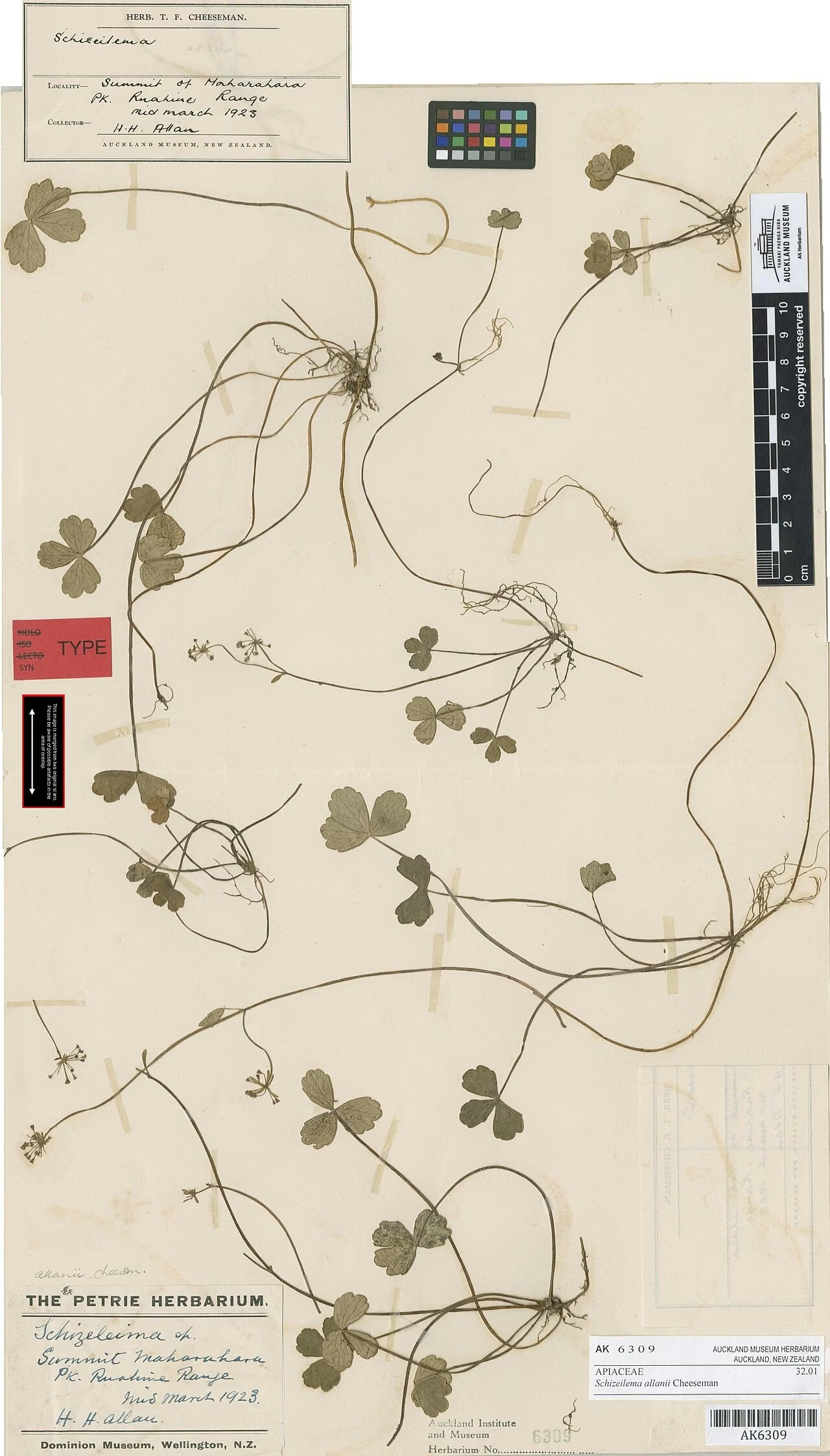
Schizeilema allanii, now known as Azorella allanii, is a rare, hairless creeping herb in the carrot family. Its branching stems root at the nodes to form open patches up to about 30 cm across, with tufts of pale green, somewhat leathery, deeply three-lobed leaves on long, slender stalks. It is endemic to the eastern ranges of the North Island, recorded with certainty only from the Raukumara and Ruahine Ranges, where it grows in montane to subalpine shrubland and open ground. Described in 1923 from the Ruahine Range, it has always been considered uncommon and is ranked At Risk - Naturally Uncommon. Very little is known about its status in the wild. Explore more native ground covers in our native plant guide.
Plant Description
Azorella allanii is a hairless herb with creeping, branching stems that root freely at the nodes, forming diffuse, open patches up to about 30 cm in diameter. The leaves are tufted at the nodes on slender stalks 5 to 10 cm long, occasionally up to 15 cm. The leaf blades are 2 to 4 cm across, pale green, somewhat leathery and deeply divided into three lobes, with margins that are irregularly lobed or crenulate and only very slightly thickened or rolled under.
The flowers are borne in small umbels of eight to twelve on very slender stalks, with individual flower stalks of unequal length, 5 to 10 mm long. The fruit is about 2.5 mm long, four-angled and deeply furrowed along the line where the two halves join. Flower colour and timing are not documented by NZPCN.
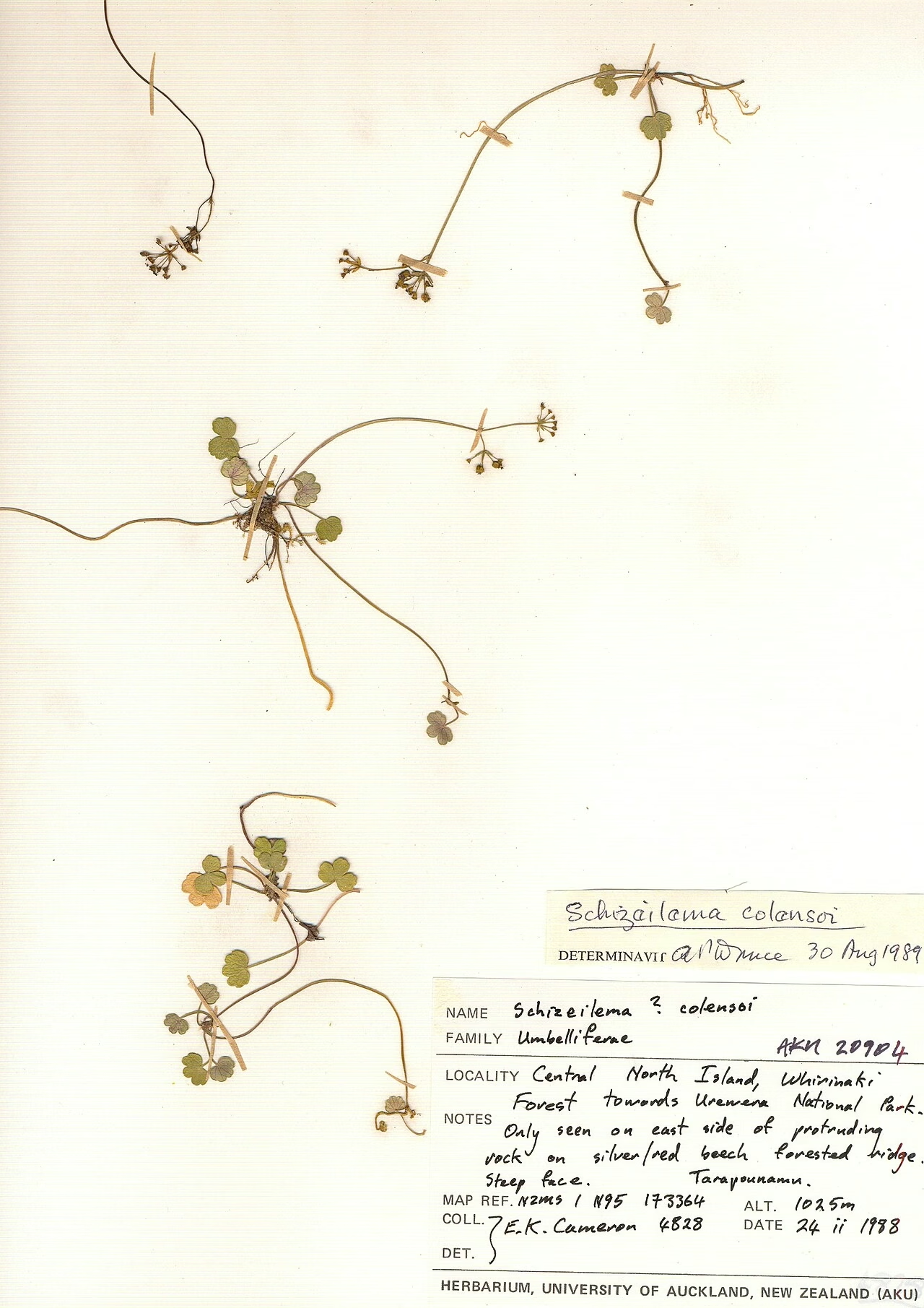
It is closest to Schizeilema colensoi. NZPCN separates the two by the leaf margins of Azorella allanii being scarcely recurved or thickened and by its flower stalks being more than three times the length of the fruit.
Quick Facts
| Scientific Name | Azorella allanii |
|---|---|
| Height | Low creeping herb; leaf stalks 5-15 cm long |
| Spread | Open patches up to about 0.3 m across |
| Water Needs | No information available; likely moist montane soils |
| Light | Open ground and shrubland; sun to partial shade |
| Frost Tolerance | High; a montane to subalpine plant |
| Salt Tolerance | No information available; not a coastal plant |
| Growth Rate | No information available |
| Lifespan | Perennial |
Climate Best Suited to
A plant of cool, moist montane to subalpine climates in the eastern North Island ranges, with regular winter frost and snow.
Regional Suitability
| City | Climate Suitability |
|---|---|
| Auckland | Low |
| Wellington | Low |
| Christchurch | Low |
| Dunedin | Low |
Plant Habitat
Azorella allanii is endemic to New Zealand and known only from the eastern ranges of the North Island. It has been recorded with certainty from the Raukumara Range and the Ruahine Range, and NZPCN suggests it is probably present elsewhere. The type specimen was collected by H.H. Allan on Mount Maharahara in the southern Ruahine Range on 17 February 1923.
It grows in montane to subalpine shrubland and open ground. More detailed habitat information, such as preferred soils, altitudinal limits or associated species, has not been published in the sources consulted.
Growing Requirements
Soil Requirements
Its soil preferences have not been documented. As a creeping herb that roots at the nodes in montane shrubland, it presumably needs a soil that stays moist.
- Specific soil requirements not recorded
- Grows in montane to subalpine shrubland and open ground
Light Requirements
It has been recorded from both shrubland and open ground, suggesting tolerance of sun to partial shade.
- Open subalpine ground
- Partial shade among shrubs
Water Requirements
No information on water requirements is available. Its montane habitat in the Ruahine and Raukumara Ranges receives regular rainfall and cloud.
- Water needs not documented
- Unlikely to tolerate prolonged drought
Planting and Establishing
Azorella allanii is not commercially available and no information on its cultivation has been published. It should not be collected from the wild.
If it ever becomes available through a conservation programme, it would most likely need a cool, moist, sheltered position resembling montane shrubland, ideally in a specialist alpine collection in a cool climate.
Ecological Role
The pollinators, seed dispersal and ecological relationships of Azorella allanii have not been studied. Small native umbellifers generally have open flowers accessible to flies and other small insects, but this has not been confirmed for this species.
Its creeping stems rooting at the nodes suggest it spreads vegetatively to form its open patches within subalpine shrubland and open ground.
Uses & Significance
Garden Uses
This is a rare and poorly known plant that is not grown in gardens.
- No established garden use
- Of interest to botanists and conservation programmes only
Ecological Value
It is part of the endemic subalpine flora of the eastern North Island ranges, which contains several rarely recorded plants.
- Endemic to a small part of New Zealand
- Adds to the diversity of montane shrubland and herbfield
- Survey records would improve understanding of its status
Landscaping Uses
There is no landscaping use for this species. It is too rare and poorly understood to be planted outside a conservation setting.
Gardeners interested in small native creeping umbellifers are better served by more widely available relatives, sourced from reputable native nurseries.
Seasonal Care Calendar
Spring
Seasonal growth patterns are unrecorded, but new leaves likely appear as snow clears from the ranges.
- Search for plants on survey trips
- Record and photograph any finds
Summer
The type specimen was collected in mid February, suggesting plants are identifiable in late summer, though flowering and fruiting times are not documented.
- Look for small umbels on long slender stalks
- Note leaf margins to separate it from relatives
Autumn
No information is available on autumn growth or fruiting.
- Report observations to iNaturalist NZ
- Do not collect plants or seed
Winter
Plants are likely under snow or frost in their subalpine habitat.
- No action needed
When to Prune and How Much
No pruning applies to this small creeping herb, and it is not in cultivation.
In the wild, plants should be left completely undisturbed.
How to Grow Azorella
NZPCN has no information on propagating Azorella allanii and lists it as not commercially available. No published propagation records were found anywhere in the sources consulted. The notes below describe how related creeping native umbellifers are generally propagated and are offered only as a starting point for a conservation programme working with permitted material. Because so little is known about the wild population, no plant material should be collected without approval from the Department of Conservation and the relevant landowners, and any propagation should be undertaken by experienced growers who can record results.
From Seed
Each umbel produces small, four-angled fruits about 2.5 mm long. When fruiting occurs is not documented, so seed would need to be collected when fruits are seen to be ripe and dry.
- Collect only with permission and in very small amounts
- Sow fresh on a moist, gritty seed mix
- Keep cool and in good light outdoors
- Record germination time and success for future reference
By Division
Because the stems creep and root freely at the nodes, rooted pieces of stem should be able to grow on as new plants, as with other creeping umbellifers.
- Use only permitted or already cultivated material
- Detach a rooted section of stem with a tuft of leaves
- Pot into a moist, free-draining mix
- Keep cool, shaded and damp until new leaves form
- Keep a record of the source population for each cutting so plants can later be returned to the right site
Pests & Diseases
No specific pests or diseases are recorded. In the eastern North Island ranges, browsing by deer, goats and other introduced herbivores is a general threat to palatable subalpine herbs, though its effect on this species is not known.
Weed invasion of open subalpine ground could also affect small creeping plants like this one.
Cultural Significance
No Māori name or traditional use is recorded for Azorella allanii in the sources consulted.
Thomas Cheeseman named it Azorella allanii in the second edition of his Manual of the New Zealand Flora (1925) to honour Harry Howard Barton Allan, who collected the type on Mount Maharahara in 1923. Allan later became the first director of the DSIR Botany Division and the author of Flora of New Zealand Volume I.
Bonus Tip
If you are tramping in the Ruahine or Raukumara Ranges and see a small creeping umbellifer with pale green, deeply three-lobed leaves on long slender stalks, photograph it with a scale and upload it to iNaturalist NZ. Because so little is known about this species, every confirmed record helps clarify its range and status.
Related Plants
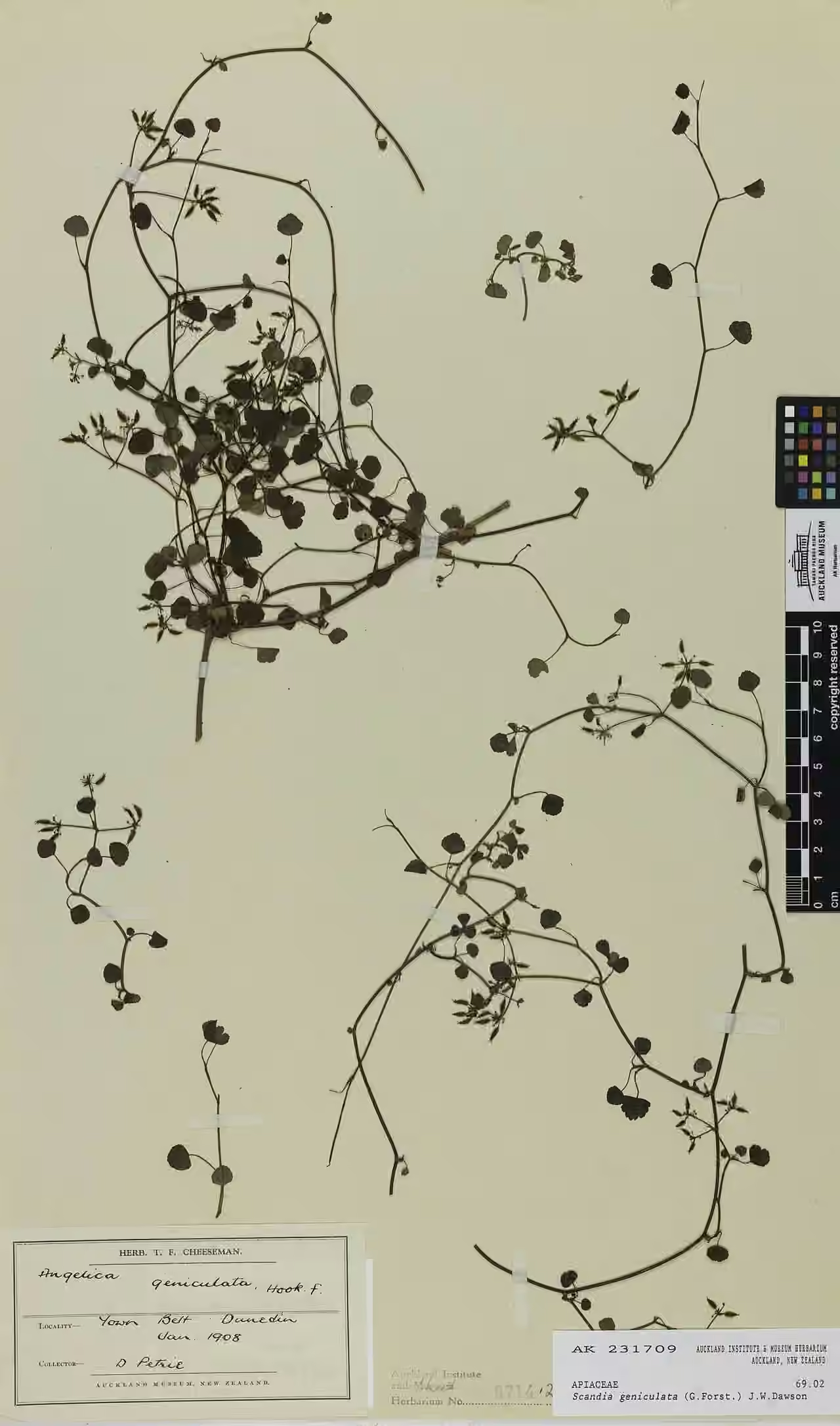
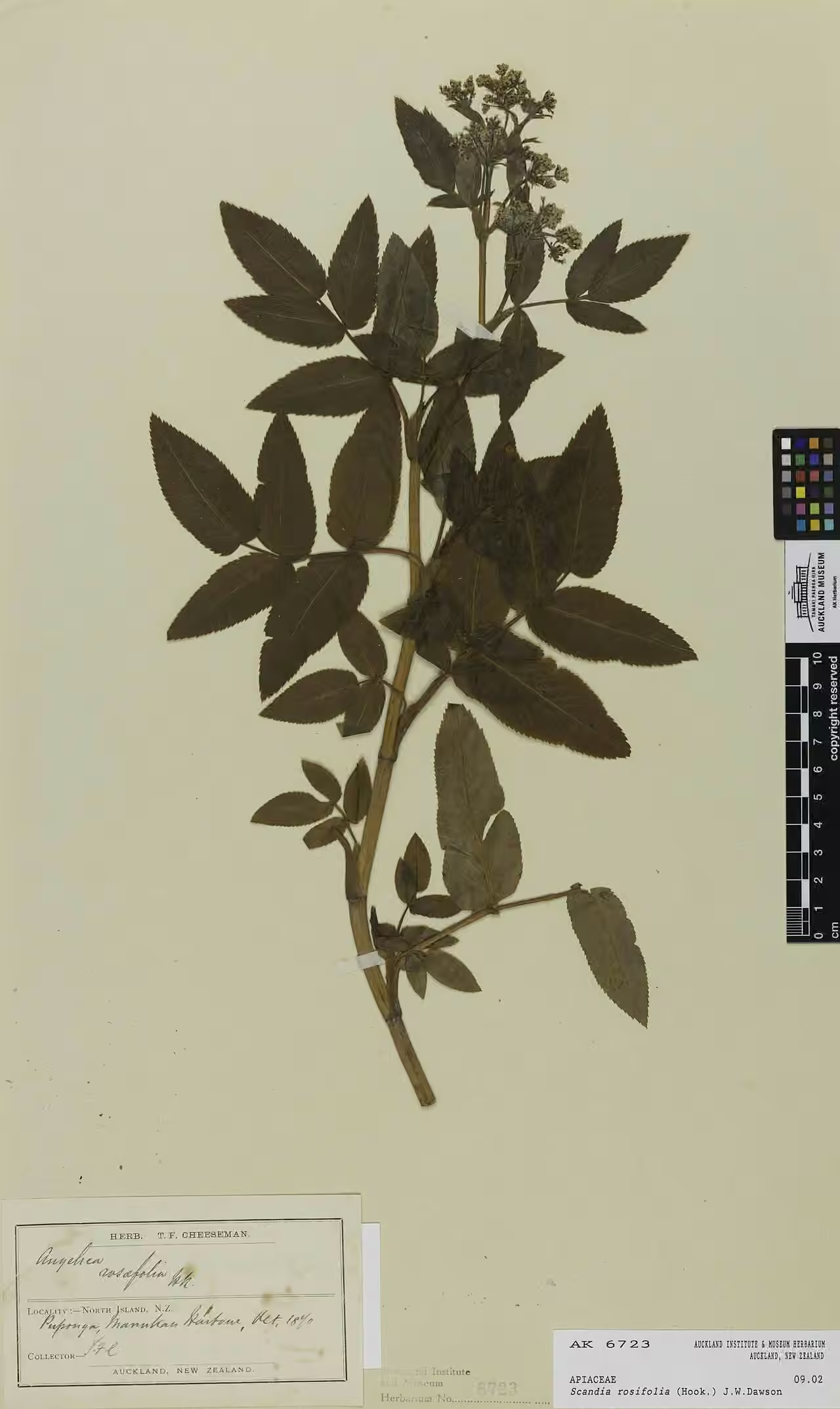
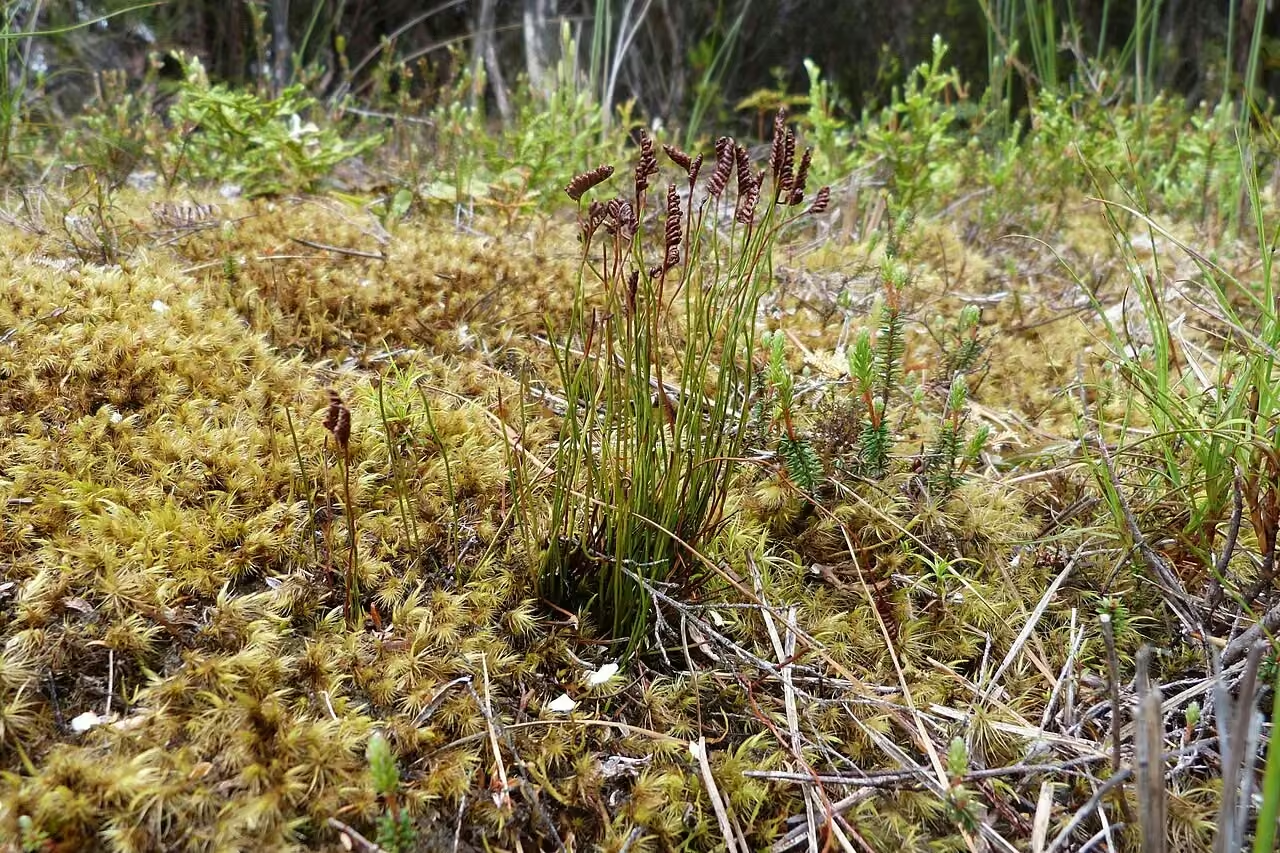
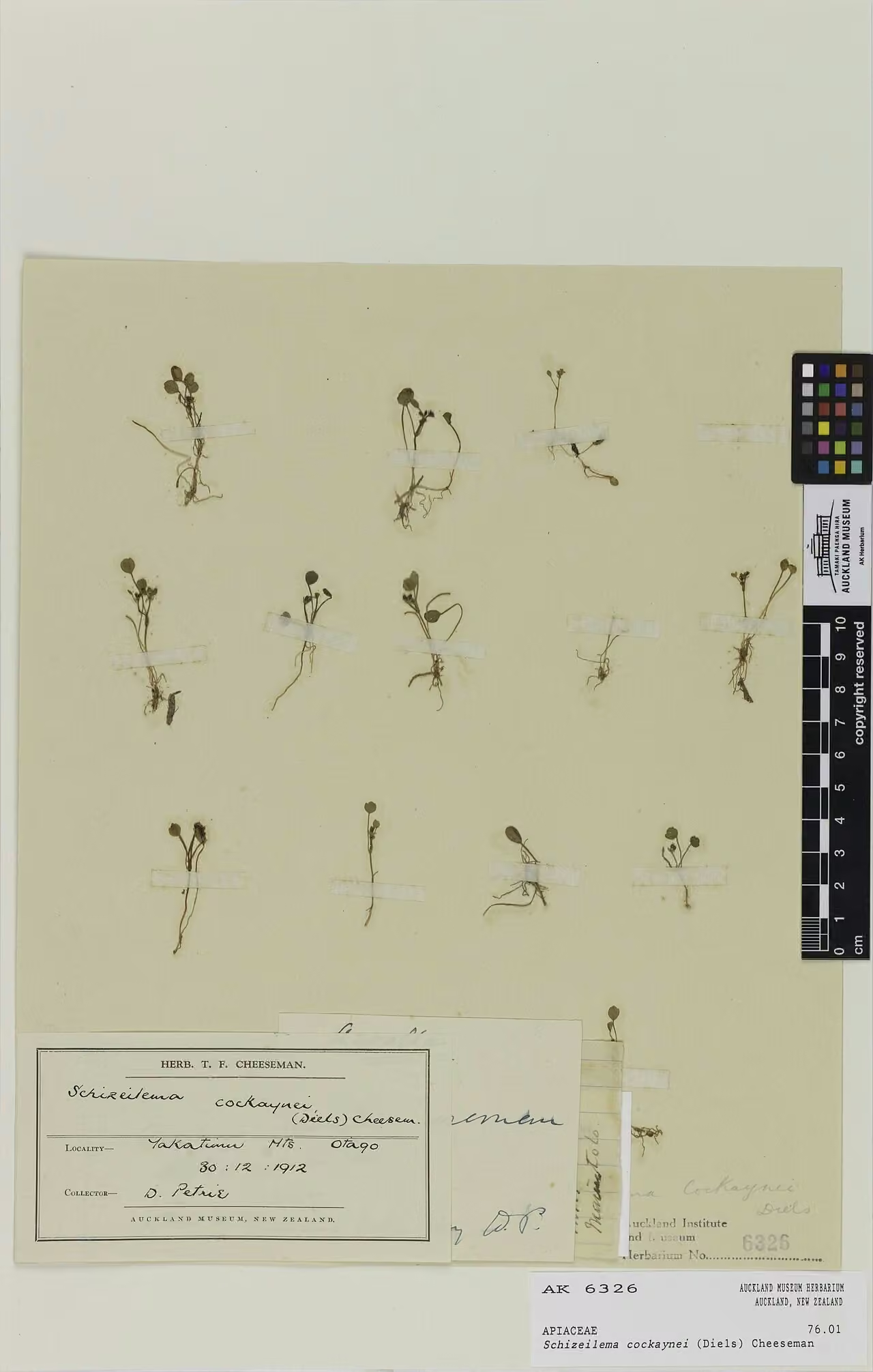
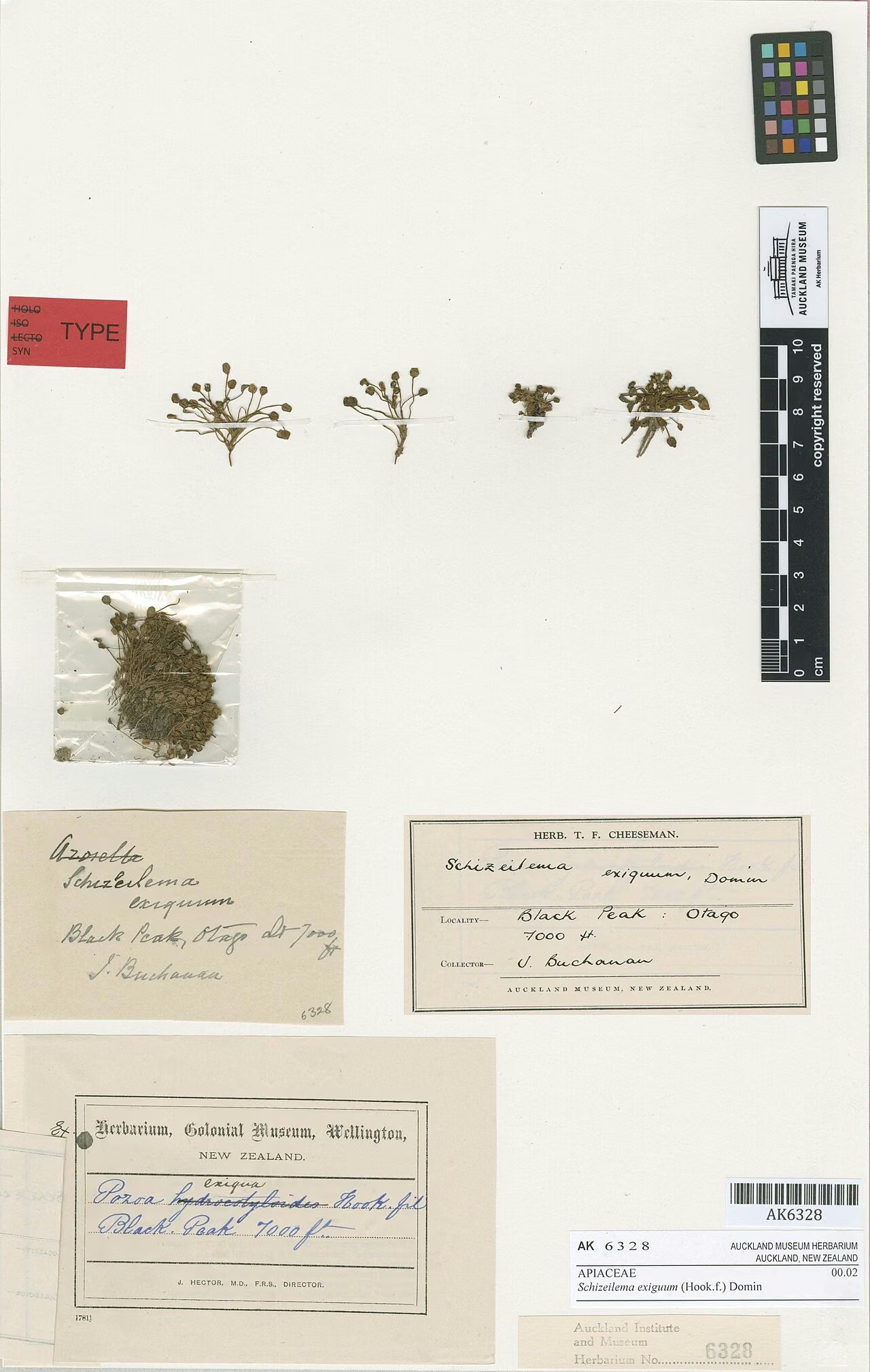
Explore other native plants that share similar characteristics or habitats with Azorella (Azorella allanii), offering further insights into New Zealand's diverse flora. These related species provide context and opportunities for complementary planting in your garden.
Plant Conservation
Azorella allanii is ranked At Risk - Naturally Uncommon (2023), with qualifiers indicating it is data poor in both population size and trend and is range restricted. NZPCN notes that it has always been considered uncommon since it was described in 1923, and that very little is known about its exact status in the wild.
The most useful conservation step is targeted survey of the eastern North Island ranges to locate and count populations. Ongoing control of browsing animals and weeds in Ruahine and Raukumara subalpine shrubland also protects its habitat.
Frequently Asked Questions
Is Schizeilema allanii the same as Azorella allanii?
Yes. Following a 2016 phylogenetic study, Plunkett and Nicolas transferred the New Zealand Schizeilema species to Azorella, so Schizeilema allanii is now called Azorella allanii.
Where is Azorella allanii found?
It is endemic to the eastern ranges of the North Island and has been recorded with certainty from the Raukumara and Ruahine Ranges, in montane to subalpine shrubland and open ground.
How do you tell Azorella allanii from Schizeilema colensoi?
NZPCN says its leaf margins are scarcely recurved or thickened, and its flower stalks are more than three times as long as the fruit, unlike the closely related Schizeilema colensoi.
Who is Azorella allanii named after?
It honours Dr Harry Howard Barton Allan (1882 to 1957), a former school teacher who became the first director of the DSIR Botany Division and author of Flora of New Zealand Volume I.
Sources and Further Reading
The botanical, growing, and conservation details for Azorella (Azorella allanii) on this page draw on the New Zealand plant references below. Consult them for full technical records and the latest distribution data.