New Zealand Aniseed
Scandia geniculata
Last updated:
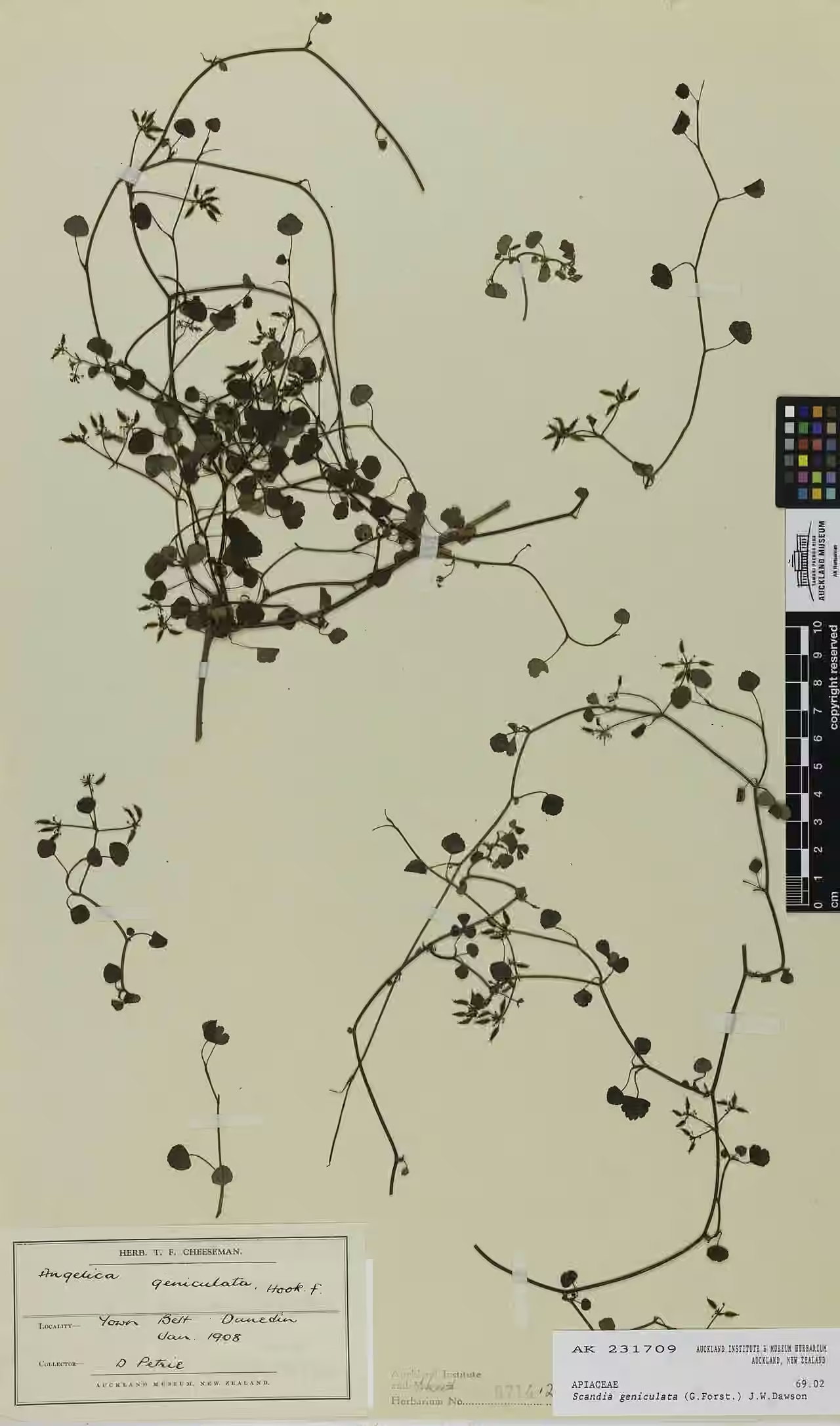
New Zealand aniseed (Scandia geniculata) is an aromatic, sprawling woody perennial in the carrot family that scrambles through shrubs and over rocks, forming tangled masses up to 3 by 3 m. It has wiry, grooved stems, small rounded leaflets and clusters of white, lacy flower heads. It is endemic, growing in the southern North Island from Kapiti Island and Paekākāriki to about Tora, and in the South Island from Marlborough to southern Otago. Its climbing habit is unique among New Zealand's native umbellifers. Now ranked At Risk - Declining, it is easy to grow from fresh seed and has even featured in the plantings of designer Piet Oudolf. Explore more native climbers in our native plant guide.
Plant Description
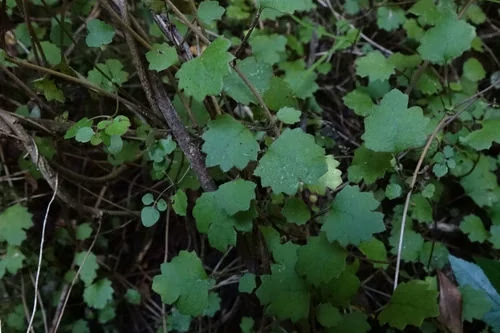
Scandia geniculata is a sprawling, woody to semi-woody aromatic perennial. It has relatively few branches, which are wiry, pliant and grooved, and these interweave with surrounding shrubs or drape over rocks to form tangled masses up to 3 by 3 m. Its stems are weaker than those of its relative Scandia rosifolia, so it depends more on climbing through other plants for support.
The leaves are alternate and either simple or divided into one to three leaflets. The leaflets are orbicular, rhomboid or kidney shaped, about 12 mm across, with crenulate to almost smooth margins, and can be dark green, yellow-green or glaucous. White flowers with petals inflexed at their tips are carried in compound umbels about 10 mm across, both in the leaf axils and at the branch tips. Populations contain both female and hermaphrodite plants. The fruit is 4.5 to 7.5 mm long, oblong-ovate and pale orange-yellow to orange.
Its climbing habit makes it unmistakable among New Zealand's native umbellifers. The species name geniculata comes from the Latin geniculum, a knee, referring to the stems bent at an angle.
Quick Facts
| Scientific Name | Scandia geniculata |
|---|---|
| Height | Scrambles up to about 3 m through shrubs |
| Spread | Tangled masses up to 3 m across |
| Water Needs | Low; dislikes excessive moisture |
| Light | Full sun |
| Frost Tolerance | High; grows from coast to montane zone |
| Salt Tolerance | Moderate; grows on coastal cliffs and rock |
| Growth Rate | Moderate to fast |
| Lifespan | Perennial |
Climate Best Suited to
Suited to the drier, sunnier eastern climates of the southern North Island and eastern South Island, with cold winters and dry summers; it dislikes humidity.
Regional Suitability
| City | Climate Suitability |
|---|---|
| Auckland | Low |
| Wellington | High |
| Christchurch | High |
| Dunedin | High |
Plant Habitat
Scandia geniculata is endemic to New Zealand. In the North Island it grows from Kapiti Island and Paekākāriki south and east to about Tora on the Wairarapa coast. In the South Island it ranges from Marlborough to southern Otago, mostly in the east.
It occurs from the coast to the montane zone in rock-strewn ground, at the base of talus slopes, on cliff faces and rock ledges, and along river gorges. It also grows within tall and short tussock grassland, and scrambles up through or among shrubs in grey scrub communities of small-leaved divaricating shrubs.
Growing Requirements
Soil Requirements
It favours stony, free-draining ground such as talus, rock ledges and gorge sides.
- Gravelly, rocky or stony soils
- Free drainage is essential
- Tolerates low fertility
Light Requirements
A plant of open rocky places and scrub, it grows best in full sun.
- Full sun for compact growth and good flowering
- Will scramble towards light through surrounding shrubs
Water Requirements
NZPCN notes that it dislikes humidity and excessive moisture.
- Water only until established
- Avoid wet, poorly drained or humid sites
Planting and Establishing
Plant in spring or autumn in a sunny, free-draining spot where it has something to scramble through, such as a small-leaved shrub, a rock wall or a fence. It can also be left to sprawl over a bank as a loose ground cover.
NZPCN recommends it as an attractive and unusual scrambling plant for a hanging basket or as ground cover on a free-draining, sunny site. Avoid sheltered, humid corners with poor air movement.
Ecological Role
Its open umbels of small white flowers offer easily accessible nectar and pollen, typical of the carrot family, and are likely visited by flies, native bees and other small insects, though specific pollinators are not documented. Flowering runs from October to July, with fruit from December to June.
In grey scrub and rocky habitats it weaves through divaricating shrubs, adding structural diversity. As a palatable aromatic plant, it is vulnerable to browsing, and its survival in rocky places is consistent with the pattern seen in its relative Scandia rosifolia, which persists mostly where browsing animals cannot reach.
Uses & Significance
Garden Uses
A distinctive scrambling native for dry, sunny gardens, and one of few native umbellifers suited to hanging baskets.
- Hanging baskets
- Scrambling through small-leaved shrubs
- Rock gardens and dry stone walls
- Naturalistic and meadow-style plantings
Ecological Value
It is a characteristic component of eastern rocky and grey scrub ecosystems, many of which have been reduced by fire and farming.
- Long flowering season provides food for small insects
- Adds structure to grey scrub
- Endemic species of declining habitats
Landscaping Uses
Its airy sprays of white flower heads, rather like a delicate Queen Anne's lace, drift through shrubs and over rocks, softening hard edges. Wikipedia notes that both Scandia species have been used by the Dutch garden designer Piet Oudolf.
Pair it with divaricating shrubs such as Coprosma or Corokia, which it can climb through, or let it tumble from a raised bed or retaining wall.
Seasonal Care Calendar
Spring
New wiry shoots extend through supporting shrubs, and flowering begins from October.
- Plant out young plants
- Guide new stems into supporting shrubs
Summer
Plants are in full flower, and the first orange-yellow fruits ripen from December.
- Collect ripe fruit for fresh seed
- Avoid overwatering
Autumn
Flowering and fruiting continue, with fruit ripening through to June.
- Sow seed fresh
- Lightly tidy straggly stems
Winter
Late flowers may persist into July before growth slows in cold weather.
- Little care needed
- Ensure drainage remains good during wet spells
When to Prune and How Much
Little pruning is needed. Trim back over-long or tangled stems after the main flowering to keep it within bounds, and remove any dead woody stems.
In hanging baskets, shorten trailing stems to keep the plant bushy.
How to Grow New Zealand Aniseed
NZPCN says Scandia geniculata is easily grown from fresh seed, and that is the standard method. Fruiting runs from December to June, giving a long window for collection. As the species is now ranked At Risk - Declining and is not commercially available, collect seed only with permission and in modest amounts, or from plants already in cultivation, and use local seed for restoration within its natural range. Cuttings are also worth trying, as they are successful for its close relative Scandia rosifolia, though no specific guidance for this species was found.
From Seed
The fruits split into two mericarps, each containing one seed. Collect them when they turn pale orange-yellow to orange and come away easily.
Seedlings dislike humid, stagnant conditions, so grow them on in an open, airy position rather than a closed propagating case, and water only when the surface of the mix begins to dry.
- Collect ripe fruit between December and June
- Sow fresh, without storing, into a free-draining seed mix
- Cover lightly with fine grit
- Keep the tray in a bright, airy spot and avoid overwatering
- Pot up seedlings into a gritty mix once large enough to handle
From Cuttings
Semi-hardwood cuttings are a reasonable trial method, based on the success of this technique with Scandia rosifolia.
- Take 8 to 10 cm semi-hardwood cuttings in late summer
- Strip the lower leaves
- Insert into a free-draining mix of pumice or perlite
- Keep lightly moist with good ventilation to avoid rot
- Pot on once rooted
Pests & Diseases
The main threat in the wild is browsing by introduced animals; aromatic native umbellifers are readily eaten, and remaining plants often survive on cliffs and rock ledges out of reach.
In cultivation, the main problem is rot or fungal disease in humid or wet conditions, which NZPCN notes the species dislikes.
Cultural Significance
No Māori name or traditional use is recorded specifically for Scandia geniculata in the sources consulted. Its northern relative Scandia rosifolia (koheriki) has recorded Māori medicinal uses.
It was first described by Georg Forster as Peucedanum geniculatum, and later moved through Angelica and Anisotome before John Dawson placed it in Scandia. The genus name comes from the Latin scandere, to climb.
Bonus Tip
Try planting New Zealand aniseed at the foot of a small-leaved divaricating shrub such as a Corokia or Coprosma. Within a season or two its wiry stems weave through the shrub's branches and its white umbels appear to float among the foliage, recreating the way it grows in natural grey scrub.
Related Plants
Explore other native plants that share similar characteristics or habitats with New Zealand Aniseed (Scandia geniculata), offering further insights into New Zealand's diverse flora. These related species provide context and opportunities for complementary planting in your garden.
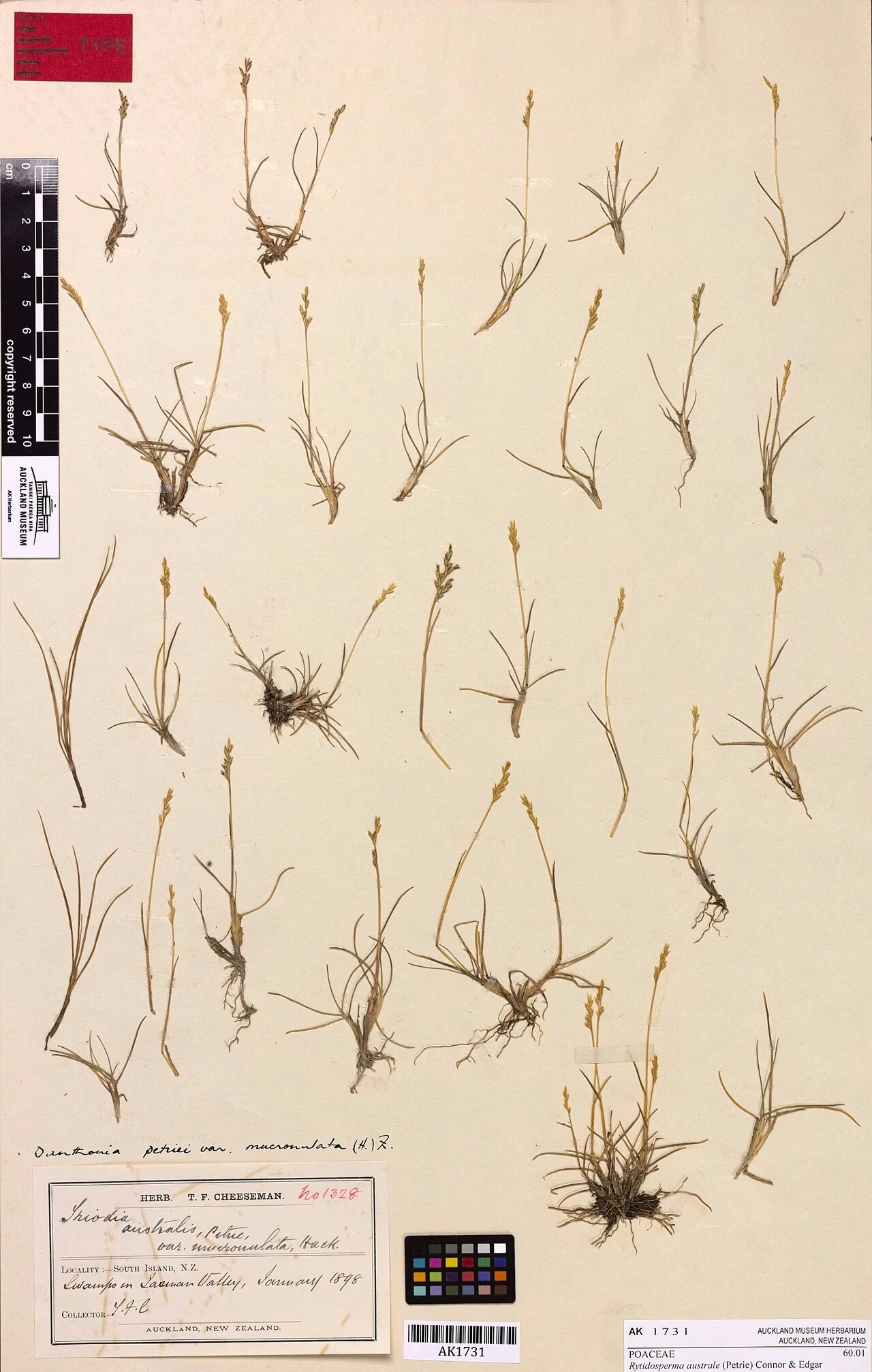
Rytidosperma australe
Rytidosperma australe
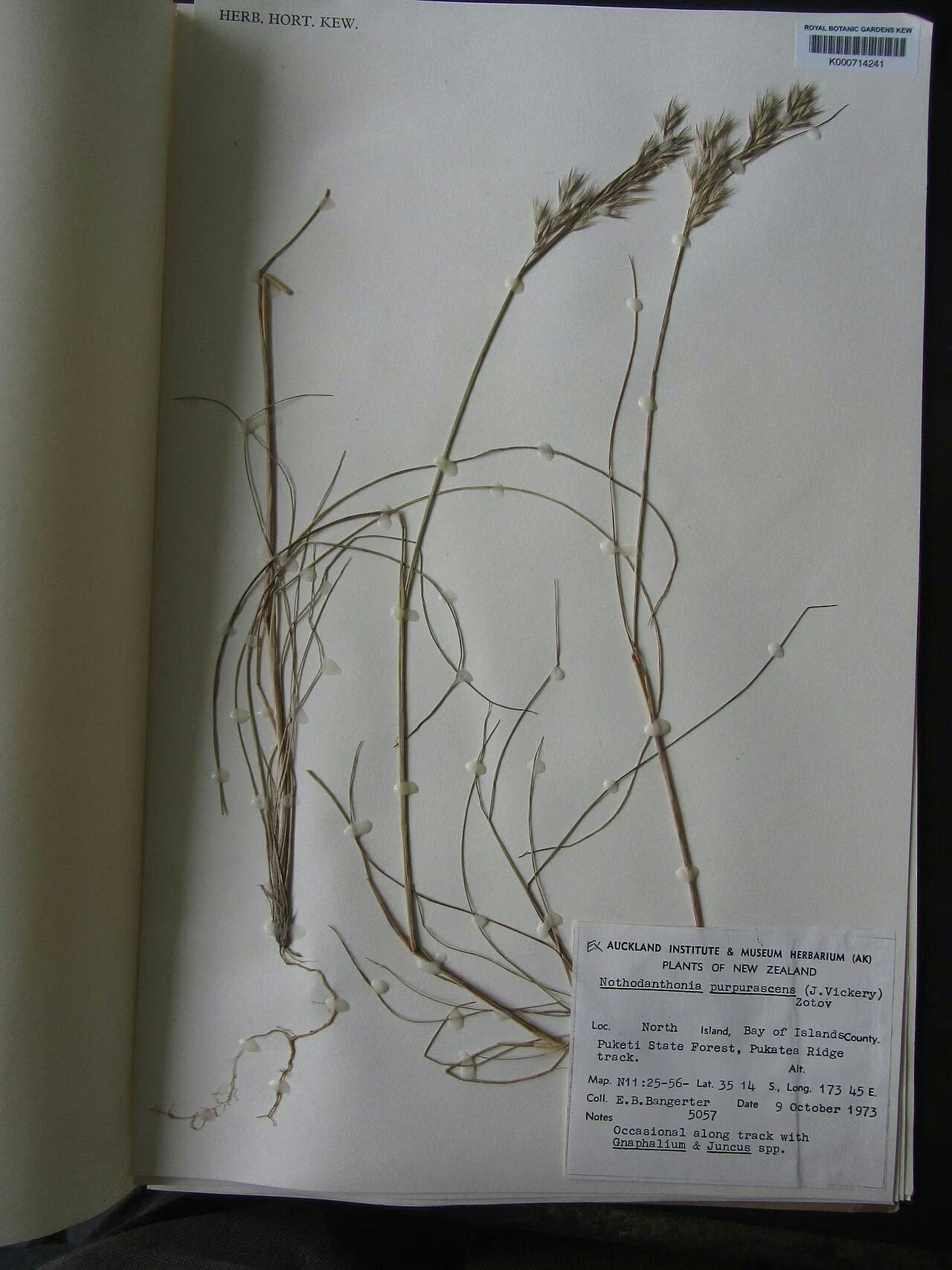
Gumland Bristle Grass
Rytidosperma biannulare
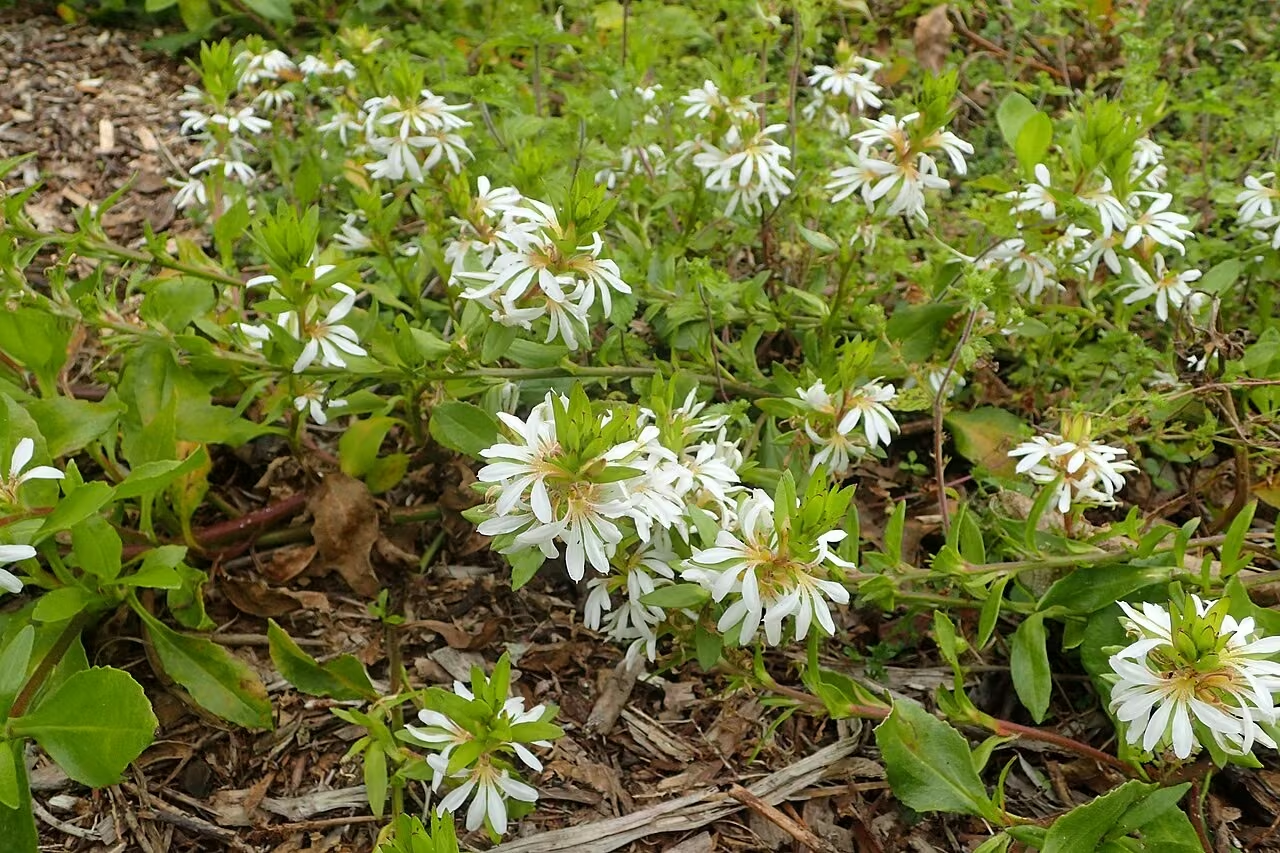
Scaevola gracilis
Scaevola gracilis
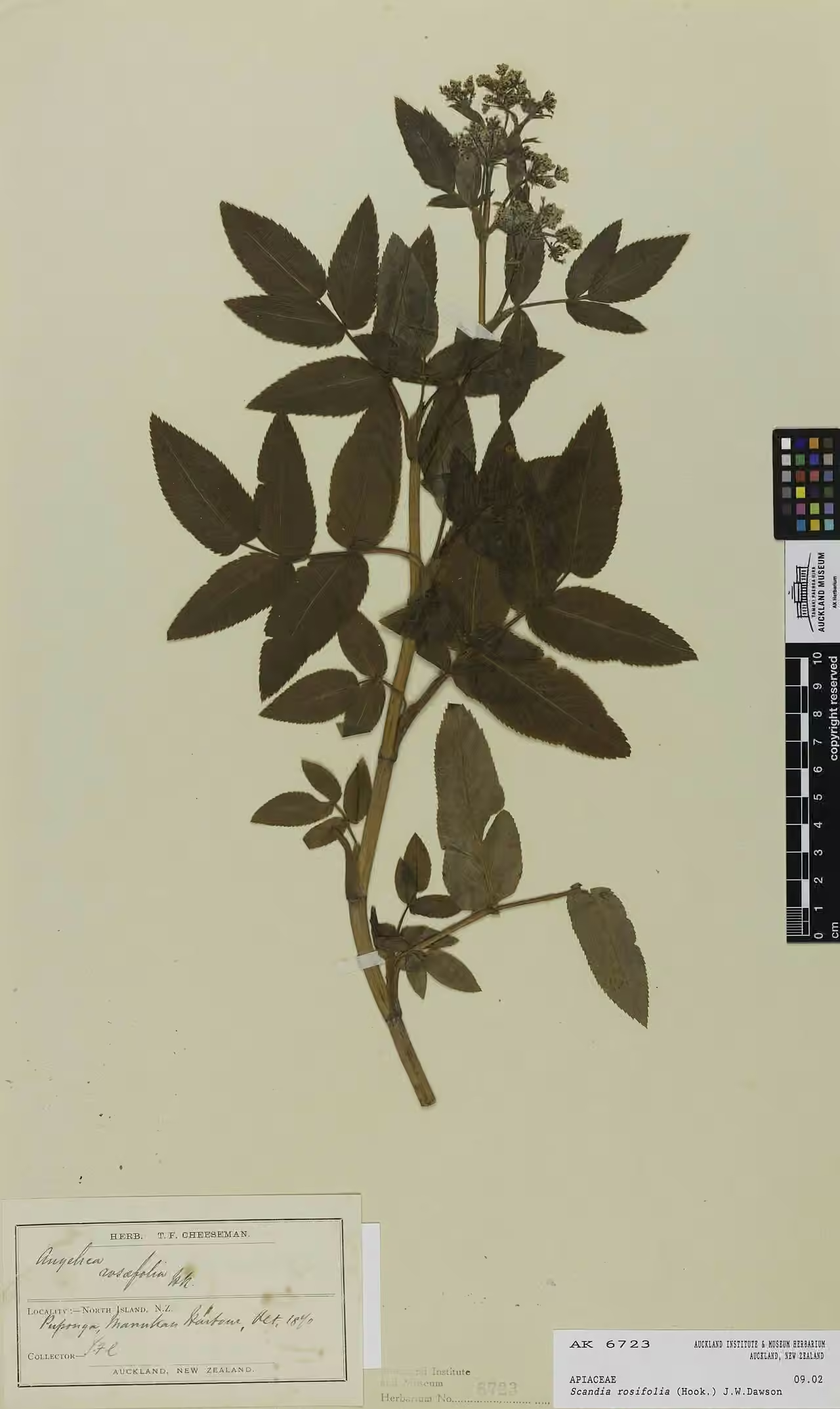
Koheriki
Scandia rosifolia
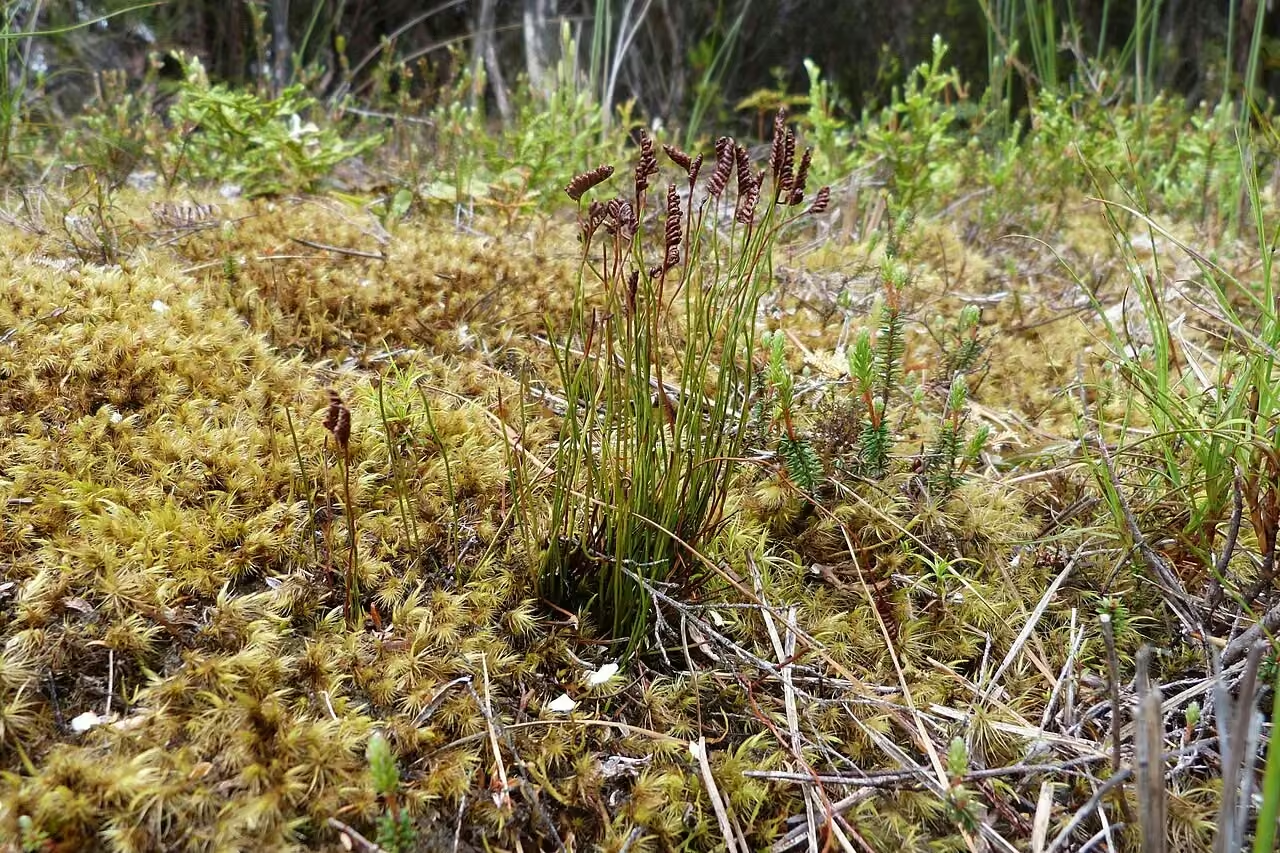
Southern Comb Fern
Schizaea australis
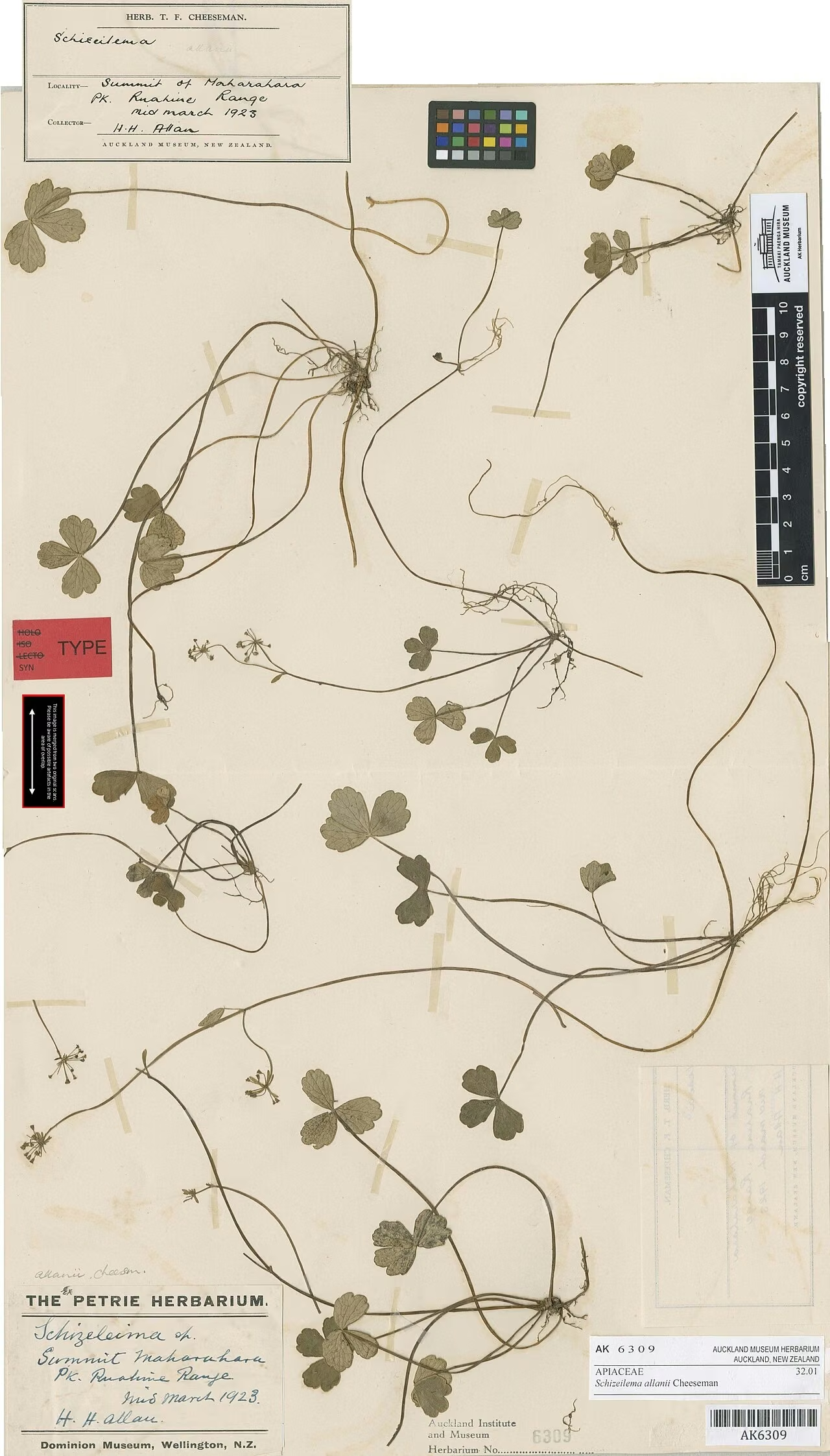
Azorella allanii
Azorella allanii
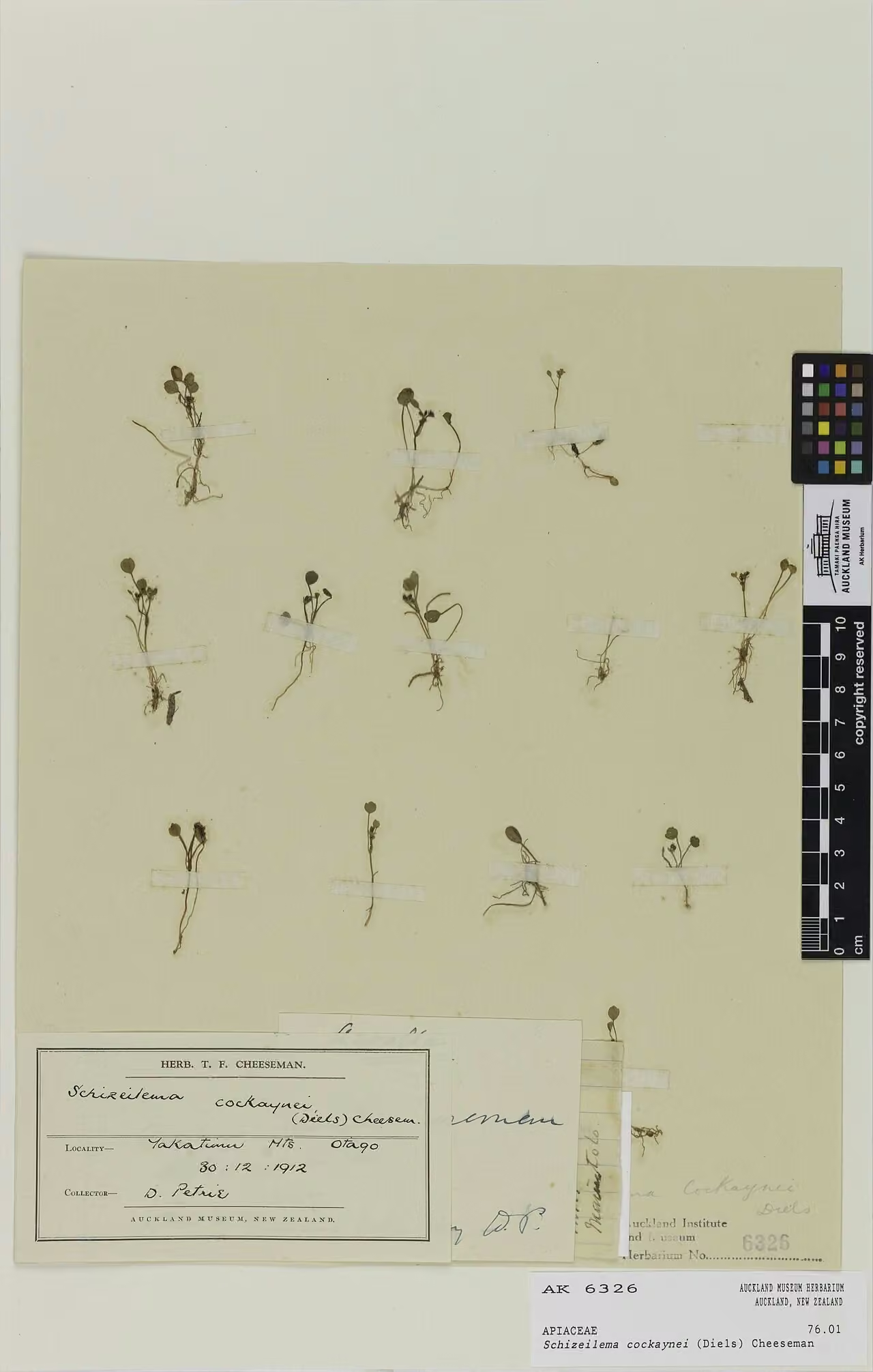
Azorella cockaynei
Azorella cockaynei
Climbing Groundsel
Climbing Groundsel
Plant Conservation
Scandia geniculata was ranked At Risk - Declining in 2023, with qualifiers DPS, DPT and PF, indicating that information on its population size and trend is poor and that its populations are fragmented. Both Otago and Wellington list it as Regionally Naturally Uncommon.
Its rocky, scrubby and grassland habitats in eastern New Zealand have been reduced by fire, farming and weed invasion, and browsing animals readily eat palatable aromatic herbs. Controlling browsing animals, protecting grey scrub remnants and growing the species in gardens and restoration plantings all help.
Frequently Asked Questions
Is Scandia geniculata a climber?
Yes. It scrambles through shrubs and over rocks using its wiry, pliant stems, forming tangled masses up to 3 m across. NZPCN describes this lianoid habit as unique among New Zealand native Apiaceae.
How is Scandia geniculata different from Scandia rosifolia?
Scandia geniculata has weaker, wiry stems and small rounded leaflets in groups of one to three, and grows in the southern North Island and eastern South Island. Scandia rosifolia is a more upright shrub with pinnate leaves and grows in the northern and central North Island.
Where does New Zealand aniseed grow?
From Kapiti Island and Paekākāriki south and east to about Tora in the North Island, and from Marlborough to southern Otago in the South Island, on rocky ground, cliffs, gorges and in grey scrub.
Is Scandia geniculata threatened?
It was ranked At Risk - Declining in 2023, having been Not Threatened in 2017. The Otago and Wellington regions both rank it as Regionally Naturally Uncommon.
Sources and Further Reading
The botanical, growing, and conservation details for New Zealand Aniseed (Scandia geniculata) on this page draw on the New Zealand plant references below. Consult them for full technical records and the latest distribution data.