Shore Dock
Rumex neglectus
Last updated:
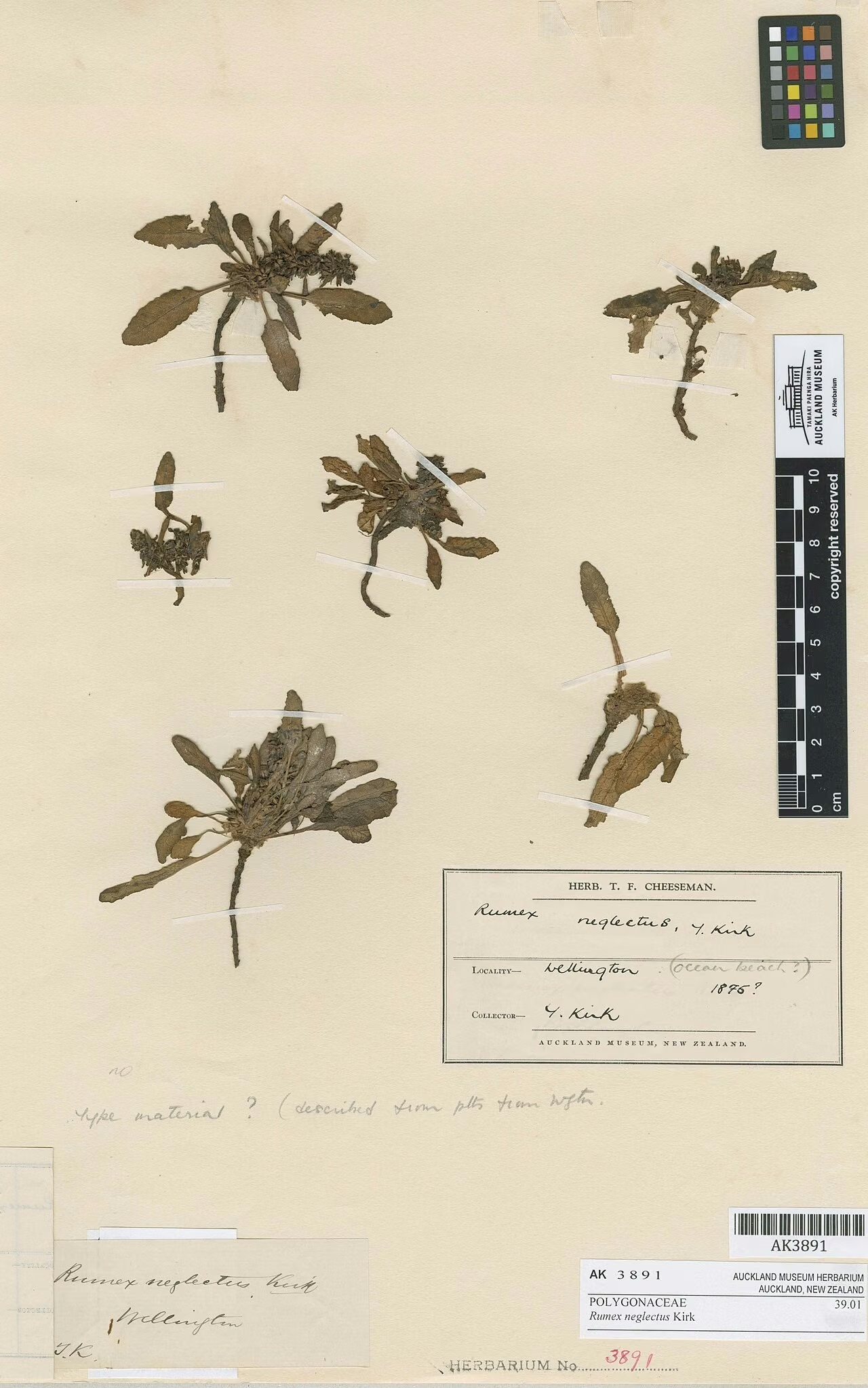
Shore dock (Rumex neglectus) is a small, fleshy-leaved dock endemic to New Zealand's southern coasts. It grows from a long, stout rootstock, forming tufts usually under 12 cm tall with broad, bright green or reddish leaves 3 to 5 cm long. Dense clusters of tiny flowers and fruits sit among the leaf tufts from November to April. It grows in damp coastal turf near streams and seepages and in damp sand, from the south Wellington coast through the South Island, Stewart Island and the Chatham Islands to the subantarctic islands, where it is most abundant. Nationally Not Threatened, it is Regionally Critical in Wellington. Explore more native ground covers in our native plant guide.
Plant Description
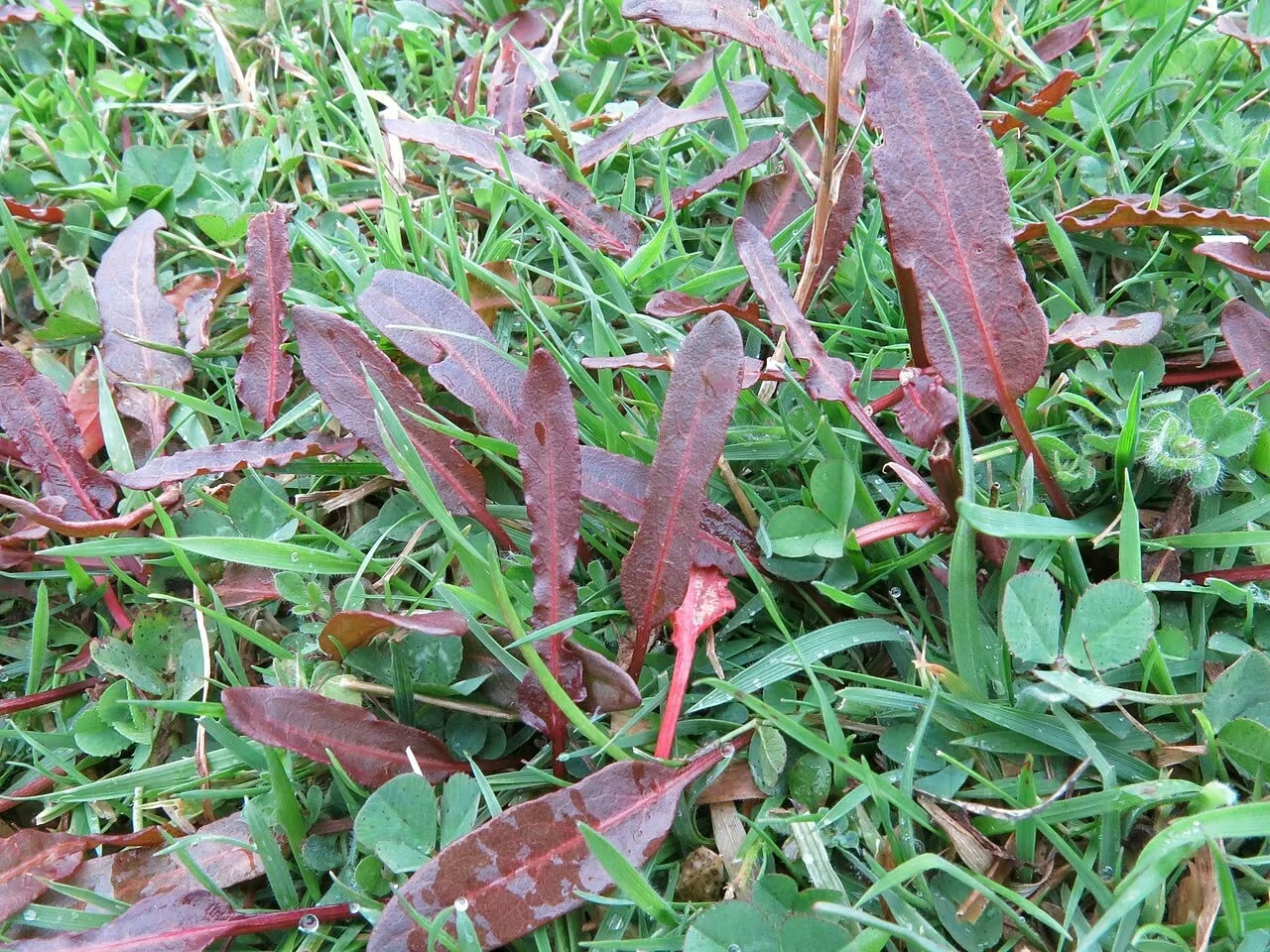
Rumex neglectus is a hairless herb usually 1 to 12 cm tall, occasionally to 20 cm, arising from a long, stout rootstock that is often branched near the top. NZPCN describes it as rhizomatous. The leaves are fleshy, broadly oval to narrow-oblong or oblong-elliptic, up to about 9 cm long but typically 3 to 5 cm long and 2 to 3 cm wide, bright green or flushed red, with slightly scalloped to wavy margins.
The flowers and fruits are borne in dense clusters arising from among the leaf tufts, 1 to 3 cm tall, and flowering is recorded from November to April. The fruit is enclosed in pale brown valves about 2.2 to 2.5 mm long, with entire margins or a single tooth or lobe, and each valve bears an elongated tubercle.
Its low, compact form and fleshy leaves separate it from Māori dock (Rumex flexuosus), which has narrow, wavy brown leaves on spreading zigzag branches, and from introduced docks, which are much larger plants with tall flowering stems.
Quick Facts
| Scientific Name | Rumex neglectus |
|---|---|
| Height | 0.01-0.12 m (occasionally to 0.2 m) |
| Spread | Spreading from a branched rootstock |
| Water Needs | High; damp ground |
| Light | Full sun |
| Frost Tolerance | High |
| Salt Tolerance | High; grows in coastal turf and sand |
| Growth Rate | Slow to moderate |
| Lifespan | Perennial |
Climate Best Suited to
Shore dock suits cool, windy, maritime climates and reaches its greatest abundance on the cold, wet subantarctic islands.
Regional Suitability
| City | Climate Suitability |
|---|---|
| Auckland | Low |
| Wellington | Medium |
| Christchurch | Medium |
| Dunedin | High |
Plant Habitat
Rumex neglectus is endemic to New Zealand. In the North Island it is known only from the south Wellington coast. It also occurs around the South Island, on Stewart Island/Rakiura and the Chatham Islands, and on most of the subantarctic islands, where it reaches its greatest abundance.
It grows in damp coastal turf near streams and seepages and in damp sand, often within reach of salt spray. It is classed as a facultative wetland plant, usually found on wet ground.
Growing Requirements
Soil Requirements
Shore dock grows in damp sandy or peaty coastal soils, often kept moist by seepage.
- Damp sand or sandy loam
- Peaty coastal turf
- Tolerates salt-laden soil
Light Requirements
Coastal turf is open and low, so it needs full light and is easily shaded out.
- Full sun
- Keep clear of taller plants
Water Requirements
It needs constantly damp ground and will struggle in dry garden soil.
- Keep soil moist year-round
- Ideal for a damp, sunny seepage or pond edge
- Avoid stagnant waterlogging
Planting and Establishing
Shore dock is not a mainstream nursery plant. In a coastal garden it could be grown in a damp, sunny spot with sandy soil, such as a seepage or the edge of a small pond, alongside other low turf plants.
It is best suited to cool southern and coastal gardens. Plants for restoration should be raised from locally collected seed, with permission, rather than taken from the wild.
Ecological Role
Little has been published on the pollination of shore dock, but docks are generally wind-pollinated. Its seeds develop in dense clusters close to the ground, and they are probably spread by water along seepages and coasts.
On the subantarctic islands it forms part of the coastal herbfield and turf communities, many of which recovered after introduced grazing animals were removed. On the mainland it belongs to the specialised coastal turf flora, a habitat that is itself uncommon and vulnerable.
Uses & Significance
Garden Uses
Shore dock is a plant for specialist coastal turf and restoration plantings rather than general gardens.
- Coastal turf restoration
- Damp seepage gardens near the sea
- Educational native plant collections
Ecological Value
It contributes to the diversity of coastal turf, one of New Zealand's most specialised plant communities.
- Part of native coastal herbfields
- Seed for small birds
- Fleshy cover on damp sand and turf
Landscaping Uses
In a coastal setting, combine shore dock with other low turf plants such as Leptinella, Selliera radicans and Samolus repens to create a natural-looking coastal lawn at the edge of a damp hollow.
Its red-flushed leaves add colour to an otherwise green turf planting.
Seasonal Care Calendar
Spring
New fleshy leaves emerge from the rootstock.
- Weed around plants to keep them in full light
- Sow seed
Summer
Dense flower clusters appear among the leaves from November.
- Keep the ground damp in dry weather
Autumn
Flowering and fruiting continue into April.
- Collect ripe fruit clusters
- Pot up any self-sown seedlings
Winter
The plant is hardy to frost, wind and salt spray.
- No care needed
- Check that the site is not becoming overgrown
When to Prune and How Much
No pruning is required. Old flower clusters can be trimmed once seed has fallen, and any dead leaves removed to keep plants tidy.
The most important maintenance is removing taller grasses and weeds that would shade it out.
How to Grow Shore Dock
No propagation information for Rumex neglectus has been published by NZPCN, and it is not grown commercially. The methods below are those generally used for small perennial docks and should be treated as trial methods. Docks typically grow readily from seed, and the branched rootstock of shore dock suggests that established plants could also be divided. Use locally sourced seed for any restoration work.
From Seed
Seed forms in dense clusters among the leaves through summer and autumn. Fresh seed sown in a moist, sandy mix should germinate as temperatures rise. Because the plant comes from cool southern coasts, a cool position for the seed tray is likely to suit it better than a heated propagator, and the young plants should be kept out of hot afternoon sun until they are established.
- Collect clusters of ripe brown fruit from late summer to autumn
- Sow on a moist mix of seed-raising compost and sand
- Cover lightly with sand
- Keep the tray damp in a cool, bright position
- Prick out seedlings into small pots once they have a few leaves
- Plant out into damp, sunny turf
By Division
Cultivated plants with a branched rootstock may be separated into sections, each with its own leaf tuft. Do this in spring when growth resumes, so the pieces have the whole growing season to root before winter.
- Lift a cultivated plant carefully in spring
- Cut through the rootstock so each piece has roots and a leaf tuft
- Replant into damp sandy soil and keep moist until established
Pests & Diseases
No specific pests are recorded for shore dock. Slugs and snails may eat seedlings, and dock rust can affect leaves in humid conditions.
In the wild, coastal turf is threatened by trampling, vehicles, grazing and invasive weeds such as introduced grasses, which can smother low plants.
Cultural Significance
No Māori name or traditional use is recorded for Rumex neglectus in the sources consulted. It was described by Thomas Kirk in 1877.
The species name neglectus means overlooked, suitable for a small dock that is easily missed among coastal turf plants.
Bonus Tip
To find shore dock on the mainland, look in damp hollows and beside trickling seepages in coastal turf, where its fleshy, often red-tinged leaves sit flat against the ground among other tiny plants. Getting down on hands and knees is usually the only way to spot it.
Related Plants
Explore other native plants that share similar characteristics or habitats with Shore Dock (Rumex neglectus), offering further insights into New Zealand's diverse flora. These related species provide context and opportunities for complementary planting in your garden.
Plant Conservation
Rumex neglectus is ranked Not Threatened in the 2023 national assessment. Regionally it is listed as Regionally Threatened - Regionally Critical in Wellington and Regionally At Risk - Regionally Declining in Otago (2025).
Mainland coastal turf has been widely lost to development, grazing, vehicles and weeds. Protecting coastal seepages and turf from vehicles and stock and controlling weeds are the main actions that help.
Frequently Asked Questions
Where does shore dock grow?
It is found on the south Wellington coast, around the South Island, on Stewart Island/Rakiura, the Chatham Islands and most subantarctic islands, in damp coastal turf, seepages and damp sand.
What does Rumex neglectus look like?
It is a low, hairless herb with fleshy, broadly oval to oblong bright green or red leaves 3 to 5 cm long, and dense clusters of small flowers and fruit among the leaf tufts.
Is shore dock endangered?
Nationally it is Not Threatened (2023), but it is ranked Regionally Critical in the Wellington region and Regionally Declining in Otago.
What does the name neglectus mean?
Neglectus means overlooked in Latin, fitting for a small, inconspicuous dock that hides among coastal turf plants.
Sources and Further Reading
The botanical, growing, and conservation details for Shore Dock (Rumex neglectus) on this page draw on the New Zealand plant references below. Consult them for full technical records and the latest distribution data.