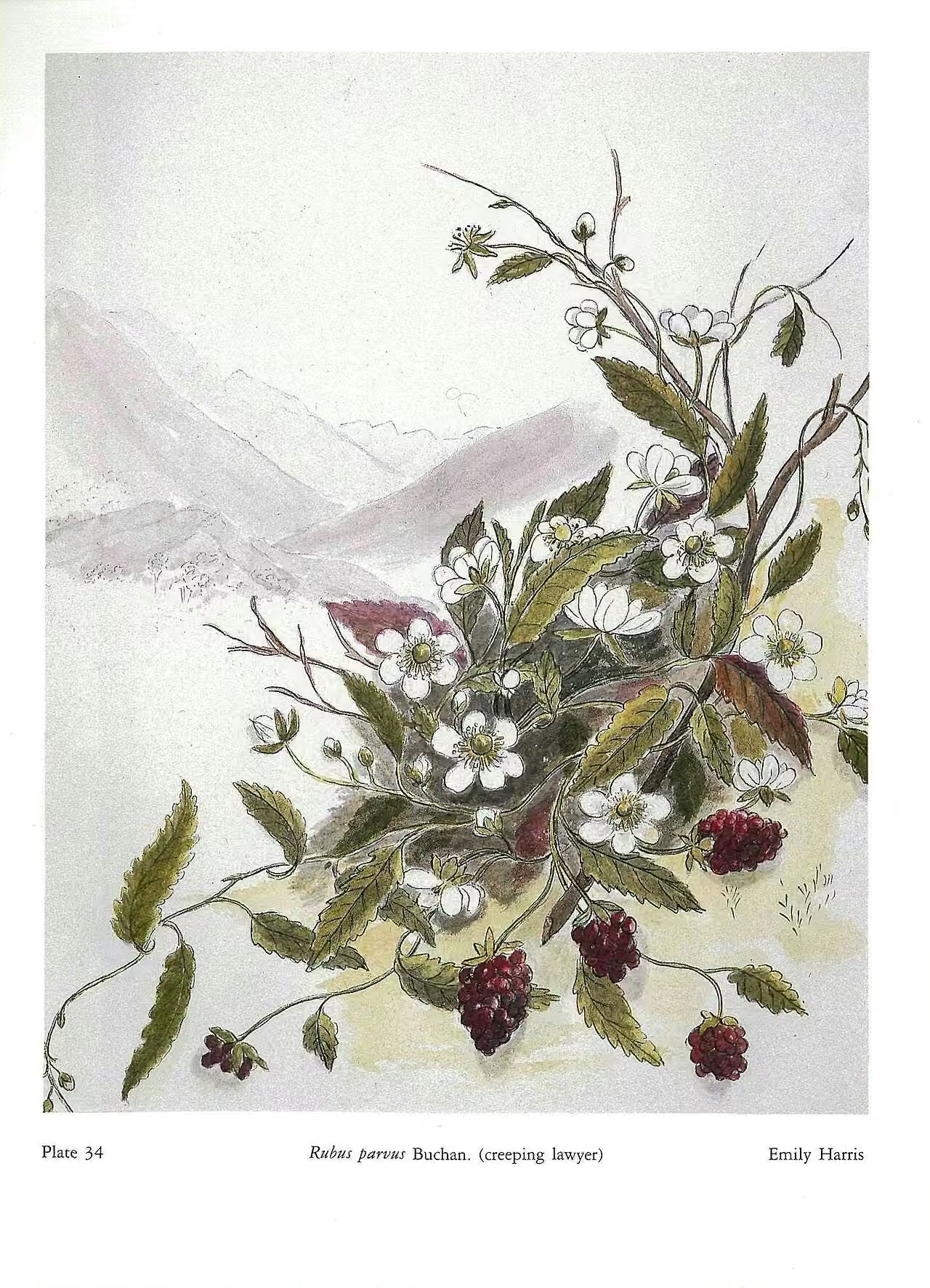
Creeping Lawyer
Rubus parvus
Last updated:
Creeping lawyer (Rubus parvus) is a low, scrambling bramble endemic to the South Island, found west of the Main Divide from Nelson to South Westland. Its prostrate stems reach about 1 m long and root as they go, carrying narrow, deeply toothed leaves that are dark bronze-green to red-green. White flowers from late spring are followed by large red berries, described by NZPCN as perhaps the most palatable of any native Rubus. It grows in damp but free-draining open sites in montane to alpine country, often along rivers. Easy to grow from rooted pieces, it makes an attractive ground cover and is ranked Not Threatened. Explore more native ground covers in our native plant guide.
Plant Description
Rubus parvus is a scrambling, much-branched, low-growing shrub with prostrate stems up to 1 m long that root at the nodes. Young stems carry small prickles in pale red, orange-red or yellow tones, but older stems are smooth and hairless. The leaves are mostly solitary (a single leaflet), leathery, narrow-lanceolate and deeply toothed, dark bronze-green to red-green above, with prickles along the midrib.
The flowers are white and usually borne singly, occasionally in small clusters, from about November to January, with the Flora recording a wider span of September to February. Unlike other New Zealand Rubus, the flowers are bisexual. They are followed by large, juicy red berries made up of many drupelets, ripening from January to April.
Its creeping habit, single leaves and solitary flowers distinguish it from the climbing native bush lawyers, which have compound leaves with three to five leaflets and large sprays of small flowers. The hybrid Rubus x barkeri, a cross with Rubus cissoides, is often sold under this name but has trifoliolate leaves and is sterile.
Quick Facts
| Scientific Name | Rubus parvus |
|---|---|
| Height | 0.05-0.15 m |
| Spread | Stems up to 1 m, rooting as they spread |
| Water Needs | Moderate; damp but free-draining |
| Light | Full sun to light shade |
| Frost Tolerance | High |
| Salt Tolerance | Low |
| Growth Rate | Moderate |
| Lifespan | Perennial |
Climate Best Suited to
Creeping lawyer suits cool, moist climates with reliable rainfall, matching its home on the wet West Coast and in the mountains of the western South Island.
Regional Suitability
| City | Climate Suitability |
|---|---|
| Auckland | Low |
| Wellington | Medium |
| Christchurch | Medium |
| Dunedin | High |
Plant Habitat
Rubus parvus is endemic to the South Island and occurs west of the Main Divide from Nelson to South Westland. It ranges from lowland and montane river flats up into alpine zones.
It is typically riparian, growing in damp, freely draining, open sites such as river terraces, gravels and stream banks, alongside other low shrubs and herbs. It also occurs in open places within lowland and montane forest.
Growing Requirements
Soil Requirements
Creeping lawyer prefers damp but well-drained soil, reflecting its natural home on river gravels and terraces.
- Free-draining gravelly or sandy loam
- Consistently moist, never waterlogged
- Moderate fertility; little feeding needed
Light Requirements
It grows in open sites and fruits best with good light.
- Full sun in cool districts
- Light shade in warmer, drier areas
Water Requirements
Its native range has high rainfall, so it should be watered in dry spells, especially while establishing.
- Keep soil evenly moist through summer
- Mulch with fine gravel to keep roots cool
- Ensure good drainage over winter
Planting and Establishing
Plant creeping lawyer in autumn or spring into damp, well-drained soil in a sunny or lightly shaded spot. Space plants about 50 cm apart for ground cover; the stems will root as they spread and knit together.
When buying, check that the leaves are single and narrow. Plants with three leaflets are likely the sterile hybrid Rubus x barkeri, which looks attractive but will not fruit.
Ecological Role
The white flowers are visited by native insects, and as the flowers are bisexual a single plant can set fruit. The red berries are eaten by birds, which disperse the seeds along river corridors, and lizards may also feed on low-growing fruit.
On river flats and gravels it helps colonise and bind open ground among other low shrubs and herbs, forming part of the early successional vegetation of western South Island valleys.
Uses & Significance
Garden Uses
NZPCN describes it as an attractive ground cover for rockeries and well-lit areas.
- Ground cover in rock gardens
- Trailing over walls or banks
- Edible native garden plantings
- Container planting where stems can cascade
Ecological Value
It provides food and cover for native wildlife in open riparian habitats.
- Fruit for birds and possibly lizards
- Nectar and pollen for insects
- Low cover that stabilises gravelly ground
Landscaping Uses
Use creeping lawyer to carpet the ground between rocks or to spill over the edge of a raised bed, where its bronze foliage and red fruit can be appreciated. It combines well with other low natives such as Leptinella, Raoulia and small Coprosma.
Because of its prickles, keep it away from paths where people walk barefoot, and plant it where fruit can be picked from the edge.
Seasonal Care Calendar
Spring
New shoots appear with colourful prickles, and flowering begins in late spring.
- Apply a light gravel mulch
- Water if spring is dry
Summer
White flowers continue into early summer and red berries start ripening from January.
- Pick ripe fruit regularly
- Keep soil moist in dry spells
Autumn
Fruit continues to ripen into April, and the foliage often deepens in bronze tones.
- Good time to plant or take rooted pieces
- Collect seed from ripe fruit
Winter
Growth stops and the plant tolerates frost and snow well.
- Ensure soil does not become waterlogged
- Trim straggly stems if needed
When to Prune and How Much
Little pruning is needed. Trim back any stems that wander beyond their allotted space, and remove dead or tangled stems in late winter to keep the mat tidy.
Wear gloves, as the young stems and leaf midribs carry small prickles.
How to Grow Creeping Lawyer
NZPCN notes that creeping lawyer is very easily grown from rooted pieces, because its prostrate stems root naturally at the nodes. This is the quickest way to multiply a plant and keeps the parent's characteristics. Seed is a second option for raising larger numbers. Make sure your starting plant is true Rubus parvus with single leaves, not the sterile hybrid.
By Layering and Rooted Pieces
Look along the creeping stems for nodes that have already formed roots where they touch the soil. These can be cut from the parent and potted up, or you can encourage new roots by pinning a stem to the ground.
- Find a stem that has rooted at a node, or pin a stem down with a wire hoop
- Wait until roots are well formed, usually a few weeks in spring or summer
- Cut the stem on the parent side of the rooted node
- Lift the new plant with soil around its roots
- Pot into free-draining mix or plant straight into the garden
- Keep moist until new growth begins
From Seed
Seed is extracted from ripe red fruit in late summer or autumn. Rubus seeds can be slow to germinate and often benefit from a period of cold, so sow them outdoors in autumn and be patient.
- Mash ripe berries in water and rinse away the pulp
- Sow the cleaned seeds in a free-draining seed mix and cover lightly
- Leave the tray outside over winter
- Prick out seedlings when large enough to handle
Pests & Diseases
Creeping lawyer has few recorded pests. Slugs and snails may damage new shoots, and fruit can be taken by birds before you pick it.
In poorly drained or humid sites, root rot and fungal leaf spots can occur, so good drainage and air movement are important.
Cultural Significance
No Māori name or traditional use specific to Rubus parvus has been found in the sources consulted. The name tātarāmoa is applied to New Zealand bush lawyers generally, and early European settlers used lawyer berries for jams and jellies.
The common name lawyer is a colonial joke: once the prickly stems catch hold of you, they do not let go. Parvus means small in Latin, referring to its diminutive size compared with the climbing bush lawyers.
Bonus Tip
Check the leaves before you buy. True Rubus parvus has single narrow leaves and will fruit on its own because its flowers are bisexual; the commonly sold hybrid Rubus x barkeri has three leaflets and never fruits.
Related Plants
Explore other native plants that share similar characteristics or habitats with Creeping Lawyer (Rubus parvus), offering further insights into New Zealand's diverse flora. These related species provide context and opportunities for complementary planting in your garden.
Plant Conservation
Rubus parvus is ranked Not Threatened in the 2023 New Zealand Threat Classification, and has held that ranking in every assessment since 2004.
Its riverbed and terrace habitats can be invaded by weeds such as gorse, broom and introduced grasses, which may smother low plants. Weed control on western South Island river flats helps it and the many other low native plants that share its habitat.
Frequently Asked Questions
Are creeping lawyer berries edible?
Yes. NZPCN describes the large red fruits of Rubus parvus as perhaps the most palatable of New Zealand's indigenous Rubus species, though plants need to be well grown to fruit freely.
How do you tell creeping lawyer from other bush lawyers?
It is a low, creeping plant rather than a climbing vine, has single narrow leaves rather than compound leaves, only small prickles on young stems, and usually solitary white flowers.
Why is my creeping lawyer not producing fruit?
Plants sold as Rubus parvus are often the sterile hybrid Rubus x barkeri, which has three-leaflet leaves and cannot set fruit. True Rubus parvus has single leaves.
Where does Rubus parvus grow naturally?
It is endemic to the South Island, west of the Main Divide from Nelson to South Westland, in montane to alpine riparian sites and on river flats.
Sources and Further Reading
The botanical, growing, and conservation details for Creeping Lawyer (Rubus parvus) on this page draw on the New Zealand plant references below. Consult them for full technical records and the latest distribution data.