Bristle Grass
Rytidosperma australe
Last updated:
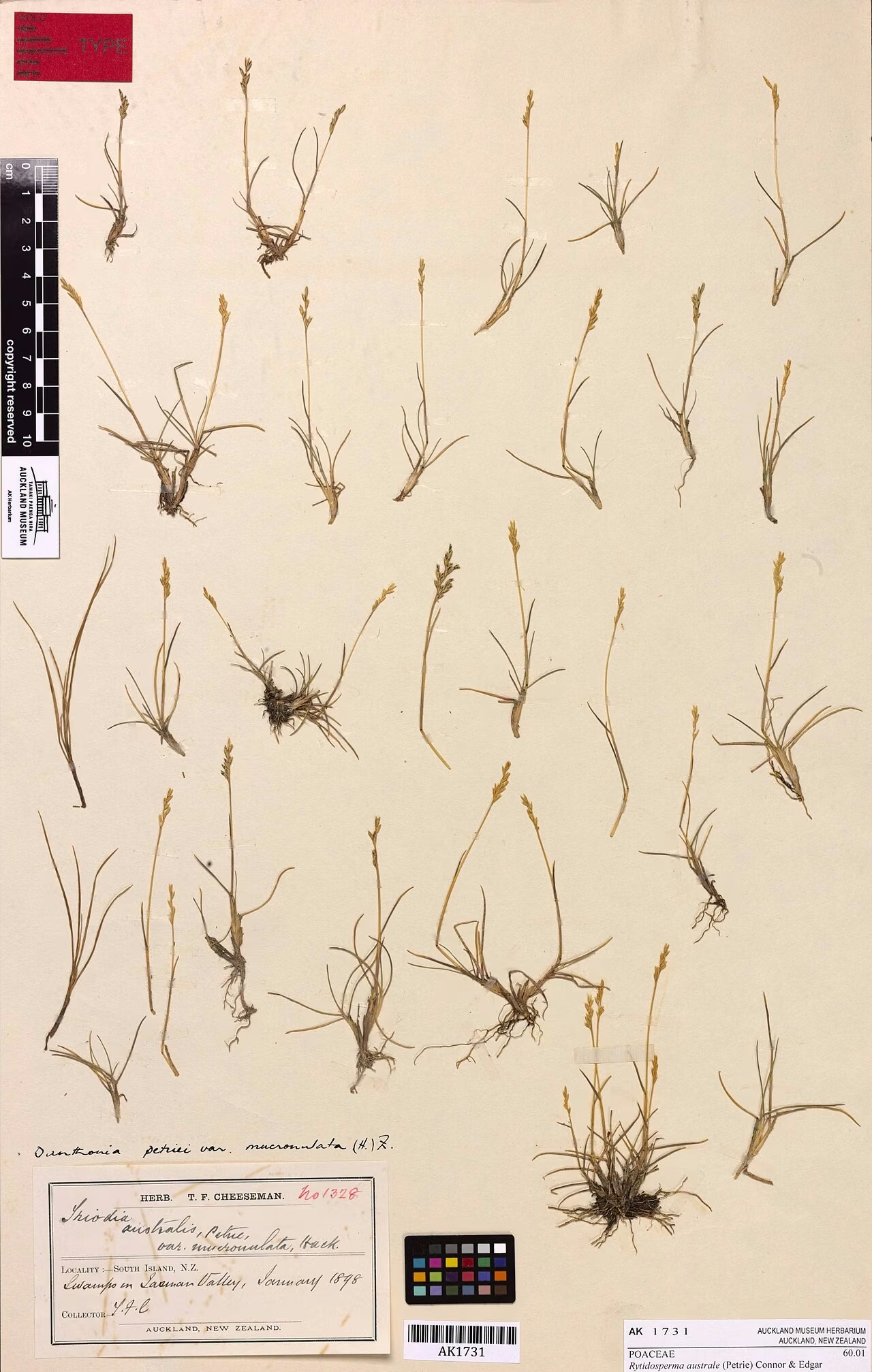
Rytidosperma australe is a small, tufted native grass in the danthonioid group of the grass family. It forms low, wiry tufts or taller, softer tufts, usually 3 to 15 cm tall in flower, and can spread by short rhizomes. In the North Island it grows in the Raukumara, Ruahine and Tararua Ranges, and in the South Island it occurs in North-West Nelson and east of the main divide. It also grows in Australia. Formerly called Erythranthera australis, it is ranked Not Threatened. Its tiny red anthers and the minute point in the notch of each lemma help botanists tell it apart from related grasses. Explore more native grasses and flaxes in our native plant guide.
Plant Description
Rytidosperma australe is a variable perennial grass. Some plants form low-growing, wiry tufts, while others make taller, softer and more slender tufts. Plants may be shortly rhizomatous or sometimes long-rhizomatous, with the shoots fairly stout at the base. Leaf blades reach about 8 cm, rarely 18 cm, and are no longer than the flowering culms. A useful field feature recorded in the Flora is that the leaf blades break away at the ligule.
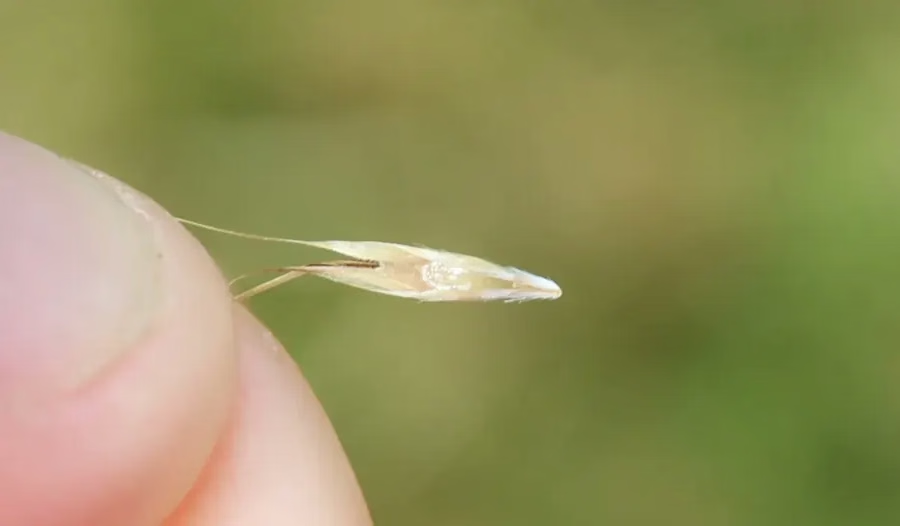
The flowering culms are usually 3 to 15 cm tall, ranging from 1.5 to 35 cm. They carry a small, compact panicle 0.5 to 2 cm long, occasionally to 3.5 cm. The glumes are 2.5 to 3 mm long. Each lemma is only 1.5 to 1.8 mm long and has a minute mucro, about 0.1 mm, sitting in the notch at its tip. The anthers are red and 0.4 to 0.7 mm long, and the grain is about 0.8 by 0.5 mm. NZPCN records the flower colour as red to pink.
Its small size, short dense panicles and tiny lemmas separate it from the larger tussock-forming Rytidosperma species such as Rytidosperma gracile or Rytidosperma setifolium. Because the differences between small Rytidosperma species are technical, the Manaaki Whenua interactive key to New Zealand grasses is the best tool for confirming an identification.
Quick Facts
| Scientific Name | Rytidosperma australe |
|---|---|
| Height | Flowering stems usually 0.03-0.15 m, occasionally to 0.35 m |
| Spread | Small tufts, sometimes spreading by rhizomes |
| Water Needs | Moist; often recorded from damp turf, flushes and bog margins |
| Light | Full sun to light shade |
| Frost Tolerance | High; a montane to subalpine grass |
| Salt Tolerance | No information available; not a coastal species |
| Growth Rate | Slow |
| Lifespan | Perennial |
Climate Best Suited to
A grass of cool montane and subalpine climates with regular frost and snow, in both the wetter western ranges and the drier mountains east of the main divide.
Regional Suitability
| City | Climate Suitability |
|---|---|
| Auckland | Low |
| Wellington | Low |
| Christchurch | Medium |
| Dunedin | Medium |
Plant Habitat
In the North Island Rytidosperma australe is known from the Raukumara, Ruahine and Tararua Ranges. In the South Island it occurs in North-West Nelson and in the mountains east of the main divide, and Otago lists it as Regionally Not Threatened. Wellington ranks it as Regionally Data Deficient. Outside New Zealand it grows in Australia.
NZPCN gives no habitat description, but herbarium and vegetation plot records place it in montane and subalpine settings at roughly 650 to 1000 m, including grassland, open mountain beech forest with seepages and flushes, short turf around small lakes, and cushion bog among Sphagnum. These records suggest a preference for open, moist, short vegetation.
Growing Requirements
Soil Requirements
Records point to moist, often peaty or seepage-fed montane soils, though detailed soil preferences have not been published.
- Moist, low-fertility soils
- Peaty turf and bog margins
- Open ground with little competition from tall plants
Light Requirements
It grows in open grassland and turf and in thin beech forest, so it suits full sun to light shade.
- Full sun in open turf
- Tolerates the dappled light of open beech forest
Water Requirements
Many records come from flushes, seepages and lake-edge turf, which indicates it likes reliable moisture.
- Keep soil damp in cultivation
- Avoid prolonged drying out in summer
Planting and Establishing
Rytidosperma australe is not commercially available and is of interest mainly to botanists and restoration projects working in its montane range. If it is grown, plant small tufts in spring into a moist, open, low-fertility site where taller grasses and herbs will not smother it.
Restoration planting should use plants raised from locally sourced seed from the same mountain district, because this grass has a scattered range across several separate ranges and local genetic differences are likely.
Ecological Role
Like other grasses, Rytidosperma australe is wind pollinated, and its red anthers hang out of the florets to shed pollen. The small grains are dispersed with the hairy lemma, which can catch on fur, feathers or clothing or be carried short distances by wind.
As a small component of montane turf, flush and bog vegetation, it helps bind thin soils and contributes to the dense short sward that many tiny alpine herbs and invertebrates depend on. Its specific insect associations have not been documented.
Uses & Significance
Garden Uses
This is a botanical curiosity rather than a garden plant, and it is not sold by nurseries.
- Specialist alpine or bog garden collections
- Restoration of montane turf and flush vegetation within its natural range
Ecological Value
It is part of the natural turf and flush vegetation of eastern and central mountain ranges.
- Stabilises thin, wet montane soils
- Adds to the diversity of native short-grass communities
- Wind-pollinated, so it does not compete with insect-pollinated herbs for visitors
Landscaping Uses
With its fine, low tufts, Rytidosperma australe would only make sense in a naturalistic planting that imitates montane turf, such as the edge of a small pond or a damp scree garden. It is too small and inconspicuous to make any impact from a distance.
In a restoration context, it fits among other low native grasses, sedges and turf herbs rather than as a feature plant.
Seasonal Care Calendar
Spring
New leaves emerge as snow melts and the montane turf warms.
- Plant or divide cultivated tufts
- Keep soil moist
Summer
Short flowering culms appear above the tufts, with red anthers visible in the small panicles.
- Look for the red anthers when identifying it
- Do not let pots dry out
Autumn
Seed ripens in the small panicles and is shed with the hairy lemmas.
- Collect ripe seed for propagation
- Remove taller competing weeds
Winter
Plants are dormant under frost or snow in their natural habitat.
- No action needed
- Ensure pots drain freely in wet weather
When to Prune and How Much
No pruning is needed. Old flowering culms can be pulled out once they have shed seed, and dead leaves can be combed out by hand to keep a cultivated tuft tidy.
Avoid cutting tufts hard to the base, as small montane grasses recover slowly.
How to Grow Bristle Grass
No published propagation protocol for Rytidosperma australe was found, and NZPCN lists it as not commercially available. The methods below are the standard techniques used for small native tufted grasses and should be treated as a general guide rather than proven practice for this species. Seed or divisions should only come from cultivated plants or be collected with permission, in small amounts, from healthy wild populations within the district where the plants will be used.
From Seed
Rytidosperma grains are small, about 0.8 mm long in this species, and are shed enclosed in the hairy lemma. Collect the panicles when they begin to turn straw coloured and the florets come away easily when rubbed between the fingers.
- Collect ripe panicles in late summer or autumn
- Dry them in a paper bag for a few days and rub out the florets
- Sow on the surface of a moist, free-draining seed mix and cover very lightly with grit
- Keep the tray cool and moist in good light
- Prick out seedlings into small pots once they have several leaves
By Division
Because some plants spread by rhizomes, established cultivated tufts can be split into smaller pieces, each with roots and several shoots attached.
- Lift a cultivated tuft in early spring
- Tease or cut it into pieces with roots attached
- Pot the divisions into a moist, gritty mix
- Keep them sheltered and damp until new growth appears
Pests & Diseases
No specific pests or diseases have been recorded for this grass. In the wild, the main pressures on montane turf communities are weed invasion by introduced grasses and herbs, and trampling or grazing around lakes and flushes.
In cultivation, small montane grasses are most likely to fail from summer heat, drying out or being overgrown by vigorous weeds.
Cultural Significance
No Māori name or traditional use is recorded for Rytidosperma australe in the sources consulted.
Its history is mostly taxonomic. It was first described by Donald Petrie as Triodia australis, then placed in Danthonia and Erythranthera, before Connor and Edgar transferred it to Rytidosperma. The genus name means wrinkled seed and the species name australe means southern.
Bonus Tip
If you are trying to name a small Rytidosperma found in a damp montane turf, check the anthers and lemma with a hand lens: red anthers under 1 mm long and a tiny point sitting in the notch at the lemma tip are good clues that you have Rytidosperma australe.
Related Plants
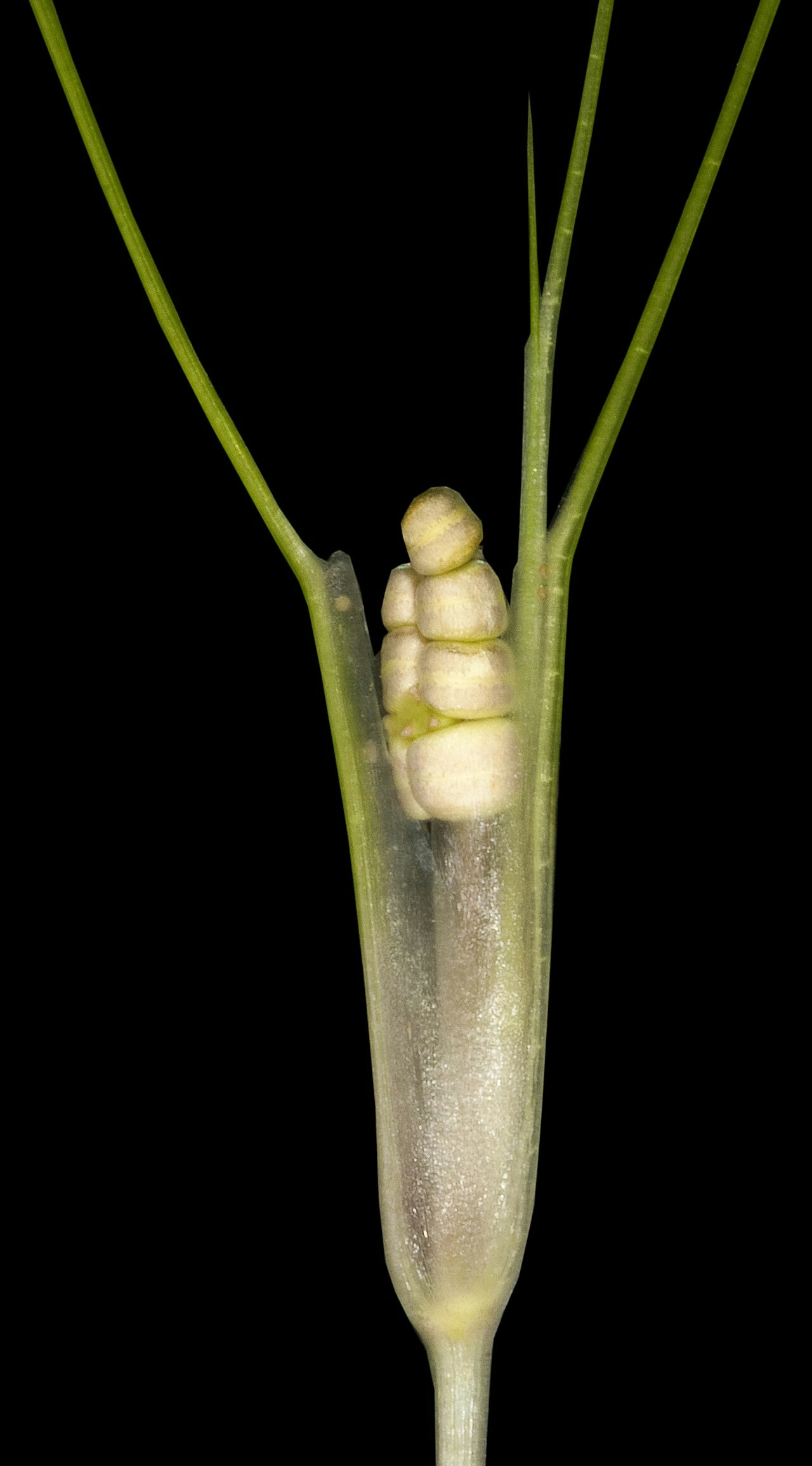
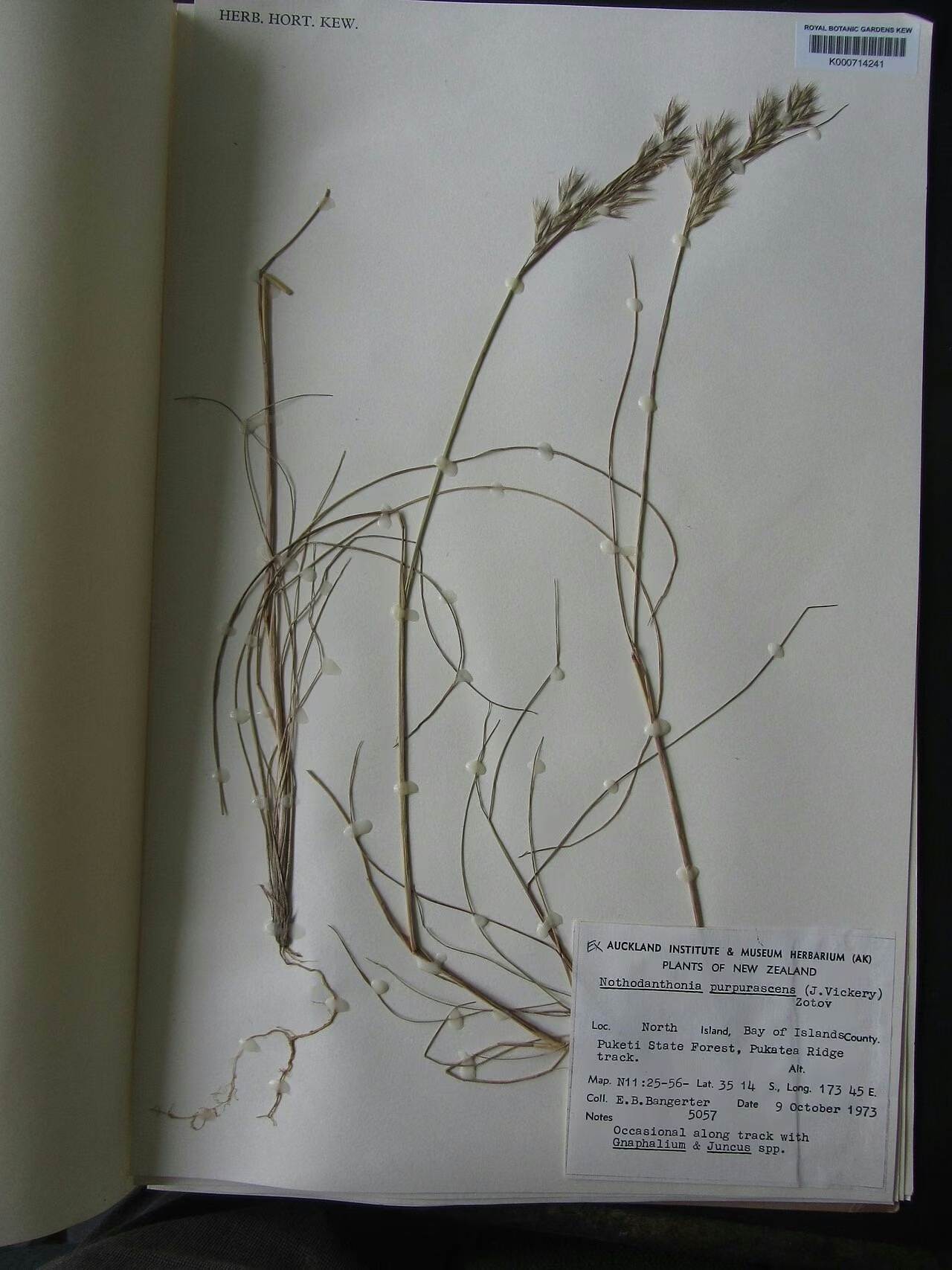
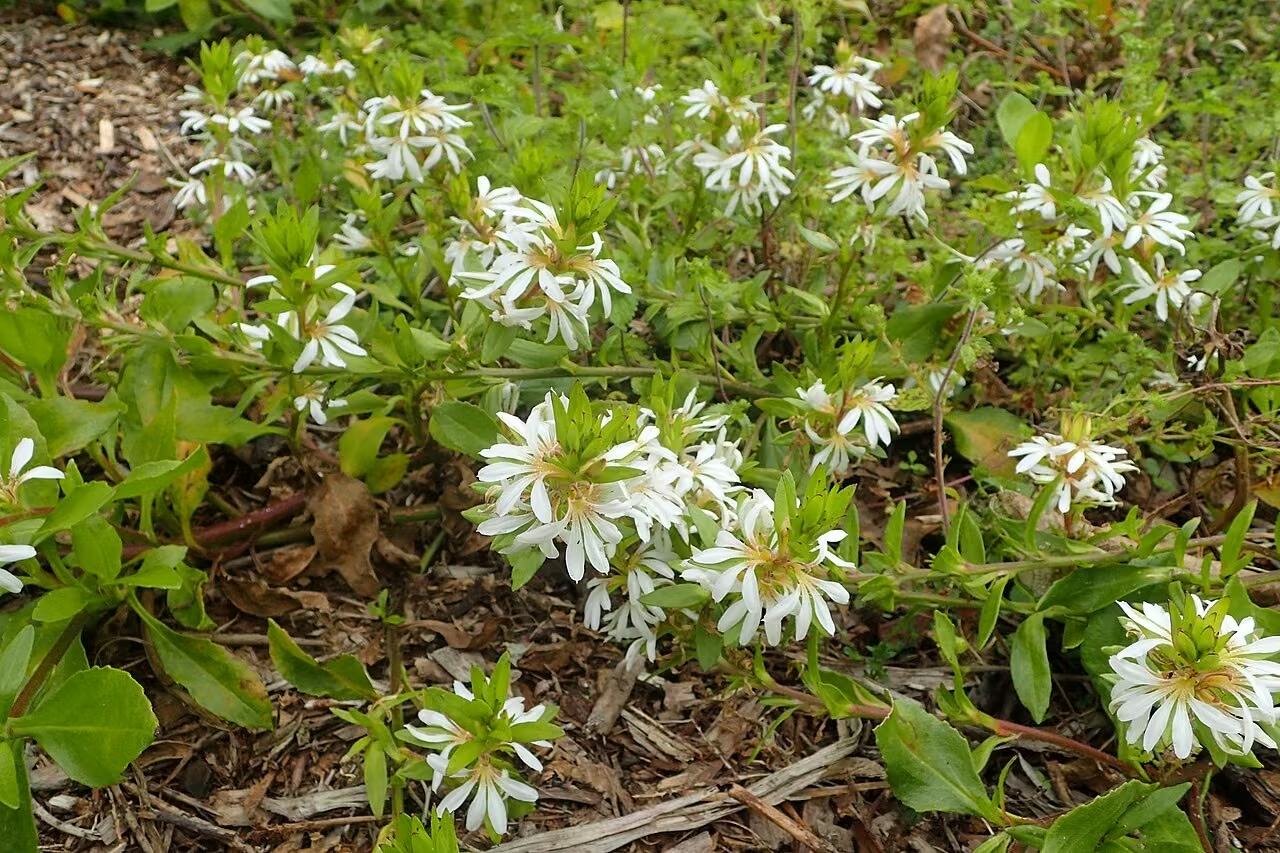
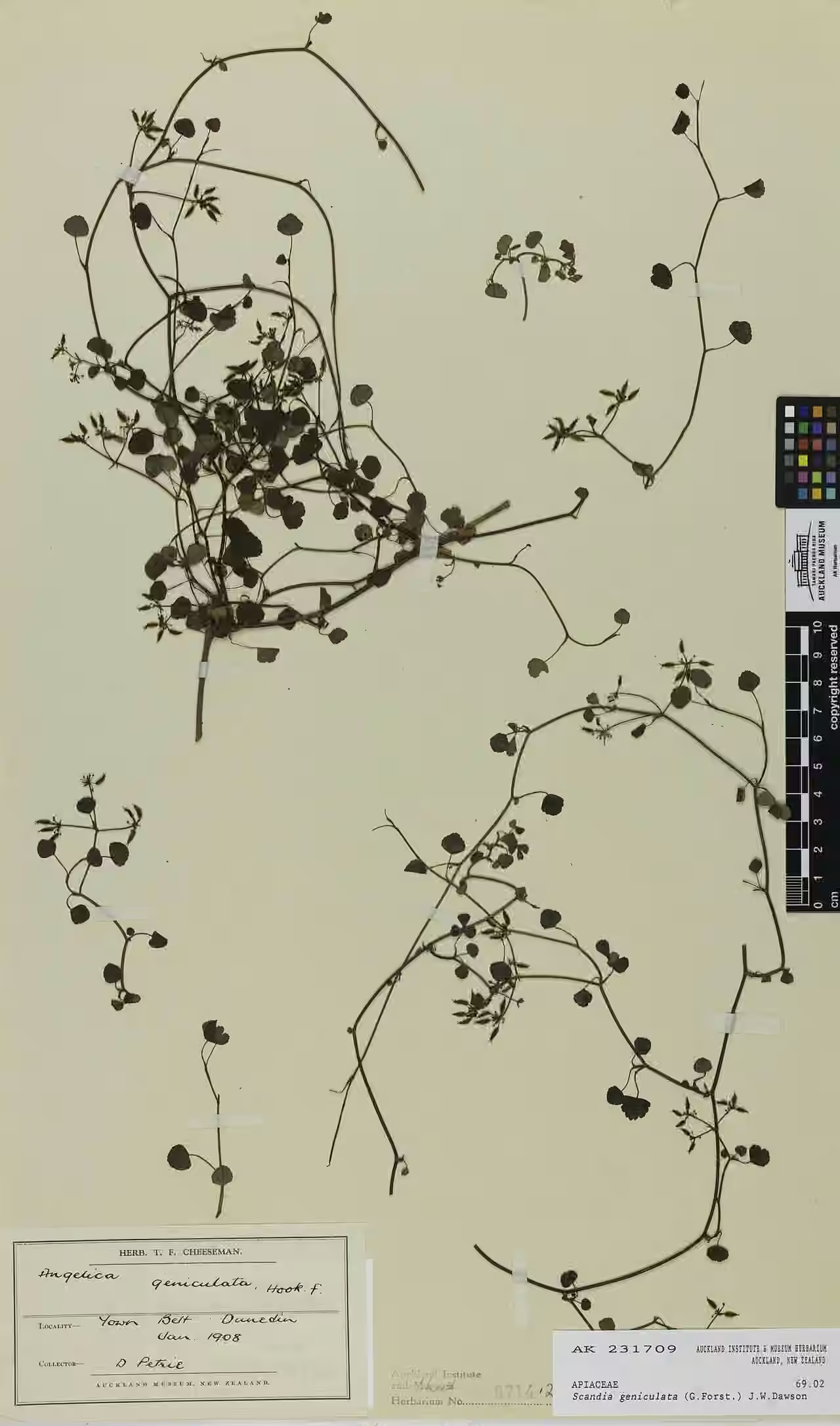
Explore other native plants that share similar characteristics or habitats with Bristle Grass (Rytidosperma australe), offering further insights into New Zealand's diverse flora. These related species provide context and opportunities for complementary planting in your garden.
Plant Conservation
Rytidosperma australe is ranked Not Threatened (2023) with the qualifier Secure Overseas, and it has held the Not Threatened ranking in every assessment since 2004. Regionally, Otago ranks it Not Threatened, while Wellington lists it as Data Deficient, reflecting how little survey information exists for small grasses.
Protecting montane wetlands, flushes and lake-edge turf from weeds, stock and vehicle damage helps keep this and many other small native plants secure. Collecting and lodging herbarium specimens of small grasses also improves knowledge of its true range.
Frequently Asked Questions
Does Rytidosperma australe have a common name?
No widely used common name is recorded by the NZ Plant Conservation Network, so it is generally called by its scientific name. Older literature calls it Erythranthera australis or Danthonia petriei.
Where does Rytidosperma australe grow in New Zealand?
It occurs in the Raukumara, Ruahine and Tararua Ranges of the North Island, and in North-West Nelson and east of the main divide in the South Island. It is also native to Australia.
How do you identify Rytidosperma australe?
Look for small tufts with leaves no longer than the flowering stems, short panicles under about 3.5 cm, red anthers 0.4 to 0.7 mm long and a minute point about 0.1 mm long in the notch of the lemma.
Is Rytidosperma australe threatened?
No. It is ranked Not Threatened in the 2023 assessment, with the qualifier Secure Overseas because it also grows in Australia.
Sources and Further Reading
The botanical, growing, and conservation details for Bristle Grass (Rytidosperma australe) on this page draw on the New Zealand plant references below. Consult them for full technical records and the latest distribution data.