Stewart Island Vegetable Sheep
Raoulia goyenii
Last updated:
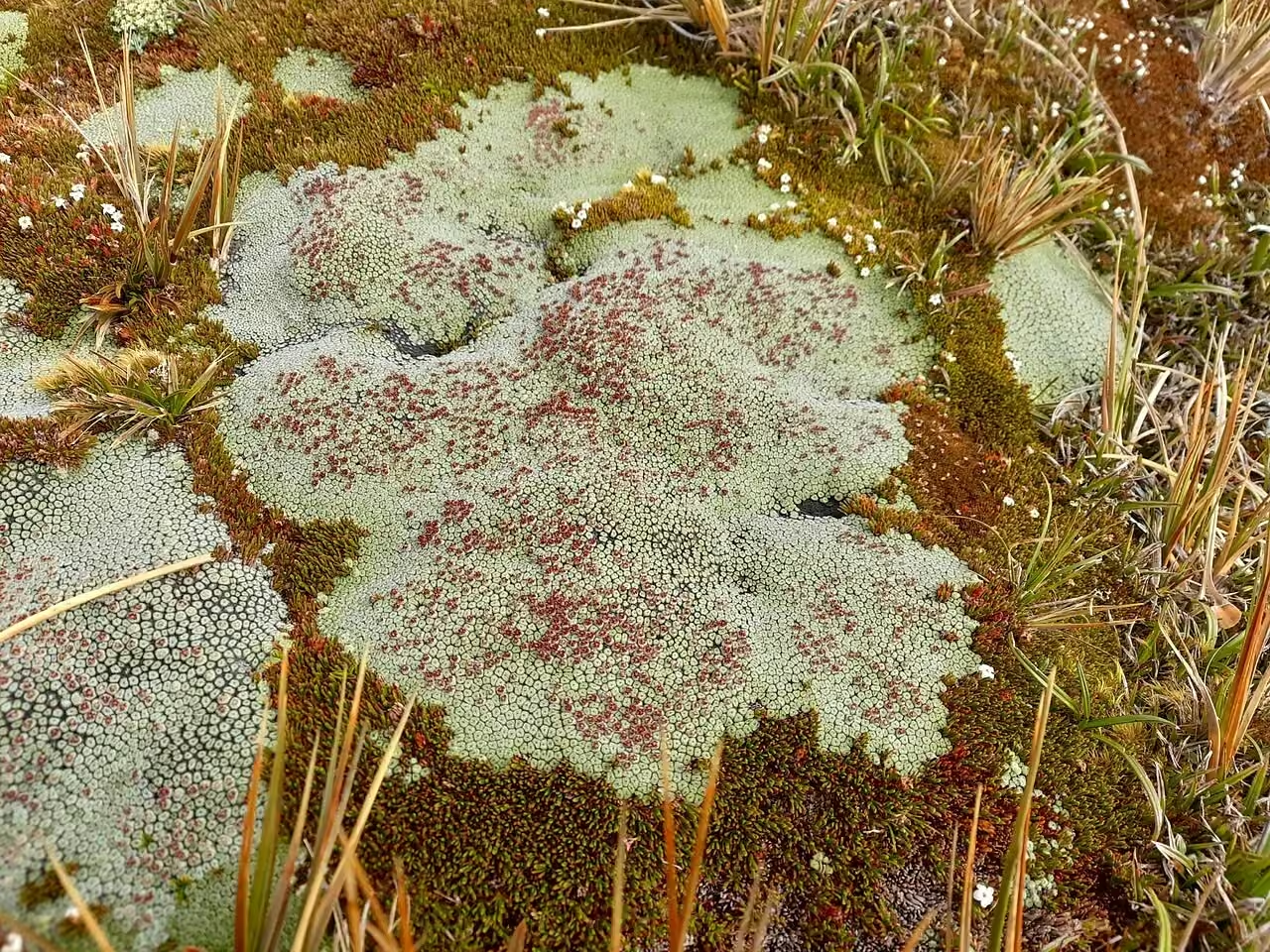
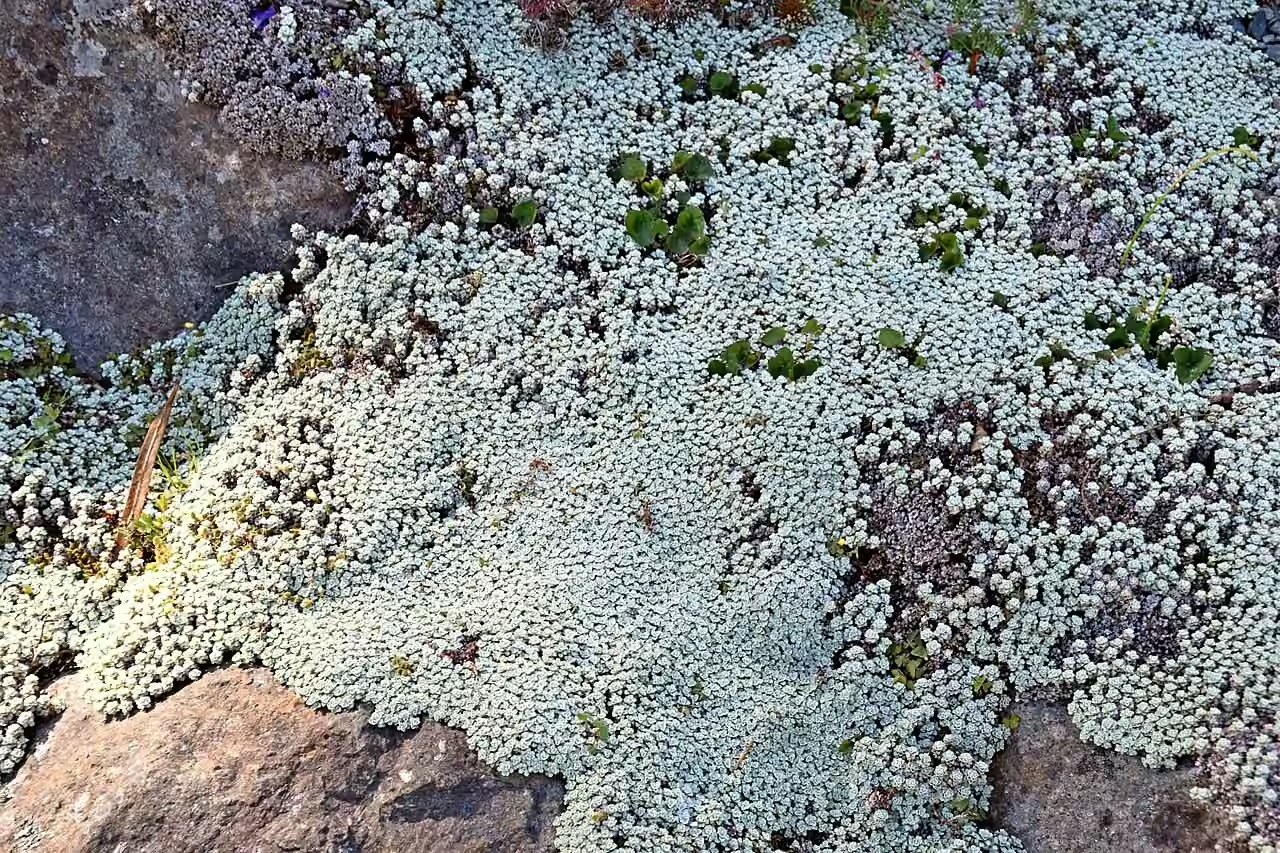
Stewart Island vegetable sheep (Raoulia goyenii) is a cushion-forming daisy endemic to Stewart Island/Rakiura. Its woody stems and densely packed shoots build greenish cushions or mats up to 1 m across and 20 cm tall in subalpine and alpine herbfield, fellfield and rocky ground. Unlike the woolly grey vegetable sheep of the Southern Alps, its cushions are distinctly green, so it is less likely to be mistaken for a real sheep. It is ranked At Risk - Naturally Uncommon because it occupies a very small natural range, though it is common within its preferred habitat. It is difficult to cultivate and should not be removed from the wild. Explore more native ground covers in our native plant guide.
Plant Description
Raoulia goyenii has a woody stock and woody branch bases. Its branches are densely compacted, forming firm, greenish cushions or mats up to 1 m in diameter and about 20 cm tall. Each shoot is clothed in tightly overlapping leaves, so the surface of the cushion is made up of thousands of tiny shoot tips packed together.
The leaves are only 3 to 4 mm long and 0.5 to 1 mm wide, linear-oblong, widened and squared off at the tip, with a single vein. The back of each leaf has a brush of long hairs near the base, and the inner surface bears a brush of straight hairs at the tip that extends beyond and hides the leaf blade. The small flower heads, 3 to 5 mm across, sit among the shoot tips and show red or pink and yellow colouring. The seeds carry stiff hairs and a pappus about 2.5 mm long.
On Rakiura it is unlikely to be confused with other plants. Compared with the vegetable sheep of the South Island mountains, which look grey and woolly from a distance, this species is noticeably greener because its hairs are concentrated in brushes rather than covering the whole leaf.
Quick Facts
| Scientific Name | Raoulia goyenii |
|---|---|
| Height | Up to 0.2 m |
| Spread | Cushions or mats up to 1 m across |
| Water Needs | Moist; grows in a wet, cloudy alpine climate |
| Light | Full sun, open alpine sites |
| Frost Tolerance | High; a subalpine to alpine species |
| Salt Tolerance | No information available |
| Growth Rate | Very slow |
| Lifespan | Long-lived perennial |
Climate Best Suited to
Suits the cold, wet, windy and cloudy alpine climate of Rakiura, where the upland zone has very high rainfall and little sunshine. It is unsuited to warm or dry lowland climates.
Regional Suitability
| City | Climate Suitability |
|---|---|
| Auckland | Low |
| Wellington | Low |
| Christchurch | Low |
| Dunedin | Low |
Plant Habitat
Raoulia goyenii is found only on Stewart Island/Rakiura. Herbarium collections record it from Mount Anglem (Hananui), the island's highest peak, and it grows in the subalpine and alpine zones of the island's uplands.
Its habitat is subalpine to alpine herbfield, fellfield and rocky ground. Stewart Island's upland zone experiences very high winds, heavy rainfall and limited sunshine, and much of the island's endemic flora, including this species, is concentrated in these alpine areas.
Growing Requirements
Soil Requirements
In the wild it grows on thin, wet, peaty or rocky alpine soils among rocks and in open fellfield.
- Low-fertility, peaty or gritty substrate
- Constant moisture combined with free drainage around the cushion
- Rocky ground and crevices
Light Requirements
It grows in open, treeless alpine country where it is exposed to whatever light the frequently cloudy Rakiura climate provides.
- Full exposure, no shade from shrubs or trees
- Overgrowth by taller vegetation would shade the cushion
Water Requirements
The Rakiura uplands are wet and frequently misty, so the plant is adapted to near-constant moisture with cool temperatures.
- Never allow the root zone to dry
- Cool temperatures are as important as moisture
Planting and Establishing
This species is not suitable for general planting. NZPCN describes it as difficult to grow and states that it should not be removed from the wild, so it is best appreciated in its natural setting.
Specialist alpine growers or botanic gardens wanting to hold it should obtain material only through authorised conservation channels, and grow it in a cold, moist, well-ventilated alpine house or trough.
Ecological Role
As a large, dense cushion, Raoulia goyenii creates its own sheltered microhabitat in exposed alpine terrain, holding moisture and organic matter within the mound. The seeds carry a pappus of hairs, a structure that typically aids dispersal by wind.
The insects that pollinate its small flower heads, and any invertebrates that live within its cushions, are not documented in the sources consulted.
Uses & Significance
Garden Uses
It has almost no role in ordinary gardens because it is difficult to grow and should not be taken from the wild.
- Specialist alpine house collections only, using legally sourced material
- Botanic garden displays of Rakiura alpine flora
- Best enjoyed on the tramping tracks of Rakiura
Ecological Value
It is a characteristic plant of the alpine herbfields and fellfields of Rakiura and part of the island's distinctive endemic flora.
- One of the alpine endemics that make Rakiura a centre of plant endemism
- Forms large cushions that stabilise and shelter exposed alpine ground
- A narrow-range species found nowhere else in the world
Landscaping Uses
Raoulia goyenii is not used in landscaping. In an alpine collection it would be displayed among rocks and gravel, where the tight green cushion could be seen alongside other cushion plants and small alpine herbs.
For a similar cushion effect in a home garden, the more widely grown mat-forming Raoulia species are better choices, but only from nursery-grown stock.
Seasonal Care Calendar
Spring
New shoot growth begins as the alpine tops warm.
- No intervention is needed in wild populations
- Keep cultivated plants cool and moist
Summer
Flowering takes place in December and January, with small red, pink and yellow flower heads among the shoot tips.
- Look for the flowering cushions on Rakiura's alpine tops
- Avoid trampling cushions when off track
Autumn
Fruiting runs from January to March, when the seeds with their pappus are released.
- Leave wild seed undisturbed
- Protect cultivated plants from autumn humidity and rot
Winter
The cushions sit out the cold, wet and windy alpine winter with little growth.
- No action required
- Ensure cultivated plants are not waterlogged
When to Prune and How Much
Do not prune. The cushion form is built from countless tightly packed shoots, and cutting into it creates gaps that can let in rot.
On cultivated plants, remove only any dead patches by gently picking them out with tweezers.
How to Grow Stewart Island Vegetable Sheep
Raoulia goyenii is difficult to propagate, and NZPCN states plainly that it should not be removed from the wild. No reliable published propagation protocol for this species was found in the sources consulted, so the methods below describe the general approach used by alpine specialists for cushion-forming Raoulia rather than proven techniques for this species. Anyone attempting it should work only with material held legally in cultivation or supplied for conservation purposes, and expect high losses, slow growth and a need for cool, moist but well-ventilated conditions throughout.
From Seed
Flowering is in December and January and fruiting from January to March. The seeds are small, with a pappus of hairs about 2.5 mm long, so seed heads must be collected as soon as they ripen or the seed will blow away.
- Collect ripe seed heads from cultivated plants in late summer
- Sow fresh on the surface of a very gritty, low-fertility mix
- Keep the pot cool, moist and in good light with free air movement
- Grow seedlings on slowly for at least a year before potting on
From Cuttings
Cushion Raoulia species are sometimes propagated by detaching small rosettes or shoot clusters from the edge of a cushion. This damages the parent, so it is only appropriate on established cultivated plants.
- Remove a small cluster of shoots from the margin of a cultivated cushion in spring
- Insert it into pure pumice or coarse grit kept just moist
- Keep cool and shaded from hot sun while roots form
- Pot on very carefully, disturbing the roots as little as possible
Pests & Diseases
No specific pests are recorded for this species. In cultivation the usual cause of failure in cushion daisies is rot in warm, humid or stagnant conditions.
In the wild, trampling by people walking off-track on the alpine tops could damage cushions, which are very slow to regrow.
Cultural Significance
No traditional Māori name or use is recorded for Raoulia goyenii in the sources consulted.
The genus Raoulia honours Étienne Raoul, a French naval surgeon and naturalist who published on New Zealand plants in 1846. The species was described by Thomas Kirk, who published several papers on the plants of Stewart Island in 1884, and Beauverd later moved it to Psychrophyton in 1910 before it was returned to Raoulia.
Bonus Tip
To see this plant, walk to the alpine tops of Rakiura, such as Mount Anglem (Hananui), in December or January when it is flowering. Look for firm, bright green cushions among the rocks, and step around them, since a footprint on a slow-growing cushion can take years to heal.
Related Plants
Explore other native plants that share similar characteristics or habitats with Stewart Island Vegetable Sheep (Raoulia goyenii), offering further insights into New Zealand's diverse flora. These related species provide context and opportunities for complementary planting in your garden.
Eyre Mountains Buttercup
Ranunculus scrithalis
Ranunculus simulans
Ranunculus simulans
Ranunculus urvilleanus
Ranunculus urvilleanus
Raoulia buchananii
Raoulia buchananii
Green Vegetable Sheep
Raoulia haastii
Raoulia mammillaris
Raoulia mammillaris
Fan-Leaved Mat Daisy
Raoulia monroi
Celadon Mat Daisy
Raoulia parkii
Plant Conservation
Raoulia goyenii is ranked At Risk - Naturally Uncommon (2023) with the qualifiers Range Restricted and Sparse. NZPCN describes it as a local, narrow-range endemic that is common in its preferred habitat, so its rarity reflects its tiny natural range rather than a steep decline.
Most of Stewart Island is protected within Rakiura National Park, which helps secure its habitat. Staying on tracks in alpine areas, and never collecting plants from the wild, are the most useful things visitors can do.
Frequently Asked Questions
What is the Stewart Island vegetable sheep?
It is Raoulia goyenii, a cushion-forming member of the daisy family found only on the subalpine and alpine tops of Stewart Island/Rakiura, where it forms green mounds up to 1 m across.
How is Raoulia goyenii different from other vegetable sheep?
Most vegetable sheep, such as Raoulia eximia and Haastia pulvinaris, form woolly grey or white cushions. Raoulia goyenii forms greenish cushions, with hair brushes mainly at the tips and bases of its tiny leaves.
Can you grow Stewart Island vegetable sheep in a garden?
NZPCN describes it as difficult to cultivate and says it should not be removed from the wild. It is not a practical garden plant.
Is Raoulia goyenii endangered?
It is ranked At Risk - Naturally Uncommon because it is confined to a narrow range on Rakiura, but within that range it is common in its preferred habitat.
Sources and Further Reading
The botanical, growing, and conservation details for Stewart Island Vegetable Sheep (Raoulia goyenii) on this page draw on the New Zealand plant references below. Consult them for full technical records and the latest distribution data.