Fan-Leaved Mat Daisy
Raoulia monroi
Last updated:
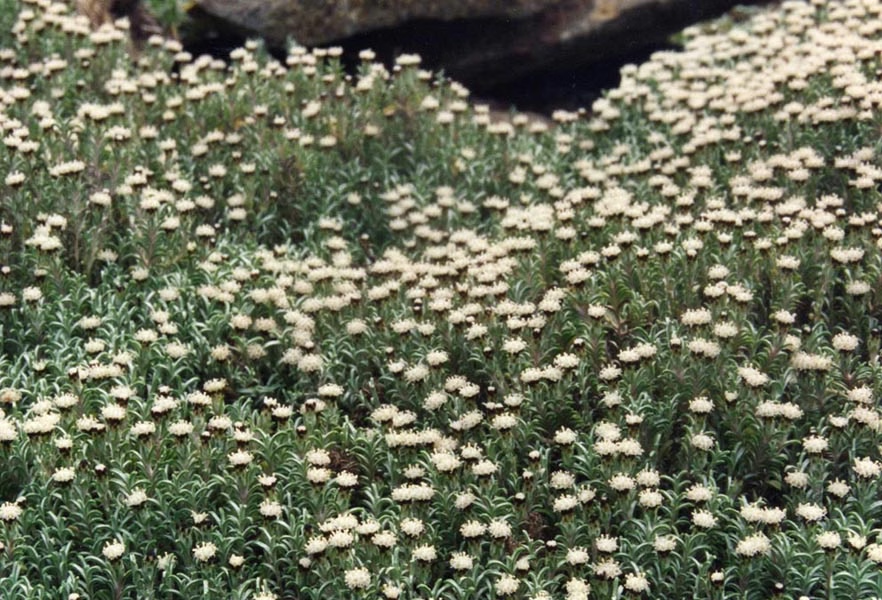
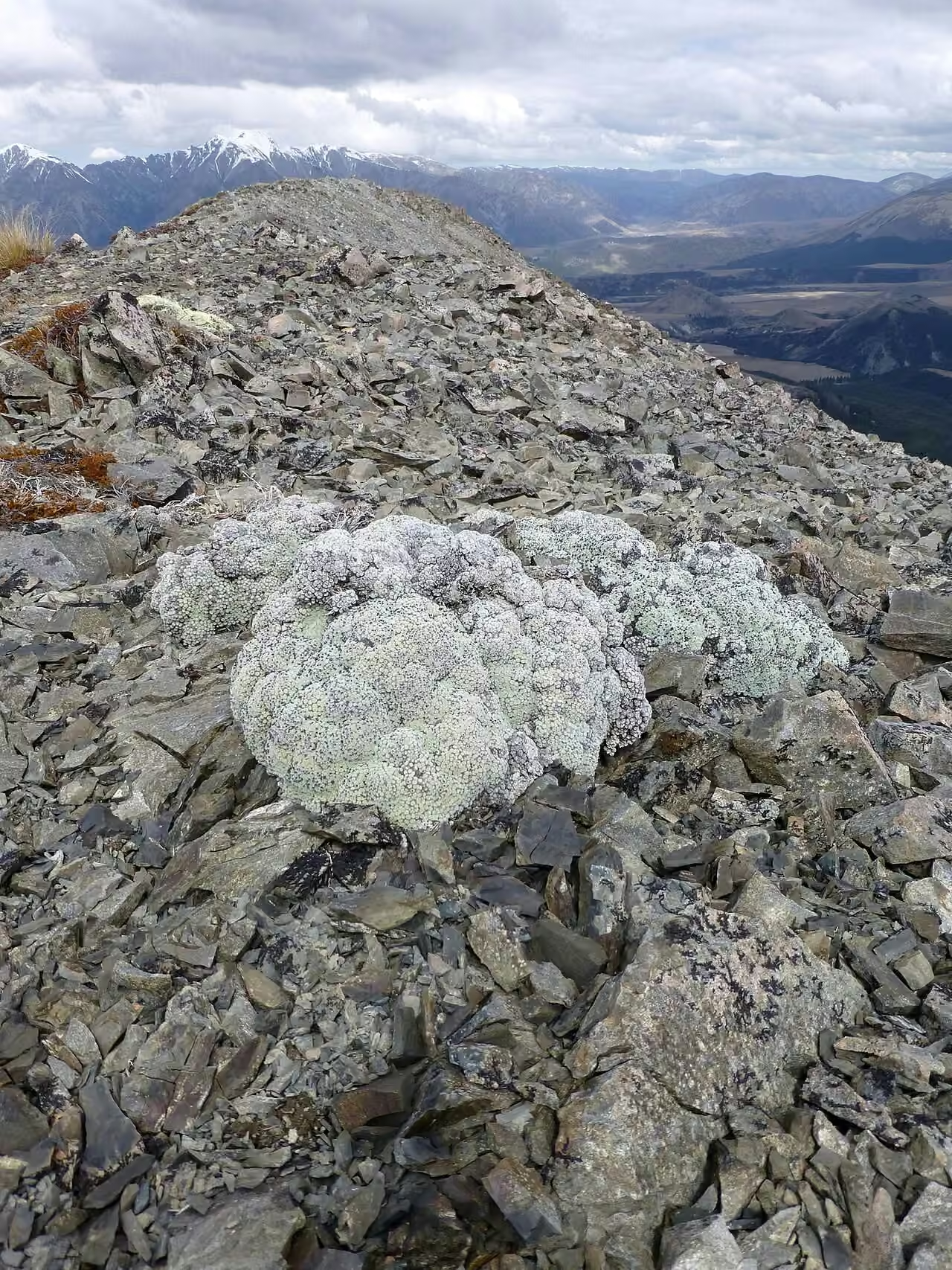
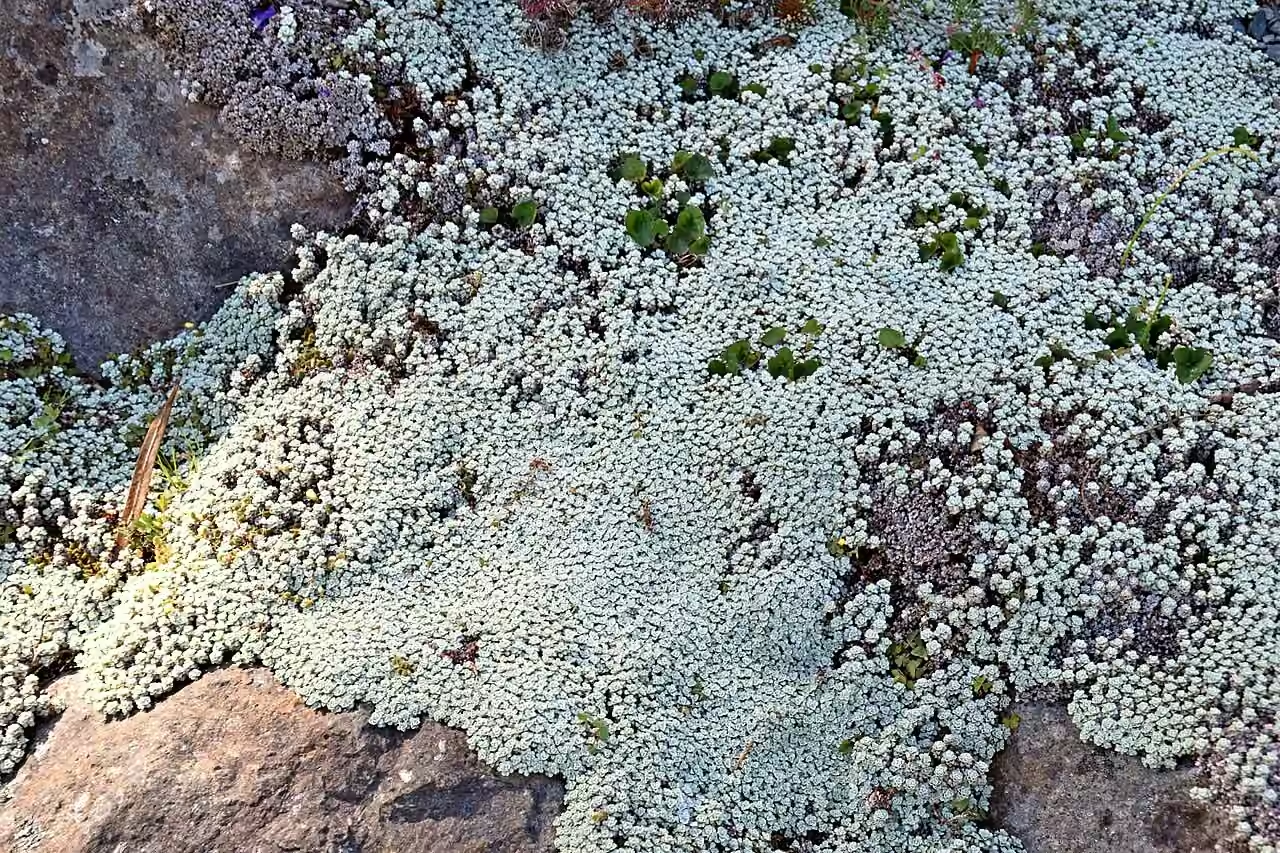
Fan-leaved mat daisy (Raoulia monroi) is a small, flat mat-forming daisy endemic to the eastern South Island, from Nelson and Marlborough through Canterbury to Otago. Its creeping stems root as they spread and carry flattened branchlets with tiny white-woolly leaves arranged in two neat rows, like little fans, a feature that sets it apart from every other Raoulia. It grows on lowland to upland open ground, rocky places, river terraces and stabilised river gravel. It is ranked At Risk - Declining because weeds and land development have removed it from parts of its range. In cultivation it grows easily from rooted pieces in hot, sunny, free-draining sites. Explore more native ground covers in our native plant guide.
Plant Description
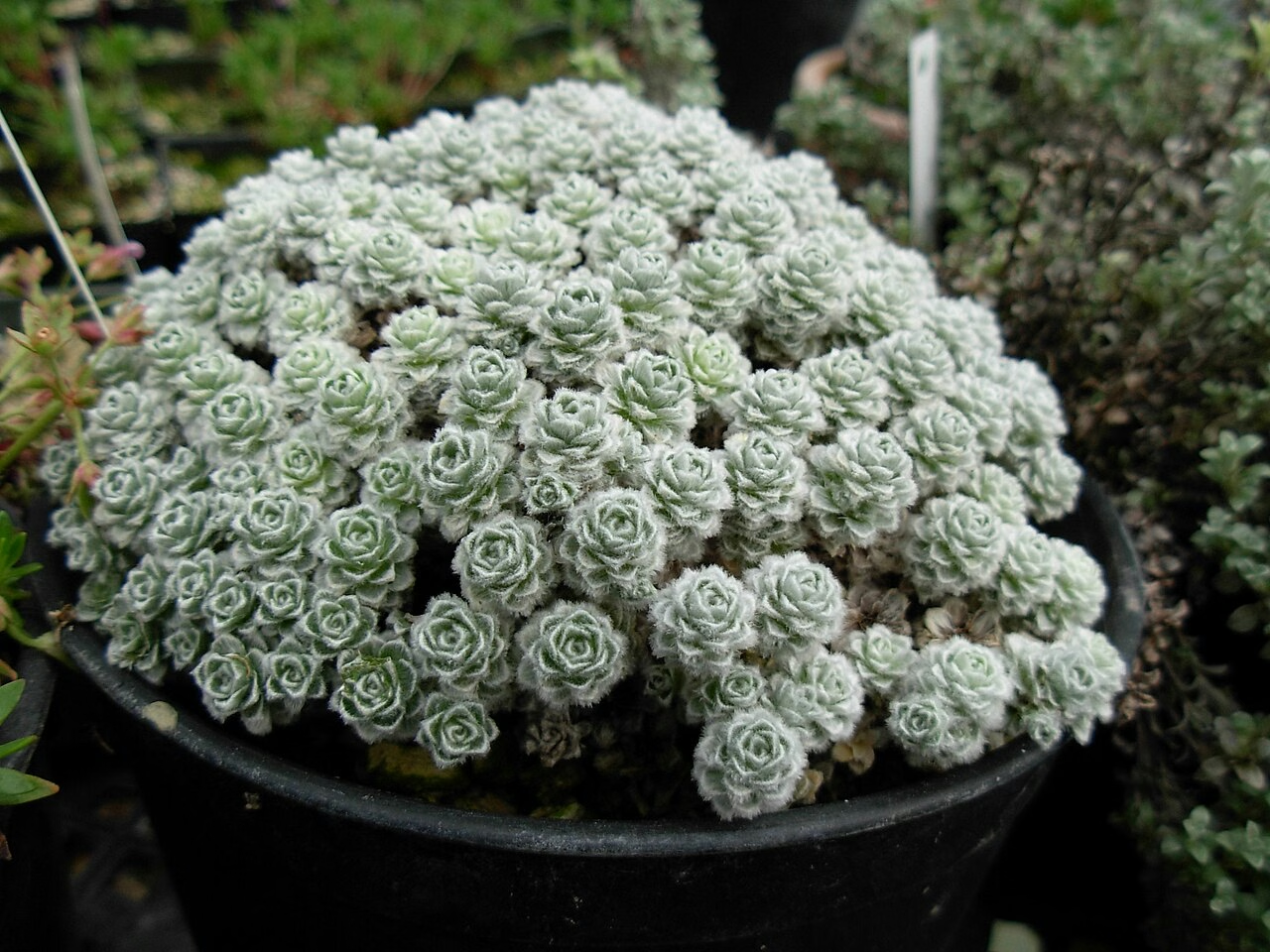
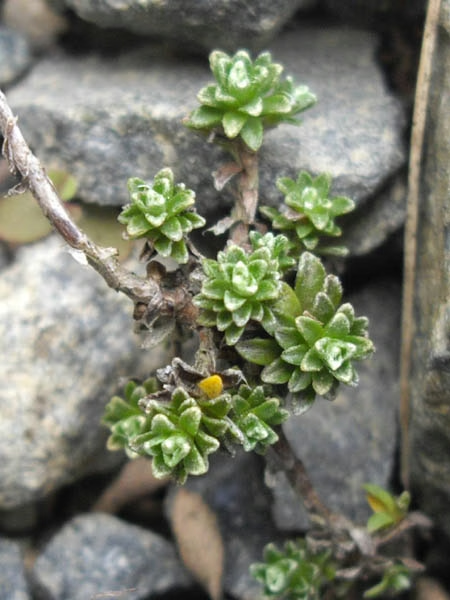
Raoulia monroi has prostrate stems that creep and root as they go, with final branchlets that turn upward and together form close to open flat patches. The leaves are closely arranged in two rows (distichous), only 2 to 3 mm long, linear-oblong to oblong-spathulate with blunt tips. The lower part of each leaf is three-nerved and membranous with white tomentum, while the tip spreads and rolls inward and carries matted white hairs. The overall effect is a grey-white mat of flattened, fan-like shoots.
The flower heads sit at the branch tips and are up to 5 mm across. The inner bracts are pale yellow-green with clear margins and usually dark brown blunt tips. Each head holds about 15 florets, 8 to 10 of them female. The seeds are about 1 mm long, finely hairy, with slender pappus hairs about 3.5 mm long.
The two-ranked leaf arrangement is unique in the genus and is the quickest way to tell it from the common scabweeds Raoulia australis and Raoulia hookeri, which grow in the same dry riverbed and terrace habitats but have leaves spirally arranged around the stem.
Quick Facts
| Scientific Name | Raoulia monroi |
|---|---|
| Height | A few centimetres |
| Spread | Flat patches; spread not recorded |
| Water Needs | Low; dislikes humidity |
| Light | Full sun, hot open sites |
| Frost Tolerance | High |
| Salt Tolerance | No information available; not a coastal plant |
| Growth Rate | Slow to moderate |
| Lifespan | Perennial |
Climate Best Suited to
It suits the dry, continental climate of the eastern South Island, with hot sunny summers, cold frosty winters and low humidity.
Regional Suitability
| City | Climate Suitability |
|---|---|
| Auckland | Low |
| Wellington | Low |
| Christchurch | High |
| Dunedin | Medium |
Plant Habitat
Fan-leaved mat daisy is endemic to the South Island, where NZPCN records it from Nelson, Marlborough, Canterbury and Otago. It occurs mainly east of the main divide in the drier inland basins and river valleys.
It grows on lowland to upland open ground and rocky places, especially on river terraces and stabilised river gravels. These sites are sparsely vegetated, sunny and dry, with shallow stony soils, and the plant depends on them remaining open and free of taller vegetation.
Growing Requirements
Soil Requirements
It needs shallow, stony, freely draining soil of low fertility, like that on old river terraces.
- Gravel, stony silt or rocky ground
- Excellent drainage
- No fertiliser, which only encourages competing weeds
Light Requirements
NZPCN notes it likes hot, sunny conditions.
- Full sun all day
- Keep taller plants from shading the mat
Water Requirements
A plant of dry terraces that is intolerant of humidity.
- Water only in prolonged drought
- Avoid overhead irrigation and humid, sheltered sites
- Never let it sit in wet soil
Planting and Establishing
Plant rooted pieces in spring in a sunny gravel garden, scree, raised rock bed or trough with a gritty mix. Set the plant so its shoots sit on gravel rather than soil, and top-dress around it with fine stone chips to keep the foliage dry.
Choose an open site with free air movement and keep it clear of vigorous neighbours. In humid northern regions it is best grown in a pot of gritty mix that can be sheltered from long wet spells.
Ecological Role
Fan-leaved mat daisy is a member of the low, open plant communities of dry river terraces and stony ground in the eastern South Island, which also support scabweeds, lichens, mosses and small native herbs. Its small heads are likely visited by the native flies, moths and bees that pollinate other mat daisies, though specific pollinator records were not found.
Seeds are wind-dispersed on a pappus. Because it cannot compete with taller plants, it depends on habitats being kept open by drought, poor soils or disturbance, and it is quickly overtopped where taller weeds invade.
Uses & Significance
Garden Uses
A neat, silvery mat for gravel and rock gardens in dry, sunny districts, and a valuable plant for conservation collections.
- Gravel gardens, scree beds and troughs
- Between paving stones in a dry, sunny courtyard
- Ex situ conservation and educational plantings
Ecological Value
As a declining species of dry terrace habitats, each surviving population is significant.
- Part of threatened dryland and riverbed plant communities
- Provides small flowers for native insects
- Indicator of intact open stony habitat
Landscaping Uses
Use fan-leaved mat daisy to soften gravel and rocks in a dryland garden, pairing it with other low natives of eastern South Island terraces such as scabweeds, small tussocks and Coprosma petriei. Its flattened, two-ranked shoots give a fine texture that rewards close viewing, so place it near a path edge.
Keep surrounding plantings low and avoid vigorous groundcovers, as the mat is easily smothered.
Seasonal Care Calendar
Spring
New growth begins and it is the best time to plant or divide.
- Plant rooted pieces into gravel
- Weed carefully around the mat
Summer
Flowering and fruiting times are not documented in the sources consulted, but flower heads appear at the branch tips in the warmer months.
- Enjoy the hot, dry conditions it prefers
- Water only in severe drought
Autumn
Growth slows and seed is shed on the wind.
- Remove fallen leaves from the mat
- Top up stone chip mulch
Winter
The mat rests through cold frosty weather.
- No frost protection needed
- Keep pots out of persistent rain
When to Prune and How Much
No pruning is needed. Simply keep the mat clear of fallen leaves and weeds.
If parts of the mat die back, cut out the dead stems and let the surrounding rooting stems grow back over the gap.
How to Grow Fan-Leaved Mat Daisy
NZPCN states that Raoulia monroi is easily grown from rooted pieces, likes freely draining soil and hot sunny conditions, and is intolerant of humidity. Because its creeping stems root as they spread, division of cultivated plants is the simplest method. Seed may also be possible, but no seed propagation notes specific to this species were found. As a declining species, it should never be dug from the wild; any propagation for restoration should be done in partnership with the Department of Conservation using approved, locally sourced material.
By Division
Rooted pieces lift easily from the edge of a cultivated mat and establish readily in gritty mix.
- In spring, select a section of stem at the edge of the mat that has rooted into the gravel
- Cut it free with some roots attached
- Pot into a mix of mostly grit or pumice with a little compost
- Keep in a sunny, airy place and water sparingly until new growth appears
- Plant out once roots fill the pot
From Seed
Seed is small and wind-dispersed. As with other mat daisies, fresh seed sown on the surface of a gritty mix is the most likely to succeed, but germination rates for this species are not documented.
- Collect ripe seed heads from cultivated plants once the pappus fluffs out
- Sow on the surface of a gritty seed mix and dust with fine grit
- Keep in a bright, airy place, moist but not wet
- Prick out seedlings into small pots of gravelly mix
Pests & Diseases
No specific pests are recorded. The main threat in the wild is competition from taller, more aggressive weed species, which NZPCN identifies as the cause of range loss and decline.
In gardens, humidity and wet conditions cause rot, and slugs may graze young pieces. Grow it in an open, airy position with free drainage.
Cultural Significance
No Māori name or traditional Māori use is recorded for Raoulia monroi in the sources consulted.
Joseph Hooker named the species in honour of Sir David Monro, a nineteenth century Nelson settler, politician and Speaker of the House of Representatives who collected plants and sent specimens to Hooker. It was later also described as Raoulia cheesemanii, now treated as a synonym.
Bonus Tip
If you find a Raoulia mat on a dry river terrace with shoots that look flattened like tiny fern fronds, look closely: two neat rows of white-woolly leaves mean fan-leaved mat daisy. Record the location with a photo on iNaturalist NZ, as NZPCN and DOC are keen to learn of new populations of this declining species.
Related Plants
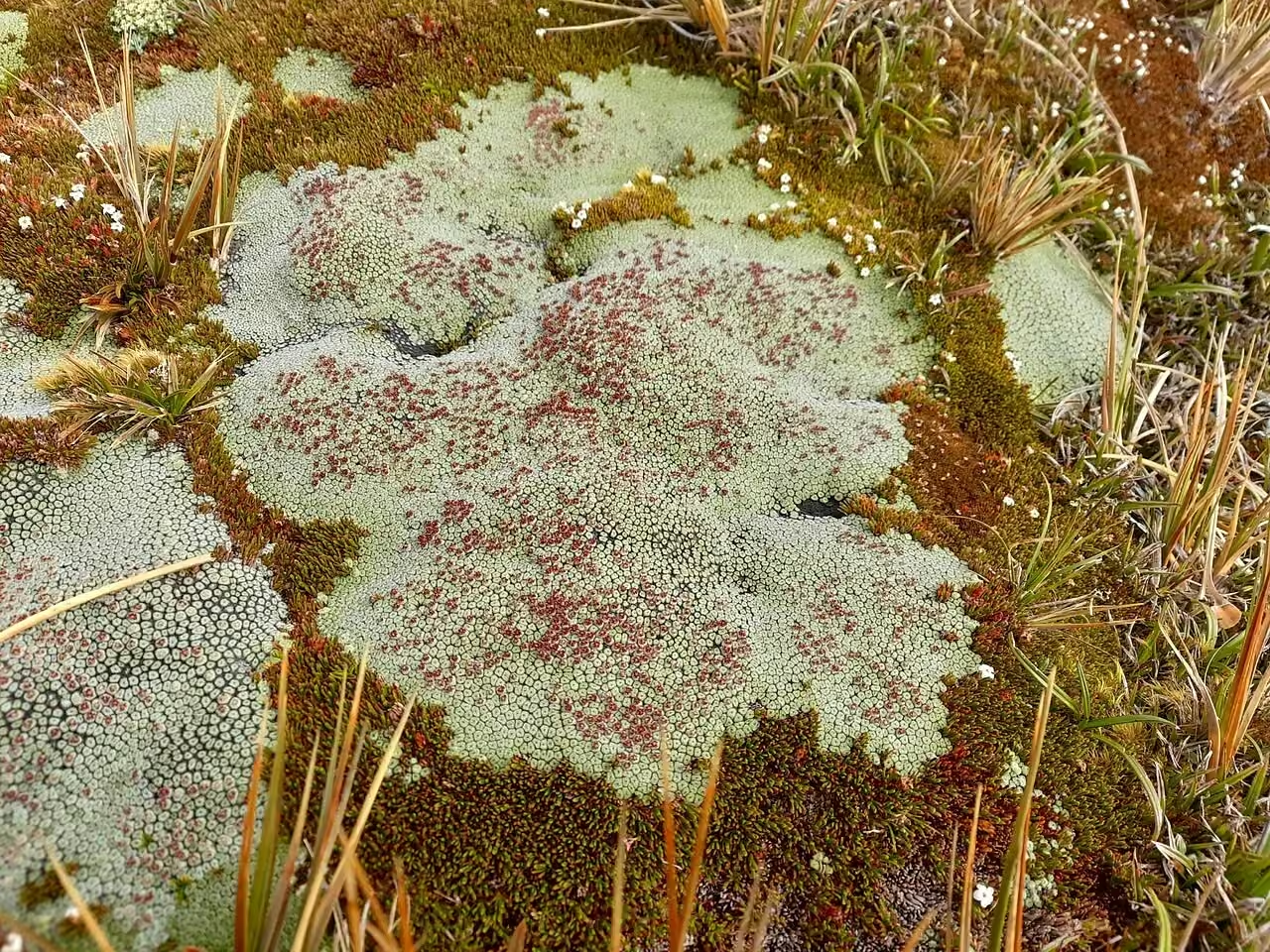
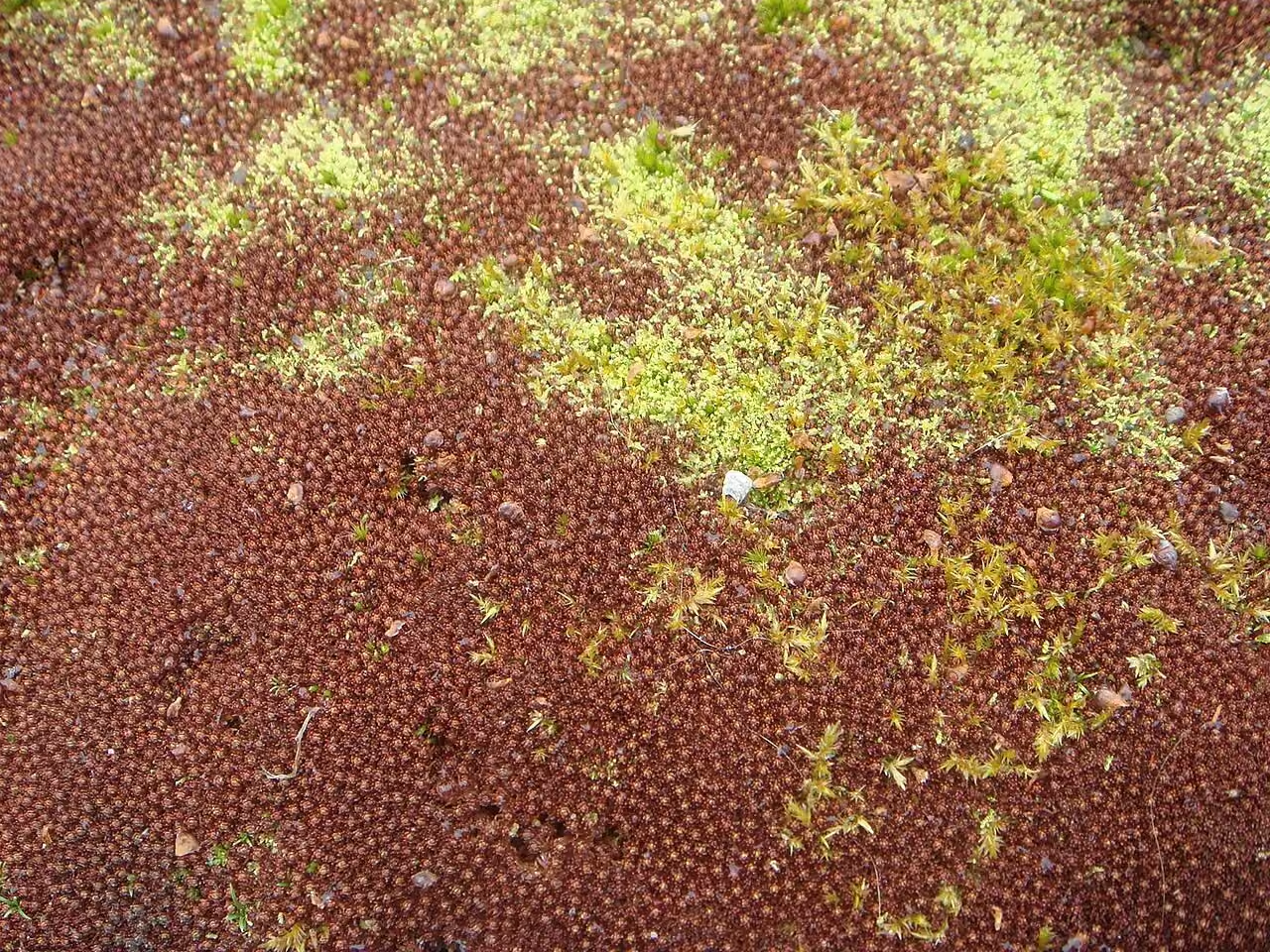
Explore other native plants that share similar characteristics or habitats with Fan-Leaved Mat Daisy (Raoulia monroi), offering further insights into New Zealand's diverse flora. These related species provide context and opportunities for complementary planting in your garden.
Plant Conservation
Raoulia monroi is ranked At Risk - Declining in the 2023 New Zealand Threat Classification, with qualifiers including Sparse, Range Restricted and Partial Decline. It was ranked Threatened - Nationally Vulnerable in 2017, and is Regionally Endangered in Otago (2025). NZPCN reports evidence of range loss and active decline in some areas.
The main threats are habitat modification and loss and competition from weeds. Recommended actions include searching for undiscovered populations, marking and protecting known sites, controlling competing weeds and monitoring populations annually. New discoveries should be reported to the Department of Conservation.
Frequently Asked Questions
How do you identify fan-leaved mat daisy?
NZPCN notes that it differs from all other Raoulia in having its leaves arranged in one plane, in two rows along the stem, so each branchlet looks flattened like a tiny fan or fern frond.
Is Raoulia monroi endangered?
It is ranked At Risk - Declining nationally (2023) and was briefly listed as Nationally Vulnerable in 2017. In Otago it is considered Regionally Endangered, mainly because of weeds and habitat loss.
Can I grow Raoulia monroi in a garden?
NZPCN says it is easily grown from rooted pieces, likes freely draining soil and hot sunny conditions, and is intolerant of humidity, so it suits a gravel or rock garden in drier districts.
Sources and Further Reading
The botanical, growing, and conservation details for Fan-Leaved Mat Daisy (Raoulia monroi) on this page draw on the New Zealand plant references below. Consult them for full technical records and the latest distribution data.