Vegetable Sheep
Raoulia mammillaris
Last updated:
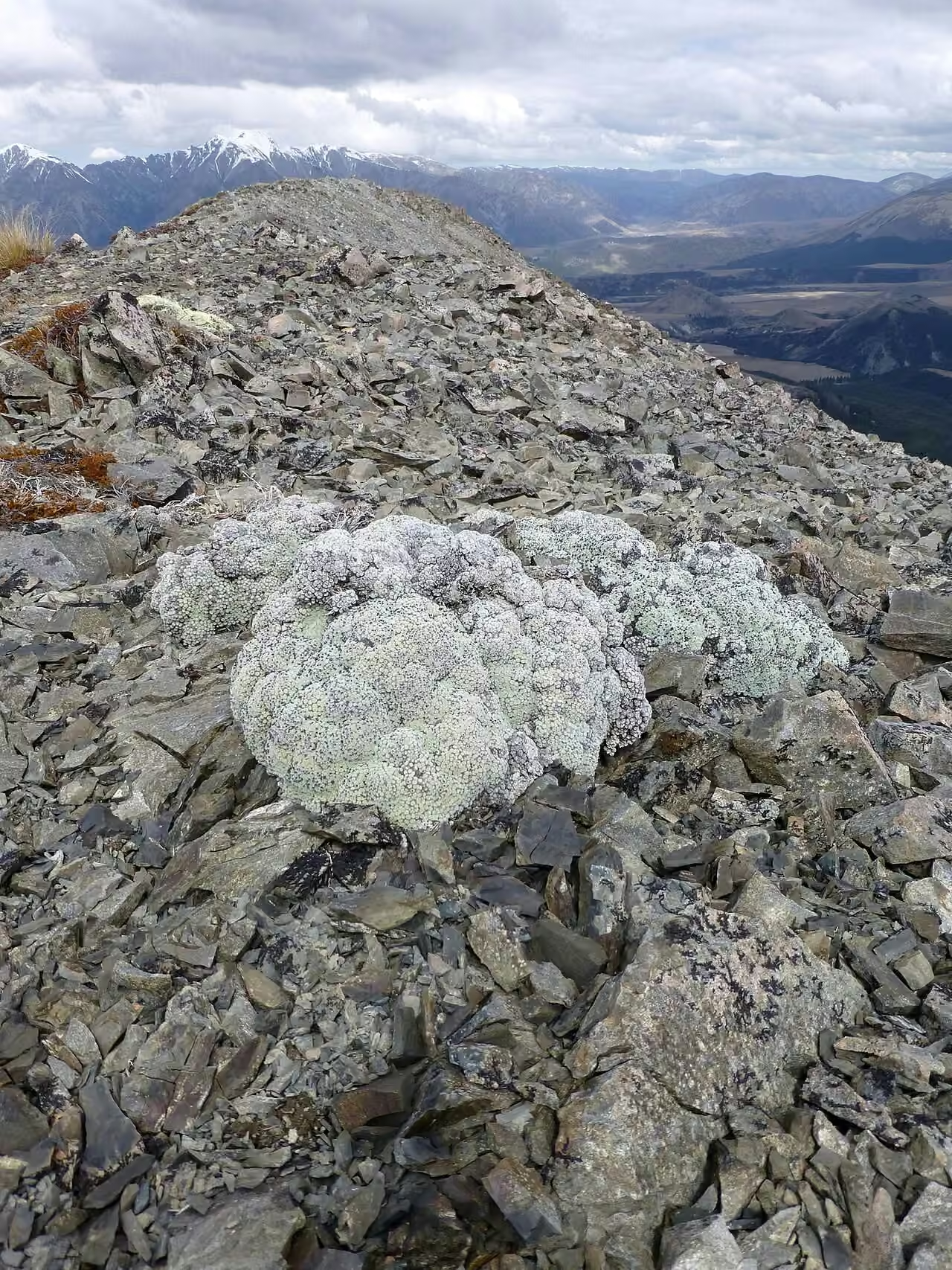
Vegetable sheep (Raoulia mammillaris) is a cushion-forming daisy endemic to the South Island mountains, mostly east of the main divide and centred on Canterbury. A stout woody stock carries densely compacted branches that form hard, rounded cushions up to 50 cm across, covered in tiny overlapping leaves tipped with straight silvery hairs. It grows on rocks, talus, scree and sparsely vegetated fellfield in the subalpine and alpine zones. In early summer the cushions are dotted with small flower heads ringed by white radiating bracts. It is ranked Not Threatened but is very difficult to cultivate and should never be taken from the wild. Explore more native ground covers in our native plant guide.
Plant Description
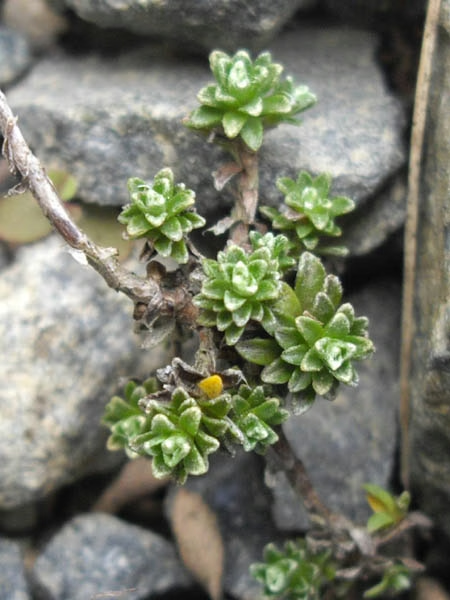
Raoulia mammillaris has a stout, woody stock with branches that are woody at the base and densely compacted into a hard, rounded cushion up to 50 cm in diameter. The leaves are densely overlapping, about 3 to 4 mm long and 1 mm wide, obovate-spathulate with a rounded apex. The lower part of each leaf is hairless on its inner surface and clothed in floccose (cottony) hairs on the outer surface, while the tip is clad on both surfaces with straight ascending hairs that only slightly exceed the leaf apex.
Flower heads reach 6.5 mm across. The inner bracts are about 4 mm long, narrow-oblong with papery margins and white, blunt, radiating tips, and each head holds 10 to 12 florets. The seeds are up to 1.25 mm long, covered in long silky hairs, with a stiff pappus about 3 mm long.
It is most easily confused with Raoulia eximia, another vegetable sheep of the eastern South Island mountains. In Raoulia mammillaris the hairs at the leaf tips barely extend beyond the leaf, so the cushion surface looks tidier and the individual rounded shoot tips are clearly visible, giving the species its name. Haastia pulvinaris, also called vegetable sheep, belongs to a different genus and has larger, more densely woolly shoots.
Quick Facts
| Scientific Name | Raoulia mammillaris |
|---|---|
| Height | Low, rounded cushions |
| Spread | Up to 0.5 m |
| Water Needs | Moist roots with sharp drainage |
| Light | Full sun, open alpine sites |
| Frost Tolerance | High |
| Salt Tolerance | No information available; not a coastal plant |
| Growth Rate | Very slow |
| Lifespan | Perennial, long-lived |
Climate Best Suited to
It suits the cold, dry to moderately wet alpine climate of the eastern Southern Alps, with heavy snow, hard frost, intense sun and strong winds.
Regional Suitability
| City | Climate Suitability |
|---|---|
| Auckland | Low |
| Wellington | Low |
| Christchurch | Low |
| Dunedin | Low |
Plant Habitat
NZPCN gives the range of Raoulia mammillaris as the South Island, mostly east of the main divide and centred on Canterbury. It is a characteristic plant of the greywacke ranges of the Canterbury high country.
It grows from the subalpine to the alpine zone on rocks, talus, scree and sparsely vegetated fellfield. Cushions are often found on stable rock outcrops and ledges, where their dense structure resists wind, frost heave and the abrasion of moving stones.
Growing Requirements
Soil Requirements
It roots deep into rock crevices and stable talus where there is little soil but the roots stay cool and moist.
- Rocky, stony or scree substrates
- Extremely low fertility
- Perfect drainage at the surface
Light Requirements
It needs full exposure on open alpine rock.
- Full sun in the wild
- Cultivated plants appreciate shade from hot lowland afternoon sun
Water Requirements
Snowmelt and rain provide moisture deep in the rock, while wind keeps the cushion surface dry.
- Keep roots moist in the growing season
- Keep the cushion surface dry and well ventilated
- Avoid humid, still conditions
Planting and Establishing
NZPCN describes Raoulia mammillaris as difficult to propagate and states that it should not be removed from the wild. It is rarely available and is a plant only for experienced alpine growers. Such growers usually keep cushion Raoulia in deep clay pots, tufa or crevice beds of pure grit in an alpine house with strong ventilation.
If plants raised in cultivation are available, wedge them into a vertical crevice between rocks so water drains away from the cushion, and keep them cool at the root. Even under ideal conditions losses are common, especially in humid summers.
Ecological Role
Vegetable sheep cushions are tiny ecosystems. The tightly packed shoots trap dead leaves, which break down into a moist, peaty core that holds water and nutrients and shelters small invertebrates through the alpine winter. The flower heads, with their white radiating bracts, attract small alpine flies, moths and native bees, though specific pollinator studies were not found.
Seeds with long silky hairs are spread by wind. Cushions are very slow-growing and long-lived, and once established they help stabilise loose rock and provide sheltered sites where other small plants can establish.
Uses & Significance
Garden Uses
It is not a practical garden plant and is grown only occasionally by alpine specialists.
- Alpine house or tufa specimen for experienced growers
- Botanic garden alpine displays
- Best enjoyed in the wild in the Canterbury mountains
Ecological Value
As one of the classic vegetable sheep, it is a keystone cushion of eastern South Island alpine rock and scree communities.
- Shelters invertebrates in its moist interior
- Stabilises rock and scree surfaces
- Provides nectar for alpine insects in early summer
Landscaping Uses
Raoulia mammillaris has no role in conventional landscaping. In a specialist crevice garden, a single cushion set between upright slabs of rock, with fine grit around it, can recreate the look of a Canterbury alpine outcrop.
In the mountains, look for it on greywacke outcrops and stable scree, where it forms grey-white mounds that genuinely resemble sheep from a distance.
Seasonal Care Calendar
Spring
New shoot growth begins as snow melts from the rocks.
- Leave wild cushions undisturbed
- Start careful watering of cultivated plants
Summer
Flowering runs from November to January, with white-tipped flower heads studding the cushion surface.
- Look for flowering cushions on Canterbury alpine rock
- Avoid stepping on cushions when off track
Autumn
Fruiting continues until April as silky-haired seeds are released.
- Do not collect seed from wild plants
- Reduce watering of cultivated plants
Winter
The cushion endures snow, frost and wind with little or no growth.
- No action needed in the wild
- Keep cultivated plants cold, bright and dry at the surface
When to Prune and How Much
No pruning is required. The hard cushion surface protects the plant, and cutting into it encourages rot.
On cultivated plants, dead patches can be carefully cleaned out with tweezers and filled with fine grit.
How to Grow Vegetable Sheep
NZPCN rates Raoulia mammillaris as difficult to propagate and says it should not be removed from the wild. No detailed propagation protocol was found in the sources consulted, so the methods below describe the general approach alpine specialists use for cushion Raoulia rather than proven techniques for this species. Work only with plants already in cultivation, expect slow growth and heavy losses, and give young plants cool, bright, well-ventilated conditions in a very gritty mix.
From Seed
Fruiting runs from December to April. The seeds carry a stiff pappus about 3 mm long and are released quickly once ripe, so heads on cultivated plants need to be watched closely.
- Collect ripe seed heads from cultivated plants in late summer
- Sow fresh on the surface of a mix of fine pumice with a little sieved compost
- Top with a thin layer of fine grit and keep in a cold, bright, airy place
- Keep evenly moist and allow a winter chill before expecting germination
- Grow seedlings slowly in deep pots for at least a year before planting out
From Cuttings
Small rosettes or clusters of shoots can be removed from the edge of a cultivated cushion. This damages the parent, so it is only appropriate on vigorous established plants.
- In spring, detach a small cluster of shoots with a sliver of woody stem from the cushion margin
- Insert into pure pumice or coarse sand kept just moist
- Keep in bright shade with good ventilation while roots form
- Pot on very carefully, disturbing the roots as little as possible
Pests & Diseases
No significant pests are recorded for wild plants. In cultivation, rot from humid or wet conditions is the main cause of death, and dry roots in pots can kill a cushion quickly.
Mealybugs and aphids can hide in cultivated cushions, and birds may tear at them in search of insects. Good air movement, a grit collar and careful watering are the best defences.
Cultural Significance
No Māori name or traditional Māori use is recorded for Raoulia mammillaris in the sources consulted.
Joseph Hooker described the species, and its large woolly cushions are among the plants that gave vegetable sheep its name, said to come from shepherds who mistook distant cushions for sheep. The genus honours Étienne Raoul, a French naval surgeon who published on New Zealand plants in the 1840s. It has also been placed in Psychrophyton as Psychrophyton mammillare.
Bonus Tip
To pick Raoulia mammillaris from Raoulia eximia in the field, look closely at a shoot tip with a hand lens. If the leaves end in neat, rounded tips with hairs barely projecting beyond them, giving a pattern of small rounded bumps, you are looking at Raoulia mammillaris.
Related Plants
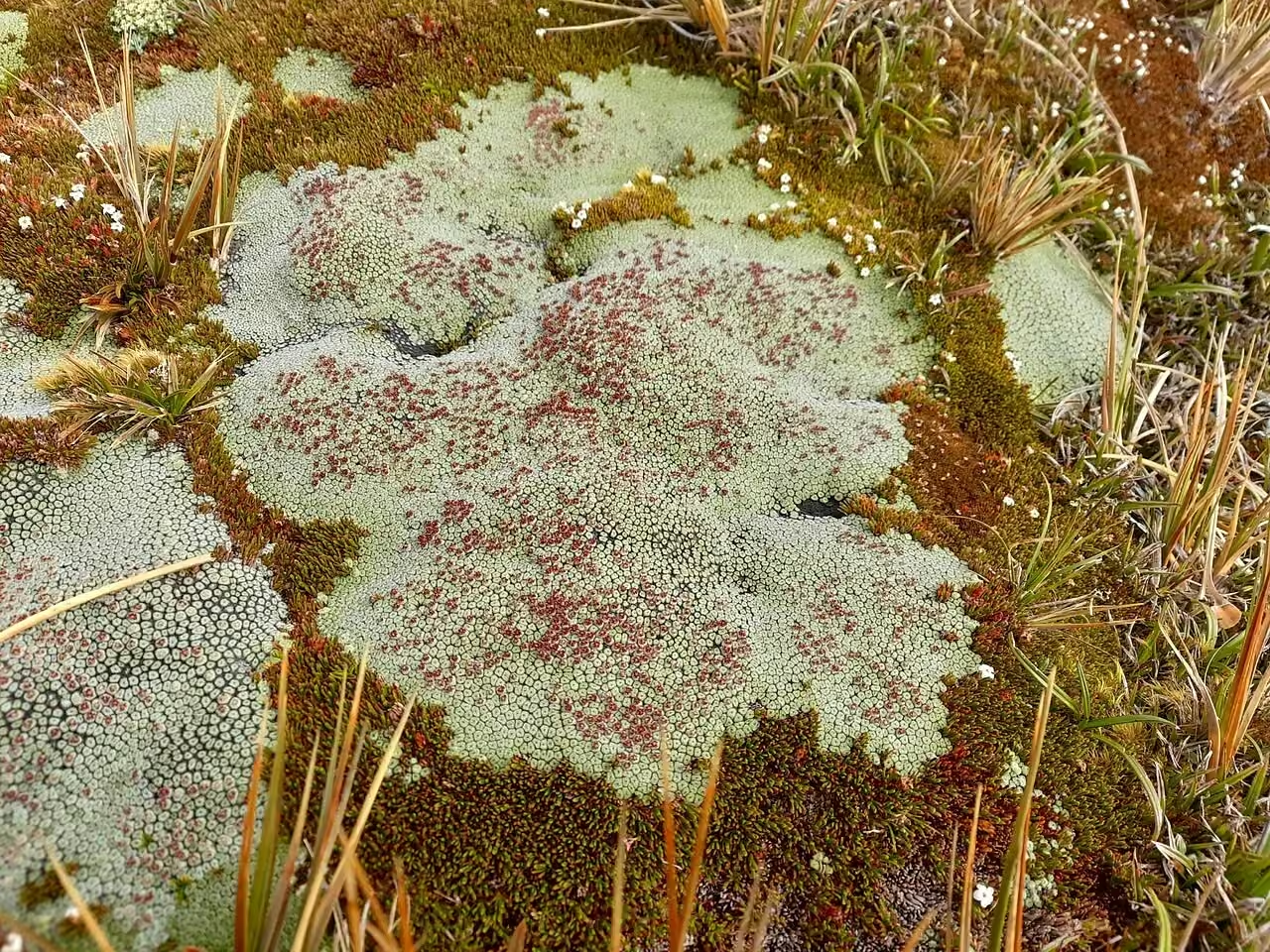
Explore other native plants that share similar characteristics or habitats with Vegetable Sheep (Raoulia mammillaris), offering further insights into New Zealand's diverse flora. These related species provide context and opportunities for complementary planting in your garden.
Plant Conservation
Raoulia mammillaris is ranked Not Threatened in the 2023 New Zealand Threat Classification and has held that ranking in every assessment since 2004.
Large cushions take many years to form and are easily damaged by trampling, rock climbing or removal for collections. Leaving cushions undisturbed, staying off them when crossing scree, and never collecting plants from the wild are the most useful actions.
Frequently Asked Questions
How big does Raoulia mammillaris grow?
Flora of New Zealand records hard rounded cushions up to 50 cm in diameter, built from densely packed woody branches. Cushions of this size take many years to develop.
When does Raoulia mammillaris flower?
NZPCN gives flowering from November to January and fruiting from December to April. The flower heads are up to 6.5 mm across with white radiating bract tips.
How do you tell Raoulia mammillaris from Raoulia eximia?
Both form woolly cushions in the Canterbury mountains. Raoulia mammillaris has hairs that barely extend beyond the leaf tip, giving a neater, harder surface, while Raoulia eximia is shaggier with longer hairs projecting past the leaves.
What does mammillaris mean?
NZPCN explains that the epithet mammillaris means teat-bearing, a reference to the rounded, nipple-like shoot tips that pattern the surface of the cushion.
Sources and Further Reading
The botanical, growing, and conservation details for Vegetable Sheep (Raoulia mammillaris) on this page draw on the New Zealand plant references below. Consult them for full technical records and the latest distribution data.