Buttercup
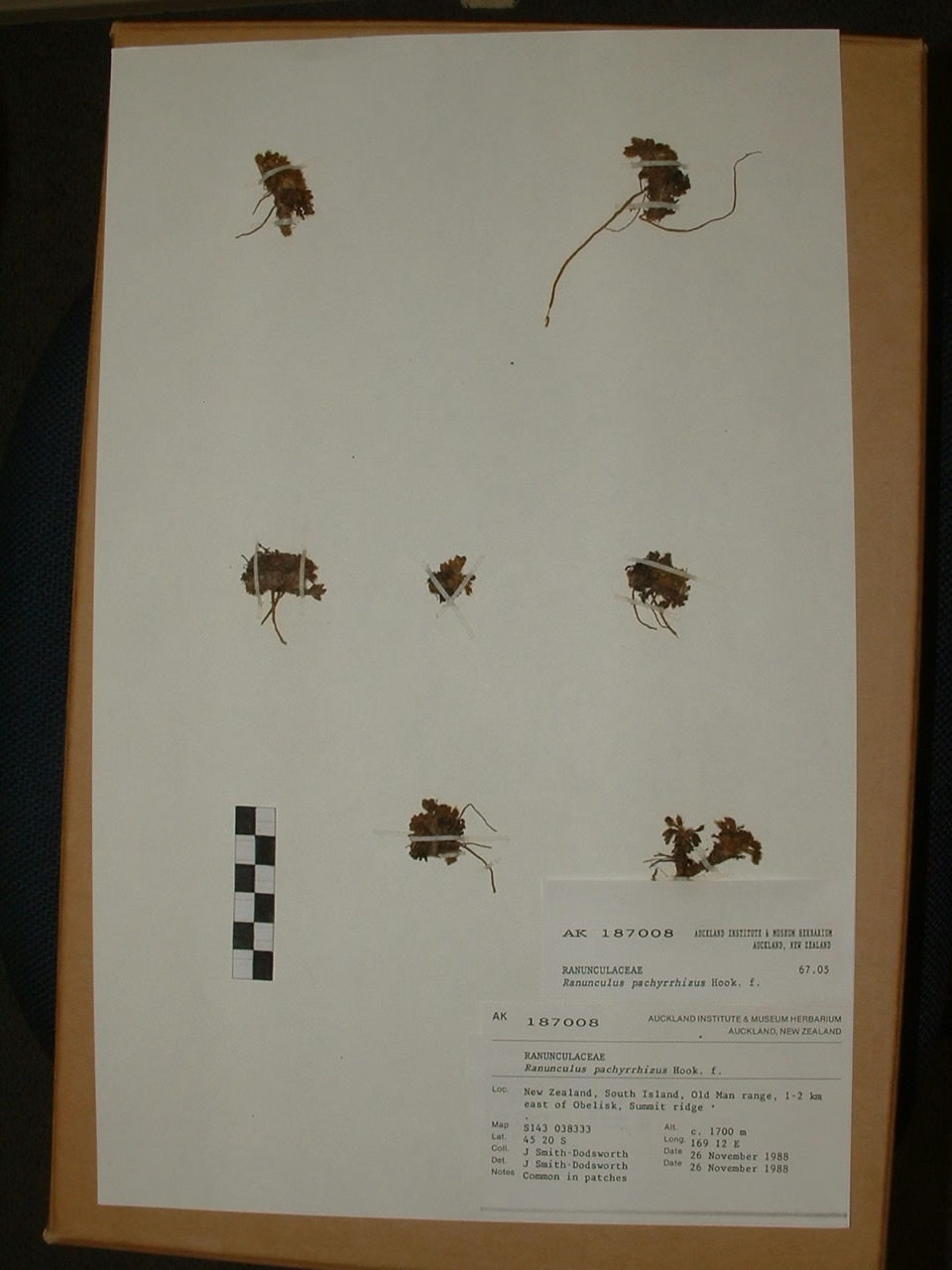
Ranunculus pachyrrhizus
Last updated:
Ranunculus pachyrrhizus is a tiny, fleshy alpine buttercup endemic to the mountains of Central Otago and northern Southland. It grows no more than about 4 cm tall, with tufts of softly hairy, finely divided leaves at the tips of a thick, branching rhizome that is often exposed on the ground surface. Single yellow flowers 1.5 to 2.5 cm across appear from December into autumn. It lives at 1200 to 2150 m on peat around tarns and in ground fed by meltwater from summer snowbanks on ranges such as the Old Man, Pisa and Remarkables. The name means thick root. Explore more native flowering plants in our native plant guide.
Plant Description
Ranunculus pachyrrhizus is a dwarf perennial reaching only about 4 cm tall. Its most distinctive feature is a stout, fleshy, branching rhizome that is often exposed on the soil surface, with small rosettes of leaves tufted at the end of each branch. The leaves are 1.5 to 3 cm long, fleshy and softly hairy, and divided once or twice into three, giving them a finely lobed outline.
Each short, hairy scape carries a single flower 1.5 to 2.5 cm across, large for such a small plant. There are 8 to 15 narrow, glossy yellow petals, each with one to three nectaries 2 to 4 mm above the base. The fruiting head holds roughly 60 to 80 plump achenes, hairless or sparsely hairy, each with a body about 1 mm long and a stout, straight beak of similar length.
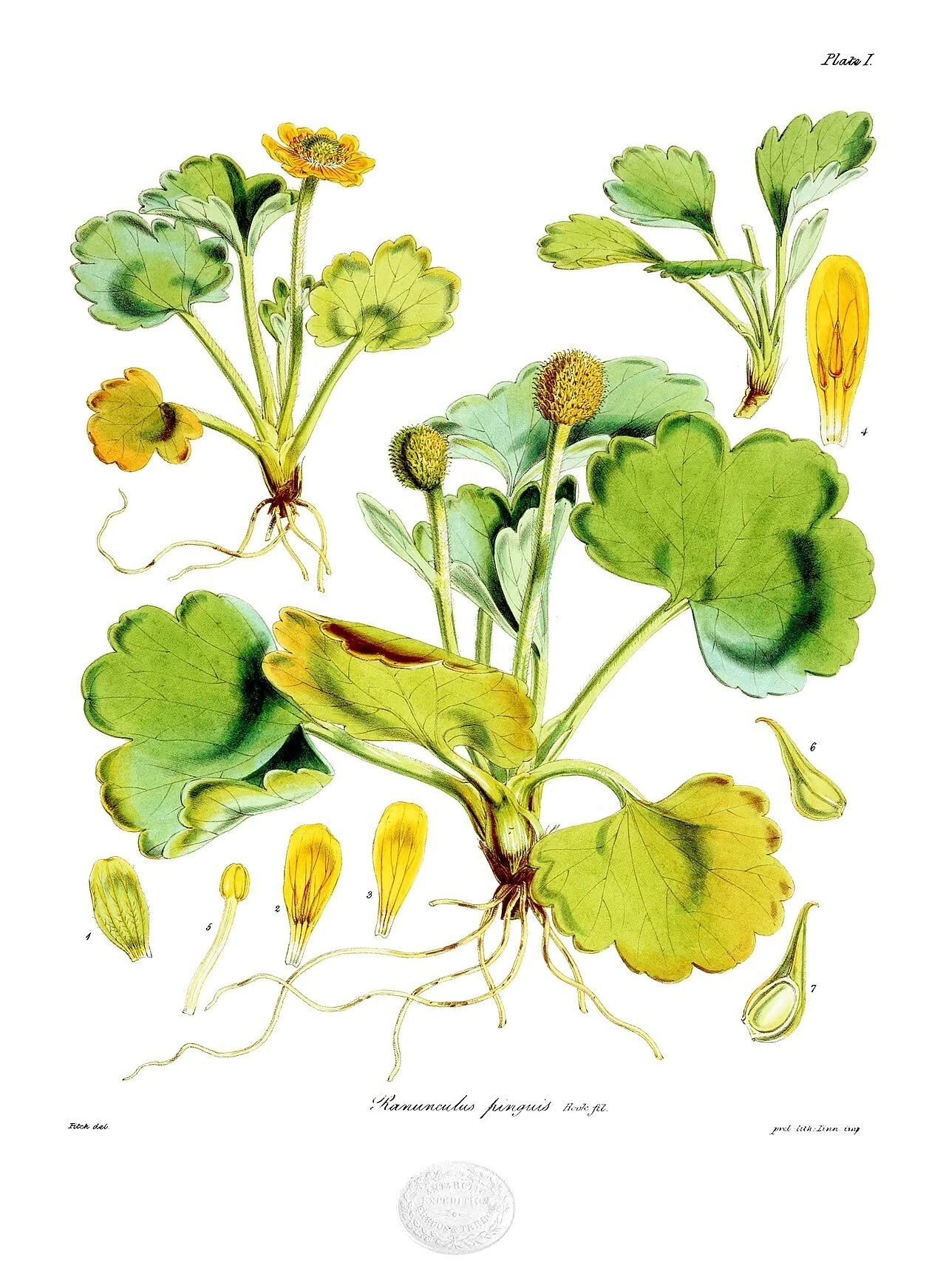
Its tiny size, exposed thick rhizome and many-petalled yellow flowers separate it from other buttercups of the Otago snowbanks. NZPCN notes that the subantarctic R. pinguis most closely resembles it, differing in leaf hairiness, leaf lobing and rhizome structure, but that species grows only on the Auckland and Campbell islands.
Quick Facts
| Scientific Name | Ranunculus pachyrrhizus |
|---|---|
| Height | Up to 0.04 m |
| Spread | Small patches of rosettes, typically under 0.2 m across |
| Water Needs | Constantly moist; snowmelt and peat habitats |
| Light | Full sun |
| Frost Tolerance | Very high; a high alpine species |
| Salt Tolerance | No information available; not a coastal plant |
| Growth Rate | Very slow |
| Lifespan | Perennial |
Climate Best Suited to
It is adapted to a harsh continental alpine climate with long snow cover, short summers, hard frosts and drying winds, relieved by constant meltwater in the growing season.
Regional Suitability
| City | Climate Suitability |
|---|---|
| Auckland | Low |
| Wellington | Low |
| Christchurch | Low |
| Dunedin | Low |
Plant Habitat
The species is confined to the South Island ranges of Central Otago and northern Southland. The Flora of New Zealand records it from mountains near Lake Wānaka, the Pisa Range, Cardrona Range, Old Man Range and the Remarkables in Otago, and from the Garvie Mountains in Southland.
It grows between 1200 and 2150 m in peat at the edges of tarns and in ground soaked by meltwater from snowbanks that persist into summer. These snowbank and cushion-bog sites are among the coldest and shortest-season habitats in New Zealand.
Growing Requirements
Soil Requirements
In the wild it roots into wet alpine peat and saturated fine soil kept cold by snowmelt.
- Peaty, cool, constantly moist substrate
- Low nutrient levels
- Never allowed to dry out in the growing season
Light Requirements
Its snowbank and tarn habitats are open and treeless, so it receives full alpine light once the snow melts.
- Full sun
- Cool temperatures matter more than light levels
Water Requirements
Constant moisture from melting snow is essential. The plant is dormant under snow in winter and grows quickly once it is uncovered.
- Wet from spring through summer
- Cold, flowing or seeping water mimics its habitat
- No tolerance of summer drought
Planting and Establishing
No reliable cultivation records were found for Ranunculus pachyrrhizus, and it is not available in the nursery trade. Its requirements for long cold dormancy and constant meltwater make it very difficult to grow outside the mountains.
It is best appreciated in its natural setting, for example on the Old Man Range or Remarkables in midsummer, and should not be dug from the wild.
Ecological Role
Its flowers open in the brief window after snow retreats from December onwards, providing nectar for the native flies and other insects active on the high ranges at that time. The species continues flowering into April, making it a late food source as well.
Plants form part of the snowbank and tarn margin community with cushion plants, mosses and small herbs. The exposed rhizome probably stores reserves that allow it to grow and flower rapidly in a very short season.
Uses & Significance
Garden Uses
It has no practical garden use; its value lies in the wild alpine plant communities of Otago.
- Botanical interest for alpine enthusiasts
- Subject for photography on the Central Otago ranges
- Indicator of intact snowbank habitat
Ecological Value
It is one of the specialist plants of Central Otago's snowbanks and tarn margins, a habitat type limited to the highest ranges.
- Late summer nectar for alpine insects
- Part of rare snowbank and cushion-bog communities
- Endemic to Otago and northern Southland
Landscaping Uses
This species is not suited to landscape planting. Anyone designing alpine displays should use cultivated, easier buttercups or cushion plants instead and leave R. pachyrrhizus in its mountain habitat.
On the ranges themselves, keeping vehicles and foot traffic off saturated snowbank ground is the best way to protect it.
Seasonal Care Calendar
Spring
Plants are still under snow for most of spring on the high ranges.
- Dormant beneath snow
- Rhizome holds reserves
Summer
Leaves expand rapidly as snow melts and flowering begins in December.
- Peak flowering in midsummer
- Fruits from January
Autumn
Flowering and fruiting continue into April before the first snow.
- Achenes shed close to the parent
- Leaves die back with frost
Winter
The plant is buried under deep snow, which insulates it from extreme cold.
- Fully dormant
- Snow cover protects the rhizome
When to Prune and How Much
Pruning does not apply to this tiny wild alpine herb. The leaves die back naturally in autumn and the rhizome persists through winter.
Avoid trampling exposed rhizomes, which are easily broken and are the plant's only reserve.
How to Grow Buttercup
There are no published propagation records for Ranunculus pachyrrhizus, and plants or seed should not be taken from the wild without a permit from the Department of Conservation or the landowner. The notes below describe the methods generally used by alpine growers for comparable snowbank buttercups, and anyone attempting it should expect slow and uncertain results.
From Seed
Alpine buttercups from snowbank habitats generally need fresh seed and a long cold, moist period before germination. A refrigerator can provide this if natural winter cold is lacking.
- Use seed only from a lawful source such as a botanic garden or permitted collection
- Sow fresh achenes in autumn on a mix of peat and fine grit
- Keep the tray constantly moist and cold, outdoors in a cold district or refrigerated for several months
- Move to a cool, bright position in spring and watch for slow germination
- Grow seedlings on in shallow trays standing in cold water
- Keep summer temperatures as low as possible
By Rhizome Division
Because the plant branches from a stout rhizome, a cultivated plant with several rosettes could in principle be divided, but there is no recorded experience of this with the species. Any such trial should be treated as an experiment and recorded, since it would add to what is known about the species.
- Divide only cultivated plants, in early summer as growth starts
- Cut the rhizome so each piece carries a rosette and roots
- Replant in wet peaty grit and keep cold and shaded until established
Pests & Diseases
No specific pests or diseases are recorded for Ranunculus pachyrrhizus. On the Central Otago ranges, hares and rabbits graze alpine herbs, and wetland habitats can be damaged by trampling and vehicles.
Any attempt at cultivation would be most at risk from warm temperatures and rot rather than from insects.
Cultural Significance
No Māori name or traditional use is recorded for Ranunculus pachyrrhizus in the sources consulted.
Joseph Dalton Hooker described the species, and it was later illustrated and described in detail by F.J.F. Fisher in his 1965 monograph The Alpine Ranunculi of New Zealand, still a key reference for this group.
Bonus Tip
To find it, visit late-lying snowbanks and tarn margins on the Old Man Range or the Remarkables in January and look for clusters of tiny furry rosettes sitting on a thick, exposed root, often right at the edge of the meltwater.
Related Plants
Explore other native plants that share similar characteristics or habitats with Buttercup (Ranunculus pachyrrhizus), offering further insights into New Zealand's diverse flora. These related species provide context and opportunities for complementary planting in your garden.
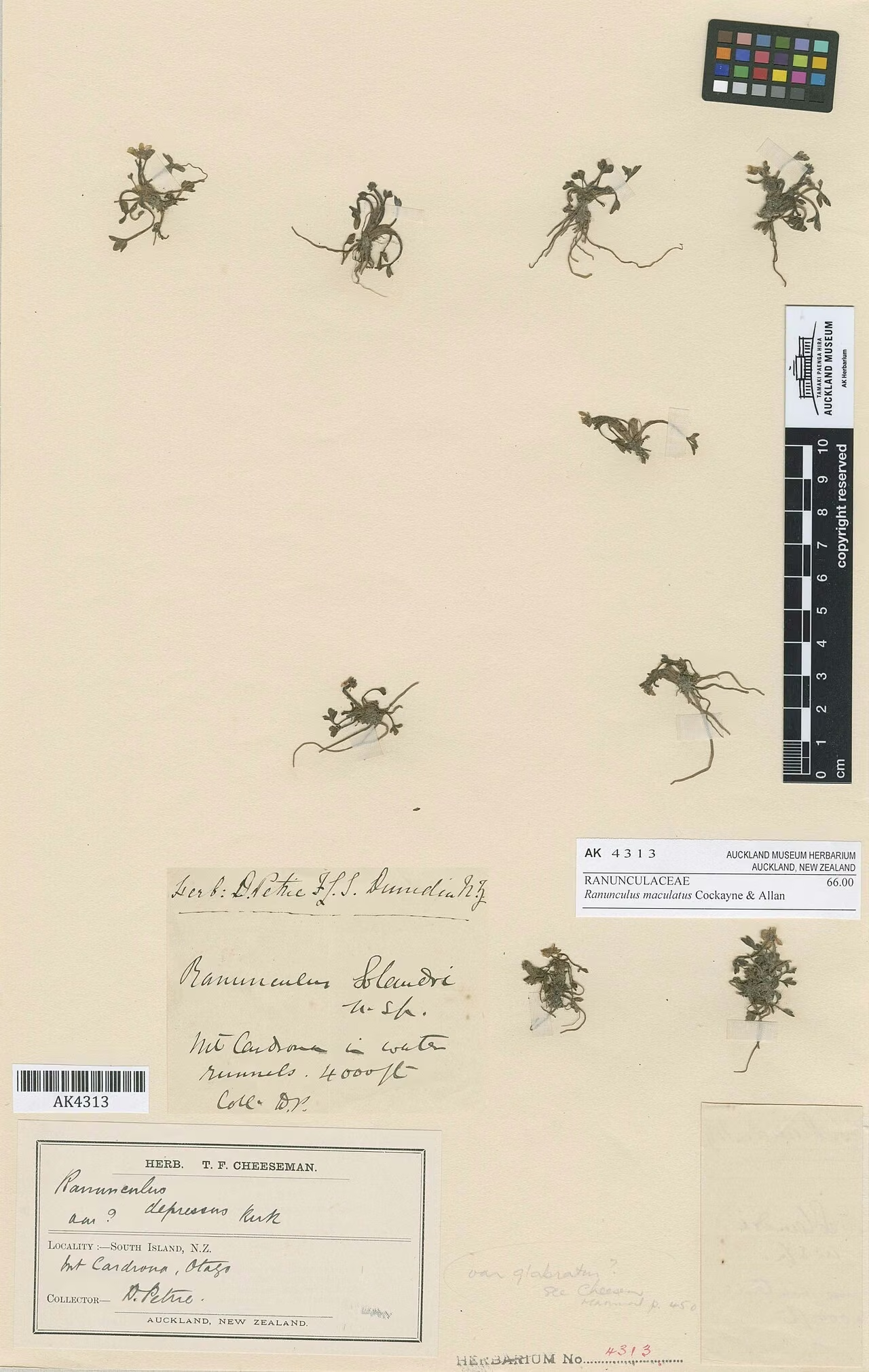
Ranunculus maculatus
Ranunculus maculatus
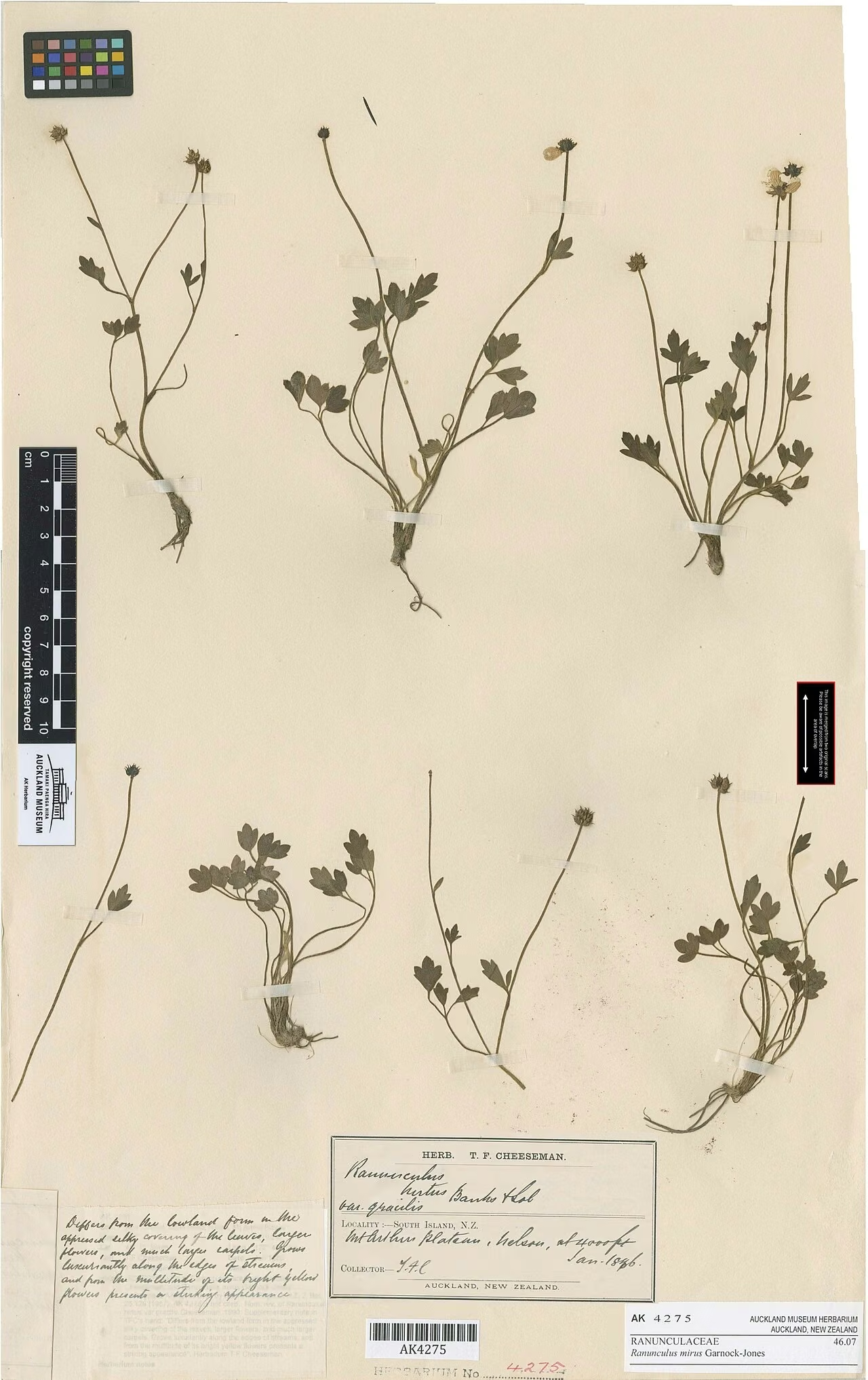
Ranunculus mirus
Ranunculus mirus
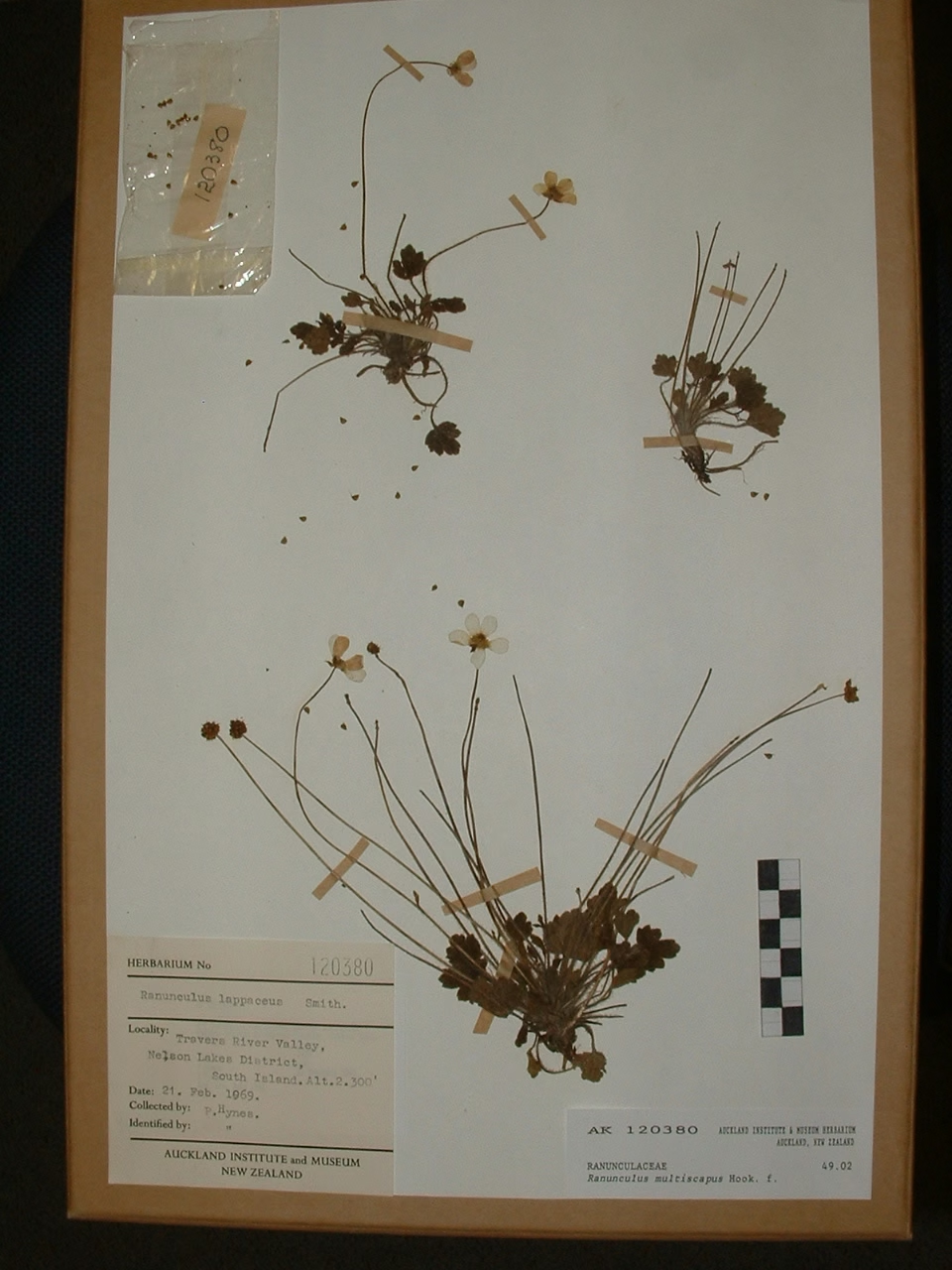
Grassland Buttercup
Ranunculus multiscapus
Mount Egmont Buttercup
Ranunculus nivicola
Ranunculus pilifer
Ranunculus pilifer
Ranunculus pinguis
Ranunculus pinguis
Ranunculus recens
Ranunculus recens
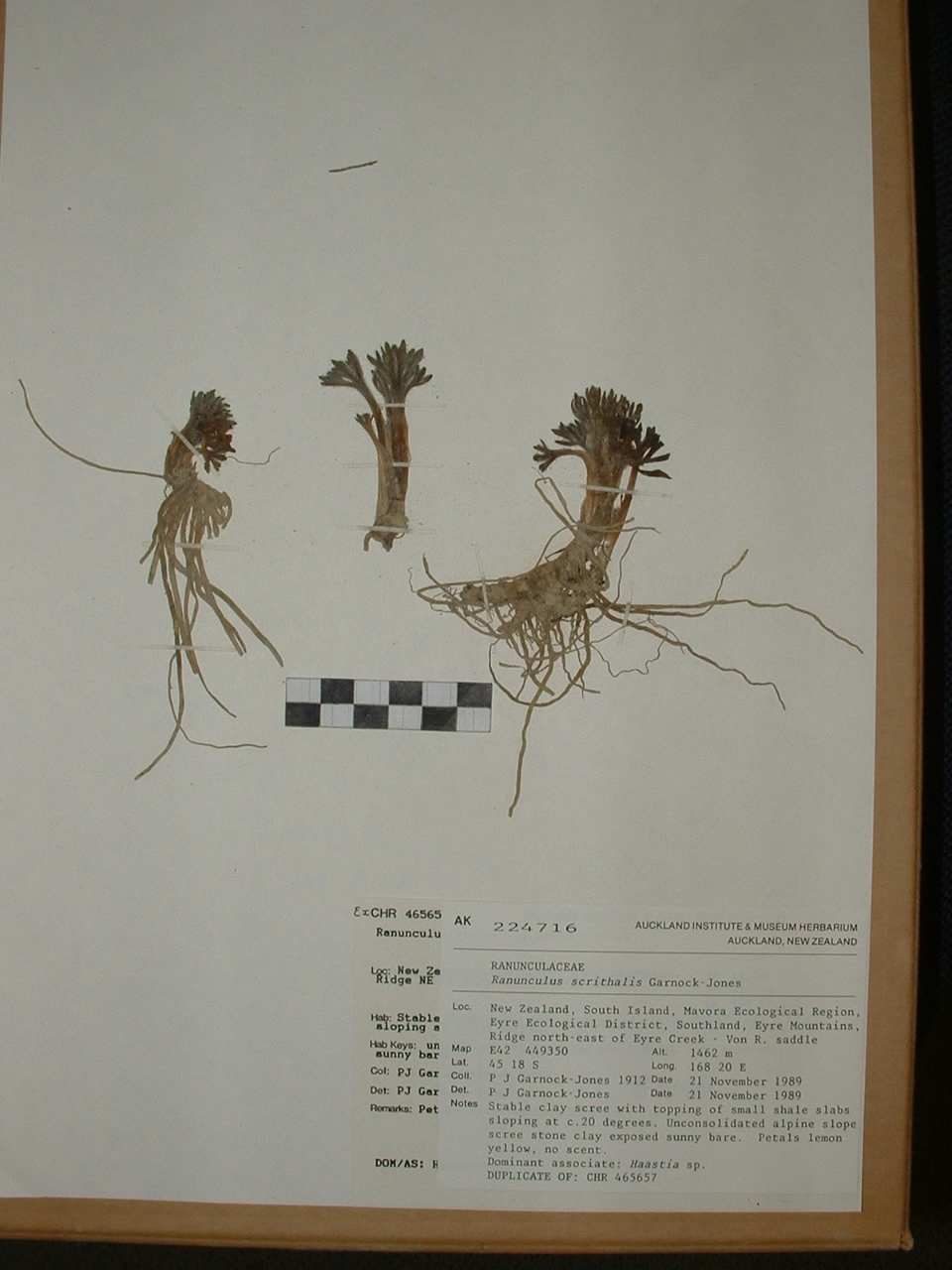
Eyre Mountains Buttercup
Ranunculus scrithalis
Plant Conservation
Ranunculus pachyrrhizus is ranked Not Threatened nationally (NZTCS 2023), but the Otago regional threat assessment (2025) lists it as Regionally At Risk - Regionally Naturally Uncommon because it is confined to a few ranges.
Its snowbank habitats are vulnerable to warming that reduces snow lie, and to disturbance from vehicles and grazing. Protecting high alpine wetlands and keeping off saturated ground help secure it.
Frequently Asked Questions
What does pachyrrhizus mean?
The name comes from Greek words for thick and root, describing the stout, branching rhizome that is often exposed on the soil surface with leaf rosettes clustered at its tips.
Where can you find Ranunculus pachyrrhizus?
It grows on the high ranges of Central Otago, including the Pisa, Cardrona and Old Man ranges, the Remarkables and mountains near Lake Wānaka, and on the Garvie Mountains in Southland.
Is Ranunculus pachyrrhizus rare?
Nationally it is ranked Not Threatened, but because it is confined to a small part of Otago and Southland the Otago regional assessment lists it as Regionally Naturally Uncommon.
Sources and Further Reading
The botanical, growing, and conservation details for Buttercup (Ranunculus pachyrrhizus) on this page draw on the New Zealand plant references below. Consult them for full technical records and the latest distribution data.