Buttercup
Ranunculus mirus
Last updated:
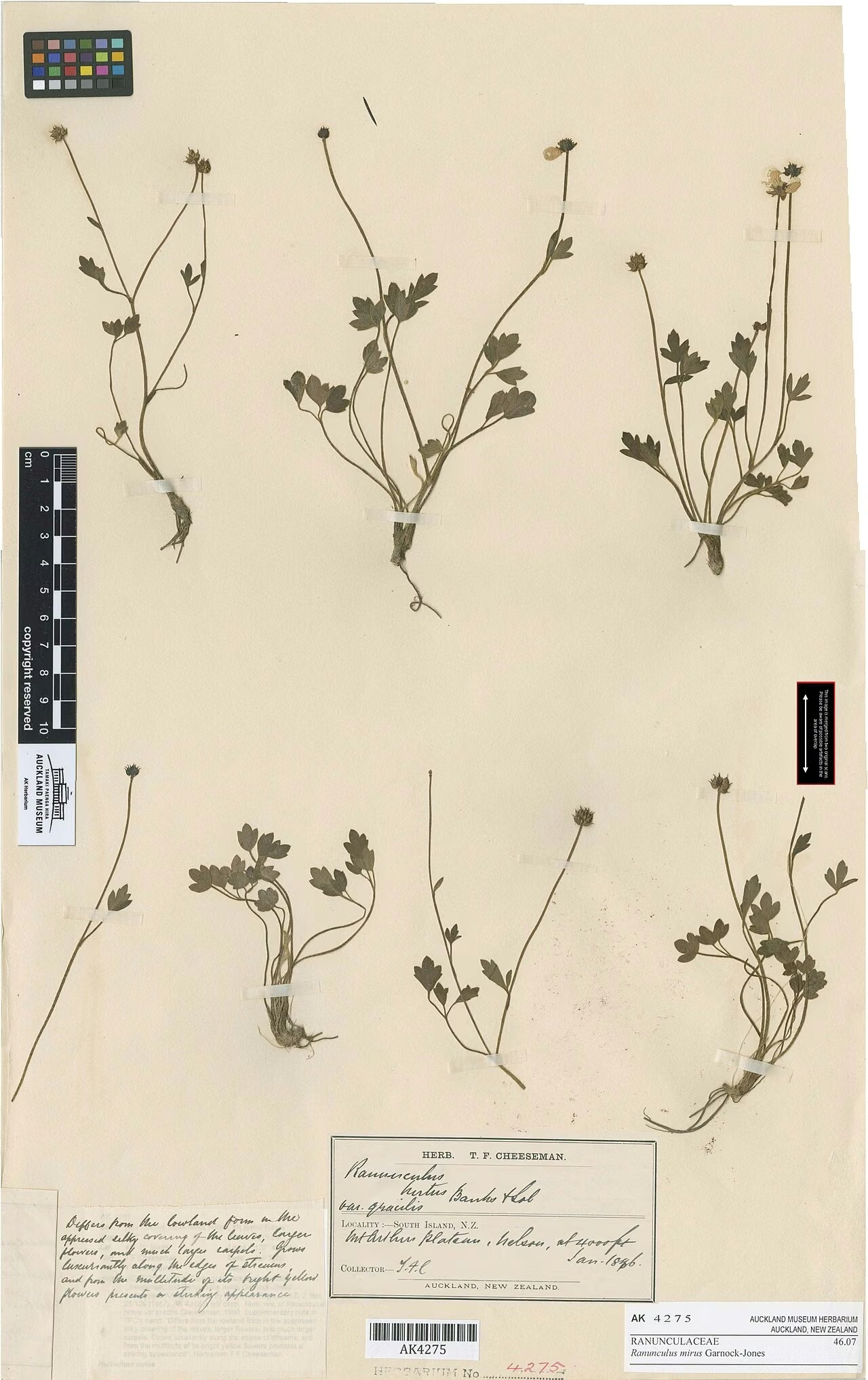
Ranunculus mirus is a small tufted alpine buttercup endemic to the marble and limestone country of north-west Nelson. It forms compact rosettes of finely divided, bright to dark green leaves covered in flattened hairs, and from November to February produces bright yellow flowers 18 to 25 mm across, singly or in twos and threes. It grows between 1200 and 1500 m among short grasses and herbfield on karst, in Kahurangi National Park from the Peel Range and Mt Arthur south to the Wangapeka Range. Although its range is small, it is considered secure and ranked Not Threatened. Explore more native flowering plants in our native plant guide.
Plant Description
Ranunculus mirus is a perennial herb forming small tufted rosettes without rhizomes. The rosette leaves have long stalks clothed in flattened (subappressed) hairs, and blades 7 to 15 mm long and 10 to 18 mm wide that are deeply divided into three, the stalked leaflets obovate, shallowly to deeply three-lobed and toothed. They are bright to dark green. One to three small leaves on the flowering stems are stalkless or shortly stalked, either narrow and entire or obovate and three-cleft.
Flowers are 18 to 25 mm across, solitary or two to three per stem, on hairy stalks. The sepals spread outwards and are bristly. The five bright yellow, obovate petals each have a single nectary about 1 mm from the base, covered by a narrow oblong scale. The receptacle is hairy, and the fruit is a rounded head of 15 to 20 dark brown to dark purplish-brown achenes, each 2.5 to 3 mm long with a curved, hook-tipped beak 1 to 1.5 mm long.
It is related to Ranunculus reflexus, from which it differs in its appressed stem, stalk and leaf hairs, three-parted leaves, spreading (not reflexed) sepals and its fewer, larger, darker achenes. It differs from Ranunculus foliosus in having flattened rather than spreading hairs and longer achene beaks (1 to 1.5 mm compared with 0.5 to 1 mm).
Quick Facts
| Scientific Name | Ranunculus mirus |
|---|---|
| Height | 0.05-0.15 m |
| Spread | 0.05-0.1 m |
| Water Needs | Moderate; moist but free-draining karst soils |
| Light | Full sun to light shade among short grasses |
| Frost Tolerance | High; alpine species |
| Salt Tolerance | None recorded; an inland alpine plant |
| Growth Rate | Slow |
| Lifespan | Perennial |
Climate Best Suited to
It suits the cool, wet alpine climate of north-west Nelson's mountains, with high rainfall, frequent cloud, winter snow and frost. Warm, humid lowland conditions are poorly suited.
Regional Suitability
| City | Climate Suitability |
|---|---|
| Auckland | Low |
| Wellington | Low |
| Christchurch | Low |
| Dunedin | Low |
Plant Habitat
Ranunculus mirus is endemic to north-west Nelson in the South Island. It is known from Kahurangi National Park, from the Peel Range and Mt Arthur south to the Wangapeka Range.
It is an alpine plant of 1200 to 1500 m and a karst endemic, confined to marble and limestone soils and karrenfield, the fluted and fissured bare limestone pavements of the Arthur Range and nearby ranges. There it grows among short grasses and in herbfield.
Growing Requirements
Soil Requirements
It is restricted to soils derived from marble and limestone, typically shallow pockets among karst rock.
- Calcareous, lime-rich soils
- Shallow, free-draining pockets in fissured karst
- Low to moderate fertility
Light Requirements
It grows in open alpine grassland and herbfield, receiving plenty of light but some shelter from surrounding grasses.
- Full sun to light dappled shade from grasses
- Avoid deep shade
Water Requirements
Rainfall in its range is high, but karst drains rapidly, so the plant sits in moist yet freely draining conditions.
- Regular moisture during the growing season
- No waterlogging around the crown
Planting and Establishing
Ranunculus mirus is not commercially available, and its entire range lies within Kahurangi National Park, so wild plants must not be removed. Seed for cultivation should come from authorised conservation or research collections.
If grown, use a gritty mix with crushed limestone or marble chips, in a cool spot with good air movement. NZPCN notes that most alpine buttercups get powdery mildew at low altitude and dislike humidity, so an alpine house or cold, airy rock garden in a southern location is the best chance of success.
Ecological Role
Flowering runs from November to February and fruiting from December to April. Its bright yellow flowers attract small flies, native bees and other insects active in alpine herbfield, though specific pollinators have not been studied.
It is part of the distinctive limestone and marble flora of north-west Nelson, an area noted for a high number of plants found nowhere else. The hooked achene beaks may help the fruit catch on fur, feathers or clothing, though dispersal has not been studied.
Uses & Significance
Garden Uses
Garden use is limited to specialist alpine growers.
- Alpine house pans with limestone grit
- Limestone rock gardens in cool climates
Ecological Value
As a karst endemic, it contributes to one of the richest centres of plant endemism in New Zealand.
- Summer nectar for alpine insects
- Part of the specialised alpine limestone herbfield
- An example of the narrow-range endemics of Kahurangi National Park
Landscaping Uses
There is no landscaping role for this species. Its small size, lime-dependent habit and dislike of humidity make it impractical outside specialist collections.
Visitors to the Mt Arthur tablelands and the Arthur Range in early summer may see it in flower in its natural setting, which is the best way to enjoy it.
Seasonal Care Calendar
Spring
Rosettes resume growth as snow clears from the karst tops.
- New leaves unfold with flattened hairs
- Keep cultivated plants cool and airy
Summer
Bright yellow flowers appear from November to February, followed by dark achene heads from December.
- Peak flowering in early summer
- Watch cultivated plants for powdery mildew
Autumn
Fruit ripens through to April before growth slows.
- Sow fresh seed promptly
- Reduce watering of potted plants
Winter
Plants rest under snow or frost on the alpine karst.
- No action needed
- Protect pots from prolonged winter wet
When to Prune and How Much
No pruning is needed. Spent flower stems and old leaves wither naturally.
In cultivation, remove dead leaves promptly to improve airflow and limit powdery mildew.
How to Grow Buttercup
NZPCN suggests Ranunculus mirus is probably quite easily grown, but notes that most alpine buttercups are prone to powdery mildew at low altitudes and dislike humidity. No detailed propagation records were found for this species, so the methods below follow the general approach used for small tufted alpine buttercups, with attention to its preference for lime-rich soils. Because the species occurs only within Kahurangi National Park, any seed collection requires authorisation from the Department of Conservation, and wild plants must never be dug up.
From Seed
Fruit ripens from December to April. Alpine buttercup seed generally germinates best when sown fresh and given a period of winter cold before spring. Check fruiting plants every few days in late summer so ripe achenes are collected before they are shed.
- Collect ripe achene heads from cultivated plants or under permit
- Sow on a gritty mix with added crushed limestone
- Top-dress with fine limestone or marble grit
- Leave pots outdoors over winter to receive natural chilling
- Grow seedlings in a cool, bright, well-ventilated spot
- Pot on individually when roots fill the cell
By Division
Tufted plants that have developed several crowns can be separated with care, although without rhizomes there is little spare material.
- Lift an established cultivated plant in early spring
- Separate a crown with a good portion of roots
- Replant into gritty, lime-rich mix and keep cool until new leaves form
Pests & Diseases
No specific pests or diseases are recorded in the wild, and NZPCN believes plants are secure within their alpine habitat.
In cultivation, powdery mildew is the main problem, especially in humid lowland conditions, and slugs and snails may damage the leaves.
Cultural Significance
No Māori name or traditional Māori use is recorded for Ranunculus mirus in the sources consulted.
The species was described by New Zealand botanist Phil Garnock-Jones in 1987, making it one of the more recently named New Zealand buttercups. The Latin word mirus means wonderful or remarkable.
Bonus Tip
When looking for this buttercup on the Mt Arthur tablelands or the Arthur Range, stay on the marble and limestone ground: it is a strict karst endemic, so it disappears where the rock changes to granite or other non-calcareous rock. The flattened hairs on its leaf stalks, rather than spreading ones, are the quickest way to separate it from similar buttercups.
Related Plants
Explore other native plants that share similar characteristics or habitats with Buttercup (Ranunculus mirus), offering further insights into New Zealand's diverse flora. These related species provide context and opportunities for complementary planting in your garden.
Ranunculus kirkii
Ranunculus kirkii
Mud Buttercup
Ranunculus limosella
Swamp Buttercup
Ranunculus macropus
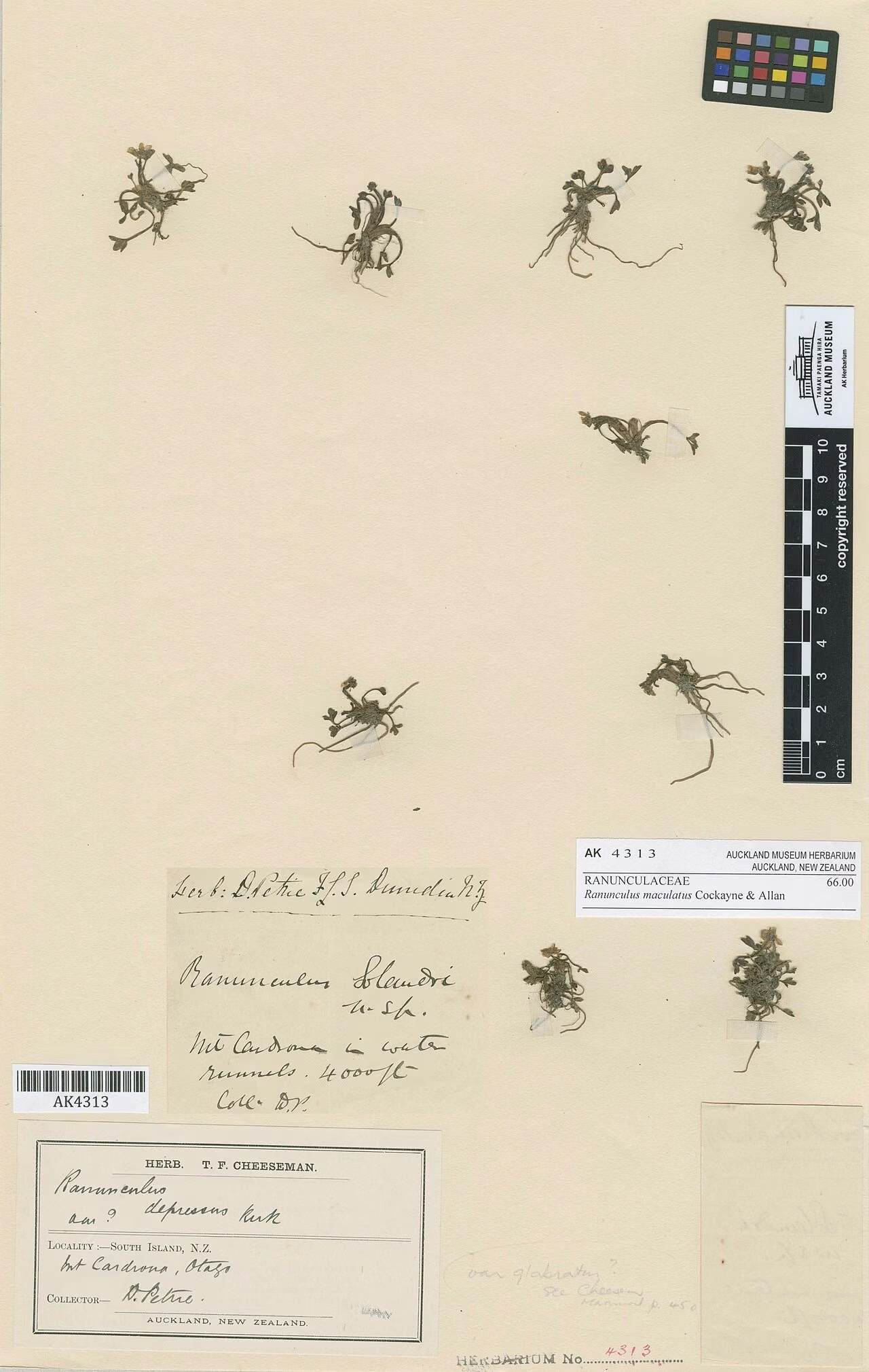
Ranunculus maculatus
Ranunculus maculatus
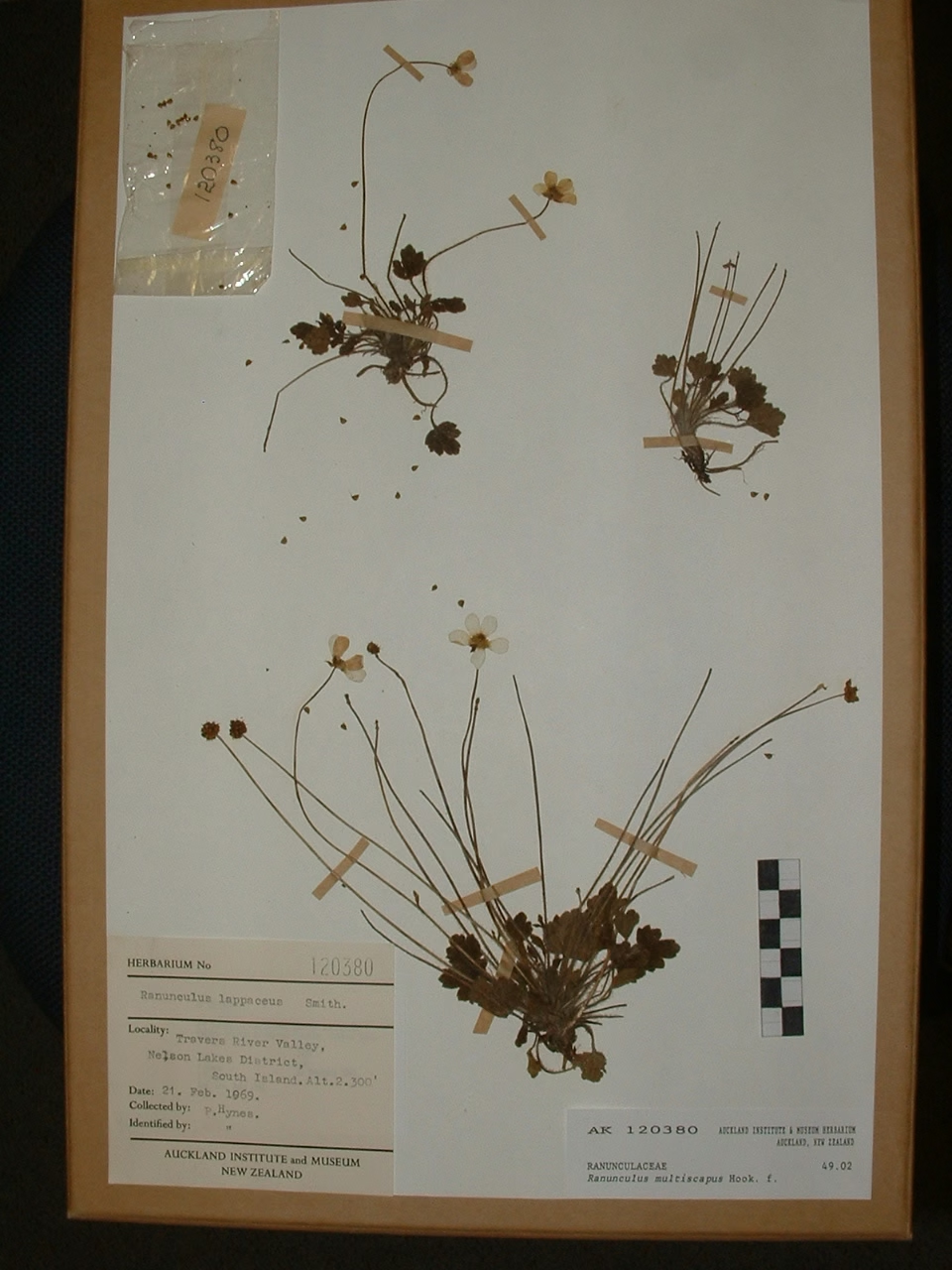
Grassland Buttercup
Ranunculus multiscapus
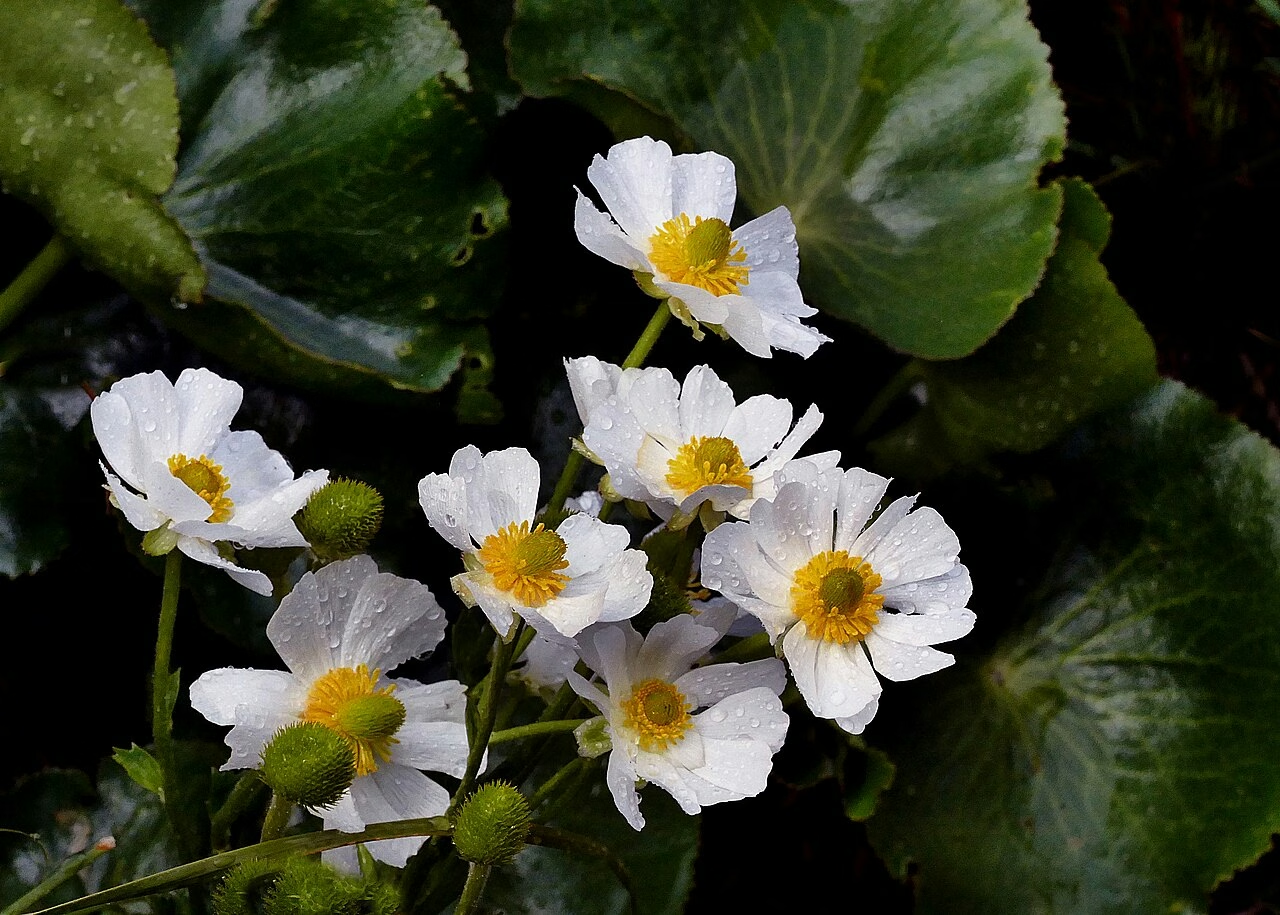
Mount Egmont Buttercup
Ranunculus nivicola
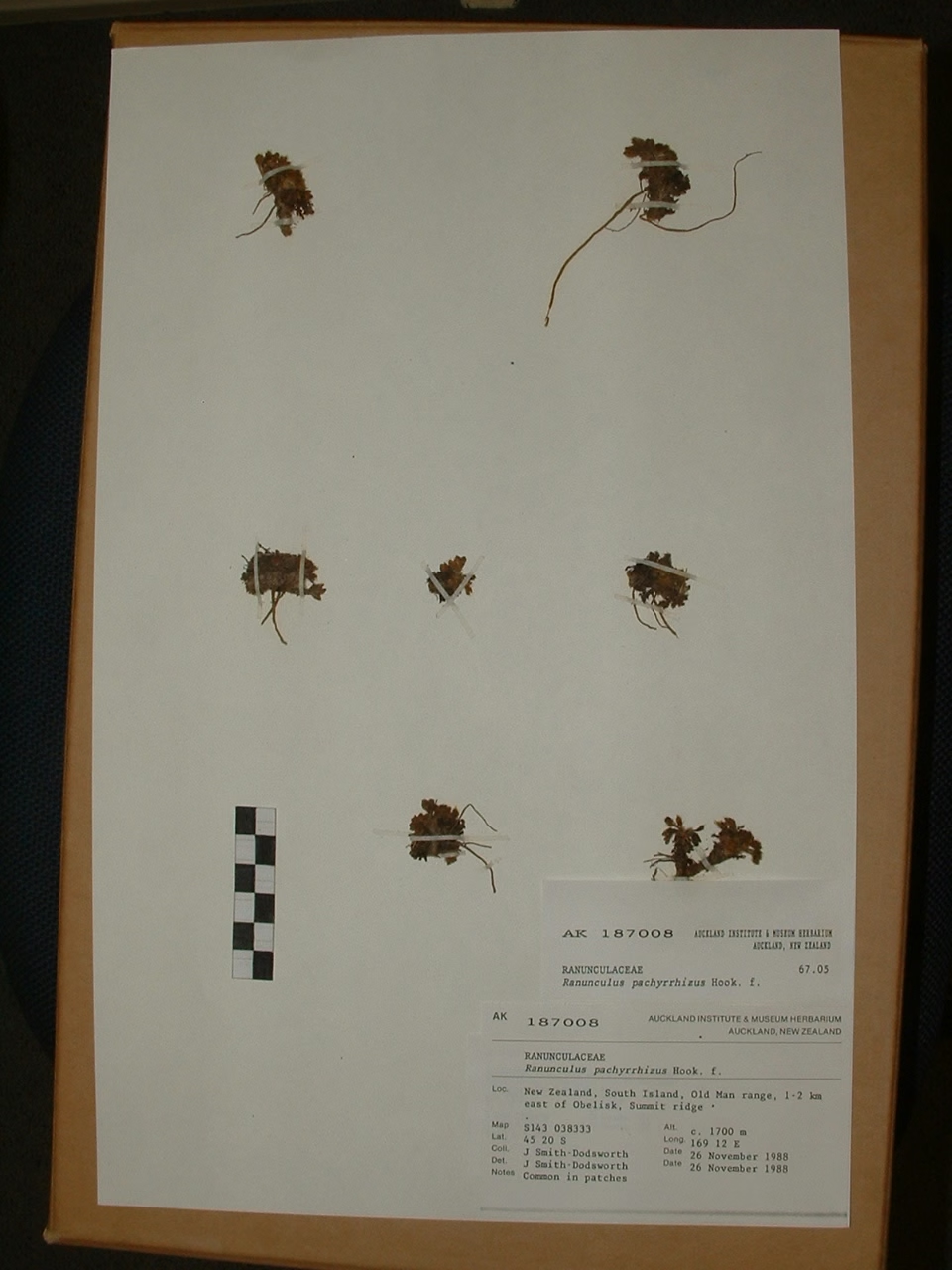
Ranunculus pachyrrhizus
Ranunculus pachyrrhizus
Ranunculus pilifer
Ranunculus pilifer
Plant Conservation
Ranunculus mirus is ranked Not Threatened (2023) and has held that status in earlier assessments. NZPCN describes it as a narrow-range endemic whose plants are believed secure within their alpine habitat in Kahurangi National Park.
Its main safeguards are the protection of the national park and the control of browsing animals and weeds on the karst tops. Keeping to tracks on the fragile limestone pavements also helps.
Frequently Asked Questions
Where does Ranunculus mirus grow?
Only in north-west Nelson, in Kahurangi National Park from the Peel Range and Mt Arthur south to the Wangapeka Range, on alpine marble and limestone karst at 1200 to 1500 m.
Is Ranunculus mirus threatened?
No. It is ranked Not Threatened. NZPCN describes it as a narrow-range endemic but believes plants are secure within their alpine habitat.
How is Ranunculus mirus different from Ranunculus reflexus?
R. mirus has flattened rather than spreading hairs, spreading rather than reflexed sepals, and fewer (15 to 30) but larger and darker achenes than R. reflexus, which has 40 to 100.
Can Ranunculus mirus be grown in a garden?
NZPCN thinks it is probably quite easily grown, but warns that most alpine buttercups get powdery mildew at low altitude and dislike humidity. It is not sold commercially.
Sources and Further Reading
The botanical, growing, and conservation details for Buttercup (Ranunculus mirus) on this page draw on the New Zealand plant references below. Consult them for full technical records and the latest distribution data.