Grassland Buttercup
Ranunculus multiscapus
Last updated:
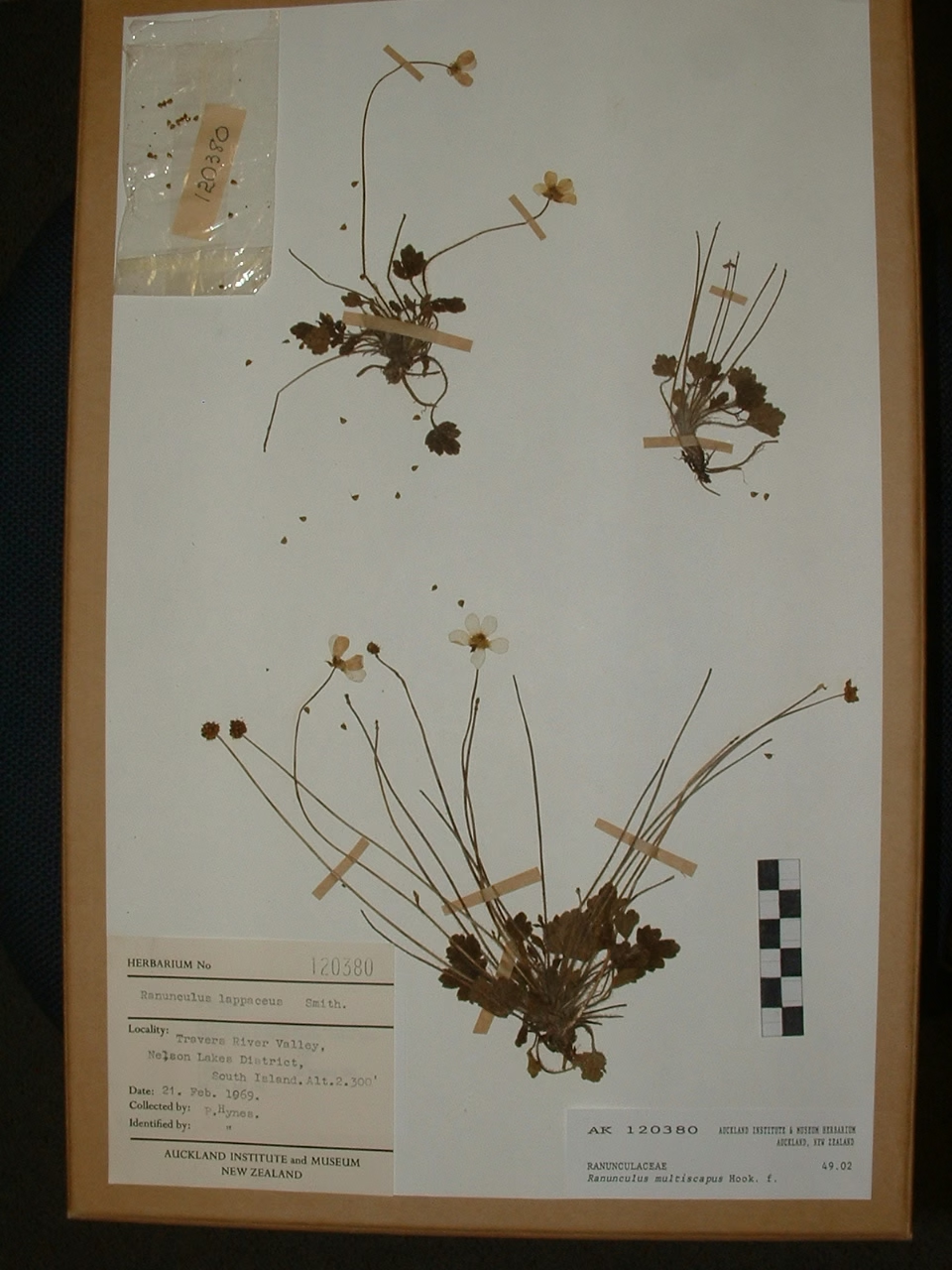
Grassland buttercup (Ranunculus multiscapus) is a tufted native buttercup endemic to New Zealand and common in tussock country. It grows 5 to 35 cm tall, with simple, toothed, oval to spoon-shaped leaves in a basal tuft and several long, leafless flower stalks, each topped by a single yellow flower 10 to 20 mm across whose petals are often purplish underneath. It grows in lowland to subalpine tussock grassland, mostly on well-drained sites, from Hawke's Bay and the Wairarapa to Southland. Ranked Not Threatened, it was for many years wrongly called Ranunculus lappaceus, an Australian species. Explore more native flowering plants in our native plant guide.
Plant Description
Ranunculus multiscapus is a tufted, scapose perennial 5 to 35 cm tall (usually 10 to 35 cm), with no creeping rhizome. Its leaves are simple, oblanceolate to ovate or very broadly ovate to obovate, usually 10 to 20 mm long and 8 to 18 mm wide, with five to nine teeth along the margin and sometimes slight lobing.
The flowers are solitary on long stalks, as the name multiscapus (many flower stalks) suggests, and measure 10 to 20 mm across. There are usually five, occasionally six, yellow petals, often tinged purplish on the underside, each with a single nectary at the base. The fruit is a head of 15 to 30 flattened achenes 2 to 3.5 mm long, each with a beak 0.5 to 1 mm long.
Its simple, merely toothed leaves separate it from the many New Zealand buttercups with deeply divided leaves, and its tufted habit without runners and preference for well-drained ground distinguish it from introduced creeping buttercup (Ranunculus repens) of damp pasture.
Quick Facts
| Scientific Name | Ranunculus multiscapus |
|---|---|
| Height | 0.05-0.35 m |
| Spread | 0.05-0.15 m |
| Water Needs | Low to moderate; prefers well-drained ground |
| Light | Full sun |
| Frost Tolerance | High; grows to subalpine elevations |
| Salt Tolerance | Not recorded; no information found |
| Growth Rate | Moderate |
| Lifespan | Perennial |
Climate Best Suited to
It suits the drier, continental climates east of the main ranges, with warm summers, cold frosty winters and moderate rainfall, from lowland to subalpine elevations.
Regional Suitability
| City | Climate Suitability |
|---|---|
| Auckland | Low |
| Wellington | Medium |
| Christchurch | High |
| Dunedin | High |
Plant Habitat
Grassland buttercup is endemic to New Zealand. In the North Island it occurs in Hawke's Bay, the Wairarapa and the adjacent mountain ranges; in the South Island it ranges through Nelson, Marlborough, Canterbury, Otago and Southland.
It grows in lowland to subalpine tussock grassland, mostly on well-drained sites. Herbarium records also include montane tussock grassland mixed with exotic grasses and herbs and short grassland dominated by introduced hawkweeds (Pilosella), showing it can persist in modified grassland. It is rated an obligate upland plant, rarely found in wetlands.
Growing Requirements
Soil Requirements
It prefers well-drained grassland soils, typical of the dry eastern tussock country.
- Free-draining loams, gravels and stony soils
- Low to moderate fertility
- Avoid waterlogged or heavy wet soils
Light Requirements
As a plant of open tussock grassland, it needs good light and does poorly in shade.
- Full sun
- Tolerates the light shelter of surrounding tussocks
Water Requirements
It is adapted to drier eastern climates and well-drained sites, tolerating summer dry spells once established.
- Water young plants until established
- Avoid overwatering; wet feet encourage rot
Planting and Establishing
Grassland buttercup is not widely sold, but it can be grown from seed of local origin by native plant growers. Plant in a sunny, well-drained spot in spring or autumn among low tussocks or in a dry meadow planting.
Space plants 15 to 20 cm apart so the tufts and their flower stalks are not swamped by vigorous grasses. Avoid rich soil and heavy fertiliser, which favour competing exotic grasses.
Ecological Role
Its open, yellow flowers are accessible to a range of small insects such as native bees and flies, which are the usual visitors to New Zealand buttercups, although its pollinators have not been specifically studied. The flowering season is not recorded in the sources consulted.
It is a component of the herb layer of short and tall tussock grasslands, filling gaps between tussocks. Its ability to persist in grassland modified by exotic grasses and hawkweeds makes it one of the more resilient native herbs of the eastern high country.
Uses & Significance
Garden Uses
It is a charming small plant for naturalistic native grassland and rock garden plantings.
- Native meadow or tussock garden in dry eastern regions
- Rock gardens and gravel gardens
- Restoration plantings in tussock grassland
Ecological Value
It adds native herb diversity to tussock grassland, a habitat dominated in many places by exotic species.
- Nectar and pollen for native insects
- Fills inter-tussock gaps with native rather than exotic herbs
- A useful species for grassland restoration seed mixes
Landscaping Uses
In a tussock garden, plant drifts of grassland buttercup between Festuca, Poa or Chionochloa tussocks so its yellow flowers stand above the low foliage. It pairs well with other dryland natives in gravel gardens.
In restoration, include it with other native grassland herbs where livestock grazing is managed, to help rebuild the native herb layer of eastern grasslands.
Seasonal Care Calendar
Spring
New leaves form in the basal tuft as the soil warms.
- Good time to plant or sow
- Weed out competing exotic grasses
Summer
Plants are in active growth in the warm, dry season of the eastern grasslands; check local plants for flowers and fruit, as flowering dates are not recorded in the sources consulted.
- Little watering needed once established
- Collect seed when achene heads are ripe
Autumn
Growth slows as temperatures fall; autumn is a good second planting window.
- Sow fresh seed
- Tidy dead flower stalks
Winter
Plants are dormant or slow-growing through frosty winters.
- No action needed
- Ensure drainage is good to avoid winter rot
When to Prune and How Much
No pruning is required. Remove spent flower stalks after seeding if a tidy look is preferred.
Clear smothering grasses from around tufts each year so plants keep good light.
How to Grow Grassland Buttercup
No propagation notes for grassland buttercup were found in the NZPCN or Flora of New Zealand accounts, so the guidance below describes the standard techniques used for tufted native buttercups of dry grassland rather than species-specific trial results. Seed is the simplest and most practical method, since plants form discrete tufts without runners or rhizomes. Wherever possible use seed from plants growing near the planting site, as local populations are best adapted to local climate and soils. Collect only a small proportion of the seed from any wild population, and seek landowner or Department of Conservation permission before collecting.
From Seed
Each flower produces a head of 15 to 30 flattened achenes. Native buttercup seed is generally best sown soon after it ripens, as dried seed can become dormant.
- Collect achene heads when they turn brown and loosen easily
- Sow on the surface of a free-draining seed mix
- Cover lightly with fine grit
- Keep the mix just moist in a sunny, sheltered place outdoors
- Prick out seedlings into small pots once they have a few leaves
- Plant out when a strong tuft has formed
By Division
Older plants with several crowns in the tuft can be carefully split, keeping roots attached to each crown. Division gives fewer plants than seed, but they reach flowering size sooner.
- Lift an established clump in autumn or early spring
- Separate crowns gently by hand
- Replant into well-drained soil and water in
Pests & Diseases
No specific pests or diseases are recorded for grassland buttercup. Competition from vigorous exotic pasture grasses is probably the greatest pressure on plants in modified grassland.
In gardens, slugs and snails may graze young seedlings, and plants can rot in poorly drained, heavy soils.
Cultural Significance
No Māori name or traditional Māori use is recorded for Ranunculus multiscapus in the sources consulted.
The name was published by Joseph Dalton Hooker, and synonyms include Ranunculus muricatulus Colenso and Ranunculus lappaceus var. macrophyllus Kirk. For many years New Zealand plants were known as Ranunculus lappaceus until botanists recognised that name belongs to an Australian species absent from New Zealand.
Bonus Tip
If you have a lawn or dry paddock edge in Canterbury or Otago where native grassland plants persist, look for low tufts of simple, toothed leaves with several thin flower stalks. Mowing high or leaving the patch unmown for part of the year lets grassland buttercup flower and set seed, an easy way to encourage a native herb.
Related Plants
Explore other native plants that share similar characteristics or habitats with Grassland Buttercup (Ranunculus multiscapus), offering further insights into New Zealand's diverse flora. These related species provide context and opportunities for complementary planting in your garden.
Mud Buttercup
Ranunculus limosella
Swamp Buttercup
Ranunculus macropus
Ranunculus maculatus
Ranunculus maculatus
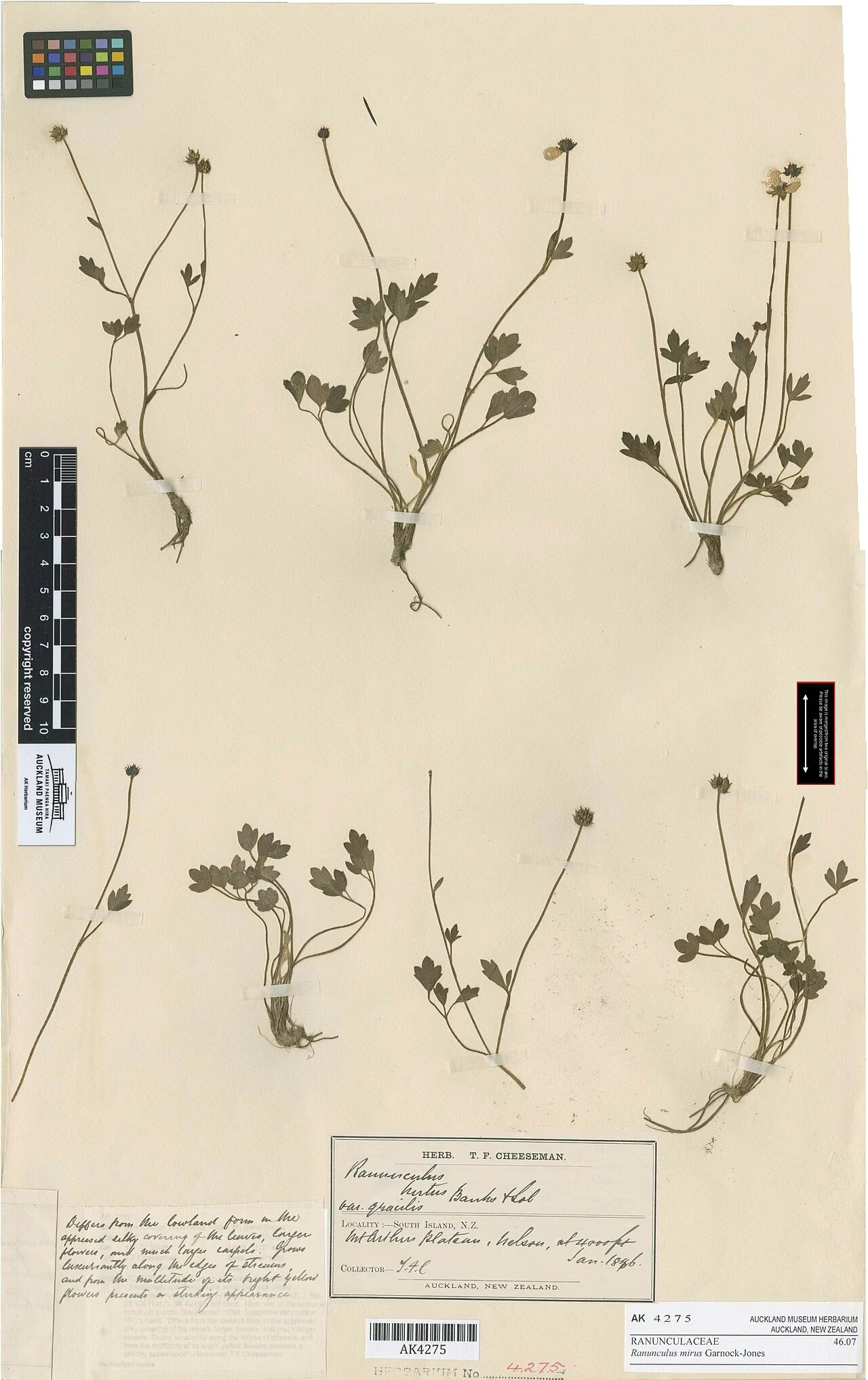
Ranunculus mirus
Ranunculus mirus
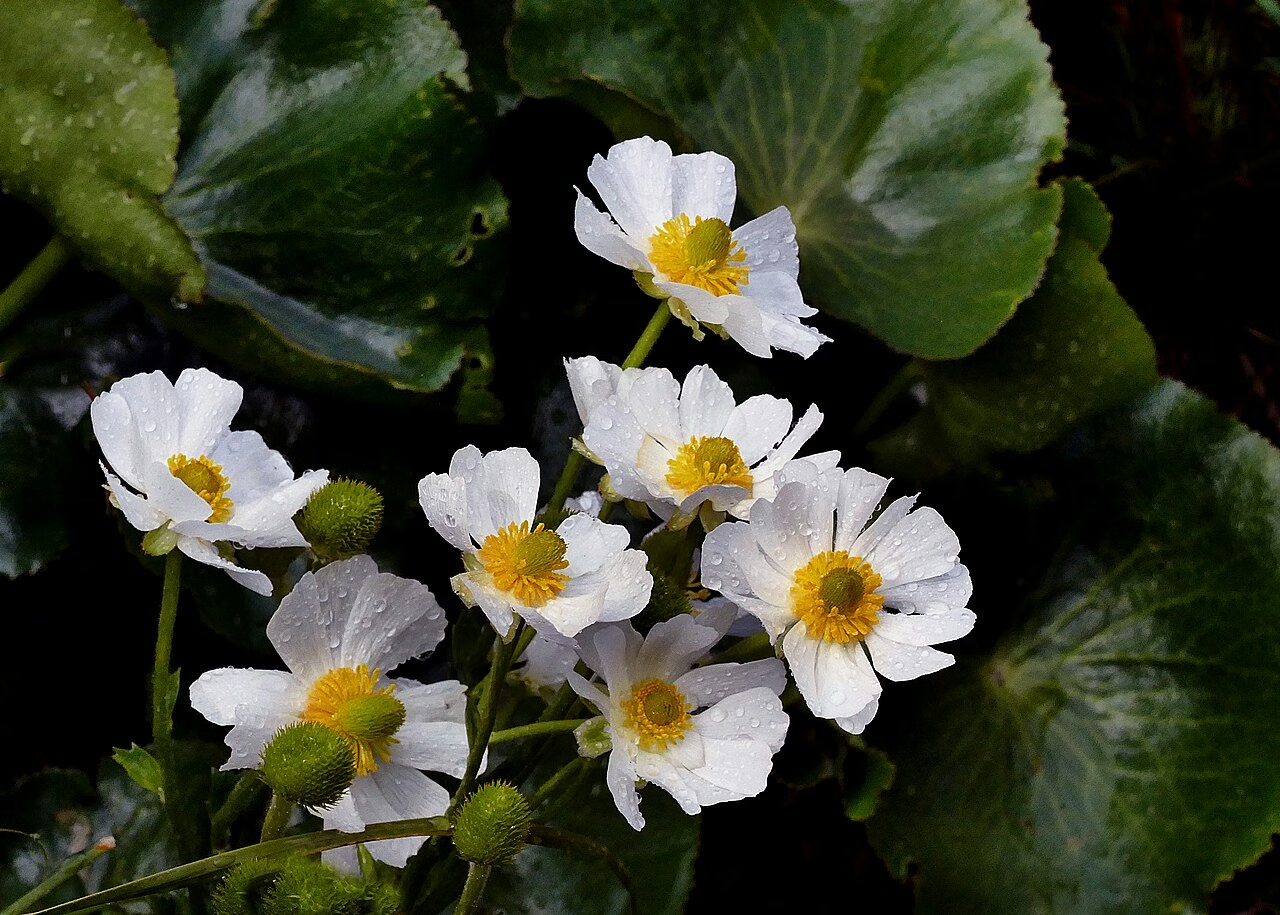
Mount Egmont Buttercup
Ranunculus nivicola
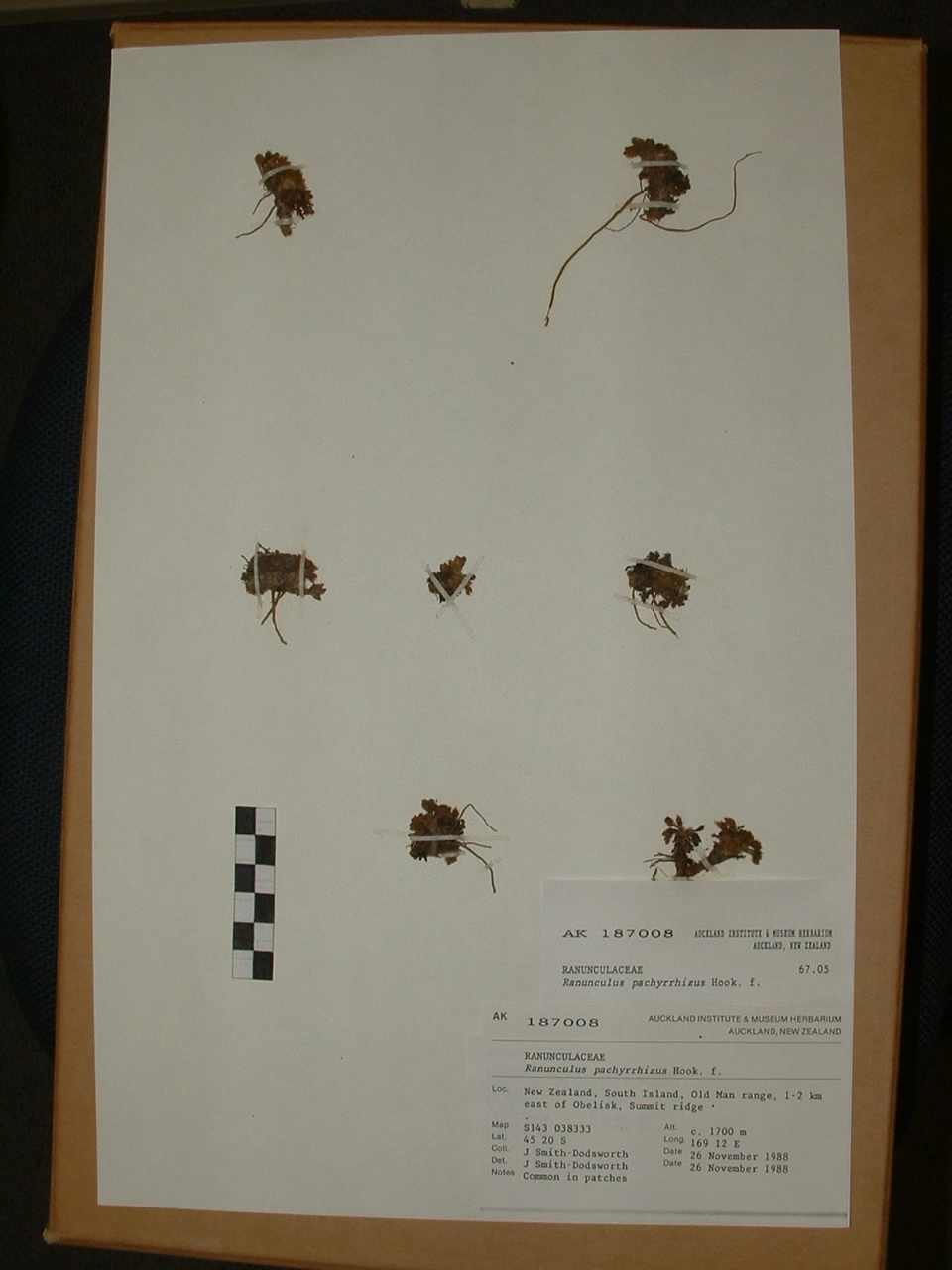
Ranunculus pachyrrhizus
Ranunculus pachyrrhizus
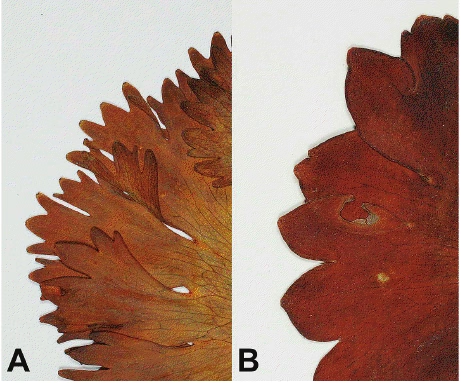
Ranunculus pilifer
Ranunculus pilifer
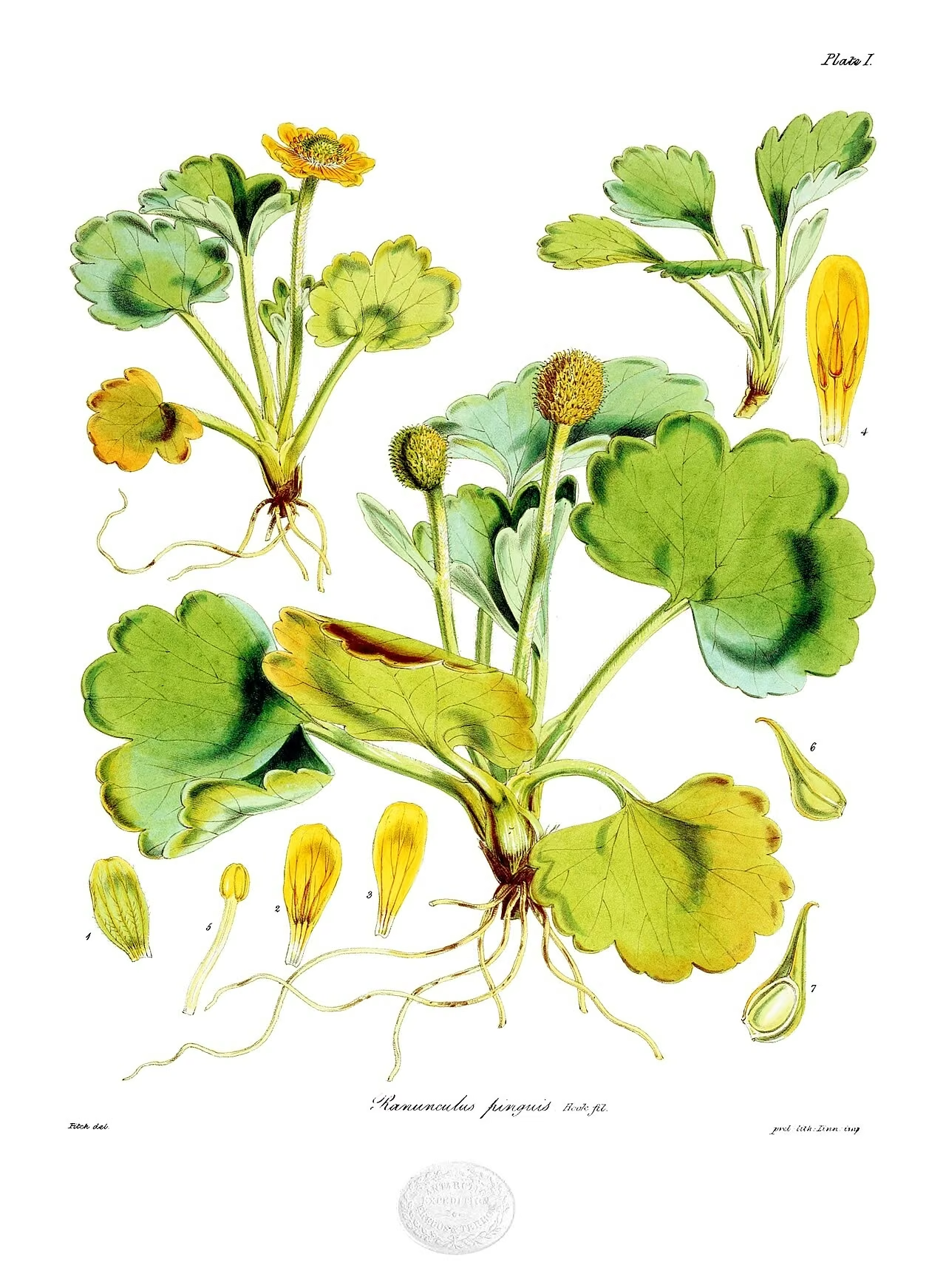
Ranunculus pinguis
Ranunculus pinguis
Plant Conservation
Ranunculus multiscapus has been ranked Not Threatened in every national assessment since 2004 and is listed as Regionally Not Threatened in Otago (2025).
Although secure, it depends on the survival of native tussock grasslands, which continue to be lost to land conversion and invasion by exotic grasses and wilding conifers. Protecting remnant grasslands benefits this and many other native herbs.
Frequently Asked Questions
What does grassland buttercup look like?
It is a tuft of simple, oval to spoon-shaped leaves with five to nine teeth, from which several long stalks each carry one yellow flower 1 to 2 cm across, the petals often purple beneath.
Is Ranunculus multiscapus the same as Ranunculus lappaceus?
No. New Zealand plants were long called R. lappaceus, but that name belongs to an Australian species not found in New Zealand. R. multiscapus is the earliest correct name for the New Zealand plant.
Where does grassland buttercup grow?
In lowland to subalpine tussock grassland, mostly on well-drained sites, in Hawke's Bay, the Wairarapa and nearby ranges, and in Nelson, Marlborough, Canterbury, Otago and Southland.
Is grassland buttercup a weed like the introduced buttercups?
No. It is a native endemic species ranked Not Threatened, and unlike creeping buttercup it forms tufts rather than spreading by runners and prefers dry ground over wet pasture.
Sources and Further Reading
The botanical, growing, and conservation details for Grassland Buttercup (Ranunculus multiscapus) on this page draw on the New Zealand plant references below. Consult them for full technical records and the latest distribution data.