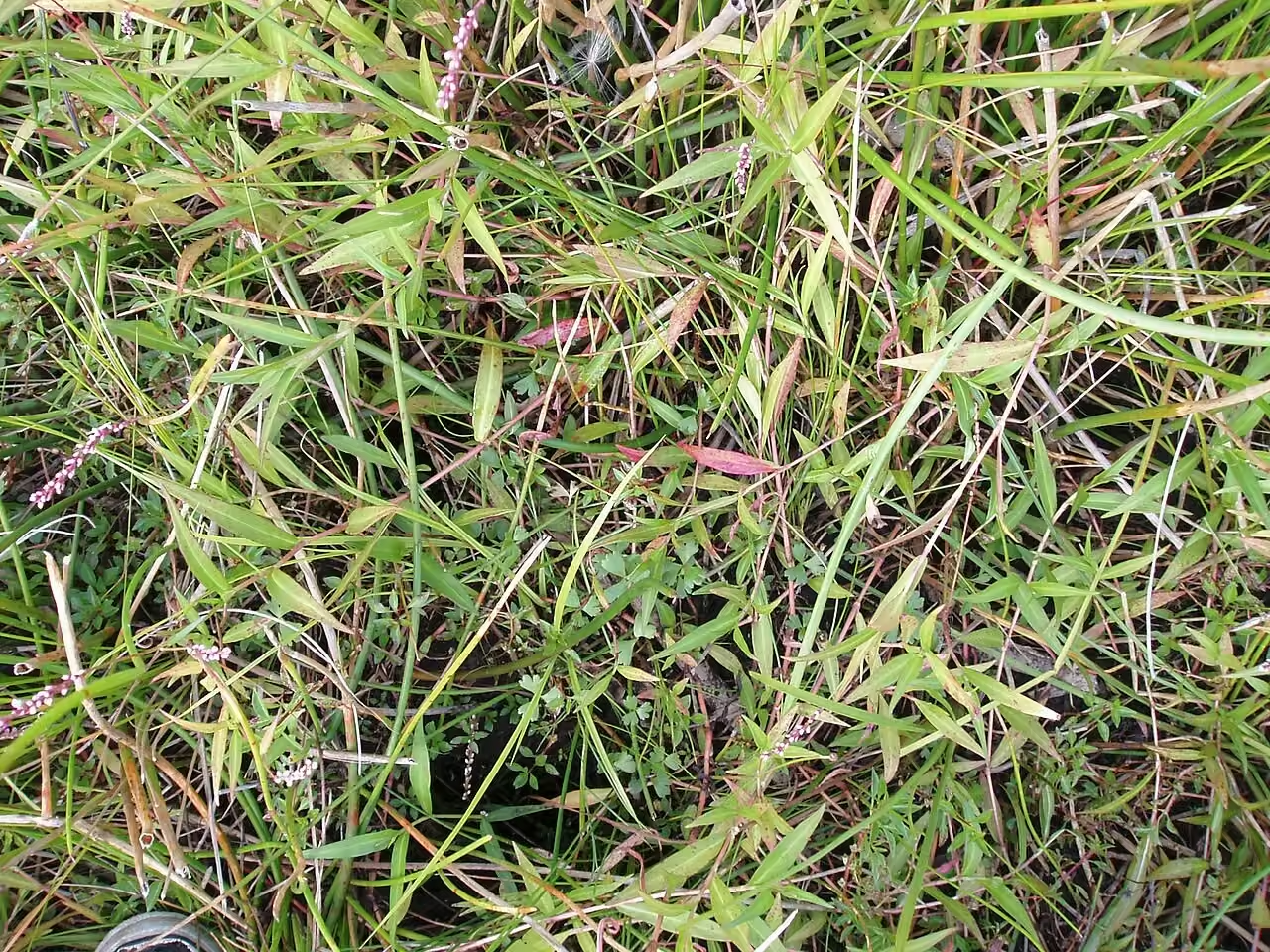
Swamp Buttercup
Ranunculus macropus
Last updated:
Swamp buttercup (Ranunculus macropus), also known as raoriki or waoriki, is a robust semi-aquatic buttercup endemic to New Zealand. It forms tufted rosettes on stout creeping stems, with three-part leaves held up on very thick stalks, and carries clusters of three to five dark yellow flowers 10 to 15 mm across. It grows in still, moderately deep to deep water in raupō wetlands from coastal to lowland elevations. Once widespread from northern Waikato to Wellington, it has declined with wetland drainage and hybridisation and is ranked At Risk - Declining. It is a shy flowerer, often seen only as leaves. Explore more native flowering plants in our native plant guide.
Plant Description
Ranunculus macropus is a semi-aquatic to aquatic herb with tufted rosettes on stout creeping stems, the leaves arising from swollen, bulb-like nodes. The basal leaves have very stout erect stalks, typically 15 to 30 cm long. Each leaf is ternate, made up of three wedge-shaped leaflets that are stalkless or shortly stalked, shallowly three-lobed at the tip and with toothed or entire margins. The two side leaflets are often a little larger than the end one.
Flowers are produced in groups of one to five on each stem, 10 to 15 mm (occasionally 20 mm) across, on hairless stalks. The sepals spread or curve back slightly and are hairless. There are usually three to five dark yellow, oblong, shortly clawed petals, each with a single nectary near the base, and a collar of bristles at the base of the receptacle. The fruit is a head of 15 to 50 or more barely flattened, hairless achenes about 1.5 to 2 mm long with a straight beak.
It is often confused with Ranunculus amphitrichus and Ranunculus glabrifolius. NZPCN separates it by its larger flowers with broad, irregularly spaced petals, whose nectary scales are hidden by the dense cluster of carpels when viewed from above, and by its very robust leaves on stout stalks. It flowers rarely and is more often found sterile, which makes identification harder.
Quick Facts
| Scientific Name | Ranunculus macropus |
|---|---|
| Height | 0.15-0.4 m (leaf stalks up to about 40 cm) |
| Spread | 0.3-0.6 m, spreading by creeping stems |
| Water Needs | Permanent shallow to deep still water; obligate wetland plant |
| Light | Full sun |
| Frost Tolerance | Moderate; occurs in inland Canterbury and Otago wetlands |
| Salt Tolerance | Low; a freshwater species |
| Growth Rate | Moderate to fast in good conditions |
| Lifespan | Perennial |
Climate Best Suited to
It suits mild to cool temperate lowland climates with permanent wetlands, from the Waikato to the Canterbury Plains. It tolerates frost in inland sites as long as its water does not dry up.
Regional Suitability
| City | Climate Suitability |
|---|---|
| Auckland | High |
| Wellington | High |
| Christchurch | High |
| Dunedin | Medium |
Plant Habitat
Swamp buttercup is endemic to the North Island and the northern part of the South Island. It was formerly widespread in the North Island from northern Waikato to Wellington, but is now found mainly in western Waikato, the Rotorua Lakes district and from East Cape to Hawke's Bay. In the South Island it is scarce, with recent populations at Canadian Flats beside the Taieri River in Otago, on the Canterbury Plains west of Christchurch and at Te Waihora/Lake Ellesmere.
It grows from coastal to lowland elevations, usually in raupō (Typha orientalis) dominated wetlands, where it lives in still, moderately deep to deep water. It is an obligate wetland plant.
Growing Requirements
Soil Requirements
It roots into soft, organic swamp mud beneath standing water.
- Saturated peat or organic mud
- Still water rather than flowing streams
- Tolerates low oxygen in waterlogged sediments
Light Requirements
It needs open, sunny water among or at the edge of raupō; dense shade from weeds or willows suppresses it.
- Full sun
- Open water gaps within raupō beds
Water Requirements
Permanent water is essential. NZPCN advises permanently damp but sunny situations, and wild plants grow in moderately deep to deep still water.
- Never allow to dry out
- Shallow ponds work well in cultivation
- Clean, low-nutrient water limits competing weeds
Planting and Establishing
Plant divisions in spring into the shallow margin of a pond or a sunken container of heavy, organic loam topped with gravel, so the crown sits under a few centimetres of water. As plants establish they can be moved into deeper water.
For restoration, use plants of local origin and check identity carefully, because hybrids with Ranunculus amphitrichus are common in modified wetlands. Remove competing exotic marginal plants such as Glyceria and keep stock out of the wetland.
Ecological Role
Swamp buttercup flowers sporadically from September to April and fruits from October to July, though it is a shy flowerer. The open yellow flowers are accessible to small flies and bees visiting wetland margins. Its creeping stems allow it to spread vegetatively through raupō swamps.
It is part of the native herb flora of raupō wetlands, and its decline reflects the loss and modification of these swamps. Where wetlands are disturbed, it hybridises with Ranunculus amphitrichus, and in large parts of its former range hybrids are now commoner than the pure species.
Uses & Significance
Garden Uses
It is a good native plant for shallow garden ponds and wetland plantings.
- Pond margins and shallow water shelves
- Constructed wetlands and stormwater ponds
- Native bog gardens in sunny sites
Ecological Value
As an At Risk wetland endemic, it is a valuable addition to raupō wetland restoration.
- Restores native herb diversity under and between raupō
- Nectar and pollen for wetland insects across a long flowering period
- Helps conserve the genetic identity of a species threatened by hybridisation
Landscaping Uses
In a water garden, its large three-lobed leaves on tall stalks give a lush, textural effect, and the cheerful yellow flowers stand above the water when they appear. Plant it in groups in shallow water alongside native sedges and small raupō for a natural look.
In larger wetland restoration projects, establish it in open water gaps rather than in dense raupō, and avoid planting near R. amphitrichus to limit hybridisation.
Seasonal Care Calendar
Spring
New leaves emerge from the creeping stems and flowering can begin from September.
- Best time to divide and plant
- Remove smothering weeds from pond margins
Summer
Plants are at their most robust and may flower sporadically through the season.
- Keep water levels topped up
- Watch for algae in warm ponds
Autumn
Flowering tapers off by April, while fruit can continue maturing into winter.
- Collect fresh seed when achenes loosen
- Thin overcrowded clumps
Winter
Growth slows, though fruit may still be present until July.
- No pruning needed
- Ensure pond does not freeze solid in cold inland sites
When to Prune and How Much
No regular pruning is required. Remove yellowing leaves and spent flower stems if you want a tidy pond.
Thin vigorous clumps every few years by lifting and dividing, which also provides material for new plantings.
How to Grow Swamp Buttercup
NZPCN describes swamp buttercup as easy to propagate from division of whole plants and from fresh seed. It is a wetland species that needs permanently damp but sunny situations, and it does well in shallow ponds. Because hybrids with Ranunculus amphitrichus are now widespread, it is important to start from plants that have been confidently identified, ideally from a known pure population close to the planting site. Division gives quick, true-to-type plants, while seed can be used for larger restoration numbers, though seedlings from mixed populations may be hybrids.
By Division
Whole plants divide easily along their stout creeping stems, each section carrying a rosette of leaves and roots from its swollen nodes. This is the most reliable method and keeps the exact identity of the parent, which matters for a species so prone to hybridising.
- Lift a clump in spring or early summer
- Cut the creeping stem into sections, each with a rosette and roots
- Pot into heavy, organic mix in containers stood in water
- Plant out into shallow water once new leaves have formed
From Seed
Fruit is produced between October and July but the species flowers shyly, so seed may be scarce. Sow it fresh.
- Collect ripe achene heads from identified plants
- Sow on the surface of a wet, silty or peaty mix
- Keep the pot standing in water in a sunny, sheltered spot
- Grow seedlings on in saturated mix before moving them to the pond
Pests & Diseases
NZPCN lists wetland drainage, wetland modification and the spread of weeds as the main threats. Hybridisation with Ranunculus amphitrichus is a further problem: in large parts of its former range hybrids now outnumber pure swamp buttercup.
In ponds, the main problems are being crowded out by aggressive exotic marginal plants and shading by willows or tall weeds. Slugs and snails may graze young leaves.
Cultural Significance
The Flora of New Zealand records raoriki and waoriki as names for Ranunculus macropus. No specific traditional Māori use of the plant was found in the sources consulted, though it grows in the raupō wetlands that were important places for food and fibre gathering.
The species name macropus means big foot, referring to its stout leaf stalks and creeping stems. It was described by Joseph Dalton Hooker in 1844, and William Colenso later named the same plant Ranunculus longipetiolatus, now treated as a synonym.
Bonus Tip
Because swamp buttercup often grows without flowering, use its leaves to spot it: look for big three-parted leaves standing on very thick stalks out of still water among raupō. If you find flowering plants, record them on iNaturalist NZ with close-up photos of the petals, as flowering records help botanists separate true R. macropus from hybrids.
Related Plants
Explore other native plants that share similar characteristics or habitats with Swamp Buttercup (Ranunculus macropus), offering further insights into New Zealand's diverse flora. These related species provide context and opportunities for complementary planting in your garden.
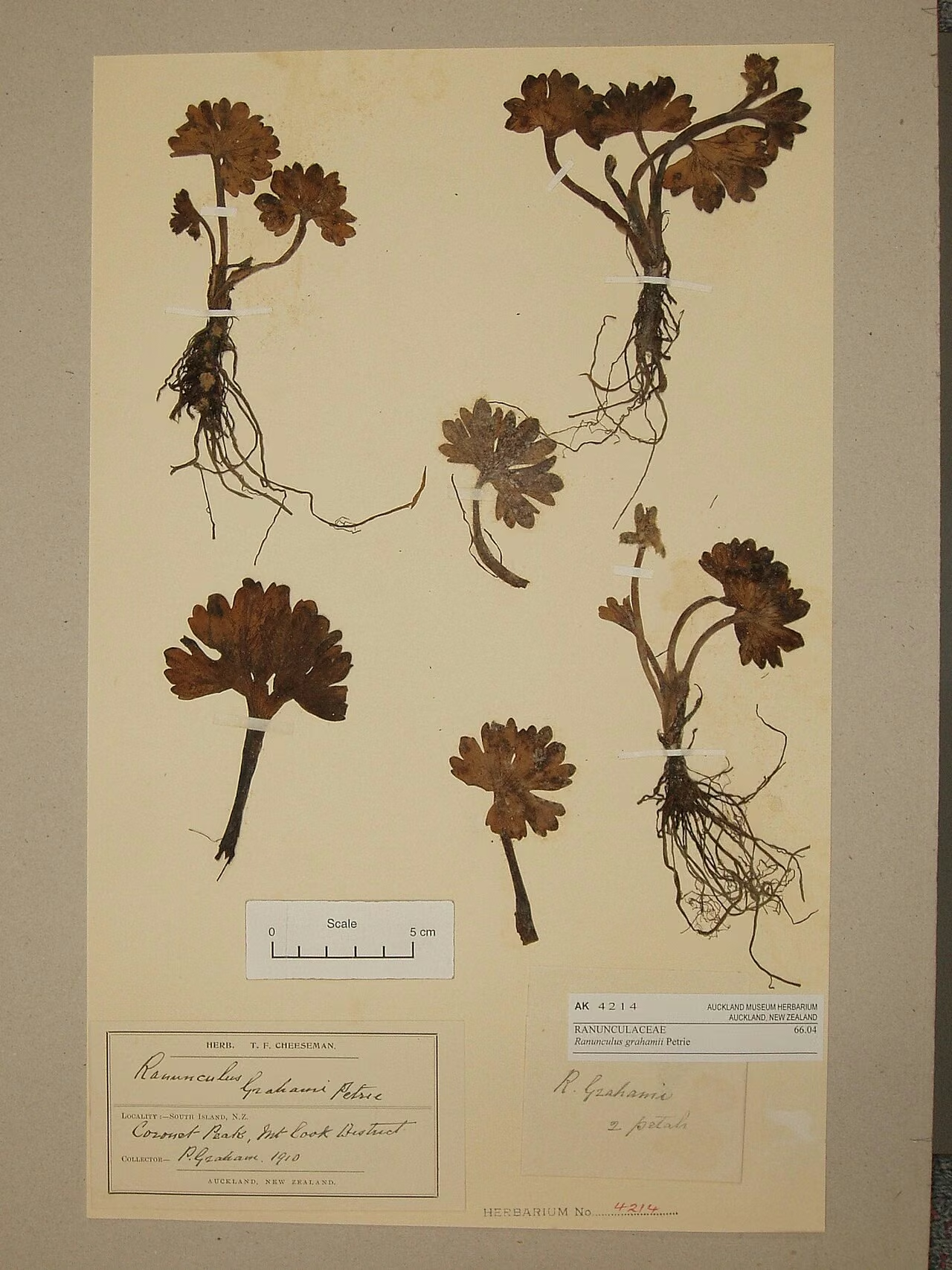
Graham's Buttercup
Ranunculus grahamii
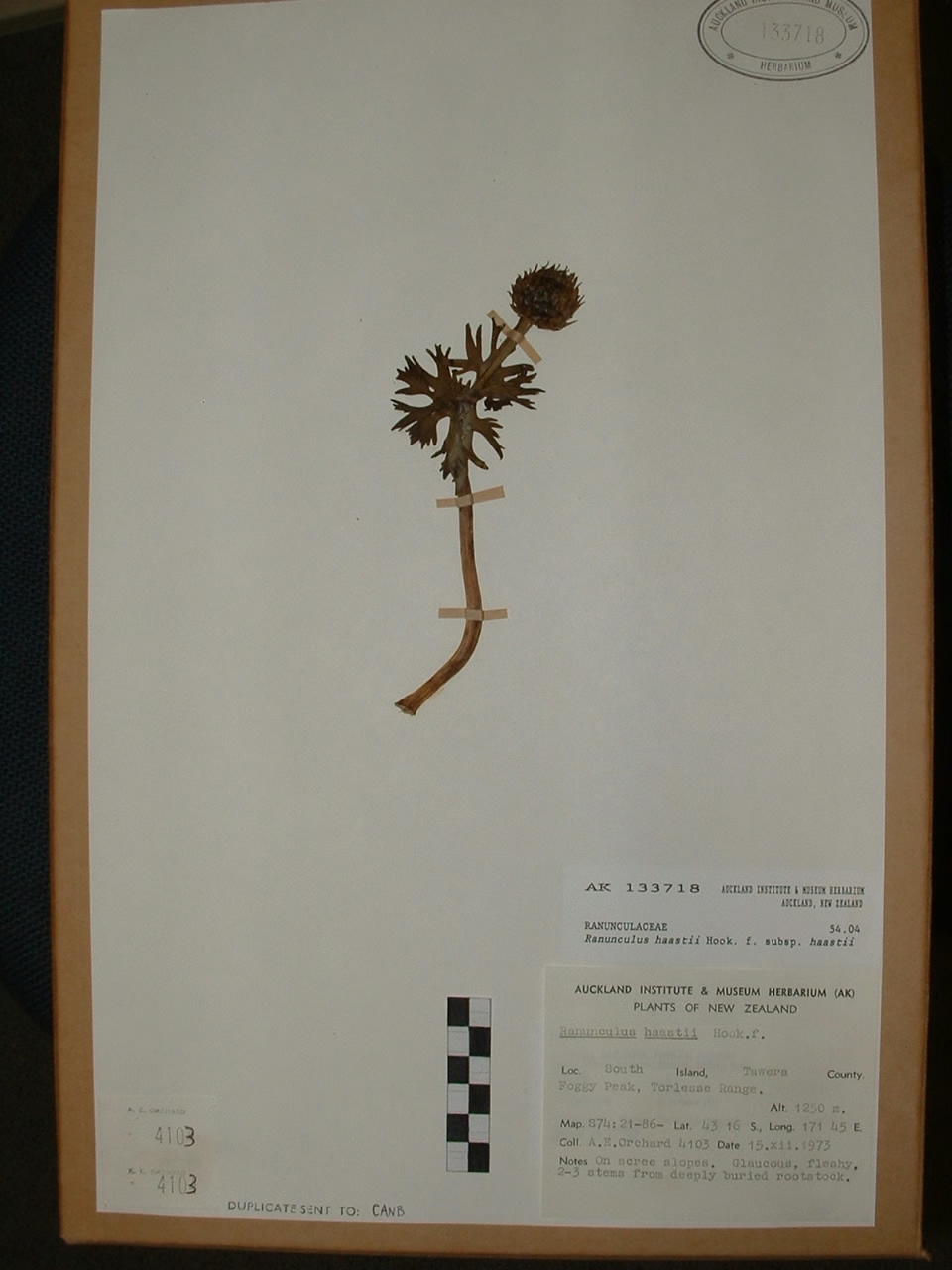
Haast's Buttercup
Ranunculus haastii
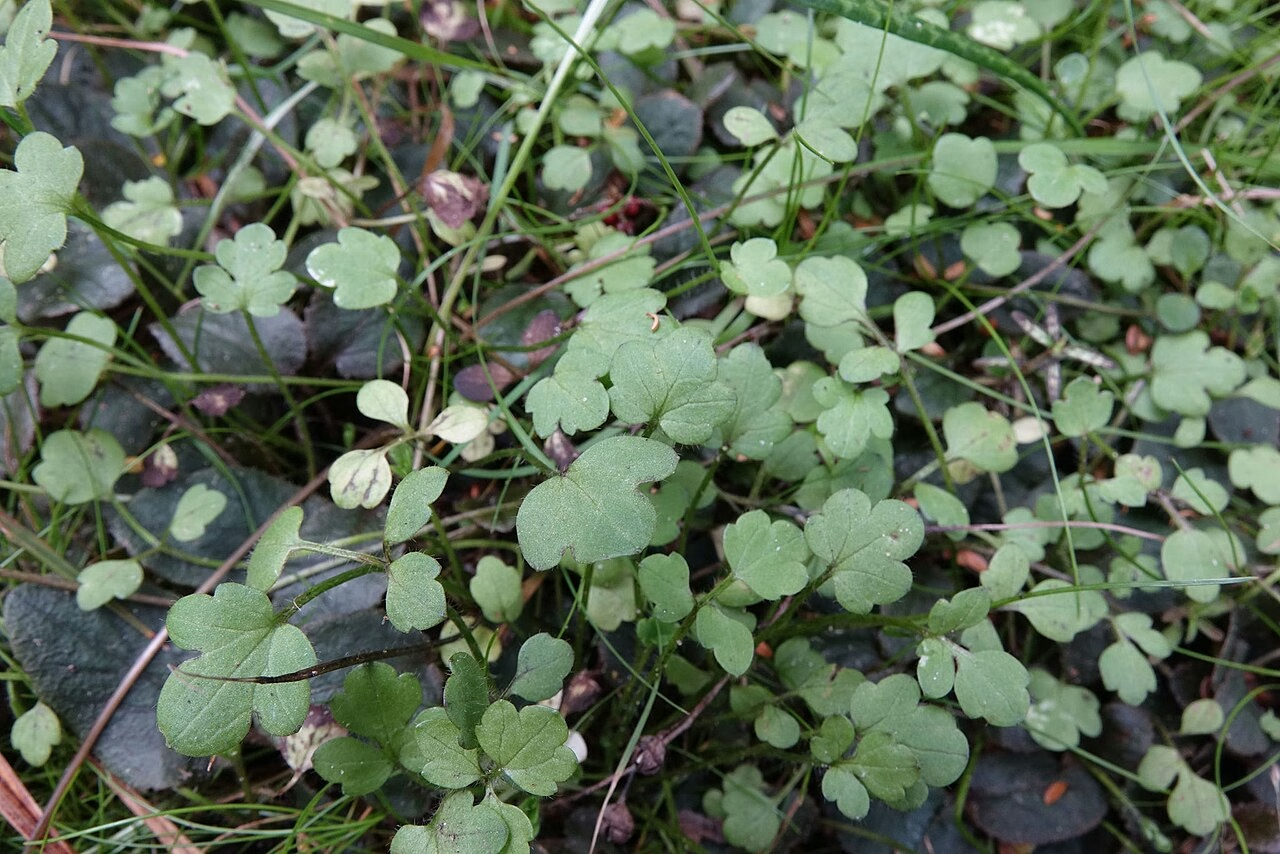
Ranunculus kirkii
Ranunculus kirkii

Mud Buttercup
Ranunculus limosella
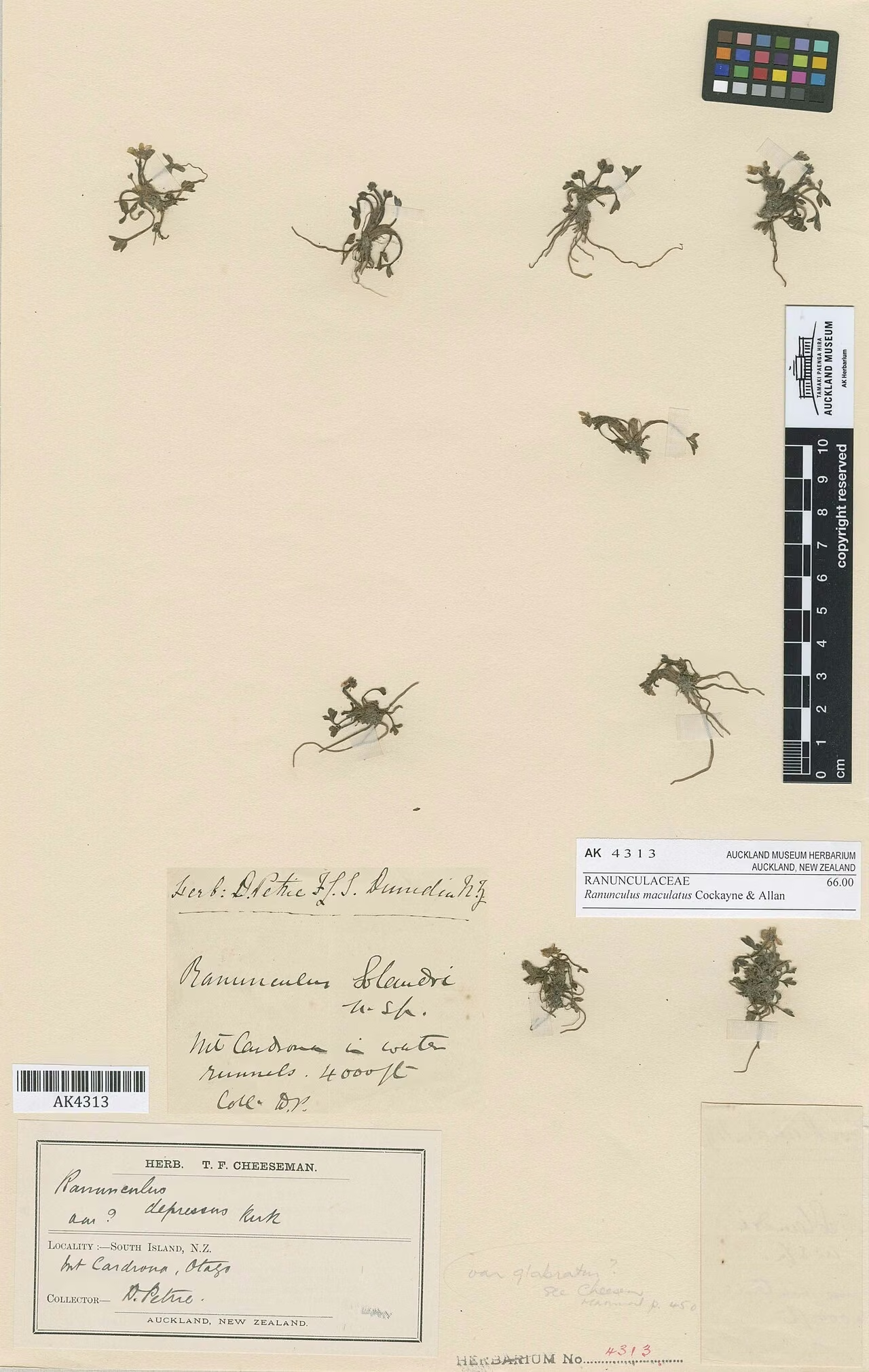
Ranunculus maculatus
Ranunculus maculatus
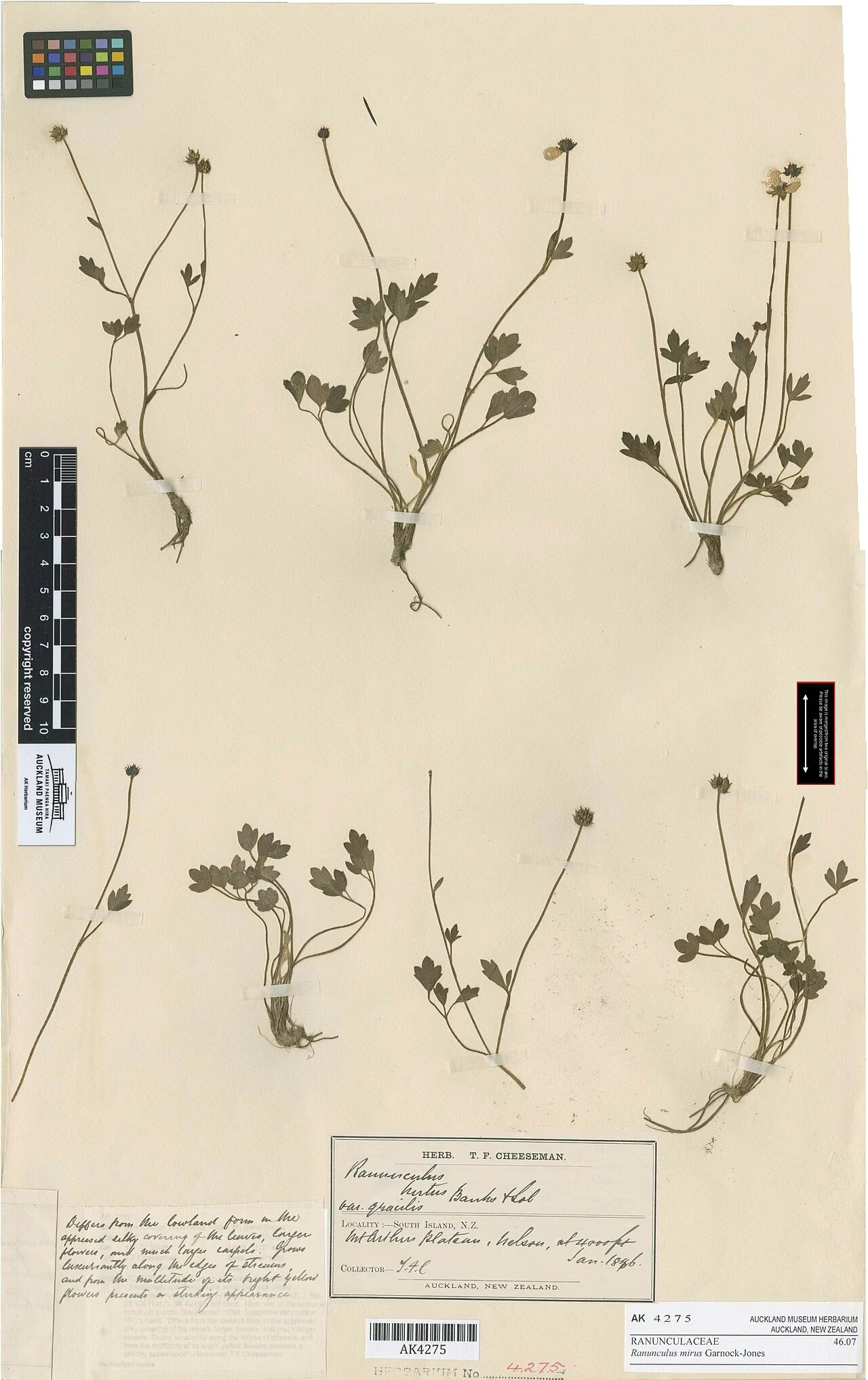
Ranunculus mirus
Ranunculus mirus
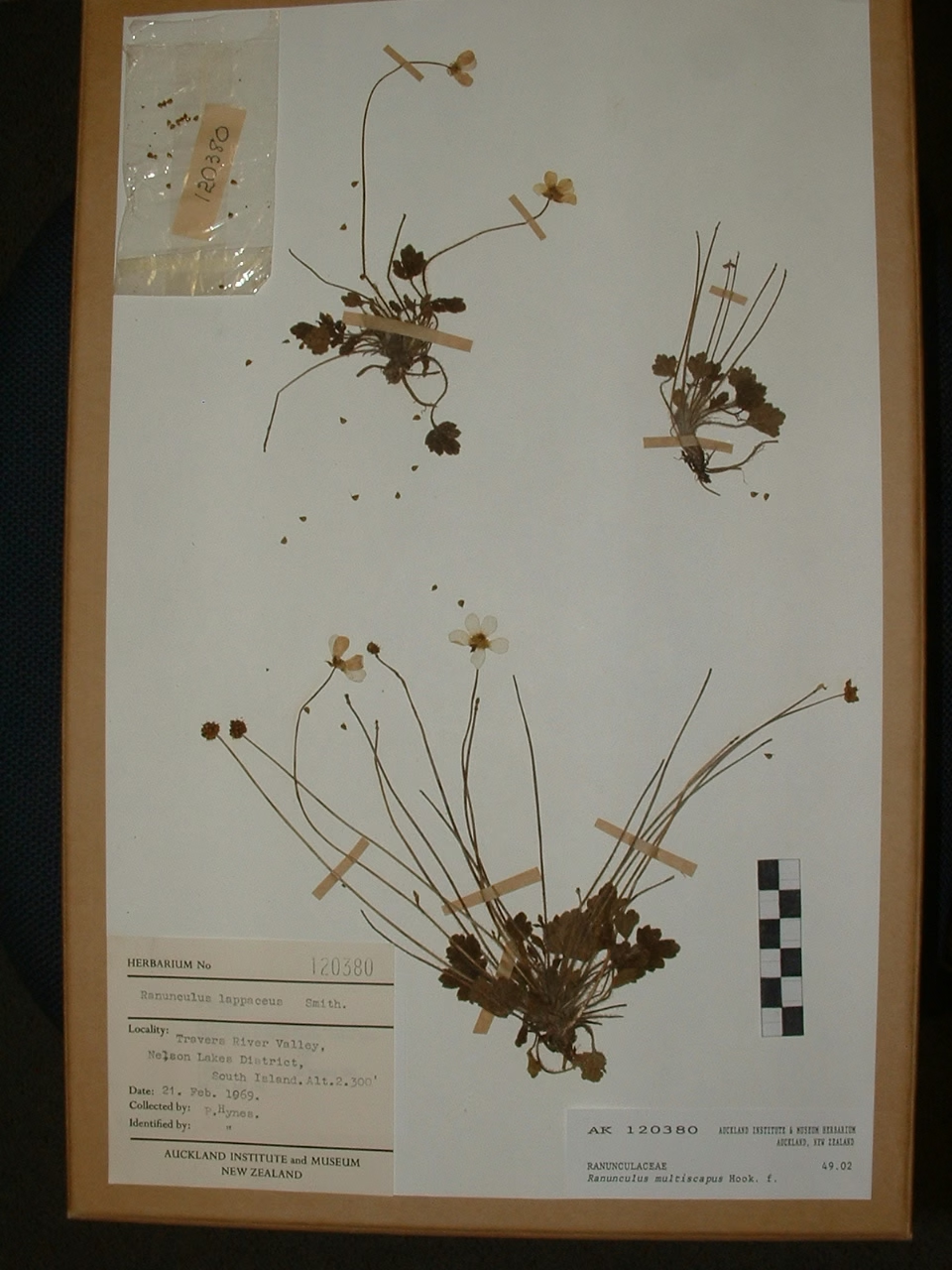
Grassland Buttercup
Ranunculus multiscapus
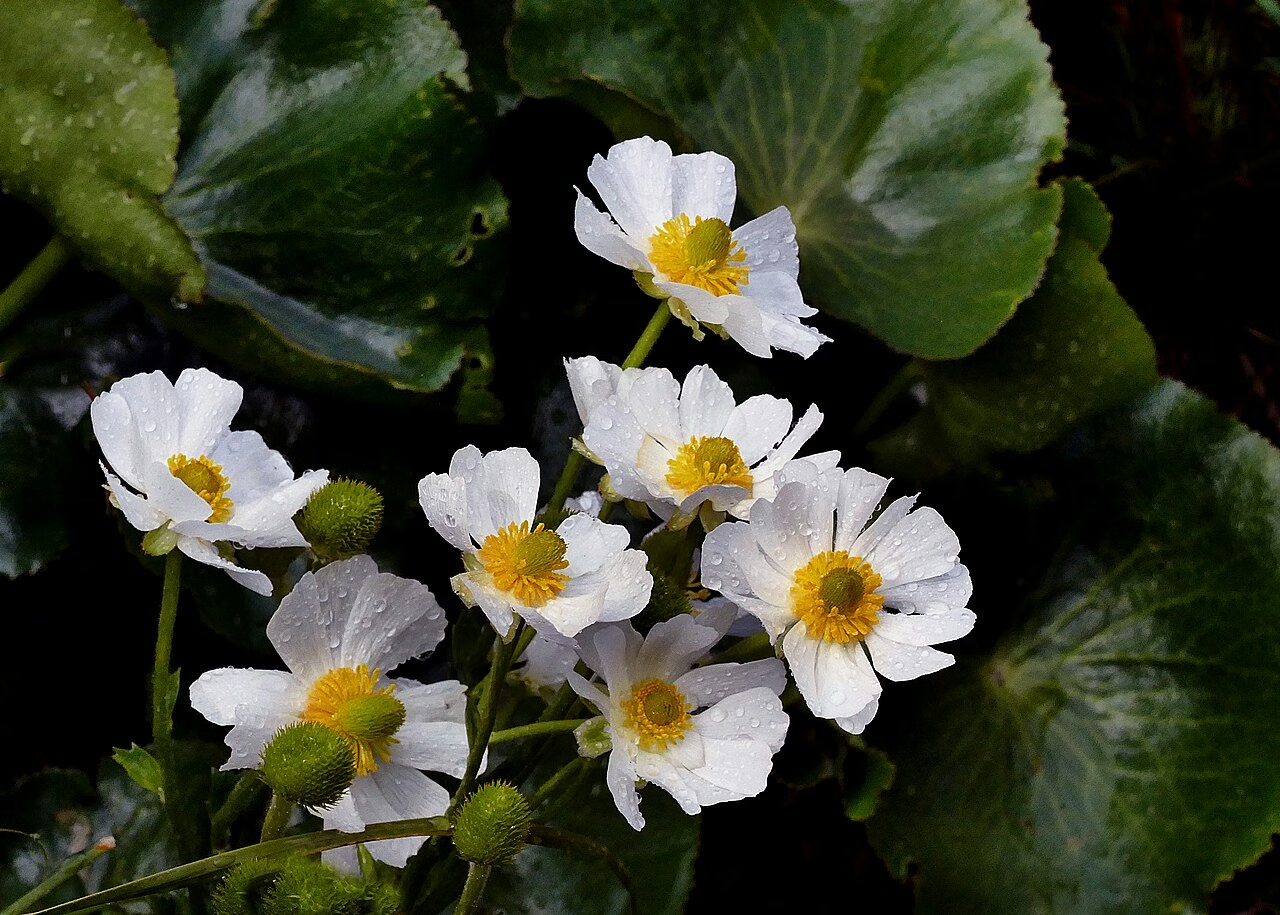
Mount Egmont Buttercup
Ranunculus nivicola
Plant Conservation
Ranunculus macropus was ranked At Risk - Declining in 2023, with qualifiers noting sparse populations, range restriction and data-poor recognition, population size and trend. Earlier assessments listed it as Data Deficient. Regionally it is Regionally Endangered in Auckland, Regionally Vulnerable in Wellington and Regionally Critical in Otago (2025).
Protecting and restoring raupō wetlands, keeping them permanently wet, excluding stock and controlling weeds are key. Planting confirmed pure stock in restored wetlands, away from R. amphitrichus, will help preserve the species' identity.
Frequently Asked Questions
What is the Māori name for swamp buttercup?
The Flora of New Zealand lists raoriki and waoriki as vernacular names for Ranunculus macropus, alongside the English name swamp buttercup.
Where does swamp buttercup grow?
It grows in raupō-dominated wetlands in still water, now mainly in western Waikato, the Rotorua lakes, East Cape to Hawke's Bay, and at a few South Island sites in Canterbury and Otago.
How is swamp buttercup different from Ranunculus amphitrichus?
Swamp buttercup has larger flowers with broad, irregularly spaced oblong petals and, in good conditions, very large three-part leaves on stout stalks. Hybrids between the two are now common in modified wetlands.
Is swamp buttercup easy to grow?
Yes. NZPCN says it is easy from division of whole plants and from fresh seed, and is good in shallow ponds that stay permanently wet and sunny.
Sources and Further Reading
The botanical, growing, and conservation details for Swamp Buttercup (Ranunculus macropus) on this page draw on the New Zealand plant references below. Consult them for full technical records and the latest distribution data.