
Mud Buttercup
Ranunculus limosella
Last updated:
Mud buttercup (Ranunculus limosella) is a tiny, creeping aquatic buttercup endemic to New Zealand. It spreads by slender buried stems that root at the nodes, sending up small tufts of smooth, spoon-shaped or strap-like leaves and solitary flowers just 6 to 8 mm across with four narrow yellow to purple petals. It grows on muddy margins of swamps, lakes and streams, often submerged, from the Waikato lakes south to about the latitude of Otago. Easily overlooked, it looks more like a mudwort than a buttercup, and is ranked Not Threatened nationally but declining in some regions. Explore more native flowering plants in our native plant guide.
Plant Description
Ranunculus limosella is a small perennial herb with a slender, creeping stem buried in mud. Rosettes of leaves are tufted along the stem at the rooting nodes. The leaves are long-stalked with entire, hairless blades that are spoon-shaped or slightly widened, about 5 to 15 mm long on emergent plants. When permanently submerged the whole leaf, including its stalk, can reach 14 cm long.
The flowers are solitary, only 6 to 8 mm across, on hairless stalks 1 to 2 cm tall. Unusually for a buttercup, they have four spreading sepals and four narrow, linear petals that range from yellow to purple. The fruit is a small cluster of 5 to 15 plump, hairless achenes with a body only 0.8 to 1 mm long and a straight or curved beak about 1 mm long.
With its untoothed leaves and buried creeping stems, mud buttercup is easily mistaken for mudwort (Limosella lineata), which grows in the same places. Look for leaves that broaden towards the tip and curve slightly, and for the tiny four-petalled buttercup flowers. Its untoothed leaves also set it apart from most other New Zealand buttercups.
Quick Facts
| Scientific Name | Ranunculus limosella |
|---|---|
| Height | 0.01-0.02 m above the mud (leaves longer when submerged) |
| Spread | Creeping, forming patches 0.2 m or more across |
| Water Needs | Wet mud or shallow water; an obligate wetland plant |
| Light | Full sun to light shade |
| Frost Tolerance | Good; grows up to upper montane lakes |
| Salt Tolerance | Low; a freshwater plant |
| Growth Rate | Moderate to fast in suitable mud |
| Lifespan | Perennial |
Climate Best Suited to
It suits temperate lowland and montane climates from the central North Island to the lower South Island, wherever muddy wetland margins stay wet. It tolerates frost and survives seasonal flooding.
Regional Suitability
| City | Climate Suitability |
|---|---|
| Auckland | Medium |
| Wellington | Medium |
| Christchurch | High |
| Dunedin | Medium |
Plant Habitat
Mud buttercup is endemic to the North and South Islands, ranging from Lake Whangape in the Waikato southward. Allan's Flora describes it as local between about latitude 37 degrees 30 minutes and 45 degrees 30 minutes south, which takes in the Waikato lakes, the central North Island and much of the eastern and southern South Island. The type collection came from Lakes Whangape, Waikare and Waiti in the Waikato.
It grows from lowland to upper montane elevations on the margins of swamps, lakes and streams, either submerged in shallow water or on exposed wet mud. It is an obligate wetland plant, almost never found away from water.
Growing Requirements
Soil Requirements
It needs soft, permanently wet mud or silt where its slender stems can creep and root.
- Fine silt, mud or muddy sand
- Low competition from taller plants
- Tolerates periodic flooding and exposure as water levels change
Light Requirements
Open lake and stream margins give it good light; it is quickly overgrown by tall vegetation.
- Full sun to light shade
- Needs open turf or bare mud free of rank grass
Water Requirements
Permanently wet conditions are essential, whether as shallow water or saturated mud.
- Shallow water or saturated mud year-round
- Leaves lengthen under permanent submergence
- Clean water; nutrient enrichment encourages competing weeds and algae
Planting and Establishing
NZPCN recommends growing it in a pond or in pots kept semi-submerged. A shallow shelf at the edge of a garden pond, filled with fine silty mud and with only a few centimetres of water over it, suits it well.
Plant rooted pieces in spring so they can establish over the growing season. Keep vigorous marginal plants away, as mud buttercup is tiny and easily smothered. It is not commercially available, so material normally comes from other growers or restoration nurseries.
Ecological Role
Flowering and fruiting run from November to April. The tiny flowers are likely visited by small flies and other insects at the water's edge, although specific pollinators are not recorded. Its creeping stems let it form small patches and recolonise mud as water levels fall.
It is part of the specialised turf flora of lake and wetland margins, a community of small herbs that depends on fluctuating water levels and low competition. That community is easily lost to drainage, nutrient enrichment and invasion by exotic grasses and aquatic weeds.
Uses & Significance
Garden Uses
It is a niche plant for wildlife ponds and native bog gardens.
- Shallow margins of garden ponds
- Semi-submerged pots in a water garden
- Educational displays of native wetland turf plants
Ecological Value
It contributes to the diversity of native lake-margin turf, one of New Zealand's most depleted plant communities.
- Stabilises soft mud at the water's edge
- Adds to the small-herb diversity of open wetland edges
- An indicator of relatively unmodified wetland margins
Landscaping Uses
In wetland restoration projects it can be added to the open, shallow margins of constructed ponds and lake edges, alongside other native turf plants. It works best where livestock are excluded but taller vegetation is not allowed to take over.
In home gardens its value is as a living groundcover on the edge of a natural pond, softening the waterline with a fine carpet of small leaves.
Seasonal Care Calendar
Spring
New leaves emerge along the creeping stems as water warms.
- Plant or divide rooted pieces
- Clear smothering weeds from pond margins
Summer
Small yellow to purple flowers appear from November, often on exposed mud as lake levels drop.
- Keep pond levels topped up so mud does not dry out
- Watch for algae in warm, enriched water
Autumn
Flowering and fruiting continue to April, and plants spread across newly exposed mud.
- Collect fresh seed for sowing
- Thin out any overcrowding marginal plants
Winter
Growth slows; plants persist in the mud or under shallow water.
- No action needed
- Plants tolerate winter flooding
When to Prune and How Much
Mud buttercup needs no pruning. The more important task is controlling taller neighbours that would shade it out.
If patches outgrow a small pond shelf, simply lift and remove sections of creeping stem, which also provides material for propagation.
How to Grow Mud Buttercup
NZPCN describes mud buttercup as easy to grow from fresh seed and from rooted pieces, and recommends a pond or semi-submerged pots. Because it is not sold commercially, propagation is usually done by restoration nurseries or keen growers sharing material. Rooted pieces give the quickest result, as the slender stems already root at the nodes. Seed is useful for raising larger numbers for wetland restoration, and should come from plants of local origin wherever possible, since regional populations in places such as Wellington and Otago are uncommon and worth keeping genetically distinct.
From Seed
Fruit forms from November to April. The tiny achenes should be sown fresh and kept constantly wet, since the species never dries out in the wild.
- Collect ripe fruit heads when the achenes loosen
- Sow on the surface of fine, wet silty mix in a shallow pot
- Stand the pot in a tray of water so the surface stays saturated
- Keep in good light; seedlings are tiny and easily lost to drying
- Plant out clumps once a small mat has formed
By Division of Rooted Pieces
Sections of creeping stem with roots at the nodes establish quickly in wet mud. This is the simplest way to start a new patch on a pond shelf, and spring or early summer is the best time because the plants are actively growing.
- Lift a few centimetres of creeping stem with its rosettes and roots
- Press into wet mud in a pot or directly onto a pond shelf
- Keep submerged or saturated while new leaves form
Pests & Diseases
NZPCN identifies habitat modification, eutrophication from uncontrolled nutrient run-off and fertilisers, and drainage as major problems throughout its range. Invasive aquatic weeds that smother the shallow margins are also a problem in many areas.
In garden ponds, the main issues are being shaded out by vigorous marginal plants and being smothered by filamentous algae in warm, nutrient-rich water.
Cultural Significance
No Māori name or traditional Māori use is recorded for Ranunculus limosella in the sources consulted.
The species name comes from the Latin limosus, meaning muddy, referring to its habit of growing in mud. The genus name Ranunculus means little frog, alluding to the wet places where many buttercups grow. Its type locality, the Waikato lakes Whangape, Waikare and Waiti, places it among the flora of the lower Waikato wetlands.
Bonus Tip
Search for mud buttercup in late summer when lake and pond levels drop and expose bare mud. Get down low: the four narrow petals, sometimes purple rather than yellow, are only 6 to 8 mm across, and the plant is far easier to spot in flower than when it is just a scatter of small spoon-shaped leaves.
Related Plants
Explore other native plants that share similar characteristics or habitats with Mud Buttercup (Ranunculus limosella), offering further insights into New Zealand's diverse flora. These related species provide context and opportunities for complementary planting in your garden.
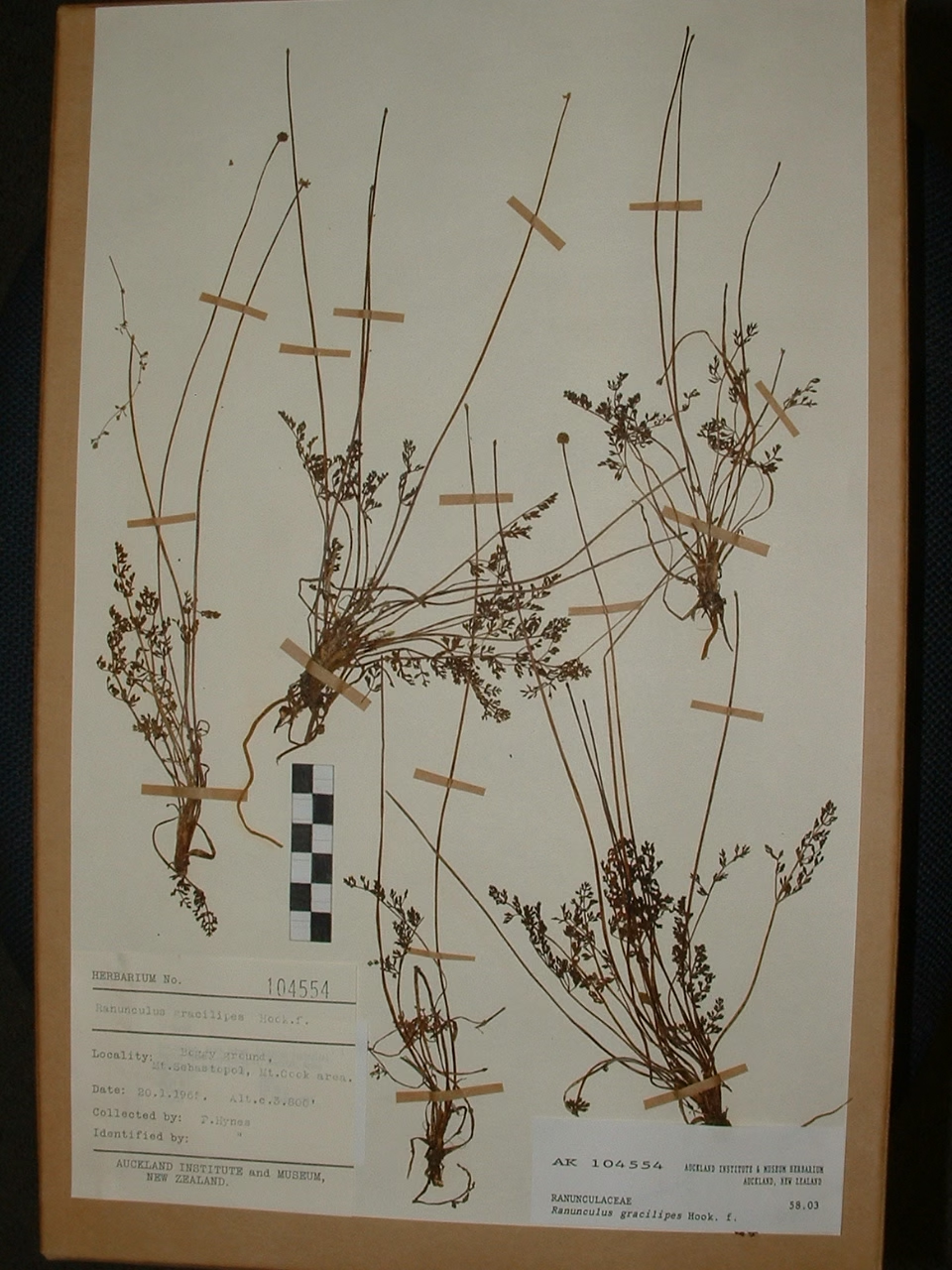
Ranunculus gracilipes
Ranunculus gracilipes
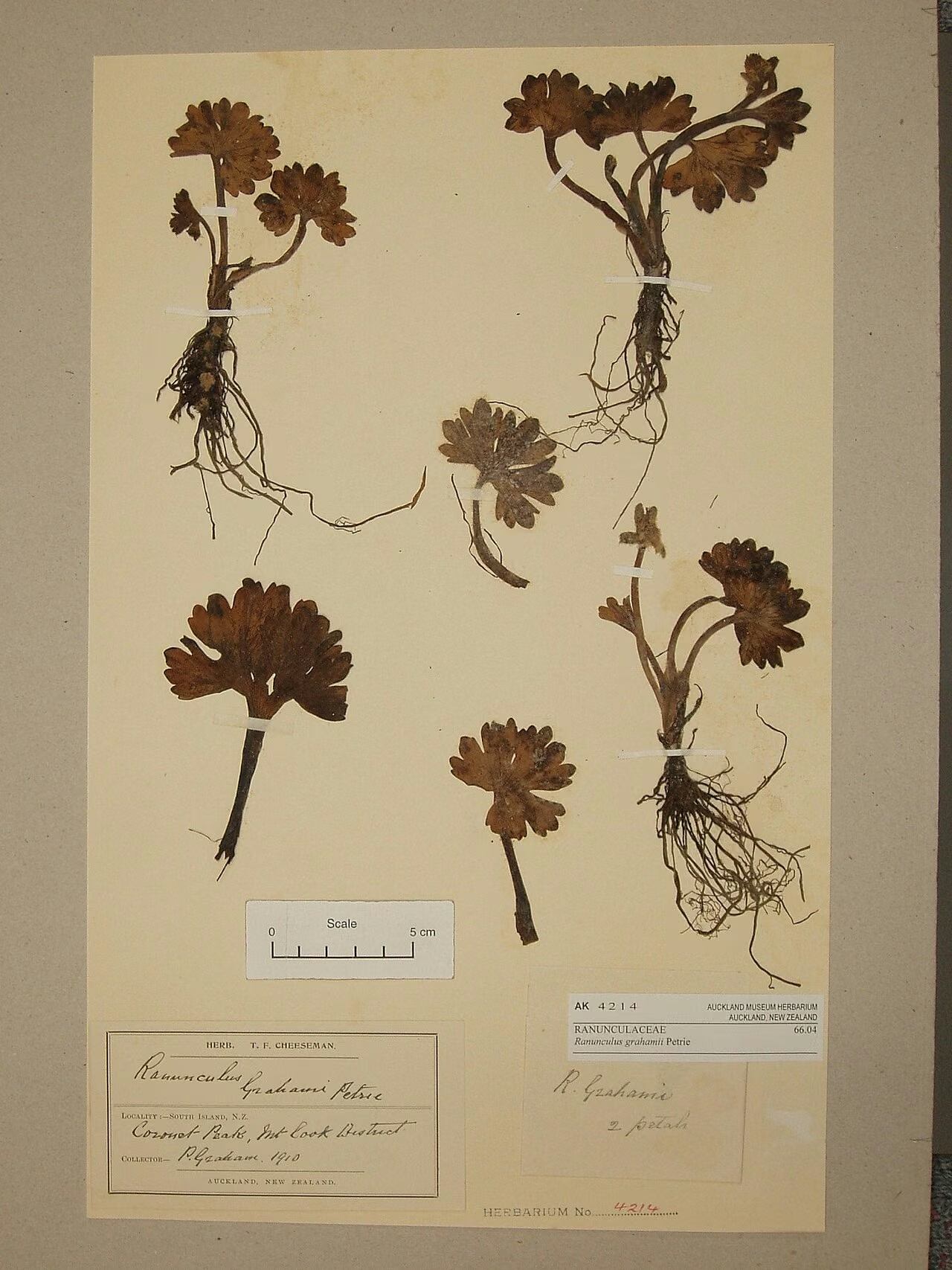
Graham's Buttercup
Ranunculus grahamii
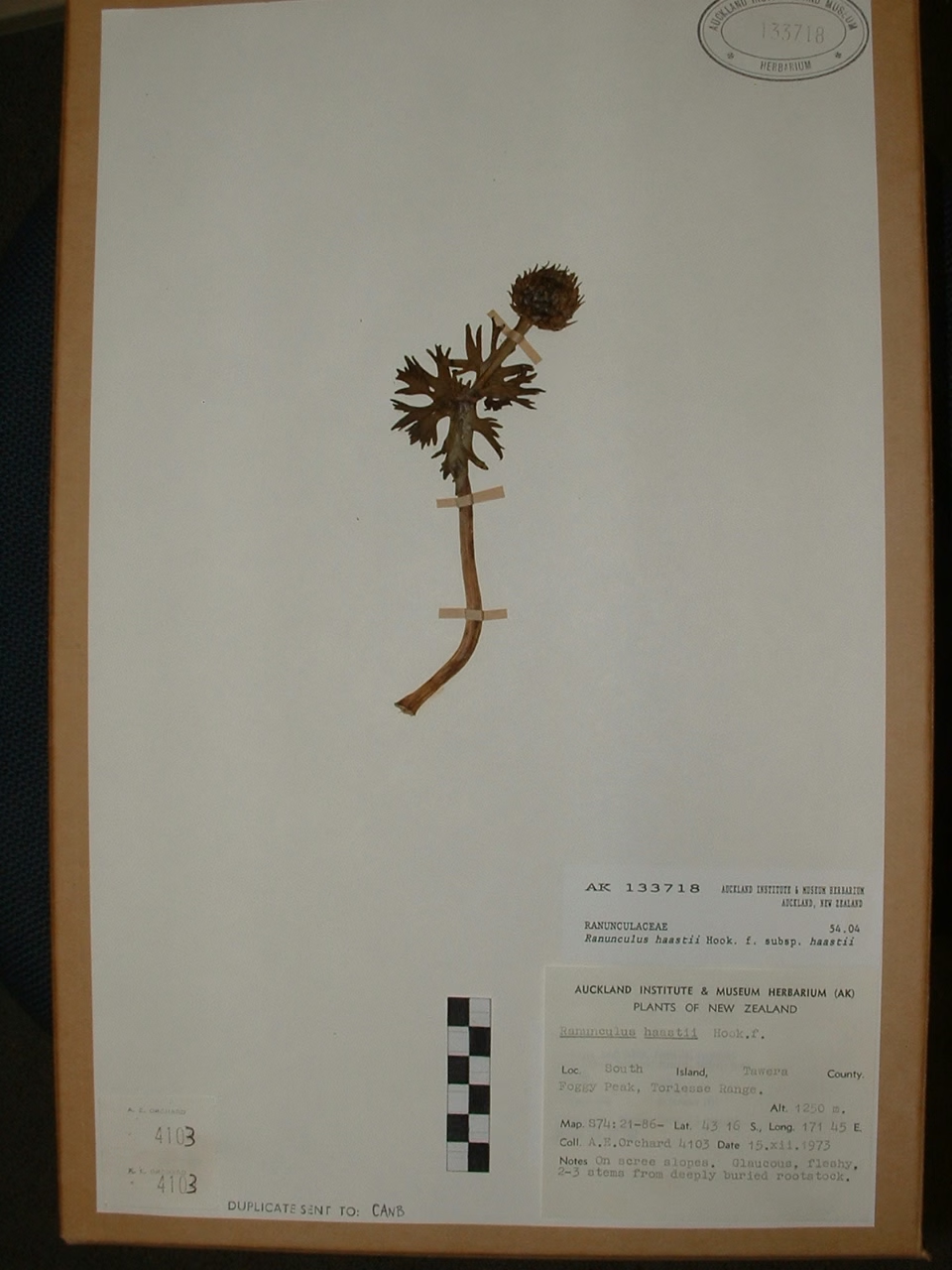
Haast's Buttercup
Ranunculus haastii
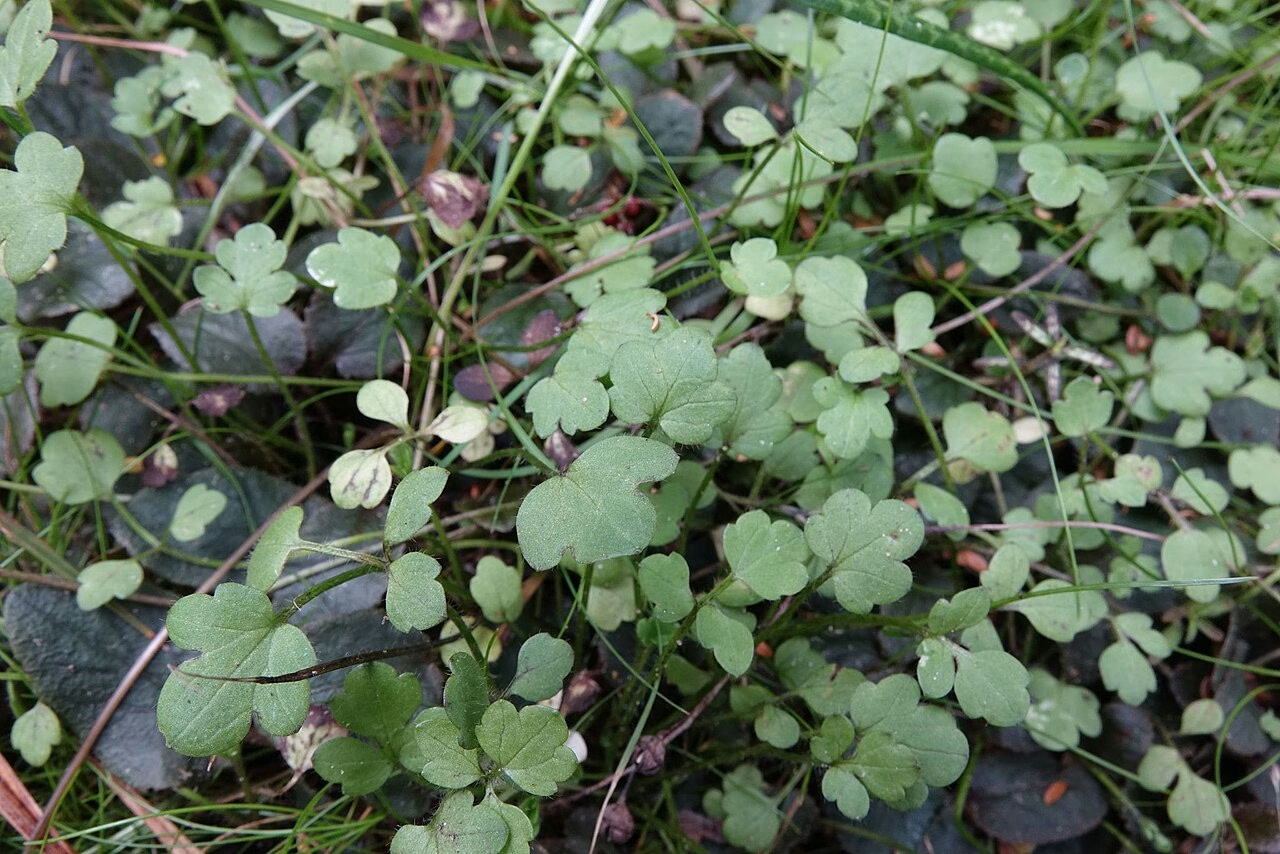
Ranunculus kirkii
Ranunculus kirkii
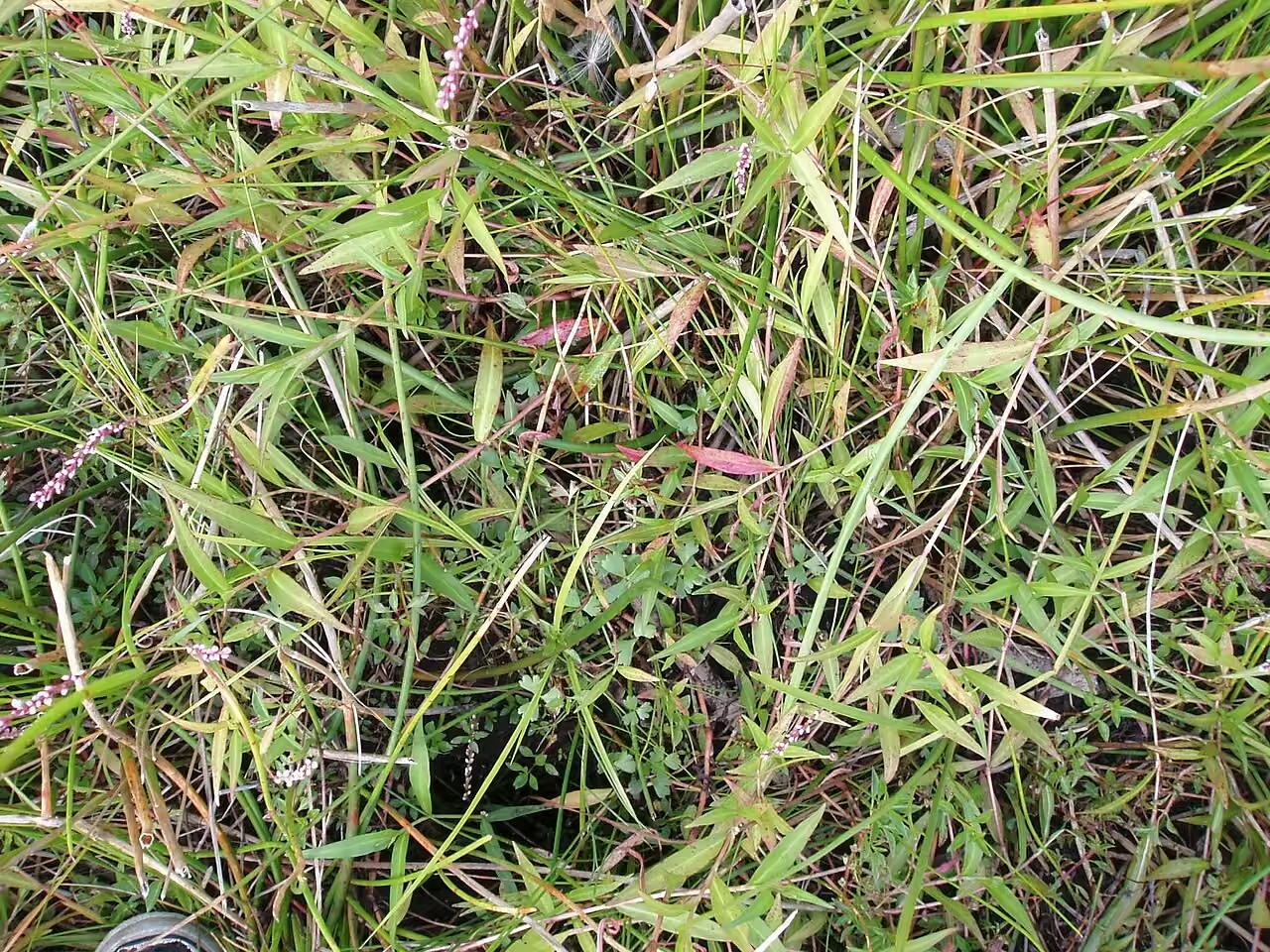
Swamp Buttercup
Ranunculus macropus
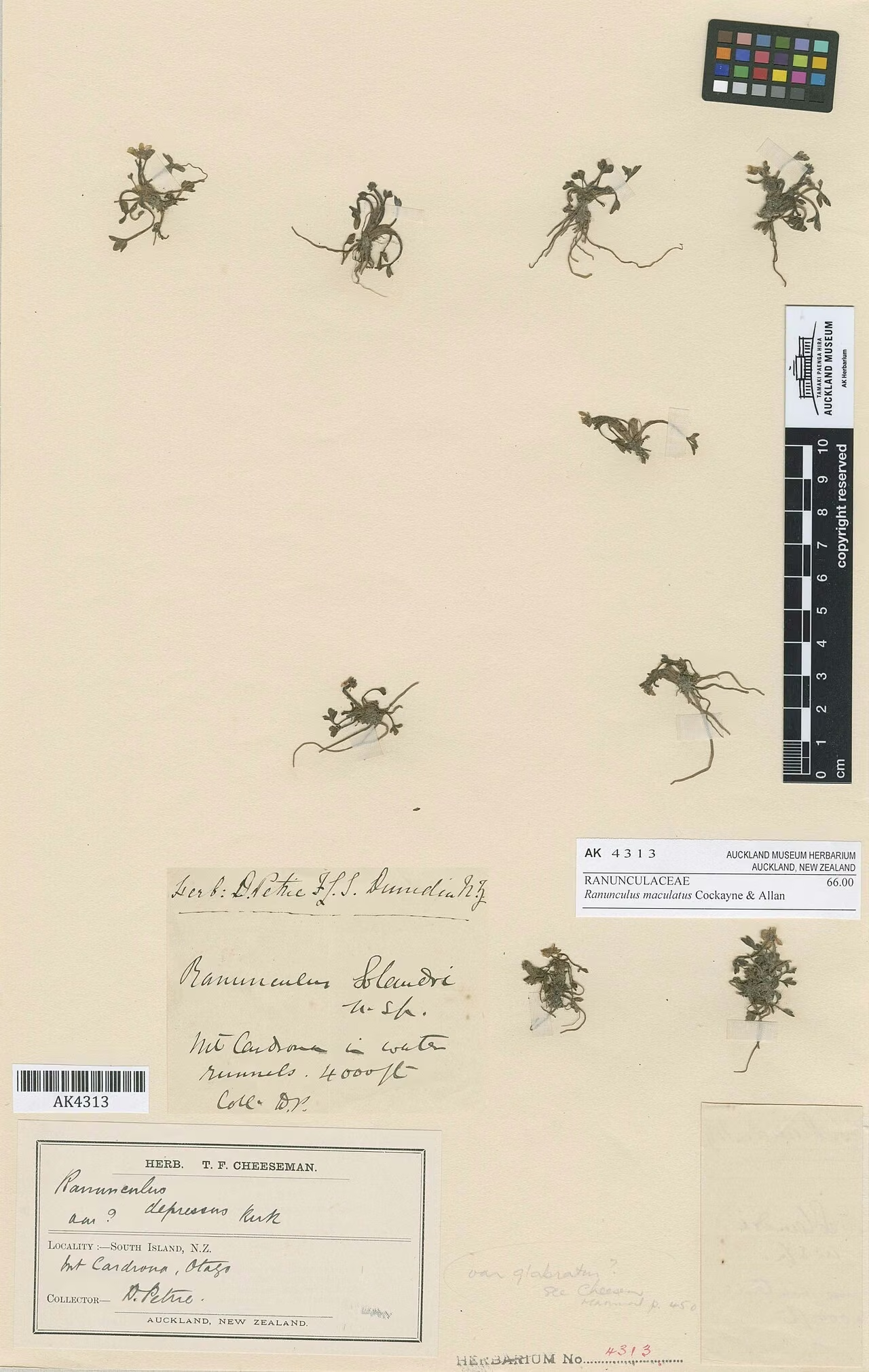
Ranunculus maculatus
Ranunculus maculatus
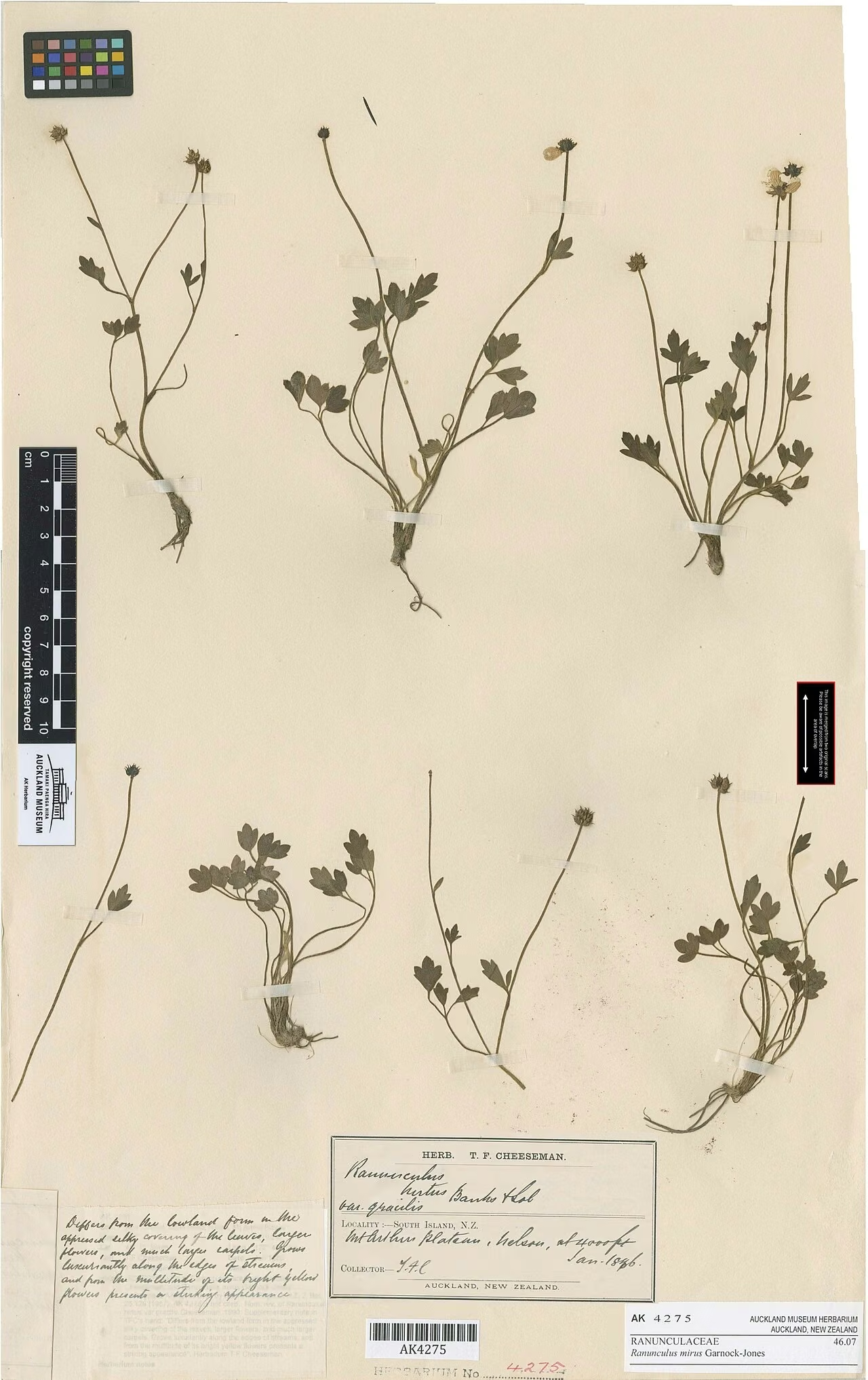
Ranunculus mirus
Ranunculus mirus
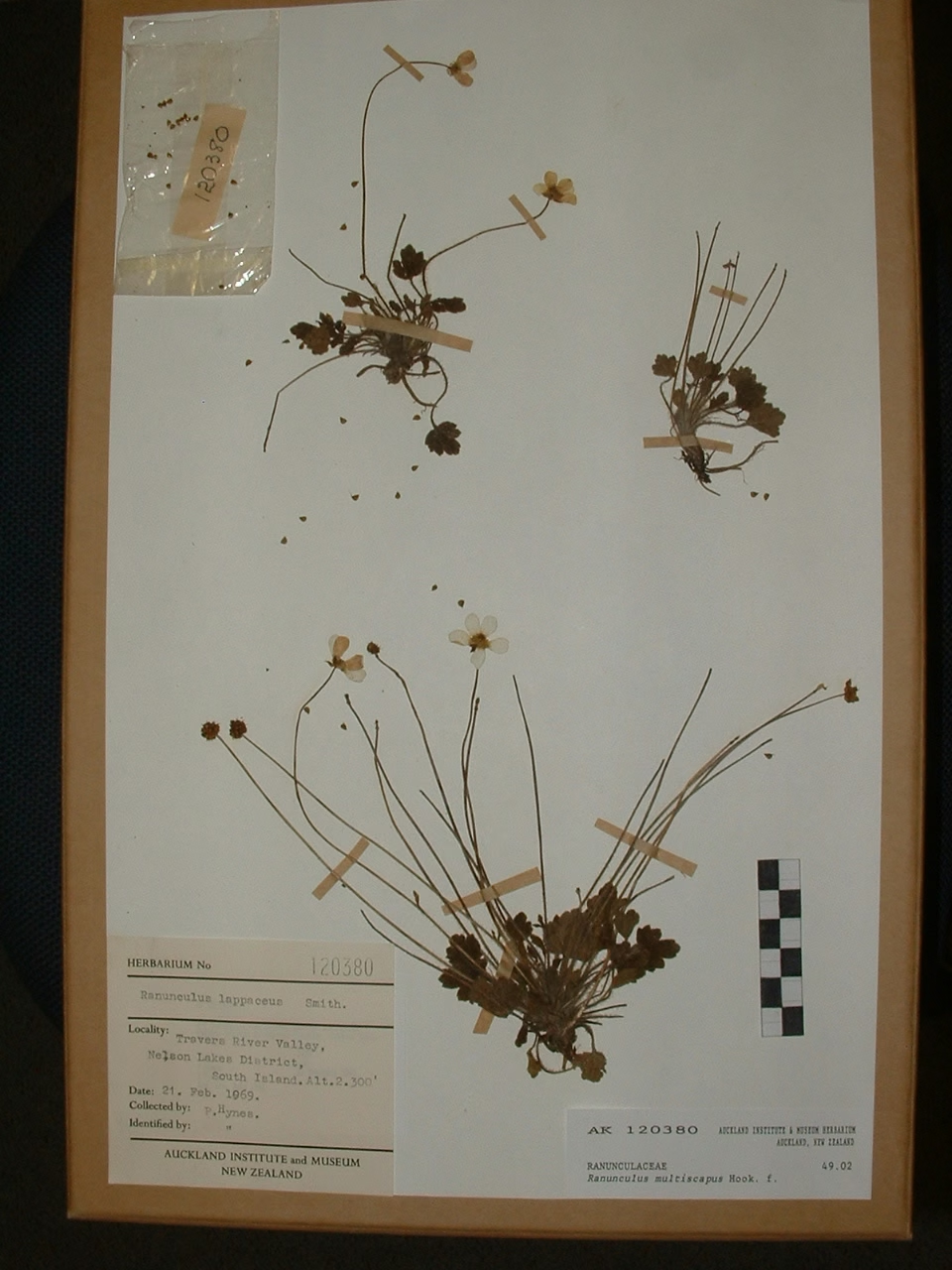
Grassland Buttercup
Ranunculus multiscapus
Plant Conservation
Ranunculus limosella was ranked At Risk - Declining in 2009 but has been assessed as Not Threatened since 2012. Regionally it is listed as Regionally Vulnerable in the Wellington region and Regionally Naturally Uncommon in Otago (2025).
Protecting wetland margins from drainage, reducing nutrient run-off, fencing out stock and controlling invasive aquatic weeds all benefit this small herb and the lake-margin turf community it belongs to.
Frequently Asked Questions
What does mud buttercup look like?
It forms small tufts of hairless, untoothed, spoon-shaped or linear leaves along a creeping buried stem, with tiny solitary flowers bearing four narrow yellow to purple petals on stalks 1 to 2 cm tall.
How do you tell mud buttercup from Limosella lineata?
Both grow in mud and look similar. Mud buttercup has linear to spoon-shaped, slightly curved leaves with smaller sheaths, whereas Limosella lineata has purely linear leaves and white flowers of a different family.
Can I grow mud buttercup in a pond?
Yes. NZPCN says it is easy to grow from fresh seed and rooted pieces and does best in a pond or in pots kept semi-submerged.
Is Ranunculus limosella rare?
Nationally it is ranked Not Threatened, but it is listed as Regionally Vulnerable in the Wellington region and Regionally Naturally Uncommon in Otago, reflecting wetland loss.
Sources and Further Reading
The botanical, growing, and conservation details for Mud Buttercup (Ranunculus limosella) on this page draw on the New Zealand plant references below. Consult them for full technical records and the latest distribution data.