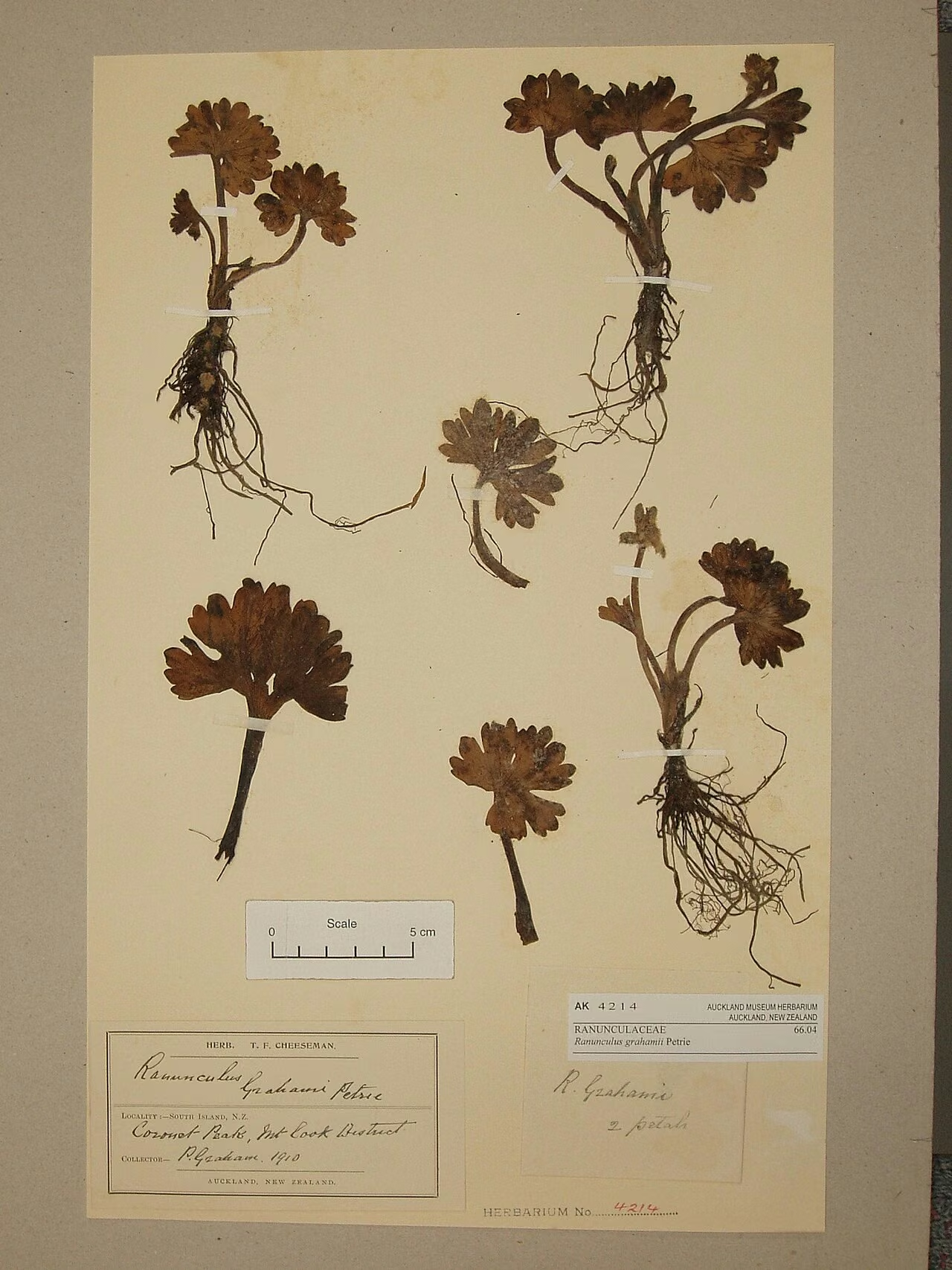
Graham's Buttercup
Ranunculus grahamii
Last updated:
Graham's buttercup (Ranunculus grahamii) is a small, fleshy alpine buttercup endemic to the South Island and found only in Aoraki/Mount Cook National Park. It forms compact rosettes 7 to 12 cm tall of thick, waxy, blue-grey leaves and opens golden flowers 2 to 3 cm across in late summer. It grows higher than almost any other New Zealand flowering plant, on rock crevices, ledges and cliff faces between 2300 and 2800 m, above the permanent snow line. Ranked Threatened - Nationally Vulnerable, it is a plant for mountaineers to admire rather than gardeners to grow. Explore more native flowering plants in our native plant guide.
Plant Description
Ranunculus grahamii is a compact, summer-green rosette herb 70 to 120 mm tall, arising from a stout rhizome with many stringy rootlets. It has three to four or more basal leaves on stalks 50 to 80 mm long, with broad sheathing bases fringed by white silky hairs. The leaf blades are 35 to 50 mm across, kidney-shaped, thick, fleshy and leathery, and distinctly glaucous, giving the plant a blue-grey cast. Each blade is cut into three broad wedge-shaped segments that are themselves deeply lobed, and the blades become hairless apart from a few long silky hairs on the margins.
One to three golden-yellow flowers, 20 to 30 mm across, are carried on each stem. There are five blunt, oblong sepals with silky outer faces and 8 to 16 narrow, blunt petals, each with one or more nectaries near the base. The fruit is a head of plump, ovoid achenes 2.5 to 3.5 mm long, dull pale brown, hairless or sparsely hairy near the base, with a slightly curved beak 2.5 to 3 mm long.
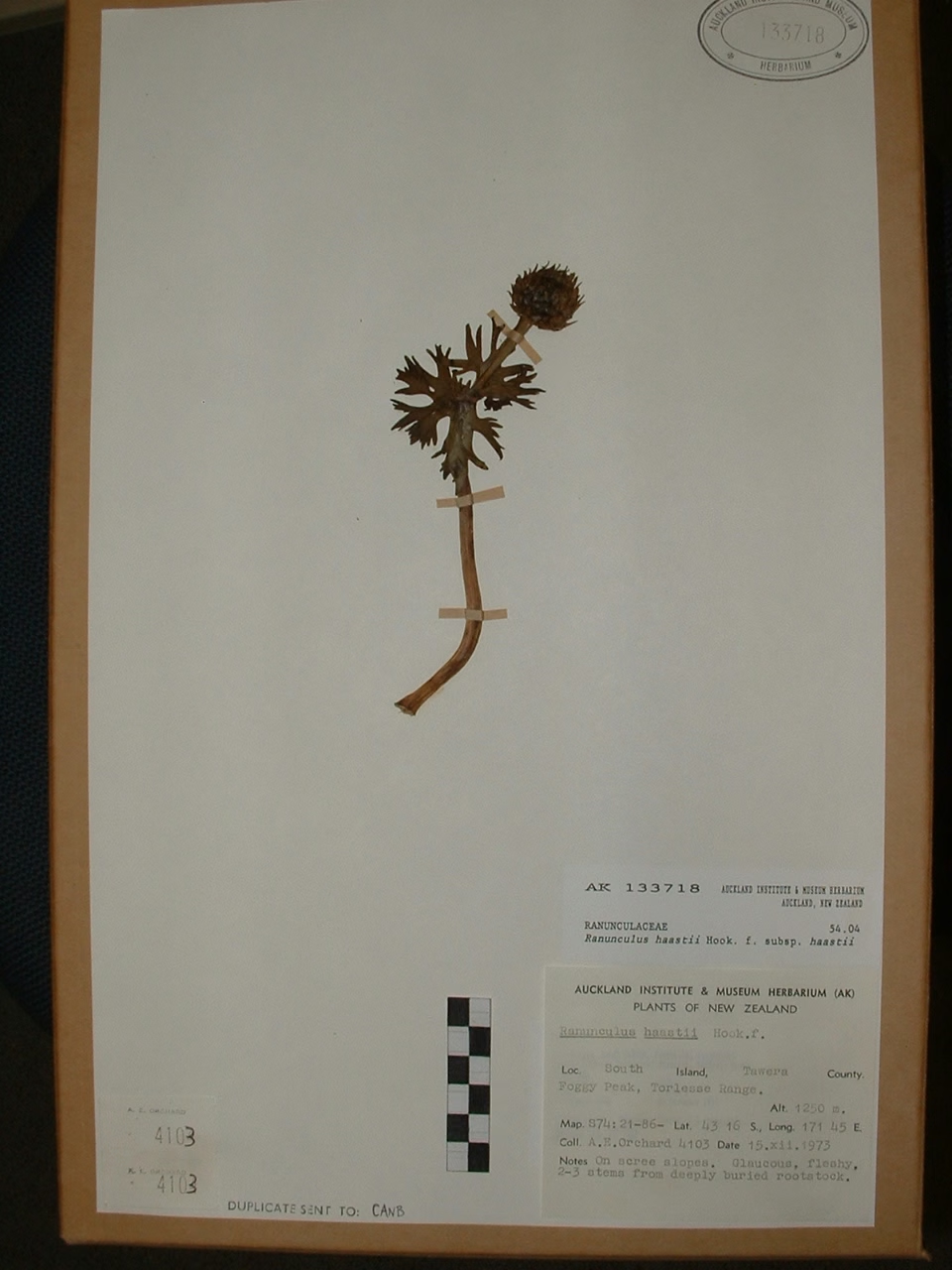
Its closest look-alike is Haast's buttercup (Ranunculus haastii). Graham's buttercup differs in its habitat of rock crevices within the permanent snow line rather than mobile scree, its less finely divided leaves (cut to about three-quarters rather than to the base), and achene beaks that are less obviously flattened, sometimes partly winged.
Quick Facts
| Scientific Name | Ranunculus grahamii |
|---|---|
| Height | 0.07-0.12 m |
| Spread | Single compact rosettes, roughly 0.1 m across |
| Water Needs | Constant moisture from snowmelt with sharp drainage |
| Light | Full sun on exposed rock |
| Frost Tolerance | Extreme; grows above the permanent snow line |
| Salt Tolerance | None; a high-alpine plant far from the coast |
| Growth Rate | Slow, with a very short growing season |
| Lifespan | Long-lived perennial (summer-green) |
Climate Best Suited to
It needs a true high-alpine climate: long snow cover, a brief cool growing season in late summer and intense light. No lowland New Zealand city comes close to these conditions.
Regional Suitability
| City | Climate Suitability |
|---|---|
| Auckland | Low |
| Wellington | Low |
| Christchurch | Low |
| Dunedin | Low |
Plant Habitat
Graham's buttercup is known only from Aoraki/Mount Cook National Park in the central Southern Alps. Its range is a narrow zone stretching from the Malte Brun Range eastward to the main divide and south to Mt Nazomi.
It is a high-alpine plant of rock crevices, ledges and cliff faces between 2300 and 2800 m, within the zone of permanent snow. The terrain is extremely exposed and the growing season lasts only from mid to late summer. Because many sites are reachable only by rock climbers, the true size of the population is not well known.
Growing Requirements
Soil Requirements
It roots into small pockets of mineral debris and fine rock fragments lodged in crevices and on ledges of hard greywacke rock.
- Thin, gritty mineral pockets with almost no organic matter
- Deep crevices that hold moisture for the stout rhizome and rootlets
- Perfect drainage; water never sits around the crown
Light Requirements
Its cliff and ledge sites are open to the sky, with intense high-altitude light and ultraviolet exposure.
- Full sun once snow has cleared
- Glaucous, waxy leaves help cope with strong light and drying wind
Water Requirements
Moisture comes from melting snow and frequent mountain cloud, while the rock crevices shed surplus water quickly.
- Steady seepage or snowmelt during the short growing season
- Dry, frozen dormancy under snow through the rest of the year
Planting and Establishing
This species should not be planted or collected. NZPCN describes it as difficult to propagate and says it should not be removed from the wild, and its entire range lies within a national park where plant collection requires authorisation.
Anyone wanting to see it in situ needs mountaineering skills and experience on glaciated terrain. Photographing plants without disturbing the crevices they grow in is the most useful contribution a visitor can make.
Ecological Role
Flowering in February and March, Graham's buttercup provides one of the very few food sources for insects at such altitudes late in the season. Specific pollinators have not been documented in the sources consulted, though New Zealand alpine buttercups are generally visited by flies and other small insects.
The achenes have no obvious adaptation for long-distance dispersal and probably fall close to the parent plant or are moved short distances by gravity, wind and meltwater. Being on cliff faces gives the plants some protection from browsing animals, but tahr and chamois can reach many of these sites.
Uses & Significance
Garden Uses
Graham's buttercup has no practical garden use and is not available in the nursery trade.
- Not suitable for rock gardens or alpine houses at lowland sites
- Best appreciated through photographs or on guided alpine trips
Ecological Value
It is one of the highest-growing flowering plants in New Zealand, and part of a specialised flora living above the permanent snow line.
- Late-summer nectar and pollen for high-alpine insects
- An indicator of how browsing ungulates affect the highest alpine plant communities
- A narrow-range endemic contributing to the distinctiveness of the Aoraki/Mount Cook flora
Landscaping Uses
There is no landscaping role for this species. Gardeners drawn to its fleshy blue-grey foliage and golden flowers should look at more adaptable alpine buttercups that are sometimes grown by specialists, while accepting that most large alpine Ranunculus dislike lowland humidity.
For public education, interpretation panels in Aoraki/Mount Cook Village or images in alpine flora guides are a far better way to showcase the plant than attempting cultivation.
Seasonal Care Calendar
Spring
Plants remain dormant under deep snow while lower altitudes warm.
- No growth above ground
- Rhizomes survive beneath the snowpack
Summer
New leaves emerge in mid to late summer once the ledges clear of snow, and flowering begins in February.
- Golden flowers 2 to 3 cm across appear from February
- Climbers should avoid stepping on ledge vegetation
Autumn
Flowering finishes in March and achenes ripen from March to May before snow returns.
- Seed heads mature quickly in the short season
- Leaves die back as the summer-green plant shuts down
Winter
The plant is dormant, its rhizome sheltered in rock crevices beneath snow and ice.
- No intervention needed
- Snow cover protects the crown from the harshest cold
When to Prune and How Much
No pruning is needed or appropriate. The summer-green leaves die back naturally each autumn, and the old leaf bases help protect the rhizome.
In the unlikely event of a plant held under permit for conservation research, dead foliage should simply be removed gently to reduce fungal problems.
How to Grow Graham's Buttercup
NZPCN states that Ranunculus grahamii is difficult to propagate and should not be removed from the wild. There is no established horticultural protocol for this species, and any propagation would only be justified for a sanctioned conservation programme with permits from the Department of Conservation, because every known site is inside Aoraki/Mount Cook National Park. The notes below describe the general approach used for large alpine buttercups, adapted to what is known of this plant's biology, rather than a proven method for Graham's buttercup itself. Expect slow germination, high losses and a strong dislike of warm, humid lowland conditions.
From Seed
Achenes ripen between March and May. Seed of many New Zealand alpine buttercups germinates best after a period of cold, moist conditions that mimic winter under snow, and fresh seed tends to be more reliable than stored seed.
- Collect ripe achenes only under permit, taking a small fraction of what is available
- Sow fresh onto a very gritty, free-draining mix topped with fine grit
- Give the pots a cold, moist stratification period over winter outdoors or in a refrigerator
- Keep seedlings cool, bright and well ventilated, never sitting in water
- Pot on individually only once a strong rhizome has formed
By Division
Branched rhizomes of established plants in cultivation could in principle be divided, though this is risky with fleshy alpine buttercups and is not recommended from wild plants under any circumstances.
- Divide only cultivated plants, at the start of the growing season
- Cut cleanly so each piece has a growing point and roots
- Dust cut surfaces and replant in pure grit or pumice
- Keep cool and shaded until new leaves appear
Pests & Diseases
The main documented threat comes from introduced browsing animals. NZPCN reports that Graham's buttercup is believed to be at some risk from Himalayan tahr and chamois, which range across the high alpine zone of the Southern Alps.
In cultivation, large alpine buttercups commonly suffer from powdery mildew and crown rot in humid or warm conditions, and slugs and snails readily graze their fleshy leaves.
Cultural Significance
No Māori name or traditional Māori use is recorded for Ranunculus grahamii.
The species is a botanical prize for climbers and alpine botanists in Aoraki/Mount Cook National Park, and NZPCN featured it as a Plant of the Month in its Trilepidea newsletter in November 2013. The sources consulted do not say which Graham the name honours.
Bonus Tip
If you are climbing in the Malte Brun Range or around the main divide near Aoraki in February or March, look for blue-grey rosettes in rock cracks on sunny ledges. Record the location and a photo on iNaturalist NZ: because so few people reach these sites, every confirmed sighting helps scientists understand how many plants survive.
Related Plants
Explore other native plants that share similar characteristics or habitats with Graham's Buttercup (Ranunculus grahamii), offering further insights into New Zealand's diverse flora. These related species provide context and opportunities for complementary planting in your garden.
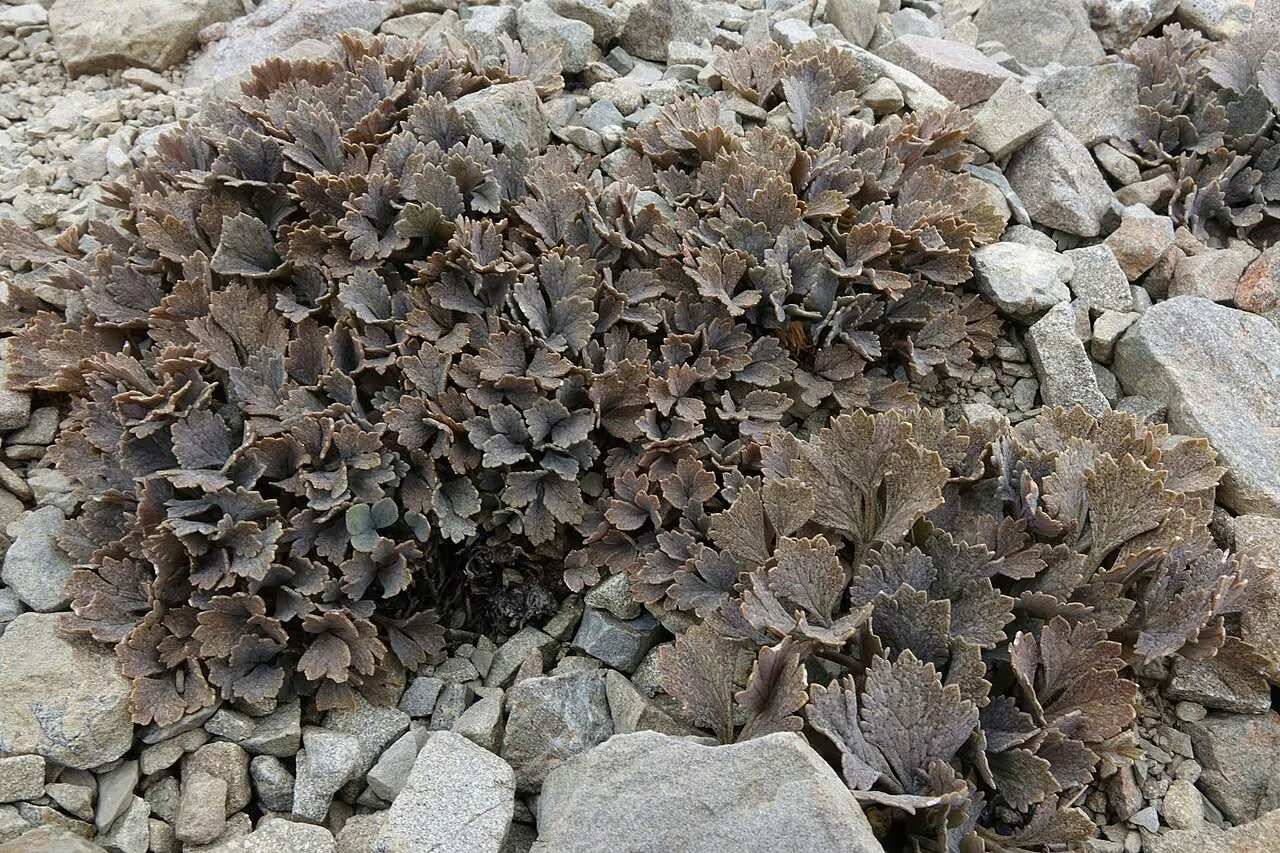
Scree Buttercup
Ranunculus crithmifolius
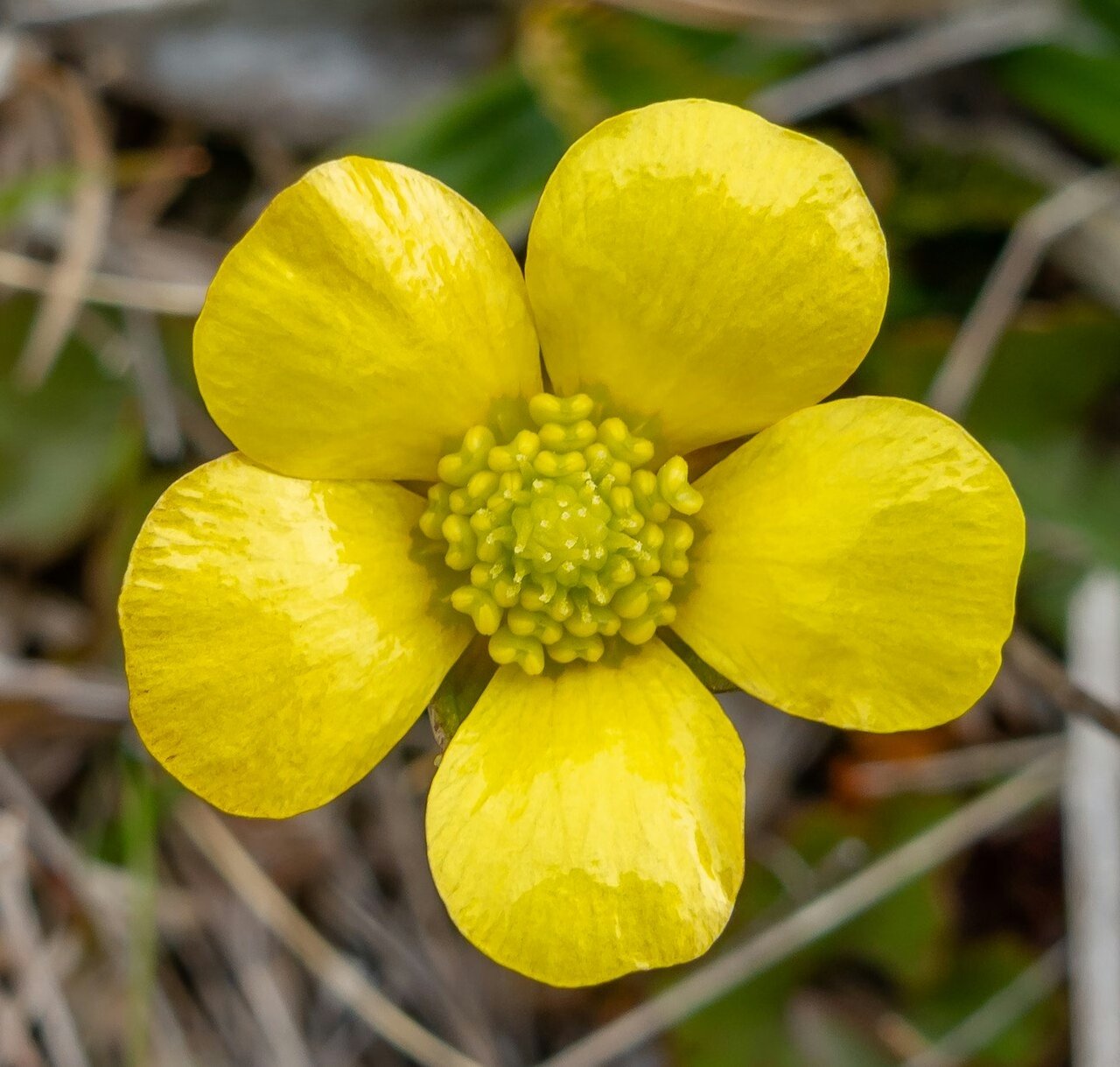
Ranunculus enysii
Ranunculus enysii
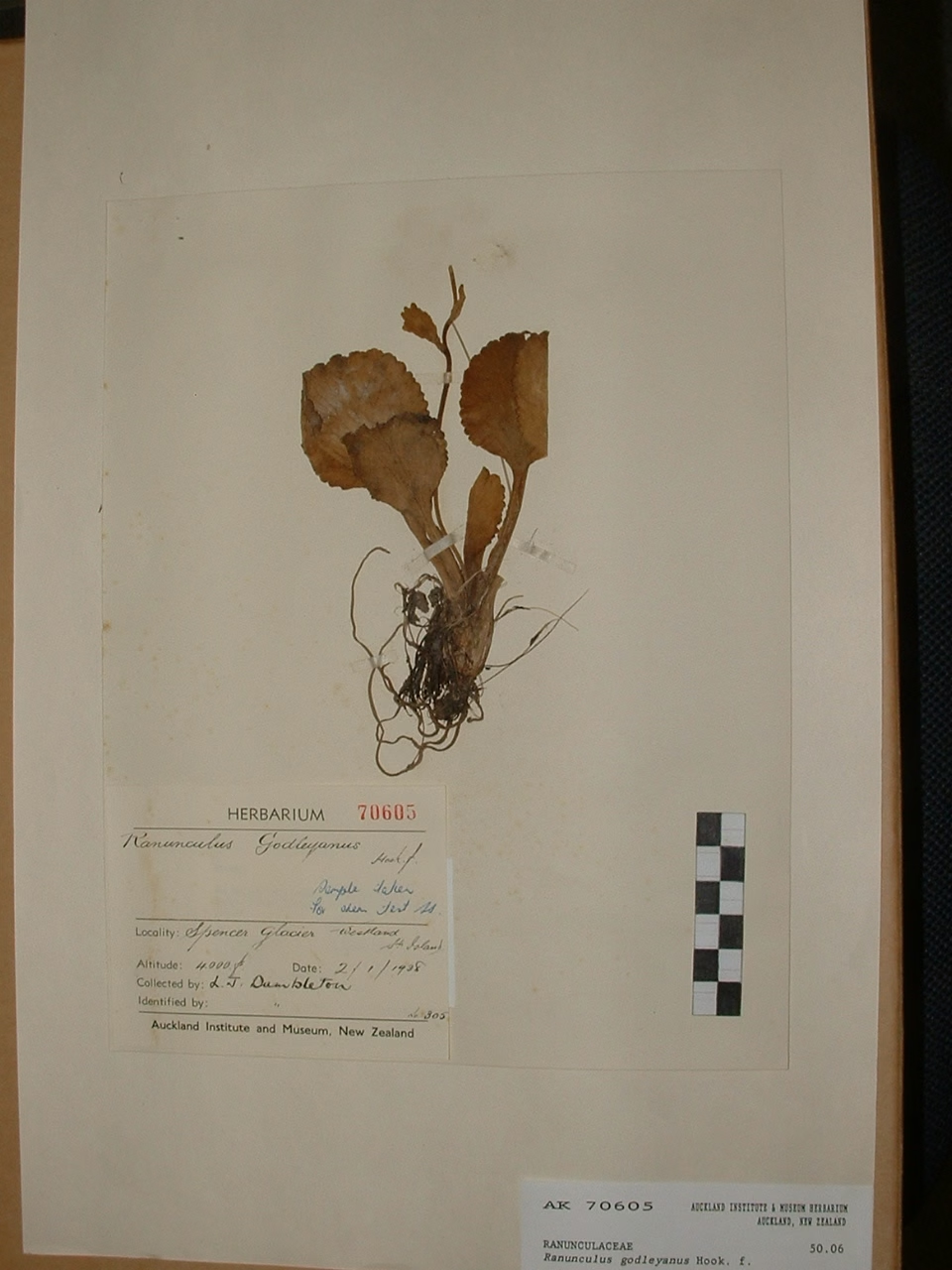
Yellow Alpine Buttercup
Ranunculus godleyanus
Ranunculus gracilipes
Ranunculus gracilipes
Haast's Buttercup
Ranunculus haastii
Ranunculus kirkii
Ranunculus kirkii
Mud Buttercup
Ranunculus limosella
Swamp Buttercup
Ranunculus macropus
Plant Conservation
Ranunculus grahamii was ranked Threatened - Nationally Vulnerable in the 2023 New Zealand Threat Classification assessment, with the qualifier Range Restricted. It had previously been listed as At Risk - Naturally Uncommon. Its total population is uncertain because much of its habitat is accessible only to rock climbers.
The principal management action identified by NZPCN is keeping populations of Himalayan tahr and chamois low across its range. Climbers can help by avoiding damage to ledge vegetation and reporting sightings.
Frequently Asked Questions
Where does Graham's buttercup grow?
Only in Aoraki/Mount Cook National Park, in a narrow zone from the Malte Brun Range east to the main divide and south to Mt Nazomi, at 2300 to 2800 m.
When does Ranunculus grahamii flower?
It flowers in February and March, very late for a buttercup, because snow only clears from its high rock ledges in mid to late summer. Fruit follows from March to May.
How is Graham's buttercup different from Haast's buttercup?
Ranunculus haastii grows on mobile scree and has leaves divided right to the base. Ranunculus grahamii grows in rock crevices above the snow line and its leaves are divided to about three-quarters of their length.
Why is Ranunculus grahamii threatened?
It occupies a tiny, localised high-alpine niche, and NZPCN notes it is believed to be at some risk from browsing Himalayan tahr and chamois.
Sources and Further Reading
The botanical, growing, and conservation details for Graham's Buttercup (Ranunculus grahamii) on this page draw on the New Zealand plant references below. Consult them for full technical records and the latest distribution data.