Buttercup
Ranunculus enysii
Last updated:
Ranunculus enysii is a hairless, tufted alpine buttercup endemic to the South Island. It grows 10 to 40 cm tall from a stout rhizome and has leathery leaves so variable in shape that it was once described under five different names, from large rounded leaflets with a few shallow teeth to small leaflets cut into narrow segments. One to three yellow flowers, 1.5 to 3 cm across, appear on each stem from December to February. It grows in sheltered places in tussock grassland and scrub at 900 to 1500 m in Canterbury, Otago and Southland, and is ranked Not Threatened. Explore more native flowering plants in our native plant guide.
Plant Description
Ranunculus enysii is a tufted, hairless perennial 10 to 40 cm tall with a stout rhizome. Its leathery leaves are ovate to oblong in outline and divided into three or arranged palmately, rarely only deeply three-lobed. The leaflets are very variable: some plants have large, rounded leaflets with a few shallow teeth, while others have smaller leaflets cut into narrow segments.
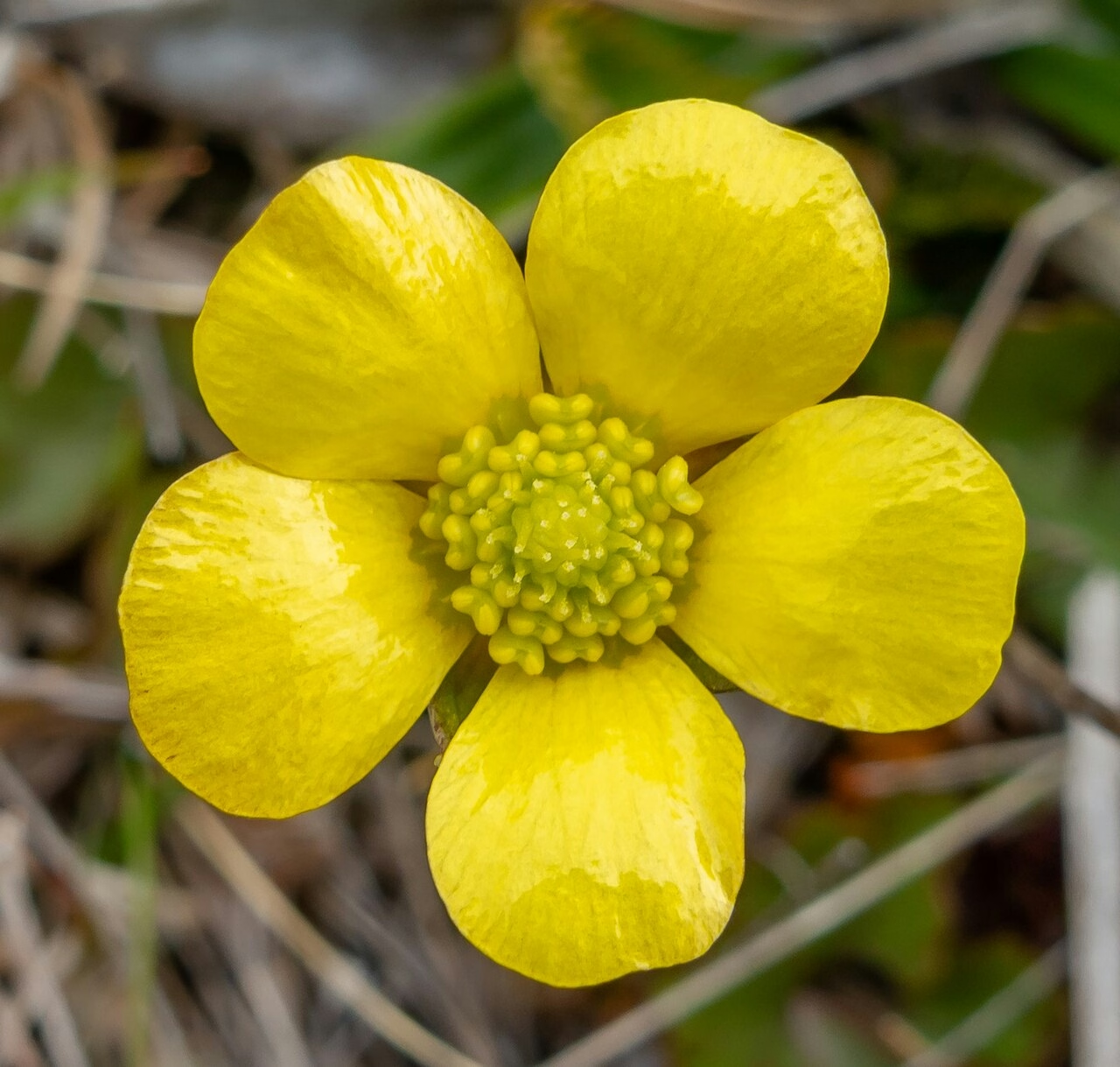
The flowering stems carry one to three flowers, each 1.5 to 3 cm across, with five yellow, obovate-cuneate petals. Each petal has a single nectary near its base. The fruiting head contains 20 to 50 smooth achenes, about 1.5 to 2 mm long, with straight or slightly curved beaks.
Because of its variable foliage, identification usually relies on a combination of features: a hairless plant, leathery compound leaves, a stout rhizome, medium-sized yellow flowers with five petals and one nectary each, and smooth achenes. Fisher's 1965 monograph of the New Zealand alpine buttercups gives an expanded description with illustrations of the leaf variation.
Quick Facts
| Scientific Name | Ranunculus enysii |
|---|---|
| Height | 0.1-0.4 m |
| Spread | Tufted clumps about 0.1-0.2 m across |
| Water Needs | Moist |
| Light | Sun to partial shade among tussock and scrub |
| Frost Tolerance | Very high; montane to subalpine |
| Salt Tolerance | No information available; an inland mountain species |
| Growth Rate | Slow to moderate |
| Lifespan | Perennial |
Climate Best Suited to
Suits the cold montane and subalpine climate of the eastern and southern South Island, with snowy winters and cool summers.
Regional Suitability
| City | Climate Suitability |
|---|---|
| Auckland | Low |
| Wellington | Low |
| Christchurch | Medium |
| Dunedin | Medium |
Plant Habitat
Ranunculus enysii is endemic to the South Island, where it is recorded from Canterbury, Otago and Southland at 900 to 1500 m.
It grows in sheltered places in tussock grassland and scrub, such as hollows, the lee of shrubs and the bases of tussocks, where it is protected from drying winds and the soil stays moist through summer.
Growing Requirements
Soil Requirements
It grows in moist mountain soils in sheltered spots within tussock grassland and scrub.
- Moist but free-draining mineral soil
- Some organic matter from surrounding tussock litter
- Cool root run
Light Requirements
It favours sheltered sites, so it often receives some shade from tussocks or shrubs while still growing in open country.
- Sun to partial shade
- Protection from drying wind matters as much as light
Water Requirements
Its sheltered habitats hold moisture longer than exposed ground, and it does best where the soil does not dry out in summer.
- Keep evenly moist in the growing season
- Avoid waterlogging in winter
Planting and Establishing
Ranunculus enysii is seldom grown, and no nursery sources were found. It would suit a cool rock garden or trough with a sheltered aspect, planted in gritty soil enriched with some leaf mould.
Choose a position in the lee of a rock or low shrub to imitate the sheltered tussock and scrub sites where it grows naturally.
Ecological Role
It forms part of the herb layer beneath and between tussocks and subalpine shrubs, flowering in midsummer when many alpine insects are active. Its specific pollinators are not documented in the sources consulted.
The achenes fall close to the parent plant, so new plants usually appear nearby in the same sheltered microhabitat.
Uses & Significance
Garden Uses
It has potential for alpine plant collections, where its variable leaf forms are of interest.
- Troughs and rock gardens in cool southern districts
- Collections showing variation in alpine buttercups
- Restoration of tussock grassland herb layers within its range
Ecological Value
It contributes to the diversity of herbs in South Island tussock grassland and subalpine scrub.
- Provides summer flowers in tussock communities
- Part of the endemic alpine buttercup radiation of New Zealand
Landscaping Uses
In an alpine-style planting, grow it beside small tussocks such as Festuca or Poa so it receives the dappled shelter it gets in the wild, with its yellow flowers rising between the grass blades.
Its leafy clumps are modest when not in flower, so place it where midsummer flowering can be appreciated close up.
Seasonal Care Calendar
Spring
New leaves emerge from the rhizome as the snow retreats.
- Begin regular watering of cultivated plants
- Watch for slug damage on new growth
Summer
Flowering runs from December to February, with one to three yellow flowers per stem.
- Keep soil moist during dry spells
- Begin collecting ripe seed from January
Autumn
Fruit continues to ripen until March, then foliage dies back.
- Sow fresh seed outdoors
- Tidy dead leaves from the crown
Winter
The plant is dormant, surviving as a rhizome under snow or frozen ground.
- Keep potted plants cold and well drained
- No feeding or watering needed
When to Prune and How Much
Ranunculus enysii needs no pruning. Spent flower stems can be cut back after seed has been collected.
Remove old leaves in autumn to keep the crown clean and reduce rot.
How to Grow Buttercup
NZPCN provides no propagation details for Ranunculus enysii, and no published propagation records were found in the sources consulted. The approaches below follow those generally used for South Island alpine buttercups. Fresh seed exposed to winter cold is the usual route, and established clumps with several crowns along the stout rhizome may also be divided. Because the species is so variable, label seed and plants with their source location; growers interested in its leaf variation may want to keep different forms separate. Collect only small amounts, from plants in cultivation or with landowner or Department of Conservation permission.
From Seed
Fruit ripens from January to March. Sowing soon after collection and leaving the pots outside over winter provides the cold period that alpine buttercup seed usually needs.
- Collect achenes when the fruiting heads begin to break apart
- Sow on a free-draining seed mix and cover thinly with grit
- Stand pots outdoors in a cool, shaded position over winter
- Keep moist and wait for spring germination
- Pot on seedlings individually once they have true leaves
By Division
Clumps with several rosettes can be split in early spring, keeping a portion of the rhizome and roots with each piece.
- Lift a mature cultivated clump as growth resumes
- Cut through the rhizome so each piece has a growing point and roots
- Replant into gritty, moist compost
- Keep sheltered and lightly shaded until new leaves show it has established
Pests & Diseases
No specific pests or diseases are recorded for Ranunculus enysii in the sources consulted. In cultivation, slugs and snails are likely to attack soft new leaves and buds.
Crown rot can occur where drainage is poor, particularly in warm, humid lowland conditions.
Cultural Significance
No traditional Māori name or use is recorded for Ranunculus enysii in the sources consulted.
Thomas Kirk named the species after John Davies Enys, who ran Castle Hill Station in inland Canterbury from 1867 to 1891 and had wide interests in geology and natural history. Several of its synonyms were coined by Donald Petrie and others before botanists recognised that the different forms belonged to one variable species.
Bonus Tip
If you find a hairless yellow buttercup with leathery, three-part leaves in a sheltered corner of Canterbury or Otago tussock grassland, do not rule out Ranunculus enysii just because its leaves look different from a photo. Compare several plants in the population, since leaf shape varies widely even between neighbouring clumps.
Related Plants
Explore other native plants that share similar characteristics or habitats with Buttercup (Ranunculus enysii), offering further insights into New Zealand's diverse flora. These related species provide context and opportunities for complementary planting in your garden.
Cut-Leaved Alpine Buttercup
Ranunculus buchananii
Ranunculus carsei
Ranunculus carsei
Scree Buttercup
Ranunculus crithmifolius
Yellow Alpine Buttercup
Ranunculus godleyanus
Ranunculus gracilipes
Ranunculus gracilipes
Graham's Buttercup
Ranunculus grahamii
Haast's Buttercup
Ranunculus haastii
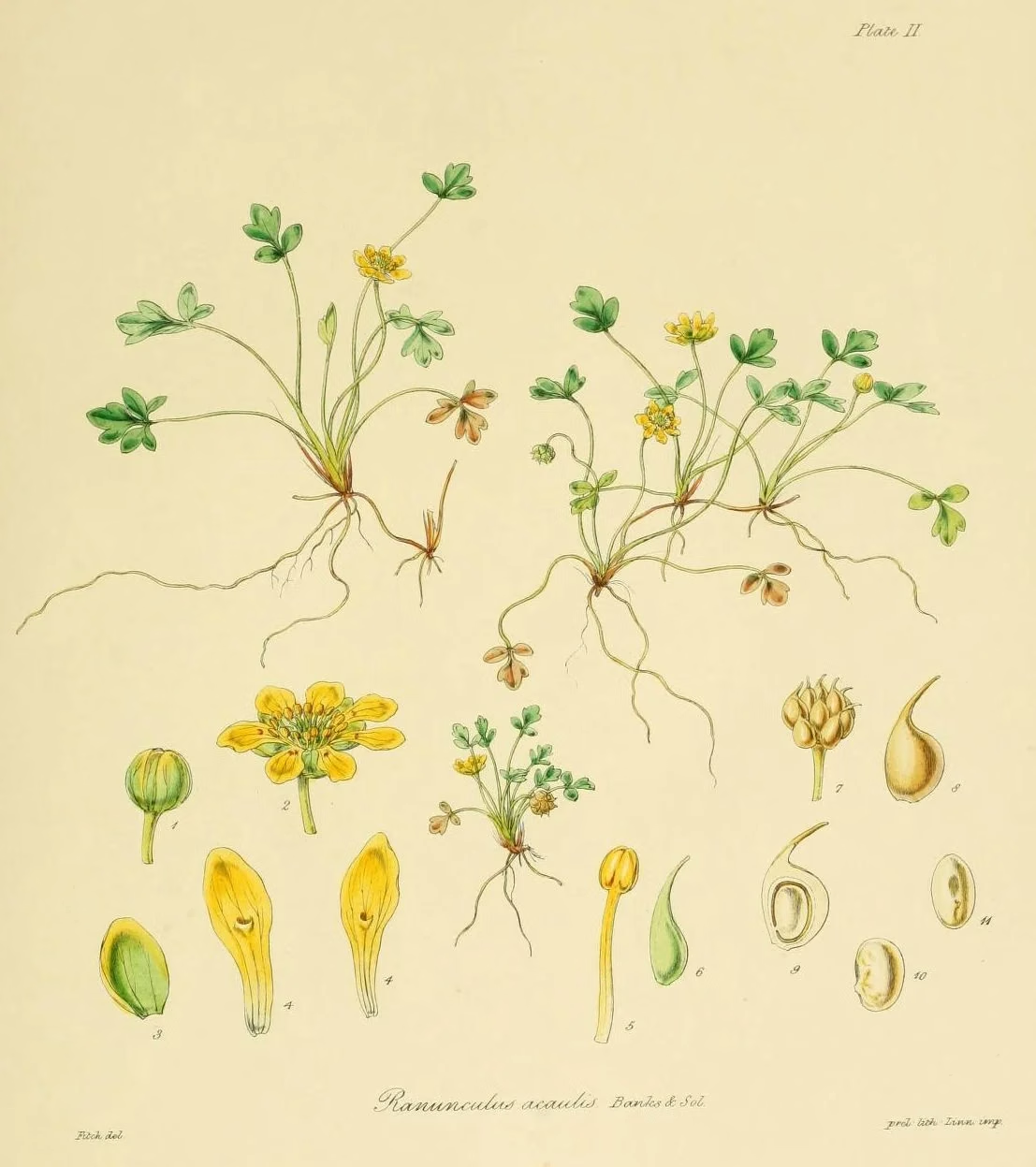
Acaulis Plant
Acaulis Plant
Plant Conservation
Ranunculus enysii has been ranked Not Threatened nationally in every assessment to 2023. In Otago it is ranked Regionally At Risk - Regionally Naturally Uncommon (2025), reflecting its sparse occurrence in that region.
Protecting the herb layer of tussock grassland and scrub from heavy grazing, weeds and conversion to pasture helps maintain its habitat.
Frequently Asked Questions
Who was Ranunculus enysii named after?
It honours John Davies Enys (1837 to 1912), a Cornish geologist, biologist and farmer who owned Castle Hill Station in Canterbury from 1867 to 1891.
Why does Ranunculus enysii have so many synonyms?
Its leaves vary enormously between populations, from broad rounded leaflets to finely cut ones, so botanists described forms as separate species such as R. berggrenii and R. novae-zelandiae before they were united under R. enysii.
When does Ranunculus enysii flower?
Flowering is from December to February, and fruit ripens from January to March.
Where does Ranunculus enysii grow?
It grows in sheltered sites within tussock grassland and subalpine scrub at 900 to 1500 m in Canterbury, Otago and Southland.
Sources and Further Reading
The botanical, growing, and conservation details for Buttercup (Ranunculus enysii) on this page draw on the New Zealand plant references below. Consult them for full technical records and the latest distribution data.