Yellow Alpine Buttercup
Ranunculus godleyanus
Last updated:
Yellow alpine buttercup (Ranunculus godleyanus) is a stout, hairless high-alpine buttercup endemic to the central Southern Alps. From a rosette of large, fleshy, leathery leaves it sends up flowering stems to 60 cm tall, each carrying 5 to 15 bright golden-yellow flowers 3 to 5 cm across. It grows between 1400 and 2030 m on permanently damp rock ledges, cliffs and boulder falls, usually close to glaciers and permanent icefields, from Mt Rolleston in Arthur's Pass National Park south to Mt Sefton in Aoraki/Mount Cook National Park. It is ranked At Risk - Declining, mainly because of browsing by tahr and chamois. Explore more native flowering plants in our native plant guide.
Plant Description
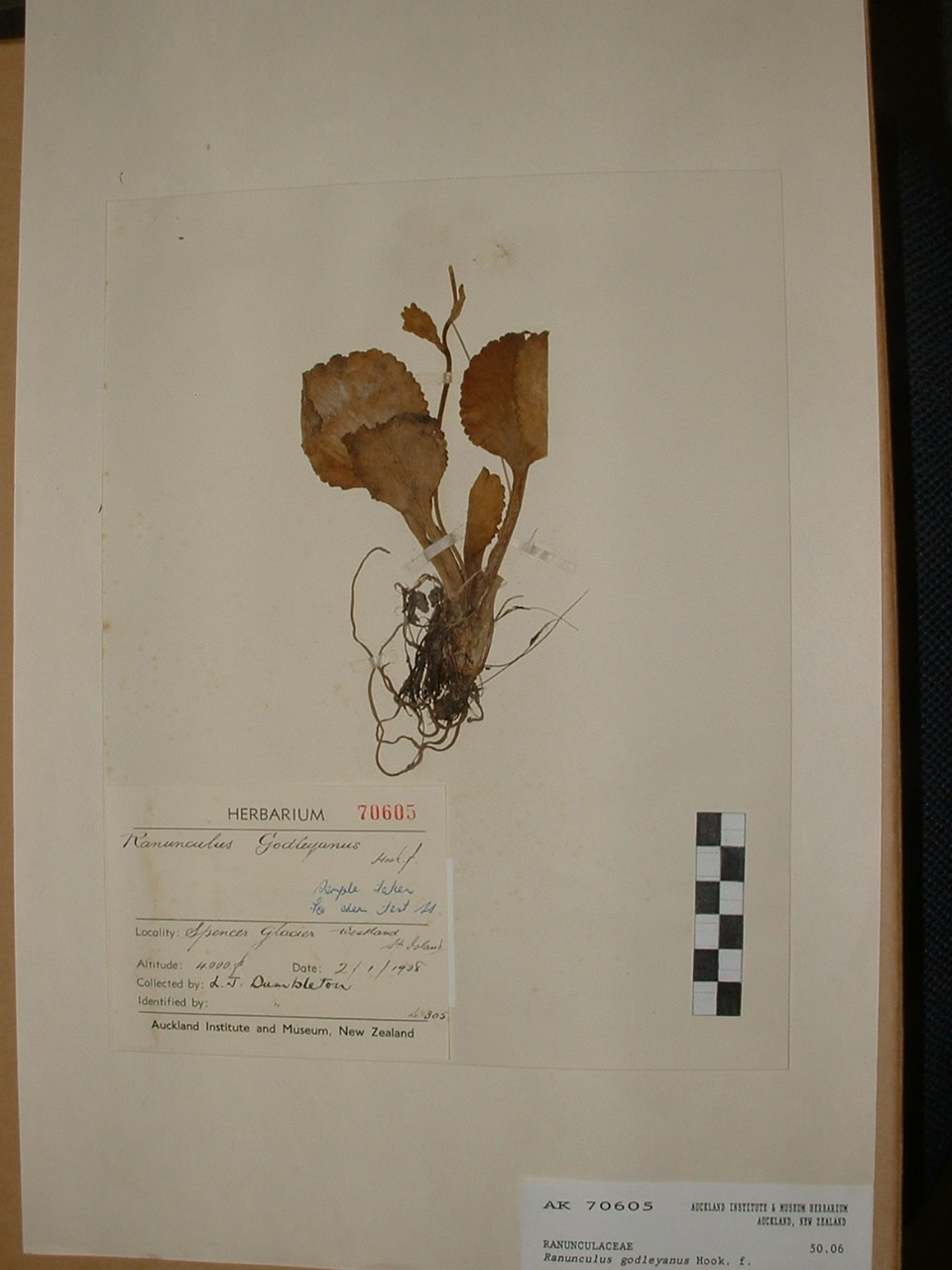
Ranunculus godleyanus is a stout, completely hairless perennial forming large rosettes from thick white rhizomes 10 to 15 mm in diameter. The rosette leaves are simple, fleshy and leathery, oblong to elliptic, 6 to 15 cm long and 4 to 10 cm wide, with coarsely scalloped margins. They sit on thick, flattened leaf stalks up to 20 mm wide.
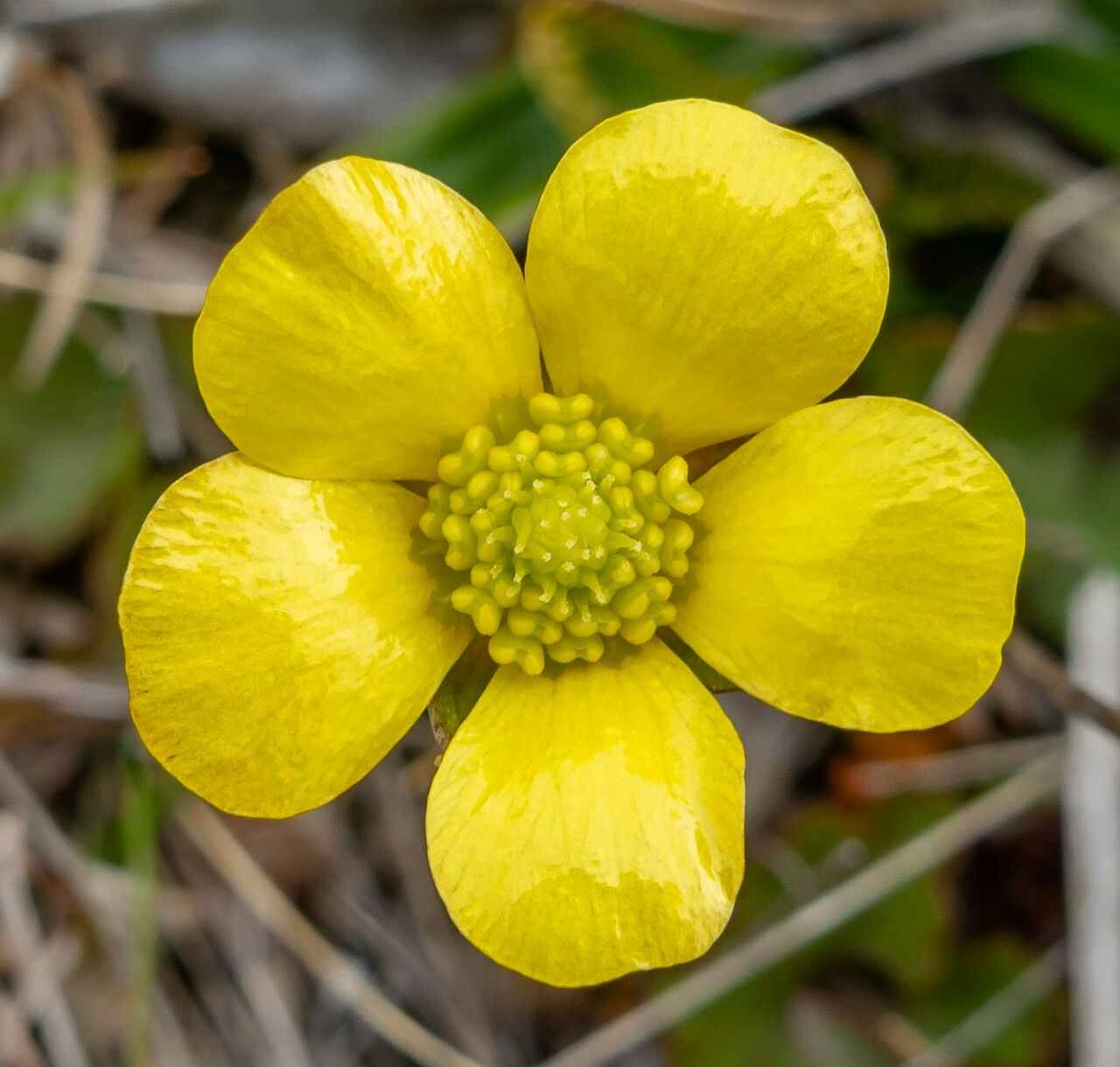
The erect flowering stems reach 60 cm and carry 5 to 15 bright golden-yellow flowers, each 3 to 5 cm across with five or six wedge-shaped, notched petals. The fruiting heads hold numerous small, hairy achenes with curved beaks 5 to 6 mm long.
Its closest relative is Ranunculus insignis, another large yellow-flowered mountain buttercup. Ranunculus godleyanus is distinguished by its entirely hairless leaves, broad flattened leaf stalks rather than rounded ones, and longer achene beaks. Its tall, many-flowered golden stems among wet rock near ice make it one of the most spectacular plants of the high Southern Alps.
Quick Facts
| Scientific Name | Ranunculus godleyanus |
|---|---|
| Height | Flowering stems to 0.6 m |
| Spread | Rosettes about 0.3-0.5 m across |
| Water Needs | Permanently damp; wet rock near ice |
| Light | Shade to full sun on rock ledges |
| Frost Tolerance | Extreme; high alpine |
| Salt Tolerance | No information available; a high alpine species |
| Growth Rate | Slow |
| Lifespan | Long-lived perennial |
Climate Best Suited to
Suits the extreme high-alpine climate of the central Southern Alps, with heavy snowfall, very cold winters, short cool summers and constant meltwater from nearby ice.
Regional Suitability
| City | Climate Suitability |
|---|---|
| Auckland | Low |
| Wellington | Low |
| Christchurch | Low |
| Dunedin | Low |
Plant Habitat
Yellow alpine buttercup is endemic to the South Island, where it ranges along the central Southern Alps from Mt Rolleston and Mt Hunt in Arthur's Pass National Park south to Mt Sefton near the Hermitage in Aoraki/Mount Cook National Park.
It is a high alpine plant of 1400 to 2030 m. It grows on shaded to sunny, permanently damp rock ledges, cliff faces, boulder chokes and rock falls, usually in the immediate vicinity of permanent icefields and glaciers, where meltwater keeps the ground wet throughout the short growing season.
Growing Requirements
Soil Requirements
It roots into wet rock debris, crevices and ledges where fine mineral material and meltwater collect.
- Wet, rocky, mineral debris
- Ledges and crevices on cliffs and boulder falls
- Constant meltwater flushing through the root zone
Light Requirements
It tolerates a wide range of light, from shaded cliff faces to sunny ledges, provided the ground stays wet and cold.
- Shade to full sun
- Cold, wet conditions matter more than aspect
Water Requirements
Permanent moisture from glaciers and snowfields is essential; it does not grow on dry rock.
- Requires continuously wet, cold ground
- Drought would be fatal
Planting and Establishing
This is not a plant for gardens. NZPCN states that it is difficult to grow and should not be removed from the wild. Its need for cold, wet, glacier-fed conditions is almost impossible to reproduce in lowland New Zealand.
The best way to enjoy it is on alpine trips in Arthur's Pass or Aoraki/Mount Cook National Parks in midsummer, viewing plants without climbing onto fragile ledges.
Ecological Role
The tall heads of large golden flowers are a conspicuous food source for high-alpine insects in midsummer, although the specific pollinators are not documented in the sources consulted.
Its large, fleshy, hairless leaves are palatable to introduced browsing mammals. Plants on ledges that Himalayan tahr and chamois can reach are eaten, while those on ledges the animals cannot reach escape this damage.
Uses & Significance
Garden Uses
It has no realistic place in ordinary gardens and should be appreciated in the wild.
- Specialist research or botanic garden collections only
- A highlight for alpine trampers and climbers in midsummer
Ecological Value
It is one of the largest and most striking members of the New Zealand alpine buttercup group and a flagship plant of glacier-margin habitats.
- Provides abundant nectar and pollen near the snowline
- Indicator of browsing pressure by tahr and chamois
- Restricted to the central Southern Alps
Landscaping Uses
Ranunculus godleyanus is not used in landscaping.
Gardeners wanting a big-leaved yellow alpine buttercup effect are better to seek out nursery-grown forms of more amenable species and to visit the national parks to see this one in flower.
Seasonal Care Calendar
Spring
Plants remain under snow for much of spring at these altitudes, with new leaves emerging only as the snow melts.
- No intervention needed
- Avalanche and rockfall risk makes access hazardous
Summer
Flowering runs from December to February, when tall stems of golden flowers appear on wet ledges near the ice.
- Best time to see it in flower
- Stay off unstable ledges to avoid damaging plants
Autumn
Fruiting continues from February to May as achenes ripen and fall.
- Leave seed in place in the wild
- Leaves begin to die back with early snow
Winter
The rhizomes and rosette bases lie dormant under deep snow.
- No action required
- Snow cover protects plants from extreme cold
When to Prune and How Much
No pruning applies. Plants should be left entirely undisturbed in the wild.
In any specialist collection, remove only dead leaves and spent flower stems to reduce rot.
How to Grow Yellow Alpine Buttercup
NZPCN describes Ranunculus godleyanus as difficult to propagate and stresses that it should not be removed from the wild. No reliable propagation protocol for this species was found in the sources consulted, so the outline below is based on general methods used for large alpine buttercups and is relevant only to conservation or research collections working under permit from the Department of Conservation. Its natural habitat lies within national parks, where collecting plants or seed requires authorisation. Success would depend on keeping seedlings and divisions constantly cold and wet in summer, which typically requires refrigerated growing facilities.
From Seed
Fruiting runs from February to May. Large alpine buttercup seed usually needs a long, cold, moist period before it will germinate, and germination is often slow and erratic.
- Collect ripe hairy achenes only under permit
- Sow on a gritty, moisture-retentive mix
- Give several months of cold, moist conditions, either outdoors in a cold district or in refrigeration
- Keep seedlings cool and constantly moist, never allowing them to warm up
- Grow on for several years before expecting flowers
By Rhizome Division
The plant has stout white rhizomes, and in large cultivated plants a section with a growing point could in principle be separated, but this has not been documented for the species.
- Use only plants already held in cultivation
- Separate a rhizome portion with its own roots and bud in early spring
- Pot into a cold, wet, gritty mix
- Hold in cool, shaded conditions until growth resumes
Pests & Diseases
Browsing by introduced Himalayan tahr and chamois is the main threat recorded for this species, affecting plants wherever the animals can reach them.
Climate change and the retreat of glaciers could also alter the permanently wet, cold habitats on which it depends, though this is not quantified in the sources consulted.
Cultural Significance
No traditional Māori name or use is recorded for Ranunculus godleyanus in the sources consulted.
The species was described by Joseph Hooker. The genus name comes from the Latin rana, frog, a reference to the damp places where many buttercups grow, which suits this plant of meltwater-soaked ledges well.
Bonus Tip
To see yellow alpine buttercup without disturbing it, scan wet cliff faces and boulder falls beside glaciers with binoculars in January. The tall stems of golden flowers stand out clearly against dark rock, and binoculars let you enjoy plants on wet ledges without climbing onto them.
Related Plants
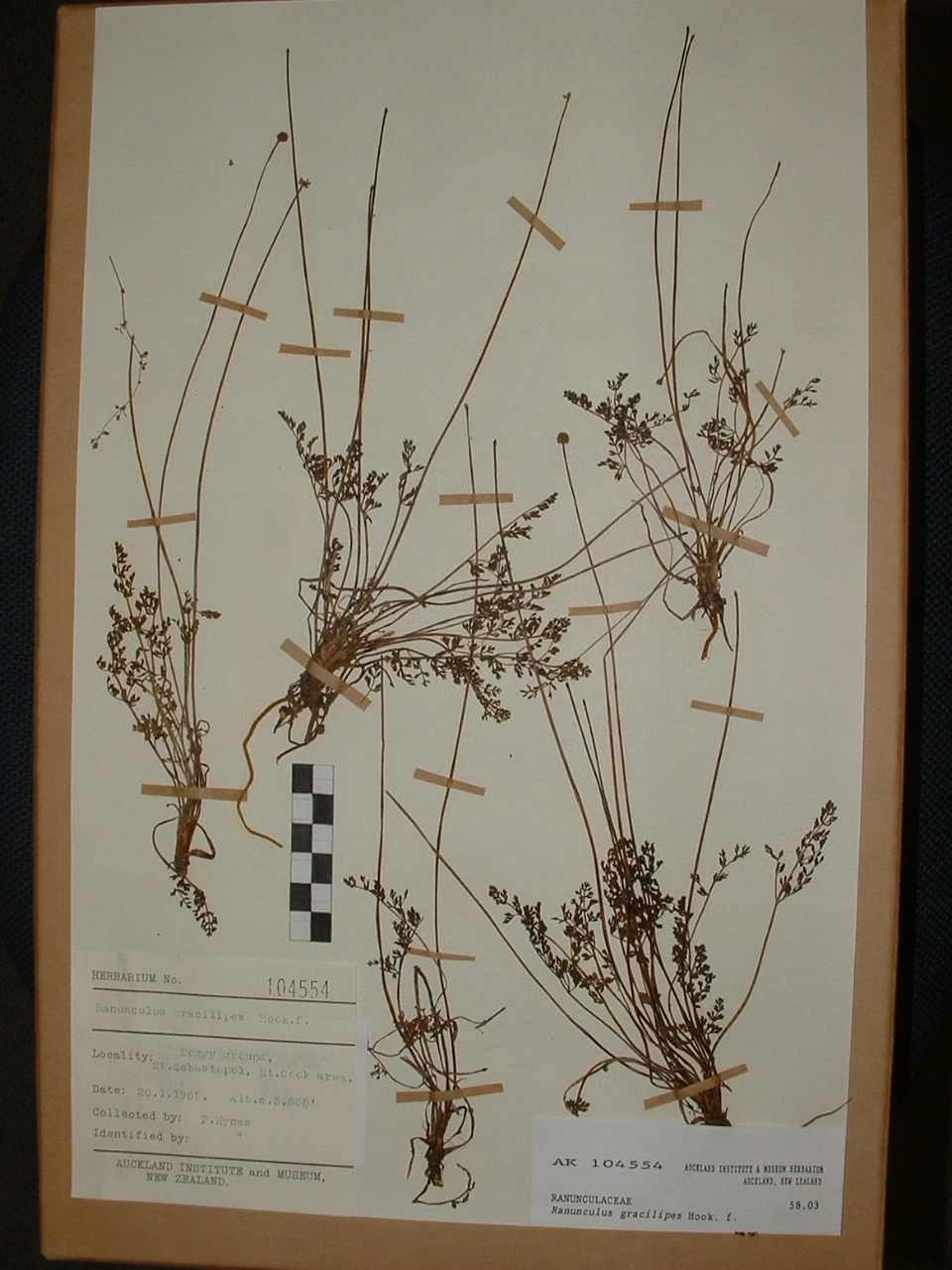
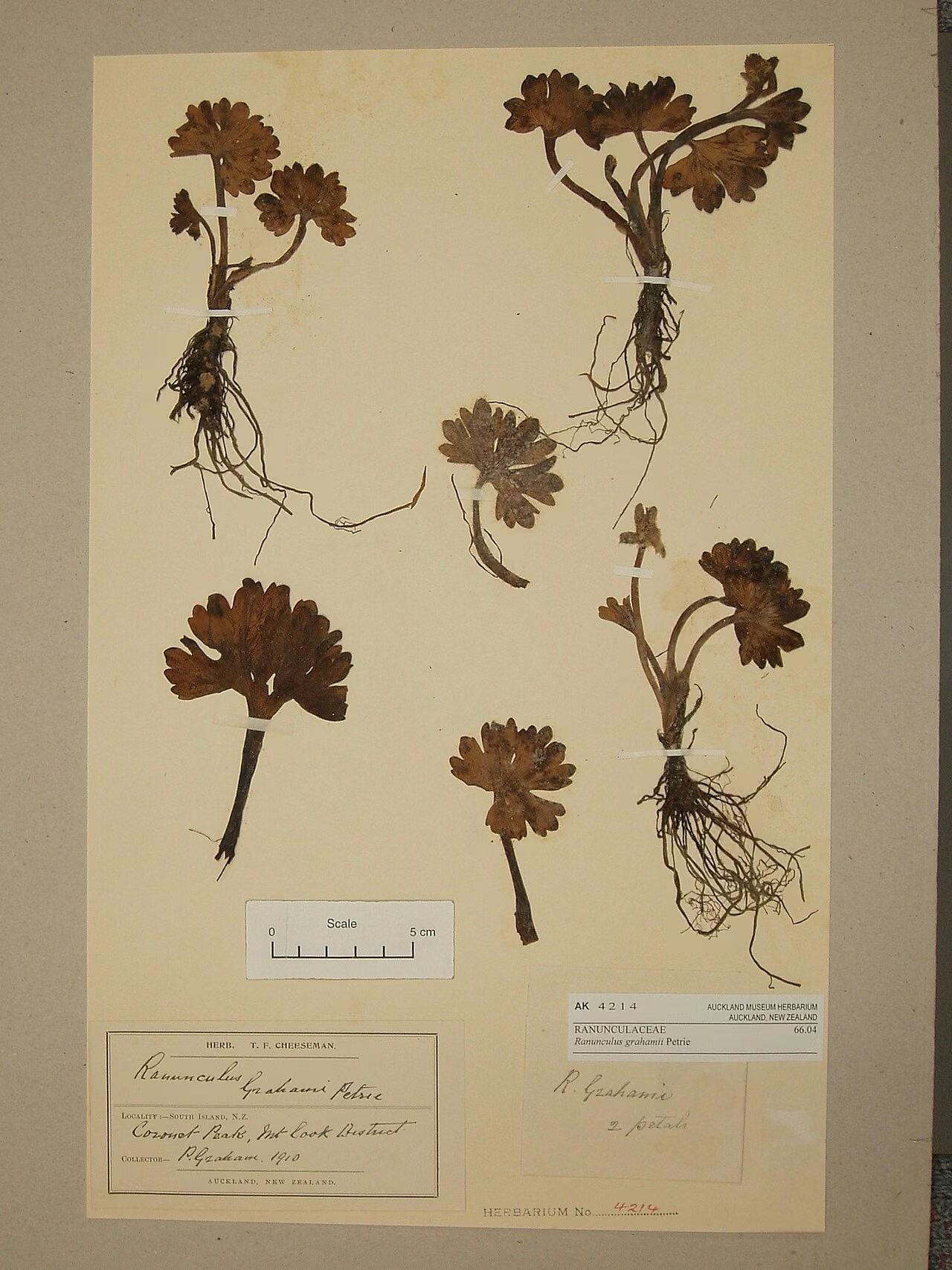
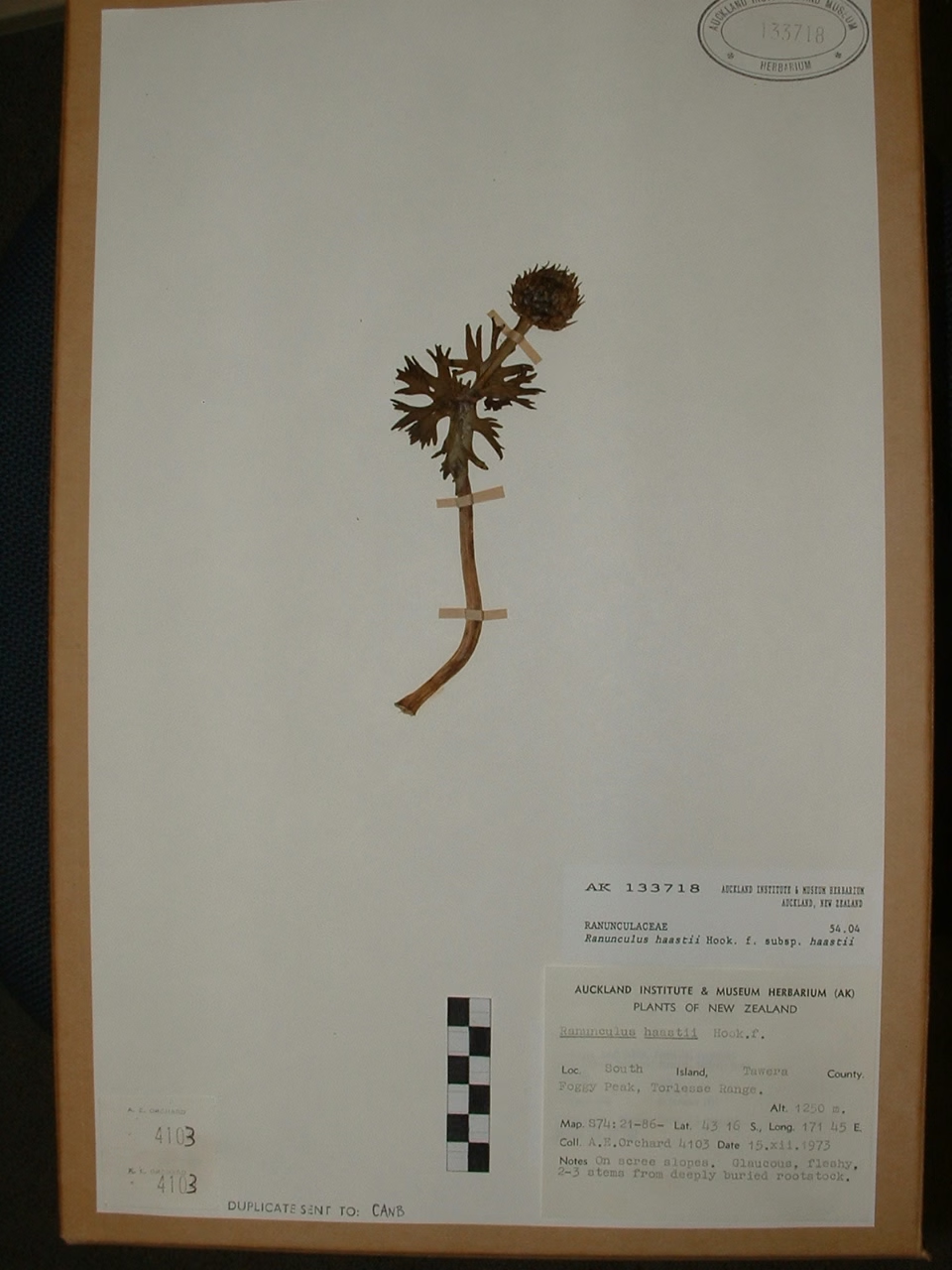
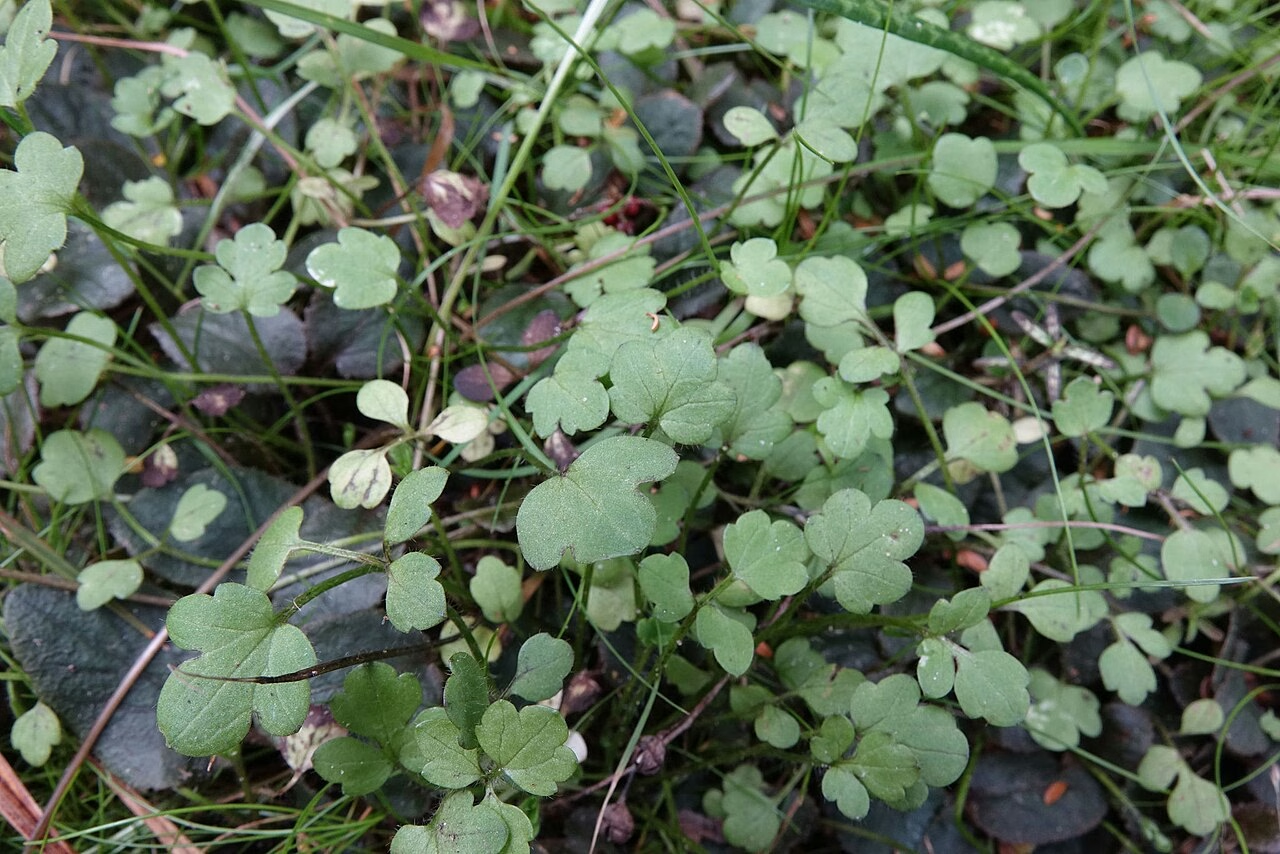
Explore other native plants that share similar characteristics or habitats with Yellow Alpine Buttercup (Ranunculus godleyanus), offering further insights into New Zealand's diverse flora. These related species provide context and opportunities for complementary planting in your garden.
Plant Conservation
Yellow alpine buttercup is ranked At Risk - Declining (2023) with the qualifiers Data Poor Trend and Range Restricted. NZPCN notes that it is conservation dependent, relying on control of tahr and chamois.
Continued culling of tahr and chamois in Arthur's Pass and Aoraki/Mount Cook National Parks is the most important action for this species. Climbers and trampers can help by recording sightings and avoiding damage to plants on ledges.
Frequently Asked Questions
Where can you see the yellow alpine buttercup?
It grows in the high mountains between Arthur's Pass National Park, including Mt Rolleston and Mt Hunt, and Mt Sefton near the Hermitage in Aoraki/Mount Cook National Park, usually near glaciers above 1400 m.
How do you tell Ranunculus godleyanus from Ranunculus insignis?
Ranunculus godleyanus has completely hairless leaves, flattened leaf stalks up to 20 mm wide and longer achene beaks, whereas Ranunculus insignis has hairy leaves and rounded leaf stalks.
Why is the yellow alpine buttercup declining?
NZPCN identifies browsing by introduced Himalayan tahr and chamois as the main threat where plants are accessible, and notes the species depends on ongoing control of these animals.
Can you grow Ranunculus godleyanus in a garden?
NZPCN describes it as difficult to cultivate and says it should not be removed from the wild, so it is not a practical garden plant.
Sources and Further Reading
The botanical, growing, and conservation details for Yellow Alpine Buttercup (Ranunculus godleyanus) on this page draw on the New Zealand plant references below. Consult them for full technical records and the latest distribution data.