Scree Buttercup
Ranunculus crithmifolius
Last updated:
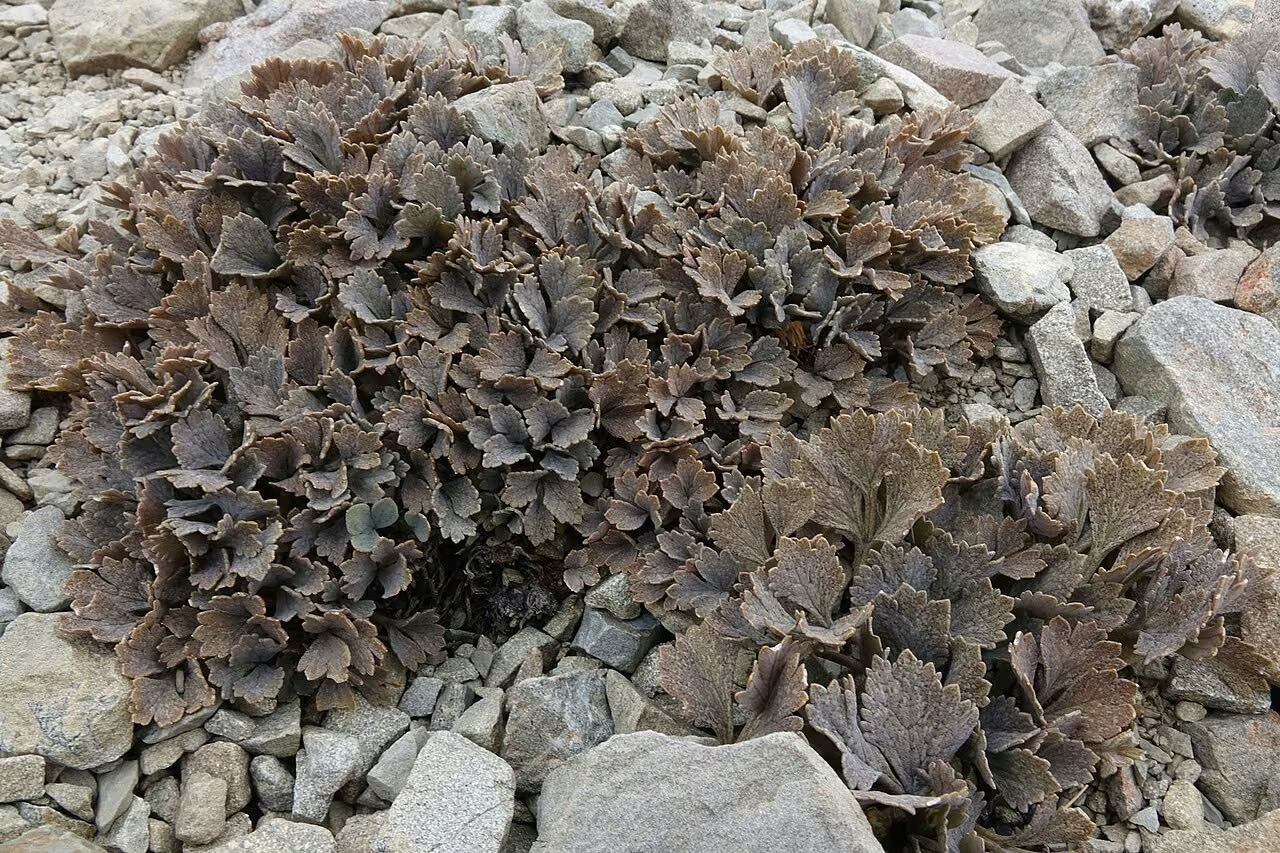
Scree buttercup (Ranunculus crithmifolius) is a low, hairless alpine buttercup endemic to the eastern South Island mountains. Only 5 to 10 cm tall, it has thick, bluish-grey, deeply lobed leaves arising from stout rhizomes, and surprisingly large yellow flowers 3 to 5 cm across held singly on short stalks. It grows on bare eroded clay, ridges, saddles and stony screes over moist debris at 600 to 1500 m, from southern Marlborough and Nelson through Canterbury and North Otago to the Eyre Mountains in Southland. Long considered secure, it was ranked At Risk - Declining in 2023. Explore more native flowering plants in our native plant guide.
Plant Description
Ranunculus crithmifolius is a hairless perennial 5 to 10 cm tall. Its rosettes are tufted along stout creeping or ascending rhizomes buried in the scree. The leaves are roughly circular in outline, thick and leathery, glaucous (bluish-grey), and deeply cut into three lobes, which are themselves toothed, scalloped or dissected into narrow, blunt segments.
The flowers are large for such a small plant, 3 to 5 cm across, with glossy yellow, wedge-shaped petals. Each flowering stalk carries a single flower and is erect while flowering but curves downward as the fruit ripens. The fruiting head holds 12 to 20 plump, rounded achenes.
It is separated from most other scree buttercups by its glaucous, deeply three-lobed, fleshy leaves combined with large single yellow flowers. Plants from the Castle Hill Basin with shallowly lobed, finely serrated leaves are now treated by NZPCN as the separate Castle Hill buttercup (Ranunculus paucifolius).
Quick Facts
| Scientific Name | Ranunculus crithmifolius |
|---|---|
| Height | 0.05-0.1 m |
| Spread | Small clumps spreading slowly by rhizomes |
| Water Needs | Moist below, dry and free-draining at the surface |
| Light | Full sun on open scree |
| Frost Tolerance | Very high; montane to alpine |
| Salt Tolerance | No information available; an inland mountain species |
| Growth Rate | Slow |
| Lifespan | Perennial |
Climate Best Suited to
Suits the cold, dry continental mountain climate east of the Main Divide, with hard frosts, winter snow, strong nor'west winds and hot, dry summer days on exposed scree.
Regional Suitability
| City | Climate Suitability |
|---|---|
| Auckland | Low |
| Wellington | Low |
| Christchurch | Medium |
| Dunedin | Medium |
Plant Habitat
Scree buttercup is endemic to the South Island. It is recorded from southern Marlborough, southern Nelson, Canterbury, North Otago and the Eyre Mountains of Southland, at 600 to 1500 m. Herbarium collections include material from Castle Hill in the Craigieburn area of inland Canterbury.
It grows on ridges, in hollows and on saddles, in bare, eroded clay soils or on stony screes lying over moist debris. These are harsh, unstable sites where its rhizomes can creep through loose material to reach moisture below the dry surface.
Growing Requirements
Soil Requirements
It favours bare, eroded clay and loose, stony scree where the surface is dry and mobile but moisture is held in the finer debris underneath.
- Coarse, free-draining stony scree
- Bare clay on eroded ridges and saddles
- Moist, cool debris beneath the surface layer
Light Requirements
Its scree and eroded ridge habitats are completely open, so it grows in full sun with little competition.
- Full sun
- Cannot compete with dense tussock or shrubs
Water Requirements
Water comes from rain and snowmelt held deep in the debris; the surface often dries out completely in summer.
- Moist root run with a dry crown
- Never waterlog the crown in cultivation
Planting and Establishing
Scree buttercup is a plant for specialist alpine growers. If attempted, grow it in a deep pot or scree bed of mostly coarse grit over a moisture-holding base, so the rhizomes can run down to cool, damp material while the crown stays dry.
Use only seed or plants from existing cultivated stock. Given its Declining status, wild plants should be left undisturbed.
Ecological Role
It is one of the specialised plants of the eastern South Island screes, a habitat that also supports other buttercups, daisies and penwiperts adapted to moving stones and summer drought. Its creeping rhizomes help it survive burial and movement of the scree.
The downward curving of the fruiting stalk places the ripening achenes close to the ground among the stones. Its pollinators are not documented in the sources consulted.
Uses & Significance
Garden Uses
Its glaucous leaves and big yellow flowers make it attractive to alpine plant enthusiasts, though it is rarely grown.
- Deep troughs or alpine house pots
- Purpose-built scree beds in cold, dry districts
- Botanic garden collections of scree flora
Ecological Value
It is part of the specialised and largely endemic scree flora of the eastern South Island ranges.
- Colonises bare, eroded ground few plants can use
- Provides flowers for alpine insects on open scree
- An endemic species now considered to be declining
Landscaping Uses
In a constructed scree garden, place scree buttercup among loose stones on a slope or raised bed, where the grey-blue foliage blends with the rock and the yellow flowers stand out.
Combine it with other low scree natives and avoid placing it near spreading plants that would cover it.
Seasonal Care Calendar
Spring
New leaves appear from the rhizomes as snow clears from the screes.
- Begin light watering of cultivated plants
- Check the crown for rot after winter
Summer
Large single yellow flowers open during the alpine growing season, though the exact flowering months are not recorded in the sources consulted. Flower stalks then bend down as fruit forms.
- Water deeply but keep the crown dry
- Collect achenes as they ripen
Autumn
Fruit finishes ripening and leaves begin to die back.
- Sow fresh seed outdoors
- Reduce watering
Winter
The plant is dormant under frost and snow, with only the rhizomes surviving below the stones.
- Keep potted plants cold and dry at the surface
- Protect from excessive winter wet
When to Prune and How Much
No pruning is needed. Remove spent flowering stalks after collecting seed if desired.
Pick dead leaves away from the crown in autumn to reduce the risk of rot in cultivation.
How to Grow Scree Buttercup
NZPCN gives no propagation information for scree buttercup, and no published propagation protocol was found for it in the sources consulted. The methods below follow general practice for New Zealand scree buttercups and are offered as a starting point rather than proven techniques for this species. Seed is the preferred method because it keeps genetic variety and avoids disturbing established plants. Its creeping rhizomes suggest that careful division of a well-established cultivated plant should also be possible. Given its At Risk - Declining status, collect only from plants in cultivation or with permission, and never dig up wild plants from screes.
From Seed
Fresh achenes sown in autumn and exposed to winter cold are most likely to germinate the following spring. Some seed may lie dormant for a further year.
- Collect the plump achenes as the recurved fruiting heads ripen
- Sow on a very gritty seed mix and cover with coarse grit
- Leave outdoors in a cold, open spot over winter
- Keep evenly moist but not saturated
- Pot seedlings into deep containers of scree mix once large enough to handle
By Division of Rhizomes
Established plants spread by stout rhizomes, and a piece with its own rosette and roots can be removed in early spring.
- Carefully tip out a well-established potted plant
- Separate a rhizome section carrying a rosette and roots
- Replant in deep, gritty mix and keep the crown dry
- Shade lightly until it re-establishes
Pests & Diseases
Slugs and snails can damage the soft leaves and flowers in cultivation, and crown rot is the main risk in humid lowland gardens.
In the wild, the reasons for its recent move to Declining are not described in the sources consulted. Data on its population size, range and trend are noted as poor.
Cultural Significance
No traditional Māori name or use is recorded for Ranunculus crithmifolius in the sources consulted.
Joseph Hooker described the species in the nineteenth century. The epithet compares its leaves with those of rock samphire (Crithmum maritimum), and Ranunculus chordorhizos is treated as a synonym.
Bonus Tip
When looking for scree buttercup, scan bare, grey eroded patches and fine screes on ridges and saddles rather than vegetated ground. Its bluish-grey leaves are well camouflaged among the stones, and the plant is often easiest to find when the big yellow flowers are open.
Related Plants
Explore other native plants that share similar characteristics or habitats with Scree Buttercup (Ranunculus crithmifolius), offering further insights into New Zealand's diverse flora. These related species provide context and opportunities for complementary planting in your garden.
Walker's Saltgrass
Puccinellia walkeri
Cut-Leaved Alpine Buttercup
Ranunculus buchananii
Ranunculus carsei
Ranunculus carsei
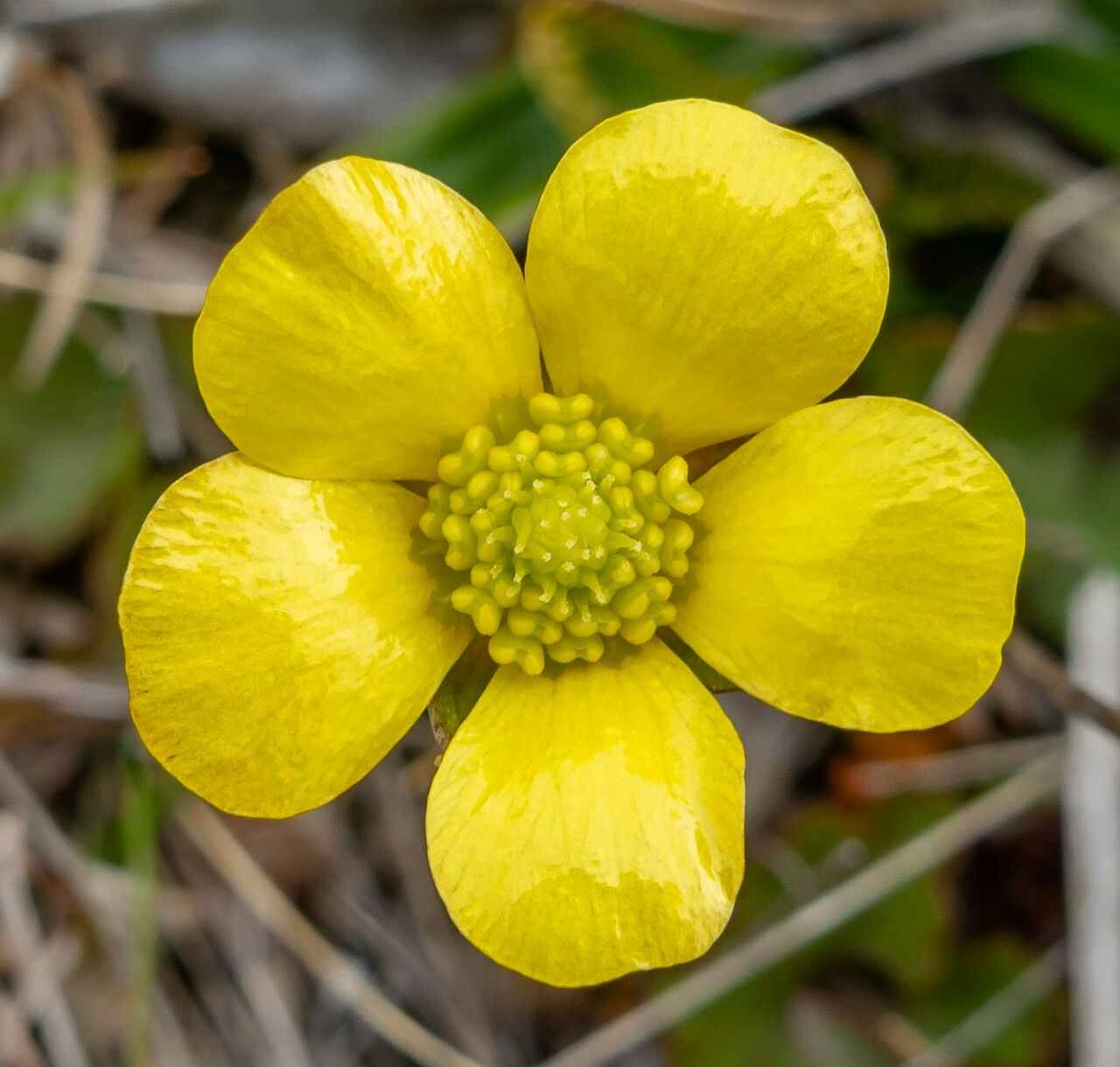
Ranunculus enysii
Ranunculus enysii
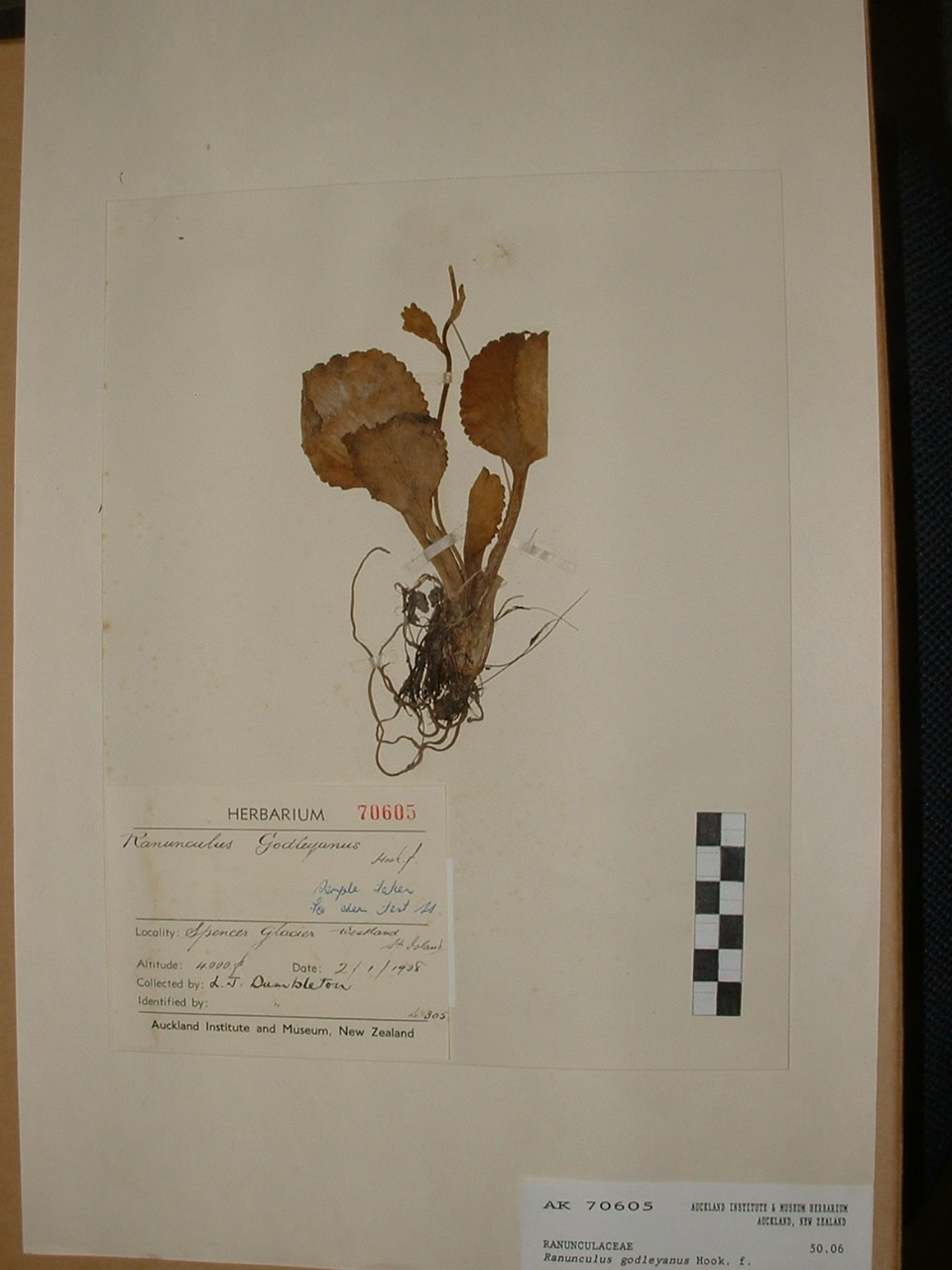
Yellow Alpine Buttercup
Ranunculus godleyanus
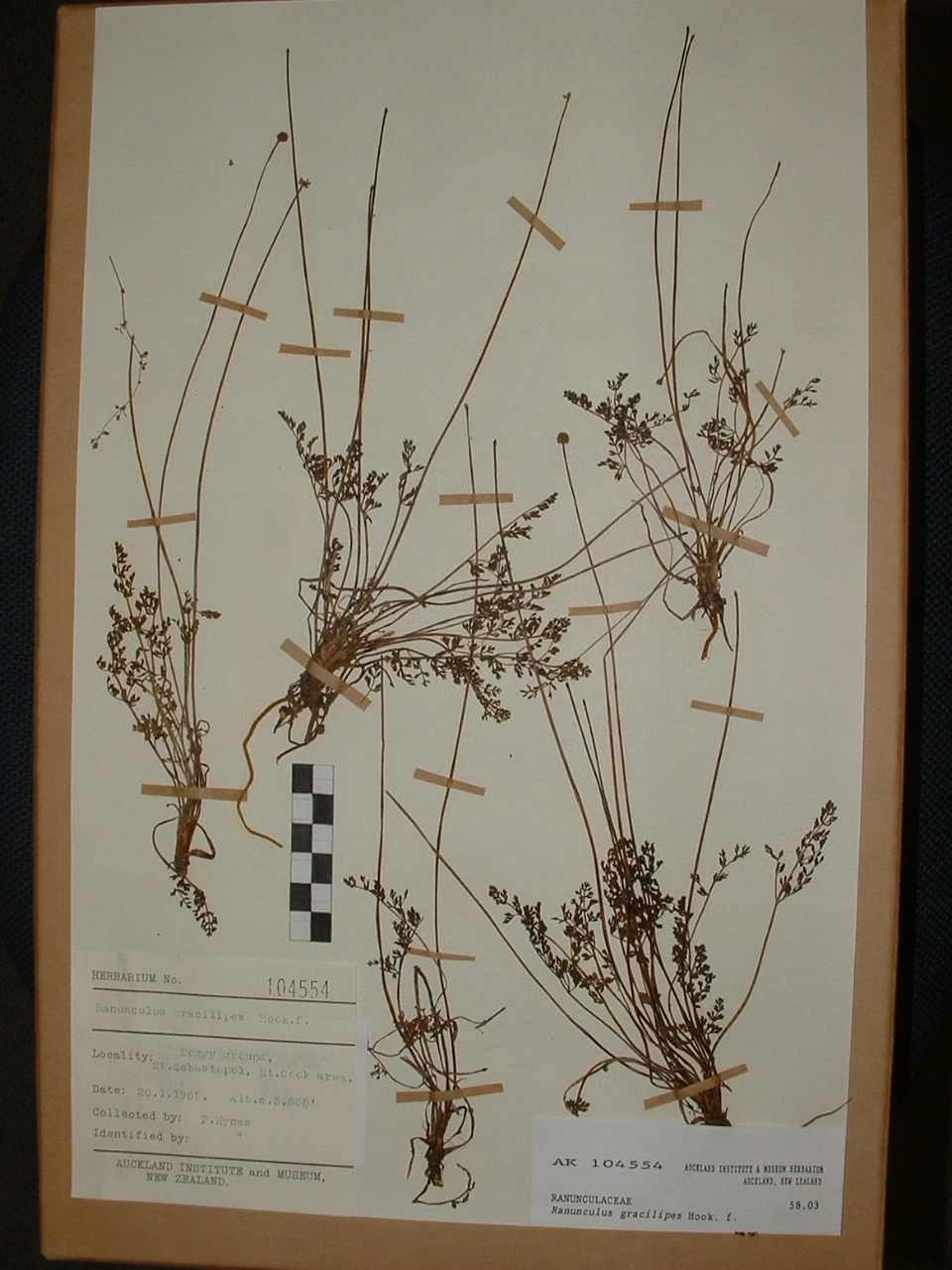
Ranunculus gracilipes
Ranunculus gracilipes
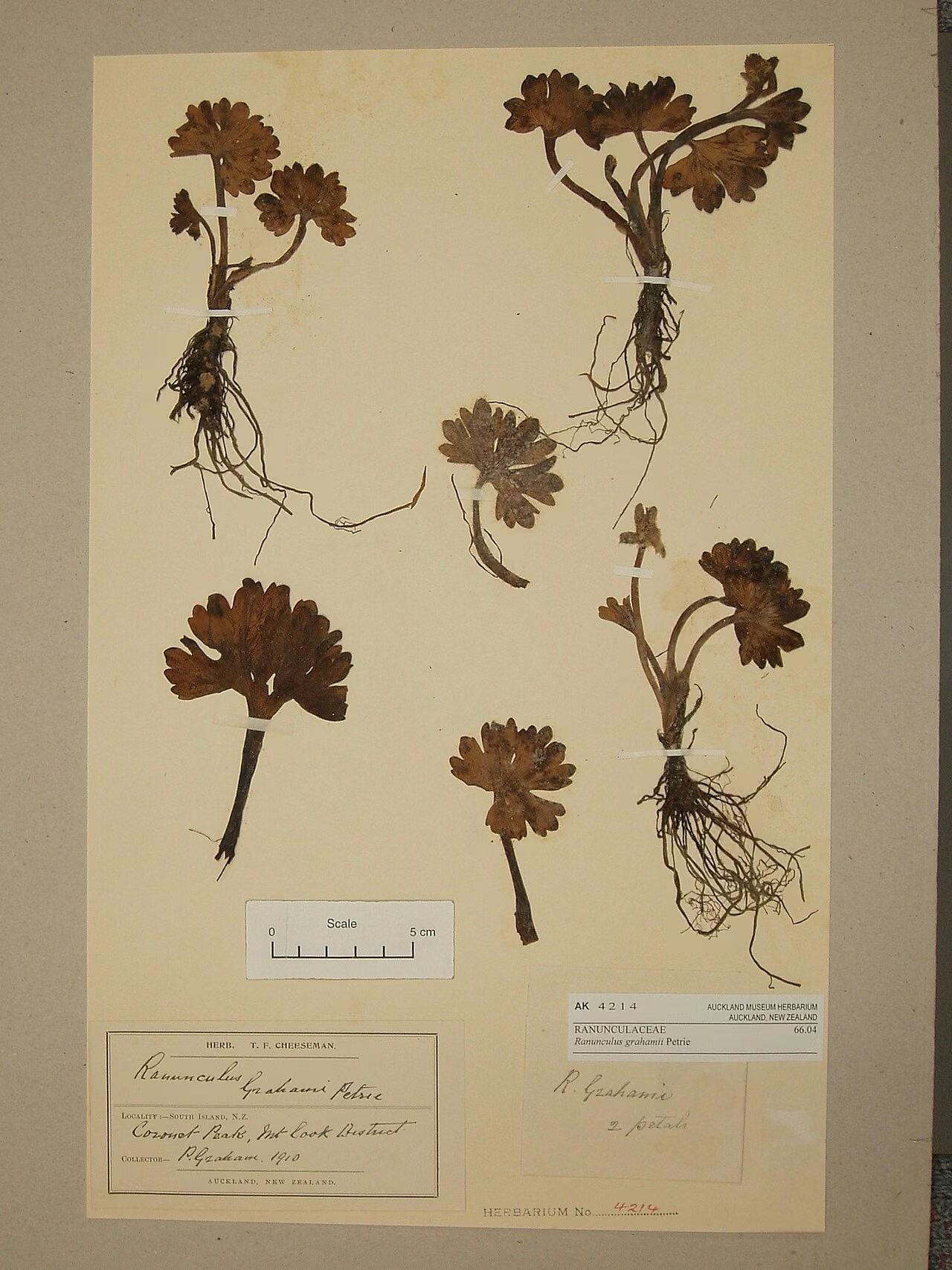
Graham's Buttercup
Ranunculus grahamii
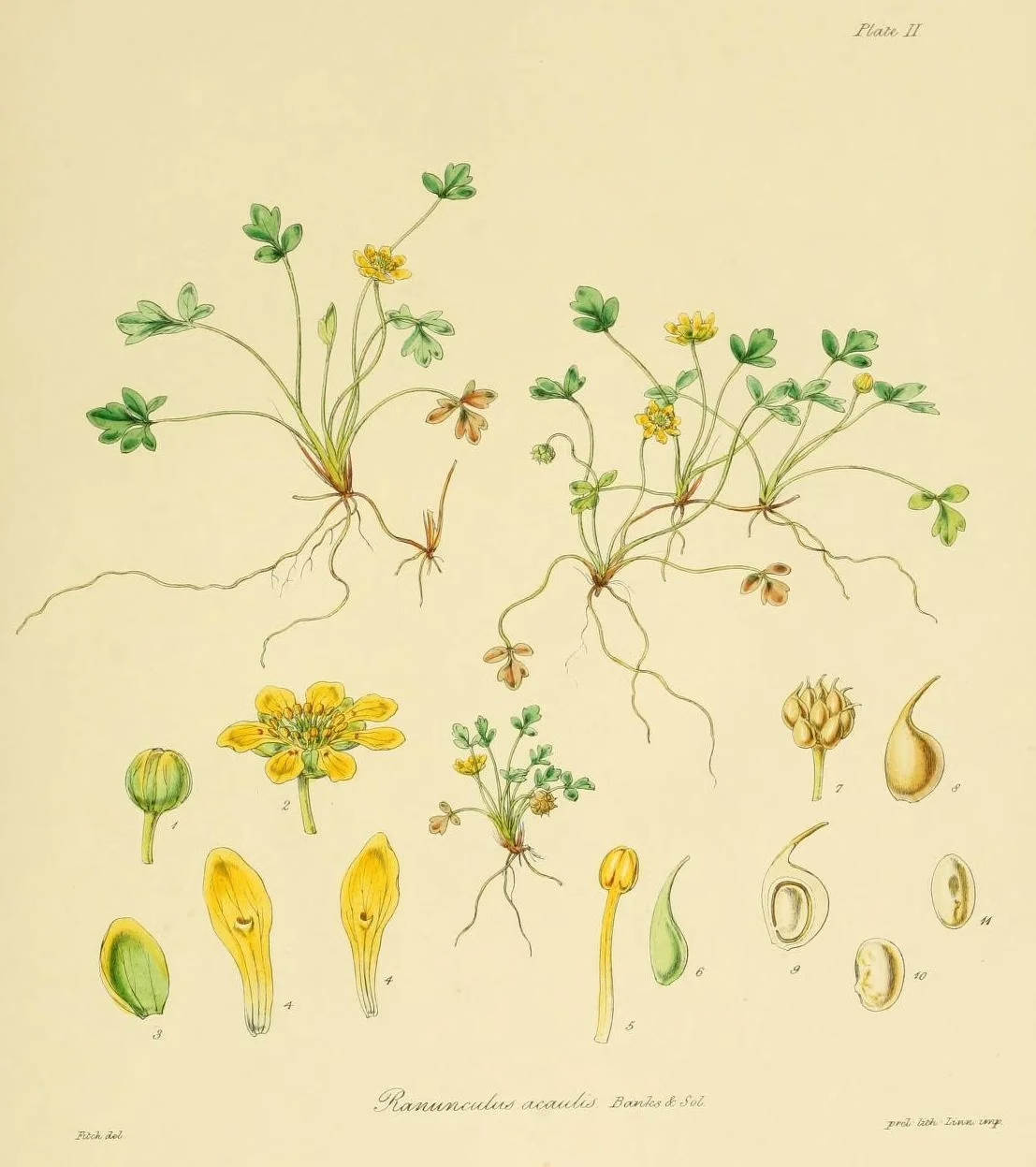
Acaulis Plant
Acaulis Plant
Plant Conservation
Scree buttercup is ranked At Risk - Declining (2023) with the qualifiers Sparse, Data Poor Recognition, Data Poor Size and Data Poor Trend. It was considered Not Threatened in 2004, 2009, 2012 and 2017, and Otago currently lists it as Regionally Not Threatened (2025).
Better survey data are needed to understand why it is declining. Recording sightings with photographs and location details helps, as does avoiding disturbance of fragile scree habitats.
Frequently Asked Questions
Why is it called the scree buttercup?
It grows on stony screes and bare, eroded clay ground on ridges and saddles in the eastern South Island mountains, where few other plants can establish.
What is the difference between the scree buttercup and the Castle Hill buttercup?
The Castle Hill buttercup (Ranunculus paucifolius) has shallowly three-lobed leaves with finely toothed margins and was once treated as a subspecies of R. crithmifolius. NZPCN treats it as a separate, Nationally Critical species.
What does the name crithmifolius mean?
It means having leaves like Crithmum, the coastal plant rock samphire, whose fleshy, divided, grey-green leaves resemble those of this buttercup.
Is the scree buttercup endangered?
It is ranked At Risk - Declining (2023), with data on its population size, range and trend described as poor. Before 2023 it was considered Not Threatened.
Sources and Further Reading
The botanical, growing, and conservation details for Scree Buttercup (Ranunculus crithmifolius) on this page draw on the New Zealand plant references below. Consult them for full technical records and the latest distribution data.