Shrimp-Flowered Greenhood
Pterostylis porrecta
Last updated:
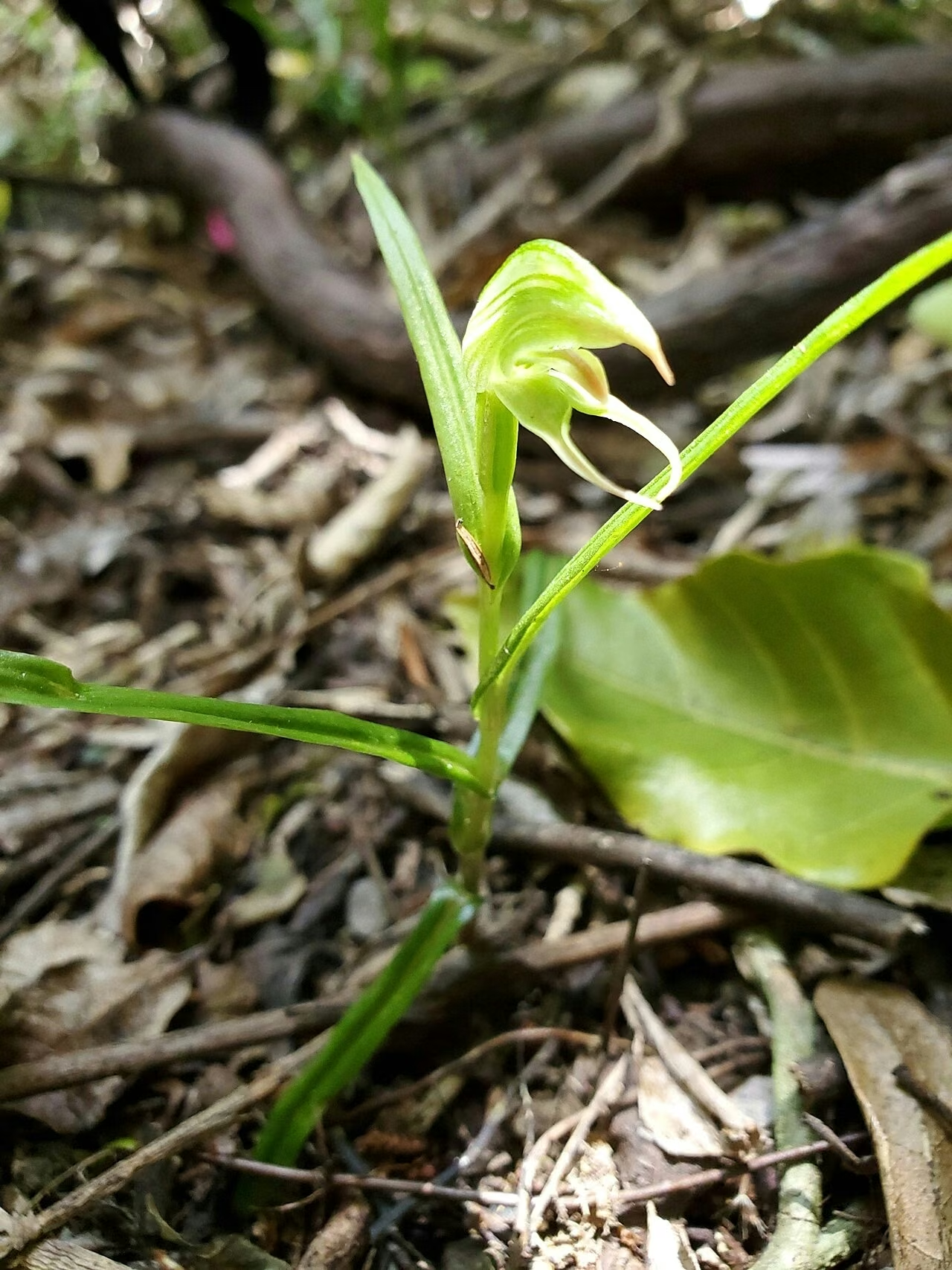
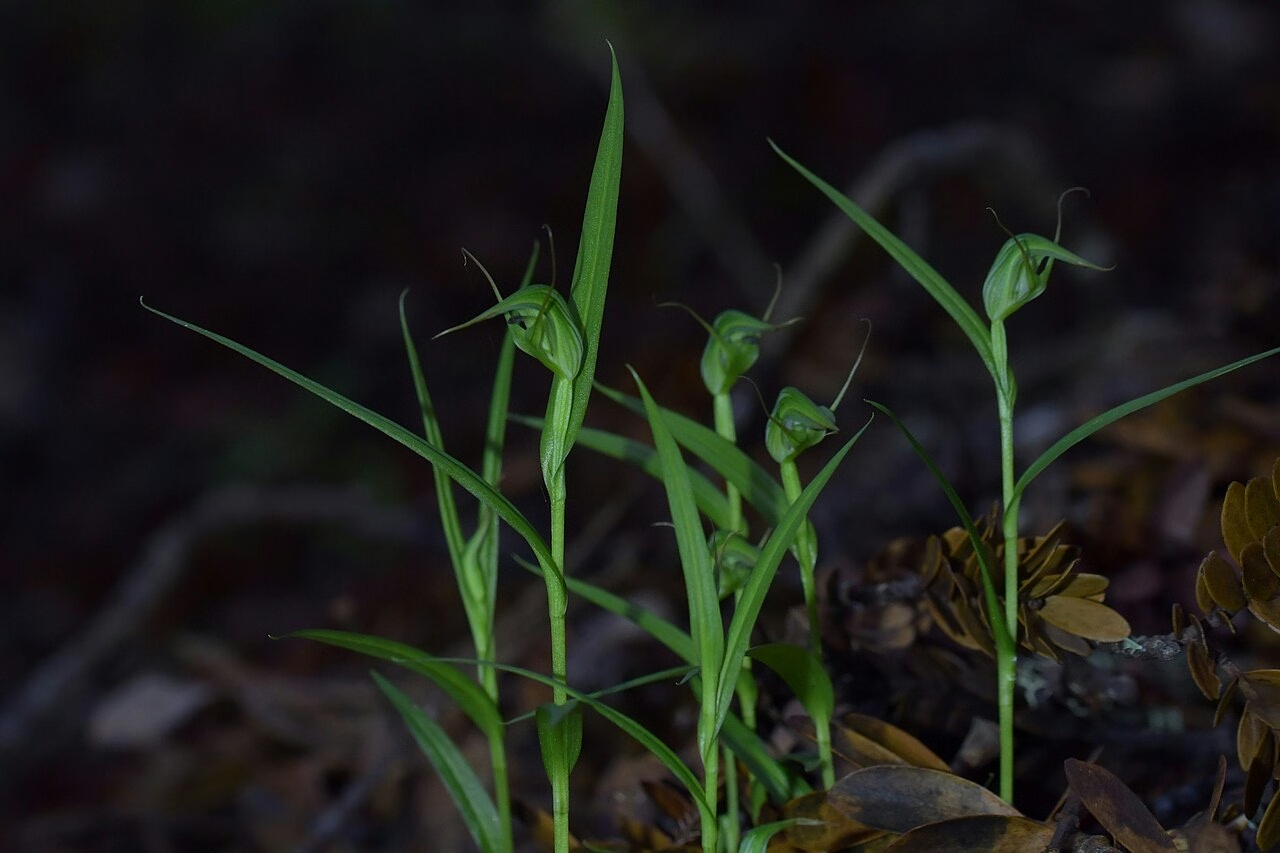
Shrimp-flowered greenhood (Pterostylis porrecta) is a small endemic ground orchid known from widely scattered sites in the North and South Islands. Flowering plants are 6 to 20 cm tall, with grass-like leaves and a single semi-nodding flower 18 to 22 mm long, translucent white and pale green with darker tips and pale pink sepal points. It grows in deeply shaded, damp scrub and light forest from the lowlands to the mountains, and also on ultramafic rock. Flowering is from November to January. It is ranked At Risk - Naturally Uncommon because it is biologically sparse, and it may be threatened by collectors, so it should never be taken from the wild. Explore more native flowering plants in our native plant guide.
Plant Description
Pterostylis porrecta is a tuberous herb that forms diffuse colonies. Non-flowering plants are only 20 to 50 mm tall with three or four leaves, while flowering plants reach 60 to 200 mm and carry spreading, grass-like leaves on the stem.
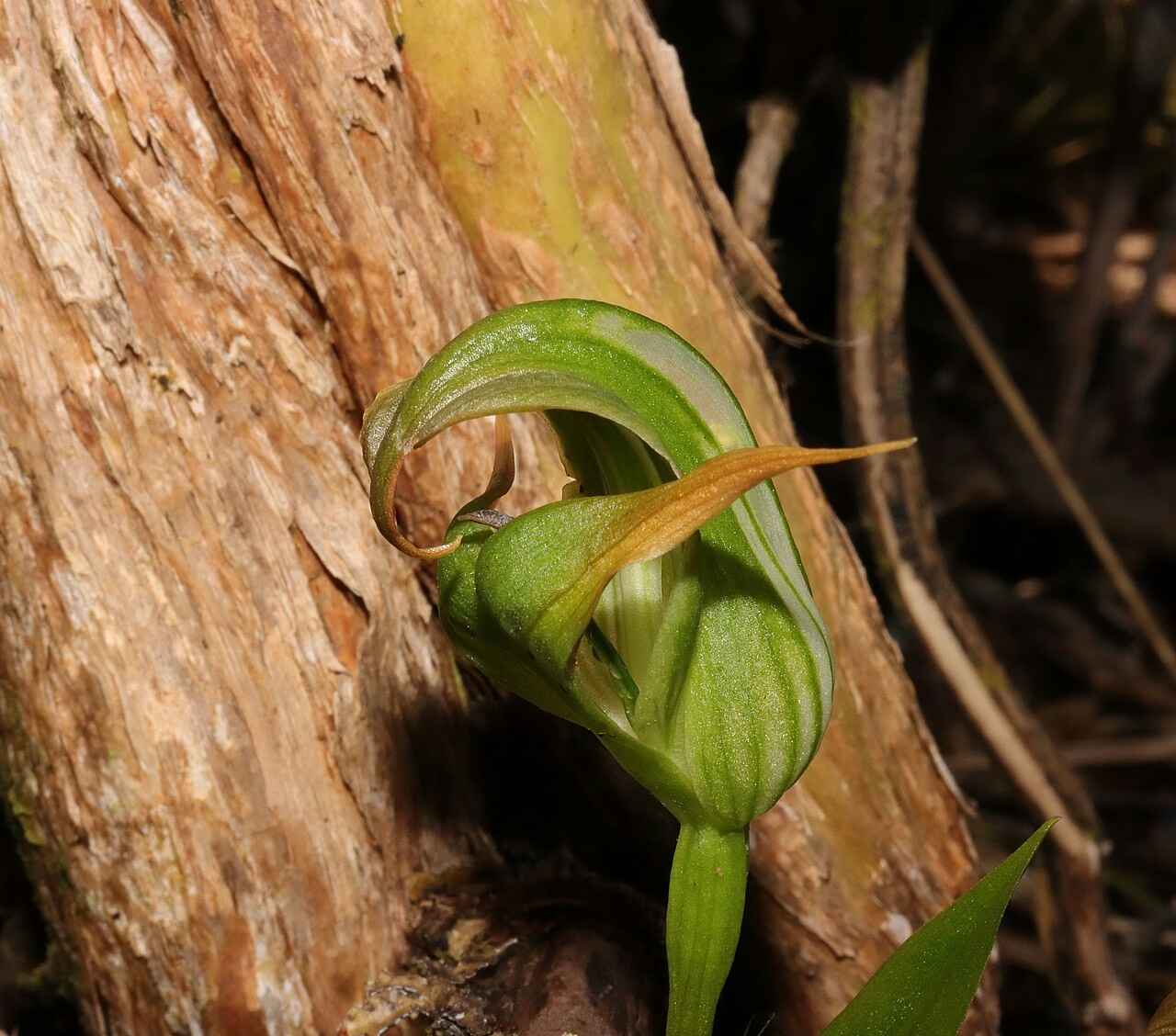
The flower is solitary and semi-nodding, 18 to 22 mm long, translucent white and pale green with darker tips and pale pink sepal points. The lateral sepals are held well away from the hood, roughly horizontally in front of the flower, leaving wide gaps at the sides, and their tapered tips curve forward. The petals are straight and the labellum is oblong.
This combination of a small pale semi-nodding flower, widely held lateral sepals and pink, forward-curved sepal points separates it from other New Zealand greenhoods. Nativeorchids.co.nz notes that in the similar Pterostylis irwinii the lateral sepals overtop the dorsal sepal, which they do not do in this species.
Quick Facts
| Scientific Name | Pterostylis porrecta |
|---|---|
| Height | 0.06-0.2 m in flower |
| Spread | Diffuse colonies of scattered plants |
| Water Needs | Damp, shaded sites |
| Light | Deep shade |
| Frost Tolerance | Moderate to high; lowland to montane range |
| Salt Tolerance | No information available |
| Growth Rate | Seasonal; regrows from a tuber |
| Lifespan | Perennial (tuberous) |
Climate Best Suited to
Suits mild to cool, moist climates where it can grow in permanently shaded, damp microsites. Its scattered range runs from lowland to montane country.
Regional Suitability
| City | Climate Suitability |
|---|---|
| Auckland | Low |
| Wellington | Medium |
| Christchurch | Low |
| Dunedin | Medium |
Plant Habitat
Shrimp-flowered greenhood is endemic to the North and South Islands, where it is known from widely scattered sites. Nativeorchids.co.nz gives its range as Waikato to Southland, with recorded localities in the Wairarapa, Porirua and Wellington areas, and notes that although sparse overall it can be locally abundant.
It occupies lowland to montane habitats, typically deeply shaded and damp scrub and light forest. It is also recorded on ultramafic rock, and nativeorchids.co.nz describes it as favouring forest floor on base-rich rocks.
Growing Requirements
Soil Requirements
It grows in damp, shaded forest floor and is recorded on ultramafic and other base-rich rocks.
- Moist soil and leaf litter under scrub
- Ultramafic or base-rich substrates at some sites
- Ground that stays damp through the growing season
Light Requirements
NZPCN describes its sites as deeply shaded.
- Deep shade under scrub or light forest
- Avoids open, sunny ground
Water Requirements
It favours damp sites where moisture is held by shade and litter.
- Consistently damp while in growth
- Dry, exposed sites do not suit it
Planting and Establishing
This species is not available in cultivation, and NZPCN rates it as difficult to propagate and states that it should not be removed from the wild. It is not a plant for gardens.
Landowners with a known population can help by keeping the shading scrub intact, excluding stock and not clearing the litter layer.
Ecological Role
Its flower works as a trap like those of other greenhoods: an insect touching the sensitive labellum is flipped inward and has to exit past the column, picking up or delivering pollen. Small flies are the usual pollinators of greenhoods, but no pollinator has been documented for this species in the sources consulted.
As a sparse plant with diffuse colonies, each population may hold only a few flowering stems in a given year. Its seed relies on soil fungi for germination, tying it to undisturbed, shaded forest floor.
Uses & Significance
Garden Uses
It has no garden use. It is a plant to look for, record and protect in the wild.
- Record sightings on iNaturalist NZ to help map its scattered range
- Protect shaded scrub where it occurs
- Not commercially available
Ecological Value
It is one of the less common endemic greenhoods and part of the distinctive flora of shaded scrub and ultramafic sites.
- Endemic and naturally sparse
- Recorded on ultramafic rock, a specialised habitat
- Adds to the diversity of ground orchids in damp scrub
Landscaping Uses
It is not used in landscaping. Its small pale flowers are easy to overlook in the deep shade where it grows.
The best contribution a landowner can make is to leave shady scrub and light forest unmanaged around known plants.
Seasonal Care Calendar
Spring
Leaves emerge and flowering stems begin to rise toward the November start of flowering.
- Watch for grass-like leaves in deep shade
- Avoid trampling known sites
Summer
Flowering runs from November to January, with capsules ripening from January to March.
- Photograph and record flowering plants
- Leave capsules undisturbed
Autumn
Seed is released and foliage dies back after fruiting.
- No intervention needed
- Keep stock out of habitat
Winter
Plants survive as underground tubers until the next growing season.
- Leaf litter protects resting tubers
- Avoid disturbing the soil
When to Prune and How Much
No pruning is required. The plant dies back to its tuber naturally after fruiting.
Leave the surrounding litter and shading shrubs in place, since clearing them would expose the habitat.
How to Grow Shrimp-Flowered Greenhood
NZPCN rates Pterostylis porrecta as difficult to propagate and says it should not be removed from the wild. Because it is sparse and may be threatened by plant collectors, no wild plant should be disturbed for propagation. No species-specific propagation protocol was found in the sources consulted. The notes below describe the general approach used for greenhoods and would only be appropriate for conservation programmes working with permitted material, where seed or tubers are already held in cultivation and the aim is to secure the species rather than supply gardens.
From Seed
Greenhood seed is dust-fine and germinates only when it meets a compatible mycorrhizal fungus. Conservation growers either sow onto pots with established greenhoods or use laboratory techniques with isolated fungi.
- Collect capsules from cultivated plants as they yellow, between January and March
- Sow the seed onto the surface of a pot containing established greenhoods
- Keep the pot in deep shade and evenly damp
- Wait at least a full growing season before checking for tiny seedling leaves
By Tuber Division
The species forms diffuse colonies, which suggests new tubers are produced over time. Dormant tubers of cultivated plants can be separated and replanted.
- Wait until the foliage has completely withered after fruiting
- Carefully expose the tubers and separate any daughter tubers
- Replant shallowly in a moist, free-draining, litter-rich mix
- Keep the pot shaded and lightly moist until new growth resumes the following season
Pests & Diseases
NZPCN notes the species may be threatened by plant collectors. Slugs, snails and browsing animals can also damage greenhood leaves and flowers.
Loss or opening up of the shading scrub it depends on would also harm populations.
Cultural Significance
Greenhood orchids are known in te reo Māori as tutukiwi, but no Māori name or use specific to Pterostylis porrecta is recorded in the sources consulted.
The epithet porrecta means stretched out or extended forward, which matches the way its lateral sepals are held out in front of the flower.
Bonus Tip
If you find this orchid, resist the urge to share its exact location publicly. NZPCN lists collectors as a possible threat, so record it on iNaturalist NZ with the location obscured and let local botanists know.
Related Plants
Explore other native plants that share similar characteristics or habitats with Shrimp-Flowered Greenhood (Pterostylis porrecta), offering further insights into New Zealand's diverse flora. These related species provide context and opportunities for complementary planting in your garden.
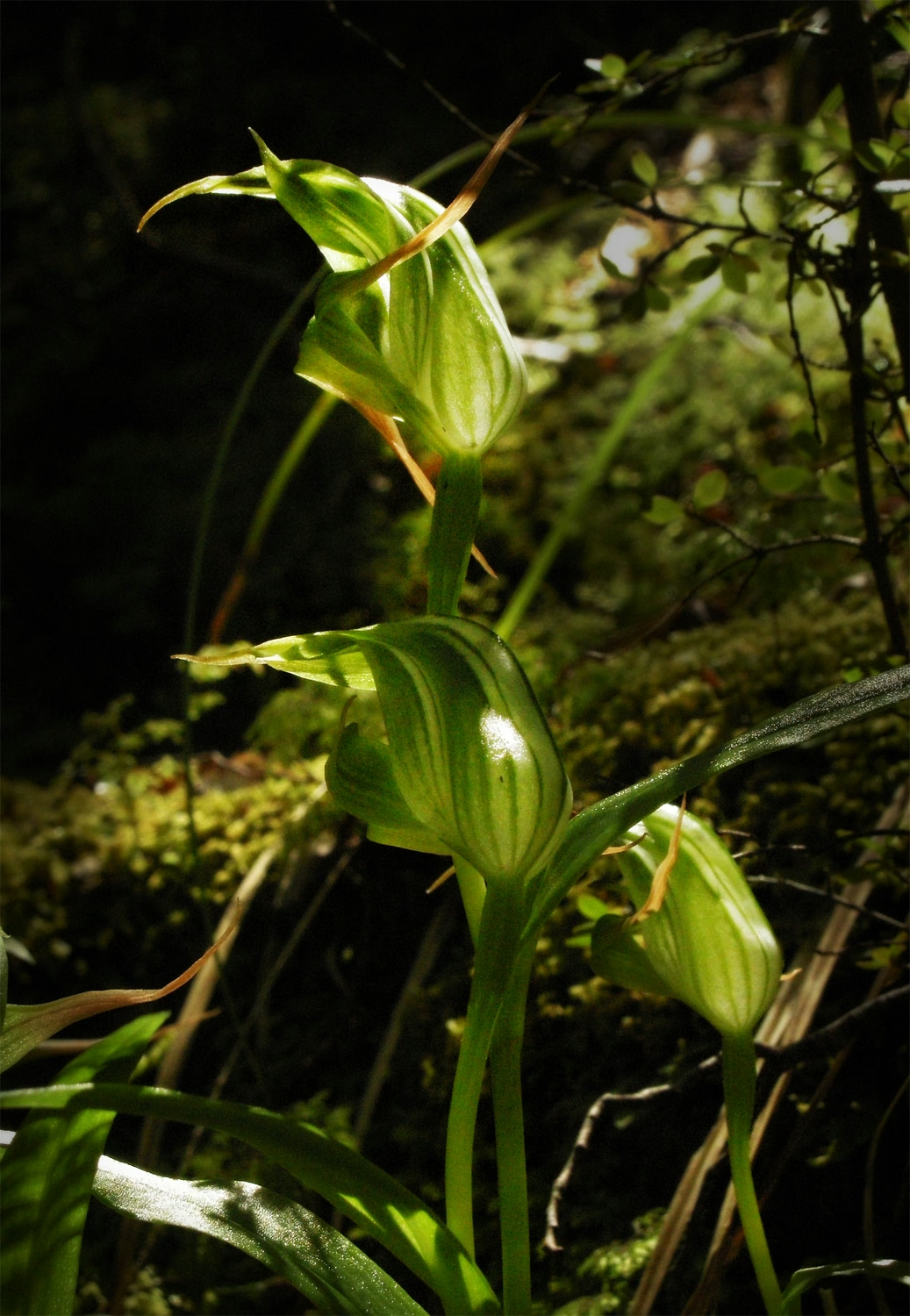
Pterostylis irsoniana
Pterostylis irsoniana
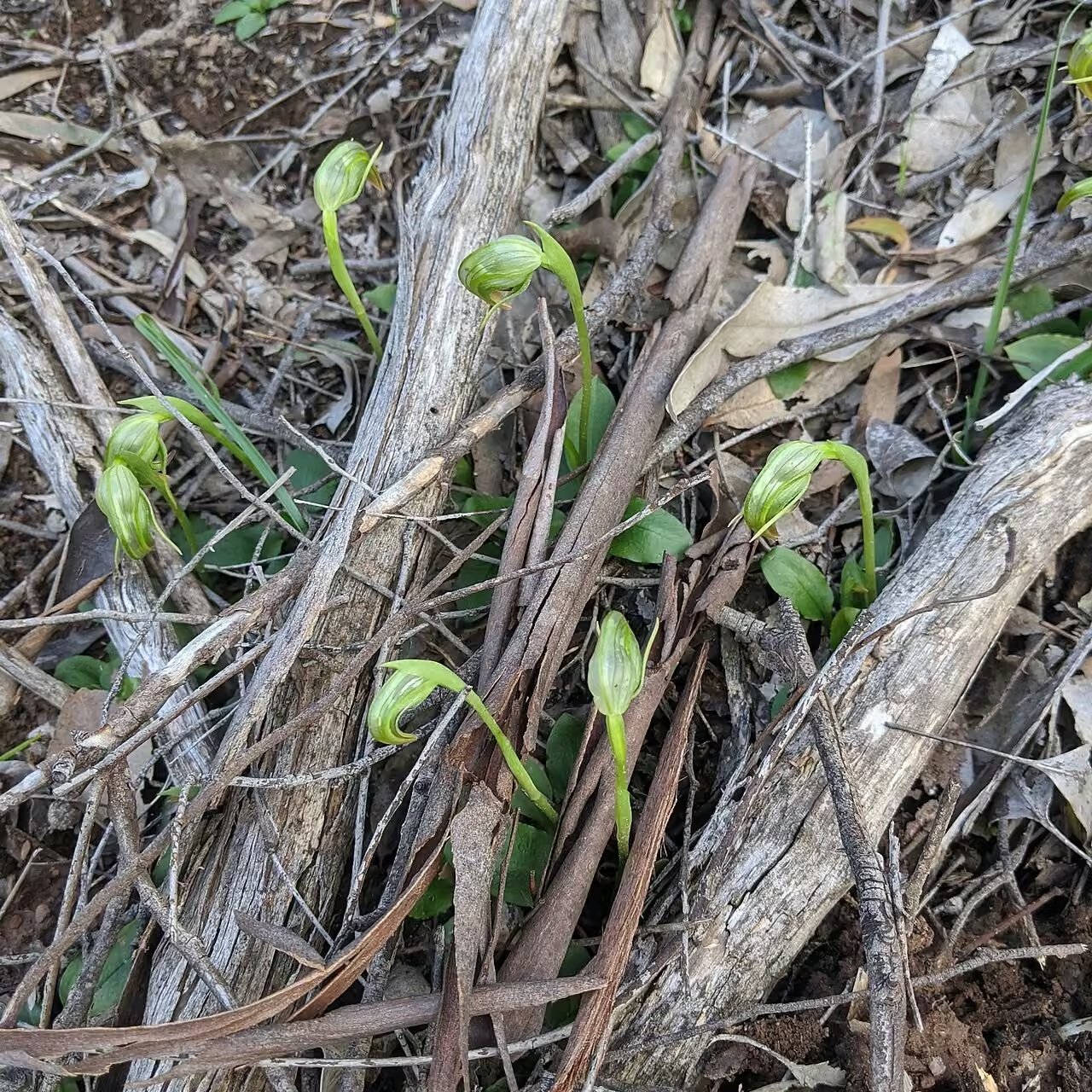
Nodding Greenhood
Pterostylis nutans
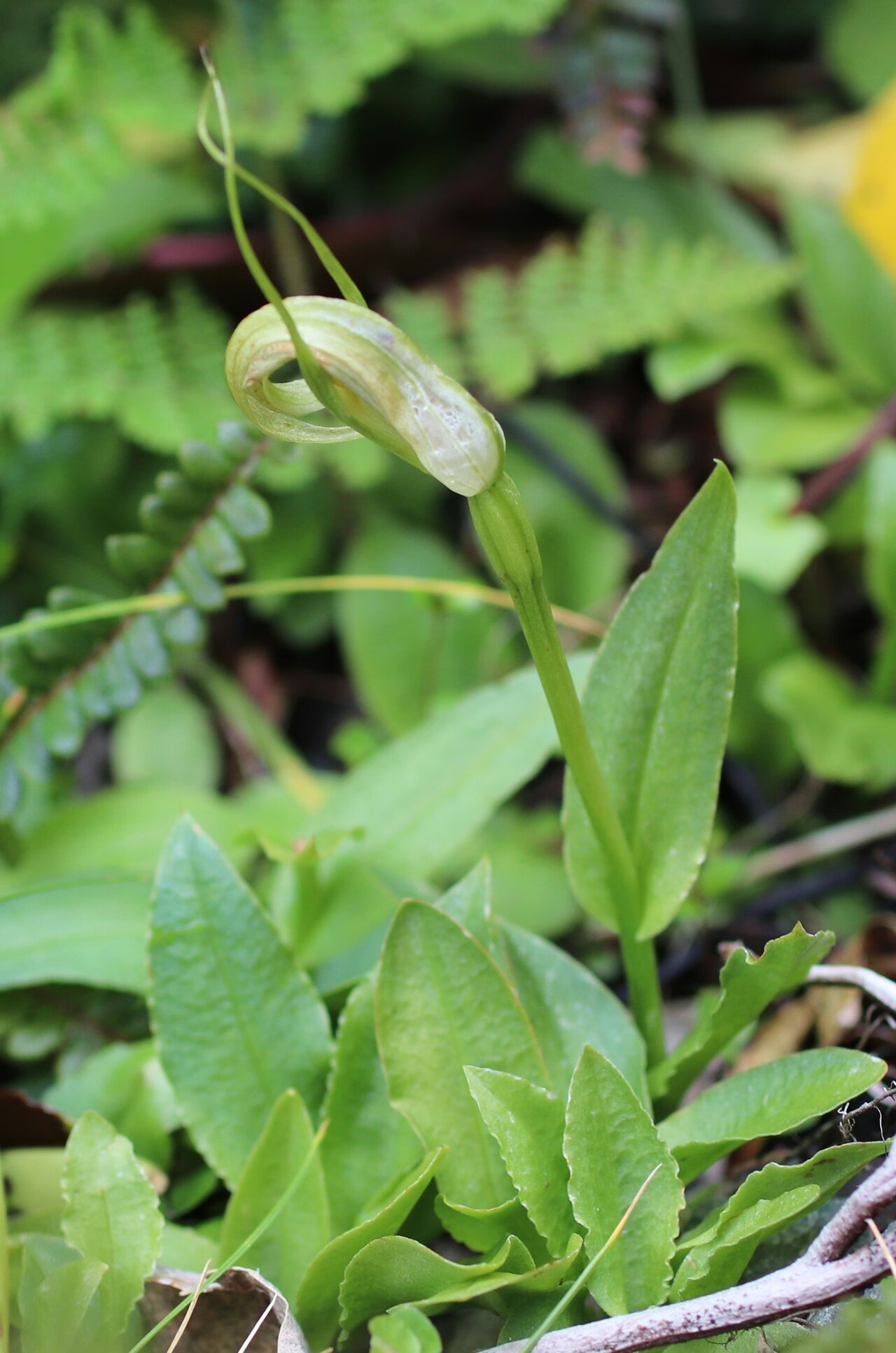
Oliver's Greenhood
Pterostylis oliveri
Pterostylis patens
Pterostylis patens
Antipodes Saltgrass
Puccinellia antipoda
Chatham Islands Salt Grass
Puccinellia chathamica
Salt Grass
Puccinellia stricta
Kauri Greenhood
Pterostylis agathicola
Plant Conservation
Pterostylis porrecta is ranked At Risk - Naturally Uncommon (2023) with the qualifier Sparse. NZPCN describes it as biologically sparse and known from widely scattered sites.
Protecting shaded scrub and forest remnants, especially on ultramafic sites, keeping stock out, and discouraging collection are the main ways to help it.
Frequently Asked Questions
Why is Pterostylis porrecta called shrimp-flowered greenhood?
Its small, pale, semi-nodding flower with forward-curved pink sepal points and widely spread lateral sepals has a shrimp-like look, which gives the common name.
Is the shrimp-flowered greenhood rare?
Yes. It is ranked At Risk - Naturally Uncommon because NZPCN describes it as a biologically sparse species known from widely scattered sites, possibly threatened by plant collectors.
How do you identify Pterostylis porrecta?
Look for a small pale flower held semi-nodding, lateral sepals held well away from the hood with wide gaps at the sides, pale pink tapered sepal points, straight petals and an oblong labellum.
What habitat does shrimp-flowered greenhood grow in?
It grows in lowland to montane, deeply shaded and damp scrub or light forest, and it is also recorded on ultramafic rock.
Sources and Further Reading
The botanical, growing, and conservation details for Shrimp-Flowered Greenhood (Pterostylis porrecta) on this page draw on the New Zealand plant references below. Consult them for full technical records and the latest distribution data.