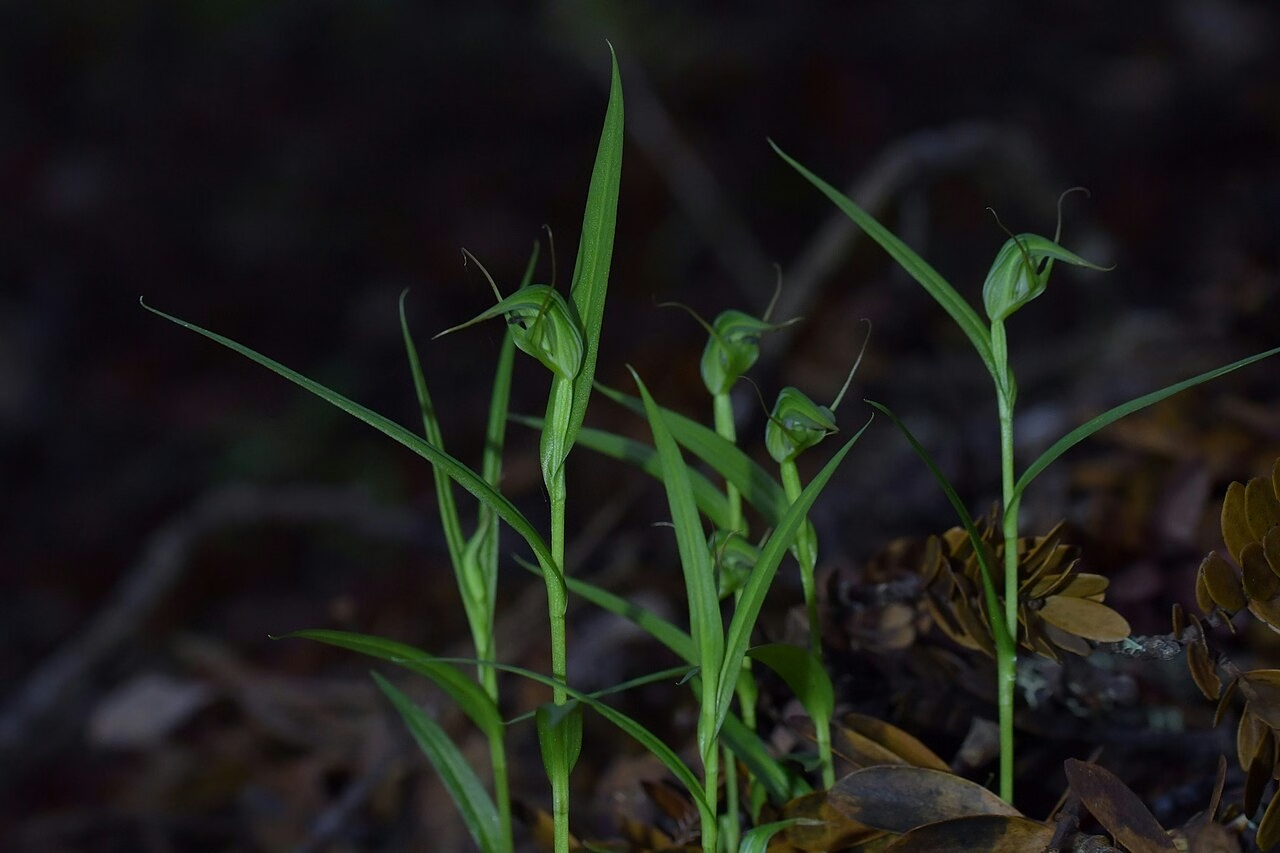
Kauri Greenhood
Pterostylis agathicola
Last updated:
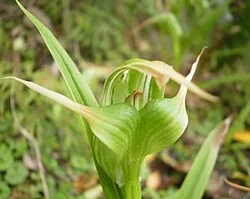
Kauri greenhood (Pterostylis agathicola) is a small terrestrial orchid endemic to the northern North Island, from Te Paki south to Te Kauri Park Scenic Reserve in the west and the northern Kaimai Range in the east. As its name says, it is virtually confined to kauri forest, growing in leaf litter close to the trunks of large kauri trees. Flowering plants reach 10-35 cm and carry one, rarely two, translucent white and dark green hooded flowers 24-28 mm long, with a reddish stem and tips. It is one of the earliest greenhoods to bloom, flowering from July to October. It is ranked Not Threatened but cannot be cultivated. Explore more native flowering plants in our native plant guide.
Plant Description
Kauri greenhood is a tuberous ground orchid that grows as solitary plants or in colonies. Non-flowering plants are 60-100 mm tall, while flowering stems reach 100-350 mm and are characteristically reddish. The stem carries three or four widely spaced, spreading leaves that are narrowly lanceolate and dark green.
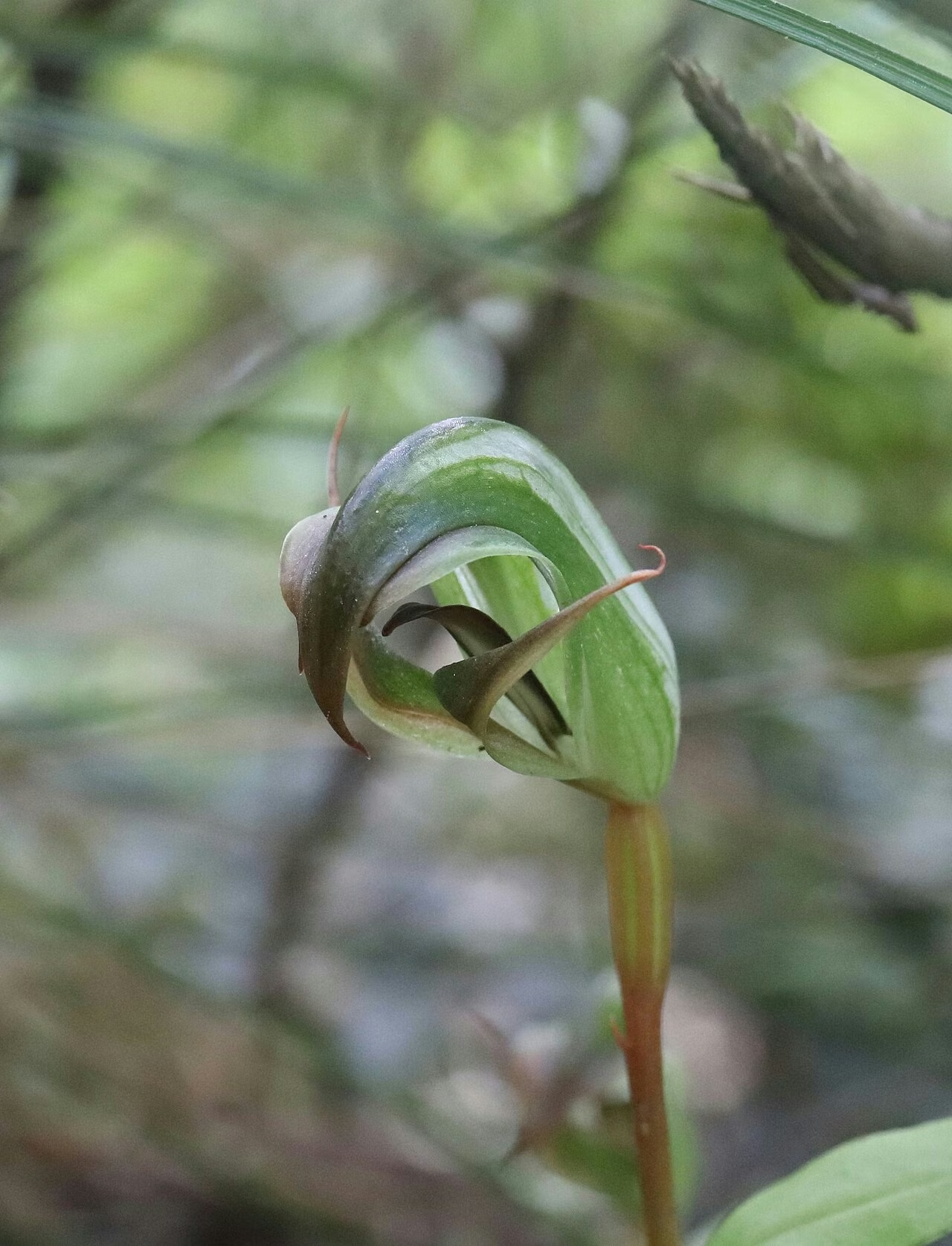
The flower is usually single, occasionally two, 24-28 mm long, held erect or leaning slightly forwards. It is translucent white striped with dark green, with reddish colouring at the tips. As in all greenhoods, the dorsal sepal and petals form a hood (galea) over the column. The labellum is erect, curving forwards in its outer third, and its tip is twisted strongly to the right, a feature that helps identify the species.
NZPCN separates it from other greenhoods by its early flowering, reddish stem, widely spaced and spreading leaves and the twisted labellum apex. It often grows alongside Pterostylis brumalis in kauri forest, so check these features carefully.
Quick Facts
| Scientific Name | Pterostylis agathicola |
|---|---|
| Height | 0.1-0.35 m in flower; sterile plants 6-10 cm |
| Spread | Solitary plants or small colonies |
| Water Needs | Moist leaf litter |
| Light | Shade to dappled light under kauri |
| Frost Tolerance | Moderate; coastal to montane up to 720 m |
| Salt Tolerance | No information available |
| Growth Rate | Seasonal; dies back to a tuber each year |
| Lifespan | Perennial (tuberous) |
Climate Best Suited to
It lives in the warm, humid climate of Northland, Auckland and the northern Kaimai Range, where kauri forest grows, from near the coast to about 720 m.
Regional Suitability
| City | Climate Suitability |
|---|---|
| Auckland | High |
| Wellington | Low |
| Christchurch | Low |
| Dunedin | Low |
Plant Habitat
Pterostylis agathicola is endemic to the North Island, from Te Paki in the far north south to Te Kauri Park Scenic Reserve in the west and the northern Kaimai Range in the east. The type specimen came from the Waitākere Ranges. It ranges from coastal to montane forest up to 720 m.
It is virtually confined to kauri (Agathis australis) dominated forest, where it usually grows in the deep leaf litter close to the trunks of large kauri trees. This litter and the fungi within it appear to be essential to its survival.
Growing Requirements
Soil Requirements
In the wild it roots in the deep, acidic leaf litter and humus that builds up around old kauri.
- Deep kauri leaf litter over infertile forest soil
- Relies on mycorrhizal fungi in the litter
- Not suited to garden soils
Light Requirements
It grows on the shaded floor of kauri forest.
- Shade to dappled forest light
- Often close to the trunk of a large kauri
- Not a plant for open sites
Water Requirements
It grows and flowers through the wetter months of winter and spring, then dies back to a tuber.
- Moist litter during the winter growing season
- Tubers rest through drier summer months
- Disturbance of the litter layer harms it
Planting and Establishing
Kauri greenhood should not be planted or moved. NZPCN states that it is difficult, extremely mycorrhizal and should not be removed from the wild. Its dependence on fungi associated with kauri forest means transplants almost always fail.
The best way to support it is to protect the kauri forests where it grows. Visit these forests only on open tracks, clean your footwear at hygiene stations to avoid spreading kauri dieback, and do not step into the leaf litter around kauri roots.
Ecological Role
Greenhoods (Pterostylis) are generally pollinated by small male fungus gnats that land on the sensitive labellum, which flicks inwards and traps the insect against the column so that it picks up or deposits pollen as it escapes. No study specific to kauri greenhood was found, but its flower structure matches this pattern.
Like all orchids, it produces dust-like seed without food reserves, so germination depends on a mycorrhizal fungus. Its near-exclusive association with kauri suggests that the fungi or litter conditions under kauri are crucial to its life cycle.
Uses & Significance
Garden Uses
This orchid has no place in gardens and is not available commercially.
- Enjoy it in the wild in kauri forest reserves
- Photograph rather than collect
- Report sightings to iNaturalist NZ to help record its distribution
Ecological Value
It is part of the distinctive ground flora of kauri forest, one of New Zealand's most threatened forest types.
- An indicator of intact kauri forest floor
- Food source for its fungus gnat pollinators
- Contributes to the high orchid diversity of northern forests
Landscaping Uses
Kauri greenhood is not used in landscaping. Its value for land managers lies in recognising and protecting the kauri forest floor where it grows.
In parks and reserves, keeping walkers on boardwalks and tracks around large kauri protects both the tree roots and the orchids in the litter beneath them.
Seasonal Care Calendar
Spring
Late flowering continues into October and seed capsules develop.
- Capsules ripen from August to December
- Leaves begin to yellow later in the season
Summer
Plants die back and survive as underground tubers.
- Nothing visible above ground
- Seed release finishes by December
Autumn
New leaves emerge from the tubers as the forest floor moistens.
- Rosettes and flowering stems begin to appear
- Look near large kauri trunks
Winter
The main flowering season begins in July, earlier than most greenhoods.
- Translucent white and green flowers with reddish tips
- A good time to search kauri forest tracks
When to Prune and How Much
No pruning applies. The leaves and flowering stem die back naturally after fruiting, and the plant survives the summer as an underground tuber.
Leave the surrounding leaf litter undisturbed, as raking or clearing it destroys the habitat and the fungi the orchid depends on.
How to Grow Kauri Greenhood
Kauri greenhood is not a plant to propagate at home. NZPCN describes propagation as difficult, notes that it is extremely mycorrhizal and says it should not be removed from the wild. Its survival in nature depends on fungi associated with kauri forest litter, and taking plants or tubers risks both the orchid and the spread of kauri dieback in soil. The notes below explain how the species reproduces naturally and how orchid specialists approach greenhoods in general, rather than recommending that anyone attempt it.
From Seed
Each capsule releases thousands of dust-like seeds that lack food reserves. In nature a seed germinates only if it is colonised by a suitable mycorrhizal fungus, which supplies sugars until the seedling can photosynthesise. In laboratories, orchid seed is sometimes raised on sterile nutrient agar or with a matching fungus, but no protocol specific to this species was found.
- Leave capsules on wild plants so seed can disperse naturally
- Do not collect seed without permission from the land manager
- Any trial should be done by specialists using symbiotic or sterile culture
By Tuber
Kauri greenhood forms colonies, which suggests that some plants produce extra tubers each season. For greenhoods in general, NZPCN suggests a basic orchid mix of 2 parts coarse river sand, 2 parts soil or leaf-mould, 1 part weathered sawdust or rotting wood and 1 part granulated bark, kept evenly moist under about 50% shade.
- Never dig tubers from the wild
- Tubers are handled only while dormant in summer
- Kauri forest soil must not be moved because of kauri dieback risk
Pests & Diseases
Slugs and snails graze greenhood leaves and flowers, and introduced animals such as pigs that root through forest litter can destroy colonies.
The largest threat to its habitat is kauri dieback, caused by the pathogen Phytophthora agathidicida, which kills kauri and changes the forest floor where this orchid lives. Trampling around kauri roots also damages the litter layer.
Cultural Significance
The Māori name tutukiwi is recorded for greenhood orchids, especially Pterostylis banksii, but no Māori name or traditional use specific to kauri greenhood is recorded in the sources consulted.
Before its formal description in 1997, this orchid was referred to under the invalid name Pterostylis graminea var. rubricaulis, meaning red-stemmed. The epithet agathicola links it to kauri (Agathis australis), a tree of great cultural importance to Māori as a rangatira of the forest.
Bonus Tip
If you want to find kauri greenhood, walk a kauri forest track in late winter, from July to September, and scan the leaf litter at the base of the biggest kauri visible from the track. Its reddish stem and white-and-green hood stand out against the brown litter.
Related Plants
Explore other native plants that share similar characteristics or habitats with Kauri Greenhood (Pterostylis agathicola), offering further insights into New Zealand's diverse flora. These related species provide context and opportunities for complementary planting in your garden.
Plant Conservation
Kauri greenhood is ranked Not Threatened (2023). It is reasonably common within kauri forest across its range.
Because it is bound so tightly to kauri forest, its future is tied to that of kauri. Following track closures and hygiene rules, controlling pigs and protecting kauri from dieback all help this orchid.
Frequently Asked Questions
Why is it called the kauri greenhood?
The name agathicola means dweller with Agathis, the kauri genus. This orchid is virtually confined to kauri forest, usually growing in leaf litter close to the trunks of large kauri trees.
When does Pterostylis agathicola flower?
NZPCN records flowering from July to October, which is early for a greenhood, with fruit following from August to December.
How is kauri greenhood told apart from other greenhoods?
Look for its early flowering, reddish stem, widely spaced spreading leaves and a labellum tip twisted strongly to the right. It often grows with Pterostylis brumalis in kauri forest.
Can I grow kauri greenhood in my garden?
No. NZPCN says it is difficult, should not be removed from the wild and is extremely mycorrhizal, depending on soil fungi found in kauri forest.
Sources and Further Reading
The botanical, growing, and conservation details for Kauri Greenhood (Pterostylis agathicola) on this page draw on the New Zealand plant references below. Consult them for full technical records and the latest distribution data.