Tutukiwi
Pterostylis patens
Last updated:
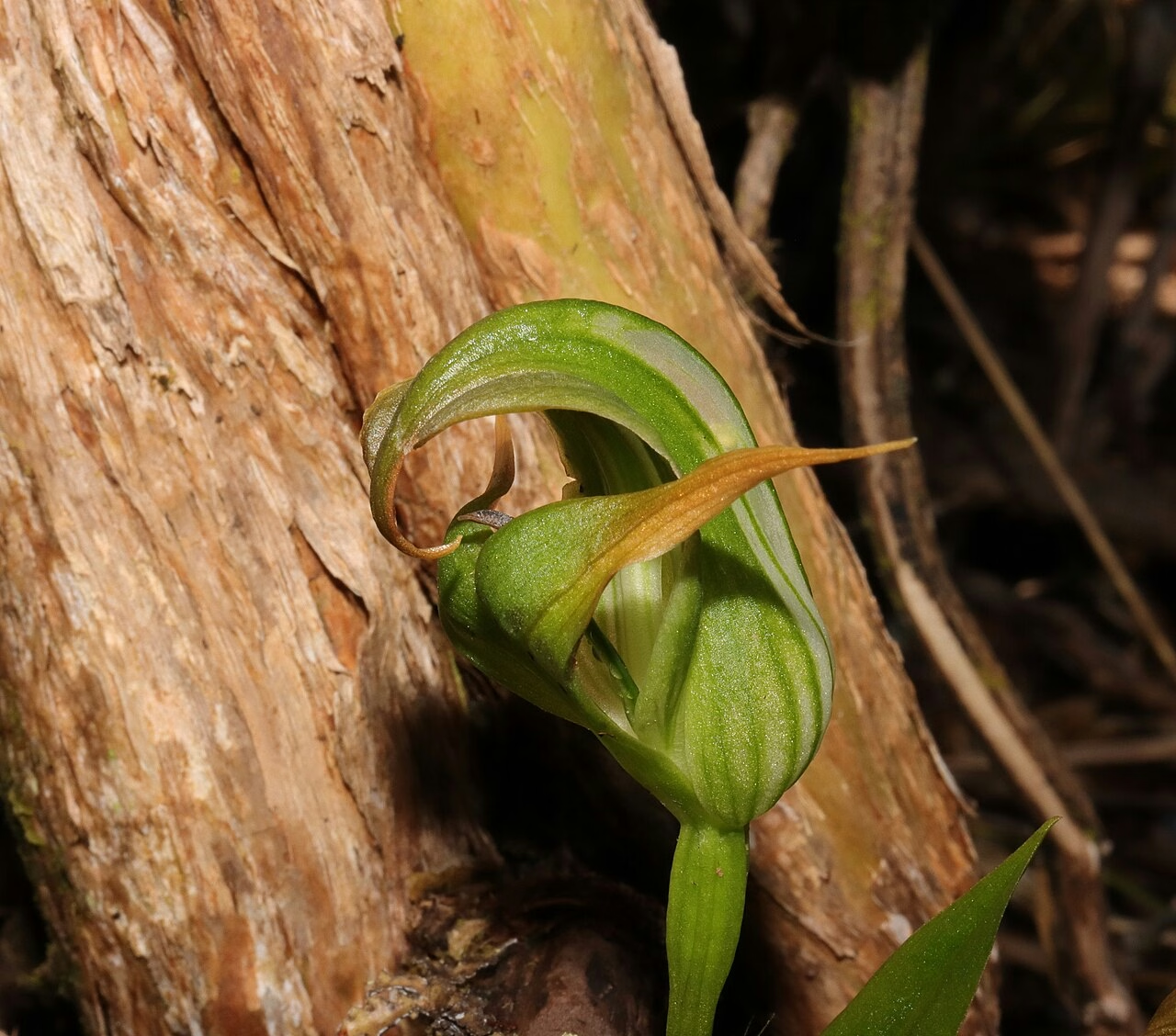
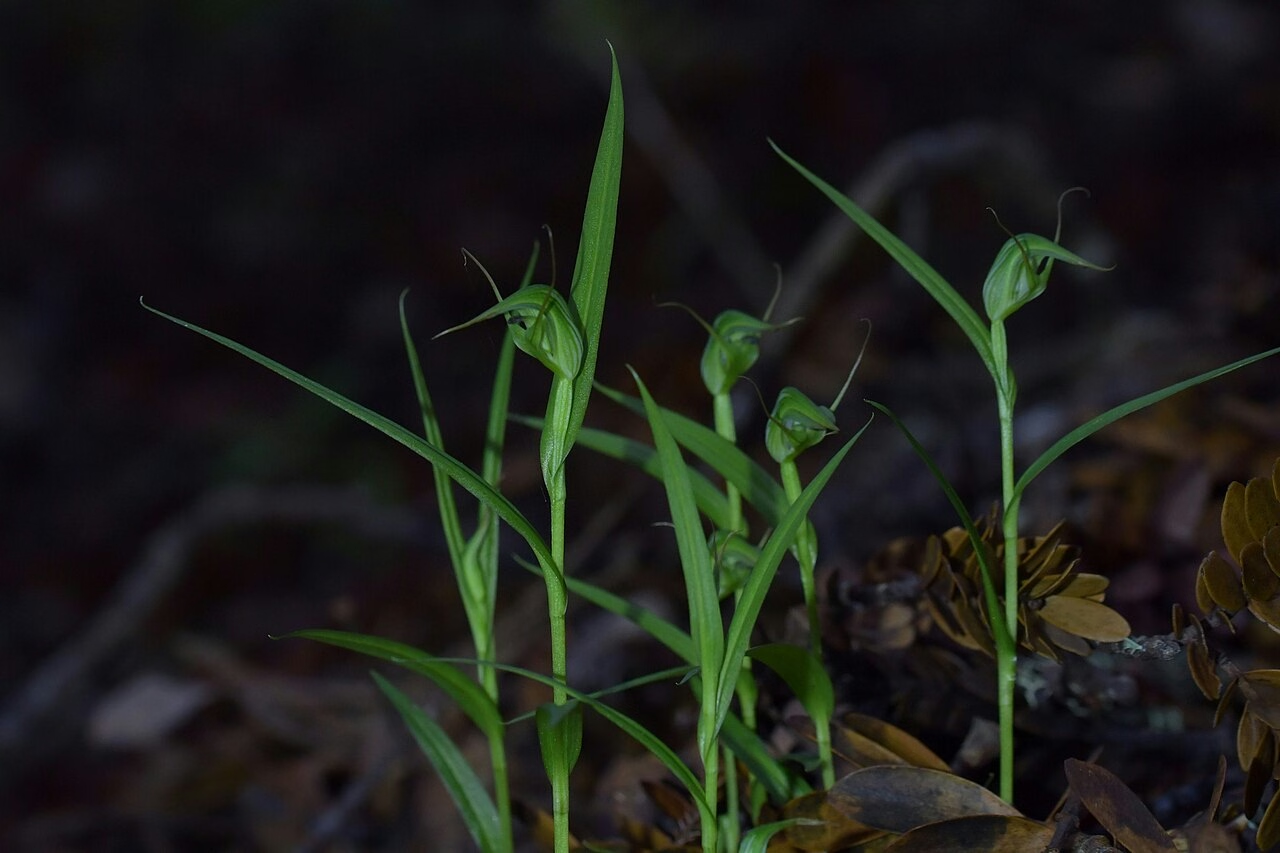
Tutukiwi (Pterostylis patens) is an endemic greenhood orchid that forms dense colonies on the floor of beech forest, montane cloud forest and subalpine scrub. Plants stand 10 to 48 cm tall with four to six stiffly erect, dark green to reddish leaves and a single upright flower, mostly green finely striped with white and noticeably swollen near the base. It grows from about Mt Pirongia southwards through the North Island and across the South Island and Stewart Island/Rakiura, mostly in montane to subalpine country up to 1200 m. It flowers from November to January and is ranked Not Threatened, but it is difficult to grow and is best left in the wild. Explore more native flowering plants in our native plant guide.
Plant Description
Pterostylis patens is a tuberous ground orchid that forms dense colonies of many plants through vegetative spread. Flowering plants are 10 to 48 cm tall and carry four to six stiffly erect leaves that are dark green to reddish and lance-shaped, roughly 50 to 180 mm long.
The single erect flower is mostly green on the front, finely striped with white, and prominently inflated near the base. The dorsal sepal and petals join to form the hood, while the lateral sepals spread widely and end in long thread-like tips. The epithet patens means spreading.
Its closest relative is Pterostylis oliveri of the western South Island, which is often sprawling rather than stiffly erect and differs in leaf shape. Pterostylis banksii, another common large greenhood, has a noticeably smaller and less globose flower.
Quick Facts
| Scientific Name | Pterostylis patens |
|---|---|
| Height | 0.1-0.48 m in flower |
| Spread | Dense colonies by vegetative spread |
| Water Needs | Damp sites, consistently moist |
| Light | Semi-shade under forest or scrub |
| Frost Tolerance | High; montane to subalpine |
| Salt Tolerance | Low; an inland forest plant |
| Growth Rate | Seasonal; regrows from tubers |
| Lifespan | Perennial (tuberous) |
Climate Best Suited to
Suits cool, moist montane and subalpine climates with reliable rainfall, though it also reaches lower elevations in the southern Wairarapa and Rimutaka Ranges. Hot, dry lowland conditions do not suit it.
Regional Suitability
| City | Climate Suitability |
|---|---|
| Auckland | Low |
| Wellington | Medium |
| Christchurch | Low |
| Dunedin | Medium |
Plant Habitat
Tutukiwi is endemic to New Zealand. In the North Island it is found from about Mt Pirongia southwards, and it occurs throughout the South Island and on Stewart Island/Rakiura.
It is mostly a montane to subalpine plant, up to about 1200 m, but it comes down to lower elevations in the southern Wairarapa and the Rimutaka Ranges. It favours beech (Nothofagaceae) forest, and also grows in montane cloud forest and under subalpine scrub, usually in damp, semi-shaded sites.
Growing Requirements
Soil Requirements
It grows in the moist litter and humus layer of beech and montane forest floors.
- Damp, humus-rich forest soil
- Layers of beech leaf litter and moss
- Cool soils that do not dry out in summer
Light Requirements
It favours semi-shaded spots under beech canopy or subalpine shrubs.
- Semi-shade to dappled light
- Often at track edges and canopy gaps in beech forest
Water Requirements
NZPCN describes its sites as usually damp, and its montane habitat receives frequent rain and cloud.
- Consistent moisture during the growing season
- Cloud forest and high-rainfall ranges suit it
Planting and Establishing
Tutukiwi is not commercially available, and NZPCN states that it should not be removed from the wild. It is not a plant for home gardens.
Where it already grows on private land, the best approach is to protect the forest floor: keep stock out, leave leaf litter and fallen wood in place and avoid spraying or clearing track margins.
Ecological Role
Greenhood flowers are traps. An insect alighting on the sensitive labellum is tipped into the hood and must crawl out past the column, collecting or depositing pollen as it goes. Small flies such as fungus gnats are the usual pollinators of greenhoods, although the pollinator of this species is not documented in the sources consulted.
Its habit of forming dense colonies through new tubers means a single site can hold many flowering stems. The fine seed depends on soil fungi to germinate, linking the orchid to the health of the forest soil.
Uses & Significance
Garden Uses
It has no real place in gardens, but it is one of the most visible greenhoods for trampers in beech forest.
- Enjoy it in beech forest from November to January
- Protect existing colonies on private bush blocks
- Not available from nurseries
Ecological Value
It is a characteristic ground orchid of beech and montane forest across much of New Zealand.
- Forms colonies that are part of the beech forest floor flora
- A trap flower used by small forest flies
- Indicates undisturbed, moist forest floor
Landscaping Uses
It is not used in landscaping. In the wild its colonies of upright striped hoods are a feature of beech forest tracks in early summer.
Landowners with beech remnants can encourage it simply by fencing out stock and letting the litter layer build up.
Seasonal Care Calendar
Spring
Erect, dark green to reddish leaves push up through the litter and flower buds form.
- Keep stock out of forest remnants
- Watch for emerging colonies on track edges
Summer
Flowering runs from November to January, and fruit capsules develop from December.
- Photograph flowers rather than picking
- Stay on tracks to avoid crushing colonies
Autumn
Capsules ripen and release seed through to April, then foliage dies back.
- Leave seed capsules in place
- No intervention needed
Winter
Plants rest underground as tubers in the cold forest floor.
- Leaf litter insulates the tubers
- No visible growth
When to Prune and How Much
No pruning is needed. Leaves and stems die back naturally after the plant has fruited.
Do not tidy away the leaf litter around colonies, because it holds the moisture and fungi the orchid depends on.
How to Grow Tutukiwi
NZPCN rates Pterostylis patens as difficult to propagate, says it should not be removed from the wild and lists it as not commercially available. No species-specific propagation protocol was found in the sources consulted. In the wild it increases by vegetative extension, forming dense colonies, which suggests that new tubers are produced readily under the right conditions. The methods below summarise the general approach used by specialist greenhood growers, and should only be applied to legally held cultivated or rescued material, never to plants dug from the wild.
From Seed
The seed is microscopic and has no stored food, so germination relies on a compatible mycorrhizal fungus. Sowing into a pot where greenhoods are already growing gives the best chance of success.
- Collect capsules from cultivated plants as they turn yellow, from December to April
- Scatter the seed over the surface of an established greenhood pot
- Keep the pot shaded, cool and evenly damp
- Allow at least one full season before expecting visible seedlings
By Tuber Division
Colony-forming greenhoods produce several daughter tubers each year. These can be separated when the plants are dormant and replanted to establish new pots.
- Wait until the leaves and stems have fully withered in autumn
- Gently turn out the pot and separate the small tubers
- Replant them shallowly in a free-draining mix rich in leaf litter
- Keep cool and lightly moist until shoots emerge in spring
Pests & Diseases
No specific pests are recorded for this species. Slugs and snails eat greenhood leaves and buds, and browsing deer and stock can trample or eat colonies in unfenced forest.
In cultivation, rot in poorly drained or stagnant pots is the usual cause of failure.
Cultural Significance
NZPCN lists tutukiwi as a common name for Pterostylis patens. Tutukiwi is a Māori name for greenhood orchids generally; no traditional Māori use of this species is recorded in the sources consulted.
William Colenso described the species in 1886 in the Transactions and Proceedings of the New Zealand Institute. The genus name Pterostylis means winged column.
Bonus Tip
When you find a colony of greenhoods in beech forest, check how the plants stand. Stiffly erect leaves and stems with a large, swollen, white-striped hood point to Pterostylis patens; a sprawling habit in the western South Island suggests Pterostylis oliveri instead.
Related Plants
Explore other native plants that share similar characteristics or habitats with Tutukiwi (Pterostylis patens), offering further insights into New Zealand's diverse flora. These related species provide context and opportunities for complementary planting in your garden.
Pterostylis humilis
Pterostylis humilis
Pterostylis irsoniana
Pterostylis irsoniana
Nodding Greenhood
Pterostylis nutans
Oliver's Greenhood
Pterostylis oliveri
Shrimp-Flowered Greenhood
Pterostylis porrecta
Antipodes Saltgrass
Puccinellia antipoda
Chatham Islands Salt Grass
Puccinellia chathamica
Kauri Greenhood
Pterostylis agathicola
Plant Conservation
Pterostylis patens has been ranked Not Threatened in every national assessment since 2004, most recently in 2023. In Otago it is listed as Regionally Data Deficient and in Wellington as Regionally Not Threatened (2025).
Large areas of its beech forest habitat lie within national parks and conservation areas. Control of browsing animals and leaving plants in place are the most useful actions.
Frequently Asked Questions
What does tutukiwi mean?
Tutukiwi is a Māori name for greenhood orchids, and NZPCN lists it as a common name for Pterostylis patens. It is applied to greenhoods in general rather than this species alone.
Where can I see Pterostylis patens?
Look in damp, semi-shaded beech forest and subalpine scrub from about Mt Pirongia southwards, including the Rimutaka and southern Wairarapa ranges, the South Island and Stewart Island/Rakiura.
How is Pterostylis patens different from Pterostylis banksii?
NZPCN notes that Pterostylis patens has a much larger, distinctly globose flower than P. banksii, and it differs from P. oliveri by its stiffly erect growth habit.
Can I grow tutukiwi in my garden?
NZPCN rates it as difficult to propagate and says it should not be removed from the wild, and it is not commercially available.
Sources and Further Reading
The botanical, growing, and conservation details for Tutukiwi (Pterostylis patens) on this page draw on the New Zealand plant references below. Consult them for full technical records and the latest distribution data.