Nodding Greenhood
Pterostylis nutans
Last updated:
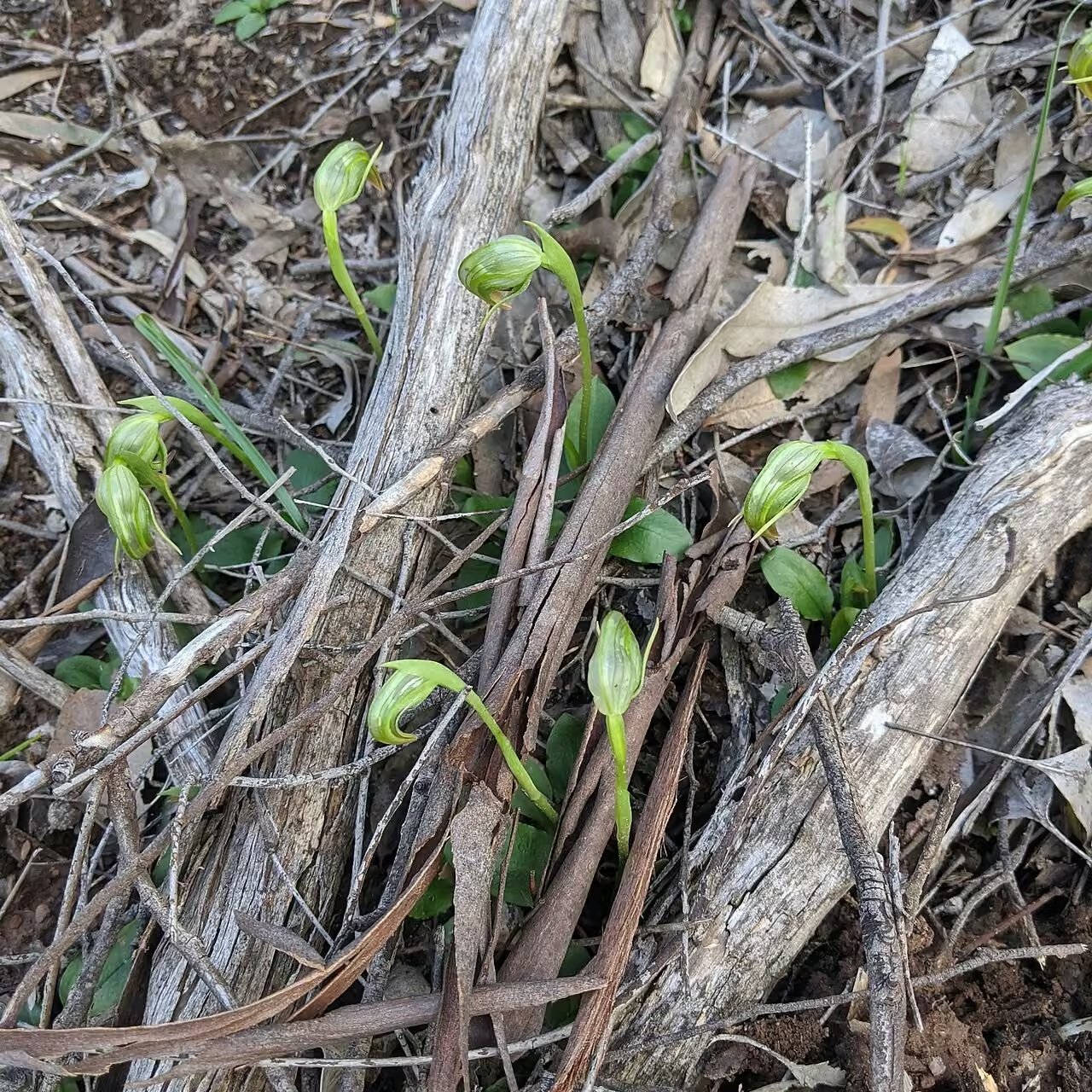
Nodding greenhood (Pterostylis nutans) is a small terrestrial orchid from eastern Australia that has occasionally turned up in New Zealand. It forms colonies of leafy rosettes and sends up a stem to about 30 cm carrying a single green, white and brown flower that bends forward so sharply it faces the ground. In New Zealand it is known from only three North Island records, near Kaitaia, on the Whangaparaoa coast and in the Hauhangaroa Range, and it is classed as a vagrant. Its specialist pollinating insects do not live here, so New Zealand plants cannot set seed naturally. In Australia it is a common, easily grown greenhood. Explore more native flowering plants in our native plant guide.
Plant Description
Pterostylis nutans is a tuberous ground orchid that forms colonies. Each plant has a rosette of 5 to 10 or more leaves on conspicuous, narrowly winged stalks, with oblong-ovate blades 15 to 30 mm long and 10 to 20 mm wide. The flowering stem reaches up to about 30 cm tall.
The solitary flower is the giveaway. It is translucent white with green stripes and brownish tones, about 18 to 25 mm long, and it bends forward so far that it faces downwards or curves back toward the stem. The dorsal sepal is about 25 mm tall, the lateral sepals are briefly joined and end in fine points, and the narrow triangular labellum is strongly arched, protrudes from the flower and carries bristly hairs.
NZPCN describes it as very distinctive, saying its large nodding flowers immediately separate it from every other greenhood found in New Zealand, all of which carry their flowers more or less upright.
Quick Facts
| Scientific Name | Pterostylis nutans |
|---|---|
| Height | Up to 0.3 m in flower |
| Spread | Single rosettes forming small colonies |
| Water Needs | Moist in winter and spring, dry while dormant |
| Light | Partial shade to filtered light |
| Frost Tolerance | Light frosts; dormant underground in summer |
| Salt Tolerance | No information available |
| Growth Rate | Seasonal; grows from a tuber each year |
| Lifespan | Perennial (tuberous) |
Climate Best Suited to
In Australia it grows in moist, sheltered forest in temperate to subtropical climates. The few New Zealand records are all from the warmer North Island.
Regional Suitability
| City | Climate Suitability |
|---|---|
| Auckland | Medium |
| Wellington | Medium |
| Christchurch | Low |
| Dunedin | Low |
Plant Habitat
In New Zealand the nodding greenhood is known only from the North Island: Pukemiro Hill near Kaitaia, collected between 1914 and 1920; Castor Bay and the Whangaparaoa Peninsula north of Auckland in 1942; and Waihaha in the Hauhangaroa Range west of Lake Taupō in 1995. None of these colonies is known to survive.
Here it was found in coastal shrubland, on open clay ground and in dense podocarp forest on the edge of a walking track. In eastern Australia, from South Australia and Tasmania to Queensland, it is widespread in moist, protected forest and often forms extensive colonies.
Growing Requirements
Soil Requirements
It grows from a small underground tuber in leaf litter and the upper soil, on clay as well as forest soils in New Zealand.
- Free-draining soil with plenty of decomposed leaf litter
- Australian growers use a free-draining, sandy potting mix
- Waterlogged soil rots the dormant tuber
Light Requirements
In the wild it grows under shrubs and forest or on lightly shaded open ground.
- Filtered light or part shade
- Protect from hot afternoon sun
Water Requirements
Like other greenhoods it grows through the cooler wet months and dies back to a tuber afterwards.
- Keep evenly moist while leaves and flowers are present
- Keep almost dry while the plant is dormant
Planting and Establishing
Nodding greenhood is not available from New Zealand nurseries, and NZPCN warns that reports of wild plants need scrutiny because some people have deliberately planted it. Do not plant it into the wild.
Growers who hold it legally in cultivation keep it in pots of free-draining, sandy mix, plant tubers in late summer or autumn just below the surface and repot annually while the plants are dormant.
Ecological Role
Greenhoods have a trap flower. An insect landing on the sensitive labellum tips it inward, trapping the visitor in the hood so that it must squeeze past the column and the pollen on its way out. In Australia Pterostylis nutans is pollinated by a specialist fungus gnat drawn in by chemical signals from the labellum.
NZPCN records that those pollinators are not present in New Zealand, so the plant cannot set seed here naturally. It can still spread slowly by producing new tubers, which is how small colonies persisted for a time.
Uses & Significance
Garden Uses
Outside Australia it is mainly a plant for orchid enthusiasts growing in pots.
- Pot culture in a shade house or cool glasshouse
- Not a plant for restoration planting in New Zealand
- Not commercially available here
Ecological Value
In New Zealand its value is scientific: it shows how Australian orchid seed crosses the Tasman, and why some arrivals fail to establish.
- An example of trans-Tasman dispersal by tiny wind-blown orchid seed
- Illustrates how missing pollinators limit colonisation
- No known role in New Zealand ecosystems
Landscaping Uses
It has no landscaping role in New Zealand. In an orchid collection a pot of flowering nodding greenhoods is striking because the colony flowers together and every hood bows the same way.
Anyone wanting greenhoods in a native garden is better served by watching for New Zealand species that turn up naturally in shady leaf litter than by trying to introduce plants.
Seasonal Care Calendar
Spring
Flowering runs from July to October, so late winter and spring is when the nodding hoods appear.
- Keep potted plants moist and shaded
- Hand pollinate if seed is wanted
Summer
Fruiting runs from September to February, and the leaves die back as the weather warms and dries.
- Reduce watering as foliage yellows
- Let pots dry for dormancy
Autumn
New growth emerges from the tubers with the return of cooler, wetter weather.
- Repot dormant tubers before growth starts
- Resume watering when shoots appear
Winter
The leaf rosettes are fully developed and flower stems begin to rise.
- Protect pots from heavy frost and slugs
- Keep the mix moist but never waterlogged
When to Prune and How Much
No pruning is needed. The leaves and flower stem die back naturally each year and the plant retreats to its underground tuber.
Leave yellowing foliage in place until it withers so that it can feed the new tubers, then remove the dry remains.
How to Grow Nodding Greenhood
NZPCN says nodding greenhood is easily cultivated, unlike most New Zealand greenhoods. It can be increased from seed after hand pollination, because its natural pollinators are missing in New Zealand, or more simply by dividing the clumps of tubers that a healthy pot produces. Because NZPCN cautions that people have planted this orchid into the wild, any propagation should stay in pots and not be used to establish plants in native vegetation. Material should come only from existing legal cultivated stock, never from wild colonies.
From Seed
Orchid seed is dust-like and has almost no food reserve, so in nature it germinates only with the help of a soil fungus. Specialist growers sow greenhood seed onto the surface of pots that already contain an established greenhood, where the right fungus is likely to be present.
- Transfer pollen to the stigma of another flower with a toothpick while flowers are open
- Collect the capsule as it begins to yellow, before it splits
- Scatter the seed over the surface of a pot holding established greenhoods
- Keep the pot moist through the growing season and watch for tiny leaves the following year
By Tuber Division
Healthy plants produce extra daughter tubers each season, which is how the species forms colonies. Dividing these during dormancy is the most reliable way to increase it.
- Tip out the pot in summer once the foliage has fully died down
- Separate the small round tubers by hand
- Replant them a few centimetres deep in fresh free-draining sandy mix
- Keep the pot nearly dry until new shoots appear in autumn
Pests & Diseases
Slugs and snails readily eat the soft rosettes and flower buds of greenhoods, so potted plants need protection through the growing season.
The main cause of loss in cultivation is tuber rot when the mix stays wet during dormancy. In New Zealand the wild colonies were probably lost to plant collectors.
Cultural Significance
As an occasional arrival from Australia, nodding greenhood has no documented Māori name or use. Greenhood orchids in general are known in te reo Māori as tutukiwi.
The plant was described by Robert Brown in 1810 from Australian material. Its scattered New Zealand records over 80 years make it one of the better documented examples of an Australian orchid crossing the Tasman without establishing permanently.
Bonus Tip
If you think you have found nodding greenhood in New Zealand bush, photograph it in place, note the location and report it to iNaturalist NZ or your local botanical society rather than digging it up. NZPCN notes that wild reports need checking because some colonies have been planted, and a careful record helps sort genuine wind-blown arrivals from escapes.
Related Plants
Explore other native plants that share similar characteristics or habitats with Nodding Greenhood (Pterostylis nutans), offering further insights into New Zealand's diverse flora. These related species provide context and opportunities for complementary planting in your garden.
Pterostylis areolata
Pterostylis areolata
Pterostylis cardiostigma
Pterostylis cardiostigma
Pterostylis humilis
Pterostylis humilis
Pterostylis irsoniana
Pterostylis irsoniana
Oliver's Greenhood
Pterostylis oliveri
Pterostylis patens
Pterostylis patens
Shrimp-Flowered Greenhood
Pterostylis porrecta
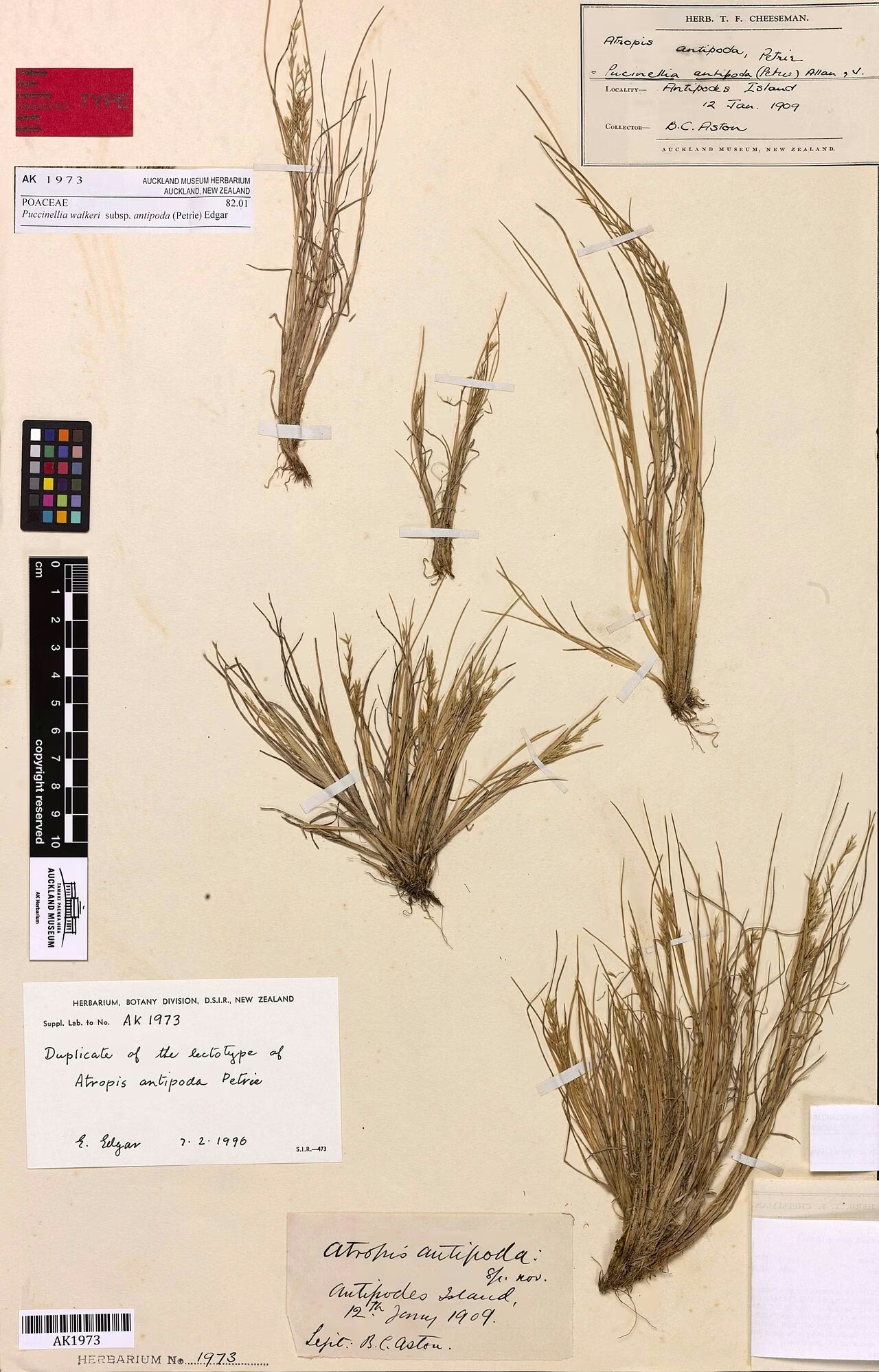
Antipodes Saltgrass
Puccinellia antipoda
Plant Conservation
Pterostylis nutans is ranked Non-resident Native - Vagrant (2023), meaning it reaches New Zealand naturally but does not maintain a breeding population. NZPCN considers that both earlier colonies were probably eradicated by plant collectors.
There is no conservation management for it in New Zealand, and none is needed while it remains abundant in Australia. Leaving any new colony undisturbed and reporting it is the best response.
Frequently Asked Questions
Is the nodding greenhood native to New Zealand?
It is counted as a native but classed as a Non-resident Native - Vagrant. Seed blown from Australia has established a few short-lived North Island colonies, but it has never formed lasting populations here.
Why is it called nodding greenhood?
The single flower leans so far forward that it faces downwards or even curves back toward the stem, which gives the plant its nodding look and its Latin name nutans, meaning drooping.
Why can't Pterostylis nutans spread in New Zealand?
NZPCN notes that the insects that pollinate it in Australia are not present in New Zealand, so plants here cannot produce seed without hand pollination.
Where has nodding greenhood been found in New Zealand?
Records come from Pukemiro Hill near Kaitaia (1914 to 1920), Castor Bay and the Whangaparaoa Peninsula (1942), and Waihaha in the Hauhangaroa Range (1995).
Sources and Further Reading
The botanical, growing, and conservation details for Nodding Greenhood (Pterostylis nutans) on this page draw on the New Zealand plant references below. Consult them for full technical records and the latest distribution data.