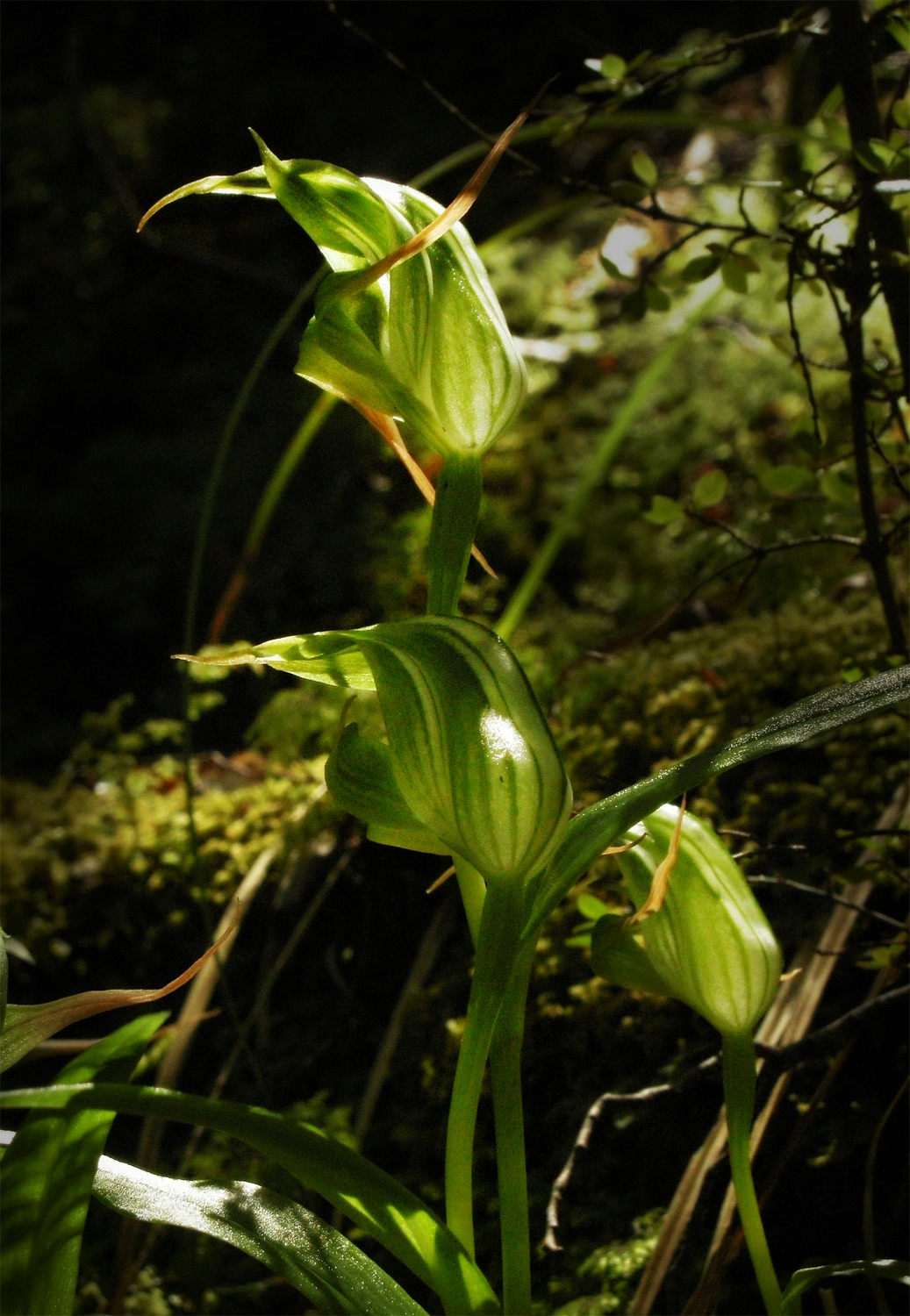
Greenhood
Pterostylis irsoniana
Last updated:
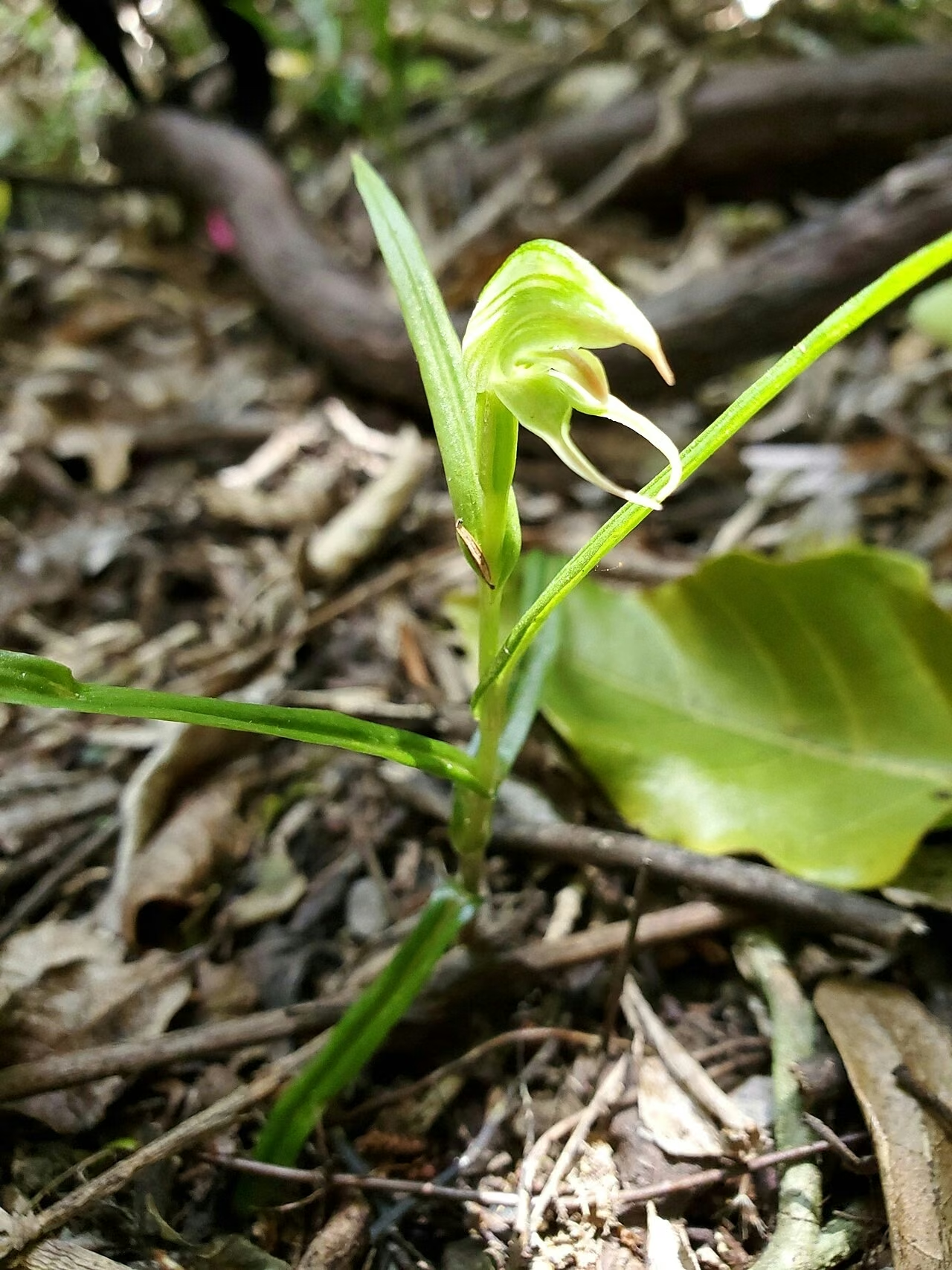
Pterostylis irsoniana is an endemic New Zealand greenhood orchid, 25-35 cm tall, found from East Cape to Wellington in the North Island and along the western South Island to about Haast. It grows from the lowlands to about 1200 m in beech and podocarp forest, on frost flats and in subalpine scrub, often in deep leaf litter or at the margins of sphagnum bogs. Its solitary green and white flower has fine red or orange stripes, and its labellum curls sharply downward at a deeply notched tip, like a drainer's scoop, a feature that sets it apart from every other New Zealand Pterostylis. It flowers from October to January and is ranked Not Threatened. Explore more native flowering plants in our native plant guide.
Plant Description
Pterostylis irsoniana is a terrestrial, tuberous, summer-green orchid growing 25-35 cm tall. It has three to five, occasionally up to eight, leaves that increase in size up the stem, with the uppermost overtopping the flower. The largest leaves are usually 150-200 mm long and 5-12 mm wide, dark green to yellow-green and often tinged red or pink, linear-lanceolate and keeled, with a prominent midrib.
The single flower is green and white with fine red or orange stripes and a reddish tinge at the tips. The labellum is narrowly triangular and protruding, gently arched, then curled sharply downward at its narrow, hooded, deeply notched tip. Its midrib bears small papillae or calli near the base and ends in a prominent, projecting dark red to maroon-black callus that faces the column. As in other greenhoods, the labellum is touch-sensitive and can flick back inside the flower.
NZPCN regards the curled, scoop-like labellum tip and the dark basal callus as the key features separating this species from all other New Zealand Pterostylis. The tall, grassy leaves rising above the flower are also a helpful field character.
Quick Facts
| Scientific Name | Pterostylis irsoniana |
|---|---|
| Height | 0.25-0.35 m in flower |
| Spread | Single plants or small groups |
| Water Needs | Moist litter or bog margins |
| Light | Forest shade to open frost flats |
| Frost Tolerance | High; grows on frost flats and to 1200 m |
| Salt Tolerance | No information available |
| Growth Rate | Seasonal; summer-green |
| Lifespan | Perennial (tuberous) |
Climate Best Suited to
It tolerates a wide range of cool, moist climates, from lowland forest to subalpine scrub and frosty valley-floor flats, especially in high-rainfall western regions.
Regional Suitability
| City | Climate Suitability |
|---|---|
| Auckland | Low |
| Wellington | High |
| Christchurch | Low |
| Dunedin | Low |
Plant Habitat
Pterostylis irsoniana is endemic to New Zealand. In the North Island it ranges from East Cape south to Wellington, and the type specimen came from about 1160 m in Egmont National Park. In the South Island it occurs mainly in the west, south to about Haast.
It grows from lowland to subalpine elevations up to about 1200 m, in beech forest, podocarp forest, on frost flats and in subalpine scrub. It is often found in deep leaf litter or on the margins of sphagnum bogs.
Growing Requirements
Soil Requirements
It roots in deep, moist organic layers such as forest litter and the peaty edges of sphagnum bogs.
- Deep, damp leaf litter
- Peaty, acidic sphagnum bog margins
- Infertile, undisturbed soils with orchid fungi
Light Requirements
Its habitats range from shaded forest floors to fairly open frost flats and scrub.
- Forest shade to partial sun
- Open frost flats and bog edges
- Low subalpine scrub
Water Requirements
Many of its sites are wet for much of the year, particularly bog margins.
- Consistently moist while in growth
- Tolerates wet, peaty ground at bog edges
- Rests as a tuber after fruiting
Planting and Establishing
Pterostylis irsoniana is not sold by nurseries, and NZPCN describes it as difficult and says it should not be removed from the wild.
Where it grows on private land, such as frost flats or bog margins, fencing out stock and avoiding drainage of wetlands are the most helpful actions.
Ecological Role
Greenhoods attract small insects, typically fungus gnats, which land on the sensitive labellum and are flicked inside, where they must crawl past the column and pick up pollen to escape. The strongly curled labellum of this species is part of that trapping mechanism, though its specific pollinators are not documented in the sources consulted.
It is a member of the orchid-rich flora of frost flats, bog margins and beech forest floors, habitats where many small native orchids grow together. Its dust-like seed needs mycorrhizal fungi to germinate.
Uses & Significance
Garden Uses
It is a plant for observation in the wild rather than for gardens.
- Look for it on forest and bog walks in late spring
- Use a hand lens to see the curled, notched labellum
- Record finds on iNaturalist NZ
Ecological Value
It enriches the orchid diversity of beech forest, frost flat and wetland margins.
- Supports small pollinating insects
- Part of distinctive frost flat and bog-edge communities
- Indicator of undrained, undisturbed wetland margins
Landscaping Uses
It is not used in landscaping. Retaining the wet, peaty margins of bogs and the open frost flats where it grows is the relevant management concern.
Avoid planting trees or drains into frost flats and bog edges that support native orchids, as shading and drying both change the habitat.
Seasonal Care Calendar
Spring
Flowering begins in October.
- Green and white flowers with red or orange stripes
- Tall leaves overtop the flower
Summer
Late flowers continue into January while capsules form.
- Capsules ripen from December
- Look for the scoop-like curled lip
Autumn
Capsules finish shedding seed by April and plants die back.
- Foliage withers
- Tubers rest in the soil
Winter
Dormant underground, often under frost or snow at higher sites.
- No visible growth
- Avoid disturbing bog margins
When to Prune and How Much
Pruning does not apply. The leaves and stem die away naturally once seed has been shed.
Do not pick flowers or trim leaves, as the plant relies on its foliage to rebuild its tuber for the following season.
How to Grow Greenhood
NZPCN states that Pterostylis irsoniana is difficult to propagate and should not be removed from the wild, and it is not commercially available. Its general advice for growing Pterostylis is a basic orchid mix of coarse river sand, soil or leaf-mould, weathered sawdust or rotting wood and granulated bark, kept evenly moist under about 50% shade. Specialist growers would also need to match the cool, wet, often peaty conditions of its bog-margin and subalpine habitats, which makes this a demanding species even by greenhood standards.
From Seed
Seed capsules ripen between December and April and release very fine seed. Without its partner fungus the seed cannot develop, so propagation from seed is confined to specialist sterile or symbiotic culture, for which no species-specific method is published.
- Leave wild capsules to disperse seed naturally
- Collect only with permission from DOC or the landowner
- Have seed sown by an experienced orchid propagator
- Grow seedlings cool and evenly moist in a peaty, leafy mix
By Tuber
Like other greenhoods, cultivated plants rest as tubers after fruiting, and any extra tubers formed can be separated during dormancy.
- Work only with legally cultivated plants
- Lift and separate tubers in late summer or autumn while dormant
- Repot into the NZPCN orchid mix with a little added sphagnum
- Keep under about 50% shade and water evenly once shoots emerge
- Cut back watering as the leaves yellow so the tubers can ripen before their dormant rest
Pests & Diseases
Slugs and snails feed on greenhood leaves and flowers, while deer, goats and stock can browse or trample plants on forest floors and frost flats.
Drainage of wetlands, invasion of frost flats by weeds such as heather or wilding conifers, and disturbance of litter are likely pressures on its habitats, although NZPCN does not list specific threats.
Cultural Significance
No Māori name or traditional use specific to Pterostylis irsoniana is recorded in the sources consulted. The Māori name tutukiwi is recorded for greenhoods, particularly Pterostylis banksii.
Edwin Hatch described the species in 1950 in the Transactions and Proceedings of the Royal Society of New Zealand. He coined the epithet irsoniana by combining parts of two surnames, Irwin and Gibson, to honour Bruce Irwin and Owen Gibson, who did much to elucidate the orchid flora of Mount Taranaki.
Bonus Tip
The quickest field check for this species is to look at the flower from the side: if the lip protrudes and then curls sharply down into a notched, scoop-shaped tip with a dark maroon lump at its base, you have found Pterostylis irsoniana.
Related Plants
Explore other native plants that share similar characteristics or habitats with Greenhood (Pterostylis irsoniana), offering further insights into New Zealand's diverse flora. These related species provide context and opportunities for complementary planting in your garden.
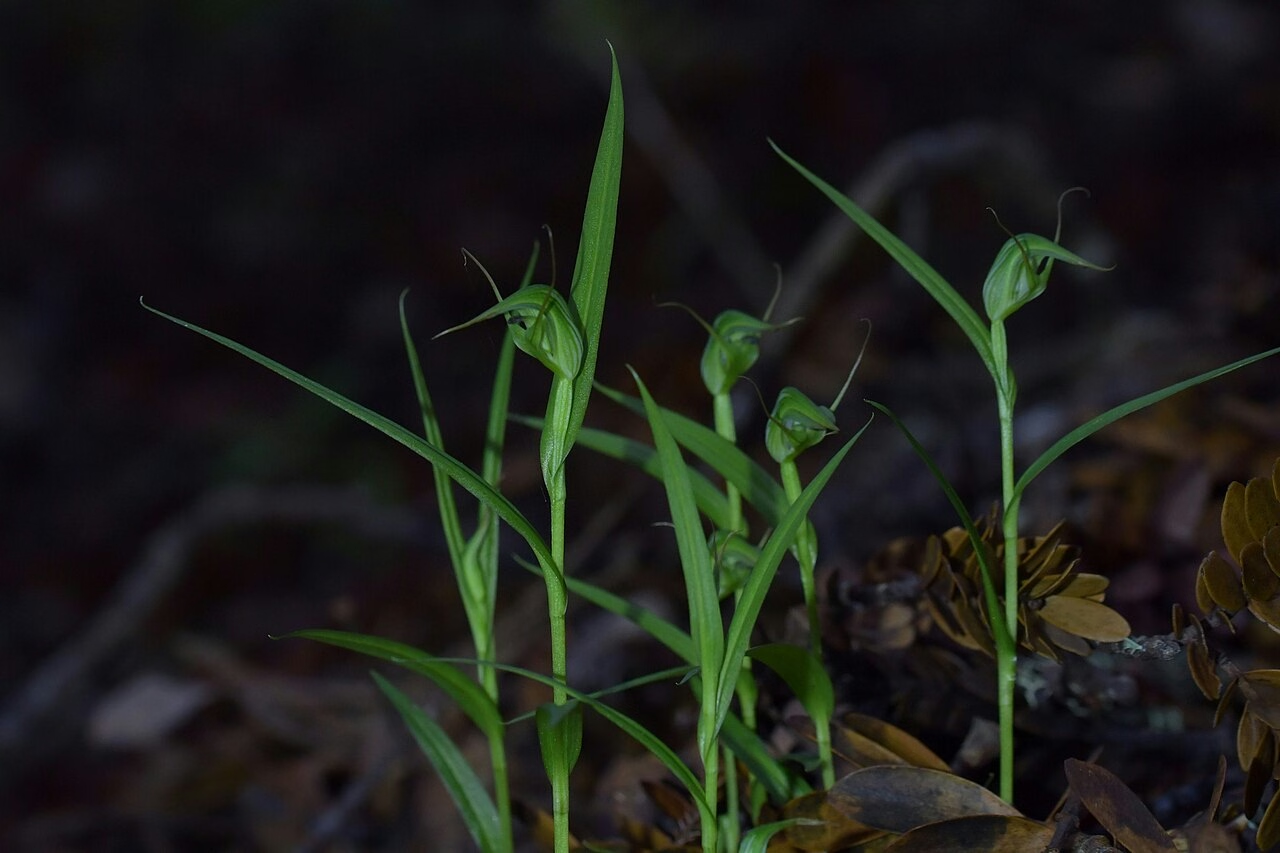
Kauri Greenhood
Pterostylis agathicola
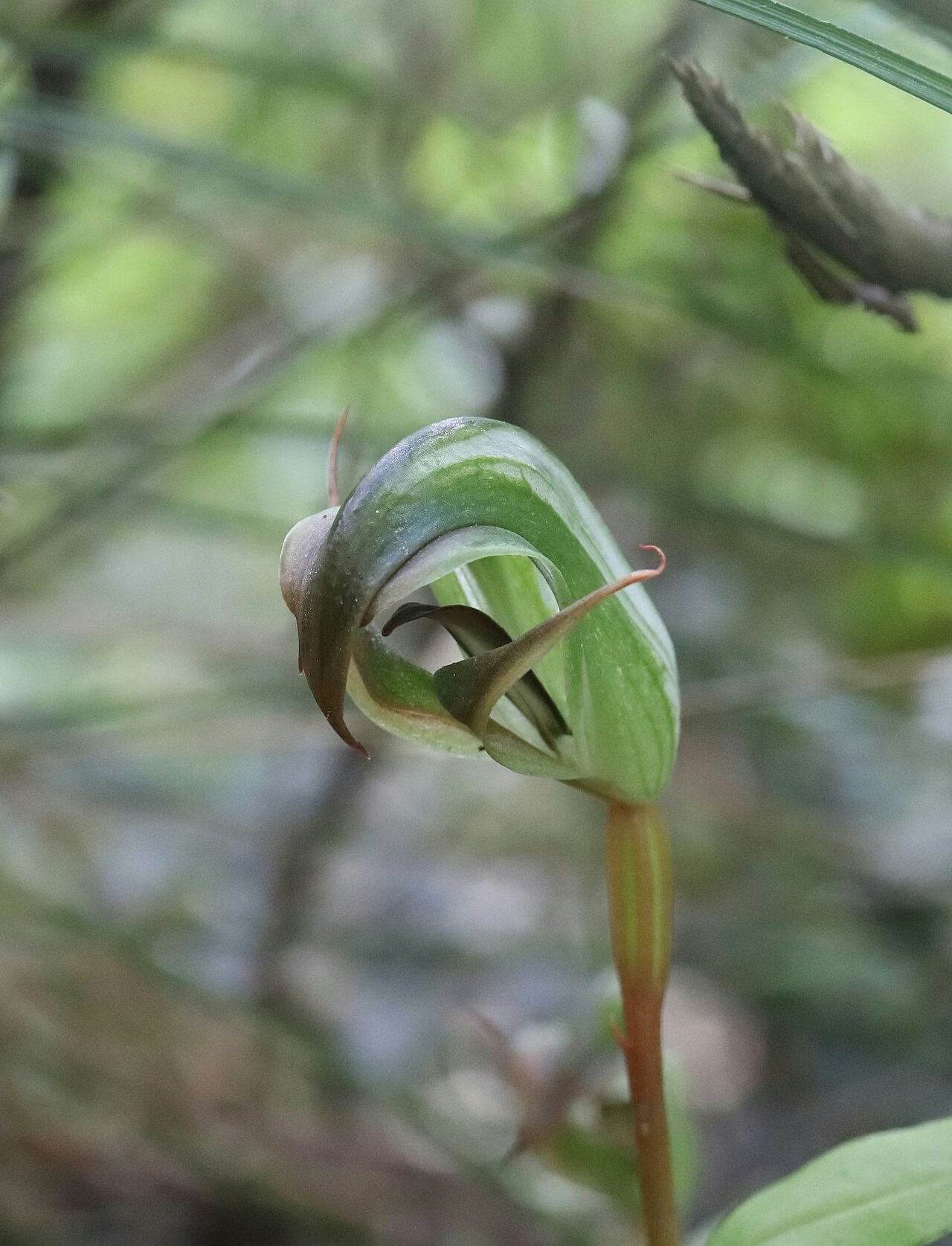
Pterostylis areolata
Pterostylis areolata
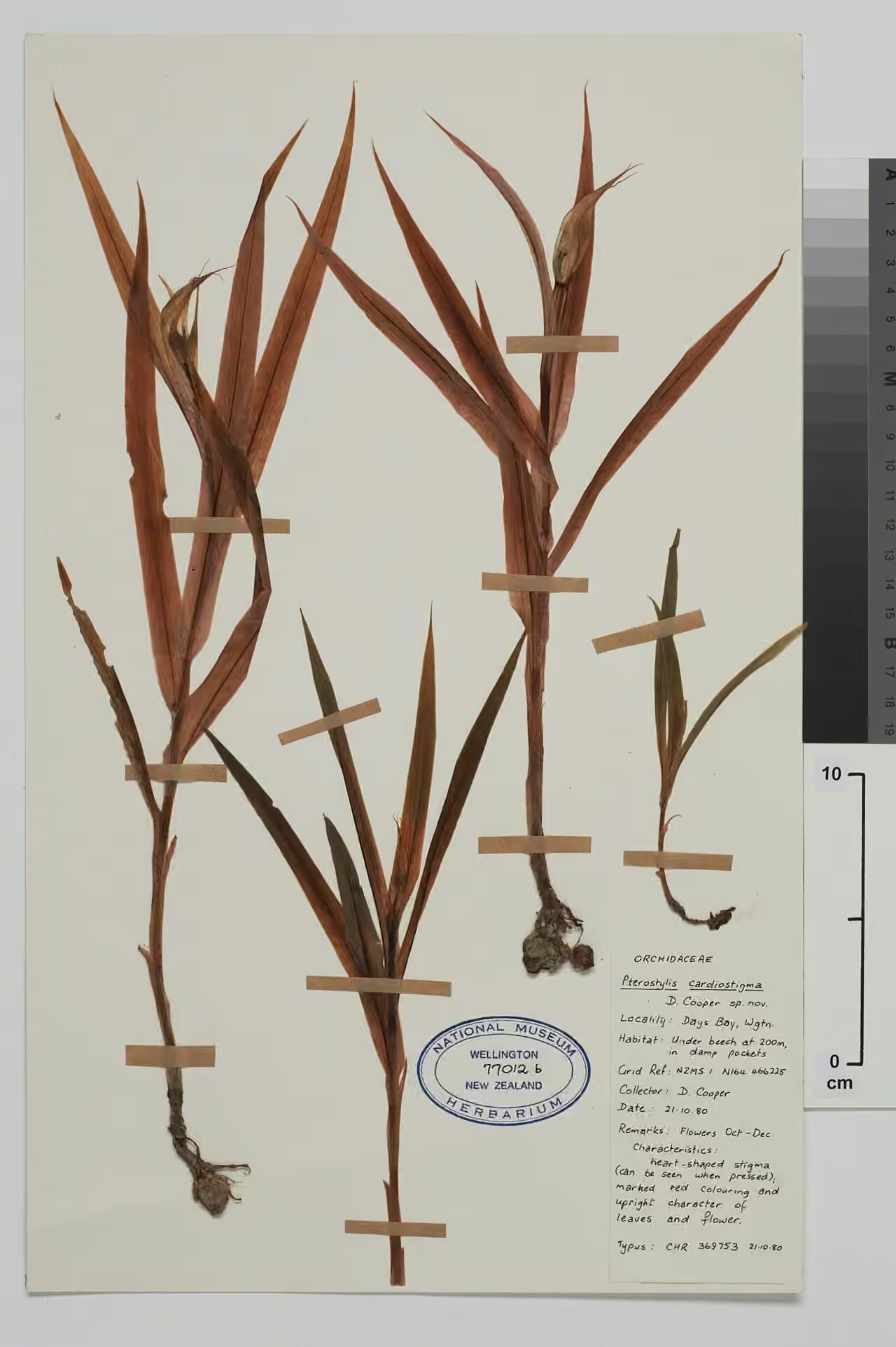
Pterostylis cardiostigma
Pterostylis cardiostigma
Pterostylis humilis
Pterostylis humilis
Nodding Greenhood
Pterostylis nutans
Oliver's Greenhood
Pterostylis oliveri
Pterostylis patens
Pterostylis patens
Shrimp-Flowered Greenhood
Pterostylis porrecta
Plant Conservation
Pterostylis irsoniana is ranked Not Threatened (2023) and is widespread across its range, much of which lies in national parks and other conservation land.
Protecting bogs and frost flats from drainage and weed invasion, controlling browsing animals and keeping visitors on tracks help keep its populations secure.
Frequently Asked Questions
How do you identify Pterostylis irsoniana?
NZPCN says its curled labellum with a deeply notched tip, like a drainer's scoop, and a prominent dark red to maroon-black basal callus distinguish it from all other New Zealand Pterostylis.
Who is Pterostylis irsoniana named after?
Orchidologist Edwin Hatch built the name from two surnames, ir for Bruce Irwin and son for Owen Gibson, to honour their work on New Zealand orchids, especially on Mount Taranaki.
Where does Pterostylis irsoniana grow?
It occurs from East Cape to Wellington in the North Island and mainly in the west of the South Island south to about Haast, in forest, frost flats, subalpine scrub and bog margins up to 1200 m.
When does Pterostylis irsoniana flower?
Flowering runs from October to January, with capsules ripening from December to April.
Sources and Further Reading
The botanical, growing, and conservation details for Greenhood (Pterostylis irsoniana) on this page draw on the New Zealand plant references below. Consult them for full technical records and the latest distribution data.