Greenhood
Pterostylis areolata
Last updated:
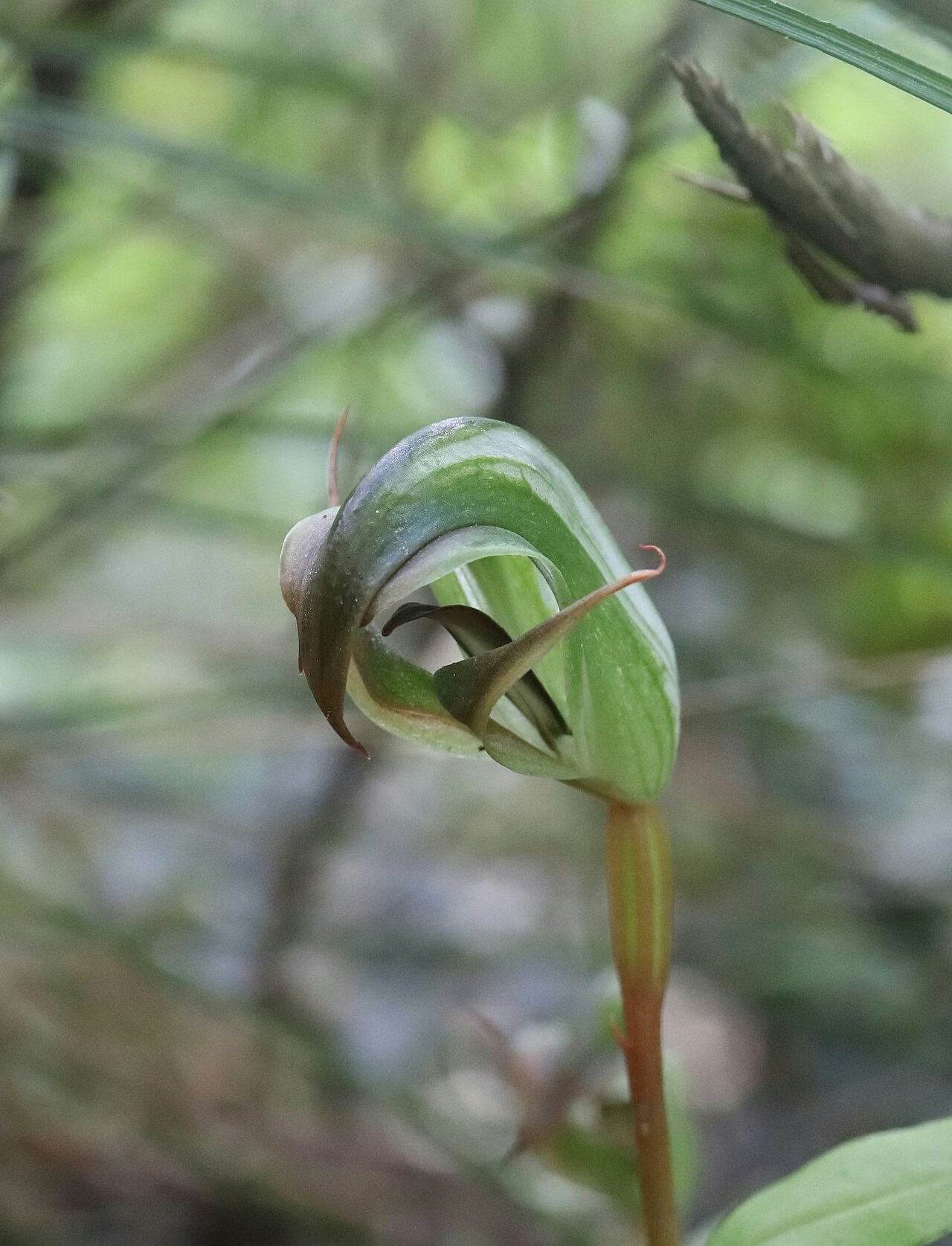
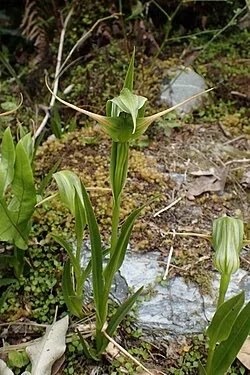
Pterostylis areolata is an endemic New Zealand greenhood orchid that grows mainly in the South Island, east of the main divide, with outliers in Nelson and Fiordland and in the Tararua Range of the North Island. It is a tuberous ground orchid 7-25 cm tall, with two to four broad leaves and a single large, dark green flower striped with white towards the back of the hood, which tips forwards. The labellum is red with a darker tip. It grows from the lowlands to the subalpine zone in tussock grassland, grey scrub, wetland margins and open forest, flowering in October and November. It is ranked Not Threatened. Explore more native flowering plants in our native plant guide.
Plant Description
Pterostylis areolata is a tuberous ground orchid that grows singly or in small patches of 3-8 plants, reaching 70-250 mm tall when in flower. The stem is smooth and dark green to reddish. There are two to four leaves whose shape changes up the stem: the lower ones are broadly elliptic to obovate, 30-90 by 10-25 mm, while the upper ones are shorter and pointed.
The single flower is large and tips forwards. It is dark green, striped with white towards the back of the galea (hood). The dorsal sepal is 30-35 mm long, mostly erect before curving to horizontal or bending down at the tip. The lateral sepals spread at a narrow angle and end in tapering, only slightly tail-like points. The labellum is elliptic, slightly arched and red at the base with a distinctly darker tip.
It is closest to Pterostylis australis, which typically has more numerous, narrower leaves that may overtop the flower, longer tail-like sepal tips and, in some southern populations, finely toothed leaf margins. P. areolata leaves are never finely toothed and its stigma is elongate-ovate and uniformly red.
Quick Facts
| Scientific Name | Pterostylis areolata |
|---|---|
| Height | 0.07-0.25 m in flower |
| Spread | Solitary or in patches of 3-8 plants |
| Water Needs | Moist in spring; tolerates drier summers |
| Light | Open grassland to light shade |
| Frost Tolerance | High; lowland to subalpine |
| Salt Tolerance | No information available |
| Growth Rate | Seasonal; dies back to a tuber |
| Lifespan | Perennial (tuberous) |
Climate Best Suited to
It suits the cool, frosty, relatively dry climate of the eastern South Island high country and also wetter mountain climates in Nelson, Fiordland and the Tararua Range.
Regional Suitability
| City | Climate Suitability |
|---|---|
| Auckland | Low |
| Wellington | Medium |
| Christchurch | Medium |
| Dunedin | Medium |
Plant Habitat
Pterostylis areolata is endemic to New Zealand. In the North Island it is known from the Tararua Range and possibly the Ruahine Range. In the South Island it is widespread, mainly east of the main divide, but also occurs in Nelson and Fiordland. The type specimen came from near the Awatere River in Marlborough.
It grows from lowland to subalpine elevations in short or tall tussock grassland, grey scrub (the small-leaved shrubland of drier eastern districts), on the margins of wetlands and in open forest.
Growing Requirements
Soil Requirements
It grows in the natural soils of tussock grassland and scrub, where it depends on mycorrhizal fungi.
- Undisturbed native grassland and scrub soils
- Moist in spring when it grows and flowers
- Not suited to cultivated or fertilised ground
Light Requirements
Unlike many forest greenhoods, it often grows in open tussock and scrub.
- Full light among tussocks
- Light shade under grey scrub or open forest
- Avoids dense, dark forest
Water Requirements
It is active in spring and dies back after fruiting, avoiding the driest part of summer.
- Spring moisture from snowmelt and rain
- Found on wetland margins as well as drier slopes
- Dormant tubers survive summer dryness
Planting and Establishing
Pterostylis areolata is not commercially available, and NZPCN says it is difficult and should not be removed from the wild. It is not a garden plant.
Landowners in the eastern South Island can help it by retaining patches of native tussock and grey scrub, avoiding top-dressing and oversowing in those areas, and managing grazing so that spring-flowering orchids can set seed.
Ecological Role
Greenhood flowers have a touch-sensitive labellum that traps visiting insects, usually small fungus gnats, against the column so they carry pollen away. The specific pollinators of P. areolata have not been documented in the sources consulted.
It is part of the diverse small-herb flora of tussock grasslands and grey scrub, habitats that have been heavily reduced by farming development in the eastern South Island. Its dust-like seed relies on soil fungi to germinate.
Uses & Significance
Garden Uses
It has no practical garden use and is not sold by nurseries.
- Observe and photograph it on high country walks in spring
- Record sightings on iNaturalist NZ
- Protect existing populations on farms and in reserves
Ecological Value
It adds to the biodiversity of eastern South Island tussock and scrub ecosystems.
- Spring flowers for its insect pollinators
- An indicator of intact native grassland
- Part of the orchid diversity of dryland habitats
Landscaping Uses
This orchid is not used in landscaping. Its presence is a reason to leave native tussock and scrub patches unploughed and unsprayed rather than a plant to introduce.
In reserves, light, well-timed grazing management or exclusion during spring can help it flower and fruit successfully.
Seasonal Care Calendar
Spring
The flowering season, from October to November.
- Large dark green hood with a red lip
- Look among tussocks and grey scrub
Summer
Capsules ripen from November to February before the plant dies back.
- Seed released into the wind
- Leaves wither as soils dry
Autumn
Plants are dormant as underground tubers.
- Nothing visible above ground
- New tubers formed for next year
Winter
Leaves begin to emerge late in winter in milder sites.
- Rosettes appear before spring flowering
- Snow cover protects plants in the high country
When to Prune and How Much
Pruning does not apply to this orchid. Its stems and leaves die back naturally after the seed is released.
Avoid mowing, spraying or heavy grazing in spring where it grows, as this removes flowers before they can set seed.
How to Grow Greenhood
Pterostylis areolata is not commercially available, and NZPCN states that it is difficult to grow and should not be removed from the wild. For Pterostylis, NZPCN suggests a basic orchid mix of 2 parts medium coarse sand, ideally clean river sand, 2 parts soil, humus or leaf-mould, 1 part weathered sawdust or rotting wood and 1 part granulated bark, with about 50% shade and pots kept evenly moist. This information is relevant only to specialist growers working with legally obtained material.
From Seed
The capsules that ripen between November and February release very fine seed that has no stored food. Germination requires a compatible mycorrhizal fungus, so scattering seed in a garden is ineffective. Specialist laboratories sometimes raise native orchids on sterile media, but no published method for this species was found.
- Leave seed capsules on wild plants
- Seek permission from DOC or the landowner before any collection
- Refer seed to specialists experienced in orchid culture
- Record capsule ripening dates, since timing collection is critical for fine orchid seed
By Tuber
Plants that grow in patches of 3-8 probably increase through new tubers. In cultivation, greenhood tubers are usually repotted while dormant in summer and early autumn, before new shoots appear.
- Use only plants from a legal, cultivated source
- Repot dormant tubers into the NZPCN orchid mix
- Keep under about 50% shade and evenly moist once growth starts
- Water sparingly once leaves yellow, letting the tubers rest through summer
Pests & Diseases
Slugs, snails and grazing animals such as rabbits, hares and stock can eat the leaves and flowers. Spring grazing in particular can prevent flowering and seeding.
Habitat loss through conversion of tussock grassland and scrub to pasture, and invasion by weeds such as introduced grasses, broom and wilding conifers, are the main pressures on its habitats.
Cultural Significance
The Māori name tutukiwi is recorded for greenhoods, particularly Pterostylis banksii, but no Māori name or use specific to Pterostylis areolata is recorded in the sources consulted.
The species was described by Donald Petrie, a Scottish-born schools inspector and botanist who named many New Zealand plants. The epithet areolata means netted, with a network pattern between the veins.
Bonus Tip
When you find a greenhood in South Island tussock, compare the leaves with the flower: if there are only two to four broad leaves that stay below the hood, and the lip is red with a darker tip, it is likely P. areolata rather than the narrower-leaved P. australis.
Related Plants
Explore other native plants that share similar characteristics or habitats with Greenhood (Pterostylis areolata), offering further insights into New Zealand's diverse flora. These related species provide context and opportunities for complementary planting in your garden.
Pteris saxatilis
Pteris saxatilis
Ladder Brake
Pteris vittata
Kauri Greenhood
Pterostylis agathicola
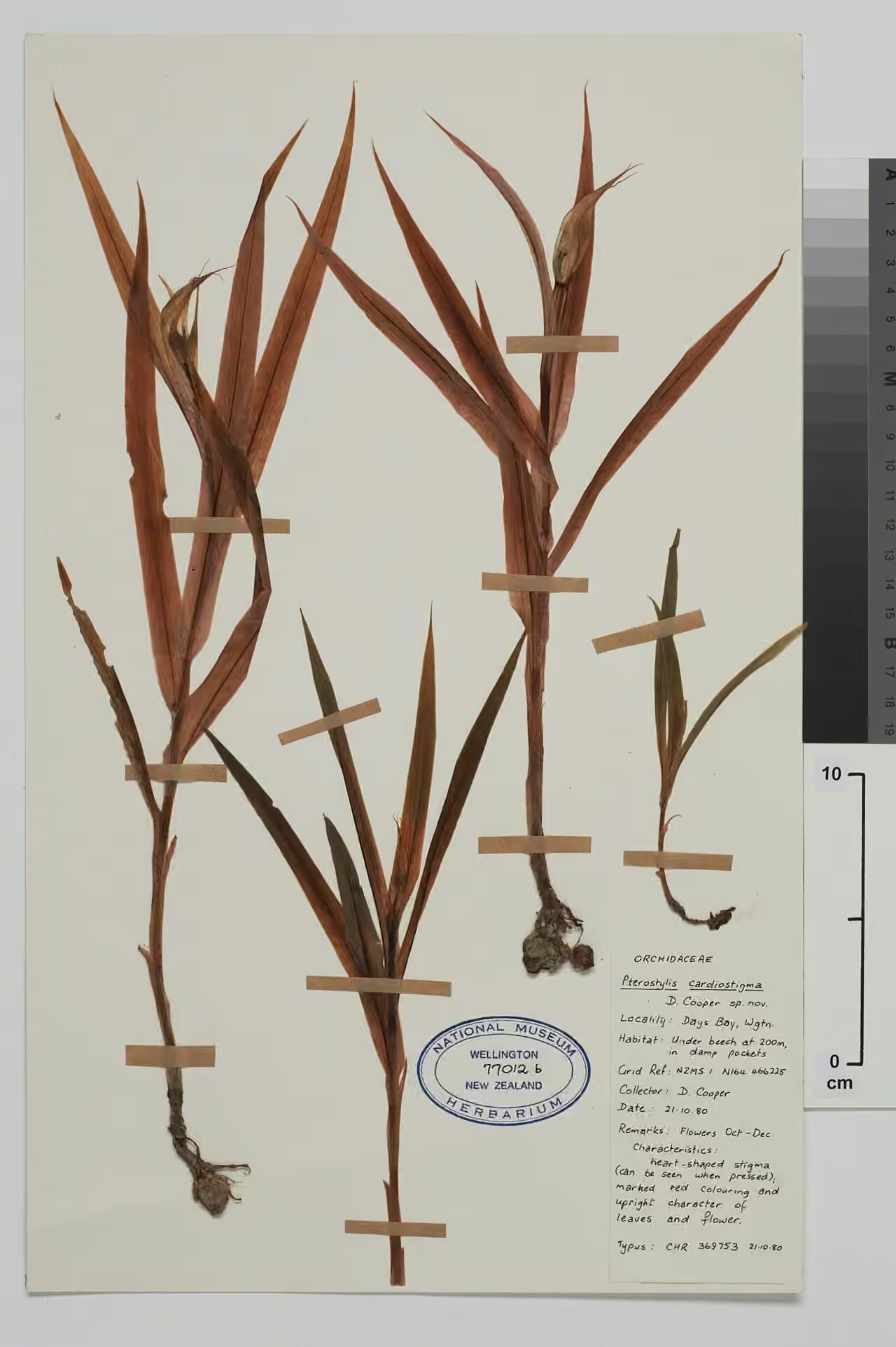
Pterostylis cardiostigma
Pterostylis cardiostigma
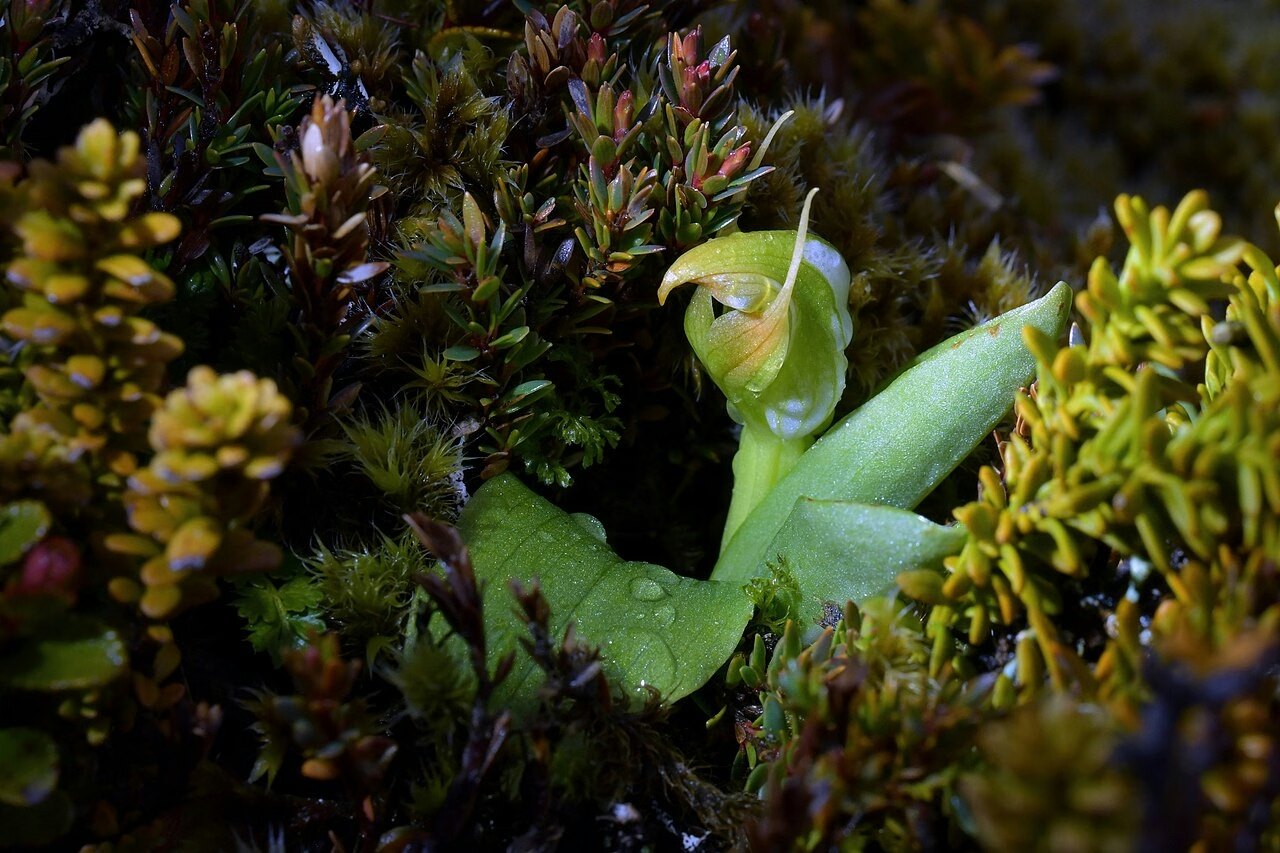
Pterostylis humilis
Pterostylis humilis
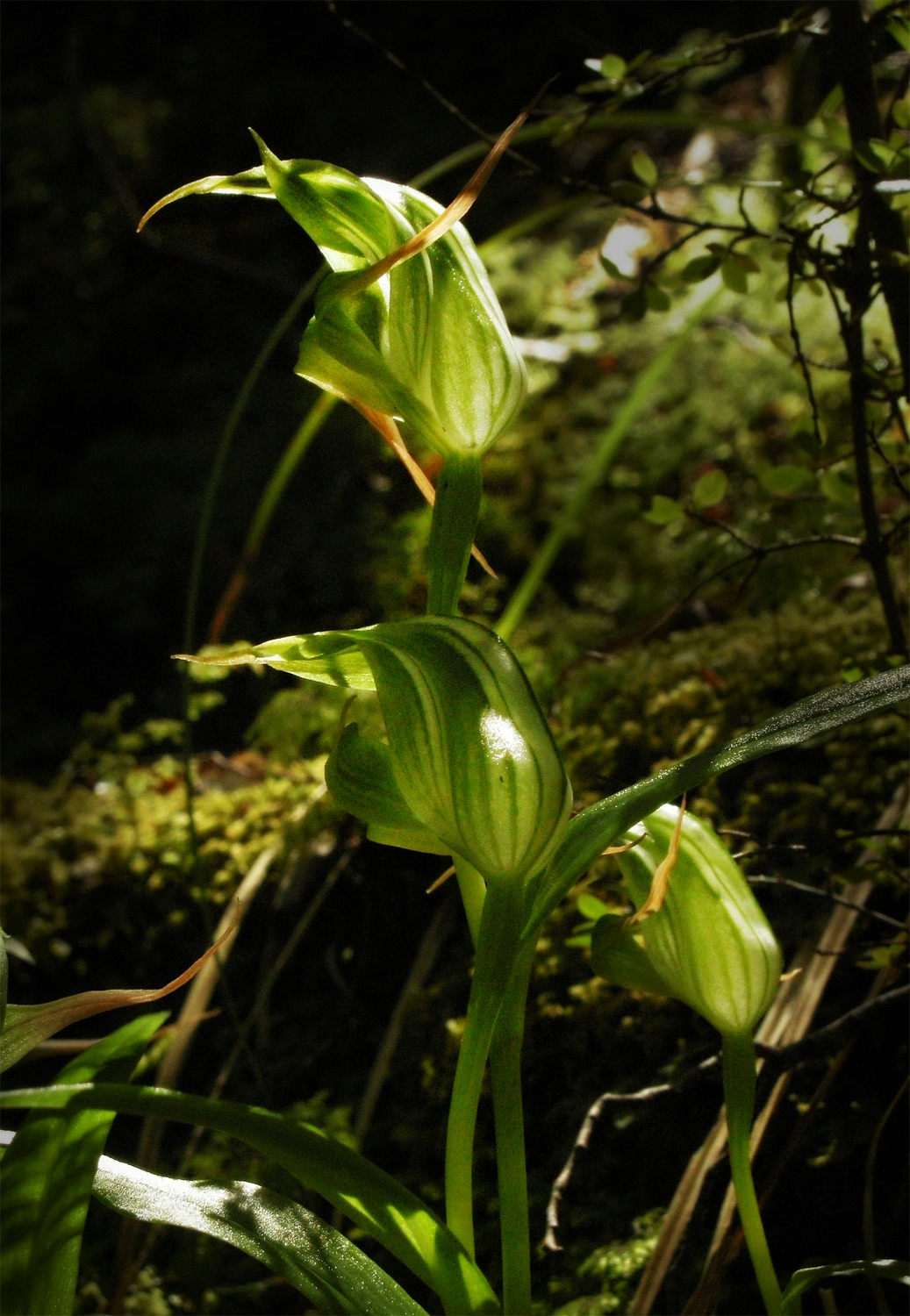
Pterostylis irsoniana
Pterostylis irsoniana
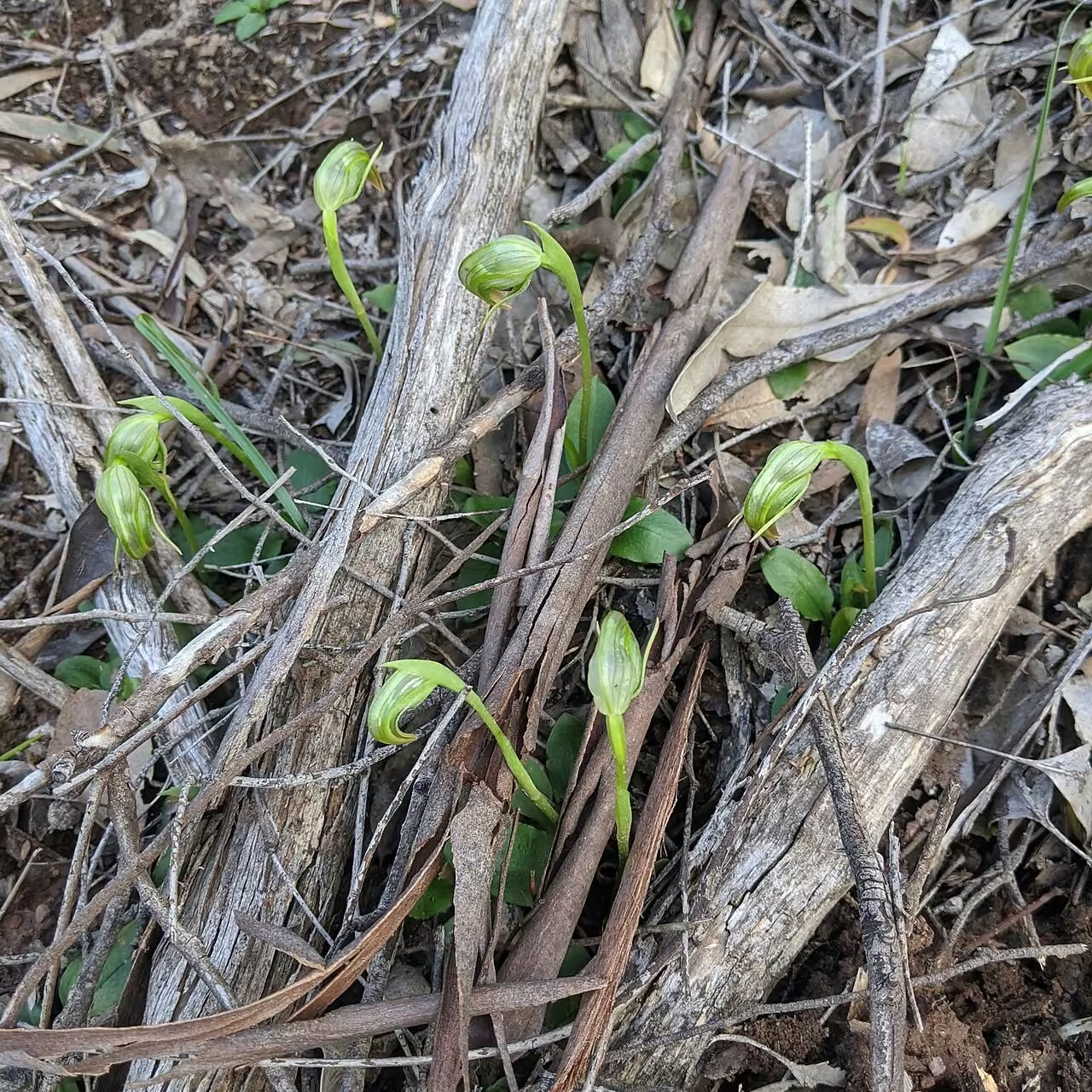
Nodding Greenhood
Pterostylis nutans
Southern Greenhood
Southern Greenhood
Plant Conservation
Pterostylis areolata is ranked Not Threatened (2023), and Otago ranks it Regionally Not Threatened (2025). It remains widespread east of the main divide.
Retaining native tussock grassland and grey scrub, controlling weeds and wilding pines, and managing grazing in spring are the best ways to keep its populations healthy.
Frequently Asked Questions
How do you tell Pterostylis areolata from Pterostylis australis?
NZPCN says P. areolata has fewer, consistently wider elliptic to obovate leaves that do not overtop the hood, only slightly caudate lateral sepals and an elongate-ovate, uniformly red stigma.
Where does Pterostylis areolata grow?
It is widespread in the South Island, mainly east of the main divide, also in Nelson and Fiordland, and in the North Island in the Tararua Range and possibly the Ruahines.
What does areolata mean?
The epithet means netted, with a network pattern between the veins, which refers to the patterning visible on the plant.
When does Pterostylis areolata flower?
NZPCN records flowering in October and November, with seed capsules from November to February.
Sources and Further Reading
The botanical, growing, and conservation details for Greenhood (Pterostylis areolata) on this page draw on the New Zealand plant references below. Consult them for full technical records and the latest distribution data.